Results by title
138 books match the query 'Minority Studies' and 18 start with r
RSF
The Russell Sage Foundation Journal of the Social Sciences: The Deportation System and Its AftermathCaitlin Patler
Russell Sage Foundation, 2025
The United States is home to the largest deportation system in the world: Between 2001 and 2022, U.S. Immigration and Customs Enforcement (ICE) carried out nearly 6.5 million deportations. Deportation is often framed as a singular event that happens to an individual. However, as public policy scholar Caitlin Patler and political scientist Brad Jones argue in this issue of RSF, deportation is a system that encompasses premigration, within-U.S., and post-deportation contexts and outcomes. With Congress recently approving a massive expansion of the US deportation system, understanding its consequences is more important than ever before.
In this issue, an interdisciplinary group of contributors explore the wide range of impacts of the U.S. deportation system. The introductory chapter by Patler and Jones defines the U.S. deportation system and provides a comprehensive historical context for understanding its causes and consequences. Mass deportation is enabled primarily through the merging of U.S. immigration and criminal laws. Ian Peacock explores the proliferation of 287(g) agreements, which deputize local law enforcement to enforce immigration law. He shows that counties with stronger ties to public official associations, such as the National Sheriff’s Association and the Major County Sheriffs of America, were more likely to adopt identical 287(g) agreements, devote more jail space to ICE detainees, and comply with ICE detainer requests at higher rates. The issue also presents empirical analyses of the consequences of the US deportation system. Articles by Youngjin Stephanie Hong and colleagues, Cora Bennett and colleagues, and J. Jacob Kirksey and Carolyn Sattin-Bajaj, link deportation to reduced Head Start enrollment, lower K-12 test scores, and declines in college enrollment, respectively. The remaining articles turn to the aftermath of deportation. Erin R. Hamilton and colleagues show that between 2015 and 2020, 11,000 individuals were de facto deportees—family members who leave the country because another family member has been deported—in Mexico, with a disproportionate number being women and children. Further highlighting the importance of family, Ángel A. Escamilla García and Adriana M. Cerón analyze survey data from recently deported Central Americans and find those who left minor children in the U.S. were more likely to intend to remigrate to the U.S.
This issue of RSF sheds light on various dimensions of the increasingly punitive U.S. deportation system and the many ways it harms individuals and communities. In the current era of mass expansion of immigration law enforcement, it will be a valuable educational tool for students, faculty, policymakers, and many other stakeholders.
RSF
The Russell Sage Foundation Journal of the Social Sciences: Three Decades Since 'Making Ends Meet': What We Know about How Single Mothers Survive TodayElizabeth O. Ananat
Russell Sage Foundation, 2026
In their seminal 1995 book Making Ends Meet: How Low-Income Single Mothers Survive Welfare and Low-Wage Employment, Kathryn Edin and Laura Lein laid bare the strategies and challenges of low-income single mothers who were struggling to provide for their families. Even in an era when cash welfare was a federal entitlement, these women struggled to get by. In the thirty years since the book’s publication, many single parents wrestle with volatility and precarious resources from work, informal and formal supports. In this double issue of RSF, economist Elizabeth O. Ananat, political scientist and public policy scholar Carolyn Y. Barnes, sociologists Sandra K. Danziger and Kathryn Edin, and an interdisciplinary group of contributors examine how the policy landscape has changed since welfare reform and how it impacts low-income single mothers’ ability to make ends meet today.
Issue 1 has 8 articles that examine how the traditional safety net has evolved and new supports that have been developed since Making Ends Meet. For example, Sarah K. Bruch and colleagues assess changes to the social safety net since welfare reform in the 1990s and find that benefits have become more exclusive, have more constraints, and are less generous. Kelley Fong and Nora McCarthy reveal that, in an attempt to decrease child maltreatment, the child welfare system increasingly provides material resources to system-involved parents, including in-kind donations and assistance accessing childcare. However, parents often avoid obtaining resources through the system because it opens them up to increased state surveillance. Heather D. Hill and colleagues show that access to paid family and medical leave (PFML) varies greatly for single mothers, with two-thirds of single mothers living in states without PMFL. For those who live in states with PFML, the accessibility and generosity of benefits vary greatly.
Issue 2 has 5 articles that look at lessons that can be learned from COVID Era policies, how single mothers currently try to make ends meet, and men’s contributions to families. For example, Natasha V. Pilkauskas and Kevin Bruey find that low-income single mothers, with and without employment, utilize a variety of public and private resources to make ends meet. Despite this, both groups face high levels of material hardship, including food and housing insecurity. Hope Harvey examines how members of doubled up households understand their economic and social relationships and reveals that there are often disagreements about shared resources, such as money and food. However, it is not just the precise contributions that cause conflict, but how the exchanges are interpreted within the context of household members’ relationships. Allison Dwyer Emory and colleagues show that nonresident fathers often have trouble making ends meet themselves and are unable to make up for the loss of cash support post-welfare reform.
This double issue of RSF showcases the persistence of precarity that low-income families face since Making Ends Meet.
Note: This copy refers to both issues of the journal double issue.
RSF
The Russell Sage Foundation Journal of the Social Sciences: Three Decades Since 'Making Ends Meet': What We Know about How Single Mothers Survive TodayElizabeth O. Ananat
Russell Sage Foundation, 2026
In their seminal 1995 book Making Ends Meet: How Low-Income Single Mothers Survive Welfare and Low-Wage Employment, Kathryn Edin and Laura Lein laid bare the strategies and challenges of low-income single mothers who were struggling to provide for their families. Even in an era when cash welfare was a federal entitlement, these women struggled to get by. In the thirty years since the book’s publication, many single parents wrestle with volatility and precarious resources from work, informal and formal supports. In this double issue of RSF, economist Elizabeth O. Ananat, political scientist and public policy scholar Carolyn Y. Barnes, sociologists Sandra K. Danziger and Kathryn Edin, and an interdisciplinary group of contributors examine how the policy landscape has changed since welfare reform and how it impacts low-income single mothers’ ability to make ends meet today.
Issue 1 has 8 articles that examine how the traditional safety net has evolved and new supports that have been developed since Making Ends Meet. For example, Sarah K. Bruch and colleagues assess changes to the social safety net since welfare reform in the 1990s and find that benefits have become more exclusive, have more constraints, and are less generous. Kelley Fong and Nora McCarthy reveal that, in an attempt to decrease child maltreatment, the child welfare system increasingly provides material resources to system-involved parents, including in-kind donations and assistance accessing childcare. However, parents often avoid obtaining resources through the system because it opens them up to increased state surveillance. Heather D. Hill and colleagues show that access to paid family and medical leave (PFML) varies greatly for single mothers, with two-thirds of single mothers living in states without PMFL. For those who live in states with PFML, the accessibility and generosity of benefits vary greatly.
Issue 2 has 5 articles that look at lessons that can be learned from COVID Era policies, how single mothers currently try to make ends meet, and men’s contributions to families. For example, Natasha V. Pilkauskas and Kevin Bruey find that low-income single mothers, with and without employment, utilize a variety of public and private resources to make ends meet. Despite this, both groups face high levels of material hardship, including food and housing insecurity. Hope Harvey examines how members of doubled up households understand their economic and social relationships and reveals that there are often disagreements about shared resources, such as money and food. However, it is not just the precise contributions that cause conflict, but how the exchanges are interpreted within the context of household members’ relationships. Allison Dwyer Emory and colleagues show that nonresident fathers often have trouble making ends meet themselves and are unable to make up for the loss of cash support post-welfare reform.
This double issue of RSF showcases the persistence of precarity that low-income families face since Making Ends Meet.
Note: This copy refers to both issues of the journal double issue.
Race And Reconciliation
Essays From The New South AfricaDaniel Herwitz
University of Minnesota Press, 2003
A meditation on the lessons to be learned from South Africa’s transformation in the wake of apartheid
Justice, truth, and identity; race, society, and law—all come into dramatic play as South Africa makes the tumultuous transition to a post-apartheid democracy. Seeking the timeless through the timely and trying to find the deeper meaning in the sweep of events, Daniel Herwitz brings the vast resources of the philosophical essay to bear on the new realities of post-apartheid South Africa—from racial identity to truth commissions, from architecture to film and television.
A public intellectual’s reflections on public life, Herwitz’s essays question how the new South Africa has constructed its concepts of reconciliation and return and how its historical emergence has meant a rethinking, reimagining, reexperiencing, relabeling, and repoliticizing of race. Herwitz’s purpose is to give a philosophical reading of society—a society already relying on implicitly philosophical concepts in its social and political agendas. Working through these concepts, testing their relevance for reading society, his book itself becomes a part of the politics of definition and description in the new South Africa.
Race and Sex in Latin America
Peter Wade
Pluto Press, 2009
The intersection of race and sex in Latin America is a subject touched upon by many disciplines but this is the first book to deal solely with these issues.
Interracial sexual relations are often a key mythic basis for Latin American national identities, but the importance of this has been underexplored. Peter Wade provides a pioneering overview of the growing literature on race and sex in the region, covering historical aspects and contemporary debates. He includes both black and indigenous people in the frame, as well as mixed and white people, avoiding the implication that "race" means "black-white" relations.
Challenging but accessible, this book will appeal across the humanities and social sciences, particularly to students of anthropology, gender studies, history and Latin American studies.
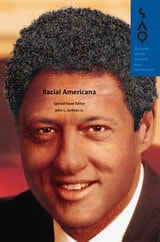
Racial Americana, Volume 104
John L. Jackson, Jr., ed.
Duke University Press, 0
Imagining America’s racialist future, the diverse contributors to this special issue—anthropologists, sociologists, historians, poets, and literary critics—offer their conceptualizations of race today, discuss how racial ideology has changed through the years, and explain its continuing ability to morph according to geopolitical, cultural, and economic strictures. Essays focus on how notions of race have helped constitute varied definitions of Americanness in the past and the present; offer critiques and recuperations of antiessentialist efforts; excavate the affective links between racism and patriotism after September 11; examine how race and gender intersect in the lives of African American jazz musicians; and determine what Du Bois's earlier arguments say about contemporary representations of “Latinidad.”
Contributors. Elizabeth Alexander, Amiri Baraka, Tess Chakkalakal, Theodore A. Harris, John Hartigan Jr., Sharon P. Holland, John L. Jackson Jr., Marcyliena Morgan, Vijay Prashad, Don Robotham, Nichole T. Rustin, Brackette F. Williams

Racial Castration
Managing Masculinity in Asian AmericaDavid L. Eng
Duke University Press, 2001
Eng juxtaposes theortical discussions of Freud, Lacan, and Fanon with critical readings of works by Frank Chin, Maxine Hong Kingston, Lonny Kaneko, David Henry Hwang, Louie Chu, David Wong Louie, Ang Lee, and R. Zamora Linmark. While situating these literary and cultural productions in relation to both psychoanalytic theory and historical events of particular significance for Asian Americans, Eng presents a sustained analysis of dreamwork and photography, the mirror stage and the primal scene, and fetishism and hysteria. In the process, he offers startlingly new interpretations of Asian American masculinity in its connections to immigration exclusion, the building of the transcontinental railroad, the wartime internment of Japanese Americans, multiculturalism, and the model minority myth. After demonstrating the many ways in which Asian American males are haunted and constrained by enduring domestic norms of sexuality and race, Eng analyzes the relationship between Asian American male subjectivity and the larger transnational Asian diaspora. Challenging more conventional understandings of diaspora as organized by race, he instead reconceptualizes it in terms of sexuality and queerness.
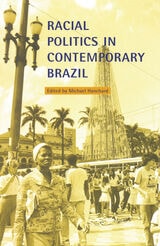
Racial Politics in Contemporary Brazil
Michael Hanchard, ed.
Duke University Press, 1999
The contributors to Racial Politics in Contemporary Brazil examine such topics as the legacy of slavery and its abolition, the historical impact of social movements, race-related violence, and the role of Afro-Brazilian activists in negotiating the cultural politics surrounding the issue of Brazilian national identity. These essays also provide comparisons of racial discrimination in the United States and Brazil, as well as an analysis of residential segregation in urban centers and its affect on the mobilization of blacks and browns. With a focus on racialized constructions of class and gender and
sexuality, Racial Politics in Contemporary Brazil reorients the direction of Brazilian studies, providing new insights into Brazilian culture, politics, and race relations.
This volume will be of importance to a wide cross section of scholars engaged with Brazil in particular, and Latin American studies in general. It will also appeal to those invested in the larger issues of political and social movements centered on the issue of race.
Contributors. Benedita da Silva, Nelson do Valle Silva, Ivanir dos Santos, Richard Graham, Michael Hanchard, Carlos Hasenbalg, Peggy A. Lovell, Michael Mitchell, Tereza Santos, Edward Telles, Howard Winant
Racial Resentment in the Political Mind
Darren W. Davis and David C. Wilson
University of Chicago Press, 2022
In Racial Resentment in the Political Mind, Darren W. Davis and David C. Wilson challenge the commonly held notion that all racial negativity, disagreements, and objections to policies that seek to help racial minorities stem from racial prejudice. They argue that racial resentment arises from just-world beliefs and appraisals of deservingness that help explain the persistence of racial inequality in America in ways more consequential than racism or racial prejudice alone.
The culprits, as many White people see it, are undeserving people of color, who are perceived to benefit unfairly from, and take advantage of, resources that come at Whites’ expense—a worldview in which any attempt at modest change is seen as a challenge to the status quo and privilege. Yet, as Davis and Wilson reveal, many Whites have become racially resentful due to their perceptions that African Americans skirt the “rules of the game” and violate traditional values by taking advantage of unearned resources. Resulting attempts at racial progress lead Whites to respond in ways that retain their social advantage—opposing ameliorative policies, minority candidates, and other advancement on racial progress. Because racial resentment is rooted in beliefs about justice, fairness, and deservingness, ordinary citizens, who may not harbor racist motivations, may wind up in the same political position as racists, but for different reasons.
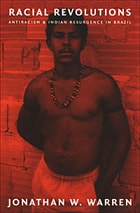
Racial Revolutions
Antiracism and Indian Resurgence in BrazilJonathan W. Warren
Duke University Press, 2001
The growing number of pardos who claim Indian identity represents a radical shift in the direction of Brazilian racial formation. For centuries, the predominant trend had been for Indians to shed tribal identities in favor of non-Indian ones. Warren argues that many factors—including the reduction of state-sponsored anti-Indian violence, intervention from the Catholic church, and shifts in anthropological thinking about ethnicity—have prompted a reversal of racial aspirations and reimaginings of Indianness. Challenging the current emphasis on blackness in Brazilian antiracist scholarship and activism, Warren demonstrates that Indians in Brazil recognize and oppose racism far more than any other ethnic group.
Racial Revolutions fills a number of voids in Latin American scholarship on the politics of race, cultural geography, ethnography, social movements, nation building, and state violence.
Designated a John Hope Franklin Center book by the John Hope Franklin Seminar Group on Race, Religion, and Globalization.

Raising the Dead
Readings of Death and (Black) SubjectivitySharon Patricia Holland
Duke University Press, 2000
Holland argues that the presence of blacks, Native Americans, women, queers, and other “minorities” in society is, like death, “almost unspeakable.” She gives voice to—or raises—the dead through her examination of works such as the movie Menace II Society, Toni Morrison’s novel Beloved, Leslie Marmon Silko’s Almanac of the Dead, Randall Kenan’s A Visitation of Spirits, and the work of the all-white, male, feminist hip-hop band Consolidated. In challenging established methods of literary investigation by putting often-disparate voices in dialogue with each other, Holland forges connections among African-American literature and culture, queer and feminist theory.
Raising the Dead will be of interest to students and scholars of American culture, African-American literature, literary theory, gender studies, queer theory, and cultural studies.

Recasting Commodity and Spectacle in the Indigenous Americas
Edited by Helen Gilbert and Charlotte Gleghorn
University of London Press, 2014

Reconstructing Dixie
Race, Gender, and Nostalgia in the Imagined SouthTara McPherson
Duke University Press, 2003
Illuminating crucial connections between understandings of race, gender, and place on the one hand and narrative and images on the other, McPherson reads a number of representations of the South produced from the 1930s to the present. These are drawn from fiction, film, television, southern studies scholarship, popular journalism, music, tourist sites, the internet, and autobiography. She examines modes of affect or ways of "feeling southern" to reveal how these feelings, along with the narratives and images she discusses, sanction particular racial logics. A wide-ranging cultural studies critique, Reconstructing Dixie calls for vibrant new ways of thinking about the South and for a revamped and reinvigorated southern studies.
Reconstructing Dixie will appeal to scholars in American, southern, and cultural studies, and to those in African American, media, and women’s studies.

Red, White, Black, and Blue
A Dual Memoir of Race and Class in AppalachiaWilliam M. Drennen Jr., Kojo (William T.) Jones Jr.
Ohio University Press, 2004
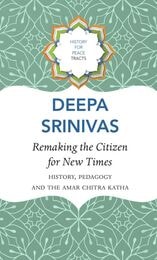
Remaking the Citizen for New Times
History, Pedagogy and the Amar Chitra KathaDeepa Sreenivas
Seagull Books, 2024
How does orthodoxy maintain its power over culture? In Remaking the Citizen for New Times, Deepa Sreenivas explores how the Amar Chitra Katha, a widely read comic series started in 1967 in India, influenced the historical and national consciousness of young readers in a conservative direction. Tacitly blaming Nehruvian welfarism of the time for the moral decline of the nation, the Amar Chitra Katha emerged as a literary articulation of the Indian right’s Hindu-nationalist ideology in a modern, bourgeois guise. To renew Hindutva hegemony, the comic series gave orthodox ideas a new sheen, both in its form and content, merging Western comic styles with Indian visual storytelling traditions on the one hand, and combining mythological characters with political figureheads into harmonious narratives on the other—making it difficult to sift history from myths and legends. Sreenivas deftly argues that these mythological-political tales emphasized the instructive rather than the informative potential of history, encouraging neoliberal values such as merit and hard work while ignoring caste or class as systemic issues.
Rewriting Exodus
American Futures from Du Bois to ObamaAnna Hartnell
Pluto Press, 2011
Exodus, as a powerful narrative of liberation, has been a central imaginative touchstone in the black American struggle against US racism. This book traces the concept in a number of pivotal black thinkers, and explores its signficance for contemporary America.
The exodus story is a fitting allegory for the painful experience of exile that disproportionately afflicted African Americans in the aftermath of Hurricane Katrina, and it also provides compelling imagery for the triumphant election of Barack Obama in 2008. Building around these themes, Anna Hartnell traces the intellectual development of one of the defining narratives of black American thinking on social justice in the United States.
In placing black America at the centre of the study of US culture, Rewriting Exodus suggests new ways of thinking about America's relationship with the Middle East and the wider postcolonial world. Hartnell's groundbreaking contribution marks a vital new chapter in American cultural and political history.
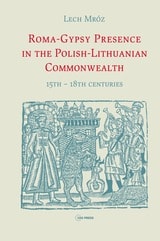
Roma-Gypsy Presence in the Polish-Lithuanian Commonwealth
15th – 18th centuriesLech Mróz
Central European University Press, 2017
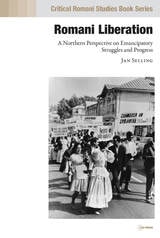
Romani Liberation
A Northern Perspective on Emancipatory Struggles and ProgressJan Selling
Central European University Press, 2022
Centered on the trajectory of the emancipation of Roma people in Scandinavia, Romani Liberation is a powerful challenge to the stereotype describing Romani as passive and incapable of responsibility and agency. The author also criticizes benevolent but paternalistic attitudes that center on Romani victimhood.
The first part of the book offers a comprehensive overview of the chronological phases of Romani emancipation in Sweden and other countries. Underscoring the significance of Roma activism in this process, Jan Selling profiles sixty Romani activists and protagonists, including numerous original photos. The narrative is followed by an analysis of the concepts of historical justice and of the process of decolonizing Romani Studies. Selling highlights the impact of the historical contexts that have enabled or impeded the success of the struggles against discrimination and for equal rights, emphasizing Romani activism as a precondition for liberation.
The particular Swedish framework is accentuated by a stimulating preface by the international activist Nicoleta Bitu, and afterwords by two prominent Romani advocates, the politician Soraya Post and the singer, author, and elder Hans Caldaras.