Results by title
1947 books match the query 'Music' and 85 start with r
RESPECT
The Poetry of Detroit MusicJim Daniels
Michigan State University Press, 2019
Race, Rock, and Elvis
Michael T. Bertrand
University of Illinois Press, 2000
Did Elvis Presley's brand of rock 'n' roll help revise racial attitudes in postwar America? Michael T. Bertrand delves into this question and many others to investigate popular music's revolutionary influence on black-white relations in the South.
Youthful fans of rhythm and blues, rock 'n' roll, and other black-inspired music often broke from their segregationist elders and ignored the color line. Not coincidentally, these same young white people--the southern branch of a national and commercialized youth culture--led a general relaxation of racist attitudes. Bertrand argues that African American music facilitated a new recognition of black people as fellow human beings. African American audiences welcomed Elvis with enthusiasm while racially mixed audiences flocked to music venues at a time when adults expected separate performances for black and white audiences. Bertrand also describes the critical role of radio and recordings in making African American culture available to white fans on an unprecedented scale. Over time, southern working-class youth used the new music to define and express new values and build their own identities.
Rachmaninoff and His World
Edited by Philip Ross Bullock
University of Chicago Press, 2022
One of the most popular classical composers of all time, Sergei Rachmaninoff (1873–1943) has often been dismissed by critics as a conservative, nostalgic holdover of the nineteenth century and a composer fundamentally hostile to musical modernism. The original essays collected here show how he was more responsive to aspects of contemporary musical life than is often thought, and how his deeply felt sense of Russianness coexisted with an appreciation of American and European culture. In particular, the essays document his involvement with intellectual and artistic circles in prerevolutionary Moscow and how the form of modernity they promoted shaped his early output. This volume represents one of the first serious explorations of Rachmaninoff’s successful career as a composer, pianist, and conductor, first in late Imperial Russia, and then after emigration in both the United States and interwar Europe. Shedding light on some unfamiliar works, especially his three operas and his many songs, the book also includes a substantial number of new documents illustrating Rachmaninoff’s celebrity status in America.
Radiation Sounds
Marshallese Music and Nuclear SilencesJessica A. Schwartz
Duke University Press, 2021
Radio Free Boston
The Rise and Fall of WBCNCarter Alan
University Press of New England, 2013
Rainbow Quest
The Folk Music Revival and American Society, 1940-1970Ronald D. Cohen
University of Massachusetts Press, 2002
For a brief period from the late 1950s to the mid-1960s, folk music captured a mass audience in the United States, as college students and others swarmed to concerts by the likes of Peter, Paul & Mary, Joan Baez, and Bob Dylan. In this comprehensive study, Ronald D. Cohen reconstructs the history of this singular cultural moment, tracing its origins to the early decades of the twentieth century. Drawing on scores of interviews and numerous manuscript collections, as well as his own extensive files, Cohen shows how a broad range of traditions—from hillbilly, gospel, blues, and sea shanties to cowboy, ethnic, and political protest music—all contributed to the genre known as folk. He documents the crucial work of John Lomax and other collectors who, with the assistance of recording companies, preserved and distributed folk music in the 1920s.
During the 1930s and 1940s, the emergence of left-wing politics and the rise of the commercial music marketplace helped to stimulate wider interest in folk music. Stars emerged, such as Woody Guthrie, Leadbelly, Pete Seeger, Burl Ives, and Josh White. With the success of the Weavers and the Kingston Trio in the 1950s, the stage was set for the full-blown “folk revival” of the early 1960s. Centered in New York's Greenwich Village and sustained by a flourishing record industry, the revival spread to college campuses and communities across the country. It included a wide array of performers and a supporting cast of journalists, club owners, record company executives, political activists, managers, and organizers. By 1965 the boom had passed its peak, as rock and roll came to dominate the marketplace, but the folk revival left an enduring musical legacy in American culture.

Rainer Maria Rilke
Das Marien-LebenRainer Maria Rilke, translated by Christopher Anderson
Bridwell Press, 2025
Raising the Bottom
Bounce Music and Black Queer Performance in Post-Katrina New OrleansAlix Chapman
Duke University Press, 2026

Ramblin' Rose
The Life and Career of Rose MaddoxJonny Whiteside
Vanderbilt University Press, 1997
A groundbreaking study of one of the pioneering women of country music, whose biography sheds new light on both the role of women in postwar America and the growth of the music business in California.
It's a Depression-era saga right out of Steinbeck. The strongwilled matriarch of a rural Alabama family uproots her husband and six children and drives them westward on foot and by boxcar, through sheer willpower, on a journey of two thousand miles to California where a new life begins. Four years later, at age eleven, youngest daughter Rose Maddox steps to the microphone for the first time to sing on radio with the family band. Within a week, the Maddox Brothers & Rose receive a thousand letters, launching the group on a country music career that ultimately ranges from the rodeo shows of the West to the bright lights of Nashville's Grand Ole Opry.
In this meticulously researched biography, veteran music journalist Jonny Whiteside recounts the colorful story of this pioneering woman who literally grew up in the male-dominated enclaves of country music and struggled to make a place for herself there. In Rose Maddox, Whiteside has found an exceptional protagonist for his story: a fiery, strongwilled entertainer whose music has had an influence far beyond her handful of hits on the record charts, and who in many ways, Whiteside convincingly argues, prefigured the coming of rock and roll. In the process, Whiteside introduces us to a host of memorable characters--stars like Hank Williams and Roy Acuff; behind-the-scenes movers and shakers like record men Cliffie Stone and Bill McCall; and, at the heart of the story, the irrepressible Maddox family themselves, whose freewheeling music so faithfully reflected the hurlyburly world of California's displaced migrant workers.
Ramblin' Rose is a long-overdue work of research and synthesis that documents not only the life of an unsung musical trailblazer but also the vibrant, roughhewn West Coast country music scene that once rivaled Nashville and left an indelible imprint on the popular music of today.
Co-published with the Country Music Foundation Press
Ramblin' on My Mind
New Perspectives on the BluesEdited by David Evans
University of Illinois Press, 2007
This compilation of essays takes the study of the blues to a welcome new level. Distinguished scholars and well-established writers from such diverse backgrounds as musicology, anthropology, musicianship, and folklore join together to examine blues as literature, music, personal expression, and cultural product. Ramblin' on My Mind contains pieces on Ella Fitzgerald, Son House, and Robert Johnson; on the styles of vaudeville, solo guitar, and zydeco; on a comparison of blues and African music; on blues nicknames; and on lyric themes of disillusionment.
Contributors are Lynn Abbott, James Bennighof, Katharine Cartwright, Andrew M. Cohen, David Evans, Bob Groom, Elliott Hurwitt, Gerhard Kubik, John Minton, Luigi Monge, and Doug Seroff.
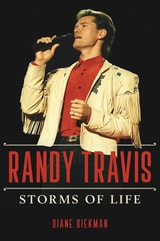
Randy Travis
Storms of LifeDiane Diekman
University of Illinois Press, 2025
Randy Travis’s 1986 breakthrough put him at the forefront of Nashville’s new traditionalist sound and, in the words of Garth Brooks, saved country music. The singer’s warm baritone and all-time classic songs like “Forever and Ever, Amen” landed him atop the charts sixteen times. His cross-genre appeal brought a level of multiplatinum success that no country artist before him had ever achieved.
Diane Diekman’s biography follows the life and career of one of country music’s most beloved figures. Steered from a troubled path as a teen, Travis served a long apprenticeship under manager and future wife Lib Hatcher before being rejected by the Nashville music industry as “too country.” The single “On the Other Hand” and his smash debut album did away with the doubters and began a dominant four-year run that stretched into ongoing success as a recording artist, trailblazing live performer, and actor in film and television. Diekman uses dozens of interviews and in-depth research to fill in the details of Travis’s pre-fame life and his enormous impact on country, popular, and gospel music. From there, she pivots to telling the story of the singer’s difficult divorce from Hatcher, subsequent problems with alcohol and run-ins with the law, and the challenges he overcame in the aftermath of a devastating 2013 stroke.
Informed by a wealth of new research and interviews, Randy Travis is the first in-depth biography of the country music legend.
Rap Music and Street Consciousness
Cheryl L. Keyes
University of Illinois Press, 2002
In this first musicological history of rap music, Cheryl L. Keyes traces the genre's history from its roots in West African bardic traditions, the Jamaican dancehall tradition, and African American vernacular expressions to its permeation of the cultural mainstream as a major tenet of hip-hop lifestyle and culture.
Rap music, according to Keyes, addresses the political and economic disfranchisement of black youths and other groups, fosters ethnic pride, and displays culture values and aesthetics. Blending popular culture with folklore and ethnomusicology, Keyes offers a nuanced portrait of the artists, themes, and varying styles reflective of urban life and street consciousness. Her analysis draws on music, lives, politics, and interests of figures ranging from Afrika Bambaataa, the "godfather of hip-hop," to early artists like Grandmaster Flash, to crossover pioneers like LL Cool J, De La Soul, and Public Enemy, to megastars like Tupac Shakur and The Notorious B.I.G. At the same time, Keyes delves into the impact of the rapper-turned mogul phenomenon, the rise of Death Row Records, and the East Coast-West Coast tensions of the Nineties.
Rape at the Opera
Staging Sexual ViolenceMargaret Cormier
University of Michigan Press, 2024
Drawing on archival footage as well as attendance at live events, Cormier analyzes productions of canonic operas from German, Italian, and French traditions from the eighteenth to the early twentieth century, including Die Entführung aus dem Serail, Don Giovanni, La forza del destino, Un ballo in maschera, Salome, and Turandot. In doing so, Cormier highlights the dynamism of twenty-first-century opera performance practice with regard to sexual violence, establishes methods to evaluate representations of sexual violence on the opera stage, and reframes the primary responsibility of opera critics and creators as being not to opera composers and librettists but to the public.
Rave On
Global Adventures in Electronic Dance MusicMatthew Collin
University of Chicago Press, 2018
Electronic dance music has been a vital force for more than three decades now, and has undergone transformation upon transformation as it has taken over the world. In this searching, lyrical account of dance music culture worldwide, Matthew Collin takes stock of its highest highs and lowest lows across its global trajectory. Through firsthand reportage and interviews with clubbers and DJs, Collin documents the itinerant musical form from its underground beginnings in New York, Chicago, and Detroit in the 1980s, to its explosions in Ibiza and Berlin, to today’s mainstream music scenes in new frontiers like Las Vegas, Shanghai, and Dubai. Collin shows how its dizzying array of genres—from house, techno, and garage to drum and bass, dubstep, and psytrance—have given voice to locally specific struggles. For so many people in so many different places, electronic dance music has been caught up in the search for free cultural space: forming the soundtrack to liberation for South African youth after Apartheid; inspiring a psychedelic party culture in Israel; offering fleeting escape from—and at times into—corporatization in China; and even undergirding a veritable “independent republic” in a politically contested slice of the former Soviet Union.
Full of admiration for the possibilities the music has opened up all over the world, Collin also unflinchingly probes where this utopianism has fallen short, whether the culture maintains its liberating possibilities today, and where it might go in the future.
Re-Envisioning Past Musical Cultures
Ethnomusicology in the Study of Gregorian ChantPeter Jeffery
University of Chicago Press, 1992
Peter Jeffery offers an innovative new approach for understanding how these melodies were created, memorized, performed, and modified. Drawing on a variety of disciplines, including anthropology and ethnomusicology, he identifies characteristics of Gregorian chant that closely resemble other oral traditions in non-Western cultures and demonstrates ways music historians can take into account the social, cultural, and anthropological contexts of chant's development.

Reading Country Music
Steel Guitars, Opry Stars, and Honky Tonk BarsCecelia Tichi, ed.
Duke University Press, 1998
Bringing together a wide range of scholars and critics from literature, communications, history, sociology, art, and music, this anthology looks at everything from the inner workings of the country music industry to the iconography of certain stars to the development of distinctive styles within the country music genre. Essays include a look at the shift from "hard-core" to "soft-shell" country music in recent years; Johnny Cash as lesbian icon; gender, class, and region in Dolly Parton’s star image; and bluegrass’s gothic tradition. Originally published as a special issue of South Atlantic Quarterly, this expanded book edition includes new articles on the spirituality of Willie Nelson, the legacy and tradition of stringed music, and the revival of Stephen Foster’s blackface musical, among others.
Contributors. Mary A. Bufwack, Don Cusic, Curtis W. Ellison, Mark Fenster, Vivien Green Fryd, Teresa Goddu, T. Walter Herbert, Christine Kreyling, Michael Kurek, Amy Schrager Lang, Charmaine Lanham, Bill Malone, Christopher Metress, Jocelyn Neal, Teresa Ortega, Richard A. Peterson, Ronnie Pugh, John W. Rumble, David Sanjek, Cecelia Tichi, Pamela Wilson, Charles K. Wolfe
Real Country
Music and Language in Working-Class CultureAaron A. Fox
Duke University Press, 2004
Fox spent hundreds of hours observing, recording, and participating in talk and music-making in homes, beer joints, and garage jam sessions. He renders the everyday life of Lockhart’s working-class community in detail, right down to the ice cold beer, the battered guitars, and the technical skills of such local musical legends as Randy Meyer and Larry “Hoppy” Hopkins. Throughout, Fox focuses on the human voice. His analyses of conversations, interviews, songs, and vocal techniques show how feeling and experience are expressed, and how local understandings of place, memory, musical aesthetics, working-class social history, race, and gender are shared. In Real Country, working-class Texans re-imagine their past and give voice to the struggles and satisfactions of their lives in the present through music.
Real Love, No Drama
The Music of Mary J. BligeBy Danny Alexander
University of Texas Press, 2016
Mary J. Blige is an icon who represents the political consciousness of hip hop and the historical promise of soul. She is an everywoman, celebrated by Oprah Winfrey and beloved by pop music fans of all ages and races. Blige has sold over fifty million albums, won numerous Grammys, and even played at multiple White House events, as well as the 2013 Nobel Peace Prize ceremony. Displaying astonishing range and versatility, she has recorded everything from Broadway standards to Led Zeppelin anthems and worked with some of popular music’s greatest artists—Aretha Franklin, Eric Clapton, Elton John, Whitney Houston, Sting, U2, and Beyoncé, among them.
Real Love, No Drama: The Music of Mary J. Blige tells the story of one of the most important artists in pop music history. Danny Alexander follows the whole arc of Blige’s career, from her first album, which heralded the birth of “hip hop soul,” to her critically praised 2014 album, The London Sessions. He highlights the fact that Blige was part of the historically unprecedented movement of black women onto pop radio and explores how she and other women took control of their careers and used their music to give voice to women’s (and men’s) everyday struggles and dreams. This book adds immensely to the story of both black women artists and artists rooted in hip hop and pays tribute to a musician who, by expanding her reach and asking tough questions about how music can and should evolve, has proven herself an artistic visionary.
Real Men Don't Sing
Crooning in American CultureAllison McCracken
Duke University Press, 2015
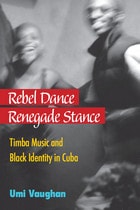
Rebel Dance, Renegade Stance
Timba Music and Black Identity in CubaUmi Vaughan
University of Michigan Press, 2013
Rebel Dance, Renegade Stanceshows how community music-makers and dancers take in all that is around them socially and globally, and publicly and bodily unfold their memories, sentiments, and raw responses within open spaces designated or commandeered for local popular dance. Umi Vaughan, an African American anthropologist, musician, dancer, and photographer "plantao" in Cuba—planted, living like a Cuban—reveals a rarely discussed perspective on contemporary Cuban society during the 1990s, the peak decade of timba, and beyond, as the Cuban leadership transferred from Fidel Castro to his brother. Simultaneously, the book reveals popular dance music in the context of a young and astutely educated Cuban generation of fierce and creative performers.
By looking at the experiences of black Cubans and exploring the notion of "Afro Cuba," Rebel Dance, Renegade Stanceexplains timba's evolution and achieved significance in the larger context of Cuban culture. Vaughan discusses a maroon aesthetic extended beyond the colonial era to the context of contemporary society; describes the dance spaces of Cuba; and examines the performance of identity and desire through the character of the "especulador." This book will find an audience with musicians, anthropologists, ethnomusicologists, interdisciplinary specialists in performance studies, cultural studies, and Latin American and Caribbean studies, as well as laypeople who are interested in Atlantic/African and African American/Africana studies and/or Cuban culture.
Recasting Folk in the Himalayas
Indian Music, Media, and Social MobilityStefan Fiol
University of Illinois Press, 2017
Record Cultures
The Transformation of the U.S. Recording IndustryKyle Barnett
University of Michigan Press, 2020
Through an interdisciplinary and intermedial approach to recording industry history, Record Cultures creates new connections between different strands of media research. It will be of interest to scholars of popular music, media studies, sound studies, American culture, and the history of film, television, and radio.
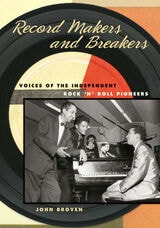
Record Makers and Breakers
Voices of the Independent Rock 'n' Roll PioneersJohn Broven
University of Illinois Press, 2009
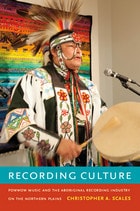
Recording Culture
Powwow Music and the Aboriginal Recording Industry on the Northern PlainsChristopher A. Scales
Duke University Press, 2012
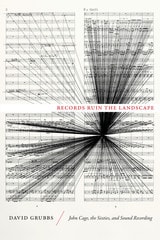
Records Ruin the Landscape
John Cage, the Sixties, and Sound RecordingDavid Grubbs
Duke University Press, 2014
In their day, few of these works circulated in recorded form. By contrast, contemporary listeners can encounter this music not only through a flood of LP and CD releases of archival recordings but also in even greater volume through Internet file sharing and online resources. Present-day listeners are coming to know that era's experimental music through the recorded artifacts of composers and musicians who largely disavowed recordings. In Records Ruin the Landscape, Grubbs surveys a musical landscape marked by altered listening practices.

Red Dust and Broadsides
A Joint AutobiographyRonald D. Cohen
University of Massachusetts Press, 1999
Perhaps best known for Broadside, the influential magazine they founded in 1962, Agnes “Sis” Cunningham and Gordon Friesen have long been renowned figures on the American left. In this book, these two dedicated social activists—Sis the folk musician and Gordon the radical journalist—offer a spirited account of their personal and political odyssey. The story is illustrated with numerous photographs and drawings.
Born into poverty in rural Oklahoma, further shaped by the hardships of the “dustbowl” Depression years, Sis and Gordon were already committed to radical causes when they met and married in 1941. A short time later they moved to New York City, where they befriended Pete Seeger and Woody Guthrie. Sis joined the folk protest group the Almanac Singers, and Gordon continued his work as a journalist. Although blacklisted for their political views during the McCarthy era, Sis and Gordon persevered and eventually launched Broadside, which they continued to produce for almost twenty years. The magazine was instrumental in promoting the careers of many singer-songwriters, publishing the first works of such artists as Bob Dylan, Janis Ian, Phil Ochs, Buffy Sainte-Marie, and Tom Paxton, as well as the works of more established figures, including Malvina Reynolds and Pete Seeger. Indeed, Broadside gave birth to a musical revival that energized the country and forged a vital link between the folk music of the 1930s and 1940s and the urban folk revivalists of the 1960s and 1970s.

Red River Blues
The Blues Tradition in the SoutheastBruce Bastin
University of Illinois Press, 1986
A Classic of Blues Literature inductee into the Blues Foundation's Blues Hall of Fame
Drawing on archives and interviews with musicians, Red River Blues remains an acclaimed work of blues scholarship. Bruce Bastin traces the origins of the music to the turn of the twentieth century, when African Americans rejected slave songs, worksongs, and minstrel music in favor of a potent new vehicle for secular musical expression. Bastin looks at the blues' early emerging popularity and its spread via the Great Migration, delves into a wealth of field recordings, and looks at the careers of Brownie McGhee, Blind Boy Fuller, Curly Weaver, Sonny Terry, and many other foundational artists.
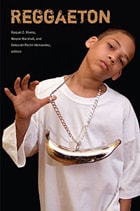
Reggaeton
Raquel Z. Rivera, Wayne Marshall, and Deborah Pacini Hernandez, eds.
Duke University Press, 2009
The collection opens with an in-depth exploration of the social and sonic currents that coalesced into reggaeton in Puerto Rico during the 1990s. Contributors consider reggaeton in relation to that island, Panama, Jamaica, and New York; Cuban society, Miami’s hip-hop scene, and Dominican identity; and other genres including reggae en español, underground, and dancehall reggae. The reggaeton artist Tego Calderón provides a powerful indictment of racism in Latin America, while the hip-hop artist Welmo Romero Joseph discusses the development of reggaeton in Puerto Rico and his refusal to embrace the upstart genre. The collection features interviews with the DJ/rapper El General and the reggae performer Renato, as well as a translation of “Chamaco’s Corner,” the poem that served as the introduction to Daddy Yankee’s debut album. Among the volume’s striking images are photographs from Miguel Luciano’s series Pure Plantainum, a meditation on identity politics in the bling-bling era, and photos taken by the reggaeton videographer Kacho López during the making of the documentary Bling’d: Blood, Diamonds, and Hip-Hop.
Contributors. Geoff Baker, Tego Calderón, Carolina Caycedo, Jose Davila, Jan Fairley, Juan Flores, Gallego (José Raúl González), Félix Jiménez, Kacho López, Miguel Luciano, Wayne Marshall, Frances Negrón-Muntaner, Alfredo Nieves Moreno, Ifeoma C. K. Nwankwo, Deborah Pacini Hernandez, Raquel Z. Rivera, Welmo Romero Joseph, Christoph Twickel, Alexandra T. Vazquez
Reichsrock
The International Web of White-Power and Neo-Nazi Hate MusicDyck, Kirsten
Rutgers University Press, 2016
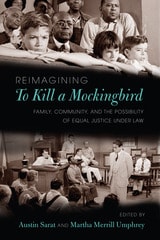
Reimagining "To Kill a Mockingbird"
Family, Community, and the Possibility of Equal Justice under LawAustin Sarat
University of Massachusetts Press, 2013
The readings in this volume peel back the film's visual representation of the many-layered social world of Maycomb, Alabama, offering sometimes counterintuitive insights through the prism of a number of provocative contemporary theoretical and interpretive questions. What, they ask, is the relationship between the subversion of social norms and the doing of justice or injustice? Through what narrative and visual devices are some social hierarchies destabilized while others remain hegemonic? How should we understand the sacrifices characters make in the name of justice, and comprehend their failures in achieving it?
Asking such questions casts light on the film's eccentricities and internal contradictions and suggests the possibility of new interpretations of a culturally iconic text. The book examines the context that gave meaning to the film's representation of race and how debates about family, community, and race are played out and reframed in law.
Contributors include Colin Dayan, Thomas L. Dumm, Susan Sage Heinzelman, Linda Ross Meyer, Naomi Mezey, Imani Perry, and Ravit Reichman.
Remains of Ritual
Northern Gods in a Southern LandSteven M. Friedson
University of Chicago Press, 2009
Remains of Ritual, Steven M. Friedson’s second book on musical experience in African ritual, focuses on the Brekete/Gorovodu religion of the Ewe people. Friedson presents a multifaceted understanding of religious practice through a historical and ethnographic study of one of the dominant ritual sites on the southern coast of Ghana: a medicine shrine whose origins lie in the northern region of the country. Each chapter of this fascinating book considers a different aspect of ritual life, demonstrating throughout that none of them can be conceived of separately from their musicality—in the Brekete world, music functions as ritual and ritual as music. Dance and possession, chanted calls to prayer, animal sacrifice, the sounds and movements of wake keeping, the play of the drums all come under Friedson’s careful scrutiny, as does his own position and experience within this ritual-dominated society.
Remapping Sound Studies
Gavin Steingo and Jim Sykes, editors
Duke University Press, 2019
Contributors
Tripta Chandola, Michele Friedner, Louise Meintjes, Jairo Moreno, Ana María Ochoa Gautier, Michael Birenbaum Quintero, Jeff Roy, Jessica Schwartz, Shayna Silverstein, Gavin Steingo, Jim Sykes, Benjamin Tausig, Hervé Tchumkam
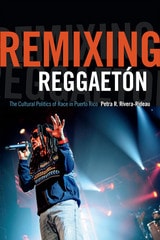
Remixing Reggaetón
The Cultural Politics of Race in Puerto RicoPetra R. Rivera-Rideau
Duke University Press, 2015
Remixing Wong Kar-wai
Music, Bricolage, and the Aesthetics of OblivionGiorgio Biancorosso
Duke University Press, 2025
Remixology
Tracing the Dub DiasporaPaul Sullivan
Reaktion Books, 2014
Renegade Rhymes
Rap Music, Narrative, and Knowledge in TaiwanMeredith Schweig
University of Chicago Press, 2022
Like many states emerging from oppressive political rule, Taiwan saw a cultural explosion in the late 1980s, when nearly four decades of martial law under the Chinese Nationalist Party ended. As members of a multicultural, multilingual society with a complex history of migration and colonization, Taiwanese people entered this moment of political transformation eager to tell their stories and grapple with their identities. In Renegade Rhymes, ethnomusicologist Meredith Schweig shows how rap music has become a powerful tool in the post-authoritarian period for both exploring and producing new knowledge about the ethnic, cultural, and political history of Taiwan.
Schweig draws on extensive ethnographic fieldwork, taking readers to concert venues, music video sets, scenes of protest, and more to show how early MCs from marginalized ethnic groups infused rap with important aspects of their own local languages, music, and narrative traditions. Aiming their critiques at the educational system and a neoliberal economy, new generations of rappers have used the art form to nurture associational bonds and rehearse rituals of democratic citizenship, making a new kind of sense out of their complicated present.
Replaying Marc Anthony
Sonic, Political, and Cultural ResonancesFrances R. Aparicio
The Ohio State University Press, 2025
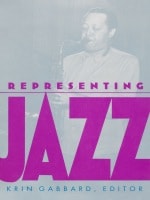
Representing Jazz
Krin Gabbard
Duke University Press, 1995
Krin Gabbard has gathered essays by distinguished writers from a variety of fields. They provide engaging analyses of films such as Round Midnight, Bird, Mo’ Better Blues, Cabin in the Sky, and Jammin’ the Blues; the writings of Eudora Welty and Dorothy Baker; the careers of the great lindy hoppers of the 1930s and 1940s; Mura Dehn’s extraordinary documentary on jazz dance; the jazz photography of William Claxton; painters of the New York School; the traditions of jazz autobiography; and the art of "vocalese." The contributors to this volume assess the influence of extramusical sources on our knowledge of jazz and suggest that the living contexts of the music must be considered if a more sophisticated jazz scholarship is ever to evolve. Transcending the familiar patterns of jazz history and criticism, Representing Jazz looks at how the music actually has been heard and felt at different levels of American culture.
With its companion anthology, Jazz Among the Discourses, this volume will enrich and transform the literature of jazz studies. Its provocative essays will interest both aficionados and potential jazz fans.
Contributors. Karen Backstein, Leland H. Chambers, Robert P. Crease, Krin Gabbard, Frederick Garber, Barry K. Grant, Mona Hadler, Christopher Harlos, Michael Jarrett, Adam Knee, Arthur Knight, James Naremore

Resilience & Melancholy
Pop Music, Feminism, NeoliberalismRobin James
University of Michigan Press, 2027
Following the first edition’s breakthrough study of popular feminism in 2010s popular music, this new edition of Resilience & Melancholy expands its original analysis into the 2020s. Robin James reads pop music from artists like Taylor Swift, Charli XCX, Rihanna, Beyonce, and Lady Gaga against the work of philosophers, feminists, and media theorists like Michel Foucault, Patricia Hill Collins, and Steven Shaviro. The result is an accessible dive into the last two decades of pop music and its politics.
Throughout the book, James shows how pop music and the politics of gender and race intersect in their discourse of resilience. While the book argues that resilience is a postfeminist strategy that invites female artists to lean into patriarchal, racial, capitalist privilege, it also finds that artists such as Beyonce, Rihanna, and Atari Teenage Riot offer a melancholic alternative to resilience in their work. As music has continued to evolve, this melancholic opposition has evolved and responded to the co-optation of melancholy into chill, the asset-ification of music, the de-monetization of musical labor, and the rise of a reactionary masculine resilience.
Rethinking American Music
Edited by Tara Browner and Thomas L. Riis
University of Illinois Press, 2019
Retuning Culture
Musical Changes in Central and Eastern EuropeMark Slobin
Duke University Press, 1996
During the period of state socialism, both the reinterpretation of the folk music heritage and the domestication of Western forms of music offered ways to resist and redefine imposed identities. With the removal of state control and support, music was free to channel and to shape emerging forms of cultural identity. Stressing both continuity and disjuncture in a period of enormous social and cultural change, this volume focuses on the importance and evolution of traditional and popular musics in peasant communities and urban environments in Hungary, Poland, Romania, Russia, the Czech Republic, Ukraine, the former Yugoslavia, Macedonia, and Bulgaria. Written by longtime specialists in the region and considering both religious and secular trends, these essays examine music as a means of expressing diverse aesthetics and ideologies, participating in the formation of national identities, and strengthening ethnic affiliation.
Retuning Culture provides a rich understanding of music’s role at a particular cultural and historical moment. Its broad range of perspectives will attract readers with interests in cultural studies, music, and Central and Eastern Europe.
Contributors. Michael Beckerman, Donna Buchanan, Anna Czekanowska, Judit Frigyesi, Barbara Rose Lange, Mirjana Lausevic, Theodore Levin, Margarita Mazo, Steluta Popa, Ljerka Vidic Rasmussen, Timothy Rice, Carol Silverman, Catherine Wanner
Revenge of the She-Punks
A Feminist Music History from Poly Styrene to Pussy RiotBy Vivien Goldman
University of Texas Press, 2019
As an industry insider and pioneering post-punk musician, Vivien Goldman’s perspective on music journalism is unusually well-rounded. In Revenge of the She-Punks, she probes four themes—identity, money, love, and protest—to explore what makes punk such a liberating art form for women.
With her visceral style, Goldman blends interviews, history, and her personal experience as one of Britain’s first female music writers in a book that reads like a vivid documentary of a genre defined by dismantling boundaries. A discussion of the Patti Smith song “Free Money,” for example, opens with Goldman on a shopping spree with Smith. Tamar-Kali, whose name pays homage to a Hindu goddess, describes the influence of her Gullah ancestors on her music, while the late Poly Styrene's daughter reflects on why her Somali-Scots-Irish mother wrote the 1978 punk anthem “Identity,” with the refrain “Identity is the crisis you can't see.” Other strands feature artists from farther afield (including in Colombia and Indonesia) and genre-busting revolutionaries such as Grace Jones, who wasn't exclusively punk but clearly influenced the movement while absorbing its liberating audacity. From punk's Euro origins to its international reach, this is an exhilarating world tour.
Rhymes in the Flow
How Rappers Flip the BeatMacklin Smith and Aurko Joshi
University of Michigan Press, 2020
Despite its global popularity, rap has received little scholarly attention in terms of its poetic features. Rhymes in the Flow systematically analyzes the poetics (rap beats, rhythms, rhymes, verse and song structures) of many notable rap songs to provide new insights on rap artistry and performance. Defining and describing the features of what rappers commonly call flow, the authors establish a theory of the rap line as they trace rap’s deepest roots and stylistic evolution—from Anglo-Saxon poetry to Lil Wayne—and contextualize its complex poetics. Rhymes in the Flow helps explain rap’s wide appeal by focusing primarily on its rhythmic and thematic power, while also claiming its historical, cultural, musical, and poetic importance.
Rhymin' and Stealin'
Musical Borrowing in Hip-HopJustin A. Williams
University of Michigan Press, 2014
Rhymin’ and Stealin’begins with a crucial premise: the fundamental element of hip-hop culture and aesthetics is the overt use of preexisting material to new ends. Whether it is taking an old dance move for a breakdancing battle, using spray paint to create street art, quoting from a famous speech, or sampling a rapper or 1970s funk song, hip-hop aesthetics involve borrowing from the past. By appropriating and reappropriating these elements, they become transformed into something new, something different, something hip-hop. Rhymin’ and Stealin’ is the first book-length study of musical borrowing in hip-hop music, which not only includes digital sampling but also demonstrates a wider web of references and quotations within the hip-hop world. Examples from Nas, Jay-Z, A Tribe Called Quest, Eminem, and many others show that the transformation of preexisting material is the fundamental element of hip-hop aesthetics. Although all music genres use and adapt preexisting material in different ways, hip-hop music celebrates and flaunts its “open source” culture through highly varied means. It is this interest in the web of references, borrowed material, and digitally sampled sounds that forms the basis of this book—sampling and other types of borrowing becomes a framework with which to analyze hip-hop music and wider cultural trends.
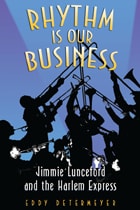
Rhythm Is Our Business
Jimmie Lunceford and the Harlem ExpressEddy Determeyer
University of Michigan Press, 2010
"The first detailed study of one of the swing era's most important bands and the first biography of its leader, Jimmie Lunceford. This is a most welcome and significant contribution to the literature of jazz, to our understanding of a vital period in jazz history, and to the music of an outstanding and unique ensemble that was emblematic of the swing era."
---Dan Morgenstern, Director, Institute of Jazz Studies, Rutgers University, and author of Living with Jazz
"We were more popular than Benny Goodman! We were the first black band that played the Paramount Theater, downtown New York. Not Duke Ellington, not Count Basie. Six weeks in a row, four or five shows daily, and it was packed every day, people lining up around the corner constantly! We could outdraw any band in the country."
---Gerald Wilson
"Jimmie Lunceford was a key swing-era figure, and no book covers his biography and music like this one does. Grounded in years of research and inspired by the writer's love of his subject, the book fills a critical gap in the jazz literature and will be essential reading for all swing aficionados."
---Jeffrey Magee, Associate Professor of Musicology, University of Illinois, Urbana-Champaign, and author of The Uncrowned King of Swing: Fletcher Henderson and Big Band Jazz
"It was Jimmie Lunceford and his orchestra that inspired me to become a musician. I was eleven years old at the time. When I heard that band play I said to myself, 'That's for me. I want to become a musician.' I still get inspired when I listen to some of their recordings. The Jimmie Lunceford Orchestra is one of the great jazz orchestras of all time."
---Horace Silver
"Jimmie Lunceford has the best of all bands. Duke is great, Basie is remarkable, but Lunceford tops them both."
---Glenn Miller
In the 1930s, swing music reigned, and the Jimmie Lunceford Orchestra was the hottest and hippest attraction on the black dance circuits. Known for its impeccable appearance and infectious rhythms, Lunceford's group was able to out-swing and outdraw any band. For ten consecutive years, they were the best-loved attraction at Harlem's famed Apollo Theater. The group's hit recordings sold in the hundreds of thousands, and Jimmie Lunceford's band rivaled Ellington's for popularity in the African American community.
Jimmie Lunceford was also an innovator, elevating big-band showmanship to an art and introducing such novel instruments as the electric guitar and bass. The band's arrangements, written by Sy Oliver, Edwin Wilcox, Gerald Wilson, Billy Moore, Jr., and Tadd Dameron, were daring and forward looking, influencing generations of big-band writers.
Rhythm Is Our Business traces the development of the Jimmie Lunceford Orchestra from its infant days as a high school band in Memphis to its record-breaking tours across the United States, Canada, and Europe. The book also unveils Lunceford's romantic yet ill-fated involvement with Yolande Du Bois, daughter of famous writer and opinion leader W.E.B. Du Bois. And by reconstructing Lunceford's last day, the book offers a glimpse into the mysteries surrounding the leader's untimely death. This is essential reading for anyone interested in the history and legacy of swing.
Eddy Determeyer has been a freelance music journalist for more than three decades. In 1984 Determeyer wrote a seven-part series on Jimmie Lunceford for the Dutch magazine Jazz Nu. Determeyer has written thousands of articles on music for a variety of Dutch publications and is the author of several books. He currently produces the Holiday for Hipsters radio show for Dutch station Concertzender.
Cover image: Lunceford brass section, ca. late 1936. Left to right: Paul Webster, Eddie Durham, Sy Oliver, Elmer Crumbley, Eddie Tompkins, Russell Bowles. (Bertil Lyttkens Collection)
Rhythm and Noise
An Aesthetics of RockTheodore Gracyk
Duke University Press, 1996
What’s in a name? “Rock” or “Rock ’n’ Roll?” Grayck argues that rock and roll is actually a performance style, one in a number of musical styles comprising rock. What distinguishes rock, Gracyk tells us, is how it is mediated by technology: The art is in the recording. The lesson is a heady one, entailing a tour through the history of rock music from Elvis Presley’s first recordings in 1954 to Kurt Cobain’s suicide in 1994. Gracyk takes us through key recordings, lets us hear what rock musicians and their critics have to say, shows us how other kinds of music compare, and gives us the philosophical background to make more than passing sense of the medium. His work takes up the common myths and stereotypes about rock, popular and academic, and focuses on the features of the music that electrify fans and consistently generate controversy. When Elvis came to town, did southern sheriffs say that rock was barbaric and addictive? Well so did Theodor Adorno, in his way, and Allan Bloom, in his, and Gracyk takes aim at this charge as it echoes through the era of recorded music. He looks at what rock has to do with romanticism and, even more, with commercialism. And he questions the orthodoxy of making grand distinctions between “serious” and “popular” art.
Keenly attuned to the nuances of music and of all the ways that we can think about it, this exhilarating book tunes us in, as no other has, to the complex role of rock in American culture.

Rhythmic Gesture in Mozart
Le Nozze di Figaro and Don GiovanniWye Jamison Allanbrook
University of Chicago Press, 1984
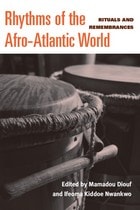
Rhythms of the Afro-Atlantic World
Rituals and RemembrancesEdited by Mamadou Diouf and Ifeoma Kiddoe Nwankwo
University of Michigan Press, 2010
"Collecting essays by fourteen expert contributors into a trans-oceanic celebration and critique, Mamadou Diouf and Ifeoma Kiddoe Nwankwo show how music, dance, and popular culture turn ways of remembering Africa into African ways of remembering. With a mix of Nuyorican, Cuban, Haitian, Kenyan, Senegalese, Trinidagonian, and Brazilian beats, Rhythms of the Afro-Atlantic World proves that the pleasures of poly-rhythm belong to the realm of the discursive as well as the sonic and the kinesthetic."
---Joseph Roach, Sterling Professor of Theater, Yale University
"As necessary as it is brilliant, Rhythms of the Afro-Atlantic World dances across, beyond, and within the Black Atlantic Diaspora with the aplomb and skill befitting its editors and contributors."
---Mark Anthony Neal, author of Soul Babies: Black Popular Culture and the Post-Soul Aesthetic
Along with linked modes of religiosity, music and dance have long occupied a central position in the ways in which Atlantic peoples have enacted, made sense of, and responded to their encounters with each other. This unique collection of essays connects nations from across the Atlantic---Senegal, Kenya, Trinidad, Cuba, Brazil, and the United States, among others---highlighting contemporary popular, folkloric, and religious music and dance. By tracking the continuous reframing, revision, and erasure of aural, oral, and corporeal traces, the contributors to Rhythms of the Afro-Atlantic World collectively argue that music and dance are the living evidence of a constant (re)composition and (re)mixing of local sounds and gestures.
Rhythms of the Afro-Atlantic World distinguishes itself as a collection focusing on the circulation of cultural forms across the Atlantic world, tracing the paths trod by a range of music and dance forms within, across, or beyond the variety of locales that constitute the Atlantic world. The editors and contributors do so, however, without assuming that these paths have been either always in line with national, regional, or continental boundaries or always transnational, transgressive, and perfectly hybrid/syncretic. This collection seeks to reorient the discourse on cultural forms moving in the Atlantic world by being attentive to the specifics of the forms---their specific geneses, the specific uses to which they are put by their creators and consumers, and the specific ways in which they travel or churn in place.
Mamadou Diouf is Leitner Family Professor of African Studies, Director of the Institute of African Studies, and Professor of History at Columbia University.
Ifeoma Kiddoe Nwankwo is Associate Professor of English at Vanderbilt University.
Jacket photograph by Elias Irizarry

Richard Strauss
New Perspectives on the Composer and His WorkBryan Gilliam, ed.
Duke University Press, 1997
Contributors discuss Strauss as a young composer steeped in a conservative instrumental tradition, as a brash young modernist tone poet of the 1890s, as an important composer of twentieth-century German opera, and as a cultural icon manipulated by the national socialists during the 1930s and early 1940s. Individual essays use Strauss’s creative work as a framework for larger musicological questions such as the tension between narrative and structure in program music, the problem of extended tonality at the turn of the century, stylistic choice versus stylistic obligation, and conflicting perspectives of progressive versus conservative music.
This collection will interest Strauss scholars, musicologists, and those interested in the artistic and cultural life of Germany from 1880 through the Second World War.
Contributors. Kofi Agawu, Günter Brosche, Bryan Gilliam, Stephen Hefling, James A. Hepokoski, Timothy L. Jackson, Michael Kennedy, Lewis Lockwood, Barbara A. Peterson, Pamela Potter, Reinhold Schlötterer, R. Larry Todd

Richard Wagner's Political Ecology
Kirsten S. Paige
University of Chicago Press, 2026
A study of the deep history of the Wagnerian environmental imagination.
Richard Wagner’s operas are bursting with environmental imagery, from tittering birds to flowing rivers to towering trees. In Richard Wagner’s Political Ecology, Kirsten S. Paige asks where Wagner’s environmental imagination came from, how it was received by audience members and reconceived by stage directors, and how it refracts his politics. By tracing the ecological dimensions of the composer’s essays and dramas, Paige reveals how Wagner’s environmental imagination was inextricable from broader political concerns of his time.
The book begins by examining the way Wagner’s political ecology shape-shifted across its rhetorical, musical, scenographic, and technological permutations. Although Wagner’s essays and dramas invite a range of interpretations, for Paige, they point to an all-encompassing image of opera-as-climate. The book then turns to the ways Wagnerian drama—and opera more generally—at once participates in the industrial-technological lineage of climate change and helps spectators grapple with the challenges of living in a warming world. In providing the first close examination of Wagner’s artistic thought, practice, and reception in relation to nineteenth-century climate theory and the early history of environmentalism, Richard Wagner’s Political Ecology considers what it might mean to reimagine opera around ethical mandates of sustainability.