Results by title
175 books match the query 'Narration (Rhetoric)' and 5 start with r
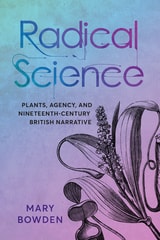
Radical Science
Plants, Agency, and Nineteenth-Century British NarrativeMary Bowden
The Ohio State University Press, 2026
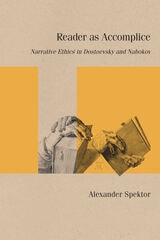
Reader as Accomplice
Narrative Ethics in Dostoevsky and NabokovAlexander Spektor
Northwestern University Press, 2021
Reader as Accomplice: Narrative Ethics in Dostoevsky and Nabokov argues that Fyodor Dostoevsky and Vladimir Nabokov seek to affect the moral imagination of their readers by linking morally laden plots to the ethical questions raised by narrative fiction at the formal level. By doing so, these two authors ask us to consider and respond to the ethical demands that narrative acts of representation and interpretation place on authors and readers.
Using the lens of narrative ethics, Alexander Spektor brings to light the important, previously unexplored correspondences between Dostoevsky and Nabokov. Ultimately, he argues for a productive comparison of how each writer investigates the ethical costs of narrating oneself and others. He also explores the power dynamics between author, character, narrator, and reader. In his readings of such texts as “The Meek One” and The Idiot by Dostoevsky and Bend Sinister and Despair by Nabokov, Spektor demonstrates that these authors incite the reader’s sense of ethics by exposing the risks but also the possibilities of narrative fiction.
Real Mysteries
Narrative and the UnknowableH. Porter Abbott
The Ohio State University Press, 2013
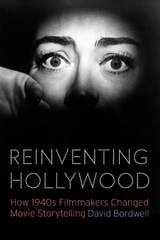
Reinventing Hollywood
How 1940s Filmmakers Changed Movie StorytellingDavid Bordwell
University of Chicago Press, 2017
If this sounds like today’s cinema, that’s because it is. In Reinventing Hollywood, David Bordwell examines the full range and depth of trends that crystallized into traditions. He shows how the Christopher Nolans and Quentin Tarantinos of today owe an immense debt to the dynamic, occasionally delirious narrative experiments of the Forties. Through in-depth analyses of films both famous and virtually unknown, from Our Town and All About Eve to Swell Guy and The Guilt of Janet Ames, Bordwell assesses the era’s unique achievements and its legacy for future filmmakers. Reinventing Hollywood is a groundbreaking study of how Hollywood storytelling became a more complex art and essential reading for lovers of popular cinema.

Retelling / Rereading
The Fate of Storytelling in Modern TimesKroeber, Karl
Rutgers University Press, 1992
In this highly readable and thoroughly original book, Karl Kroeber questions the assumptions about storytelling we have inherited from the exponents of modernism and postmodernism. These assumptions have led to overly formalistic and universalizing conceptions of narrative that mystify the social functions of storytelling. Even "politically correct" critics have Eurocentrically defined story as too "primitive" to be taken seriously as art. Kroeber reminds us that the fundamental value of storytelling lies in retelling, this paradoxical remaking anew that constitutes story's role as one of the essential modes of discourse. His work develops some recent anthropological and feminist criticism to delineate the participative function of audience in narrative performances.
In depicting how audiences contribute to storytelling transactions, Kroeber carries us into a surprising array of examples, ranging from a Mesopotamian sculpture to Derek Walcott's Omeros; startling juxtapositions, such as Cervantes to Vermeer; and innovative readings of familiar novels and paintings. Tom Wolfe's comparison of his Bonfire of the Vanities to Vanity Fair is critically analyzed, as are the differences between Thackeray's novel and Joyce's Ulysses and Flaubert's Madame Bovary. Other discussions focus on traditional Native American stories, Henry James's The Ambassadors, Calvino's If on a winter's night a traveler, and narrative paintings of Giotto, Holman Hunt, and Roy Lichtenstein. Kroeber deploys the ideas of Ricoeur and Bakhtin to reassess dramatically the field of narrative theory, demonstrating why contemporary narratologists overrate plot and undervalue story's capacity to give meaning to the contingencies of real experience. Retelling/Rereading provides solid theoretical grounding for a new understanding of storytelling's strange role in twentieth-century art and of our need to develop a truly multicultural narrative criticism.