Results by title
166 books match the query 'Native American' and 7 start with r
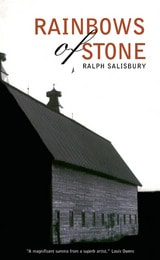
Rainbows of Stone
Ralph Salisbury
University of Arizona Press, 2000
Son of a Cherokee-English father and an Irish mother, Ralph Salisbury grew up among storytellers and has shared his family's tales and experiences in seven previous books of prose and poetry. Now in Rainbows of Stone he returns with a striking collection of poems that interweaves family tales with personal and tribal history.
Salisbury conjures images that define his life, from the vanishing farming and hunting traditions with which he was raised to his experiences in World War II as a member of a bomber crew. He writes of himself and of Indian people as Vanishing Americans—vanishing into the mingling of races—and sees himself as a pacifistic patriot concerned that we not continue the destructive reliance on war that marks our history.
Writing as one who is "not part Indian, part white, but wholly both," Salisbury has produced a haunting, powerful work that expresses his devotion to the Cherokee religion, its fidelity to its forebears, and its harmony with the forces of Nature. For all concerned with ecology, social justice, and peace, Rainbows of Stone conveys a growing awareness of the world and a sense of how each individual connects with the universal and timeless realities of every other human being.
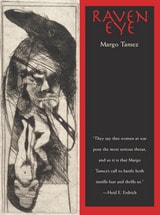
Raven Eye
Margo Tamez
University of Arizona Press, 2007
These complex and necessary themes are at the heart of award-winning poet Margo Tamez’s second book of poetry. Her poems bring forth experiences of a raced and gendered life along the border. Tamez engages the experiences of an indigenous life, refusing labels of Mexican or Native American as social constructs of a colonized people. This book is a challenging cartography of colonialism, poverty, and issues of Native identity and demonstrates these as threats to the environment, both ecological and social, in the borderlands. Each poem is crafted as if it were a minute prayer, dense with compassion and unerring optimism.
But the hope that Tamez serves is not blind. In poem after poem, she draws us into a space ruled by mythic symbolism and the ebb and flow of the landscape—a place where comfort is compromised and where we must work to relearn the nature of existence and the value of life.
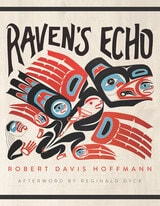
Raven's Echo
Robert Davis Hoffmann, Afterword by Reginald Dyck
University of Arizona Press, 2022
Raven’s Echo is divided into two books, “SoulCatcher” and “Reconstruction.” “SoulCatcher” artfully explores human alienation and spiritual longing through poems that describe the speaker’s enduring struggle to find a place in Tlingit tribal history and contemporary experience. It takes up topics like colonialism, government subordination, painful acculturation, assimilation, and an array of other challenges, while it also addresses human loneliness in a world of spirits who often elude rather than nurture. The poems in “Reconstruction” present ways of integrating traditional Tlingit culture into contemporary life by honoring the significance of the land, subsistence fishing, warrior identity, and the role of elders. The two books are woven together by the constant thread of finding a way to live humanely in a world that is historically fractured yet spiritually inviting.
Hoffmann’s poetry is acutely aware of economic, political, and social tensions, while still highlighting the joy of traditions and the beauty of Alaskan nature throughout the collection. The destructiveness of colonialism brings a profound darkness to some of the poems in Raven’s Echo, but the collection also explores the possibility of finding spiritual healing in the face of historical and contemporary traumas. As Hoffman’s poetry grapples with reconstructing a life within Tlingit tradition and history, the speaker urges that the importance of honoring and remembering traditions through art is ever present: “Listen, I’m trying to say something— / always our stories have lived through paintings, / always our stories stayed alive through retelling.” Raven’s Echo may tell stories about living in a world of guns and horsepower, global warming, cops, and drunks—but Raven always lurks in the background.
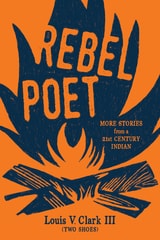
Rebel Poet
More Stories from a 21st Century IndianLouis V. Clark (Two Shoes)
Wisconsin Historical Society Press, 2019
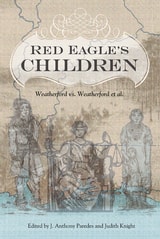
Red Eagle's Children
Weatherford vs. Weatherford et al.Edited by J. Anthony Paredes and Judith Knight
University of Alabama Press, 2012
Tracing identity, law, and legacy in an inheritance dispute that reveals the intersection of two cultural and legal systems: Creek Indian and Euro-American.
In 1846, in the Chancery Court of Mobile, Alabama, William “Red Eagle” Weatherford’s son, by the Indian woman Supalamy, sued his half siblings fathered by Weatherford with two other Creek women, Polly Moniac and Mary Stiggins, for a greater share of Weatherford’s estate. While the court recognized William Jr. as the son of William Sr., he nevertheless lost his petition for inheritance due to the lack of legal evidence concerning the marriage of his biological mother to William Sr. The case, which went to the Alabama Supreme Court in 1851, provides a record of an attempt to interrelate and, perhaps, manipulate differences in cultures as they played out within the ritualized, arcane world of antebellum Alabama jurisprudence.
Although the case has value in the classic mold of salvage ethnography of Creek Indian culture, Red Eagle’s Children, edited by J. Anthony Paredes and Judith Knight, shows that its more enduring value lies in being a source for historical ethnography—that is, for anthropological analyses of cultural dynamics of the past events that complement the narratives of professional historians.
CONTRIBUTORS: David I. Durham / Robbie Ethridge / Judith Knight / J. Anthony Paredes / Paul M. Pruitt Jr. / Nina Gail Thrower / Robert Thrower / Gregory A. Waselkov
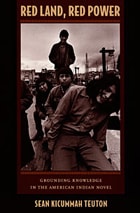
Red Land, Red Power
Grounding Knowledge in the American Indian NovelSean Kicummah Teuton
Duke University Press, 2008
While engaging a wide spectrum of Native American writing, Teuton focuses on three of the most canonized and, he contends, most misread novels of the era—N. Scott Momaday’s House Made of Dawn (1968), James Welch’s Winter in the Blood (1974), and Leslie Marmon Silko’s Ceremony (1977). Through his readings, he demonstrates the utility of tribal realism as an interpretive framework to explain social transformations in Indian Country during the Red Power era and today. Such transformations, Teuton maintains, were forged through a process of political awakening that grew from Indians’ rethought experience with tribal lands and oral traditions, the body and imprisonment, in literature and in life.
Redoubted
Poems byR. Vincent Moniz Jr.
Michigan State University Press, 2018