Results by title
413 books match the query 'New York' and 18 start with r
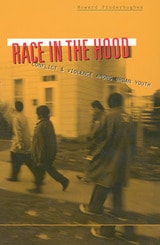
Race In The Hood
Conflict and Violence among Urban YouthHoward Pinderhughes
University of Minnesota Press, 1997
A compelling study of the origins of racial conflict and violence in America.
“We’ll just be hanging out, partying. And somebody will say, ‘Hey, let’s go on a mission.’ That’s when you go looking for people who don’t belong in the neighborhood, and you beat ’em up. Sometimes we go out lookin’ for blacks to jump. Sometimes we look for anybody who ain’t supposed to be there.” —Sal, Avenue T Boys
Why are racial conflict and violence among the most enduring problems in American society? Why do some youths express racism violently while others develop tolerance and respect for those who are different? What can we as a society do to foster open-mindedness among children and teenagers? Seeking answers to these questions, Howard Pinderhughes spent two years talking to and studying three groups of New York City adolescents: the predominantly Italian American Avenue T Boys from the Bensonhurst section of Brooklyn; a group of African American teenagers from Schomberg Plaza in East Harlem; and a group of Albanian American youth from Pelham Park in the Bronx. Through the voices of these young people, Pinderhughes examines how racial attitudes and identities develop in communities and are then expressed as either tolerance, resulting in territorial cooperation, or hatred, resulting in racial conflict. Race in the Hood draws a picture of young people who grew up in similar class circumstances, facing remarkably similar problems and issues, with one significant difference in their lives-their race or ethnicity. Pinderhughes argues that the key to success in developing racial tolerance lies in the transformation of racialized grassroots ideologies through community and school-based multicultural education. A sophisticated and nuanced study of race relations in New York City, Race in the Hood points to areas of concern and directions for change in all of our communities.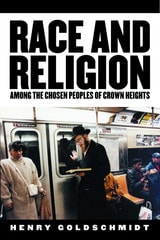
Race and Religion Among the Chosen People of Crown Heights
Goldschmidt, Henry
Rutgers University Press, 2006
In August of 1991, the Brooklyn neighborhood of Crown Heights was engulfed in violence following the deaths of Gavin Cato and Yankel Rosenbaum—a West Indian boy struck by a car in the motorcade of a Hasidic spiritual leader and an orthodox Jew stabbed by a Black teenager. The ensuing unrest thrust the tensions between the Lubavitch Hasidic community and their Afro-Caribbean and African American neighbors into the media spotlight, spurring local and national debates on diversity and multiculturalism. Crown Heights became a symbol of racial and religious division. Yet few have paused to examine the nature of Black-Jewish difference in Crown Heights, or to question the flawed assumptions about race and religion that shape the politics—and perceptions—of conflict in the community.
In Race and Religion among the Chosen Peoples of Crown Heights, Henry Goldschmidt explores the everyday realities of difference in Crown Heights. Drawing on two years of fieldwork and interviews, he argues that identity formation is particularly complex in Crown Heights because the neighborhood’s communities envision the conflict in remarkably diverse ways. Lubavitch Hasidic Jews tend to describe it as a religious difference between Jews and Gentiles, while their Afro-Caribbean and African American neighbors usually define it as a racial difference between Blacks and Whites. These tangled definitions are further complicated by government agencies who address the issue as a matter of culture, and by the Lubavitch Hasidic belief—a belief shared with a surprising number of their neighbors—that they are a “chosen people” whose identity transcends the constraints of the social world.
The efforts of the Lubavitch Hasidic community to live as a divinely chosen people in a diverse Brooklyn neighborhood where collective identities are generally defined in terms of race illuminate the limits of American multiculturalism—a concept that claims to celebrate diversity, yet only accommodates variations of certain kinds. Taking the history of conflict in Crown Heights as an invitation to reimagine our shared social world, Goldschmidt interrogates the boundaries of race and religion and works to create space in American society for radical forms of cultural difference.

Radiant Daughter
A NovelPatricia Grossman
Northwestern University Press, 2010
In Radiant Daughter, award-winning novelist Patricia Grossman follows a Czech-American family for twenty-seven years, beginning in suburban Chicago in 1969 and ending in Brooklyn, in seaside “Little Odessa,” in 1996. Though the novel begins as a traditional assimilation story—immigrant parents, “native” children, and the conflicts one might expect—it evolves into a highly particular and harrowing tale surrounding the descent of Elise Blazek, the family’s brightest star. Radiant Daughter is also a story of translation—between generations, from the Czech of Irena and Stepan, to the “American” of the children, and finally to the Russian that is Elise’s academic specialty.
Radiant Daughter explores all that is human, from the most self-destructive behavior to the highest forms of commitment and self-sacrifice. Even at her lowest moments, Irena never loses her fierce love for the daughter who has traveled so utterly beyond her reach. For Elise, the future will always be complicated: a precarious balance between periods of insight, bursts of accomplishment, and the abyss of her illness.
Reminiscent, on the one hand, of the meticulously constructed mother-daughter dynamic in Carol Shields’s Unless and, on the other, of the anarchic real-life experience of Big and Little Edie Beale in Grey Gardens, Grossman’s moving narrative breaks new ground in exploring a dangerous turn in the complex bond between a mother and her adult child.
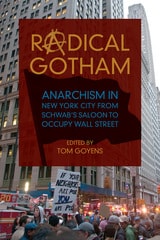
Radical Gotham
Anarchism in New York City from Schwab's Saloon to Occupy Wall StreetEdited by Tom Goyens
University of Illinois Press, 2017
Raving
McKenzie Wark
Duke University Press, 2023
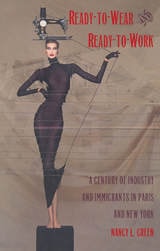
Ready-to-Wear and Ready-to-Work
A Century of Industry and Immigrants in Paris and New YorkNancy L. Green
Duke University Press, 1997
Green focuses on issues of fashion and fabrication as they involve both the production and consumption of clothing. Traditionally, much of the urban garment industry has been organized around small workshops and flexible homework, and Green emphasizes the effect this labor organization had on the men and mostly women who have sewn the garments. Whether considering the immigrant Jews, Italians, Puerto Ricans, Dominicans, and Chinese in New York or the Chinese-Cambodians, Turks, Armenians, and Russian, Polish, and Tunisian Jews in Paris, she outlines similarities of social experience in the shops and the unions, while allowing the voices of the workers, in all their diversity to be heard.
A provocative examination of gender and ethnicity, historical conflict and consensus, and notions of class and cultural difference, Ready-to-Wear and Ready-to-Work breaks new ground in the methodology of comparative history.
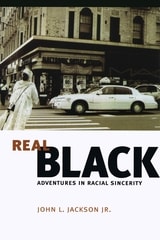
Real Black
Adventures in Racial SincerityJohn L. Jackson Jr.
University of Chicago Press, 2005
Jackson argues that authenticity caricatures identity as something imposed on people, imprisoning them within stereotypes: an African American high school student who excels in the classroom, for instance, might be dismissed as "acting white." On the other hand, sincerity, as Jackson defines it, imagines authenticity as an incomplete measuring stick, an analytical model that attempts to deny people agency in their search for identity.
Drawing on more than ten years of ethnographic research in and around New York City, Jackson offers a kaleidoscope of subjects and stories that directly and indirectly address how race is negotiated in today's world—including tales of book-vending numerologists, urban conspiracy theorists, corrupt police officers, mixed-race neo-Nazis, and gospel choirs forbidden to catch the Holy Ghost. Jackson records and retells their interconnected sagas, all the while attempting to reconcile these stories with his own crisis of identity and authority as an anthropologist terrified by fieldwork. Finding ethnographic significance where mere mortals see only bricks and mortar, his invented alter ego Anthroman takes to the streets, showing how race is defined and debated, imposed and confounded every single day.
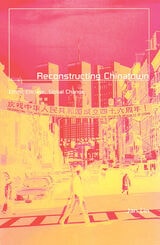
Reconstructing Chinatown
Ethnic Enclave, Global ChangeJan Lin
University of Minnesota Press, 1998
An exploration of this fascinating community as a window on globalization.
In the American popular imagination, Chinatown is a mysterious and dangerous place, clannish and dilapidated, filled with sweatshops, vice, and organized crime. In this well-written and engaging volume, Jan Lin presents a real-world picture of New York City’s Chinatown, countering this “orientalist” view by looking at the human dimensions and the larger forces of globalization that make this vital neighborhood both unique and broadly instructive.
Using interviews with residents, firsthand observation, archival research, and U.S. census data, Lin delivers an informed, reliable picture of Chinatown today. Lin claims that to understand contemporary ethnic neighborhoods like this one we must dispense with notions of monolithic “community.” When he looks at Chinatown, Lin sees a neighborhood that is being rebuilt, both literally and economically. Rather than a clannish and unified peer group, he sees substantial class inequality and internal social conflict. There is also social change, most visibly manifested in dramatic episodes of collective action by sweatshop workers and community activists and in the growing influence of Chinatown’s denizens in electoral politics. Popular portrayals of Chinatown also reflect a new global reality: as American cities change with the international economy, traditional assumptions about immigrant incorporation into U.S. society alter as well. Lin describes the public disquiet and official response regarding immigration, sweatshops, and the influx of Asian capital. He outlines the ways that local, state, and federal governments have directed and gained from globalization in Chinatown through banking deregulation and urban redevelopment policy. Finally, Lin puts forth Chinatown as a central enclave in the “world city” of New York, arguing that globalization brings similar structural processes of urban change to diverse locations. In the end, Lin moves beyond the myth of Chinatown, clarifying the meaning of globalization and its myriad effects within the local context.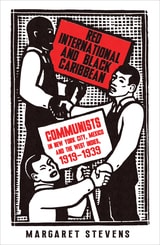
Red International and Black Caribbean
Communists in New York City, Mexico and the West Indies, 1919-1939Margaret Stevens
Pluto Press, 2017
Challenging dominant accounts, Red International and Black Caribbean debunks the “great men” narrative, emphasizes the role of women in their capacity as laborers, and paints the true struggles of black peasants and workers in Communist parties.
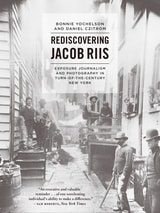
Rediscovering Jacob Riis
Exposure Journalism and Photography in Turn-of-the-Century New YorkBonnie Yochelson and Daniel Czitrom
University of Chicago Press, 2014
With Rediscovering Jacob Riis, art historian Bonnie Yochelson and historian Daniel Czitrom place Jacob Riis’s images in historical context even as they expose a clear sightline to the present. In the first half of their book, Czitrom explores Riis’s reporting and activism within the gritty specifics of Gilded Age New York: its new immigrants, its political machines, its fiercely competitive journalism, its evangelical reformers, and its labor movement. In delving into Riis’s intellectual education and the lasting impact of How the Other Half Lives, Czitrom shows that though Riis argued for charity, not sociopolitical justice, the empathy that drove his work continues to inspire urban reformers today.
In the second half of the book, Yochelson describes for the first time Riis’s photographic practice: his initial reliance on amateur photographers to take the photographs he needed, his own use of the camera, and then his collecting of photographs by professionals, who by 1900 were documenting social reform efforts for government agencies and charities. She argues that while Riis is rightly considered a revolutionary in the history of photography, he was not a photographic artist. Instead, Riis was a writer and lecturer who first harnessed the power of photography to affect social change.
As staggering inequality continues to be an urgent political topic, this book, illustrated with nearly seventy of Riis’s photographs, will serve as a stunning reminder of what has changed, and what has not.
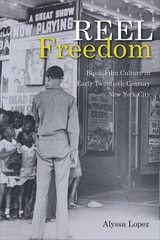
Reel Freedom
Black Film Culture in Early Twentieth-Century New York CityAlyssa Lopez
Temple University Press, 2025
Lopez investigates how ordinary people, labor activists, journalists, filmmakers, theater managers, and owners all shaped Black film culture. Black girls and women used moviegoing as a means of independence and control over their lives. Race filmmaker Oscar Micheaux fought with New York State’s censorship board to get his films screened with limited edits in local theaters. And Harlem’s Black projectionists battled for unionization and fair pay, while journalists linked cinema to Black New Yorkers’ lived experiences.
In Reel Freedom, Lopez chronicles the wide-ranging and remarkable pervasiveness of Black film culture in New York City, redefining a period and place most associated with the Harlem Renaissance. In doing so, she illustrates how Black New Yorkers leveraged cinema to make the city their own and to enjoy urban living to its fullest.
In the series Urban Life, Landscape, and Policy
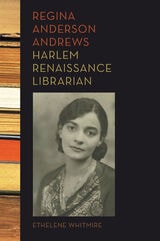
Regina Anderson Andrews, Harlem Renaissance Librarian
Ethelene Whitmire
University of Illinois Press, 2015
Andrews also played a key role in the Harlem Renaissance, supporting writers and intellectuals with dedicated workspace at her 135th Street Branch Library. After hours she cohosted a legendary salon that drew the likes of Langston Hughes and Zora Neale Hurston. Her work as an actress and playwright helped establish the Harlem Experimental Theater, where she wrote plays about lynching, passing, and the Underground Railroad.
Ethelene Whitmire's new biography offers the first full-length study of Andrews's activism and pioneering work with the NYPL. Whitmire's portrait of her sustained efforts to break down barriers reveals Andrews's legacy and places her within the NYPL's larger history.
Reinventing Care
Assisted Living in New York CityDavid Barton Smith
Vanderbilt University Press, 2003
In Reinventing Care, David Barton Smith offers brilliant insights into those questions by examining the realities of assisted living in New York City. Encompassing the largest, most concentrated population of elderly in the United States, New York spends more per person caring for its seniors than any other urban center. Yet, while the size of the city's care system boggles the mind, it nevertheless contains the same elements that exist in other metropolitan areas and thus provides valuable lessons for the nation as a whole.
Smith's study draws on twenty-five years of research, including hundreds of interviews and visits to representative facilities. He provides a succinct overview of how care is presently organized for New York's aging population and traces the history of the system up to the present. Among the key issues he addresses are the role of market forces and government regulation, the impact of class differences on access to quality care, and the ways in which perceptions of community affect the creation and management of assisted living programs. At the heart of the book are ten fascinating case studies, half of them focused on private-pay facilities and the other half on public-pay institutions.
While finding that the actualities of assisted living rarely match the rhetoric of its proponents, Smith sees much to admire in its goals. He suggests tactics and strategies--such as promoting family- and community-based models of assisted living and adopting a standard of licensure for certain facilities--that could point the way to a better future.
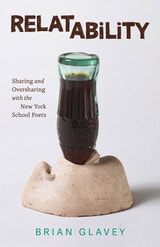
Relatability
Sharing and Oversharing with the New York School PoetsBrian Glavey
University of Chicago Press, 2026
An engaging account of how the New York School poets used art to imagine their queerness as something that might be shared with other people.
How did Frank O’Hara and other New York School poets—a small coterie associated with experimental art and gay culture —become fixtures in today’s culture, quoted on prestige television shows, in teen romances, and at the wedding ceremonies of straight celebrities? How, in other words, did these poets become so relatable? Brian Glavey’s Relatability tells the story of an aesthetic as it traveled from a cluster of mostly queer poets in the middle of the twentieth century to become increasingly central to everyday life in the early twenty-first century.
That the New York School poets are more relatable now than they were during their own lifetime speaks in part to the growing acceptance of same-sex desire in American culture. But Glavey argues that this transformation also tells the story of a shift in the way that aesthetic experience is understood to work. Moving away from forms of modernist impersonality, O’Hara, John Ashbery, James Schuyler, and Joe Brainard made sociability central to the experience of art and literature. Attempting to share their experience of works of art, they were willing to risk the reader’s judgment that they had, perhaps, overshared. Glavey advances an idea of aesthetic judgment that takes seriously its missed connections as well as its successes. Relatability adds a fresh perspective to current conversations around attachment and affect in literary studies.
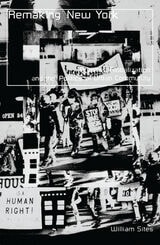
Remaking New York
Primitive Globalization And The Politics Of Urban CommunityWilliam Sites
University of Minnesota Press, 2003
Uses New York City to discuss the ways that policy has mismanaged the effects of globalization
Inequality increases, instability grows, communities fragment: this is the fate of a city in the wake of globalization—but is globalization really the cause? Proposing a new perspective on politics, globalization, and the city, this provocative book argues that such urban problems result in part from U.S. policies that can be changed.
William Sites develops the concept of primitive globalization, identifying a pattern of reactive politics—ad hoc measures to subsidize business, displace the urban poor, and dismantle the welfare state—that uproots social actors (corporations, citizens, urban residents) and facilitates a damaging, short-term-oriented type of international integration. In light of this theory, Sites examines the transformation of New York City since the 1970s, focusing on the logic of political action at national, local, and neighborhood levels. In the process, the story of late twentieth-century New York and its Lower East Side community emerges as something different: not a tale of globalist transformation or of local resurgence but a distinctly American case, one in which urban politics and the state, in their own right, exacerbate inequality and community fragmentation within the city.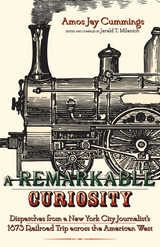
Remarkable Curiosity
Dispatches from a New York City Journalist's 1873 Railroad Trip across the American WestJerald T. Milanich
University Press of Colorado, 2008
Although today he is virtually unknown, during his lifetime Cummings was one of the most famous newspapermen in the United States, in part because of stories like these. Complete with a biographical sketch and historical introduction, A Remarkable Curiosity is an enjoyable read for anybody interested in the American West in the latter half of the nineteenth century.
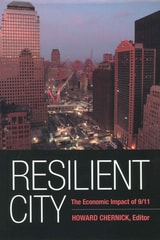
Resilient City
The Economic Impact of 9/11Howard Chernick
Russell Sage Foundation, 2005
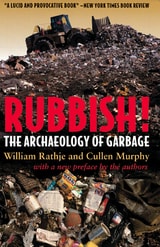
Rubbish!
The Archaeology of GarbageWilliam Rathje and Cullen Murphy
University of Arizona Press, 2001