Results by title
179 books match the query 'Past' and 13 start with r
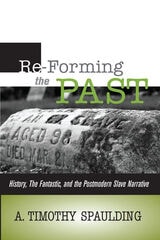
RE-FORMING THE PAST
HISTORY, THE FANTASTIC, & THE POSTMODERN SLAVE NARRATIVEA. Timothy Spaulding
The Ohio State University Press, 2005
In their rejection of mimetic representation and traditional historiography, Spaulding contextualizes postmodern slave narrative. By addressing both literary and popular African American texts, Re-Forming the Past expands discussions of both the African American literary tradition and postmodern culture.
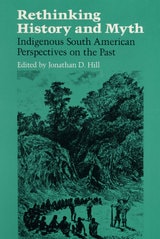
RETHINKING HISTORY
Indigenous South American Perspectives on the PastEdited by Jonathan D. Hill
University of Illinois Press, 2000
Examining specific cultural and linguistic traditions that shape the social consciousness of native South Americans, the authors show that historical and mythic consciousness work together in forming new symbolic strategies that allow indigenous peoples to understand their societies as at least partially autonomous groups within national and global power structures. This complex process is used to interpret the history of interethnic relations, allowing both individuals and groups to change themselves and alter their own circumstances.

Race and Romance
Coloring the PastMargo Hendricks
Arizona Center for Medieval and Renaissance Studies, 2021
Race and Romance: Coloring the Past explores the literary and cultural genealogy of colorism, white passing, and white presenting in the romance genre. The scope of the study ranges from Heliodorus’ Aithiopika to the short novels of Aphra Behn, to the modern romance novel Forbidden by Beverly Jenkins. This analysis engages with the troublesome racecraft of “passing” and the instability of racial identity and its formation from the premodern to the present. The study also looks at the significance of white settler colonialism to early modern romance narratives. A bridge between studies of early modern romance and scholarship on twenty-first-century romance novels, this book is well-suited for those interested in the romance genre.
Radio's Second Century
Past, Present, and Future PerspectivesJohn Allen Hendricks
Rutgers University Press, 2020
One of the first books to examine the status of broadcasting on its one hundredth anniversary, Radio’s Second Century investigates both vanguard and perennial topics relevant to radio’s past, present, and future. As the radio industry enters its second century of existence, it continues to be a dominant mass medium with almost total listenership saturation despite rapid technological advancements that provide alternatives for consumers. Lasting influences such as on-air personalities, audience behavior, fan relationships, and localism are analyzed as well as contemporary issues including social and digital media. Other essays examine the regulatory concerns that continue to exist for public radio, commercial radio, and community radio, and discuss the hindrances and challenges posed by government regulation with an emphasis on both American and international perspectives. Radio’s impact on cultural hegemony through creative programming content in the areas of religion, ethnic inclusivity, and gender parity is also explored. Taken together, this volume compromises a meaningful insight into the broadcast industry’s continuing power to inform and entertain listeners around the world via its oldest mass medium--radio.
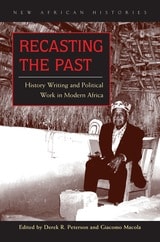
Recasting the Past
History Writing and Political Work in Modern AfricaDerek R. Peterson
Ohio University Press, 2009
The study of intellectual history in Africa is in its infancy. We know very little about what Africa’s thinkers made of their times. Recasting the Past brings one field of intellectual endeavor into view. The book takes its place alongside a small but growing literature that highlights how, in autobiographies, historical writing, fiction, and other literary genres, African writers intervened creatively in their political world.
The past has already been worked over by the African interpreters that the present volume brings into view. African brokers—pastors, journalists, kingmakers, religious dissidents, politicians, entrepreneurs all—have been doing research, conducting interviews, reading archives, and presenting their results to critical audiences. Their scholarly work makes it impossible to think of African history as an inert entity awaiting the attention of professional historians. Professionals take their place in a broader field of interpretation, where Africans are already reifying, editing, and representing the past.
The essays collected in Recasting the Past study the warp and weft of Africa’s homespun historical work. Contributors trace the strands of discourse from which historical entrepreneurs drew, highlighting the sources of inspiration and reference that enlivened their work. By illuminating the conventions of the past, Africa’s history writers set their contemporary constituents on a path toward a particular future. History writing was a means by which entrepreneurs conjured up constituencies, claimed legitimate authority, and mobilized people around a cause. By illuminating the spheres of debate in which Africa’s own scholars participated, Recasting the Past repositions the practice of modern history.
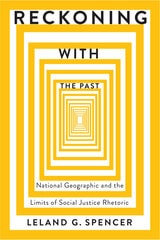
Reckoning with the Past
National Geographic and the Limits of Social Justice RhetoricLeland G. Spencer
Michigan State University Press, 2026
For over a century, National Geographic has shaped American visual culture, captivating audiences with stunning photography and compelling storytelling. Yet behind its iconic yellow border lies a fraught legacy of gender bias, racial misrepresentation, and colonialist narratives.In this incisive study, Leland G. Spencer examines the brand's recent attempts to reckon with that legacy across its magazine and television platforms. From special issues spotlighting transgender lives, to a public acknowledgment of past racism, to a magazine edition created entirely by women, these efforts signal a move toward inclusivity. But as Spencer reveals through rigorous rhetorical analysis, these gestures often fall short. The texts themselves frequently echo the same systemic inequalities they seek to redress. National Geographic's progressive rebranding, he argues, remains tangled in the very histories it aims to transcend.
Regulatory Barriers and the Principle of Non-discrimination in World Trade Law
Past, Present, and FutureThomas Cottier and Petros C. Mavroidis, Editors
University of Michigan Press, 2000
Religion and the Authority of the Past
Tobin Siebers, Editor
University of Michigan Press, 1993
Religion and the Authority of the Past looks at how the past has influenced religious authority, and demonstrates that authority has been, and continues to be, prevalent in all religions and cultures. This book shows, in a fascinating variety of ways, how religious doctrine, interpretation, behavior, and expression are affected by those in power.
The contributors—distinguished scholars from the fields of history, religion, classics, art, and Asian studies—find authority not only in places where one might expect it—in Islamic doctrine, Hindu religious texts, and the dogma of the Roman Catholic church, for example—but also in unimagined and intriguing locations: in the first U.S. archaeological expedition to the ancient Near East; in representations of heroic action in the Homeric epics and early Chinese classics; in the transmission of religious stereotypes from the Old World to the New; in the poetry of Paul Celan and Dan Pagis; and in a sculptor's attempts to create art for houses of worship, where architects, bishops, priests, and the laity assert a variety of forms of religious authority of their own.
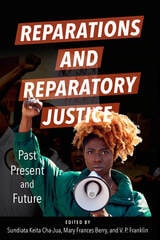
Reparations and Reparatory Justice
Past, Present, and FutureEdited by Sundiata Keita Cha-Jua, Mary Frances Berry, and V. P. Franklin
University of Illinois Press, 2024
Sharing a focus on reparations as an issue of justice, the contributors provide a historical primer of the movement; introduce the philosophical, political, economic, legal and ethical issues surrounding reparations; explain why government, corporations, universities, and other institutions must take steps to rehabilitate, compensate, and commemorate African Americans; call for the restoration of Black people’s human and civil rights and material and psychological well-being; lay out specific ideas about how reparations can and should be paid; and advance cutting-edge interpretations of the complex long-lasting effects that enslavement, police and vigilante actions, economic discrimination, and other behaviors have had on people of African descent.
Groundbreaking and innovative, Reparations and Reparatory Justice offers a multifaceted resource to anyone wishing to explore a defining moral issue of our time.
Contributors: Dedrick Asante-Muhammad, Hilary McDonald Beckles, Mary Frances Berry, Sundiata Keita Cha-Jua, Chuck Collins, Ron Daniels, V. P. Franklin, Danny Glover, Adom Gretachew, Charles Henry, Kamm Howard, Earl Ofari Hutchinson, Jesse Jackson, Sr., Brian Jones, Sheila Jackson Lee, James B. Stewart, the Movement 4 Black Lives, the National African American Reparations Commission, the National Coalition of Blacks for Reparations in America, the New Afrikan Peoples Organization/Malcolm X Grassroots Movement
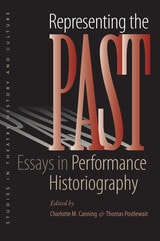
Representing the Past
Essays in Performance HistoriographyCharlotte M. Canning
University of Iowa Press, 2010
How do historians represent the past? How do theatre historians represent performance events? The fifteen challenging essays in Representing the Past: Essays in Performance Historiography focus on the fundamental epistemological conditions and procedures that serve as the foundational ideas that guide all historians in their endeavors. Unified by their investigations into how best to understand and then represent the past, this diverse group of scholars in the field of theatre history and performance studies offers insights into the abiding issues that all historians face in the task of representing human events and actions.
Five primary ideas provide the topics as well as the intellectual parameters for this book: archive, time, space, identity, and narrative. Taking these as the conceptual framework for historical research and analysis, the essayists cover an expansive range of case studies and problems in the historical study of performance from the Americas to Africa and from Europe to India and China. Considering not only how historians think about these concepts in their research and writing but more pointedly—and historiographically—how they think with them, the essayists demonstrate the power and centrality of each of these five ideas in historical scholarship from initial research to the writing of essays and books.
Performance history has a diversity of identities, locations, sources, and narratives. This compelling engagement with the concepts essential to historical understanding is a valuable contribution to the historiography of performance—for students, teachers, and the future of the discipline itself. Expanding upon its classic predecessor, Interpreting the Theatrical Past: Essays in the Historiography of Performance, this exciting new collection illustrates the contemporary richness of historical thinking and writing in the field of performance history.
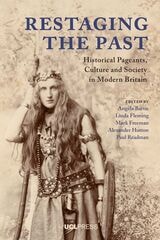
Restaging the Past
Historical Pageants, Culture and Society in Modern BritainEdited by Angela Bartie, Linda Fleming, Mark Freeman, and Alexander Hutton
University College London, 2020
Pageants were community events, bringing people together in a shared celebration and performance of the past; they also involved many prominent novelists, professional historians, and other writers, and as a result were featured repeatedly in popular and highbrow literature. Although the pageant tradition has largely died out, the contributors argue that it deserves to be acknowledged as a key aspect of community history during a period of great social and political change—and, they show, because of its former prominence, some lingering signs of “pageant fever” can still be seen in Britain today.
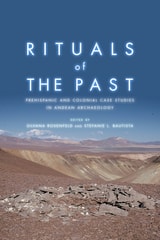
Rituals of the Past
Prehispanic and Colonial Case Studies in Andean ArchaeologySilvana Rosenfeld
University Press of Colorado, 2017
Rituals of the Past explores the various approaches archaeologists use to identify ritual in the material record and discusses the influence ritual had on the formation, reproduction, and transformation of community life in past Andean societies. A diverse group of established and rising scholars from across the globe investigates how ritual influenced, permeated, and altered political authority, economic production, shamanic practice, landscape cognition, and religion in the Andes over a period of three thousand years.
Contributors deal with theoretical and methodological concerns including non-human and human agency; the development and maintenance of political and religious authority, ideology, cosmologies, and social memory; and relationships with ritual action. The authors use a diverse array of archaeological, ethnographic, and linguistic data and historical documents to demonstrate the role ritual played in prehispanic, colonial, and post-colonial Andean societies throughout the regions of Peru, Chile, Bolivia, and Argentina. By providing a diachronic and widely regional perspective, Rituals of the Past shows how ritual is vital to understanding many aspects of the formation, reproduction, and change of past lifeways in Andean societies.
Contributors: Sarah Abraham, Carlos Angiorama, Florencia Avila, Camila Capriata Estrada, David Chicoine, Daniel Contreras, Matthew Edwards, Francesca Fernandini, Matthew Helmer, Hugo Ikehara, Enrique Lopez-Hurtado, Jerry Moore, Axel Nielsen, Yoshio Onuki, John Rick, Mario Ruales, Koichiro Shibata, Hendrik Van Gijseghem, Rafael Vega-Centeno, Verity Whalen
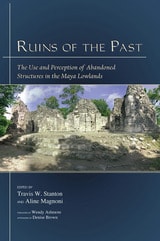
Ruins of the Past
The Use and Perception of Abandoned Structures in the Maya LowlandsTravis W. Stanton
University Press of Colorado, 2008