Results by title
3258 books match the query 'Performing Arts' and 136 start with r

RTE and the Globalisation of Irish Television
Farrel Corcoran
Intellect Books, 1995
Race and Cultural Practice in Popular Culture
Perez, Domino
Rutgers University Press, 2019
Race and Performance after Repetition
Soyica Diggs Colbert, Douglas A. Jones Jr., and Shane Vogel, editors
Duke University Press, 2020
Contributors. Joshua Chambers-Letson, Soyica Diggs Colbert, Nicholas Fesette, Patricia Herrera, Jasmine Elizabeth Johnson, Douglas A. Jones Jr., Mario LaMothe, Daphne P. Lei, Jisha Menon, Tavia Nyong’o, Tina Post, Elizabeth W. Son, Shane Vogel, Catherine M. Young, Katherine Zien
Race and Role
The Mixed-Race Asian Experience in American DramaRena M. Heinrich
Rutgers University Press, 2023
Race and Role: The Mixed-Race Experience in American Drama traces the shifting identities of multiracial Asian figures in theater from the late-nineteenth century to the present day and explores the ways that mixed-race Asian identity transforms our understanding of race. Mixed-Asian playwrights harness theater’s generative power to enact performances of “double liminality” and expose the absurd tenacity with which society clings to a tenuous racial scaffolding.
Race and the Forms of Knowledge
Technique, Identity, and Place in Artistic ResearchBen Spatz
Northwestern University Press, 2024
Enacts a radically interdisciplinary intersectionality to position performance-based research in solidarity with decoloniality
This boldly innovative work interrogates the form and meaning of artistic research (also called practice research, performance as research, and research-creation), examining its development within the context of predominately white institutions that have enabled and depoliticized it while highlighting its radical potential when reframed as a lineage of critical whiteness practice.
Ben Spatz crafts a fluid yet critical new framework, explored via a series of case studies that includes Spatz’s own practice-as-research, to productively confront hegemonic modes of white writing and white institutionality. Ultimately taking jewishness as a paradigmatically “molecular” identity—variously configured as racial, ethnic, religious, or national—they offer a series of concrete methodological and formal proposals for working at the intersections of embodied identities, artistic techniques, and alternative forms of knowledge.
Race and the Forms of Knowledge: Technique, Identity, and Place in Artistic Research takes inspiration from recent critical studies of blackness and indigeneity to show how artistic research is always involved in the production and transformation of identity. Spatz offers a toolkit of practical methods and concepts—from molecular identities to audiovisual ethnotechnics and earthing the laboratory—for reimagining the university and other contemporary institutions.
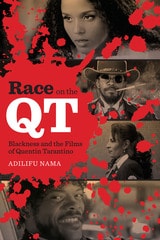
Race on the QT
Blackness and the Films of Quentin TarantinoBy Adilifu Nama
University of Texas Press, 2015
Winner, Ray & Pat Browne Award for Best Reference/Primary Source Work in Popular and American Culture, Popular Culture Association/American Culture Association, 2016
Known for their violence and prolific profanity, including free use of the n-word, the films of Quentin Tarantino, like the director himself, chronically blurt out in polite company what is extremely problematic even when deliberated in private. Consequently, there is an uncomfortable and often awkward frankness associated with virtually all of Tarantino’s films, particularly when it comes to race and blackness. Yet beyond the debate over whether Tarantino is or is not racist is the fact that his films effectively articulate racial anxieties circulating in American society as they engage longstanding racial discourses and hint at emerging trends. This radical racial politics—always present in Tarantino’s films but kept very much on the quiet—is the subject of Race on the QT.
Adilifu Nama concisely deconstructs and reassembles the racial dynamics woven into Reservoir Dogs, True Romance, Pulp Fiction, Jackie Brown, Kill Bill: Vol. 1, Kill Bill: Vol. 2, Death Proof, Inglourious Basterds, and Django Unchained, as they relate to historical and current racial issues in America. Nama’s eclectic fusion of cultural criticism and film analysis looks beyond the director’s personal racial attitudes and focuses on what Tarantino’s filmic body of work has said and is saying about race in America symbolically, metaphorically, literally, impolitely, cynically, sarcastically, crudely, controversially, and brilliantly.
Racial Blackness and Indian Ocean Slavery
Iran's Cinematic ArchiveParisa Vaziri
University of Minnesota Press, 2023
Rethinking the history of African enslavement in the western Indian Ocean through the lens of Iranian cinema
From the East African and Red Sea coasts to the Persian Gulf ports of Bushihr, Kish, and Hurmuz, sailing and caravan networks supplied Iran and the surrounding regions with African slave labor from antiquity to the nineteenth century. This book reveals how Iranian cinema preserves the legacy of this vast and yet long-overlooked history that has come to be known as Indian Ocean slavery.
How does a focus on blackness complicate traditional understandings of history and culture? Parisa Vaziri addresses this question by looking at residues of the Indian Ocean slave trade in Iranian films from the second half of the twentieth century. Revealing the politicized clash between commercial cinema (fīlmfārsī) and alternative filmmaking (the Iranian New Wave), she pays particular attention to the healing ritual zār, which is both an African slave descendent practice and a constitutive element of Iranian culture, as well as to cinematic sīyāh bāzī (Persian black play). Moving beyond other studies on Indian Ocean and trans-Saharan slavery, Vaziri highlights the crystallization of a singular mode of historicity within these cinematic examples—one of “absence” that reflects the relative dearth of archival information on the facts surrounding Indian Ocean slavery.
Bringing together cinema studies, Middle East studies, Black studies, and postcolonial theory, Racial Blackness and Indian Ocean Slavery explores African enslavement in the Indian Ocean through the revelatory and little-known history of Iranian cinema. It shows that Iranian film reveals a resistance to facticity representative of the history of African enslavement in the Indian Ocean and preserves the legacy of African slavery’s longue durée in ways that resist its overpowering erasure in the popular and historical imagination.
Retail e-book files for this title are screen-reader friendly with images accompanied by short alt text and/or extended descriptions.
Racial Care
On Asian American Suffering and SurvivalJames McMaster
Duke University Press, 2025
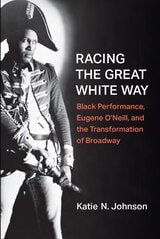
Racing the Great White Way
Black Performance, Eugene O’Neill, and the Transformation of BroadwayKatie N. Johnson
University of Michigan Press, 2023
Finalist: 2023 Theatre Library Association George Freedley Memorial Award
The early drama of Eugene O’Neill, with its emphasis on racial themes and conflicts, opened up extraordinary opportunities for Black performers to challenge racist structures in modern theater and cinema. By adapting O’Neill’s dramatic writing—changing scripts to omit offensive epithets, inserting African American music and dance, or including citations of Black internationalism--theater artists of color have used O’Neill’s texts to raze barriers in American and transatlantic theater.
Challenging the widely accepted idea that Broadway was the white-hot creative engine of U.S. theater during the early 20th century, author Katie N. Johnson reveals a far more complex system of exchanges between the Broadway establishment and a vibrant Black theater scene in New York and beyond to chart a new history of American and transnational theater. In spite of their dichotomous (and at times problematic) representation of Blackness, O’Neill’s plays such as The Emperor Jones and All God’s Chillun Got Wings make ideal case studies because of the way these works stimulated traffic between Broadway and Harlem—and between white and Black America. These investigations of O’Neill and Broadway productions are enriched by the vibrant transnational exchange found in early to mid-20th century artistic production. Anchored in archival research, Racing the Great White Way recovers not only vital lost performance histories, but also the layered contexts for performing bodies across the Black Atlantic and the Circum-Atlantic.
Radical Initiatives in Interventionist & Community Drama
Edited by Peter Billingham
Intellect Books, 1995
The list of contributors is impressive and quite consciously eclectic, ranging from established scholars such as Dr. Lionel Pilkington (University of Galway) through to the latest talent emerging in the field of theatre research such as Bill McDonnell (University of Sheffield) and Maureen Barry (Bretton Hall College, University of Leeds.) There is also a significant international dimension to Volume I with contributions from Carole Christensen (Copenhagen) and - (South Africa), with Velda Harris (Central School of Speech and Drama) offering a critical evaluation of her work with nomadic tribes people in Azerbaijan.
As with the series as a whole, the focus for this first collection is a fusion of high-quality scholarly research with dynamic and perceptive accounts from practitioners in their field of work. Similarly this collection represents an eclectic mix of material that is absolutely contemporary and previously unpublished, offering a unique insight into some of the ideological, methodological and aesthetic issues surrounding the generic area of Interventionist and Community Theatre.

Radio Free Boston
The Rise and Fall of WBCNCarter Alan
University Press of New England, 2013
Radio Free Stein
Gertrude Stein's Parlor PlaysAdam J. Frank
Northwestern University Press, 2025
Returns us to Gertrude Stein’s theater by way of the modernist medium of radio
What happens when we listen to Gertrude Stein’s plays as radio and music theater? This book explores the sound of Stein’s theater and proposes that radio, when approached both historically and phenomenologically, offers technical solutions to her texts’ unique challenges. Adam J. Frank documents the collaborative project of staging Stein’s early plays and offers new critical interpretations of these lesser-known works. Radio Free Stein grapples with her innovative theater poetics from a variety of disciplinary perspectives: sound and media studies, affect and object relations theory, linguistic performativity, theater scholarship, and music composition.
Radio Voices
American Broadcasting, 1922-1952Michele Hilmes
University of Minnesota Press, 1997
Radio's Second Century
Past, Present, and Future PerspectivesJohn Allen Hendricks
Rutgers University Press, 2020
One of the first books to examine the status of broadcasting on its one hundredth anniversary, Radio’s Second Century investigates both vanguard and perennial topics relevant to radio’s past, present, and future. As the radio industry enters its second century of existence, it continues to be a dominant mass medium with almost total listenership saturation despite rapid technological advancements that provide alternatives for consumers. Lasting influences such as on-air personalities, audience behavior, fan relationships, and localism are analyzed as well as contemporary issues including social and digital media. Other essays examine the regulatory concerns that continue to exist for public radio, commercial radio, and community radio, and discuss the hindrances and challenges posed by government regulation with an emphasis on both American and international perspectives. Radio’s impact on cultural hegemony through creative programming content in the areas of religion, ethnic inclusivity, and gender parity is also explored. Taken together, this volume compromises a meaningful insight into the broadcast industry’s continuing power to inform and entertain listeners around the world via its oldest mass medium--radio.
Radio, Morality, & Culture
Britain, Canada, and the United States, 1919 - 1945Robert S. Fortner
Southern Illinois University Press, 2005
Radio, Morality, and Culture: Britain, Canada, and the United States, 1919–1945 examines the moral controversies surrounding radio’s development during its formative years. In comparing the fledgling medium in Great Britain, Canada, and the United States, Robert S. Fortner documents how the church failed to participate in radio’s moral development and instead engaged in internecine warfare over issues of legitimacy and orthodoxy.
The church was arguing about theological turf and dealing with internal disputes while radio policy was being developed and communications history was being written. Fortner reveals how the church, doomed to play little more than a bit part in the future of radio, eventually lost its voice altogether in the continuing development of electronic media. Fortner effectively synthesizes cultural history and theory, communication studies, and the role religious organizations played in shaping the content and character of early radio. Geared to scholars of history, communications, and theology, Radio, Morality, and Culture provides a useful resource for research, scholarship, and public policy.
Radioactive Documentary
Filming the Nuclear Environment after the Cold WarHelen Hughes
Intellect Books, 2021
In her coherent, accessible analysis of the representation of radioactive spaces in documentary and experimental art films, Hughes shows us how the documentary form itself can help reimagine the relationships between people and their environments.
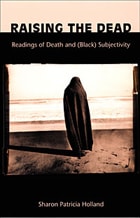
Raising the Dead
Readings of Death and (Black) SubjectivitySharon Patricia Holland
Duke University Press, 2000
Holland argues that the presence of blacks, Native Americans, women, queers, and other “minorities” in society is, like death, “almost unspeakable.” She gives voice to—or raises—the dead through her examination of works such as the movie Menace II Society, Toni Morrison’s novel Beloved, Leslie Marmon Silko’s Almanac of the Dead, Randall Kenan’s A Visitation of Spirits, and the work of the all-white, male, feminist hip-hop band Consolidated. In challenging established methods of literary investigation by putting often-disparate voices in dialogue with each other, Holland forges connections among African-American literature and culture, queer and feminist theory.
Raising the Dead will be of interest to students and scholars of American culture, African-American literature, literary theory, gender studies, queer theory, and cultural studies.
Rape, Agency, and Carceral Solutions
From Criminal Justice to Social JusticeLeland G. Spencer
University of Massachusetts Press, 2023
Winner of the 2023 National Communication Association's American Studies Division Outstanding Book Award
News media and popular culture in the United States have produced a conventional narrative of the outcomes of sexual abuse: someone perpetrates sexual violence, goes to trial, and is then punished with prison time. Survivors recede into the background, becoming minor characters in their own stories as intrepid prosecutors, police officers, and investigators gather evidence and build a case.
Leland G. Spencer explains how the stories we tell about sexual assault serve to reinforce rape culture, privileging criminal punishment over social justice and community-based responses to sexual violence. Examining a broad range of popular media, including news coverage of the Brock Turner case, Naomi Iizuka’s popular play Good Kids, the television program Criminal Minds, and the book turned television show 13 Reasons Why, Spencer demonstrates how these representations shore up the carceral state, perpetuate rape myths, blame victims, and excuse those who harm. While increased discussion about sexual violence represents feminist progress, these narratives assume that policing and prosecution are the only means of achieving justice, sidelining other potential avenues for confronting perpetrators and supporting victims.
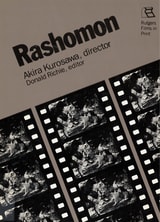
Rashomon
Akira Kurosawa, DirectorRichie, Donald
Rutgers University Press, 1987
The central section of the film, a series of flashbacks and tales within tales, consists of the same events retold by the husband (speaking through a medium, from the grave), the wife, the bandit, and the woodcutter. Each tells what happened--or possibly, what should have happened. The film deals with multiple truths; Richie summarizes the director's point of view in the introduction: "the world is illusion, you yourself make reality, but this reality undoes you if you submit to being limited by what you have made."
The sixth title in the Rutgers Film in Print Series and the first Japanese film, this volume brings together for the first time the full continuity script of Rashomon; an introductory essay by Donald Richie; the Akutagawa stories upon which the film is based; critical reviews and commentaries on the film; a filmography; and a bibliography.
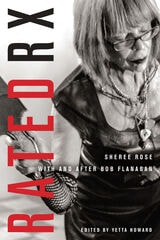
Rated RX
Sheree Rose with and after Bob FlanaganEdited by Yetta Howard
The Ohio State University Press, 2020
Curated with attention to queer-crip subjectivities and transgressive feminisms, Rated RX includes essays by and interviews with scholars, artists, and Rose’s collaborators that address gender politics, archival practices, minority embodiment, and disability in Rose’s work as well as more than eighty photographs and rare archival materials reflecting Rose’s recent and past performances. Offering a necessary corrective, Rated RX is the first collection to underscore Sheree Rose as a legendary figure in performance art and BDSM subcultural history, reflecting her lifetime of involvement in documenting the underground and the transformative role her work plays in sexual, subcultural, and art exhibitionism.
Ray Bradbury
David Seed
University of Illinois Press, 2015
David Seed follows Bradbury's long career from the early short story masterpieces through his work in a wide variety of broadcast and film genres to the influential cultural commentary he spread via essays, speeches, and interviews. Mining Bradbury's classics and hard-to-find archival, literary, and cultural materials, Seed analyzes how the author's views on technology, authoritarianism, and censorship affected his art; how his Midwest of dream and dread brought his work to life; and the ways film and television influenced his creative process and visually-oriented prose style. The result is a passionate statement on Bradbury's status as an essential literary writer deserving of a place in the cultural history of his time.
Ray Bradbury Unbound
Jonathan R. Eller
University of Illinois Press, 2020
At the height of his powers as a poetic prose stylist, Bradbury shifted his creative attention to film and television, where new successes gave him an enduring platform as a compelling cultural commentator. His passionate advocacy validated the U.S. space program's mission, extending his pivotal role as a chronicler of human values in an age of technological wonders.
Informed by many years of interviews with Bradbury as well as an unprecedented access to personal papers and private collections, Ray Bradbury Unbound provides the definitive portrait of how a legendary American author helped shape his times.
Re-Choreographing Cortical & Cartographic Maps
Going West to Find East. Going East to find WestHenry Daniel
Intellect Books, 2022
This book is a transdisciplinary approach to practice-as-research, complete with an elaborate theory of practice and a set of four multi-year performance research projects through which the theory plays out. Its methodology is at times ethnographic, as the author deftly inserts himself and his Caribbean West African ancestry into a series of complex cortical and geographic maps, which become choreographic in every sense of the term.
The central argument in the book is based on a claim that human beings are cognitively embodied through their own lived experiences of movement through space and time; the spaces we inhabit and the practices we engage in are documented through cortical and cartographic maps. In short, as we inhabit and move through spaces our brains organize our experiences into unique cortical and spatial maps, which eventually determine how we see and deal with, or “become,” subjects in a world that we also help create. The argument is that through performance, we can claim the knowledge that is in the body as well as in the spaces through which it travels.
Re-takes
Postcoloniality and Foreign Film LanguagesJohn Mowitt
University of Minnesota Press, 2005
Reactivations
Essays on Performance and Its DocumentationPhilip Auslander
University of Michigan Press, 2018
performance from its documentation? What is the value of performance documentation?
The book treats performance documentation as a specific discursive use of media that arose in the middle of the 20th century alongside such forms of performance as the Happening and that is different, both discursively and as a practice, from traditional theater and dance photography. Philip Auslander explores the phenomenal relationship between the spectator who experiences the performance from the document and the document itself. The document is not merely a secondary iteration of the original event but a vehicle that gives us meaningful access to the performance itself as an artistic work.

Read and Tell Stories
For parents, grandparents, aunts, uncles, and other loving adultsRosie Cutrer
Parkhurst Brothers, Inc., 2020
Reading between Designs
Visual Imagery and the Generation of Meaning in The Avengers, The Prisoner, and Doctor WhoBy Piers D. Britton and Simon J. Barker
University of Texas Press, 2003
From the alien worlds of Star Trek to the realistic operating room of ER, the design of sets and costumes contributes not only to the look and mood of television shows, but even more importantly to the creation of memorable characters. Yet, until now, this crucial aspect of television creativity has received little critical attention, despite the ongoing interest in production design within the closely allied discipline of film studies.
In this book, Piers Britton and Simon Barker offer a first analytical study of scenic and costume design for television drama series. They focus on three enduringly popular series of the 1960s—The Avengers, The Prisoner, and Doctor Who—and discuss such topics as the sartorial image of Steed in The Avengers, the juxtaposition of picturesque and fascistic architecture in The Prisoner, and the evolution of the high-tech interior of Doctor Who's TARDIS. Interviews with the series' original designers and reproductions of their original drawings complement the authors' analysis, which sheds new light on a variety of issues, from the discourse of fashion to that of the heritage industry, notions of "Pop" and retro, and the cultural preoccupation with realism and virtual reality.
Readying the Revolution
African American Theater and Performance from Post-World War II to the Black Arts MovementJonathan Shandell
University of Michigan Press, 2025
2026 American Theatre and Drama Society John W. Frick Book Award Winner
Starting in 1966, African American activist Stokely Carmichael and other political leaders adopted the phrase "Black Power!" The slogan captured a militant, revolutionary spirit that was already emerging in the work of playwrights, poets, musicians, and visual artists throughout the Black Arts movement of the mid-1960s. But the story of those theater artists and performers whose work helped bring about the Black Arts revolution has not fully been told. Readying the Revolution: African American Theater and Performance from Post-World War II to the Black Arts Movement explores the dynamic era of Black culture between the end of World War II and the start of the Black Arts Movement (1946-1964) by illuminating how artists and innovators such as Jackie Robinson, Lorraine Hansberry, Ossie Davis, Nina Simone, and others helped radicalize Black culture and Black political thought. In doing so, these artists defied white cultural hegemony in the United States, and built the foundation for the revolutionary movement in Black theater that followed in the mid 1960s. Through archival research, close textual reading, and an analysis of performance artifacts, Shandell demonstrates how these artists negotiated a space on the public stage for cultivating radical Black aesthetics and built the foundation for the revolutionary movement in Black theater that followed in the mid-1960s.
Real Emotional Logic
Film and Television Docudrama as Persuasive PracticeSteven N. Lipkin
Southern Illinois University Press, 2002
Analyzing docudrama as a mode of argument, Steven N. Lipkin explores the ethical, historical, and ideological functions of docudrama to discover why these films based on true stories offer such appealing story lines. That appeal, Lipkin discovers, is rooted in docudrama’s representation of actual people and events by means of melodramatic narrative structures that play on the emotions of the viewer.
The dual nature of docudramas—blending narrative and documentary style— argues for a moral view of reality-based subject matter. The ethics, the ideology, the very presence of docudrama on television and the range of topics and problems that appear in contemporary feature film docudramas indicate how this form of presentation appeals to its audience. Docudrama offers a warranted, rational view of what the story material might suggest initially to be an irrational world. Through its moral agenda, docudrama ultimately allows the possibilities of understanding, optimism, and hope to emerge from “real stories.”
Real Emotional Logic traces the development of docudramas into contemporary movies of the week and feature films, including Schindler’s List, Amistad, JFK, The Killing Fields, Quiz Show, A League of Their Own, In the Name of the Father, Call Northside 777, 13 Rue Madeleine, Cheerleader Mom, Shine, Rosewood, A Civil Action, and October Sky.
Lipkin provides further insight into the genre by identifying and describing the commonalities connecting ostensibly different docudramas through their shared themes and narrative techniques. In doing so, he exposes the persuasive rhetorical strategies at the heart of docudramas and reveals the constructed emotional appeal inherent in films “based on a true story.”
Real Objects in Unreal Situations
Modern Art in Fiction FilmsSusan Felleman
Intellect Books, 2014
Real Sister
Stereotypes, Respectability, and Black Women in Reality TVWard, Jervette R
Rutgers University Press, 2015
The first book of scholarship devoted to the issue of how black women are depicted on reality television, Real Sister offers an even-handed consideration of the genre. The book’s ten contributors—black female scholars from a variety of disciplines—provide a wide range of perspectives, while considering everything from Basketball Wives to Say Yes to the Dress. As regular viewers of reality television, these scholars are able to note ways in which the genre presents positive images of black womanhood, even as they catalog a litany of stereotypes about race, class, and gender that it tends to reinforce.
Rather than simply dismissing reality television as “trash,” this collection takes the genre seriously, as an important touchstone in ongoing cultural debates about what constitutes “trashiness” and “respectability.” Written in an accessible style that will appeal to reality TV fans both inside and outside of academia, Real Sister thus seeks to inspire a more nuanced, thoughtful conversation about the genre’s representations and their effects on the black community.

Realer Than Reel
Global Directions in DocumentaryBy David Hogarth
University of Texas Press, 2006
Television and globalization have transformed the traditional documentary almost beyond recognition, converting what was once a film genre devoted to public service and education into a popular televisual commodity with productions ranging from serious public affairs programming to TV "reality" shows and "docusoaps." Realer Than Reel offers a state-of-the-art overview of international documentary programming that investigates the possibilities documentary offers for local and public representation in a global age, as well as what actually constitutes documentary in a time of increasing digitalization and manipulation of visual media.
David Hogarth focuses on public affairs, nature, and reality shows from around the world, drawing upon industry data, producer interviews, analyses of selected documentary programs, and firsthand observations of market sites. He looks at how documentary has become a transnational product through exports, co-ventures, and festival contacts; how local and regional "place" is represented in global documentary, especially by producers such as Discovery Networks International and the National Geographic Channel; how documentary addresses the needs of its viewers as citizens through public service broadcasting; and how documentary is challenging accepted conventions of factuality, sense, and taste. The concluding chapter considers the future of both documentary as a genre and television as a global factual medium, asking whether TV will continue to "document" the world in any meaningful sense of the term.
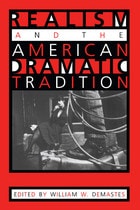
Realism and the American Dramatic Tradition
William W. Demastes
University of Alabama Press, 1996
This book reconsiders realism on the American stage by addressing the great variety and richness of the plays that form the American theatre canon.
Any review of 20th-century American theatre invariably leads to the term realism. Yet despite the strong tradition of theatrical realism on the American stage, the term is frequently misidentified, and the practices to which it refers are often attacked as monolithically tyrannical, restricting the potential of the American national theatre.This book reconsiders realism on the American stage by addressing the great variety and richness of the plays that form the American theatre canon. By reconsidering the form and revisiting many of the plays that contributed to the realist tradition, the authors provide the opportunity to apprise strengths often overlooked by previous critics. The volume traces the development of American dramatic realism from James A. Herne, the "American Ibsen," to currently active contemporaries such as Sam Shepard, David Mamet, and Marsha Norman. This frank assessment, in sixteen original essays, reopens a critical dialog too long closed.
Essays include:
American Dramatic Realisms, Viable Frames of Thought
The Struggle for the Real--Interpretive Conflict, Dramatic Method, and the Paradox of Realism
The Legacy of James A. Herne: American Realities and Realisms
Whose Realism? Rachel Crothers's Power Struggle in the American Theatre
The Provincetown Players' Experiments with Realism
Servant of Three Masters: Realism, Idealism, and "Hokum" in American High Comedy
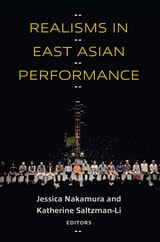
Realisms in East Asian Performance
Jessica Nakamura and Katherine Saltzman-Li, Editors
University of Michigan Press, 2023
Existing scholarly discussions of theatrical realism have been predominantly limited to 19th-century European and Russian theater, with little attention paid to wider explorations and alternative definitions of the practice. Examining theater forms and artists from China, Japan, and Korea, Realisms in East Asian Performance brings together a group of theater historians to reconsider realism through the performing arts of East Asia.
The book’s contributors emphasize trans-regional conversations and activate inter-Asian dialogues on theatrical production. Tracing historical trajectories, starting from premodern periods through today, the book seeks to understand realisms’ multiple origins, forms, and cultural significances, and examines their continuities, disruptions, and divergences. In its diversity of topics, geographic locations, and time periods, Realisms in East Asian Performance aims to globalize and de-center the dominant narratives surrounding realism in theater, and revise assumptions about the spectacular and theatrical forms of Asian performance. Understanding realism as a powerful representational style, chapters collectively reevaluate acts of representation on stage not just for East Asia, but for theater and performance studies more broadly.
Reality Fictions
The Films of Frederick WisemanThomas W. Benson and Carolyn Anderson
Southern Illinois University Press, 2002
Providing in-depth accounts and close critical examinations of nine of Wiseman’s films—Titicut Follies, High School, Basic Training, Essene, Juvenile Court, Primate, Welfare, Canal Zone, and The Store—thissecond edition features a new introduction, a revised and updated filmography, and an updated bibliography.
No book on documentary film has ever analyzed in such detail the work of a single filmmaker. In impeccable close readings of his films, Tom Benson and Carolyn Anderson explore how Frederick Wiseman has elaborated his widely admired sensibility.
A special feature is an extended chapter on the legal difficulties encountered by Wiseman’s first documentary, Titicut Follies, an unflinching depiction of conditions in the Massachusetts Correctional Institution at Bridgewater. The Commonwealth of Massachusetts took Wiseman to court, seeking to prevent the exhibition of Titicut Follies. In New York State, three judges refused to issue an injunction against the film. In Massachusetts, the film was the subject of a sensational series of legislative hearings and a court trial, in which the principals gave very different stories of the conditions and terms under which the film had been negotiated and produced.
Wiseman, himself an attorney, exchanged charges and countercharges with Massachusetts Attorney General Elliot Richardson, and the controversy split the civil liberties community. Judge Harry Kalus, calling Titicut Follies "a nightmare of ghoulish obscenities," not only ruled for the Commonwealth but ordered that the film be destroyed. On appeal, the Massachusetts Supreme Judicial Court modified the Kalus ruling, allowing the film to be seen only by professional audiences. Titicut Follies became the only American film whose exhibition is restricted for reasons other than obscenity or national security.
After Titicut Follies, Wiseman went on to become a major independent documentary producer. Many of his films have been shown on public television in the United States and at film festivals around the world. The films are widely admired and often highly controversial. Wiseman has developed a unique cinematic rhetoric that draws from both the documentary and fiction traditions to describe American institutions: a high school, basic training, a monastery, a juvenile court, a primate research center, a welfare agency, the Panama canal zone, and a department store. Benson and Anderson scrutinize each of these films, record the reactions of some of his subjects and audiences, and present the heretofore neglected contributions of his four cinematographers: John Marshall, Richard Leiterman, William Brayne, and John Davey.
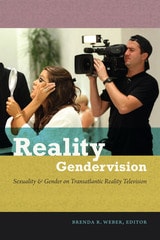
Reality Gendervision
Sexuality and Gender on Transatlantic Reality TelevisionBrenda R. Weber, ed.
Duke University Press, 2014
Contributors. David Greven, Dana Heller, Su Holmes, Deborah Jermyn, Misha Kavka, Amanda Ann Klein, Susan Lepselter, Diane Negra, Laurie Ouellette, Gareth Palmer, Kirsten Pike, Maria Pramaggiore, Kimberly Springer, Rebecca Stephens, Lindsay Steenberg, Brenda R. Weber
Reality Principles
From the Absurd to the VirtualHerbert Blau
University of Michigan Press, 2011
“Herbert Blau’s long sustained inquiry into theater’s most provocative questions—presence, liveness, and finitude—are, at their deepest level, queries into life. Reality Principles returns us to Blau’s inspiring provocations and extends them to new subjects—9/11 and Ground Zero, the nature of charisma, Pirandello and Strindberg.”
—Peggy Phelan, Stanford University
Reality Principles gathers recent essays by esteemed scholar and theater practitioner Herbert Blau covering a range of topics. The book’s provocative essays—including “The Emotional Memory of Directing,” “The Faith-Based Initiative of the Theater of the Absurd,” “Virtually Yours: Presence, Liveness, Lessness,” “The Human Nature of the Bot”—were given as keynotes and/or memorial lectures and are collected here for the first time. The essays take up a remarkable array of topics—from body art and the self-inflicted punishments of Stelarc, Orlan, and the Viennese Actionists, to Ground Zero and 9/11—and allow Blau to address critical questions of theater and theory, performance and relevance, the absurd and the virtual, history and illusion, community and memory. Reality Principles offers a panoramic view of Herbert Blau’s perspectives on life and the imitation of life on stage.
Reattachment Theory
Queer Cinema of RemarriageLee Wallace
Duke University Press, 2020
Rebel Dance, Renegade Stance
Timba Music and Black Identity in CubaUmi Vaughan
University of Michigan Press, 2013
Rebel Dance, Renegade Stanceshows how community music-makers and dancers take in all that is around them socially and globally, and publicly and bodily unfold their memories, sentiments, and raw responses within open spaces designated or commandeered for local popular dance. Umi Vaughan, an African American anthropologist, musician, dancer, and photographer "plantao" in Cuba—planted, living like a Cuban—reveals a rarely discussed perspective on contemporary Cuban society during the 1990s, the peak decade of timba, and beyond, as the Cuban leadership transferred from Fidel Castro to his brother. Simultaneously, the book reveals popular dance music in the context of a young and astutely educated Cuban generation of fierce and creative performers.
By looking at the experiences of black Cubans and exploring the notion of "Afro Cuba," Rebel Dance, Renegade Stanceexplains timba's evolution and achieved significance in the larger context of Cuban culture. Vaughan discusses a maroon aesthetic extended beyond the colonial era to the context of contemporary society; describes the dance spaces of Cuba; and examines the performance of identity and desire through the character of the "especulador." This book will find an audience with musicians, anthropologists, ethnomusicologists, interdisciplinary specialists in performance studies, cultural studies, and Latin American and Caribbean studies, as well as laypeople who are interested in Atlantic/African and African American/Africana studies and/or Cuban culture.
Rebellious Bodies
Stardom, Citizenship, and the New Body PoliticsBy Russell Meeuf
University of Texas Press, 2017
Celebrity culture today teems with stars who challenge long-held ideas about a “normal” body. Plus-size and older actresses are rebelling against the cultural obsession with slender bodies and youth. Physically disabled actors and actresses are moving beyond the stock roles and stereotypes that once constrained their opportunities. Stars of various races and ethnicities are crafting new narratives about cultural belonging, while transgender performers are challenging our culture’s assumptions about gender and identity. But do these new players in contemporary entertainment media truly signal a new acceptance of body diversity in popular culture?
Focusing on six key examples—Melissa McCarthy, Gabourey Sidibe, Peter Dinklage, Danny Trejo, Betty White, and Laverne Cox—Rebellious Bodies examines the new body politics of stardom, situating each star against a prominent cultural anxiety about bodies and inclusion, evoking issues ranging from the obesity epidemic and the rise of postracial rhetoric to disability rights, Latino/a immigration, an aging population, and transgender activism. Using a wide variety of sources featuring these celebrities—films, TV shows, entertainment journalism, and more—to analyze each one’s media persona, Russell Meeuf demonstrates that while these stars are promoted as examples of a supposedly more inclusive industry, the reality is far more complex. Revealing how their bodies have become sites for negotiating the still-contested boundaries of cultural citizenship, he uncovers the stark limitations of inclusion in a deeply unequal world.
Rebels
Youth and the Cold War Origins of IdentityLeerom Medovoi
Duke University Press, 2005
Alongside the young rebel, the contemporary concept of identity emerged in the 1950s. It was in that decade that “identity” was first used to define collective selves in the politicized manner that is recognizable today: in terms such as “national identity” and “racial identity.” Medovoi traces the rapid absorption of identity themes across many facets of postwar American culture, including beat literature, the young adult novel, the Hollywood teen film, early rock ‘n’ roll, black drama, and “bad girl” narratives. He demonstrates that youth culture especially began to exhibit telltale motifs of teen, racial, sexual, gender, and generational revolt that would burst into political prominence during the ensuing decades, bequeathing to the progressive wing of contemporary American political culture a potent but ambiguous legacy of identity politics.
Receptive Bodies
Leo Bersani
University of Chicago Press, 2018
Reckoning with Spirit in the Paradigm of Performance
Donnalee Dox
University of Michigan Press, 2016
Reclaiming Time
Race, Temporality, and Black Expressive CultureIsaiah Matthew Wooden
Northwestern University Press, 2025
Showing how twenty-first-century Black theater and media arts challenge dominant conceptualizations of time
Reclaiming Time: Race, Temporality, and Black Expressive Culture examines works by contemporary Black artists in multiple media—drama, film, performance art, and photography—that trouble dominant conceptualizations and normative configurations of time in relation to race in the twenty-first century. Isaiah Matthew Wooden explores the ways in which an intentional and sometimes ludic engagement with time and temporality has enabled these artists to probe urgent questions and themes concerning the conditions of contemporary Black life.
Wooden surveys a diverse array of performance-based and visual texts to explore the rich practices of contemporary Black expressive culture: dramatic works by playwrights Eisa Davis, Tarell Alvin McCraney, and Robert O’Hara; performance art and photography by visual artists Jefferson Pinder and LaToya Ruby Frazier; and feature-length cinema by director-producer Tanya Hamilton. These works expose normative time as specious and evidence the transformative potential in honing practices of Black temporal experimentation and intervention. By putting this cross-disciplinary set of texts in conversation with each other, Wooden sheds new light on the shrewd ways that they each reflect an investment in unbinding time from the exigencies of normativity and teleology, as well as on their shared commitments to reclaiming time to reimagine and represent Blackness in all its multiplicities.
Recycled Stars
Female Film Stardom in the Age of Television and VideoMary R. Desjardins
Duke University Press, 2015
Red Sun and Merlin Unchained
David Rudkin
Intellect Books, 2011
Red Sun and Merlin Unchained are the most recent original stage works by one of the most accomplished yet neglected dramatists of our time. Red Sun is a two-hander, tightly tethered within the classical unities of theme and space and the span of a single day. Merlin Unchained is an explosive, multitudinous epic, crossing continents and centuries and passing between worlds. Yet though technically so different, both works speak with the same distinctive voice, offering an exhilarating—and sometimes disturbing— challenge to the cultural and political perceptions of the contemporary audience, and exploring alien worlds that, alarmingly, begin to become recognizable as our own.
Red, White & Black
Cinema and the Structure of U.S. AntagonismsFrank B. Wilderson III
Duke University Press, 2010
Wilderson provides detailed readings of two films by Black directors, Antwone Fisher (Denzel Washington) and Bush Mama (Haile Gerima); one by an Indian director, Skins (Chris Eyre); and one by a White director, Monster’s Ball (Marc Foster). These films present Red and Black people beleaguered by problems such as homelessness and the repercussions of incarceration. They portray social turmoil in terms of conflict, as problems that can be solved (at least theoretically, if not in the given narratives). Wilderson maintains that at the narrative level, they fail to recognize that the turmoil is based not in conflict, but in fundamentally irreconcilable racial antagonisms. Yet, as he explains, those antagonisms are unintentionally disclosed in the films’ non-narrative strategies, in decisions regarding matters such as lighting, camera angles, and sound.
Redefining Theatre Communities
International Perspectives on Community-Conscious Theatre-MakingEdited by Marco Galea and Szabolcs Musca
Intellect Books, 2023
Redefining Theatre Communities explores the interplay between contemporary theatre and communities. It considers the aesthetic, social, and cultural aspects of community-conscious theatre-making. While doing so, the volume reflects on recent transformations in structural, textual, and theatrical conventions and traditions, and explores the changing modes of production and spectatorship in relation to theatre communities. The essays in this collection present an array of emerging perspectives on the politics, ethics, and practices of community representation in the contemporary international theatre landscape. An international, interdisciplinary collection featuring work by theatre scholars, theatre-makers, and artistic directors from across Europe and beyond, Redefining Theatre Communities will appeal to those interested in the diverse forms of socially engaged theatre and performance.
Rediscovering Korean Cinema
Sangjoon Lee, Editor
University of Michigan Press, 2019
This groundbreaking collection of thirty-five essays by a wide range of academic specialists situates current scholarship on Korean cinema within the ongoing theoretical debates in contemporary global film studies. Chapters explore key films of Korean cinema, from Sweet Dream, Madame Freedom, The Housemaid, and The March of Fools to Oldboy, The Host, and Train to Busan, as well as major directors such as Shin Sang-ok, Kim Ki-young, Im Kwon-taek, Bong Joon-ho, Hong Sang-soo, Park Chan-wook, and Lee Chang-dong. While the chapters provide in-depth analyses of particular films, together they cohere into a detailed and multidimensional presentation of Korean cinema’s cumulative history and broader significance.
With its historical and critical scope, abundance of new research, and detailed discussion of important individual films, Rediscovering Korean Cinema is at once an accessible classroom text and a deeply informative compendium for scholars of Korean and East Asian studies, cinema and media studies, and communications. It will also be an essential resource for film industry professionals and anyone interested in international cinema.
Rediscovering Mordecai Gorelik
Scene Design and the American TheatreAnne Fletcher
Southern Illinois University Press, 2009
Rediscovering Mordecai Gorelik explores the life and work of the pioneering scene designer whose career spanned decades in American theatre. Anne Fletcher’s insightful volume draws intriguing parallels and contrasts between Gorelik’s productions and the theatrical movements of the twentieth century, exposing the indelible mark he left on the stage. Through in-depth analysis of his letters, diaries, designs, and theoretical works, Fletcher examines the ways in which Gorelik’s productions can be used as a mirror to reflect the shifting dramatic landscapes of his times.
Fletcher places Gorelik against the colorful historical backdrops that surrounded him—including the avant-garde movement of the 1920s, World War II, the Cold War, and absurdism—using the designer’s career as a window into the theatre during these eras. Within these cultural contexts, Gorelik sought to blaze his own unconventional path through the realms of theatre and theory. Fletcher traces Gorelik’s tenures with such companies as the Provincetown Players, the Theatre Guild, and the Theatre Union, as well as his relationships with icons such as Bertolt Brecht, revealing how his interactions with others influenced his progressive designs and thus set the stage for major dramatic innovations. In particular, Fletcher explores Gorelik’s use of scenic metaphor: the employment of stage design techniques to subtly enhance the tone or mood of a production. Fletcher also details the designer’s written contributions to criticism and theory, including the influential volume New Theatres for Old, as well as other articles and publications.
In addition to thorough examinations of several of Gorelik’s most famous projects, Rediscovering Mordecai Gorelik contains explications of productions by such legends as John Howard Lawson, Clifford Odets, and Arthur Miller. Also included are numerous full-color and black-and-white illustrations of Gorelik’s work, most of which have never been available to the public until now. More than simply a portrait of one man, this indispensable volume is a cultural history of American theatre as seen through the career of a visionary designer and theoretician.