Results by title
54 books match the query 'Populism' and 5 start with r
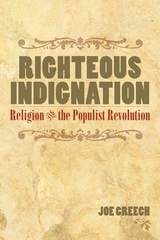
RIGHTEOUS INDIGNATION
Religion and the Populist RevolutionJoe Creech
University of Illinois Press, 2010
This illuminating study shows how Populists wove their political and economic reforms into a grand cosmic narrative pitting the forces of God and democracy against those of Satan and tyranny, and energizing their movement with a sacred sense of urgency. This book also unpacks the southern Protestants’ complicated approach to political and economic questions, as well as addressing broader issues about protest movements, race relations, and the American South.
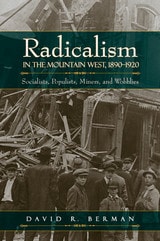
Radicalism in the Mountain West, 1890-1920
Socialists, Populists, Miners, and WobbliesDavid R. Berman
University Press of Colorado, 2013
Focusing on the populist and socialist movements, David R. Berman sheds light on American radicalism with this study of a region that epitomized its rise and fall. As the frontier industrialized, self-reliant pioneers and prospectors transformed into wage- laborers for major corporations with government, military, and church ties. Economically and politically stymied, westerners rallied around homegrown radicals such as William "Big Bill" Haywood and Vincent "the Saint" St. John and touring agitators such as Eugene Debs and Mary "Mother" Jones. Radicalism in the Mountain West tells how volleys of strikes, property damage, executions, and deportations ensued in the absence of negotiation.
Drawing on years of archival research and diverse materials such as radical newspapers, reports filed by labor spies and government agents, and records of votes, subscriptions, and memberships, Berman offers Western historians and political scientists an unprecedented view into the region's radical past.
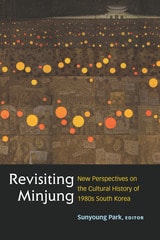
Revisiting Minjung
New Perspectives on the Cultural History of 1980s South KoreaSunyoung Park, Editor
University of Michigan Press, 2019
Revisiting Minjung brings new themes, new subjectivities, and new theoretical perspectives to the study of the rich ecosystem of 1980s Korean culture. Treated here is a wide array of topics, including the origins of minjung ideology, its critique by the right wing, minjung art and music, workers’ literary culture, women writers and the resurgence of feminism, erotic cinema, science fiction, transnational political travels, and the representations of race and queerness in 1980s popular culture. The book thus details the origins and development of some of the movements that shape cultural life in South Korea today, and it does so through analyses that engage some of the most pressing debates in current scholarship in Korea and abroad.
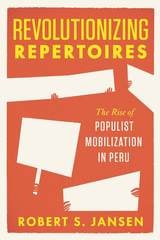
Revolutionizing Repertoires
The Rise of Populist Mobilization in PeruRobert S. Jansen
University of Chicago Press, 2017
Drawing on pragmatist theories of social action, Revolutionizing Repertoires sets out to examine what happens when the repertoire of practices available to political actors is dramatically reconfigured. Taking as his case study the development of a distinctively Latin American style of populist mobilization, Robert S. Jansen analyzes the Peruvian presidential election of 1931. He finds that, ultimately, populist mobilization emerged in the country at this time because newly empowered outsiders recognized the limitations of routine political practice and understood how to modify, transpose, invent, and recombine practices in a whole new way. Suggesting striking parallels to the recent populist turn in global politics, Revolutionizing Repertoires offers new insights not only to historians of Peru but also to scholars of historical sociology and comparative politics, and to anyone interested in the social and political origins of populism.

Roots of Reform
Farmers, Workers, and the American State, 1877-1917Elizabeth Sanders
University of Chicago Press, 1999
Based on new evidence from legislative records and other sources, Sanders shows that this tenuous alliance of "producers versus plutocrats" shaped early regulatory legislation, remained powerful through the populist and progressive eras, and developed a characteristic method of democratic state expansion with continued relevance for subsequent reform movements.
Roots of Reform is essential reading for anyone interested in this crucial period of American political development.