Results by title
167 books match the query 'Reform' and 25 start with r
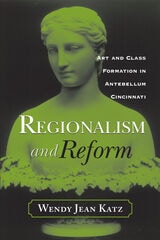
REGIONALISM AND REFORM
ART AND CLASS FORMATION IN ANTEBELLUM CIWENDY JEAN KATZ
The Ohio State University Press, 2002
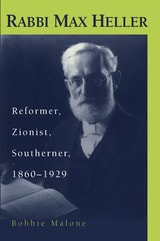
Rabbi Max Heller
Reformer, Zionist, Southerner, 1860-1929Barbara S. Malone
University of Alabama Press, 1997
Max Heller was a man of both passionate conviction and inner contradiction. He sought to be at the center of current affairs, not as a spokesperson of centrist opinion, but as an agitator or mediator, constantly struggling to find an acceptable path as he confronted the major issues of the day--racism and Jewish emancipation in eastern Europe, nationalism and nativism, immigration and assimilation. Heller's life experience provides a distinct vantage point from which to view the complexity of race relations in New Orleans and the South and the confluence of cultures that molded his development as a leader. A Bohemian immigrant and one of the first U.S.-trained rabbis, Max Heller served for 40 years as spiritual leader of a Reform Jewish congregation in New Orleans--at that time the largest city in the South. Far more than a congregational rabbi, Heller assumed an activist role in local affairs, Reform Judaism, and the Zionist movement, maintaining positions often unpopular with his neighbors, congregants, and colleagues. His deep concern for social justice led him to question two basic assumptions that characterized his larger social milieu--segregation and Jewish assimilation.
Heller, a consummate Progressive with clear vision and ideas substantially ahead of their time, led his congregation, his community, Reform Jewish colleagues, and Zionist sympathizers in a difficult era.

Rabbi's Manual
David Polish
Central Conference of American Rabbis, 1988
Rabbinic Authority
Elliot L. Stevens
Central Conference of American Rabbis, 1982
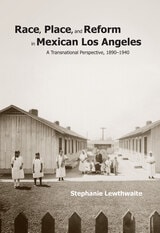
Race, Place, and Reform in Mexican Los Angeles
A Transnational Perspective, 1890-1940Stephanie Lewthwaite
University of Arizona Press, 2009
In Race, Place, and Reform in Mexican Los Angeles, Stephanie Lewthwaite presents evidence from a myriad of sources that these varied agendas of reform consistently supported the creation of racial, ethnic, and cultural differences across Los Angeles. Reformers simultaneously promoted acculturation and racialization, creating a “landscape of difference” that significantly shaped the place and status of Mexican immigrants and Mexican Americans from the Progressive era through the New Deal.
The book journeys across the urban, suburban, and rural spaces of Greater Los Angeles as it moves through time and examines the rural–urban migration of Mexicans on both a local and a transnational scale. Part 1 traverses the world of Progressive reform in urban Los Angeles, exploring the link between the region’s territorial and industrial expansion, early campaigns for social and housing reform, and the emergence of a first-generation Mexican immigrant population. Part 2 documents the shift from official Americanization and assimilation toward nativism and exclusion. Here Lewthwaite examines competing cultures of reform and the challenges to assimilation from Mexican nationalists and American nativists. Part 3 analyzes reform during the New Deal, which spawned the active resistance of second-generation Mexican Americans.
Race, Place, and Reform in Mexican Los Angeles achieves a full, broad, and nuanced account of the various—and often contradictory—efforts to reform the Mexican population of Los Angeles. With a transnational approach grounded in historical context, this book will appeal to students of history, cultural studies, and literary studies

Re-forming Judaism
Moments of Disruption in Jewish ThoughtRabbi Stanley M. Davids and Leah Hochman, PhD
Central Conference of American Rabbis, 2023
Throughout Jewish history, revolutionary events and subversive ideas have burst forth, repeatedly transforming Jewish experience. Re-forming Judaism seeks to explore these ideas—and the individuals behind them—by delving into historical disruptions that led to lasting change in Jewish thought. A distinguished array of scholars take us on a journey from the disruptive prophets of ancient times, through rational, mystical, and extremist medievalists, to the impact of Haskalah and early Reform thought in modernity. Contemporary innovations such as changes in liturgy and music, feminism, and post-Holocaust theology are included, as are insights into Sephardic and North African experiences. By showing how Judaism forms—then re-forms, and re-forms again—the contributors demonstrate that tensions between continuity and change have always been part of Jewish life, helping us to both understand the past and contemplate the future.
Reading Reform Responsa
Jewish Tradition, Reform Rabbis, and Today's IssuesRabbi Mark Washofsky, PhD
Central Conference of American Rabbis, 2024
Recent Reform Responsa - PDF Electronic Version
Rabbi Solomon B. Freehof
Central Conference of American Rabbis, 1963
Can women serve as pall-bearers? Is it appropriate to refer to God as YHVE? May a bar mitzvah take place on Shabbat Shuvah? What are acceptable medical uses of a fetus? What names are to be avoided? Can a convicted accountant serve as a congregational officer? Must a sperm donor be Jewish in order for the fetus to be Jewish? These are some of the questions dealt with in this collection. Originally published in 1963, many of these questions are still relevant today.
Recharging Judaism
How Civic Engagement Is Good for Synagogues, Jews, and AmericaRabbi Judith Schindler and Judy Seldin-Cohen
Central Conference of American Rabbis, 2018
Recharging Judaism is the essential and timely guide for every synagogue and community seeking to strengthen the bonds of Jewish communal life through advocating for social justice. This volume delves into the enriching civic engagement and acts of righteousness already undertaken by Jews and Jewish communities across the country, and further explores the positive differences we can all affect upon the future of America. There are a myriad of ways in which advocating for social justice and participating in civic engagement can create lasting change. Those inspired to affect such change will find new meaning in the texts and history of our tradition. Using real examples from both small and large congregations across the country, Recharging Judaism offers a framework to guide us through our journey of civic responsibility and social duty and into a brighter future for our country.

Reform Responsa - PDF Electronic Version
Rabbi Solomon B. Freehof
Central Conference of American Rabbis, 1960
This volume of Responsa, originally published in 1960, answers such questions as: May a memorial service be held on Shabbat? What is the role of a stepfather at a bar mitzvah? Can a congregational gift shop be open on Shabbat? Must an Ark be centered on the bima? Is it acceptable to marry an apostate daughter of a Jewish mother? Should a dying patient be informed of his condition? What to do when a body is lost at sea? These questions and more shed light on the issues of concern to the Jewish community when this book was first published, and still provide insight today.
Reform Responsa for Our Time - PDF Electronic Version
Rabbi Solomon B. Freehof
Central Conference of American Rabbis, 1977
Originally published in 1977, this back-in-print classic offers a historic look at the concerns of an earlier generation. The questions and answers in this book deal with issues of Jewish ritual observance, holidays, life cycle events, synagogue life, birth, death, medical ethics, abortion, and much more. Though some issues are dated, this volume offers timeless wisdom and unique insights into Jewish thought.
Reform Responsa for the Twenty-First Century, Volume 1
Sh'eilot Ut'shuvotRabbi Mark Washofsky, PhD
Central Conference of American Rabbis, 2010
Reform Responsa for the Twenty-First Century: Sh'eilot Ut'shuvot is the latest in an ongoing series of Reform Responsa. Drawing from the breadth of traditional and modern Jewish texts, law, and ideology, this two volumes set addresses over seventy contemporary topics, including conversion of adopted children, fertility treatments, patrilineal descent, issues of synagogue management, social justice activism, interfaith marriage, and rituals of death and mourning.
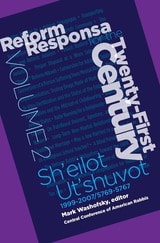
Reform Responsa for the Twenty-First Century, Volume 2
Sh'eilot Ut'shuvotRabbi Mark Washofsky, PhD
Central Conference of American Rabbis, 2010
Reform Responsa for the Twenty-First Century: Sh'eilot Ut'shuvot is part of an ongoing series of Reform Responsa. Drawing from the breadth of traditional and modern Jewish texts, law, and ideology, this two volumes set addresses over seventy contemporary topics, including conversion of adopted children, fertility treatments, patrilineal descent, issues of synagogue management, social justice activism, interfaith marriage, and rituals of death and mourning.
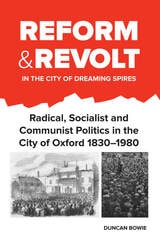
Reform and Revolt in the City of Dreaming Spires
Radical, Socialist and Communist Politics in the City of Oxford 1830–1980Duncan Bowie
University of Westminster Press, 2018
Reform, Recovery, and Growth
Latin America and the Middle EastEdited by Rudiger Dornbusch and Sebastian Edwards
University of Chicago Press, 1994
Among the questions addressed are: What are the requirements for a stabilization policy that reduces inflation in a reasonable amount of time at an acceptable cost? What are the effects of structural reforms, especially trade liberalization, deregulation, and privatization, on growth in the short and long runs? How do macroeconomic instability and adjustment policies affect income distribution and poverty? How does the specific design of structural adjustment efforts affect results?
In this companion to Macroeconomics of Populism in Latin America, the authors confirm that macroeconomic stability has a positive effect on income distribution. The volume presents case studies that describe in detail the stabilization experiences in Brazil, Israel, Argentina, and Bolivia, and also includes discussion of Chile, Mexico, Peru, and Turkey.
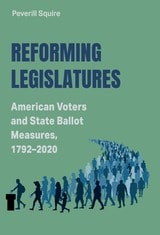
Reforming Legislatures
American Voters and State Ballot Measures, 1792-2020Peverill Squire
University of Missouri Press, 2024
Legislatures are ubiquitous in the American political experience. First created in Virginia in 1619, they have existed continuously ever since. Indeed, they were established in even the most unlikely of places, notably in sparsely populated frontier settlements, and functioned as the focal point of every governing system devised.
Despite the ubiquity of state legislatures, we know remarkably little about how Americans have viewed them as organizations, in terms of their structures, rules, and procedures. But with the rise of modern public opinion surveys in the twentieth century, we now have extensive data on how Americans have gauged legislative performance throughout the many years. That said, the responses to the questions pollsters typically pose reflect partisanship, policy, and personality. Generally, respondents respond favorably to legislatures controlled by their own political party and those in power during good economic times. Incumbent lawmakers get ratings boosts from having personalities, “home styles” that mesh with those of their constituents. These relationships are important indicators of people’s thoughts regarding the current performance of their legislatures and legislators, but they tell us nothing about attitudes toward the institution and its organizational characteristics.
This study offers a unique perspective on what American voters have historically thought about legislatures as organizations and legislators as representatives. Rather than focusing on responses to surveys that ask respondents how they rate the current performance of lawmakers and legislatures, this study leverages the most significant difference between national and state politics: the existence of ballot propositions in the latter. At the national level Americans have never had any say over Congress’s structure, rules, or procedures. In contrast, at the state level they have had ample opportunities over the course of more than two centuries to shape their state legislatures. The data examined here look at how people have voted on more than 1,500 state ballot propositions targeting a wide array of legislative organizational and parliamentary features. By linking the votes on these measures with the public debates preceding them, this study documents not only how American viewed various aspects of their legislatures, but also whether their opinions held constant or shifted over time. The findings reported paint a more nuanced picture of Americans’ attitudes toward legislatures than the prevailing one derived from survey research. When presented with legislative reform measures on which concrete choices were offered and decisions on them had to be made, the analyses presented here reveal that, counter to the conventional wisdom that people loved their representatives but hated the legislature, voters usually took charitable positions toward the institution while harboring skeptical attitudes about lawmakers’ motives and behaviors.
Reforming the Reform
Problems of Public Schooling in the American Welfare StateSusan L. Moffitt, Michaela Krug O'Neill, and David K. Cohen
University of Chicago Press, 2023
School reform is almost always born out of big dreams and well-meaning desires to change the status quo. But between lofty reform legislation and the students whose education is at stake, there are numerous additional policies and policymakers who determine how reforms operate. Even in the best cases, school reform initiatives can perpetuate problems created by earlier reforms or existing injustices, all while introducing new complications. In Reforming the Reform, political scientist Susan L. Moffitt, education policy scholar Michaela Krug O’Neill, and the late policy and education scholar David K. Cohen take on a wide-ranging examination of the many intricacies of school reform.
With a particular focus on policymakers in the spaces between legislation and implementation, such as the countless school superintendents and district leaders tasked with developing new policies in the unique context of their district or schools, the authors identify common problems that arise when trying to operationalize ambitious reform ideas. Their research draws on more than 250 interviews with administrators in Tennessee and California (chosen as contrasts for their different political makeup and centralization of the education system) and is presented here alongside survey data from across the United States as well as archival data to demonstrate how public schools shoulder enormous responsibilities for the American social safety net. They provide a general explanation for problems facing social policy reforms in federalist systems (including healthcare) and offer pathways forward for education policy in particular.
Response to Reform
Composition and the Professionalization of TeachingMargaret J. Marshall
Southern Illinois University Press, 2003
Response to Reform: Composition and the Professionalization of Teaching critiques the politics of labor and gender biases inherent in the composition workplace that prevent literacy teachers from attaining professional status and respect. Scrutinizing the relationship between scholarship and teaching, Margaret J. Marshall calls for a reconceptualization of what it means to prepare for and enter the field of composition instruction.
Interrogating the approach the education system takes to certify teachers without actually “professionalizing” their careers, Marshall contends that these programs rely on outdated rhetorics of labor that only widen the gap between teaching and other professional jobs. Such attempts to re-educate literacy teachers exploit and marginalize their work, and thus prevent them from claiming the status of academic professionals. In providing an overview of the history of and language used to literacy instruction, she also points out that while women are overrepresented in composition instruction, they are underrepresented in tenure track and administrative positions.
To correct and combat these inequities, Marshall advocates an alternate alignment of power structures and rhetorical choices. In a wide-ranging survey that sheds new light on the composition workplace as well as higher education at large, Response to Reform: Composition and the Professionalization of Teaching boldly asks us to do away with the reductive language we inherit from the past that characterize teaching and professionalization, as well as our customary responses to public criticism of education. The result is a new articulation of composition as a meritorious profession.

Rethinking Chinese Socialist Theaters of Reform
Performance Practice and Debate in the Mao EraXiaomei Chen, Tarryn Li-Min Chun, and Siyuan Liu, Editors
University of Michigan Press, 2021
Reversing Course
Carter's Foreign Policy, Domestic Politics, and the Failure of ReformDavid Skidmore
Vanderbilt University Press, 1996
In Reversing Course, David Skidmore argues that President Carter's initial foreign policy agenda required a scaling back of U.S. commitments abroad, reflecting a decline in resources, as well as influence, in a world developing in ways necessarily reducing U.S. hegemony. By probing beneath the obvious and carefully sifting the abundant but poorly understood evidence, Skidmore finds at the root of Carter's failed effort an irresistible pressure to reverse a liberal foreign-policy agenda in order to address the effect at home of well-organized conservative criticism. For Skidmore, Carter's course "reversed" toward a traditional containment strategy vis-a-vis the Soviet Union not because of Soviet intransigence or faulty idealism but because Cold War politics sold better in the polls.
While offering significant theoretical arguments, Skidmore carefully anchors his thesis in the day-to-day political give and take among those personalities and events that provoked headlines and commentaries long before they were the stuff of history. Among the telling factors and events analyzed in this book are the Vance/Brzezinski conflict, the support and opposition of Howard Baker, the SALT II Treaty, the Panama Canal Treaties, and the Soviet occupation of Afghanistan, to mention only a few.
Although Skidmore draws conclusions that apply to the Reagan, Bush, and Clinton administrations as well, his focus is not on personality but on theory and underlying structures. He provides a demonstration that this structural approach can "be helpful not only in unraveling the mysteries of policy change under Carter but also in specifying the underlying sources of policy vacillation over much of the past two decades." .
Revivals, Awakening and Reform
William G. McLoughlin
University of Chicago Press, 1980
"This book is sensitive, thought-provoking and stimulating. It is 'must' reading for those interested in awakenings, and even though some may not revise their views as a result of McLoughlin's suggestive outline, none can remain unmoved by the insights he has provided on the subject."—Christian Century
"This is one of the best books I have read all year. Professor McLoughlin has again given us a profound analysis of our culture in the midst of revivalistic trends."—Review and Expositor

Revolutions in Mexican Catholicism
Reform and Revelation in Oaxaca, 1887–1934Edward Wright-Rios
Duke University Press, 2009
Wright-Rios demonstrates that pastors, peasants, and laywomen sought to enliven and shape popular religion in Oaxaca. The clergy tried to adapt the Vatican’s blueprint for Catholic revival to Oaxaca through institutional reforms and attempts to alter the nature and feel of lay religious practice in what amounted to a religious modernization program. Yet some devout women had their own plans. They proclaimed their personal experiences of miraculous revelation, pressured priests to recognize those experiences, marshaled their supporters, and even created new local institutions to advance their causes and sustain the new practices they created. By describing female-led visionary movements and the ideas, traditions, and startling innovations that emerged from Oaxaca’s indigenous laity, Wright-Rios adds a rarely documented perspective to Mexican cultural history. He reveals a remarkable dynamic of interaction and negotiation in which priests and parishioners as well as prelates and local seers sometimes clashed and sometimes cooperated but remained engaged with one another in the process of making their faith meaningful in tumultuous times.
Rivalry and Reform
Presidents, Social Movements, and the Transformation of American PoliticsSidney M. Milkis and Daniel J. Tichenor
University of Chicago Press, 2019
Rivalry and Reform explores the relationship between presidents and social movements throughout history and into the present day, revealing the patterns that emerge from the epic battles and uneasy partnerships that have profoundly shaped reform. Through a series of case studies, including Abraham Lincoln and abolitionism, Lyndon Johnson and the civil rights movement, and Ronald Reagan and the religious right, Sidney M. Milkis and Daniel J. Tichenor argue persuasively that major political change usually reflects neither a top-down nor bottom-up strategy but a crucial interplay between the two. Savvy leaders, the authors show, use social movements to support their policy goals. At the same time, the most successful social movements target the president as either a source of powerful support or the center of opposition. The book concludes with a consideration of Barack Obama’s approach to contemporary social movements such as Black Lives Matter, United We Dream, and Marriage Equality.

Roots of Reform
Farmers, Workers, and the American State, 1877-1917Elizabeth Sanders
University of Chicago Press, 1999
Based on new evidence from legislative records and other sources, Sanders shows that this tenuous alliance of "producers versus plutocrats" shaped early regulatory legislation, remained powerful through the populist and progressive eras, and developed a characteristic method of democratic state expansion with continued relevance for subsequent reform movements.
Roots of Reform is essential reading for anyone interested in this crucial period of American political development.

Russia on the Danube
Empire, Elites, and Reform in Moldavia and Wallachia, 1812–1834Victor Taki
Central European University Press, 2021
One of the goals of Russia’s Eastern policy was to turn Moldavia and Wallachia, the two Romanian principalities north of the Danube, from Ottoman vassals into a controllable buffer zone and a springboard for future military operations against Constantinople. Russia on the Danube describes the divergent interests and uneasy cooperation between the Russian officials and the Moldavian and Wallachian nobility in a key period between 1812 and 1834. Victor Taki’s meticulous examination of the plans and memoranda composed by Russian administrators and the Romanian elite underlines the crucial consequences of this encounter. The Moldavian and Wallachian nobility used the Russian-Ottoman rivalry in order to preserve and expand their traditional autonomy. The comprehensive institutional reforms born out of their interaction with the tsar’s officials consolidated territorial statehood on the lower Danube, providing the building blocks of a nation state.
The main conclusion of the book is that although Russian policy was driven by self-interest, and despite the Russophobia among a great part of the Romanian intellectuals, this turbulent period significantly contributed to the emergence, several decades later, of modern Romania.