Results by title
237 books match the query 'Religion, Politics & State' and 33 start with r
Rabbinic Political Theory
Religion and Politics in the MishnahJacob Neusner
University of Chicago Press, 1991
Neusner begins his study with a modification of Weber's categories for a theory of politics: myth, institutions, administration, passion, responsibility, and proportion. Detailing the Mishnah's conception of politics, Neusner considers what he calls the stable and static structure and system through comparison with Aristotle. Although Aristotle's Politics and the Mishnah share a common economic theory based on the fundamental unit of the householder, they diverge in their conceptions of political structure and order. Aristotle embeds economics within political economy, while, Neusner argues, the Mishnah presents the anomaly of an economics separated from politics.
Using modern political terms, this study explicates the complicated politics developed by the philosopher-theologians of the Mishnah. It is a first-rate contribution to our understanding of the intersection of politics, political philosophy, and the Mishnaic system.
Race, Religion, and Civil Rights
Asian Students on the West Coast, 1900-1968Hinnershitz, Stephanie
Rutgers University Press, 2015
Stephanie Hinnershitz tells the story of the Asian American campus organizations that flourished on the West Coast from the 1900s through the 1960s. Using their faith to point out the hypocrisy of fellow American Protestants who supported segregation and discriminatory practices, the student activists in these groups also performed vital outreach to communities outside the university, from Californian farms to Alaskan canneries. Highlighting the unique multiethnic composition of these groups, Race, Religion, and Civil Rights explores how the students' interethnic activism weathered a variety of challenges, from the outbreak of war between Japan and China to the internment of Japanese Americans during World War II.
Drawing from a variety of archival sources to bring forth the authentic, passionate voices of the students, Race, Religion, and Civil Rights is a testament to the powerful ways they served to shape the social, political, and cultural direction of civil rights movements throughout the West Coast.
Radicalizing Men
Fascist Desires, Great Replacement Propaganda, and Political ViolenceJessica Johnson
Duke University Press, 2026
Reaction and Revolution
Rhetorics of the Radical RightKevin Musgrave
Michigan State University Press, 2027
Reaction and Revolution situates the resurgence of far-right movements and thinkers within a longer intellectual history that emerged primarily in interwar Germany—a philosophical conversation centered on political theology. Arguing that the more radically democratic modes of political theology offer better ways to understand and to counter the far right’s rhetorical appeal, this book offers a rhetorical-intellectual critique of three key thinkers and their allied movements: Paul Gottfried and the American paleoconservatives, Guillaume Faye and the French Identitarians, and Nick Land and the Dark Enlightenment. Kevin Musgrave argues that a radical political theology of race offers meaningful ways of challenging the right’s efforts to build a global imperium of whiteness and of reclaiming the promise of human dignity.
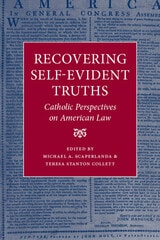
Recovering Self-Evident Truths
Catholic Perspectives on American LawMichael A. Scaperlanda
Catholic University of America Press, 2007
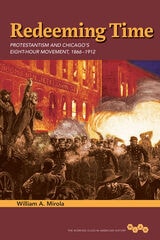
Redeeming Time
Protestantism and Chicago's Eight-Hour Movement, 1866-1912William A. Mirola
University of Illinois Press, 2015
William A. Mirola explores how the city's eight-hour movement intersected with a Protestant religious culture that supported long hours to keep workers from idleness, intemperance, and secular leisure activities. Analyzing how both workers and clergy rewove working-class religious cultures and ideologies into strategic and rhetorical frames, Mirola shows how every faith-based appeal contested whose religious meanings would define labor conditions and conflicts. As he notes, the ongoing worker-employer tension transformed both how clergy spoke about the eight-hour movement and what they were willing to do, until intensified worker protest and employer intransigence spurred Protestant clergy to support the eight-hour movement even as political and economic arguments eclipsed religious framing.
A revealing study of an era and a movement, Redeeming Time illustrates the potential--and the limitations--of religious culture and religious leaders as forces in industrial reform.
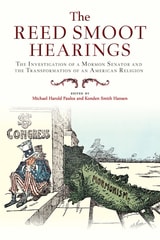
Reed Smoot Hearings
The Investigation of a Mormon Senator and the Transformation of an American ReligionMichael Harold Paulos
Utah State University Press, 2022
The work adds new insights into the role religion and the secular played in the shaping of US political institutions and national policies. Chapters also look at the history of anti-polygamy laws, the persistence of post-1890 plural marriage, the continuation of anti-Mormon sentiment, the intimacies and challenges of religious privatization, the dynamic of federal power on religious reform, and the more intimate role individuals played in effecting these institutional and national developments.
The Smoot hearings stand as an important case study that highlights the paradoxical history of religious liberty in America and the principles of exclusion and coercion that history is predicated on. Framed within a liberal Protestant sensibility, these principles of secular progress mapped out the relationship of religion and the nation-state for the new modern century. The Reed Smoot Hearings will be of significant interest to students and scholars of Mormon, western, American, and religious history.
Publication supported, in part, by Gonzaba Medical Group.
Contributors: Gary James Bergera, John Brumbaugh, Kenneth L. Cannon II, Byron W. Daynes, Kathryn M. Daynes, Kathryn Smoot Egan, D. Michael Quinn
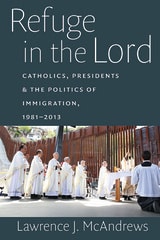
Refuge in the Lord
Lawrence J. McAndrews
Catholic University of America Press, 2015
Regulating Difference
Religious Diversity and Nationhood in the Secular WestMarian Burchardt
Rutgers University Press, 2020
Transnational migration has contributed to the rise of religious diversity and has led to profound changes in the religious make-up of society across the Western world. As a result, societies and nation-states have faced the challenge of crafting ways to bring new religious communities into existing institutions and the legal frameworks. Regulating Difference explores how the state regulates religious diversity and examines the processes whereby religious diversity and expression becomes part of administrative landscapes of nation-states and people’s everyday lives. Arguing that concepts of nationhood are key to understanding the governance of religious diversity, Regulating Difference employs a transatlantic comparison of the Spanish region of Catalonia and the Canadian province of Quebec to show how processes of nation-building, religious heritage-making and the mobilization of divergent interpretations of secularism are co-implicated in shaping religious diversity. It argues that religious diversity has become central for governing national and urban spaces.
This book is also freely available online as an open access digital edition.
Regulating Religious Coexistence
The Intricacies of Interfaith Cooperation in Coastal KenyaErik Meinema
Ohio University Press, 0
Regulating Religious Coexistence offers a compelling ethnographic analysis of how Muslims, Christians, and practitioners of indigenous African religions negotiate coexistence in Kenya’s coastal region. The book conceptualizes religious diversity as a dynamic field shaped by multiple partly intersecting and partly conflicting models of interaction. These include the political secularism promoted by the Kenyan state and civil society organizations focused on interfaith harmony, forms of competition between religious groups, and pluralistic practices in which individuals draw on multiple traditions to meet spiritual needs.
Through a close examination of civil society initiatives funded by Western donors to foster peacebuilding and to counter violent extremism, the book investigates how these models for coexistence are negotiated and contested and how they intersect with historical and contemporary patterns. It demonstrates that modes of religious coexistence in coastal Kenya have been shaped by colonial and postcolonial governance, transregional connections, and interactions between Christians, Muslims, and Traditionalists across time.
As one of the few monographs on political secularism in an African context, Regulating Religious Coexistence makes a significant contribution to scholarship on religious diversity and coexistence. It situates Christianity, Islam, and indigenous African traditions within a single conceptual framework, broadening earlier studies that mostly treated them in isolation. This book is essential reading for scholars of religion, anthropology, African studies, and political theory, offering fresh insights into the complex realities of religious diversity in Africa and beyond.
Religion and Peace
Global Perspectives and PossibilitiesNukhet A. Sandal
Ohio University Press, 2022
Religion and Political Tolerance in America
Advances in the State of the ArtPaul Djupe
Temple University Press, 2015
The essays in Religion and Political Tolerance in America seek to understand how these elements interrelate. The editor and contributors to this important volume present new and innovative research that wrestles with the fundamental question of the place of religion in democratic society. They address topics ranging from religious contributions to social identity to the political tolerance that religious elites (clergy) hold and advocate to others, and how religion shapes responses to intolerance.
The conclusion, by Ted Jelen, emphasizes that religion’s take on political tolerance is nuanced and that they are not incompatible; religion can sometimes enhance the tolerance of ordinary citizens.

Religion and Politics in East Africa
The Period since IndependenceHölger Bernt Hansen
Ohio University Press, 1994
Religious activities have been of continuing importance in the rise of protest against postcolonial governments in Eastern Africa. Governments have attempted to “manage“ religious affairs in both Muslim and Christian areas. Religious denominations have acted as advocates of human rights and in opposition to one-party-state regimes. Islamic fundamentalism changed with the ending of the Cold War.
The book is divided into four parts: The Challenge of Islam; Christianity, Sectarianism, and Politics in Uganda; Christians and Muslim in Kenyan Politics; and Cross-cultural Complications. An introductory essay by Michael Twaddle provides and overview of the changing character of politico-religious conflict in Eastern Africa. Holger Bernt Hansen summarizes the presentation with a discussion of dilemmas and challenges in the study of religion and politics.
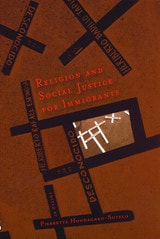
Religion and Social Justice For Immigrants
Hondagneu-Sotelo, Pierrette
Rutgers University Press, 2006
Religion has jumped into the sphere of global and domestic politics in ways that few would have imagined a century ago. Some expected that religion would die as modernity flourished. Instead, it now stares at us almost daily from the front pages of newspapers and television broadcasts. Although it is usually stories about the Christian Right or conservative Islam that grab headlines, there are many religious activists of other political persuasions that are working quietly for social justice. This book examines how religious immigrants and religious activists are working for equitable treatment for immigrants in the United States.
The essays in this book analyze the different ways in which organized religion provides immigrants with an arena for mobilization, civic participation, and solidarity. Contributors explore topics including how non-Western religious groups such as the Vietnamese Caodai are striving for community recognition and addressing problems such as racism, economic issues, and the politics of diaspora; how interfaith groups organize religious people into immigrant civil rights activists at the U.S.–Mexican border; and how Catholic groups advocate governmental legislation and policies on behalf of refugees.
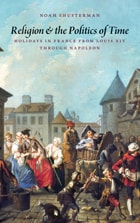
Religion and the Politics of Time
Noah Shusterman
Catholic University of America Press, 2010
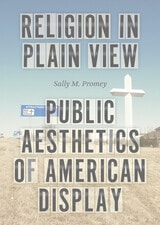
Religion in Plain View
Public Aesthetics of American DisplaySally M. Promey
University of Chicago Press, 2024
In Religion in Plain View, Sally M. Promey analyzes religion’s visible saturation of American public space and the histories that shaped this exhibitionary aesthetics. In street art, vehicle décor, signs, monuments, architecture, zoning policy, and more, Promey exposes American display’s merger of evangelicalism, capitalism, and imperialism. From this convergence, display materializes a distinctly American drive to advertise, claim territory, invalidate competitors, and fabricate a tractable national heritage. Charting this aesthetics’ strategic work as a Protestant technology of White nation formation, Religion in Plain View offers a dynamic critique of the ways public display perpetuates deeply ingrained assumptions about the proper shape of life and land in the United States.
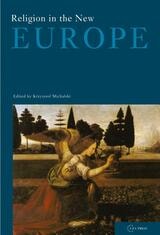
Religion in the New Europe
Krzysztof Michalski
Central European University Press, 2006
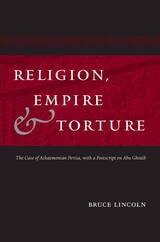
Religion, Empire, and Torture
The Case of Achaemenian Persia, with a Postscript on Abu GhraibBruce Lincoln
University of Chicago Press, 2007
Lincoln identifies three core components of an imperial theology that have transhistorical and contemporary relevance: dualistic ethics, a theory of divine election, and a sense of salvific mission. Beyond this, he asks, how did the Achaemenians understand their place in the cosmos and their moral status in relation to others? Why did they feel called to intervene in the struggle between good and evil? What was their sense of historic purpose, especially their desire to restore paradise lost? And how did this lead them to deal with enemies and critics as imperial power ran its course? Lincoln shows how these religious ideas shaped Achaemenian practice and brought the Persians unprecedented wealth, power, and territory, but also produced unmanageable contradictions, as in a gruesome case of torture discussed in the book’s final chapter. Close study of that episode leads Lincoln back to the present with a postscript that provides a searing and utterly novel perspective on the photographs from Abu Ghraib.
Religion, Secularism, and Political Belonging
Leerom Medovoi and Elizabeth Bentley, editors
Duke University Press, 2021
Contributors. Markus Balkenhol, Elizabeth Bentley, Kambiz GhaneaBassiri, David N. Gibbs, Ori Goldberg, Marcia Klotz, Zeynep Kurtulus Korkman, Leerom Medovoi, Eva Midden, Mohanad Mustafa, Mu-chou Poo, Shaul Setter, John Vignaux Smith, Pooyan Tamimi Arab, Ernst van den Hemel, Albert Welter, Francis Ching-Wah Yip, Raef Zreik
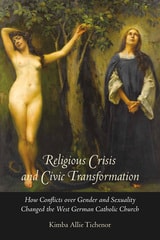
Religious Crisis and Civic Transformation
How Conflicts over Gender and Sexuality Changed the West German Catholic ChurchKimba Allie Tichenor
Brandeis University Press, 2016
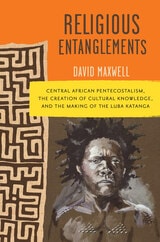
Religious Entanglements
Central African Pentecostalism, the Creation of Cultural Knowledge, and the Making of the Luba KatangaDavid Maxwell
University of Wisconsin Press, 2023
Through the careful reconstruction of knowledge pathways, Maxwell brings into focus the role of Africans in shaping texts, collections, and images as well as in challenging and adapting Western-imported presuppositions and prejudices. Ultimately, Maxwell illustrates the mutually constitutive nature of discourses of identity in colonial Africa and reveals not only how the Luba shaped missionary research but also how these coproducers of knowledge constructed and critiqued custom and convened new ethnic communities.
Making a significant intervention in the study of both the history of African Christianity and the cultural transformations effected by missionary encounters across the globe, Religious Entanglements excavates the subculture of African Pentecostalism, revealing its potentiality for radical sociocultural change.
Religious Failure, Geopolitics, and Forced Displacement in Russia, Eastern Europe, and the South Caucasus
Lucian N. Leustean
Central European University Press, 2026
Religious Freedom after the Sexual Revolution
A Catholic GuideHelen Alvare
Catholic University of America Press, 2022
Religious Liberty and the American Founding
Natural Rights and the Original Meanings of the First Amendment Religion ClausesVincent Phillip Muñoz
University of Chicago Press, 2022
The Founders understood religious liberty to be an inalienable natural right. Vincent Phillip Muñoz explains what this means for church-state constitutional law, uncovering what we can and cannot determine about the original meanings of the First Amendment’s Religion Clauses and constructing a natural rights jurisprudence of religious liberty.
Drawing on early state constitutions, declarations of religious freedom, Founding-era debates, and the First Amendment’s drafting record, Muñoz demonstrates that adherence to the Founders’ political philosophy would lead neither to consistently conservative nor consistently liberal results. Rather, adopting the Founders’ understanding would lead to a minimalist church-state jurisprudence that, in most cases, would return authority from the judiciary to the American people. Thorough and convincing, Religious Liberty and the American Founding is key reading for those seeking to understand the Founders’ political philosophy of religious freedom and the First Amendment Religion Clauses.
Religious Pluralism and the Nigerian State
Mis Af#66Simeon O. Ilesanmi
Ohio University Press, 1996
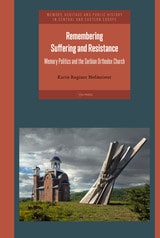
Remembering Suffering and Resistance
Memory Politics and the Serbian Orthodox ChurchKarin Roginer Hofmeister
Central European University Press, 2024
Assessing issues related to the Orthodox Church from an academic, secular point of view is a sensitive matter. However, by tracing and interpreting the engagement of the Serbian Church with the memory of Serbian heroic victimhood in World War II through a kind of “methodological agnosticism,” this volume has managed to tackle the subtle topic in a very delicate and value-neutral way. Arguing that the search for a collective memory is particularly urgent in the face of societal uncertainty and that religious institutions often use their memory potential to reaffirm their public relevance, the book examines the motivations, forms, strategies, and outcomes of a wide range of mnemonic activities the Serbian Orthodox Church engaged in following the upheavals caused by the collapse of Yugoslav socialism, the violent dissolution of the country, and the fall of the Milošević regime. These activities, taking place within the memory fields framed by the post-socialist, post-conflict, and post-secular horizons, took liturgical and non-liturgical forms, often involving a hybrid fusion of the two. As a result of this mnemonic endeavor, the author argues, the Church was successful in reasserting its power and legitimacy in the public sphere of post-2000 Serbia.

Resistance
The Essence of the Islamist RevolutionAlastair Crooke
Pluto Press, 2009
This book traces the essence of the Islamist Revolution from its origins in Egypt, through Najaf, Lebanon, Iran and the Iranian Revolution to today. Alastair Crooke presents a compelling account of the ideas and energy which are mobilising the Islamic world.
Crooke argues that the West faces a mass mobilisation against the US-led Western project. The roots of this conflict are described in terms of religious themes that extend back over 500 years. They represent clashing systems of thinking and values. Islamists have a vision for the future of their own societies which would entail radical change from Western norms. Resistance is presented as the means to force Western behaviour to change and to expose the essential differences between the two modes of thinking.
This is a rigourous account that traces the threads of revolution of various movements, including the influence of 'political Shi'ism' and the Iranian Revolution and its impact on Hezbollah and Hamas.
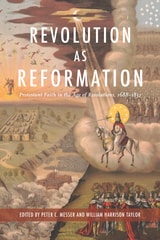
Revolution as Reformation
Protestant Faith in the Age of Revolutions, 1688–1832Edited by Peter C. Messer and William Harrison Taylor
University of Alabama Press, 2021
Essays that explore how Protestants responded to the opportunities and perils of revolution in the transatlantic age
Revolution as Reformation: Protestant Faith in the Age of Revolutions, 1688–1832 highlights the role that Protestantism played in shaping both individual and collective responses to revolution. These essays explore the various ways that the Protestant tradition, rooted in a perpetual process of recalibration and reformulation, provided the lens through which Protestants experienced and understood social and political change in the Age of Revolutions. In particular, they call attention to how Protestants used those changes to continue or accelerate the Protestant imperative of refining their faith toward an improved vision of reformed religion.
The editors and contributors define faith broadly: they incorporate individuals as well as specific sects and denominations, and as much of “life experience” as possible, not just life within a given church. In this way, the volume reveals how believers combined the practical demands of secular society with their personal faith and how, in turn, their attempts to reform religion shaped secular society.
The wide-ranging essays highlight the exchange of Protestant thinkers, traditions, and ideas across the Atlantic during this period. These perspectives reveal similarities between revolutionary movements across and around the Atlantic. The essays also emphasize the foundational role that religion played in people’s attempts to make sense of their world, and the importance they placed on harmonizing their ideas about religion and politics. These efforts produced novel theories of government, encouraged both revolution and counterrevolution, and refined both personal and collective understandings of faith and its relationship to society.
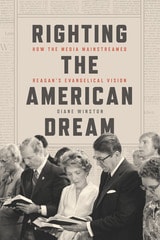
Righting the American Dream
How the Media Mainstreamed Reagan's Evangelical VisionDiane Winston
University of Chicago Press, 2023
After two years in the White House, an aging and increasingly unpopular Ronald Reagan looked like a one-term president, but in 1983 something changed. Reagan spoke of his embattled agenda as a spiritual rather than a political project and cast his vision for limited government and market economics as the natural outworking of religious conviction. The news media broadcast this message with enthusiasm, and white evangelicals rallied to the president’s cause. With their support, Reagan won reelection and continued to dismantle the welfare state, unraveling a political consensus that stood for half a century.
In Righting the American Dream, Diane Winston reveals how support for Reagan emerged from a new religious vision of American identity circulating in the popular press. Through four key events—the “evil empire” speech, AIDS outbreak, invasion of Grenada, and rise in American poverty rates—Winston shows that many journalists uncritically adopted Reagan’s religious rhetoric and ultimately mainstreamed otherwise unpopular evangelical ideas about individual responsibility. The result is a provocative new account of how Reagan together with the press turned America to the right and initiated a social revolution that continues today.
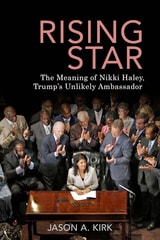
Rising Star
The Meaning of Nikki Haley, Trump’s Unlikely AmbassadorJason A. Kirk
University of Arkansas Press, 2021
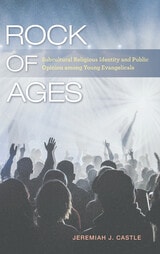
Rock of Ages
Subcultural Religious Identity and Public Opinion among Young EvangelicalsJeremiah J. Castle
Temple University Press, 2019
Evangelicals and Republicans have been powerful—and active—allies in American politics since the 1970s. But as public opinions have changed, are young evangelicals’ political identities and attitudes on key issues changing too? And if so, why? In Rock of Ages, Jeremiah Castle answers these questions to understand their important implications for American politics and society.
Castle develops his own theory of public opinion among young evangelicals to predict and explain their political attitudes and voting behavior. Relying on both survey data and his own interviews with evangelical college students, he shows that while some young evangelicals may be more liberal in their attitudes on some issues, most are just as firmly Republican, conservative, and pro-life on abortion as the previous generation.
Rock of Ages considers not only what makes young evangelicals different from the previous generation, but also what that means for both the church and American politics.
Rojava
Revolution, War and the Future of Syria's KurdsThomas Schmidinger
Pluto Press, 2018
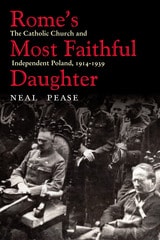
Rome’s Most Faithful Daughter
The Catholic Church and Independent Poland, 1914–1939Neal Pease
Ohio University Press, 2009
When an independent Poland reappeared on the map of Europe after World War I, it was widely regarded as the most Catholic country on the continent, as “Rome’s Most Faithful Daughter.” All the same, the relations of the Second Polish Republic with the Church—both its representatives inside the country and the Holy See itself—proved far more difficult than expected.
Based on original research in the libraries and depositories of four countries, including recently opened collections in the Vatican Secret Archives, Rome’s Most Faithful Daughter: The Catholic Church and Independent Poland, 1914–1939 presents the first scholarly history of the close but complex political relationship of Poland with the Catholic Church during the interwar period. Neal Pease addresses, for example, the centrality of Poland in the Vatican’s plans to convert the Soviet Union to Catholicism and the curious reluctance of each successive Polish government to play the role assigned to it. He also reveals the complicated story of the relations of Polish Catholicism with Jews, Freemasons, and other minorities within the country and what the response of Pope Pius XII to the Nazi German invasion of Poland in 1939 can tell us about his controversial policies during World War II.
Both authoritative and lively, Rome’s Most Faithful Daughter shows that the tensions generated by the interplay of church and state in Polish public life exerted great influence not only on the history of Poland but also on the wider Catholic world in the era between the wars.