Results by title
939 books match the query 'Religious aspects' and 70 start with r
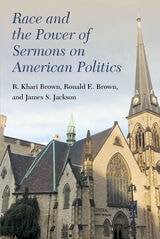
Race and the Power of Sermons on American Politics
R. Khari Brown, Ronald E. Brown, and James S. Jackson
University of Michigan Press, 2021
This book examines the intersection of race, political sermons, and social justice. Religious leaders and congregants who discuss and encourage others to do social justice embrace a form of civil religion that falls close to the covenantal wing of American civil religious thought. Clergy and members who share this theological outlook frame the nation as being exceptional in God’s sight. They also emphasize that the nation’s special relationship with the Creator is contingent on the nation working toward providing opportunities for socioeconomic well-being, freedom, and creative pursuits. God’s covenant, thus, requires inclusion of people who may have different life experiences but who, nonetheless, are equally valued by God and worthy of dignity. Adherents to such a civil religious worldview would believe it right to care for and be in solidarity with the poor and powerless, even if they are undocumented immigrants, people living in non-democratic and non-capitalist nations, or members of racial or cultural out-groups. Relying on 44 national and regional surveys conducted between 1941 and 2019, Race and the Power of Sermons on American Politics explores how racial experiences impact the degree to which religion informs social justice attitudes and political behavior. This is the most comprehensive set of analyses of publicly available survey data on this topic.
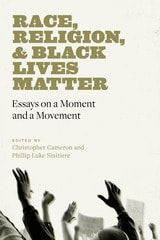
Race, Religion, and Black Lives Matter
Essays on a Moment and a MovementChristopher Cameron
Vanderbilt University Press, 2021
This volume has a simple, but far-reaching argument: religion is an important thread in BLM. To advance this claim, Race, Religion, and Black Lives Matter examines religion’s place in the movement through the lenses of history, politics, and culture. While this collection is not exhaustive or comprehensive in its coverage of religion and BLM, it selectively anthologizes unique aspects of Black religious history, thought, and culture in relation to political struggle in the contemporary era. The chapters aim to document historical change in light of current trends and current events. The contributors analyze religion and BLM in a current historical moment fraught with aggressive, fascist, authoritarian tendencies and one shaped by profound ingenuity, creativity, and insightful perspectives on Black history and culture.
Radicalization in Theory and Practice
Understanding Religious Violence in Western EuropeThierry Balzacq and Elyamine Settoul, Editors
University of Michigan Press, 2022
Radicalization is a major challenge of contemporary global security. It conjures up images of violent ideologies, “homegrown” terrorists and jihad in both the academic sphere and among security and defense experts. While the first instances of religious radicalization were initially limited to second-generation Muslim immigrants, significant changes are currently impacting this phenomenon. Technology is said to amplify the dissemination of radicalism, though there remains uncertainty as to the exact weight of technology on radical behaviors. Moreover, far from being restricted to young men of Muslim heritage suffering from a feeling of social relegation, radicalism concerns a significant number of converted Muslims, women and more heterogeneous profiles (social, academic and geographic), as well as individuals that give the appearance of being fully integrated in the host society. These new and striking dynamics require innovative conceptual lenses.
Radicalization in Theory and Practice identifies the mechanisms that explicitly link radical religious beliefs and radical actions. It describes its nature, singles out the mechanisms that enable radicalism to produce its effects, and develops a conceptual architecture to help scholars and policy-makers to address and evaluate radicalism—or what often passes as such. A variety of empirical chapters fed by first-hand data probe the relevance of theoretical perspectives that shape radicalization studies. By giving a prominent role to first-hand empirical investigations, the authors create a new framework of analysis from the ground up. This book enhances the quality of theorizing in this area, consolidates the quality of methodological enquiries, and articulates security studies insights with broader theoretical debates in different fields including sociology, social psychology, economics, and religious studies.
Radio, Morality, & Culture
Britain, Canada, and the United States, 1919 - 1945Robert S. Fortner
Southern Illinois University Press, 2005
Radio, Morality, and Culture: Britain, Canada, and the United States, 1919–1945 examines the moral controversies surrounding radio’s development during its formative years. In comparing the fledgling medium in Great Britain, Canada, and the United States, Robert S. Fortner documents how the church failed to participate in radio’s moral development and instead engaged in internecine warfare over issues of legitimacy and orthodoxy.
The church was arguing about theological turf and dealing with internal disputes while radio policy was being developed and communications history was being written. Fortner reveals how the church, doomed to play little more than a bit part in the future of radio, eventually lost its voice altogether in the continuing development of electronic media. Fortner effectively synthesizes cultural history and theory, communication studies, and the role religious organizations played in shaping the content and character of early radio. Geared to scholars of history, communications, and theology, Radio, Morality, and Culture provides a useful resource for research, scholarship, and public policy.
Rage and Carnage in the Name of God
Religious Violence in NigeriaAbiodun Alao
Duke University Press, 2022
Re-enchanting Modernity
Ritual Economy and Society in Wenzhou, ChinaMayfair Yang
Duke University Press, 2020
Reading Biblical Texts Together
Pursuing Minoritized Biblical CriticismTat-Siong Benny Liew
SBL Press, 2022
A solid and suggestive foundation for the future of ethnic-racial minority biblical criticism
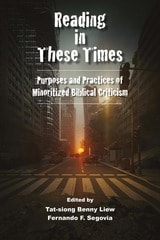
This volume, edited by Tat-siong Benny Liew and Fernando F. Segovia, expands the work begun in They Were All Together in One Place? Toward Minority Biblical Criticism (2009) by focusing on specific texts for scholarly engagement and exchange. Essays by scholars of racial/ethnic minoritized criticism of the Bible highlight the various factors and dynamics at play in the formation of power relations within and through four biblical texts: two from the Hebrew Bible (Genesis 21 and 1 Kings 12) and two from the New Testament (John 4 and Revelation 18). Contributors include Ahida Calderón Pilarski, Ronald Charles, Stephanie Buckhanon Crowder, Lynne St. Clair Darden, Steed Vernyl Davidson, Mary F. Foskett, Jione Havea, Tat-siong Benny Liew, Roberto Mata, Henry W. Morisada Rietz, Raj Nadella, Miranda N. Pillay, David Arthur Sánchez, Timothy J. Sandoval, Fernando F. Segovia, Mitzi J. Smith, Angeline M. G. Song, Linzie M. Treadway, Nasili Vaka’uta, Demetrius K. Williams, and Gale A. Yee. Each essay expands our understandings of minoritization from a global perspective.
Reading Darwin in Arabic, 1860-1950
Marwa Elshakry
University of Chicago Press, 2013
Reading in These Times
Purposes and Practices of Minoritized Biblical CriticismTat-siong Benny Liew
SBL Press, 2024
Realized Religion
Research on the Relationship between Religion and HealthTheodore J. Chamberlain
Templeton Press, 2001
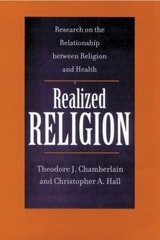
Realized Religion includes research that investigates the impact of spirituality in health and healing, faith healing, religion and mental health, religion and life satisfaction, religion and mental disorders, religion and martial satisfaction, the effect of religion on suicide, and the effect of religion on alcohol use and abuse. This book documents over 300 scientific studies published by reputable scientific journals demonstrating that religion has an ameliorating effect on the survival rate of surgical patients, on depression and anxiety, on suicide rates, and on promotion of a healthy lifestyle.
Realized Religion presents useful and helpful information to researchers and scholars who seek to understand the subtle connection between healing and spirituality. It will be an invaluable resource for libraries and others interested in the emerging field of spirituality and healing.
Recharging Judaism
How Civic Engagement Is Good for Synagogues, Jews, and AmericaRabbi Judith Schindler and Judy Seldin-Cohen
Central Conference of American Rabbis, 2018
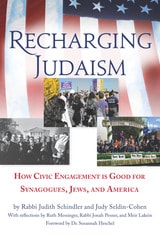
Recharging Judaism is the essential and timely guide for every synagogue and community seeking to strengthen the bonds of Jewish communal life through advocating for social justice. This volume delves into the enriching civic engagement and acts of righteousness already undertaken by Jews and Jewish communities across the country, and further explores the positive differences we can all affect upon the future of America. There are a myriad of ways in which advocating for social justice and participating in civic engagement can create lasting change. Those inspired to affect such change will find new meaning in the texts and history of our tradition. Using real examples from both small and large congregations across the country, Recharging Judaism offers a framework to guide us through our journey of civic responsibility and social duty and into a brighter future for our country.
Reckoning with Spirit in the Paradigm of Performance
Donnalee Dox
University of Michigan Press, 2016
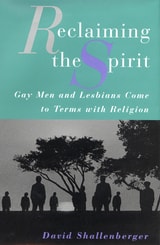
Reclaiming the Spirit
Gay Men and Lesbians Come to Terms with Their ReligionShallenberger, David
Rutgers University Press, 1998
In a world in which religion and homosexuality are often by definition incompatible, it is crucial to hear from gay men and women about how they perceive themselves to be religious or spiritual people. Eliciting powerful, frank, and sometimes troubling responses, David Shallenberger interviewed gay men and women who grew up in families that belonged to traditional religions-Jewish, Roman Catholic, and Protestant-that rejected homosexuality as an unacceptable life-style. When these children grew into adulthood and "came out," many rejected the religion of their childhood as they sought out a more accepting gay community. But once they became comfortable with their new gay identity, they began to experience a spiritual hunger and a desire to be part of a religious community. Some sought to return to the traditions from which they came; others desired membership in new religious communities.
The quest for an integration of homosexuality and spirituality is the focus of Reclaiming the Spirit. Shallenberger asks how individuals can balance both a gay and a religious identity, whether coming out is a spiritual experience, and how coming out affects an individual's relationship to a traditional religious community. Divided into chapters that correspond to the common stages of spiritual integration, Reclaiming the Spirit is immensely readable and introduces an important group of voices into the hotly contested debates surrounding religion and gay participation.
Recovering Origins
A Unique Healing Program for Adult Children of DivorceMargaret Harper McCarthy
Catholic University of America Press, 2021

Recruiting Young Love
How Christians Talk about HomosexualityMark D. Jordan
University of Chicago Press, 2011
In the view of many Christians, the teenage years are simultaneously the most dangerous and the most promising. At the very moment when teens are trying to establish a sense of identity and belonging, they are beset by temptation on all sides—from the pressure of their peers to the nihilism and materialism of popular culture. Add the specter of homosexuality to the mix, and you’ve got a situation ripe for worry, sermonizing, and exploitation.
In Recruiting Young Love, Mark D. Jordan explores more than a half century of American church debate about homosexuality to show that even as the main lesson—homosexuality is bad, teens are vulnerable—has remained constant, the arguments and assumptions have changed remarkably. At the time of the first Kinsey Report, in 1948, homosexuality was simultaneously condemned and little discussed—a teen struggling with same-sex desire would have found little specific guidance. Sixty years later, church rhetoric has undergone a radical shift, as silence has given way to frequent, public, detailed discussion of homosexuality and its perceived dangers. Along the way, churches have quietly adopted much of the language and ideas of modern sexology, psychiatry, and social reformers—deploying it, for example, to buttress the credentials of anti-gay “deprogramming” centers and traditional gender roles.
Jordan tells this story through a wide variety of sources, including oral histories, interviews, memoirs, and even pulp novels; the result is a fascinating window onto the never-ending battle for the teenage soul.
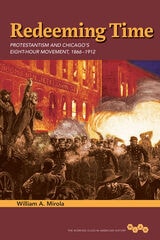
Redeeming Time
Protestantism and Chicago's Eight-Hour Movement, 1866-1912William A. Mirola
University of Illinois Press, 2015
William A. Mirola explores how the city's eight-hour movement intersected with a Protestant religious culture that supported long hours to keep workers from idleness, intemperance, and secular leisure activities. Analyzing how both workers and clergy rewove working-class religious cultures and ideologies into strategic and rhetorical frames, Mirola shows how every faith-based appeal contested whose religious meanings would define labor conditions and conflicts. As he notes, the ongoing worker-employer tension transformed both how clergy spoke about the eight-hour movement and what they were willing to do, until intensified worker protest and employer intransigence spurred Protestant clergy to support the eight-hour movement even as political and economic arguments eclipsed religious framing.
A revealing study of an era and a movement, Redeeming Time illustrates the potential--and the limitations--of religious culture and religious leaders as forces in industrial reform.
Reformation of the Senses
The Paradox of Religious Belief and Practice in GermanyJacob M. Baum
University of Illinois Press, 2018
Refuge in the Lord
Lawrence J. McAndrews
Catholic University of America Press, 2015
Regulating Difference
Religious Diversity and Nationhood in the Secular WestMarian Burchardt
Rutgers University Press, 2020
Transnational migration has contributed to the rise of religious diversity and has led to profound changes in the religious make-up of society across the Western world. As a result, societies and nation-states have faced the challenge of crafting ways to bring new religious communities into existing institutions and the legal frameworks. Regulating Difference explores how the state regulates religious diversity and examines the processes whereby religious diversity and expression becomes part of administrative landscapes of nation-states and people’s everyday lives. Arguing that concepts of nationhood are key to understanding the governance of religious diversity, Regulating Difference employs a transatlantic comparison of the Spanish region of Catalonia and the Canadian province of Quebec to show how processes of nation-building, religious heritage-making and the mobilization of divergent interpretations of secularism are co-implicated in shaping religious diversity. It argues that religious diversity has become central for governing national and urban spaces.
This book is also freely available online as an open access digital edition.
Religion & Reconciliation in South Africa
Voices of Religious LeadersBernard Spong
Templeton Press, 2003
Postapartheid South Africa's efforts to come to terms with its past, particularly its Truth and Reconciliation Commission's emphasis on forgiveness and reconciliation, is of special interest to many in the world community. The Truth and Reconciliation Commission (TRC), led by Archbishop Desmond Tutu, was mandated to go beyond truth-finding and to "promote national unity and reconciliation in a spirit of understanding which transcends the conflict and divisions of the past." In contrast with other truth commissions, the TRC was led by clerics rather than lawyers and judge, and the TRC's approach to reconciliation was shaped by and imbued with religious content. The TRC submitted its final report to the Mandela administration in October 1998.
Over the next two years, the Rev. Bernard Spong, former communications director of the South African Council of Churches, conducted a series of in-depth interviews about the TRC with thirty-three key religious figures. In this volume, they discuss and evaluate the following issues:
•How should we understand the concept of national or political reconciliation and its requirements?•What are the differences and similarities between religious and political approaches to reconciliation?
•Does national or political reconciliation require forgiveness between former victims and perpetrators?
•What is the appropriate role of religious representatives in a truth commission process? And is it recommended that other countries emulate the South African model?
•How do religious leaders assess the contributions and limitations of the TRC?
•What kind of initiatives are contemporary religious communities taking to promote reconciliation among their members and in the wider society?
The conversations presented in this volume, and the essays interpreting them, seek to illuminate issues and questions raised by the TRC model, including how to conceptualize reconciliation and the differences between political and religious approaches.
Religion and Economic Justice
edited by Michael Zweig
Temple University Press, 1992
As Eastern European economies move to capitalism, many people there hope for a better life. But capitalism is no guarantee of prosperity. Economic deprivation, war, social marginalization, and powerlessness mark the lives of millions and spark social movements for economic justice aimed at correcting these conditions. Often these movements are based in religious communities, their activists motivated by religious commitment to human dignity and the need for personal empowerment. Although the new theology contains an economic critique, little dialogue has taken place between the religious and economic communities on matters of economic analysis. Religion and Economic Justice seeks to develop this exchange.
This book contains original essays by distinguished contributors from economics, religious ethics, and biblical studies. The authors provide a powerful critique of the individualism which underlies mainstream economic analysis and which fragments our communities, a critique that extends to the values implicit in the market system. The authors also show how social marginalization and economic deprivation are the consequences of economic organization, not simply the failings of individuals.
Religion and Nationalism in Soviet and East European Politics
Pedro Ramet, ed.
Duke University Press, 1988
Religion and Peace
Global Perspectives and PossibilitiesNukhet A. Sandal
Ohio University Press, 2022
Religion and Political Tolerance in America
Advances in the State of the ArtPaul Djupe
Temple University Press, 2015
The essays in Religion and Political Tolerance in America seek to understand how these elements interrelate. The editor and contributors to this important volume present new and innovative research that wrestles with the fundamental question of the place of religion in democratic society. They address topics ranging from religious contributions to social identity to the political tolerance that religious elites (clergy) hold and advocate to others, and how religion shapes responses to intolerance.
The conclusion, by Ted Jelen, emphasizes that religion’s take on political tolerance is nuanced and that they are not incompatible; religion can sometimes enhance the tolerance of ordinary citizens.
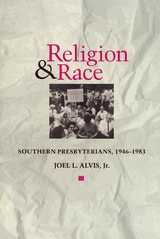
Religion and Race
Southern Presbyterians, 1946 to 1983Joel L. Alvis Jr
University of Alabama Press, 1994
Joel Alvis focuses on the relationships and tensions in the Presbyterian Church, U.S., whose ecclesiastical boundaries never expanded significantly beyond its original territory in the Confederacy and border South. By the time of the civil rights movement, the church was actively involved in ecumenical activities despite its regional isolation, and that involvement created unease in some quarters of the denomination. This concise institutional history traces how the church shaped and was shaped by its regional culture and explores the denomination's own cultural struggle to determine what role race issues would play in the definition of being Presbyterian.
Religion and Social Justice For Immigrants
Hondagneu-Sotelo, Pierrette
Rutgers University Press, 2006
Religion has jumped into the sphere of global and domestic politics in ways that few would have imagined a century ago. Some expected that religion would die as modernity flourished. Instead, it now stares at us almost daily from the front pages of newspapers and television broadcasts. Although it is usually stories about the Christian Right or conservative Islam that grab headlines, there are many religious activists of other political persuasions that are working quietly for social justice. This book examines how religious immigrants and religious activists are working for equitable treatment for immigrants in the United States.
The essays in this book analyze the different ways in which organized religion provides immigrants with an arena for mobilization, civic participation, and solidarity. Contributors explore topics including how non-Western religious groups such as the Vietnamese Caodai are striving for community recognition and addressing problems such as racism, economic issues, and the politics of diaspora; how interfaith groups organize religious people into immigrant civil rights activists at the U.S.–Mexican border; and how Catholic groups advocate governmental legislation and policies on behalf of refugees.
Religion and State Formation in Postrevolutionary Mexico
Ben Fallaw
Duke University Press, 2012
Ben Fallaw argues that previous scholarship has not appreciated the pervasive influence of Catholics and Catholicism on postrevolutionary state formation. By delving into the history of four understudied Mexican states, he is able to show that religion swayed regional politics not just in states such as Guanajuato, in Mexico's central-west "Rosary Belt," but even in those considered much less observant, including Campeche, Guerrero, and Hidalgo. Religion and State Formation in Postrevolutionary Mexico reshapes our understanding of agrarian reform, federal schooling, revolutionary anticlericalism, elections, the Segunda (a second Cristero War in the 1930s), and indigenism, the Revolution's valorization of the Mesoamerican past as the font of national identity.
Religion and the Authority of the Past
Tobin Siebers, Editor
University of Michigan Press, 1993
Religion and the Authority of the Past looks at how the past has influenced religious authority, and demonstrates that authority has been, and continues to be, prevalent in all religions and cultures. This book shows, in a fascinating variety of ways, how religious doctrine, interpretation, behavior, and expression are affected by those in power.
The contributors—distinguished scholars from the fields of history, religion, classics, art, and Asian studies—find authority not only in places where one might expect it—in Islamic doctrine, Hindu religious texts, and the dogma of the Roman Catholic church, for example—but also in unimagined and intriguing locations: in the first U.S. archaeological expedition to the ancient Near East; in representations of heroic action in the Homeric epics and early Chinese classics; in the transmission of religious stereotypes from the Old World to the New; in the poetry of Paul Celan and Dan Pagis; and in a sculptor's attempts to create art for houses of worship, where architects, bishops, priests, and the laity assert a variety of forms of religious authority of their own.
Religion and the Cold War
A Global PerspectivePhilip E. Muehlenbeck
Vanderbilt University Press, 2012
Students and scholars will find in this volume a level of comprehensiveness rarely achieved in Cold War studies. Each chapter reveals that the power and influence of ideas are just as important as military might in the struggles between superpowersand that few ideas, then as now, carry as much force as religious ideology. As Muehlenbeck and his contributors demonstrate, no area of the world, and no religious tenet, was safe from the manipulations of a powerful set of players focused solely on their own sphere of influence.
Religion and the Making of Nigeria
Olufemi Vaughan
Duke University Press, 2016
Religion in Plain View
Public Aesthetics of American DisplaySally M. Promey
University of Chicago Press, 2024
In Religion in Plain View, Sally M. Promey analyzes religion’s visible saturation of American public space and the histories that shaped this exhibitionary aesthetics. In street art, vehicle décor, signs, monuments, architecture, zoning policy, and more, Promey exposes American display’s merger of evangelicalism, capitalism, and imperialism. From this convergence, display materializes a distinctly American drive to advertise, claim territory, invalidate competitors, and fabricate a tractable national heritage. Charting this aesthetics’ strategic work as a Protestant technology of White nation formation, Religion in Plain View offers a dynamic critique of the ways public display perpetuates deeply ingrained assumptions about the proper shape of life and land in the United States.
Religion, Conflict, and Peacemaking
An Interdisciplinary ConversationMuriel Schmid
University of Utah Press, 2017
Contributors from varied backgrounds share perspectives and insights gleaned from history, theory, practice, and case studies. While the authors acknowledge the role of religion in generating conflict, they emphasize the part religion can play in conflict resolution. Addressing the centrality of conflict to the human condition, they recognize the consequent difficulty in teasing out the exact role of religion. Overall, the authors assert the necessity of frank, knowledgeable dialogue to understanding sources of, finding grounds for resolving, and managing conflict. Many of the essayists offer creative solutions for building peace. Employing examples and viewpoints drawn from diverse faith traditions, academic traditions, and cultural backgrounds, contributors seek to foster respectful dialogue and debate by exploring the complex dynamic that interconnects religion, violence, and peace.
Religion, Fundamentalism, and Violence
An Interdisciplinary DialogueEdited by Andrew L. Gluck
University of Scranton Press, 2010
In Religion, Fundamentalism, and Violence, Andrew Gluck brings together distinguished scholars to address a fiercely debated topic: the intersection of religion and violence. Among the contributions is an anthropological analysis of the violence associated with the Abrahamic monotheistic religions of the Middle East, a compelling essay accounting for the violence in Hindu religious traditions, an informative look at the Israeli-Palestinian tensions of more recent times, and an essay on the Catholic just war theory. Each chapter is followed by a commentary and reply, making this volume indispensable for students and scholars of the history of religions.
Religion, History, and Place in the Origin of Settled Life
Ian Hodder
University Press of Colorado, 2018
Contributors argue that the long-term social relationships characteristic of delayed-return agricultural systems must be based on historical ties to place and to ancestors. They define different forms of history-making, including nondiscursive routinized practices as well as commemorative memorialization. They consider the timing in the Neolithic of an emerging concern with history-making in place in relation to the adoption of farming and settled life in regional sequences. They explore whether such correlations indicate the causal processes in which history-making, ritual practices, agricultural intensification, population increase, and social competition all played a role.
Religion, History, and Place in the Origin of Settled Life takes a major step forward in understanding the adoption of farming and a settled way of life in the Middle East by foregrounding the roles of history-making and religious ritual. This work is relevant to students and scholars of Near Eastern archaeology, as well as those interested in the origins of agriculture and social complexity or the social role of religion in the past.
Contributors: Kurt W. Alt, Mark R. Anspach, Marion Benz, Lee Clare, Anna Belfer-Cohen, Morris Cohen, Oliver Dietrich, Güneş Duru, Yilmaz S. Erdal, Nigel Goring-Morris, Ian Hodder, Rosemary A. Joyce, Nicola Lercari, Wendy Matthews, Jens Notroff, Vecihi Özkaya, Feridun S. Şahin, F. Leron Shults, Devrim Sönmez, Christina Tsoraki, Wesley Wildman
Religion, Media, and Marginality in Modern Africa
Felicitas Becker
Ohio University Press, 2018
In recent years, anthropologists, historians, and others have been drawn to study the profuse and creative usages of digital media by religious movements. At the same time, scholars of Christian Africa have long been concerned with the history of textual culture, the politics of Bible translation, and the status of the vernacular in Christianity. Students of Islam in Africa have similarly examined politics of knowledge, the transmission of learning in written form, and the influence of new media. Until now, however, these arenas—Christianity and Islam, digital media and “old” media—have been studied separately.
Religion, Media, and Marginality in Modern Africa is one of the first volumes to put new media and old media into significant conversation with one another, and also offers a rare comparison between Christianity and Islam in Africa. The contributors find many previously unacknowledged correspondences among different media and between the two faiths. In the process they challenge the technological determinism—the notion that certain types of media generate particular forms of religious expression—that haunts many studies. In evaluating how media usage and religious commitment intersect in the social, cultural, and political landscapes of modern Africa, this collection will contribute to the development of new paradigms for media and religious studies.
Contributors: Heike Behrend, Andre Chappatte, Maria Frahm-Arp, David Gordon, Liz Gunner, Bruce S. Hall, Sean Hanretta, Jorg Haustein, Katrien Pype, and Asonzeh Ukah.
Religion, Order, and Law
David Little
University of Chicago Press, 1984
Religion, Secularism, and Political Belonging
Leerom Medovoi and Elizabeth Bentley, editors
Duke University Press, 2021
Contributors. Markus Balkenhol, Elizabeth Bentley, Kambiz GhaneaBassiri, David N. Gibbs, Ori Goldberg, Marcia Klotz, Zeynep Kurtulus Korkman, Leerom Medovoi, Eva Midden, Mohanad Mustafa, Mu-chou Poo, Shaul Setter, John Vignaux Smith, Pooyan Tamimi Arab, Ernst van den Hemel, Albert Welter, Francis Ching-Wah Yip, Raef Zreik
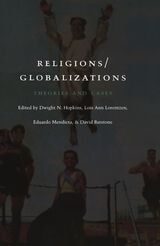
Religions/Globalizations
Theories and CasesDwight N. Hopkins, Lois Ann Lorentzen, Eduardo Mendieta, and David Batstone, eds.
Duke University Press, 2001
As the contributors to this work suggest, a crucial component of globalization—the breakdown of familiar boundaries and power balances—may open a space in which religion can be deployed to help refabricate new communities. Examples of such deployments can be found in the workings of liberation theology in Latin America. In other cases, however, the operations of globalization have provided a space for strident religious nationalism and identity disputes to flourish. Is there in fact a dialectical tension between religion and globalization, a codependence and codeterminism? While religion can be seen as a globalizing force, it has also been transformed and even victimized by globalization.
A provocative assessment of a contemporary phenomenon with both cultural and political dimensions, Religions/Globalizations will interest not only scholars in religious studies but also those studying Latin America, the Middle East, South Asia, and Africa.
Contributors. David Batstone, Berit Bretthauer, Enrique Dussel, Dwight N. Hopkins, Mark Juergensmeyer, Lois Ann Lorentzen, Eduardo Mendieta, Vijaya Rettakudi Nagarajan, Kathryn Poethig, Lamin Sanneh, Linda E. Thomas
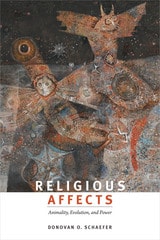
Religious Affects
Animality, Evolution, and PowerDonovan O. Schaefer
Duke University Press, 2015
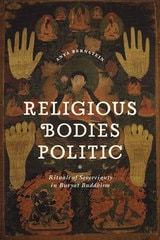
Religious Bodies Politic
Rituals of Sovereignty in Buryat BuddhismAnya Bernstein
University of Chicago Press, 2013
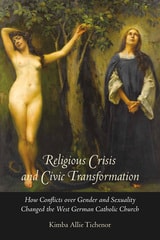
Religious Crisis and Civic Transformation
How Conflicts over Gender and Sexuality Changed the West German Catholic ChurchKimba Allie Tichenor
Brandeis University Press, 2016
Religious Freedom after the Sexual Revolution
A Catholic GuideHelen Alvare
Catholic University of America Press, 2022
Religious Imaginations
How Narratives of Faith are Shaping Today’s WorldEdited by James Walters
Gingko, 2018
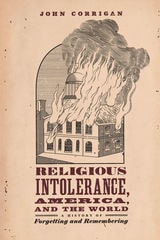
Religious Intolerance, America, and the World
A History of Forgetting and RememberingJohn Corrigan
University of Chicago Press, 2020
Religious Intolerance, America, and the World spans from Christian colonists’ intolerance of Native Americans and the role of religion in the new republic’s foreign-policy crises to Cold War witch hunts and the persecution complexes that entangle Christians and Muslims today. Corrigan reveals how US churches and institutions have continuously campaigned against intolerance overseas even as they’ve abetted or performed it at home. This selective condemnation of intolerance, he shows, created a legacy of foreign policy interventions promoting religious freedom and human rights that was not reflected within America’s own borders. This timely, captivating book forces America to confront its claims of exceptionalism based on religious liberty—and perhaps begin to break the grotesque cycle of projection and oppression.
Religious Knowledge, Authority, and Charisma
Islamic and Jewish PerspectivesDaphna Ephrat
University of Utah Press, 2014
The issue of religious authority has long fascinated and ignited scholars across a range of disciplines: history, anthropology, the sociology of religion, and political science. Religious Knowledge, Authority, and Charisma juxtaposes religious leadership in premodern and modern Islam with examples from the Judaic tradition. By illustrating various iterations of authority in numerous historical and cultural contexts, this volume offers fresh insights into the nature of institutions of learning and other systems of establishing and disseminating authority, the mechanisms for cultivating committed adherents, and the processes by which religious leadership is polarized and fragmented.
Remains of Ritual
Northern Gods in a Southern LandSteven M. Friedson
University of Chicago Press, 2009
Remains of Ritual, Steven M. Friedson’s second book on musical experience in African ritual, focuses on the Brekete/Gorovodu religion of the Ewe people. Friedson presents a multifaceted understanding of religious practice through a historical and ethnographic study of one of the dominant ritual sites on the southern coast of Ghana: a medicine shrine whose origins lie in the northern region of the country. Each chapter of this fascinating book considers a different aspect of ritual life, demonstrating throughout that none of them can be conceived of separately from their musicality—in the Brekete world, music functions as ritual and ritual as music. Dance and possession, chanted calls to prayer, animal sacrifice, the sounds and movements of wake keeping, the play of the drums all come under Friedson’s careful scrutiny, as does his own position and experience within this ritual-dominated society.
Remaking the Godly Marriage
Gender Negotiation in Evangelical FamiliesBartkowski, John
Rutgers University Press, 2001
While religious leaders often have enormous influence over their members’ beliefs and how they translate their beliefs into action in everyday life, the individual family remains the place where religious values are practiced through and ultimately transferred to the next generation. As such, the family is an extremely important, though frequently overlooked, topic of study for sociologists of religion.
In Remaking the Godly Marriage, John Bartkowski studies evangelical Protestants and their views on marriage and gender relations and how they are lived within individual families. The author compares elite evangelical prescriptions for godly family living with the day-to-day practices in conservative Protestant households. He asks: How serious are the debates over gender and the family that are manifested within contemporary evangelicalism? What are the values that underlie this debate? Have these internecine disputes been altered by the emergence of new evangelical movements such as biblical feminism and the Promise Keepers? And given the fact that leading evangelicals advance competing visions of godly family life, how do conservative religious spouses make sense of their own family relationships and gender identities?
Through in-depth interviews with evangelical married couples and an exhaustive study of evangelical family advice manuals, Bartkowski explores the disputes and ambivalence concerning traditional gender roles and patriarchal models of family life, which derive from the tension between evangelical Protestantism as a religious subculture and the broader American secular culture in which it is embedded. Bartkowski reveals how evangelical men and women jointly negotiate gender roles within their families and selectively appropriate values of the larger culture even as they attempt to cope with the conflicting messages of their own faith.
Renewal
Liberal Protestants and the American City after World War IIMark Wild
University of Chicago Press, 2019
Renewal explores the rise and fall of this movement, which began as an effort to restore the church’s standing but wound up as nothing less than an openhearted crusade to remake our nation’s cities. These campaigns reached beyond church walls to build or lend a hand to scores of organizations fighting for welfare, social justice, and community empowerment among the increasingly nonwhite urban working class. Church leaders extended their efforts far beyond traditional evangelicalism, often dovetailing with many of the contemporaneous social currents coursing through the nation, including black freedom movements and the War on Poverty.
Renewal illuminates the overlooked story of how religious institutions both shaped and were shaped by postwar urban America.
Replanted
Faith-Based Support for Adoptive and Foster FamiliesJenn Ranter Hook
Templeton Press, 2019
Many people embark on the journey of adoption and foster care but are unprepared for the challenges that await them along the way. Replanted takes an honest look at the joys and hardships that come with choosing this journey and provides a model of faith-based support made up of three parts to help families thrive: Soil, Sunlight, and Water.
- Soil, or emotional support, addresses the need for grace-filled settings where families can connect with other families who understand their experience.
- Sunlight, or informational support, focuses on obtaining helpful training to raise children who may have unique needs or challenges.
- Water, or tangible support, deals with concrete resources such as medical care, child care, and financial support.
Throughout the book, the Replanted model is brought to life by stories and examples based on the clinical work and personal experiences of the authors. Their candid insight will serve families who are actively involved in adoption or foster care, as well as people who are eager to help support those families.
Replanted affirms that with the right support system in place, parents can answer this sacred call not only with open hearts but also with their eyes wide open.
Reproducing Jews
A Cultural Account of Assisted Conception in IsraelSusan Martha Kahn
Duke University Press, 2000
In this ethnographic study of the new reproductive technologies in Israel, Susan Martha Kahn explores the cultural meanings and contemporary rabbinic responses to artificial insemination, in-vitro fertilization, egg donation, and surrogacy. Kahn draws on fieldwork with unmarried Israeli women who are using state-subsidized artificial insemination to get pregnant and on participant-observation in Israeli fertility clinics. Through close readings of traditional Jewish texts and careful analysis of Israeli public discourse, she explains how the Israeli embrace of new reproductive technologies has made Jewish beliefs about kinship startlingly literal. Kahn also reveals how a wide range of contemporary Israelis are using new reproductive technologies to realize their reproductive futures, from ultraorthodox infertile married couples to secular unmarried women.
As the first scholarly account of assisted conception in Israel, this multisited ethnography will contribute to current anthropological debates on kinship studies. It will also interest those involved with Jewish studies.