Results by title
95 books match the query 'Rivers' and 15 start with r
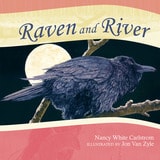
Raven and River
Nancy White Carlstrom
University of Alaska Press, 2011
Raven and River leads young readers on a fantastical journey with a raven across the icy Alaska landscape on the verge of spring. Along the way, the raven’s sonorous cry wakes a cast of sleeping woodland creatures, including a bear, a beaver, a hare, and a squirrel—all of whom join him in imploring the still-frozen river to melt and thereby initiate the change of seasons. Packed with information and featuring vibrant full-color illustrations by Jon Van Zyle, Raven and River brings to life these two important harbingers of Alaska’s spring.
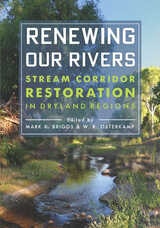
Renewing Our Rivers
Stream Corridor Restoration in Dryland RegionsEdited by Mark K. Briggs and W. R. Osterkamp
University of Arizona Press, 2020
Our rivers are in crisis and the need for river restoration has never been more urgent. Water security and biodiversity indices for all of the world’s major rivers have declined due to pollution, diversions, impoundments, fragmented flows, introduced and invasive species, and many other abuses.
Developing successful restoration responses are essential. Renewing Our Rivers addresses this need head on with examples of how to design and implement stream-corridor restoration projects. Based on the experiences of seasoned professionals, Renewing Our Rivers provides stream restoration practitioners the main steps to develop successful and viable stream restoration projects that last. Ecologists, geomorphologists, and hydrologists from dryland regions of Australia, Mexico, and the United States share case studies and key lessons learned for successful restoration and renewal of our most vital resource.
The aim of this guidebook is to offer essential restoration guidance that allows a start-to-finish overview of what it takes to bring back a damaged stream corridor. Chapters cover planning, such emerging themes as climate change and environmental flow, the nuances of implementing restoration tactics, and monitoring restoration results. Renewing Our Rivers provides community members, educators, students, natural resource practitioners, experts, and scientists broader perspectives on how to move the science of restoration to practical success.
River Life and the Upspring of Nature
Naveeda Khan
Duke University Press, 2023

River Life and the Upspring of Nature
Naveeda Khan
Duke University Press, 2023
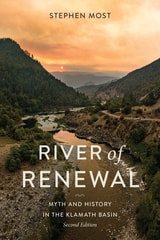
River of Renewal
Myth and History in the Klamath BasinStephen Most
Oregon State University Press, 2024
The only history of the entire Klamath Basin, River of Renewal tells the stories of the region’s diverse communities and stakeholders, including the government agencies that manage most of its land. Based on author Stephen Most’s original research and interviews with tribal leaders, ranchers, farmers, fishermen, forest managers, and others, River of Renewal is a political as well as an environmental history, one that underscores the power of commitment to a place and the vital importance of traditional knowledge in ecological stewardship. It offers an indispensable resource for anyone who wishes to better understand the peoples of the Klamath Basin and their extraordinary accomplishment of bringing about the removal of the four hydroelectric dams that harmed their cultures, economies, and environment for a century.
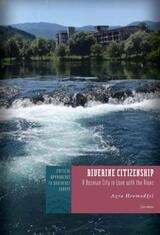
Riverine Citizenship
A Bosnian City in Love with the RiverAzra Hromadžic
Central European University Press, 2024
Water potential is a significant natural wealth of most parts of the Balkans, and it has given rise to a surge in hydropower investments unparalleled across Europe. As part of the process, a dam was planned to be built on the Una River, which runs through the Bosnian town of Bihać. This prospect alarmed the city’s residents, culminating in a protest in 2015. The book begins with this protest, and it explores how the threat of dam construction transformed the seemingly apolitical love of the river into a powerful political force around which thousands of people mobilized: riverine citizenship.
The book is based on interviews with participants, archival research, and over twenty years of ethnographic research. Azra Hromadžić focuses on the tension between ecological sustainability efforts in favor of renewable energy, on the one hand, and citizens’ historically shaped, deeply-felt, love for the river, on the other. She shows how the language and promises of green transition can mask the forces of capitalist accumulation that drive this change — whether in the form of building hydroelectric dams or promoting eco-tourism — and thus set in motion another cycle of environmental degradation, social dispossession, and economic exploitation.
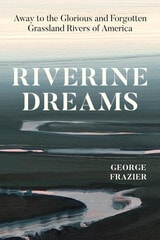
Riverine Dreams
Away to the Glorious and Forgotten Grassland Rivers of AmericaGeorge Frazier
University of Chicago Press, 2025
The North American grasslands that once covered vast areas of the central United States are now our most endangered ecosystems. But not far from any spot in the grasslands is a river. Grassland rivers are as central to the story of prairies as bison and bluestem. Defined as rivers that drain prairie watersheds, these waterways are crucial to plains ecosystems and no less endangered than the grasslands surrounding them. They are also enigmatic: some are restricted by local access laws and others have simply been forgotten. In any given year, fewer than a dozen people might lay eyes on tens of thousands of miles of America’s grassland rivers. But, as environmental writer George Frazier shows, following their twists and turns is one of the best ways to experience the wild essence of the prairies.
Riverine Dreams invites us on a trip along eight grassland rivers—including the Missouri, the Niobrara, and Purgatoire—traversing their environmental and cultural histories and introducing us to the people who study, paddle, and conserve them. This journey takes Frazier across the North American interior—from Montana and Colorado to Nebraska and Missouri—where he uncovers a remarkable movement to celebrate and preserve these natural treasures: nothing less than a grassland river revival.
The first accessible introduction to these waters, Riverine Dreams is a personal exploration of the rivers that are so vital to the health of the prairies.
Rivers in Russian Literature
Margaret Ziolkowski
University of Delaware Press, 2011
Published by University of Delaware Press. Distributed worldwide by Rutgers University Press.
Rivers of Change
Essays on Early Agriculture in Eastern North AmericaBruce D. Smith
University of Alabama Press, 2007
Organized into four sections, the twelve chapters of Rivers of Change are concerned with prehistoric Native American societies in eastern North America and their transition from a hunting and gathering way of life to a reliance on food production. Written at different times over a decade, the chapters vary both in length and topical focus. They are joined together, however, by a number of shared “rivers of change.”
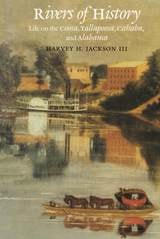
Rivers of History
Life on the Coosa, Tallapoosa, Cahaba, and AlabamaHarvey H. Jackson, III
University of Alabama Press, 1995
An illuminating study of how rivers shaped the history, culture, and environment of Alabama and the American South.
In Rivers of History, acclaimed historian Harvey H. Jackson III blends environmental history with compelling storytelling and traces the evolving relationship between people and rivers—from Indigenous communities who first depended on these waterways, to European settlers, to the development of modern towns and industries. Along the way, readers encounter stories of transportation and trade, conflict and cooperation, ecological change and conservation, all tied to the flow of these essential rivers.
Far more than a geographical study, Rivers of History demonstrates how waterways act as lifelines of human experience. Rivers shaped patterns of settlement, enabled agricultural and economic growth, and served as critical channels for communication across the American South. At the same time, they created challenges—flooding, environmental degradation, and competing demands for natural resources—that continue to influence life in the region today.
Jackson shows how the history of Alabama cannot be understood apart from its rivers. The Coosa, Tallapoosa, Cahaba, and Alabama rivers emerge not simply as physical features on a map, but as powerful forces that connect past and present, nature and society. His interdisciplinary approach—bringing together history, geography, and environmental studies—makes this work especially valuable for students, scholars, and general readers alike.
Accessible yet authoritative, Rivers of History is essential reading for anyone interested in Southern history, environmental change, or the enduring relationship between landscapes and human communities. It offers a compelling reminder that the story of a place is often written in the movement of its waters.
Rivers on Fire and Corporate Liars
The Monitoring and Sanctioning of U.S. Water Pollution CrimesJoshua Ozymy
Rutgers University Press, 2026
For over four decades, the US federal government has undertaken efforts to police and prosecute environmental crimes to protect public health and the natural environment. Yet, we still know very little about how US federal agencies have monitored and sanctioned water pollution violations and if these actions actually deter crime. In Rivers on Fire and Corporate Liars, Joshua Ozymy and Melissa Jarrell Ozymy examined over one thousand federal water pollution investigations and prosecutions undertaken by the US EPA and Department of Justice from 1983 to 2023 to answer these questions. Their analysis provides the most comprehensive empirical examination to date of how the criminal enforcement of water pollution has evolved over time, patterns in prosecutions, and how criminals were sanctioned.
Rivers on the Move
Waterways in Human Life from the Ice Age to the AnthropoceneBathesheba Demuth, Mark H. Healey, Giacomo Parrinello, and Laurence C. Smith, editors
Duke University Press, 2027
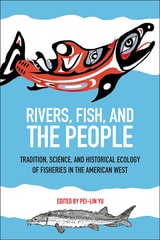
Rivers, Fish, and the People
Tradition, Science, and Historical Ecology of Fisheries in the American WestPei-Lin Yu
University of Utah Press, 2015
America’s western rivers are under assault from development, pollution, invasive species, and climate change. Returning these eco- systems to the time of European contact is often the stated goal for restoration efforts, yet neither the influence of indigenous societ- ies on rivers at the time of contact nor the deeper evolutionary relationships are yet understood by the scientific world. This volume presents a unique synthesis of scientific discoveries and traditional knowledge about the ecology of iconic river species in the American West.
Building from a foundation in fisheries biology and life history data about key species, the book reveals ancient human relationships with those species and describes time-tested Native resource management techniques, drawing from the archaeological record and original ethnographic sources. It evaluates current research trends, summarizes the conceptual foundations for the cultural and evolutionary significance of sustainable use of fish, and seeks pathways for future research. Geographic areas described include the Columbia Plateau, Idaho’s Snake River Plain, the Sacramento River Delta, and the mid-Fraser River of British Columbia. Previously unpublished information is included with the express permission and approval of tribal communities. This approach broadens and deepens the available body of data and establishes a basis for future collaboration between scientists and Native stakeholders toward mutual goals of river ecosystem health.
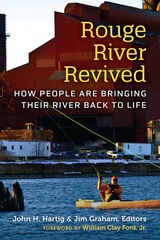
Rouge River Revived
How People Are Bringing Their River Back to LifeJohn H. Hartig and Jim Graham, Editors
University of Michigan Press, 2022
Rouge River Revived describes the river’s history from pre-European times into the 21st century. Chapters cover topics such as Native American life on the Rouge; indigenous flora and fauna over time; the river’s role in the founding of local cities; its key involvement in Detroit’s urban development and intensive industrialization; and the dramatic clean-up arising from citizen concern and activism. This book is not only a history of the environment of the Rouge River, but also of the complex and evolving relationship between humans and natural spaces.
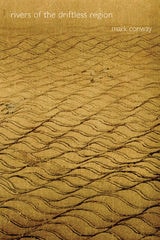
rivers of the driftless region
Mark Conway
Four Way Books, 2019