Results by title
4127 books match the query 'Science' and 118 start with r
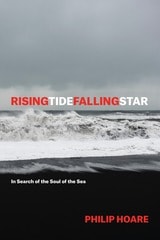
RISINGTIDEFALLINGSTAR
In Search of the Soul of the SeaPhilip Hoare
University of Chicago Press, 2018
Many of us visit the sea. Admire it. Even profess to love it. But very few of us live it. Philip Hoare does. He swims in the sea every day, either off the coast of his native Southampton or his adopted Cape Cod. He watches its daily and seasonal changes. He collects and communes with the wrack—both dead and never living—that it throws up on the shingle. He thinks with, at, through the sea.
All of which should prepare readers: RISINGTIDEFALLINGSTAR is no ordinary book. It mounts no straight-ahead argument. It hews to no single genre. Instead, like the sea itself, it moves, flows, absorbs, transforms. In its pages we find passages of beautiful nature and travel writing, lyrical memoir, seams of American and English history and much more. We find Thoreau and Melville, Bowie and Byron, John Waters and Virginia Woolf, all linked through a certain refusal to be contained, to be strictly defined—an openness to discovery and change. Running throughout is an air of elegy, a reminder that the sea is an ending, a repository of lost ships, lost people, lost ways of being. It is where we came from; for Hoare, it is where he is going.
“Every swim is a little death,” Hoare writes, “but it is also a reminder that you are alive.” Few books have ever made that knife’s edge so palpable. Read RISINGTIDEFALLINGSTAR. Let it settle into the seabed of your soul. You’ll never forget it.

Rabbits with Horns and Other Astounding Viruses
Carl Zimmer
University of Chicago Press, 2011
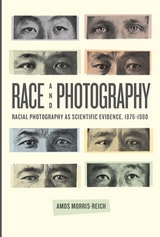
Race and Photography
Racial Photography as Scientific Evidence, 1876-1980Amos Morris-Reich
University of Chicago Press, 2015
Exploring the development of racial photography wherever it took place, including countries like France and England, Morris-Reich pays special attention to the German and Jewish contexts of scientific racism. Through careful reconstruction of individual cases, conceptual genealogies, and patterns of practice, he compares the intended roles of photography with its actual use in scientific argumentation. He examines the diverse ways it was used to establish racial ideologies—as illustrations of types, statistical data, or as self-evident record of racial signs. Altogether, Morris-Reich visits this troubling history to outline important truths about the roles of visual argumentation, imagination, perception, aesthetics, epistemology, and ideology within scientific study.
Race and Science
Scientific Challenges to Racism in Modern AmericaPaul Farber
Oregon State University Press, 2009
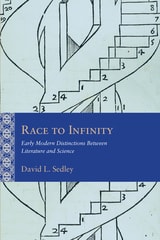
Race to Infinity
Early Modern Distinctions Between Literature and ScienceDavid L. Sedley
Northwestern University Press, 2027
Studying the early modern split between science and literature and the aftermath of their division
The conception of computers as thinking machines and literature as a social field stems from the early modern phenomenon of competing over the infinite as an object not just of contemplation but of appropriation in a race toward virtual control. The rediscovery of this origin undoes a collective forgetting of what technology and texts have in common, what they don’t, and what they can and ought to be in the future. David L. Sedley offers a new history of literature and science’s disciplinary divide—its origin and significance—tracing a series of points along the emerging frontier between these two fields. At each point there are two objects in play and two authors who push the objects in opposite directions: on the one hand, mechanical arts and the essay, probability theory and the novel, and geometry and epic; on the other, Montaigne and Bacon, Pascal and Lafayette, and Hobbes and Milton. Each of these authors, Sedley shows, tried to render an object either algorithmic or infinite to oppose the other’s efforts. Ultimately, Race to Infinity: Early Modern Distinctions Between Literature and Science illuminates the fortunes of the literary in the digital revolution and beyond.
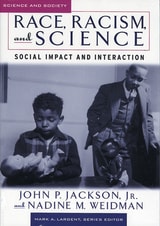
Race, Racism, and Science
Social Impact and InteractionJackson, John P
Rutgers University Press, 2005
Since the eighteenth century when natural historians created the idea of distinct racial categories, scientific findings on race have been a double-edged sword. For some antiracists, science holds the promise of one day providing indisputable evidence to help eradicate racism. On the other hand, science has been enlisted to promote racist beliefs ranging from a justification of slavery in the eighteenth century to the infamous twentieth-century book, The Bell Curve,whose authors argued that racial differences in intelligence resulted in lower test scores for African Americans.
This well-organized, readable textbook takes the reader through a chronological account of how and why racial categories were created and how the study of “race” evolved in multiple academic disciplines, including genetics, psychology, sociology, and anthropology. In a bibliographic essay at the conclusion of each of the book’s seven sections, the authors recommend primary texts that will further the reader’s understanding of each topic. Heavily illustrated and enlivened with sidebar biographies, this text is ideal for classroom use.
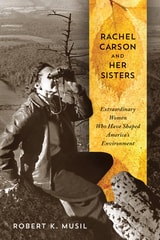
Rachel Carson and Her Sisters
Extraordinary Women Who Have Shaped America's EnvironmentRobert K. Musil
Rutgers University Press, 2015
On the fiftieth anniversary of her death, this book helps underscore Carson’s enduring environmental legacy and brings to life the achievements of women writers and advocates, such as Ellen Swallow Richards, Dr. Alice Hamilton, Terry Tempest Williams, Sandra Steingraber, Devra Davis, and Theo Colborn, all of whom overcame obstacles to build and lead the modern American environmental movement.
Radar Interference Matters
Alan Collinson
The Institution of Engineering and Technology, 2026
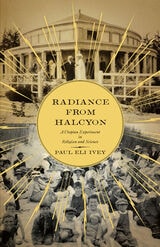
Radiance from Halcyon
A Utopian Experiment in Religion and SciencePaul Eli Ivey
University of Minnesota Press, 2013
In May 1904, the residents of Halcyon—a small utopian community on California’s central coast—invited their neighbors to attend the grand opening of the Halcyon Hotel and Sanatorium. As part of the entertainment, guests were encouraged to have their hands X-rayed. For the founders and members of Halcyon, the X-ray was a demonstration of mysterious spiritual forces made practical to human beings.
Radiance from Halcyon is the story not only of the community but also of its uniquely inventive members’ contributions to religion and science. The new synthesis of religion and science attempted by Theosophy laid the foundation for advances produced by the children of the founding members, including microwave technology and atomic spectral analysis. Paul Eli Ivey’s narrative starts in the 1890s in Syracuse, New York, with the rising of the Temple of the People, a splinter group of the theosophical movement. After developing its ideals for an agricultural and artisanal community, the Temple purchased land in California and in 1903 began to live its dream there.
In addition to an intriguing account of how a little-known utopian religious community profoundly influenced modern science, Ivey offers a wide-ranging cultural history, encompassing Theosophy, novel healing modalities, esoteric architecture, Native American concepts of community, socialist utopias, and innovative modern music.
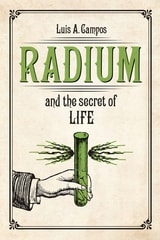
Radium and the Secret of Life
Luis A. Campos
University of Chicago Press, 2015
From the creation of half-living microbes in the test tube to charting the earliest histories of genetic engineering, Radium and the Secret of Life highlights previously unknown interconnections between the history of the early radioactive sciences and the sciences of heredity. Equating the transmutation of radium with the biological transmutation of living species, biologists saw in metabolism and mutation properties that reminded them of the new element. These initially provocative metaphoric links between radium and life proved remarkably productive and ultimately led to key biological insights into the origin of life, the nature of heredity, and the structure of the gene. Radium and the Secret of Life recovers a forgotten history of the connections between radioactivity and the life sciences that existed long before the dawn of molecular biology.
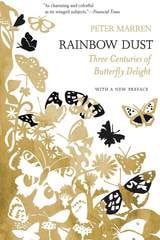
Rainbow Dust
Three Centuries of Butterfly DelightPeter Marren
University of Chicago Press, 2016
At the age of five, Marren had his “Nabokov Moment,” catching his first butterfly and feeling the dust of its colored scales between his fingers. It was a moment that would launch a lifetime’s fascination rivaling that of the famed novelist—a fascination that put both in good company. From the butterfly collecting and rearing craze that consumed North America and Europe for more than two hundred years (a hobby that in some cases bordered on madness), to the potent allure of butterfly iconography in contemporary advertisements and their use in spearheading calls to conserve and restore habitats (even though butterflies are essentially economically worthless), Marren unveils the many ways in which butterflies inspire us as objects of beauty and as symbols both transient and transcendent.
Floating around the globe and through the whole gamut of human thought, from art and literature to religion and science, Rainbow Dust is a cultural history rather than merely a natural one, a tribute to butterflies’ power to surprise, entertain, and obsess us. With a sway that far surpasses their fragile anatomy and gentle beat, butterfly wings draw us into the prismatic wonders of the natural world—and, in the words of Marren, these wonders take flight.
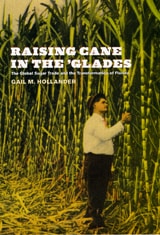
Raising Cane in the 'Glades
The Global Sugar Trade and the Transformation of FloridaGail M. Hollander
University of Chicago Press, 2008
Using, among other sources, interviews, government and corporate documents, and recently declassified U.S. State Department memoranda, Gail M. Hollander demonstrates that the development of Florida’s sugar region was the outcome of pitched battles reaching the highest political offices in the U.S. and in countries around the world, especially Cuba—which emerges in her narrative as a model, a competitor, and the regional “other” to Florida’s “self.” Spanning the period from the age of empire to the era of globalization, the book shows how the “sugar question”—a label nineteenth-century economists coined for intense international debates on sugar production and trade—emerges repeatedly in new guises. Hollander uses the sugar question as a thread to stitch together past and present, local and global, in explaining Everglades transformation.
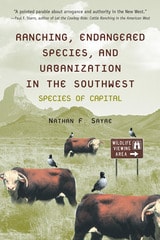
Ranching, Endangered Species, and Urbanization in the Southwest
Species of CapitalNathan F. Sayre
University of Arizona Press, 2002
Nathan Sayre now takes a close look at how the ranching ideal has come into play in the conversion of a large tract of Arizona rangeland from private ranch to National Wildlife Refuge. He tells how the Buenos Aires Ranch, a working operation for a hundred years, became not only a rallying point for multiple agendas in the "rangeland conflict" after its conversion to a wildlife refuge but also an expression of the larger shift from agricultural to urban economies in the Southwest since World War II.
The U.S. Fish and Wildlife Service bought the Buenos Aires Ranch in 1985, removed all livestock, and attempted to restore the land to its "original" grassland in order to protect an endangered species, the masked bobwhite quail. Sayre examines the history of the ranch and the bobwhite together, exploring the interplay of social, economic, and ecological issues to show how ranchers and their cattle altered the land—for better or worse—during a century of ranching and how the masked bobwhite became a symbol for environmentalists who believe that the removal of cattle benefits rangelands and wildlife.
Sayre evaluates both sides of the Buenos Aires controversy—from ranching's impact on the environment to environmentalism's sometimes misguided efforts at restoration—to address the complex and contradictory roles of ranching, endangered species conservation, and urbanization in the social and environmental transformation of the West. He focuses on three dimensions of the Buenos Aires story: the land and its inhabitants, both human and animal; the role of government agencies in shaping range and wildlife management; and the various species of capital—economic, symbolic, and bureaucratic—that have structured the activities of ranchers, environmentalists, and government officials.
The creation of the Buenos Aires National Wildlife Refuge has been a symbolic victory for environmentalists, but it comes at the cost of implicitly legitimizing the ongoing fragmentation and suburbanization of Arizona's still-wild rangelands. Sayre reveals how the polarized politics of "the rangeland conflict" have bound the Fish and Wildlife Service to a narrow, ineffectual management strategy on the Buenos Aires, with greater attention paid to increasing tourism from birdwatchers than to the complex challenge of restoring the masked bobwhite and its habitat. His findings show that the urban boom of the late twentieth century echoed the cattle boom of a century before—capitalizing on land rather than grass, humans rather than cattle—in a book that will serve as a model for restoration efforts in any environment.
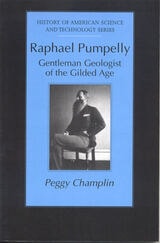
Raphael Pumpelly
Gentleman Geologist of the Gilded AgePeggy Champlin
University of Alabama Press, 1994
A definitive biography illuminating the scientific, industrial, and exploratory contributions of America’s pioneering economic geologist.
Raphael Pumpelly: Gentleman Geologist of the Gilded Age provides an excellent opportunity to look at the development of the profession of geology during the years spanned by his career, from 1860 to the early twentieth century. In this period, the practical applications of geology to resource development were of major importance, but geologists were also investigating new subjects, such as petrology, geomorphology, glaciology, and structural geology. These investigations resulted in an explosion of knowledge in these areas and in the growth of subdisciplines. Pumpelly did research in these fields but like others of his generation did not limit himself to any one of them; he remained a generalist in a time of increasing specialization, a transitional figure in a period of rapid change.
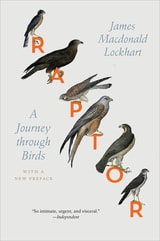
Raptor
A Journey through BirdsJames Macdonald Lockhart
University of Chicago Press, 2017
Taking as his guide the nineteenth-century Scottish naturalist and artist William MacGillivray, Lockhart loosely follows the historical trail forged by MacGillivray as he ventured from Aberdeen to London filling his pockets with plants and writing and illustrating the canonical A History of British Birds. Linking his journey to that of his muse, Lockhart shares his own encounters with raptors ranging from the scarce osprey to the successfully reintroduced red kite, a species once protected by medieval royal statute, revealing with poetic immediacy the extraordinary behaviors of these birds and the extreme environments they call home.
Creatures both worshipped and reviled, raptors have a talon-hold on the human heart and imagination. With his book, Lockhart unravels these complicated ties in a work by turns reverent and euphoric—an interweaving of history, travel, and nature writing at its best. A hymn to wanderers, to the land and to the sky, and especially to the birds, Raptor soars.
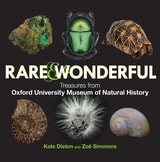
Rare and Wonderful
Treasures from the Oxford University Museum of Natural HistoryKate Diston and Zoë Simmons
Bodleian Library Publishing, 2018
This lavishly illustrated book features highlights from the collections, ranging from David Livingstone’s tsetse fly specimens to Mary Anning’s ichthyosaur, and from crabs collected by Darwin during his voyage on the Beagle to the iconic Dodo, the only soft tissue specimen of the species in existence. Also featured are the first described dinosaur bones, found in a small Oxfordshire village, the Red Lady of Paviland (who was in fact a man who lived 29,000 years ago), and a meteorite from the planet Mars.
Each item tells a unique story about natural history, the history of science, collecting, or the museum itself. Rare & Wonderful offers unique insight into the extraordinary wealth of information and fascinating tales that can be gleaned from these collections.
Rarities
Conservation Science in a Time of Unintended ConsequencesZoe Nyssa
University of Chicago Press, 2026
A sweeping study that reveals how conservation science does more than simply protect by inadvertently making nature valuable in new ways.
Climate change and other environmental transformations are causing species to go extinct at accelerating rates. What, then, should a science of saving nature look like? In Rarities, Zoe Nyssa traces how conservation emerged as a distinct scientific endeavor in the United States over the twentieth century and how this history has shaped environmental research practices and policy today. Drawing on archival and ethnographic research with leading conservation labs and programs, Nyssa explores how conservation science appears to generate contradictory, even counterintuitive, results as scientists, policymakers, and the public all take up, respond to, and repurpose scientists’ ideas about rarity, vulnerability, and endangerment. The designation of new nature reserves can lead to increased poaching and habitat destruction. The listing of a species as endangered fuels their black-market consumption as pets, food, or luxury items. Protection of natural resources can push resource extraction into unprotected areas. Other effects are less simple to calculate; persuading the public to care about one species might siphon support for another, and paying for one kind of conservation behavior can discourage other forms of conservation activity.
The science of saving nature spans a century of work by ecologists and others to develop a scientific basis for conservation. Yet Nyssa shows how their efforts to understand the natural world in terms of endangerment and extinction unleashed new ways for nonscientists to experience and understand nature as well. The scientific values that emerge, she argues, can transform the complex interconnections between human and nonhuman life. Rarities offers a framework for understanding these surprising socio-ecological dynamics and why they matter, both for contemporary science and for the planet.
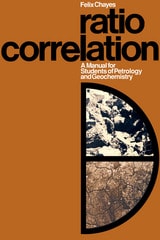
Ratio Correlation
A Manual for Students of Petrology and GeochemistryFelix Chayes
University of Chicago Press, 1971
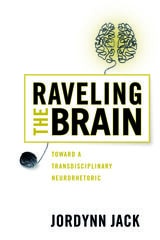
Raveling the Brain
Toward a Transdisciplinary NeurorhetoricJordynn Jack
The Ohio State University Press, 2019
Jack first looks at the problem of “neurohype”—exaggerated or oversimplified claims that essentialize brains and make them “uncritically real”—questioning some of the fundamental assumptions about the brain that experimental protocols and psychological concepts rely on. Then, through examples of research on sex and gender, political orientation, and affect, Jack demonstrates how a rhetorical-material approach can help to generate alternative approaches to studying the brain that might mitigate the problem of neurohype. By raveling out the roots of neurohype and raveling back its use through time, Raveling the Brain shows how rhetoric and neuroscience might be raveled together, or intertwined, to create a stronger transdisciplinary approach that might enrich our understanding of those issues of interest to neuroscientists and humanists alike.
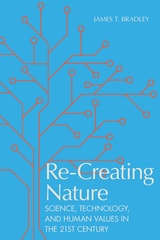
Re-Creating Nature
Science, Technology, and Human Values in the Twenty-First CenturyJames T. Bradley
University of Alabama Press, 2019
Many of the ethical issues raised by new technologies have not been widely examined, discussed, or indeed settled. For example, robotics technology challenges the notion of personhood. Should a robot, capable of making what humans would call ethical decisions, be held responsible for those decisions and the resultant actions? Should society reward and punish robots in the same way that it does humans? Likewise, issues of safety, environmental concerns, and distributive justice arise with the increasing acceptance of genetically modified organisms (GMOs) in food production nanotechnology in engineering and medicine, and human gene therapy and enhancement. The problem of dual-use—when a technology can be used both to benefit and to harm—exists with virtually all new technologies but is central in the context of emerging 21st century technologies ranging from artificial intelligence and robotics to human gene-editing and brain-computer interfacing.
In Re-Creating Nature: Science, Technology, and Human Values in the Twenty-First Century, James T. Bradley addresses emerging biotechnologies with prodigious potential to benefit humankind but that are also fraught with ethical consequences. Some actually possess the power to directly alter the evolution of life on earth including human. Specifically, these topics include stem cells, synthetic biology, GMOs in agriculture, nanotechnology, bioterrorism, CRISPR gene-editing technology, three-parent babies, robotics and roboethics, artificial intelligence, and human brain research and neurotechnologies.
Offering clear explanations of these various technologies, a pragmatic presentation of the conundrums involved, and questions that illuminate hypothetical situations, Bradley guides discussions of these and other thorny issues resulting from the development of new biotechnologies. He also highlights the responsibilities of scientists to conduct research in an ethical manner and the responsibilities of nonscientists to become “science literate” in the twenty-first century.
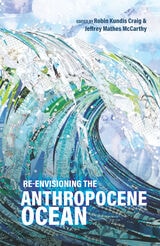
Re-envisioning the Anthropocene Ocean
Edited by Robin Kundis Craig and Jeffrey Mathes McCarthy
University of Utah Press, 2022
The world is at a critical moment, when humans must grapple with thinking about the planet’s oceans from ecological, physical, social, and legal perspectives. Warming ocean temperatures, changing currents, cultural displacement, Indigenous resilience, melting polar ice, habitat loss, are but a few of the global issues reflected in the planetary ocean as a front line in the unfolding drama of climate change. Re-envisioning the Anthropocene Ocean brings together leading scientists, lawyers, humanists, and Indigenous voices to tell of the ocean’s precarious position in the twenty-first century. The contributors affirm that the planetary ocean is crucial to our well-being and overdue for a positive change in public action to enhance the world’s resilience to climate change, ocean acidification, and other stressors. These essays engage that important work of positively re-imagining the ocean in the Anthropocene.
This volume brings diverse perspectives to the planet’s ocean future. New essays are contextualized with narratives woven by earlier ocean writers, showing readers how past perceptions of the ocean have led us to where we are today in terms of both problems and potential new visions. In this one volume, readers experience both the history of humanity’s multi- and interdisciplinary interactions with the ocean, find new perspectives on that history, and discover ideas for looking forward.
Reactivating Elements
Chemistry, Ecology, PracticeDimitris Papadopoulos, María Puig del la Bellacasa, and Natasha Myers, editors
Duke University Press, 2021
Contributors. Patrick Bresnihan, Tim Choy, Joseph Dumit, Cori Hayden, Stefan Helmreich, Joseph Masco, Michelle Murphy, Natasha Myers, Dimitris Papadopoulos, María Puig de la Bellacasa, Astrid Schrader, Isabelle Stengers
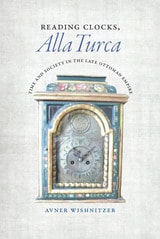
Reading Clocks, Alla Turca
Time and Society in the Late Ottoman EmpireAvner Wishnitzer
University of Chicago Press, 2015
Drawing on a wealth of archival and literary sources, Wishnitzer’s original and highly important work presents the shifting culture of time as an arena in which Ottoman social groups competed for legitimacy and a medium through which the very concept of modernity was defined. Reading Clocks, Alla Turca breaks new ground in the study of the Middle East and presents us with a new understanding of the relationship between time and modernity.

Reading Darwin in Arabic, 1860-1950
Marwa Elshakry
University of Chicago Press, 2013

Reading Galileo's Letters
Experiments in Friendship, Knowledge, and CommunityEdited by Paula Findlen and Hannah Marcus
University of Chicago Press, 2027
Essays by many of the foremost experts on Galileo offer an interdisciplinary approach to the legendary scientist’s correspondence.
The Tuscan mathematician, physicist, and astronomer Galileo Galilei (1564–1642) is one of history’s most iconic and controversial figures. Letters form the backbone of what one early Galileo scholar called the “private Galileo,” and his correspondence is indeed a record of his family and friendships; his intellectual evolution; his professional interactions with other scientific figures; and his relations with patrons, brokers, and publishers. Last, but hardly least, his letters are a unique cultural artifact of Galileo the writer and master of vernacular prose.
Galileo’s correspondence crossed Europe in public mail pouches, through diplomatic messengers, and was written in code. Today, there are 3,272 surviving letters to or from Galileo and his many friends, family members, disciples, and rivals across Europe. This volume examines these letters as an essential aspect of Galileo’s personal and scientific career. They are what the editors call his “experiments in friendship,” which enabled, abetted, and often served as early drafts of the theories in his published works. This collaborative volume brings together different approaches, case studies, and forms of expertise—historical and literary, intellectual and material, archival and digital. It is a must-read for all Galileo enthusiasts and anyone interested in how to make the most of a rich record of correspondence.
Reading Practice
The Pursuit of Natural Knowledge from Manuscript to PrintMelissa Reynolds
University of Chicago Press, 2024
Reading Practice tells the story of how ordinary people grew comfortable learning from commonplace manuscripts and printed books, such as almanacs, medical recipe collections, and herbals. From the turn of the fifteenth century to the close of the sixteenth century, these were the books English people read when they wanted to attend to their health or understand their place in the universe. Before then, these works had largely been the purview of those who could read Latin. Around 1400, however, medical and scientific texts became available in Middle English while manuscripts became less expensive. These vernacular manuscripts invited their readers into a very old and learned conversation: Hippocrates and Galen weren’t distant authorities whose word was law, they were trusted guides, whose advice could be excerpted, rearranged, recombined, and even altered to suit a manuscript compiler’s needs. This conversation continued even after the printing press arrived in England in 1476. Printers mined manuscripts for medical and scientific texts that they would publish throughout the sixteenth century, though the pressures of a commercial printing market encouraged printers to package these old texts in new ways. Without the weight of authority conditioning their reactions and responses to very old knowledge, and with so many editions of practical books to choose from, English readers grew into confident critics and purveyors of natural knowledge in their own right.
Melissa Reynolds reconstructs shifting attitudes toward medicine and science over two centuries of seismic change within English culture, attending especially to the effects of the Reformation on attitudes toward nature and the human body. Her study shows how readers learned to be discerning and selective consumers of knowledge gradually, through everyday interactions with utilitarian books.
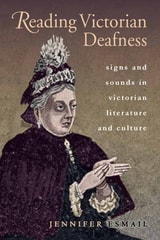
Reading Victorian Deafness
Signs and Sounds in Victorian Literature and CultureJennifer Esmail
Ohio University Press, 2013
Winner of the 2013 Sonya Rudikoff Award for best first book in Victorian Studies
Short-listed for the 2013 British Society for Literature and Science Book Prize.
Reading Victorian Deafness is the first book to address the crucial role that deaf people, and their unique language of signs, played in Victorian culture. Drawing on a range of works, from fiction by Charles Dickens and Wilkie Collins, to poetry by deaf poets and life writing by deaf memoirists Harriet Martineau and John Kitto, to scientific treatises by Alexander Graham Bell and Francis Galton, Reading Victorian Deafness argues that deaf people’s language use was a public, influential, and contentious issue in Victorian Britain.
The Victorians understood signed languages in multiple, and often contradictory, ways: they were objects of fascination and revulsion, were of scientific import and literary interest, and were considered both a unique mode of human communication and a vestige of a bestial heritage. Over the course of the nineteenth century, deaf people were increasingly stripped of their linguistic and cultural rights by a widespread pedagogical and cultural movement known as “oralism,” comprising mainly hearing educators, physicians, and parents.
Engaging with a group of human beings who used signs instead of speech challenged the Victorian understanding of humans as “the speaking animal” and the widespread understanding of “language” as a product of the voice. It is here that Reading Victorian Deafness offers substantial contributions to the fields of Victorian studies and disability studies. This book expands current scholarly conversations around orality, textuality, and sound while demonstrating how understandings of disability contributed to Victorian constructions of normalcy. Reading Victorian Deafness argues that deaf people were used as material test subjects for the Victorian process of understanding human language and, by extension, the definition of the human.
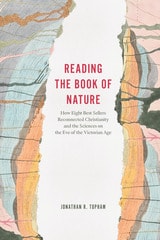
Reading the Book of Nature
How Eight Best Sellers Reconnected Christianity and the Sciences on the Eve of the Victorian AgeJonathan R. Topham
University of Chicago Press, 2022
When Charles Darwin returned to Britain from the Beagle voyage in 1836, the most talked-about scientific books of the day were the Bridgewater Treatises. This series of eight works was funded by a bequest of the last Earl of Bridgewater and written by leading men of science appointed by the president of the Royal Society to explore "the Power, Wisdom, and Goodness of God, as manifested in the Creation." Securing public attention beyond all expectations, the series offered Darwin’s generation a range of approaches to one of the great questions of the age: how to incorporate the newly emerging disciplinary sciences into Britain’s overwhelmingly Christian culture.
Drawing on a wealth of archival and published sources, including many unexplored by historians, Jonathan R. Topham examines how and to what extent the series contributed to a sense of congruence between Christianity and the sciences in the generation before the fabled Victorian conflict between science and religion. Building on the distinctive insights of book history and paying close attention to the production, circulation, and use of the books, Topham offers new perspectives on early Victorian science and the subject of science and religion as a whole.
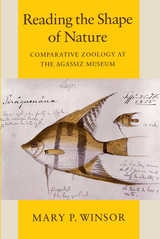
Reading the Shape of Nature
Comparative Zoology at the Agassiz MuseumMary P. Winsor
University of Chicago Press, 1991
In 1859, Louis Agassiz established the Museum of Comparative Zoology to house research on the ideal types that he believed were embodied in all living forms. Agassiz's vision arose from his insistence that the order inherent in the diversity of life reflected divine creation, not organic evolution. But the mortar of the new museum had scarcely dried when Darwin's Origin was published. By Louis Agassiz's death in 1873, even his former students, including his son Alexander, had defected to the evolutionist camp. Alexander, a self-made millionaire, succeeded his father as director and introduced a significantly different agenda for the museum.
To trace Louis and Alexander's arguments and the style of science they established at the museum, Winsor uses many fascinating examples that even zoologists may find unfamiliar. The locus of all this activity, the museum building itself, tells its own story through a wonderful series of archival photographs.
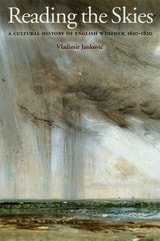
Reading the Skies
A Cultural History of English Weather, 1650-1820Vladimir Jankovic
University of Chicago Press, 2001
Jankovic interweaves classical traditions, folk/popular beliefs and practices, and the increasingly quantitative approaches of urban university men to understanding the wonders of the skies. He places special emphasis on the role that detailed meteorological observations played in natural history and chorography, or local geography; in religious and political debates; and in agriculture. Drawing on a number of archival sources, including correspondence and weather diaries, as well as contemporary pamphlets, tracts, and other printed sources reporting prodigious phenomena in the skies, this book will interest historians of science, Britain, and the environment.
Real Places
An Unconventional Guide to America's Generic LandscapeGrady Clay
University of Chicago Press, 1994
"This book provides a language for the architecture of everyday life."—Ross Miller, Chicago Tribune
"Spirited observations and capsule histories."—Suzanne Stephens, New York Times Book Review
"Compelling. . . . Included here are many nuggets of insight and illumination."—Brad Knickerbocker, Christian Science Monitor
"An amusing and touching book about the reality we Americans have captured in our language."—Boston Sunday Globe
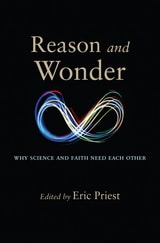
Reason and Wonder
Why Science and Faith Need Each OtherEric Priest
Templeton Press, 2016
This is exactly what Reason and Wonder does. Eric Priest has brought together twelve of the leading thinkers in science and theology to discuss everything from the origins of the universe to evolution and evil. At the heart of each essay is an understanding that the best science—and the best theology— are both undergirded by an appeal to reason as well as a deep sense of wonder.
Each of these great scientific and theological thinkers offers a chapter on their area of expertise, and the book closes with a stimulating set of questions for group discussion or personal reflection.
- Contributors and their topics include:
- Eric Priest: Towards an integration of science and religion
- Keith Ward: God, science and the New Atheism
- Eleonore Stump: Natural law, reductionism and the Creator
- David Wilkinson: The origin and end of the universe: A challenge for Christianity
- Jennifer Wiseman: Universe of wonder, universe of life
- Kenneth R. Miller: Evolution, faith and science
- Michael J. Murray and Jeff Schloss: Evolution and evil
- Pauline Rudd: Is there more to life than genes?
- David G. Myers: Psychological science meets Christian faith
- John Wyatt: Being a person: Towards an integration of neuroscientific and Christian perspectives
- John Swinton: From projection to connection: Conversations between science, spirituality and health
- Mark Harris: Do the miracles of Jesus contradict science?
- N. T. Wright: Can a scientist trust the New Testament?
Reasoning with the Infinite
From the Closed World to the Mathematical UniverseMichel Blay
University of Chicago Press, 1998
"One of Michael Blay's many fine achievements in Reasoning with the Infinite is to make us realize how velocity, and later instantaneous velocity, came to play a vital part in the development of a rigorous mathematical science of motion."—Margaret Wertheim, New Scientist
Reasons of Conscience
The Bioethics Debate in GermanyStefan Sperling
University of Chicago Press, 2013
Recent Advances in High-Power Electromagnetics
Felix Vega
The Institution of Engineering and Technology, 2024
Recent Developments in Fisheries Economics
Special Issue of Land Economics 83:1 (February 2007)Ussif Rashid Sumaila
University of Wisconsin Press, 2007
Articles cover a wide variety of recent topical issues in fisheries economics and the latest developments in the field, including marine protected areas, individual transferable quotas, fisheries subsidies, habitat values, data fouling, and rotational management of sedentary fishery resources. Seven of the articles were presented at the 2005 North American Association of Fisheries Economics Forum at the University of British Columbia in Vancouver, Canada.

Recent Mammals of Alaska
Stephen O. MacDonald and Joseph A. Cook
University of Alaska Press, 2009
From the polar bear and the gray wolf to the walrus and river otter, there are 115 species of mammals in Alaska that have never been fully catalogued until now. Biologists Joseph A. Cook and Stephen O. MacDonald have compiled here the first comprehensive guide to all of Alaska’s mammals, big and small, endearing and ferocious.
Through extensive fieldwork and research the authors have produced a unique and authoritative reference. Detailed entries for each species include distribution and taxonomic information, status, habitat, and fossil history. Appendices include quick reference listings of mammal distribution by region, specimen locations, conservation status, and the incidence of Pleistocene mammals. The guide is generously illustrated with line drawings by Alaskan artist W. D. Berry and includes several maps indicating populations and locations of species.
Mammals of Alaska will be an accessible, easy to use source for scholars and hobbyists alike.
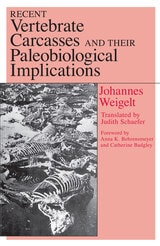
Recent Vertebrate Carcasses and Their Paleobiological Implications
Johannes Weigelt
University of Chicago Press, 1989
Weigelt spent sixteen months on the Gulf Coast in the mid-1920s, gathering evidence from the carcasses of cattle and other animals in the early stages of preservation. This book reports his observations. He discusses death and decomposition; classifies various modes of death (drowning, cold, dehydration, fire, mud, quicksand, oil slicks, etc.); documents and analyzes the positions of carcasses; presents detailed data on carcass assemblages at the Smither's Lake site in Texas; and, in a final chapter, makes comparisons to carcass assemblages from the geologic past. He raises questions about whether much of the fossil record is a product of unusual events and, if so, what the implications are for paleoecological studies.
The English edition of Recent Vertebrate Carcasses includes a foreword and a translator's note that comment on Weigelt's life and the significance of his work. The original bibliography has been brought up to date, and, where necessary, updated scientific and place names have been added to the text in brackets. An index of names, places, and subjects is included, and Weigelt's own photographs of carcasses and drawings of skeletons illustrate the text.
Recipes and Everyday Knowledge
Medicine, Science, and the Household in Early Modern EnglandElaine Leong
University of Chicago Press, 2018
In Recipes and Everyday Knowledge, Elaine Leong situates recipe knowledge and practices among larger questions of gender and cultural history, the history of the printed word, and the history of science, medicine, and technology. The production of recipes and recipe books, she argues, were at the heart of quotidian investigations of the natural world or “household science”. She shows how English homes acted as vibrant spaces for knowledge making and transmission, and explores how recipe trials allowed householders to gain deeper understandings of sickness and health, of the human body, and of natural and human-built processes. By recovering this story, Leong extends the parameters of natural inquiry and productively widens the cast of historical characters participating in and contributing to early modern science.
Reckoning with Matter
Calculating Machines, Innovation, and Thinking about Thinking from Pascal to BabbageMatthew L. Jones
University of Chicago Press, 2016
In Reckoning with Matter, Matthew L. Jones draws on the remarkably extensive and well-preserved records of the quest to explore the concrete processes involved in imagining, elaborating, testing, and building calculating machines. He explores the writings of philosophers, engineers, and craftspeople, showing how they thought about technical novelty, their distinctive areas of expertise, and ways they could coordinate their efforts. In doing so, Jones argues that the conceptions of creativity and making they exhibited are often more incisive—and more honest—than those that dominate our current legal, political, and aesthetic culture.
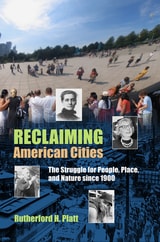
Reclaiming American Cities
The Struggle for People, Place, and Nature since 1900Rutherford H. Platt
University of Massachusetts Press, 2014
For most of the past century, urban America was dominated by top-down policies serving the white business and cultural elite, the suburbs, and the automobile. At times these approaches were fiercely challenged by reformers such as Jane Addams and Jane Jacobs. Yet by the 1980s, mainstream policies had resulted in a nation of ravaged central cities, sprawling suburbs, social and economic polarization, and incalculable environmental damage.
In the 1990s, this entrenched model finally yielded to change as local citizens, neighborhood groups, and other stakeholders, empowered by a spate of new laws and policies, began asserting their own needs and priorities. Though hampered by fiscal crises and internal disagreements, these popular initiatives launched what the author terms a new era of “humane urbanism” marked by a determination to make cities and suburbs greener, healthier, safer, more equitable, more efficient, and generally more people-friendly. In the process, the mayors, architects, engineers, and bureaucrats who had previously dominated urban policy found themselves relegated to supporting roles.
As Rutherford H. Platt points out, humane urbanism can take many forms, from affordable housing and networks of bike paths to refurbished waterfronts and urban farms. Often spontaneous, low-tech, and self-sustaining programs, their shared goal is to connect people to one another and to bring nature back into the city. Reclaiming American Cities examines both sides of this historic transformation: the long struggle against patricians and technocrats of earlier decades and the recent sprouting of grassroots efforts to make metropolitan America more humane and sustainable.
Reconciling Science and Religion
The Debate in Early-Twentieth-Century BritainPeter J. Bowler
University of Chicago Press, 2001
Peter J. Bowler argues that unlike the United States, where a strong fundamentalist opposition to evolutionism developed in the 1920s (most famously expressed in the Scopes "monkey trial" of 1925), in Britain there was a concerted effort to reconcile science and religion. Intellectually conservative scientists championed the reconciliation and were supported by liberal theologians in the Free Churches and the Church of England, especially the Anglican "Modernists." Popular writers such as Julian Huxley and George Bernard Shaw sought to create a non-Christian religion similar in some respects to the Modernist position. Younger scientists and secularists—including Rationalists such as H. G. Wells and the Marxists—tended to oppose these efforts, as did conservative Christians, who saw the liberal position as a betrayal of the true spirit of their religion. With the increased social tensions of the 1930s, as the churches moved toward a neo-orthodoxy unfriendly to natural theology and biologists adopted the "Modern Synthesis" of genetics and evolutionary theory, the proposed reconciliation fell apart.
Because the tensions between science and religion—and efforts at reconciling the two—are still very much with us today, Bowler's book will be important for everyone interested in these issues.
Reconstructing Scientific Revolutions
Thomas S. Kuhn's Philosophy of SciencePaul Hoyningen-Huene
University of Chicago Press, 1993
Scholars from disciplines as diverse as political science and art history have offered widely differing interpretations of Kuhn's ideas, appropriating his notions of paradigm shifts and revolutions to fit their own theories, however imperfectly. Hoyningen-Huene does not merely offer another interpretation—he brings Kuhn's work into focus with rigorous philosophical analysis. Through extended discussions with Kuhn and an encyclopedic reading of his work, Hoyningen-Huene looks at the problems and justifications of his claims and determines how his theories might be expanded. Most significantly, he discovers that The Structure of Scientific Revolutions can be understood only with reference to the historiographic foundation of Kuhn's philosophy.
Discussing the concepts of paradigms, paradigm shifts, normal science, and scientific revolutions, Hoyningen-Huene traces their evolution to Kuhn's experience as a historian of contemporary science. From here, Hoyningen-Huene examines Kuhn's well-known thesis that scientists on opposite sides of a revolutionary divide "work in different worlds," explaining Kuhn's notion of a world-change during a scientific revolution. He even considers Kuhn's most controversial claims—his attack on the distinction between the contexts of discovery and justification and his notion of incommensurability—addressing both criticisms and defenses of these ideas.
Destined to become the authoritative philosophical study of Kuhn's work, Reconstructing Scientific Revolutions both enriches our understanding of Kuhn and provides powerful interpretive tools for bridging Continental and Anglo-American philosophical traditions.
Recycling Land
Understanding the Legal Landscape of Brownfield DevelopmentElizabeth Glass Geltman
University of Michigan Press, 2000
Red Metal
The Calumet and Hecla StoryC. Harry Benedict
University of Michigan Press, 1952

Red Revolution, Green Revolution
Scientific Farming in Socialist ChinaSigrid Schmalzer
University of Chicago Press, 2016
In Red Revolution, Green Revolution, Sigrid Schmalzer explores the intersection of politics and agriculture in socialist China through the diverse experiences of scientists, peasants, state agents, and “educated youth.” The environmental costs of chemical-intensive agriculture and the human costs of emphasizing increasing production over equitable distribution of food and labor have been felt as strongly in China as anywhere—and yet, as Schmalzer shows, Mao-era challenges to technocracy laid important groundwork for today’s sustainability and food justice movements. This history of “scientific farming” in China offers us a unique opportunity not only to explore the consequences of modern agricultural technologies but also to engage in a necessary rethinking of fundamental assumptions about science and society.
Red-winged Blackbirds
Decision-making and Reproductive SuccessLes D. Beletsky and Gordon H. Orians
University of Chicago Press, 1996
Using analyses of observational data combined with field experiments and game-theoretical models, the authors provide new insights into the complex patterns of reproductive decision-making and breeding behavior in redwings. This book will be of interest to all who study social animals, including behavioral ecologists, evolutionary biologists, and ornithologists.
Redeeming Culture
American Religion in an Age of ScienceJames Gilbert
University of Chicago Press, 1997
"Anyone seriously interested in the history of current controversies involving religion and science will find Gilbert's book invaluable."—Peter J. Causton, Boston Book Review
"Redeeming Culture provides some fascinating background for understanding the interactions of science and religion in the United States. . . . Intriguing pictures of some of the highlights in this cultural exchange."—George Marsden, Nature
"A solid and entertaining account of the obstacles to mutual understanding that science and religion are now warily overcoming."—Catholic News Service
"[An] always fascinating look at the conversation between religion and science in America."—Publishers Weekly
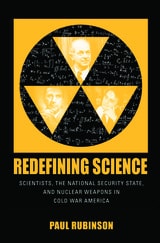
Redefining Science
Scientists, the National Security State, and Nuclear Weapons in Cold War AmericaPaul Rubinson
University of Massachusetts Press, 2016
The Cold War forced scientists to reconcile their values of internationalism and objectivity with the increasingly militaristic uses of scientific knowledge. For decades, antinuclear scientists pursued nuclear disarmament in a variety of ways, from grassroots activism to transnational diplomacy and government science advising. The U.S. government ultimately withstood these efforts, redefining science as a strictly technical endeavor that enhanced national security and deeming science that challenged nuclear weapons on moral grounds “emotional” and patently unscientific. In response, many activist scientists restricted themselves to purely technical arguments for arms control. When antinuclear protest erupted in the 1980s, grassroots activists had moved beyond scientific and technical arguments for disarmament. Grounding their stance in the idea that nuclear weapons were immoral, they used the “emotional” arguments that most scientists had abandoned.
Redefining Science shows that the government achieved its Cold War “consensus” only by active opposition to powerful dissenters and helps explain the current and uneasy relationship between scientists, the public, and government in debates over issues such as security, energy, and climate change.
Reflection in the Waves
The Interdividual Observer in a Quantum Mechanical WorldPablo Bandera
Michigan State University Press, 2019