Cloth: 979-8-89948-309-7 | Paper: 979-8-89948-308-0 | eISBN: 979-8-89948-310-3
Studying the early modern split between science and literature and the aftermath of their division
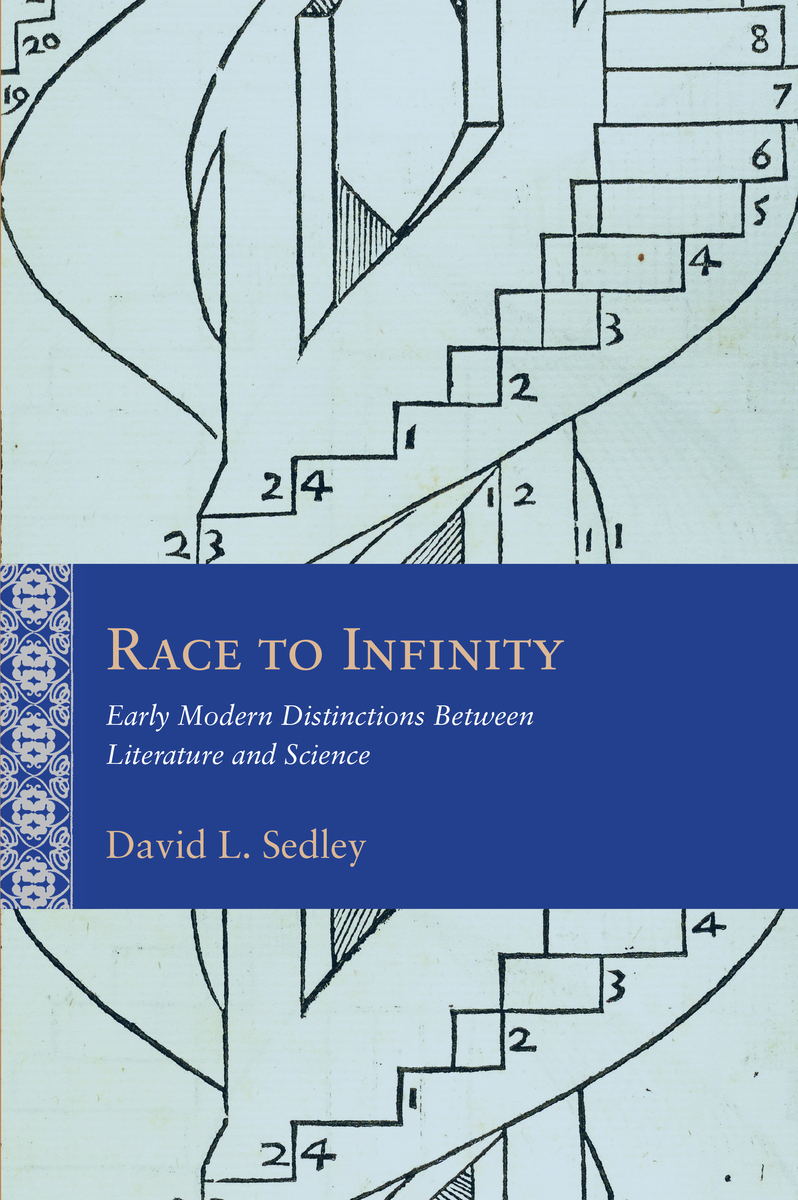
The conception of computers as thinking machines and literature as a social field stems from the early modern phenomenon of competing over the infinite as an object not just of contemplation but of appropriation in a race toward virtual control. The rediscovery of this origin undoes a collective forgetting of what technology and texts have in common, what they don’t, and what they can and ought to be in the future. David L. Sedley offers a new history of literature and science’s disciplinary divide—its origin and significance—tracing a series of points along the emerging frontier between these two fields. At each point there are two objects in play and two authors who push the objects in opposite directions: on the one hand, mechanical arts and the essay, probability theory and the novel, and geometry and epic; on the other, Montaigne and Bacon, Pascal and Lafayette, and Hobbes and Milton. Each of these authors, Sedley shows, tried to render an object either algorithmic or infinite to oppose the other’s efforts. Ultimately, Race to Infinity: Early Modern Distinctions Between Literature and Science illuminates the fortunes of the literary in the digital revolution and beyond.
See other books on: 17th Century | Comparative Literature | French | Inf | Sedley, David L.
See other titles from Northwestern University Press