Results by title
238 books match the query 'Social Classes & Economic Disparity' and 21 start with r
RSF
The Russell Sage Foundation Journal of the Social Sciences: Administrative Burden and Inequality in Policy implementationPamela Herd
Russell Sage Foundation, 2023
Administrative burdens are the learning, compliance, and psychological costs that individuals incur during encounters with public services. While some burdens are created unintentionally, others are deliberately constructed as barriers to limit claims to programs and services. Often, burdens fall most heavily on marginalized groups, preventing them from resources they need. In this double issue of RSF public administration scholar Pamela Herd, economist Hilary Hoynes, political scientists Jamila Michener and Donald Moynihan, and an interdisciplinary group of contributors explore how administrative burdens shape inequality.
Issue 1 examines how administrative burdens impact Medicaid and health inequality, student loan repayment programs, and immigration to the U.S. Emily Rauscher and Ailish Burns find that combinations of reforms to reduce administrative burdens in the late 1980s increased Medicaid enrollment and improved infant health nearly as much as Medicaid expansion. Adam Goldstein and colleagues show that administrative burdens in enrolling in income-driven repayment student loan programs causes borrowers with lower socioeconomic status to be disproportionately excluded from these programs. Lilly Yu finds that dramatic changes to immigration law and policy during the Trump Administration led immigration lawyers to inadvertently exacerbate inequality among undocumented and vulnerable immigrants’ access to legal representation.
Issue 2 looks at the role of administrative burdens in experiences with child and family support programs, the child welfare system, disaster and housing relief programs, and housing support programs. Carolyn Barnes and colleagues find that mothers’ perceptions of the costs and benefits of participation in the Special Supplemental Nutrition Assistance Program for Women, Infants, and Children (WIC) vary over time and influence whether they choose to enroll or continue participating in the program. Ethan J. Raker and Tyler M. Woods find applications from poor communities of color for Federal Emergency Management Agency (FEMA) housing aid after Hurricanes Katrina and Rita were disproportionately denied or delayed due to burdensome program requirements and implementation. Stephanie Casey Pierce and Stephanie Moulton reveal that reforms to reduce administrative burden in foreclosure programs are associated with a significant increase in the rate of benefit receipt and decrease in the foreclosure rate. Frank Edwards and colleagues show child welfare system-involved parents must navigate considerable administrative burdens in order to retain custody of their children.
This volume of RSF sheds light on the origins, experiences, and consequences of administrative burdens.
RSF
The Russell Sage Foundation Journal of the Social Sciences: Administrative Burden and Inequality in Policy implementationPamela Herd
Russell Sage Foundation, 2023
Administrative burdens are the learning, compliance, and psychological costs that individuals incur during encounters with public services. While some burdens are created unintentionally, others are deliberately constructed as barriers to limit claims to programs and services. Often, burdens fall most heavily on marginalized groups, preventing them from resources they need. In this double issue of RSF public administration scholar Pamela Herd, economist Hilary Hoynes, political scientists Jamila Michener and Donald Moynihan, and an interdisciplinary group of contributors explore how administrative burdens shape inequality.
Issue 1 examines how administrative burdens impact Medicaid and health inequality, student loan repayment programs, and immigration to the U.S. Emily Rauscher and Ailish Burns find that combinations of reforms to reduce administrative burdens in the late 1980s increased Medicaid enrollment and improved infant health nearly as much as Medicaid expansion. Adam Goldstein and colleagues show that administrative burdens in enrolling in income-driven repayment student loan programs causes borrowers with lower socioeconomic status to be disproportionately excluded from these programs. Lilly Yu finds that dramatic changes to immigration law and policy during the Trump Administration led immigration lawyers to inadvertently exacerbate inequality among undocumented and vulnerable immigrants’ access to legal representation.
Issue 2 looks at the role of administrative burdens in experiences with child and family support programs, the child welfare system, disaster and housing relief programs, and housing support programs. Carolyn Barnes and colleagues find that mothers’ perceptions of the costs and benefits of participation in the Special Supplemental Nutrition Assistance Program for Women, Infants, and Children (WIC) vary over time and influence whether they choose to enroll or continue participating in the program. Ethan J. Raker and Tyler M. Woods find applications from poor communities of color for Federal Emergency Management Agency (FEMA) housing aid after Hurricanes Katrina and Rita were disproportionately denied or delayed due to burdensome program requirements and implementation. Stephanie Casey Pierce and Stephanie Moulton reveal that reforms to reduce administrative burden in foreclosure programs are associated with a significant increase in the rate of benefit receipt and decrease in the foreclosure rate. Frank Edwards and colleagues show child welfare system-involved parents must navigate considerable administrative burdens in order to retain custody of their children.
This volume of RSF sheds light on the origins, experiences, and consequences of administrative burdens.
RSF
The Russell Sage Foundation Journal of the Social Sciences: Anti-poverty Policy Initiatives for the United StatesLawrence M. Berger
Russell Sage Foundation, 2018
Over 40 million Americans live in poverty with limited opportunities for upward mobility. With an economy characterized by large numbers of unstable and low-wage jobs, a fraying social safety net, and stagnant wages, what public policy reforms might increase the number of low-income families and individuals escaping poverty? This special double issue of RSF, edited by poverty researchers Lawrence M. Berger, Maria Cancian, and Katherine A. Magnuson, includes many innovative, evidence-based anti-poverty policy proposals crafted by leading social science researchers and policy analysts.
The first issue highlights initiatives that restructure tax and transfer programs to extend greater support to low-income families, regardless of work status. H. Luke Shaefer and colleagues would replace the current child tax credit and child tax exemption in the federal income tax with an unconditional universal child allowance. They estimate that this would reduce child poverty by about 40 percent. Maria Cancian and Daniel Meyer propose a new child support initiative that institutes a guaranteed minimum monthly support payment for every child living with a single parent, using public funds to bridge the gap when that amount exceeds what the noncustodial parent can reasonably pay. Sara Kimberlin and colleagues propose a renter’s tax credit in the federal income tax for poor households facing increasing rental costs that would benefit 70 percent of renters struggling with high rents.
The second issue analyzes policies that would reduce the extent of low-wage work by boosting education, training, and access to better jobs. Teresa Eckrich Sommer and colleagues propose expanding the Head Start program to combine parental education, job training, and employment opportunities along with existing early childhood education programs to better serve the needs of both parents and children. Mark Paul and colleagues propose a federal jobs guarantee of full-time employment, at a living wage and with benefits, for all adults seeking work. Diana Strumbos and colleagues propose a national community college program, based on a successful model used by the City University of New York, to provide disadvantaged students who enroll full-time with advising, academic, career, and financial supports.
Together, the policies proposed in this double issue provide an evidence-based blueprint for anti-poverty reforms that would benefit millions of people in need.

RSF
The Russell Sage Foundation Journal of the Social Sciences: Beyond Deaths of Despair: New Research on the Health and Well-Being of Low- and Moderately-Educated AmericansAnne Case
Russell Sage Foundation, 2026
The term “deaths of despair” was coined in 2015 by economists Anne Case and Agnus Deaton to describe the increasing mortality rate for White Americans without college degrees due to drug overdoses, suicide, and alcoholic liver disease. These deaths were attributed to the despondency experienced by the White working class, who were left behind by changes in the American economy. However, the mortality picture has changed since then. Mortality rates are now rising among both Black and White Americans without a college degree. Nearly all major causes of death are increasing more, or decreasing less, for people without college degrees. The educational gap in mortality has become so severe that, in 2021, adult life expectancy was more than eight years higher among college graduates. In this double issue of RSF, Case, Deaton, sociologist Andrew J. Cherlin, and an interdisciplinary group of contributors move beyond the concept of “deaths of despair” to explore the widening educational gap in mortality.
Issue 1 provides new perspectives on the education gap in mortality as well as new viewpoints on the non-college population. Christopher L. Foote and colleagues show that much of the educational gap in mortality may be due to smoking. One of the most popular explanations for the growing mortality gap is that college unlocks better job opportunities. However, Sam Arenberg and Sam Stripling find that what may matter for longer life expectancy is not so much having a “good” job as having a job at all, as high school dropouts with jobs have lower mortality rates than college graduates without them. Victor Tan Chen and colleagues reveal that people with opioid use disorders experience “precarity chains:” overlapping, connected hazards that combine to put people at increased risk of substance abuse.
Issue 2 also gives new viewpoints on the non-college population and examines geographic and international variation in mortality. Grace Landrum-Hall and colleagues discover that men with health issues repeatedly enter and exit the formal labor force—referred to as “churning”—due to inflexible employer policies and income support program policies. Jennifer Karas Montez and colleagues show that rural areas and small cities have seen increases in mortality, while large urban areas have seen decreases. Iliya Gutin and colleagues find that the educational gap in health and wellbeing is typically larger in the U.S. than in Britian. This may be because education in the U.S.—and the resulting higher salaries—allows for more access to health-promoting resources.
This double issue of RSF provides fascinating insights into the stark and alarming mortality gap between those with and without a college degree in the U.S.
RSF
The Russell Sage Foundation Journal of the Social Sciences: Changing Job Quality: Causes, Consequences, and ChallengesDavid R. Howell
Russell Sage Foundation, 2019
As a result of technological changes and outsourcing, unpredictable and uncertain work schedules are now widespread. Contributors Cathy Yang Liu and Luísa Nazareno demonstrate that workers in nonstandard employment arrangements earn less and work fewer hours than full-time workers. Susan Lambert, Julia Henly, and Jaesung Kim demonstrate that in addition to the financial insecurity caused by precarious work schedules, those who experience shortfalls in hours are increasingly distrustful of societal institutions. Other contributors examine job quality for women and people of color. David S. Pedulla and Katariina Mueller-Gastell study the rates at which various groups of workers apply for nonstandard jobs, and find that black and Hispanic workers are overrepresented in such positions. Michael Schultz examines mobility out of low-wage work and finds that women and nonwhites are the most entrenched in such jobs. He shows that there is greater mobility out of low-wage work where unions foster the use of job ladders and pay scales.
The issue recommends a slate of policies for creating better jobs, including increasing the federal minimum wage; strengthening collective and individual bargaining, especially through unions; and widening access to health insurance, paid sick and family leave, and childcare. In the absence of family-friendly policies at the federal level, sociologists Rachel Dwyer and Erik Olin Wright propose investments in the “social and solidarity” economy, including NGOs, nonprofit organizations, social enterprises, and worker cooperatives.
Given the centrality of work to human welfare, enhancing the quality of jobs is of urgent concern to workers, employers, and society at large. This issue of RSF helps us better understand the reasons for and consequences of declining job quality and suggests policies that would protect the most vulnerable workers.
RSF
The Russell Sage Foundation Journal of the Social Sciences: Growing Up Rural: Education, Health, Family, and Economic OutcomesShelley Clark
Russell Sage Foundation, 2022
Nearly 46 million Americans live in rural counties – areas with small populations that are often located far from large cities. Yet we know relatively little about how living in a rural area influences child and adolescent life trajectories and adult outcomes when compared to their urban counterparts. In this special double issue of RSF, sociologist Shelley Clark, epidemiologist Sam Harper, and agricultural economist Bruce Weber, and an interdisciplinary group of contributors provide a comprehensive look at the impact that growing up rural has across the lifespan, examining both the challenges and advantages of growing up in rural America.
The 15 articles in this double issue explore the effects of rural life on family, educational attainment, economic security, and health. Issue 1 looks at the impact of rural families and schools on children’s and adolescents’ educational aspirations and wellbeing. Contributors Jennifer Sherman and Kai A. Schafft find that while rural gentrification brings needed resources to struggling communities, it can also exacerbate educational inequality. Jessica C. Drescher and colleagues reveal that only modest differences in educational outcomes exist between rural and non-rural students overall and that socioeconomic status is less predictive of academic achievement in rural areas compared to non-rural areas. Ryan Parsons shows that rural students with college aspirations, particularly students of color, incur social and emotional costs in pursuing upward mobility not experienced by their urban counterparts, such as having to permanently relocate to more advantaged areas.
Issue 2 examines transitions to adulthood in rural areas and the longer-term influences of growing up in rural areas on adults’ health and economic attainment. Emily Miller and Kathryn Edin find that low-income rural young adults have children and marry earlier than their peers, but achieve other markers of adulthood, such as leaving the parental home, more slowly and often only tentatively. Robert D. Francis shows that rural, working-class men will employ various strategies to improve their employment opportunities in ways that support their identities as rural, working-class men. For example, they pursue additional education and training in fields that will allow them to continue to hold traditionally masculine, working-class jobs, such as obtaining credentials to be truck drivers or mechanics. Evan Roberts and colleagues find that growing up on or moving to a farm were associated with better health outcomes. Emily Parker and colleagues find that rural residents who live in counties that receive a higher amount of federal funding and moved from their home county in adulthood were more likely to achieve higher educational attainment and earnings than those in counties that received less funding.
This volume of RSF provides a more nuanced understanding of the advantages and disadvantage of growing up in rural areas and how it shapes the life trajectories of rural Americans.
RSF
The Russell Sage Foundation Journal of the Social Sciences: Growing Up Rural: Education, Health, Family, and Economic OutcomesShelley Clark
Russell Sage Foundation, 2022
Nearly 46 million Americans live in rural counties – areas with small populations that are often located far from large cities. Yet we know relatively little about how living in a rural area influences child and adolescent life trajectories and adult outcomes when compared to their urban counterparts. In this special double issue of RSF, sociologist Shelley Clark, epidemiologist Sam Harper, and agricultural economist Bruce Weber, and an interdisciplinary group of contributors provide a comprehensive look at the impact that growing up rural has across the lifespan, examining both the challenges and advantages of growing up in rural America.
The 15 articles in this double issue explore the effects of rural life on family, educational attainment, economic security, and health. Issue 1 looks at the impact of rural families and schools on children’s and adolescents’ educational aspirations and wellbeing. Contributors Jennifer Sherman and Kai A. Schafft find that while rural gentrification brings needed resources to struggling communities, it can also exacerbate educational inequality. Jessica C. Drescher and colleagues reveal that only modest differences in educational outcomes exist between rural and non-rural students overall and that socioeconomic status is less predictive of academic achievement in rural areas compared to non-rural areas. Ryan Parsons shows that rural students with college aspirations, particularly students of color, incur social and emotional costs in pursuing upward mobility not experienced by their urban counterparts, such as having to permanently relocate to more advantaged areas.
Issue 2 examines transitions to adulthood in rural areas and the longer-term influences of growing up in rural areas on adults’ health and economic attainment. Emily Miller and Kathryn Edin find that low-income rural young adults have children and marry earlier than their peers, but achieve other markers of adulthood, such as leaving the parental home, more slowly and often only tentatively. Robert D. Francis shows that rural, working-class men will employ various strategies to improve their employment opportunities in ways that support their identities as rural, working-class men. For example, they pursue additional education and training in fields that will allow them to continue to hold traditionally masculine, working-class jobs, such as obtaining credentials to be truck drivers or mechanics. Evan Roberts and colleagues find that growing up on or moving to a farm were associated with better health outcomes. Emily Parker and colleagues find that rural residents who live in counties that receive a higher amount of federal funding and moved from their home county in adulthood were more likely to achieve higher educational attainment and earnings than those in counties that received less funding.
This volume of RSF provides a more nuanced understanding of the advantages and disadvantage of growing up in rural areas and how it shapes the life trajectories of rural Americans.
RSF
The Russell Sage Foundation Journal of the Social Sciences: Spatial Foundations of InequalityGeorge Galster
Russell Sage Foundation, 2017
Articles in this issue explore the scale and dimensions of spatial inequality. Sean Reardon and coauthors develop a novel method of describing the joint distribution of race and income among neighborhoods. They demonstrate how blacks and Hispanics at all income levels typically live in substantially poorer neighborhoods than whites and Asians of the same income. Ann Owens investigates the relationship between residential segregation and school boundaries and finds that because parents often decide where to live based on school districts, school-age children live in more segregated neighborhoods than adults on the whole. John Hipp and Charis Kubrin examine how changes in the racial, ethnic, and economic composition of the areas that surround a given neighborhood affect it, and find that when inequality rises in a neighborhood’s surrounding areas, crime tends to increase in that neighborhood.
Other contributors study how space serves to maintain or reproduce inequalities. Anna Maria Santiago and coauthors find that neighborhood conditions—including racial and socioeconomic makeup and levels of violent crime—affect the chances that black and Latino youths will engage in risky behaviors, such as running away and using marijuana. For instance, low-income African American youths who live in neighborhoods inhabited by higher status residents are less likely to run away from home. Christopher Browning and coauthors examine the extent to which people of different socioeconomic status share space in their day-to-day lives, including working, shopping, and spending leisure time. They find that families of higher socioeconomic status are less likely to share common spaces with neighbors of any class, in part because they have more choice and control over where they go.
As the articles in this issue show, space is a core dimension of social stratification and is fundamental to understanding social and economic inequality.
RSF
The Russell Sage Foundation Journal of the Social Sciences: Suburban InequalityL'Heureux Lewis-McCoy
Russell Sage Foundation, 2023
Suburbs are home to almost half of all Americans and have undergone dramatic demographic shifts over the past 20 years. Yet, suburbs remain understudied, and we know little about the changes taking place in these communities. In this special double issue of RSF, sociologists R. L’Heureux Lewis-McCoy, Natasha Warikoo, Stephen A. Matthews, education scholar Nadirah Farah Foley, and an interdisciplinary group of contributors examine how suburbs have evolved and growing suburban inequality.
Issue 1 looks at the diversification of suburbs as well as inequality in suburban housing. Daniel T. Litcher and colleagues find that a majority of residents living in metropolitan areas now live in suburbs and this change has been driven by a migration of ethnic and racial minorities to suburban areas. Devin Q. Rutan and colleagues reveal that the number of suburban evictions has steadily risen over time, even as urban evictions have remained stable. Jennifer Girouard finds that while the state of Massachusetts passed Chapter 40B in 1969, a law that ensures affordable housing is built in the suburbs, local residents and leaders use tactics such as creating narratives of the town being victimized by predatory developers to resist the law and the development of affordable housing.
Issue 2 examines suburban schools, how community institutions function in suburban areas, and suburban politics. Shruti Bathia and colleagues find that between 2000 and 2015 Latino children attending elementary school in the suburbs had more exposure to White peers than their counterparts attending urban schools. However, suburban Latino children’s exposure to White students declined during that same time period. Scott W. Allard and Elizabeth Pelletier reveal that the nonprofit safety net is less responsive in suburban areas than urban centers and that nonprofit services are less robust in high poverty suburban areas and suburban areas with larger Black populations. Brenden Beck shows that suburbs with large Black populations rely the most on fine-and-fee revenue and that municipalities that rely more on monetary sanctions have more police killings. Kiara Wyndham Douds finds that incorporated suburbs are Whiter and less racially diverse than unincorporated suburbs, suggesting that incorporation has been an effective strategy for racial exclusion.
This volume of RSF investigates the underexamined and pressing issue of inequality in suburbs and explores how it develops within and between suburban communities.
RSF
The Russell Sage Foundation Journal of the Social Sciences: Suburban InequalityL'Heureux Lewis-McCoy
Russell Sage Foundation, 2023
Suburbs are home to almost half of all Americans and have undergone dramatic demographic shifts over the past 20 years. Yet, suburbs remain understudied, and we know little about the changes taking place in these communities. In this special double issue of RSF, sociologists R. L’Heureux Lewis-McCoy, Natasha Warikoo, Stephen A. Matthews, education scholar Nadirah Farah Foley, and an interdisciplinary group of contributors examine how suburbs have evolved and growing suburban inequality.
Issue 1 looks at the diversification of suburbs as well as inequality in suburban housing. Daniel T. Litcher and colleagues find that a majority of residents living in metropolitan areas now live in suburbs and this change has been driven by a migration of ethnic and racial minorities to suburban areas. Devin Q. Rutan and colleagues reveal that the number of suburban evictions has steadily risen over time, even as urban evictions have remained stable. Jennifer Girouard finds that while the state of Massachusetts passed Chapter 40B in 1969, a law that ensures affordable housing is built in the suburbs, local residents and leaders use tactics such as creating narratives of the town being victimized by predatory developers to resist the law and the development of affordable housing.
Issue 2 examines suburban schools, how community institutions function in suburban areas, and suburban politics. Shruti Bathia and colleagues find that between 2000 and 2015 Latino children attending elementary school in the suburbs had more exposure to White peers than their counterparts attending urban schools. However, suburban Latino children’s exposure to White students declined during that same time period. Scott W. Allard and Elizabeth Pelletier reveal that the nonprofit safety net is less responsive in suburban areas than urban centers and that nonprofit services are less robust in high poverty suburban areas and suburban areas with larger Black populations. Brenden Beck shows that suburbs with large Black populations rely the most on fine-and-fee revenue and that municipalities that rely more on monetary sanctions have more police killings. Kiara Wyndham Douds finds that incorporated suburbs are Whiter and less racially diverse than unincorporated suburbs, suggesting that incorporation has been an effective strategy for racial exclusion.
This volume of RSF investigates the underexamined and pressing issue of inequality in suburbs and explores how it develops within and between suburban communities.
RSF
The Russell Sage Foundation Journal of the Social Sciences: The Social, Political, and Economic Effects of the Affordable Care ActAndrea Campbell
Russell Sage Foundation, 2020
This journal issue explores the political dimensions of the rollout of the ACA and the attendant backlash. Contributors Helen Levy, Andrew Ying, and Nicholas Bagley argue that despite repeated efforts at repeal, over 80 percent of the Act has been implemented as it was originally intended. Julianna Pacheco, Jake Haselswerdt, and Jamila Michener show that when Republican governors support Medicaid expansion, Republican voters become more favorable toward the ACA, and polarization between Republican and Democrat voters decreases. Yet Charles Courtemanche, James Marton, and Aaron Yelowitz find little impact of the ACA on voter participation. Lisa Beauregard and Edward Miller examine states’ adoption of the ACA’s home and community-based care services for the elderly and people with disabilities, finding that states with more liberal elected officials and more fiscal capacity were more likely to adopt these provisions. Paul Shafer, David Anderson, Seciah Aquino, Laura Baum, Erika Franklin Fowler, and Sarah Gollust probe the role of different types of health insurance and political advertising on insurance enrollment. Richard Fording and Dana Patton explain the emergence of contentious Medicaid work requirements and patient co-pays that limit access to Medicaid.
Other contributors address how the ACA affects marginalized populations. Carrie Fry, Thomas McGuire, and Richard Frank link Medicaid expansion to lower rates of recidivism among the formerly incarcerated. Radhika Gore, Ritu Dhar, Sadia Mohaimin, Priscilla Lopez, Anna Divney, Jennifer Zanowiak, Lorna Thorpe, and Nadia Islam study primary care practices serving South Asian immigrants in New York City and highlight the importance of social context and organizational constraints in designing population health interventions. The issue also examines the economic effects of the ACA, especially on access to private and public health insurance. Both Mark Hall and Jean Abraham study instability in ACA health insurance markets, with Hall focusing on uncertainty arising from political factors and Abraham examining the factors that lead local markets to face high premiums and low insurer participation. Philip Rocco and Andrew Kelly explore the mechanisms included in the ACA to try to spur innovations in care delivery that both improve health and generate long-term cost savings.
As the COVID-19 pandemic affects healthcare in unprecedented ways, affordable healthcare access is critical. This RSF journal issue offers a timely, thoughtful consideration of one of the most pressing issues in American life.
RSF
The Russell Sage Foundation Journal of the Social Sciences: Three Decades Since 'Making Ends Meet': What We Know about How Single Mothers Survive TodayElizabeth O. Ananat
Russell Sage Foundation, 2026
In their seminal 1995 book Making Ends Meet: How Low-Income Single Mothers Survive Welfare and Low-Wage Employment, Kathryn Edin and Laura Lein laid bare the strategies and challenges of low-income single mothers who were struggling to provide for their families. Even in an era when cash welfare was a federal entitlement, these women struggled to get by. In the thirty years since the book’s publication, many single parents wrestle with volatility and precarious resources from work, informal and formal supports. In this double issue of RSF, economist Elizabeth O. Ananat, political scientist and public policy scholar Carolyn Y. Barnes, sociologists Sandra K. Danziger and Kathryn Edin, and an interdisciplinary group of contributors examine how the policy landscape has changed since welfare reform and how it impacts low-income single mothers’ ability to make ends meet today.
Issue 1 has 8 articles that examine how the traditional safety net has evolved and new supports that have been developed since Making Ends Meet. For example, Sarah K. Bruch and colleagues assess changes to the social safety net since welfare reform in the 1990s and find that benefits have become more exclusive, have more constraints, and are less generous. Kelley Fong and Nora McCarthy reveal that, in an attempt to decrease child maltreatment, the child welfare system increasingly provides material resources to system-involved parents, including in-kind donations and assistance accessing childcare. However, parents often avoid obtaining resources through the system because it opens them up to increased state surveillance. Heather D. Hill and colleagues show that access to paid family and medical leave (PFML) varies greatly for single mothers, with two-thirds of single mothers living in states without PMFL. For those who live in states with PFML, the accessibility and generosity of benefits vary greatly.
Issue 2 has 5 articles that look at lessons that can be learned from COVID Era policies, how single mothers currently try to make ends meet, and men’s contributions to families. For example, Natasha V. Pilkauskas and Kevin Bruey find that low-income single mothers, with and without employment, utilize a variety of public and private resources to make ends meet. Despite this, both groups face high levels of material hardship, including food and housing insecurity. Hope Harvey examines how members of doubled up households understand their economic and social relationships and reveals that there are often disagreements about shared resources, such as money and food. However, it is not just the precise contributions that cause conflict, but how the exchanges are interpreted within the context of household members’ relationships. Allison Dwyer Emory and colleagues show that nonresident fathers often have trouble making ends meet themselves and are unable to make up for the loss of cash support post-welfare reform.
This double issue of RSF showcases the persistence of precarity that low-income families face since Making Ends Meet.
Note: This copy refers to both issues of the journal double issue.
RSF
The Russell Sage Foundation Journal of the Social Sciences: Three Decades Since 'Making Ends Meet': What We Know about How Single Mothers Survive TodayElizabeth O. Ananat
Russell Sage Foundation, 2026
In their seminal 1995 book Making Ends Meet: How Low-Income Single Mothers Survive Welfare and Low-Wage Employment, Kathryn Edin and Laura Lein laid bare the strategies and challenges of low-income single mothers who were struggling to provide for their families. Even in an era when cash welfare was a federal entitlement, these women struggled to get by. In the thirty years since the book’s publication, many single parents wrestle with volatility and precarious resources from work, informal and formal supports. In this double issue of RSF, economist Elizabeth O. Ananat, political scientist and public policy scholar Carolyn Y. Barnes, sociologists Sandra K. Danziger and Kathryn Edin, and an interdisciplinary group of contributors examine how the policy landscape has changed since welfare reform and how it impacts low-income single mothers’ ability to make ends meet today.
Issue 1 has 8 articles that examine how the traditional safety net has evolved and new supports that have been developed since Making Ends Meet. For example, Sarah K. Bruch and colleagues assess changes to the social safety net since welfare reform in the 1990s and find that benefits have become more exclusive, have more constraints, and are less generous. Kelley Fong and Nora McCarthy reveal that, in an attempt to decrease child maltreatment, the child welfare system increasingly provides material resources to system-involved parents, including in-kind donations and assistance accessing childcare. However, parents often avoid obtaining resources through the system because it opens them up to increased state surveillance. Heather D. Hill and colleagues show that access to paid family and medical leave (PFML) varies greatly for single mothers, with two-thirds of single mothers living in states without PMFL. For those who live in states with PFML, the accessibility and generosity of benefits vary greatly.
Issue 2 has 5 articles that look at lessons that can be learned from COVID Era policies, how single mothers currently try to make ends meet, and men’s contributions to families. For example, Natasha V. Pilkauskas and Kevin Bruey find that low-income single mothers, with and without employment, utilize a variety of public and private resources to make ends meet. Despite this, both groups face high levels of material hardship, including food and housing insecurity. Hope Harvey examines how members of doubled up households understand their economic and social relationships and reveals that there are often disagreements about shared resources, such as money and food. However, it is not just the precise contributions that cause conflict, but how the exchanges are interpreted within the context of household members’ relationships. Allison Dwyer Emory and colleagues show that nonresident fathers often have trouble making ends meet themselves and are unable to make up for the loss of cash support post-welfare reform.
This double issue of RSF showcases the persistence of precarity that low-income families face since Making Ends Meet.
Note: This copy refers to both issues of the journal double issue.
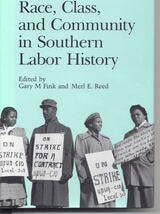
Race, Class, and Community in Southern Labor History
Gary M. Fink
University of Alabama Press, 1994
Exploring the intertwined histories of race, labor, and community in the American South.
Under the leadership of Gary M. Fink and Merl E. Reed, Georgia State University hosts the Southern Labor Studies Conferences approximately every two years. The conferences have yielded two previous volumes, published in 1977 and 1981, and this volume, which contains selected papers from the seventh conference held in 1991.
As evidence by the quality of these essays, the field of southern labor history has come into its own. Research interest is peaking: the practitioners are younger scholars, and much of their work emphasizes the new social and political history. While the topics covered in this volume usually reflect that methodology, their chronology ranges from the antebellum period to the 1970s, suggesting the variety of sources and changing research approaches that can be used in rendering new meaning to the past. Although the subject of gender was generally a minor theme in these sessions, work now being done leaves no doubt that at some future conference gender will attract a commanding amount of attention.
In introducing and describing their respective areas, the associate editors, Robert H. Zieger (textile workers), Joe W. Trotter (African Americans), and Clifford Kuhn (labor politics), have provided a rich historiographical background.
The essays in this volume will enlighten the reader on many important aspects of the history of southern labor, and they will also raise new questions to be explained by other scholars and future conferences.
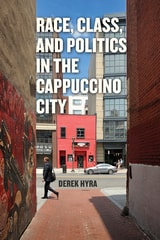
Race, Class, and Politics in the Cappuccino City
Derek S. Hyra
University of Chicago Press, 2017
Race, Class, and Politics in the Cappuccino City is an in-depth ethnography of this gilded ghetto. Derek S. Hyra captures here a quickly gentrifying space in which long-time black residents are joined, and variously displaced, by an influx of young, white, relatively wealthy, and/or gay professionals who, in part as a result of global economic forces and the recent development of central business districts, have returned to the cities earlier generations fled decades ago. As a result, America is witnessing the emergence of what Hyra calls “cappuccino cities.” A cappuccino has essentially the same ingredients as a cup of coffee with milk, but is considered upscale, and is double the price. In Hyra’s cappuccino city, the black inner-city neighborhood undergoes enormous transformations and becomes racially “lighter” and more expensive by the year.
Race/Class Conflict and Urban Financial Threat
Jennifer L. Hochschild
Russell Sage Foundation, 2024
Hochschild investigates the root causes of disputes in the arenas of policing, development, schooling, and budgeting. She finds that race and class are central to the Stop-Question-Frisk policing policy in New York City and the development of Atlanta’s Beltline. New York’s Stop-Question-Frisk policy was intended to fight crime and keep all New Yorkers safe. In practice, however, young Black and Latino men in low-income neighborhoods were disproportionately stopped by a predominantly White police force. The goal of the Atlanta Beltline, a redevelopment project that includes public parks, new housing, commercial development, and a robust public transit system, is to expand access around the city and keep working-class residents in the city by constructing affordable housing. Instead, the construction completed thus far has encouraged gentrification and displacement of poor, disproportionately Black residents, and has increased the wealth and power of both Black and White city elites.
However, Hochschild finds that race and class inequality are not central to all urban policy disputes. When investigating the issues of charter schools in Los Angeles and Chicago’s pension system she identifies a third driver: financial threat that feels existential to the policy and political actors. In Los Angeles, there is a battle between traditional public schools and independent charter schools. Increasingly, families with sufficient resources are moving out of L.A. to areas with better school districts. Traditional public schools and charter schools must fight for the remaining students and the funding that comes with them. There are not enough students to teach and not enough money to teach them. The school district risks school closures, layoffs, and pension deficits; in this context, race/class conflict fades into the background.
Chicago’s public sector pension debt is at least three times as large as the city’s annual budget and continues to grow. Policy actors agree that the pension system needs to be stably funded. Yet city leaders, fearful of upsetting constituents and jeopardizing their political careers, fail to implement policies that would do so. Meaningful policy change to rectify the pension deficit continues to get kicked down the line for future policy actors to address. In this context also, race/class conflict fades into the background.
Race/Class Conflict and Urban Financial Threat is a compelling examination of the role that race, class, and political and fiscal threat play in shaping urban policy.
Reformed American Dreams
Welfare Mothers, Higher Education, and ActivismSheila M. Katz
Rutgers University Press, 2019
Renewable Civic Energy
Community Engagement and Policy Design for a Climate Resilient AmericaCarmen Sirianni
Temple University Press, 2027
Although both our climate and democracy are in crisis, there is hope. Creative engagement has been taking place at the community level as environmental activists, grassroots movements, and place-based collaborative efforts have partnered with institutions to create effective sustainability initiatives.
Renewable Civic Energy provides an analytic framework and case studies that show how innovative practitioners from civic and professional associations, educational institutions, and youth organizations, as well as local, state, and federal agencies, have collaborated to “design for democracy.” These include watershed associations to restore rivers and address sea level rise, as well as collaborative community conservation and tribal partnerships on Western lands. Sirianni also analyzes collaborative environmental justice and university partnerships that promote engagement and democratic professionalism.
Sirianni closes Renewable Civic Energy by proposing several transformative, yet thoroughly pragmatic, institutional reform strategies. Ordinary people can help solve complex public problems—and they can enable government to work with them to improve both the climate and democracy.

Robo Sacer
Necroliberalism and Cyborg Resistance in Mexican and Chicanx DystopiasDavid S. Dalton
Vanderbilt University Press, 2023
Harvey L. Johnson Publication Award, Southwest Council of Latin American Studies, 2026
Premio Alambique, Alambique: Revista Académica de Ciencia Ficción y Fantasía, 2025
Robo Sacer engages the digital humanities, critical race theory, border studies, biopolitical theory, and necropolitical theory to interrogate how technology has been used to oppress people of Mexican descent—both within Mexico and in the United States—since the advent of the North American Free Trade Agreement (NAFTA) in 1994. As the book argues, robo-sacer identity emerges as transnational flows of bodies, capital, and technology become an institutionalized state of exception that relegates people from marginalized communities to the periphery.
And yet the same technology can be utilized by the oppressed in the service of resistance. The texts studied here represent speculative stories about this technological empowerment. These texts theorize different means of techno-resistance to key realities that have emerged within Mexican and Chicano/a/x communities under the rise and reign of neoliberalism. The first three chapters deal with dehumanization, the trafficking of death, and unbalanced access to technology. The final two chapters deal with the major forms of violence—feminicide and drug-related violence—that have grown exponentially in Mexico with the rise of neoliberalism. These stories theorize the role of technology both in oppressing and in providing the subaltern with necessary tools for resistance.
Robo Sacer builds on the previous studies of Sayak Valencia, Irmgard Emmelhainz, Guy Emerson, Achille Mbembe, and of course Giorgio Agamben, but it differentiates itself from them through its theorization on how technology—and particularly cyborg subjectivity—can amend the reigning biopolitical and necropolitical structures of power in potentially liberatory ways. Robo Sacer shows how the cyborg can denaturalize constructs of zoē by providing an outlet through which the oppressed can tell their stories, thus imbuing the oppressed with the power to combat imperialist forces.
Royal Capitalism
Wealth, Class, and Monarchy in ThailandPuangchon Unchanam
University of Wisconsin Press, 2022
The kingdom positioned itself to connect business elites, patronize local industries, and form strategic partnerships with global corporations. Instead of restraining or regulating royal power, white-collar workers joined with the crown to form a dynamic, symbiotic force that has left the lower classes to struggle in their wake. Unchanam presents a surprising case study that kings and queens live long and large in cooperation with the bourgeoisie's interests and ideology.