Results by title
333 books match the query 'Television' and 16 start with r

RTE and the Globalisation of Irish Television
Farrel Corcoran
Intellect Books, 1995
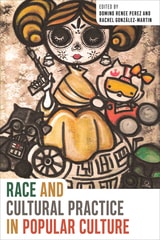
Race and Cultural Practice in Popular Culture
Perez, Domino
Rutgers University Press, 2019
Rape, Agency, and Carceral Solutions
From Criminal Justice to Social JusticeLeland G. Spencer
University of Massachusetts Press, 2023
Winner of the 2023 National Communication Association's American Studies Division Outstanding Book Award
News media and popular culture in the United States have produced a conventional narrative of the outcomes of sexual abuse: someone perpetrates sexual violence, goes to trial, and is then punished with prison time. Survivors recede into the background, becoming minor characters in their own stories as intrepid prosecutors, police officers, and investigators gather evidence and build a case.
Leland G. Spencer explains how the stories we tell about sexual assault serve to reinforce rape culture, privileging criminal punishment over social justice and community-based responses to sexual violence. Examining a broad range of popular media, including news coverage of the Brock Turner case, Naomi Iizuka’s popular play Good Kids, the television program Criminal Minds, and the book turned television show 13 Reasons Why, Spencer demonstrates how these representations shore up the carceral state, perpetuate rape myths, blame victims, and excuse those who harm. While increased discussion about sexual violence represents feminist progress, these narratives assume that policing and prosecution are the only means of achieving justice, sidelining other potential avenues for confronting perpetrators and supporting victims.
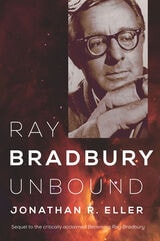
Ray Bradbury Unbound
Jonathan R. Eller
University of Illinois Press, 2020
At the height of his powers as a poetic prose stylist, Bradbury shifted his creative attention to film and television, where new successes gave him an enduring platform as a compelling cultural commentator. His passionate advocacy validated the U.S. space program's mission, extending his pivotal role as a chronicler of human values in an age of technological wonders.
Informed by many years of interviews with Bradbury as well as an unprecedented access to personal papers and private collections, Ray Bradbury Unbound provides the definitive portrait of how a legendary American author helped shape his times.
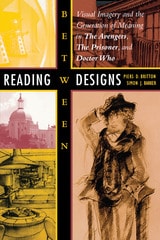
Reading between Designs
Visual Imagery and the Generation of Meaning in The Avengers, The Prisoner, and Doctor WhoBy Piers D. Britton and Simon J. Barker
University of Texas Press, 2003
From the alien worlds of Star Trek to the realistic operating room of ER, the design of sets and costumes contributes not only to the look and mood of television shows, but even more importantly to the creation of memorable characters. Yet, until now, this crucial aspect of television creativity has received little critical attention, despite the ongoing interest in production design within the closely allied discipline of film studies.
In this book, Piers Britton and Simon Barker offer a first analytical study of scenic and costume design for television drama series. They focus on three enduringly popular series of the 1960s—The Avengers, The Prisoner, and Doctor Who—and discuss such topics as the sartorial image of Steed in The Avengers, the juxtaposition of picturesque and fascistic architecture in The Prisoner, and the evolution of the high-tech interior of Doctor Who's TARDIS. Interviews with the series' original designers and reproductions of their original drawings complement the authors' analysis, which sheds new light on a variety of issues, from the discourse of fashion to that of the heritage industry, notions of "Pop" and retro, and the cultural preoccupation with realism and virtual reality.
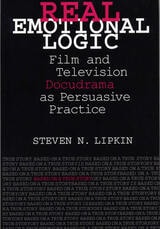
Real Emotional Logic
Film and Television Docudrama as Persuasive PracticeSteven N. Lipkin
Southern Illinois University Press, 2002
Analyzing docudrama as a mode of argument, Steven N. Lipkin explores the ethical, historical, and ideological functions of docudrama to discover why these films based on true stories offer such appealing story lines. That appeal, Lipkin discovers, is rooted in docudrama’s representation of actual people and events by means of melodramatic narrative structures that play on the emotions of the viewer.
The dual nature of docudramas—blending narrative and documentary style— argues for a moral view of reality-based subject matter. The ethics, the ideology, the very presence of docudrama on television and the range of topics and problems that appear in contemporary feature film docudramas indicate how this form of presentation appeals to its audience. Docudrama offers a warranted, rational view of what the story material might suggest initially to be an irrational world. Through its moral agenda, docudrama ultimately allows the possibilities of understanding, optimism, and hope to emerge from “real stories.”
Real Emotional Logic traces the development of docudramas into contemporary movies of the week and feature films, including Schindler’s List, Amistad, JFK, The Killing Fields, Quiz Show, A League of Their Own, In the Name of the Father, Call Northside 777, 13 Rue Madeleine, Cheerleader Mom, Shine, Rosewood, A Civil Action, and October Sky.
Lipkin provides further insight into the genre by identifying and describing the commonalities connecting ostensibly different docudramas through their shared themes and narrative techniques. In doing so, he exposes the persuasive rhetorical strategies at the heart of docudramas and reveals the constructed emotional appeal inherent in films “based on a true story.”
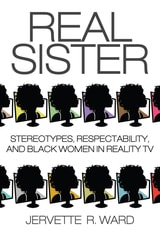
Real Sister
Stereotypes, Respectability, and Black Women in Reality TVWard, Jervette R
Rutgers University Press, 2015
The first book of scholarship devoted to the issue of how black women are depicted on reality television, Real Sister offers an even-handed consideration of the genre. The book’s ten contributors—black female scholars from a variety of disciplines—provide a wide range of perspectives, while considering everything from Basketball Wives to Say Yes to the Dress. As regular viewers of reality television, these scholars are able to note ways in which the genre presents positive images of black womanhood, even as they catalog a litany of stereotypes about race, class, and gender that it tends to reinforce.
Rather than simply dismissing reality television as “trash,” this collection takes the genre seriously, as an important touchstone in ongoing cultural debates about what constitutes “trashiness” and “respectability.” Written in an accessible style that will appeal to reality TV fans both inside and outside of academia, Real Sister thus seeks to inspire a more nuanced, thoughtful conversation about the genre’s representations and their effects on the black community.

Realer Than Reel
Global Directions in DocumentaryBy David Hogarth
University of Texas Press, 2006
Television and globalization have transformed the traditional documentary almost beyond recognition, converting what was once a film genre devoted to public service and education into a popular televisual commodity with productions ranging from serious public affairs programming to TV "reality" shows and "docusoaps." Realer Than Reel offers a state-of-the-art overview of international documentary programming that investigates the possibilities documentary offers for local and public representation in a global age, as well as what actually constitutes documentary in a time of increasing digitalization and manipulation of visual media.
David Hogarth focuses on public affairs, nature, and reality shows from around the world, drawing upon industry data, producer interviews, analyses of selected documentary programs, and firsthand observations of market sites. He looks at how documentary has become a transnational product through exports, co-ventures, and festival contacts; how local and regional "place" is represented in global documentary, especially by producers such as Discovery Networks International and the National Geographic Channel; how documentary addresses the needs of its viewers as citizens through public service broadcasting; and how documentary is challenging accepted conventions of factuality, sense, and taste. The concluding chapter considers the future of both documentary as a genre and television as a global factual medium, asking whether TV will continue to "document" the world in any meaningful sense of the term.
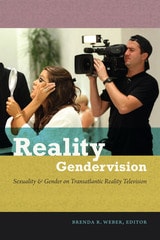
Reality Gendervision
Sexuality and Gender on Transatlantic Reality TelevisionBrenda R. Weber, ed.
Duke University Press, 2014
Contributors. David Greven, Dana Heller, Su Holmes, Deborah Jermyn, Misha Kavka, Amanda Ann Klein, Susan Lepselter, Diane Negra, Laurie Ouellette, Gareth Palmer, Kirsten Pike, Maria Pramaggiore, Kimberly Springer, Rebecca Stephens, Lindsay Steenberg, Brenda R. Weber
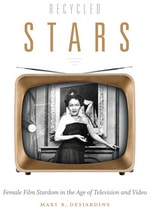
Recycled Stars
Female Film Stardom in the Age of Television and VideoMary R. Desjardins
Duke University Press, 2015
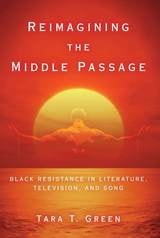
Reimagining the Middle Passage
Black Resistance in Literature, Television, and SongTara T. Green
The Ohio State University Press, 2018
Exploring the presence of water and its impact on African descendants,Reimagining the Middle Passageoffers fresh analyses of Alex Haley’sRootsand the television adaptations; the history of flooding in Black communities in literature such as Jesmyn Ward’sSalvage the Bonesand Paule Marshall’sPraisesong for the Widow, in blues songs, and in television shows such asTreme; and stories of resistance found in myths associated with Marie Laveau and flying Africans.

Restoring Baird's Image
Donald F. McLean
The Institution of Engineering and Technology, 2000
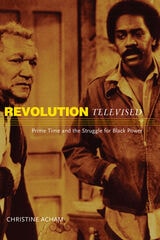
Revolution Televised
Prime Time and the Struggle for Black PowerChristine Acham
University of Minnesota Press, 2005
In Revolution Televised, Christine Acham offers a more complex reading of this period in African American television history, finding within these programs opposition to dominant white constructions of African American identity. She explores the intersection of popular television and race as witnessed from the documentary coverage of the civil rights and Black Power movements, the personal politics of Flip Wilson and Soul Train’s Don Cornelius, and the ways in which notorious X-rated comic Redd Foxx reinvented himself for prime time.
Reflecting on both the potential of television to effect social change as well as its limitations, Acham concludes with analyses of Richard Pryor’s politically charged and short-lived sketch comedy show and the success of outspoken comic Chris Rock. Revolution Televised deftly illustrates how black television artists operated within the constraints of the television industry to resist and ultimately shape the mass media’s portrayal of African American life.
Christine Acham is assistant professor in African American and African studies at the University of California, Davis.
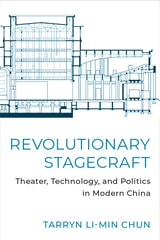
Revolutionary Stagecraft
Theater, Technology, and Politics in Modern ChinaTarryn Li-Min Chun
University of Michigan Press, 2024
2026 NYU Joe Callaway Prize Winner
- 2025 Association for Theatre in Higher Education Outstanding Book Award in Innovative Achievement Winner
- 2024 Theatre Library Association George Freedley Memorial Award Co-Winner
- American Society for Theatre Research Barnard Hewitt Award for Outstanding Research in Theatre History Finalist
Revolutionary Stagecraft draws on a rich corpus of literary, historical, and technical materials to reveal a deep entanglement among technological modernization, political agendas, and the performing arts in modern China. This unique approach to Chinese theater history combines a close look at plays themselves, performance practices, technical theater details, and behind-the-scenes debates over “how to” make theater amid the political upheavals of China’s 20th century. The book begins at a pivotal moment in the 1920s—when Chinese theater artists began to import, use, and write about modern stage equipment—and ends in the 1980s when China's scientific and technological boom began. By examining iconic plays and performances from the perspective of the stage technologies involved, Tarryn Li-Min Chun provides a fresh perspective on their composition and staging. The chapters include stories on the challenges of creating imitation neon, rigging up a makeshift revolving stage, and representing a nuclear bomb detonating onstage.
In thinking about theater through technicity, the author mines well-studied materials such as dramatic texts and performance reviews for hidden technical details and brings to light a number of previously untapped sources such as technical journals and manuals; set design renderings, lighting plots, and prop schematics; and stage technology how-to guides for amateur thespians. This approach focuses on material stage technologies, situating these objects equally in relation to their technical potential, their human use, and the social, political, economic, and cultural forces that influence them. In each of its case studies, Revolutionary Stagecraft reveals the complex and at times surprising ways in which Chinese theater artists and technicians of the 20th century envisioned and enacted their own revolutions through the materiality of the theater apparatus.
Rewriting Television
Alison Peirse
Rutgers University Press, 2025
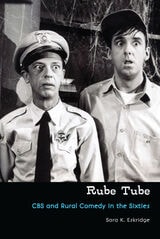
Rube Tube
CBS and Rural Comedy in the SixtiesSara K. Eskridge
University of Missouri Press, 2022