Results by title
96 books match the query 'Truth' and 2 start with r
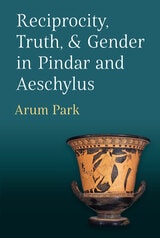
Reciprocity, Truth, and Gender in Pindar and Aeschylus
Arum Park
University of Michigan Press, 2023
In Reciprocity, Truth, and Gender in Pindar and Aeschylus, author Arum Park explores two notoriously difficult ancient Greek poets and seeks to articulate the complex relationship between them. Although Pindar and Aeschylus were contemporaries, previous scholarship has often treated them as representatives of contrasting worldviews. Park’s comparative study offers the alternative perspective of understanding them as complements instead. By examining these poets together through the concepts of reciprocity, truth, and gender, this book establishes a relationship between Pindar and Aeschylus that challenges previous conceptions of their dissimilarity. The book accomplishes three aims: first, it shows that Pindar and Aeschylus frame their poetry using similar principles of reciprocity; second, it demonstrates that each poet depicts truth in a way that is specific to those reciprocity principles; and finally, it illustrates how their depictions of gender are shaped by this intertwining of truth and reciprocity. By demonstrating their complementarity, the book situates Pindar and Aeschylus in the same poetic ecosystem, which has implications for how we understand ancient Greek poetry more broadly: using Pindar and Aeschylus as case studies, the book provides a window into their dynamic and interactive poetic world, a world in which ostensibly dissimilar poets and genres actually have much more in common than we might think.
[more]
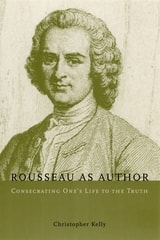
Rousseau as Author
Consecrating One's Life to the TruthChristopher Kelly
University of Chicago Press, 2002
For Rousseau, "consecrating one's life to the truth" (his personal credo) meant publicly taking responsibility for what one publishes and only publishing what would be of public benefit. Christopher Kelly argues that this commitment is central to understanding the relationship between Rousseau's writings and his political philosophy.
Unlike many other writers of his day, Rousseau refused to publish anonymously, even though he risked persecution for his writings. But Rousseau felt that authors must be self-restrained, as well as bold, and must carefully consider the potential political effects of what they might publish: sometimes seeking the good conflicts with writing the truth. Kelly shows how this understanding of public authorship played a crucial role in Rousseau's conception—and practice—of citizenship and political action.
Rousseau as Author will be a groundbreaking book not just for Rousseau scholars, but for anyone studying Enlightenment ideas about authorship and responsibility.
[more]