Results by title
22279 books match the query 'Social Science' and 1072 start with r

Represented Communities
Fiji and World DecolonizationJohn D. Kelly and Martha Kaplan
University of Chicago Press, 2001
Now, in Represented Communities, John D. Kelly and Martha Kaplan offer an extensive and devastating critique of Anderson's depictions of colonial history, his comparative method, and his political anthropology. The authors build a forceful argument around events in Fiji from World War II to the 2000 coups, showing how focus on "imagined communities" underestimates colonial history and obscures the struggle over legal rights and political representation in postcolonial nation-states. They show that the "self-determining" nation-state actually emerged with the postwar construction of the United Nations, fundamentally changing the politics of representation.
Sophisticated and impassioned, this book will further anthropology's contribution to the understanding of contemporary nationalisms.
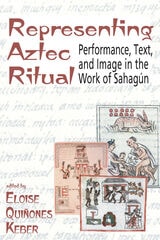
Representing Aztec Ritual
Performance, Text, and Image in the Work of SahagunEloise Quiñones Keber
University Press of Colorado, 2020
Representing Aztec Ritual: Performance, Text, and Image in the Work of Sahagún uses Sahagún's corpus as a starting point to focus on ritual performance, a key element in the functioning of the Aztec world. With topics ranging from the ritual use of sand and paper to the sacrifice of women, contributors explore how Aztec rites were represented in the images and texts of documents compiled under colonial rule and the implications of this European filter for our understanding of these ceremonies. Incorporating diverse disciplinary perspectives, contributors include Davíd Carrasco, Philip P. Arnold, Kay Read, H. B. Nicholson, Eduardo Matos Moctezuma, Guilhem Olivier, Doris Heyden, and Eloise Quiñones Keber.
Representing Talent
Hollywood Agents and the Making of MoviesViolaine Roussel
University of Chicago Press, 2017
The book takes readers behind the scenes to observe the day-to-day activities of agents, revealing their influence on artistic careers and the prospects of Hollywood’s forthcoming projects. Agents are crucial to understanding how creative and economic power are intertwined in Hollywood today. They play a key role in the process by which artistic worth and economic value are evaluated and attributed to people and projects. Roussel’s fieldwork examines what “having relationships” really means for agents, and how they perform the relationship work that’s at the heart of their professional existence and success. Representing Talent helps us to understand the players behind the definition of entertainment itself, as well as behind its current transformations.

Representing Women
Law, Literature, and FeminismSusan Sage Heinzelman and Zipporah Batshaw Wiseman, eds.
Duke University Press, 1994
Beginning with an exploration of the ways in which women are represented—how they either tell or have their stories told in literature, in the law, in a courtroom—this collection demonstrates the interrelatedness of the legal and the literary. Whether considering the status of medieval women readers or assessing the effectiveness and extent of contemporary rape law reform, the essays show that power first comes with telling one’s own story, and that the degree and effect of that power are determined by the cultural significance of the forum in which the story is presented. But telling the story is not enough. One must also be aware of how the story is contained within traditional constructs or boundaries and is thus limited in its effects, as Carol Sanger’s essay on mothers and legal/sexual identity makes clear. One must also recognize how a story might perpetuate an ideological agenda that is not in the best interests of the storyteller, as Elizabeth Butler Cullingford shows in her reading of Yeats’s "Leda and the Swan" and one must know the historical context of a story and of its telling, as Anne B. Goldstein’s essay on lesbian narratives discloses.
Breaking down the boundaries between law and literature, this anthology makes evident the ways in which the effect of women’s stories has been constrained and expands the range of possibilities for those who represent women, tell women’s stories, or present women’s issues. Representing Women makes the retelling of old stories about women compelling and the telling of new ones both necessary and possible.
Contributors. Kathryn Abrams, Linda Brodkey, Rita Copeland, Elizabeth Butler Cullingford, Margaret Anne Doody, Susan B. Estrich, Michelle Fine, Anne B. Goldstein, Angela P. Harris, Susan Sage Heinzelman, Christine L. Krueger, Martha Minow, Carol Sanger, Judy Scales-Trent
Representing
Hip Hop Culture and the Production of Black CinemaS. Craig Watkins
University of Chicago Press, 1998
"Watkins is at his most sophisticated and persuasive when he explains the surprising success of hyper-talented, entrepreneurial, and energetic black artists."—Archon Fung, Boston Book Review
Repression, Exile, and Democracy
Uruguayan CultureSaul Sosnowski and Louise B. Popkin, eds.
Duke University Press, 1992
The first section provides a context for the volume, with its analyses of the historical, political, and social aspects of the Uruguayan experience. The following chapters explore various aspects of cultural production, including personal experiences of exile and imprisonment, popular music, censorship, literary criticism, return from exile, and the role that culture plays in redemocratization.
This book's appeal extends well beyond the study of Uruguay to scholars and students of the history and culture of other Latin American nations, as well as to fields of comparative literature and politics in general.
Contributors. Hugo Achugar, Alvarro Barros-Lémez, Lisa Block de Behar, Amanda Berenguer, Hiber Conteris, José Pedro Díaz, Eduardo Galeano, Edy Kaufman, Leo Masliah, Carina Perelli, Teresa Porzecanski, Juan Rial, Mauricio Rosencof, Jorge Ruffinelli, Saúl Sosonowski, Martin Weinstein, Ruben Yáñez
Reproducing Inequities
Poverty and the Politics of Population in HaitiMaternowska, M. Catherine
Rutgers University Press, 2006
Residents of Haiti-one of the poorest and most unstable countries in the world-face a grim reality of starvation, violence, lack of economic opportunity, and minimal health care. For years, aid organizations have sought to alleviate the problems by creating health and family planning clinics, including one modern (and, by local standards, luxurious) center in the heart of Cit Soleil. During its height of service in the 1980s and 1990s, the clinic boasted nineteen staff members, an array of modern contraceptives, an accessible location, and convenient hours-but very few clients.
Why did this initiative fail so spectacularly despite surveys finding that residents would like to have fewer children? Why don't poor women heed the message of family planning, when smaller families seem to be in their best interest? In Reproducing Inequities, M. Catherine Maternowska argues that we too easily overlook the political dynamics that shape choices about family planning. Through a detailed study of the attempt to provide modern contraception in the community of Cit Soleil, Maternowska demonstrates the complex interplay between local and global politics that so often thwarts well-intended policy initiatives.
Medical anthropologists, she argues, have an important role to play in developing new action plans for better policy implementation. Ethnographic studies in desperate, dangerous locations provide essential data that can point the way to solutions for the dilemmas of contraception in poor communities worldwide.

Reproducing Jews
A Cultural Account of Assisted Conception in IsraelSusan Martha Kahn
Duke University Press, 2000
In this ethnographic study of the new reproductive technologies in Israel, Susan Martha Kahn explores the cultural meanings and contemporary rabbinic responses to artificial insemination, in-vitro fertilization, egg donation, and surrogacy. Kahn draws on fieldwork with unmarried Israeli women who are using state-subsidized artificial insemination to get pregnant and on participant-observation in Israeli fertility clinics. Through close readings of traditional Jewish texts and careful analysis of Israeli public discourse, she explains how the Israeli embrace of new reproductive technologies has made Jewish beliefs about kinship startlingly literal. Kahn also reveals how a wide range of contemporary Israelis are using new reproductive technologies to realize their reproductive futures, from ultraorthodox infertile married couples to secular unmarried women.
As the first scholarly account of assisted conception in Israel, this multisited ethnography will contribute to current anthropological debates on kinship studies. It will also interest those involved with Jewish studies.
Reproducing the French Race
Immigration, Intimacy, and Embodiment in the Early Twentieth CenturyElisa Camiscioli
Duke University Press, 2009
By focusing on telling aspects of the immigration debate, Camiscioli reveals how racial hierarchies were constructed, how gender figured in their creation, and how only white Europeans were cast as assimilable. Delving into pronatalist politics, she describes how potential immigrants were ranked according to their imagined capacity to adapt to the workplace and family life in France. She traces the links between racialized categories and concerns about industrial skills and output, and she examines medico-hygienic texts on interracial sex, connecting those to the crusade against prostitution and the related campaign to abolish “white slavery,” the alleged entrapment of (white) women for sale into prostitution abroad. Camiscioli also explores the debate surrounding the 1927 law that first made it possible for French women who married foreigners to keep their French nationality. She concludes by linking the Third Republic’s impulse to create racial hierarchies to the emergence of the Vichy regime.

Reproduction, Globalization, and the State
New Theoretical and Ethnographic PerspectivesCarole H. Browner and Carolyn F. Sargent, eds.
Duke University Press, 2011
Contributors. Aditya Bharadwaj, Caroline H. Bledsoe, Carole H. Browner, Junjie Chen, Aimee R. Eden, Susan L. Erikson, Didier Fassin, Claudia Lee Williams Fonseca, Ellen Gruenbaum, Matthew Gutmann, Marcia C. Inhorn, Mark B. Padilla, Rayna Rapp, Lisa Ann Richey, Carolyn Sargent, Papa Sow, Cecilia Van Hollen, Linda Whiteford

Reproductive Boundaries
Psychosocial Care and Pregnancy in SwitzerlandEdmée Ballif
Rutgers University Press, 2026
Reproductive Boundaries examines the shifting boundaries of prenatal care in Switzerland, focusing on the Pregnancy Support Center's innovative psychosocial model. By redefining the territory of care, the Center extends its reach beyond the medical domain, exemplifying the reproductivization of life, the increasing organization of various life aspects through a reproductive lens. The book explores how this approach challenges traditional borders between medical and psychosocial care, offering an alternative to Switzerland's heavily medicalized reproductive care. Through ethnographic insights into reproductive talk, it reveals how psychosocial advisors shift the boundaries of reproductive care, balancing support with broader state goals of reproductive governance. Set against Switzerland's history of stratified reproductive policies, the study critically examines how psychosocial care reshapes the landscape of pregnancy, raising questions about surveillance and evolving gender roles. This thought-provoking work invites readers to reconsider the limits and possibilities of care in a fragmented society.
This book is also freely available online as an open access digital edition. (https://www.rutgersuniversitypress.org/media/wysiwyg/documents/Reproductive_Boundaries_PDF.pdf)

Reproductive Justice
The Politics of Health Care for Native American WomenGurr, Barbara
Rutgers University Press, 2015

Reproductive Labor and Innovation
Against the Tech Fix in an Era of HypeJennifer Denbow
Duke University Press, 2024
Reproductive Restraints
Birth Control in India, 1877-1947Sanjam Ahluwalia
University of Illinois Press, 2007

Reproductive Technologies as Global Form
Ethnographies of Knowledge, Practices, and Transnational EncountersEdited by Michi Knecht, Maren Klotz, and Stefan Beck
Campus Verlag, 2012
In the thirty years since the first “test-tube baby,” in-vitro fertilization and other methods of reproductive assistance have become a common aspect of family life and medicine in developed nations—and, increasingly, throughout the world. This collection brings together ethnographic studies of how these reproductive technologies are deployed across a wide variety of nations and cultures, taking special account of how they are linked to aspirations towards modernity—and how they contribute to an ongoing reconfiguration of the boundaries of knowledge and human agency. The resulting volume offers both a current snapshot of the cultural state of reproductive technologies and a plethora of provocative questions for the future.

Republic of Barbecue
Stories Beyond the BrisketBy Elizabeth S. D. Engelhardt
University of Texas Press, 2009
Winner, Barbara Sudler Award, Colorado Historical Society, 2010
It's no overstatement to say that the state of Texas is a republic of barbecue. Whether it's brisket, sausage, ribs, or chicken, barbecue feeds friends while they catch up, soothes tensions at political events, fuels community festivals, sustains workers of all classes, celebrates brides and grooms, and even supports churches. Recognizing just how central barbecue is to Texas's cultural life, Elizabeth Engelhardt and a team of eleven graduate students from the University of Texas at Austin set out to discover and describe what barbecue has meant to Texans ever since they first smoked a beef brisket.
Republic of Barbecue presents a fascinating, multifaceted portrait of the world of barbecue in Central Texas. The authors look at everything from legendary barbecue joints in places such as Taylor and Lockhart to feedlots, ultra-modern sausage factories, and sustainable forests growing hardwoods for barbecue pits. They talk to pit masters and proprietors, who share the secrets of barbecue in their own words. Like side dishes to the first-person stories, short essays by the authors explore a myriad of barbecue's themes—food history, manliness and meat, technology, nostalgia, civil rights, small-town Texas identity, barbecue's connection to music, favorite drinks such as Big Red, Dr. Pepper, Shiner Bock, and Lone Star beer—to mention only a few. An ode to Texas barbecue in films, a celebration of sports and barbecue, and a pie chart of the desserts that accompany brisket all find homes in the sidebars of the book, while photographic portraits of people and places bring readers face-to-face with the culture of barbecue.

Republic of the Dispossessed
The Exceptional Old-European Consensus in AmericaRowland Berthoff
University of Missouri Press, 1997
Do Americans, in all their cultural diversity, share any fundamental consensus? Does such a consensus, or anything else, make America exceptional in the modern world?
Since 1960 most historians have answered no--except perhaps for the current nostalgia for the Eisenhower years (the "Ozzie and Harriet" years of popular recollection) of middle-class American prosperity.
In Republic of the Dispossessed social historian Rowland Berthoff maintains not only that there was--and still is--a middle-class consensus and that America is exceptional in it but that it goes back some five hundred years. The consensus stems from all those European peasants and artisans who, from 1600 to 1950, fled dispossession in the Old World. They brought with them basic social values that acted as a template for middle-class American values. To consider modern American society as exceptional--that is, as distinctive and different from any contemporary European pattern of thought--is therefore, in Berthoff's theory, not at all the "illogical absurdity" that current conventional wisdom makes it.
The Berthoff thesis, as he develops it in these ten essays from throughout the course of his career, is well worth a second look by those within and beyond the field of social history. It suggests that the ideal--both peasant and classical republican-- of maintaining a balance between personal liberty and communal equality has long inspired American reaction to the drastic modern changes of industrialization, urbanization, and immigration.
Observing that most Americans still see themselves as independent, basically equal, middle-class citizens, Berthoff explains the current apprehension among Americans that at the end of the twentieth century they are once again being dispossessed-- thus, the current emphasis on "traditional values." Because that problem is the same that worried their European ancestors as much as five hundred years ago, Berthoff argues, the time has come to face the question head-on.

Republic on the Wire
Cable Television, Pluralism, and the Politics of New Technologies, 1948-1984McMurria, John
Rutgers University Press, 2017

Requiem, Rwanda
Laura Apol
Michigan State University Press, 2015

Requirements for Certification of Teachers, Counselors, Librarians, Administrators for Elementary and Secondary Schools, Ninetieth Edition, 2025–2026
Edited by Alain Park
University of Chicago Press, 2025
This annual volume offers the most complete and current listings of the requirements for certification of a wide range of educational professionals at the elementary and secondary levels. Requirements for Certification is a valuable resource, making much-needed knowledge available in one straightforward volume.
Rereading Cultural Anthropology
George E. Marcus, ed.
Duke University Press, 1992
Drawing together work by both younger and well-established scholars, this volume reveals various influences in the remaking of traditions of ethnographic work in anthropology; feminist studies, poststructuralism, cultural critiques, and disciplinary challenges to established boundaries between the social sciences and humanities. Moving from critiques of anthropological representation and practices to modes of political awareness and experiments in writing, this collection offers systematic access to what is now understood to be a fundamental shift (still ongoing) in anthropology toward engagement with the broader interdisciplinary stream of cultural studies.
Contributors. Arjun Appadurai, Keith H. Basso, David B. Coplan, Vincent Crapanzano, Faye Ginsburg, George E. Marcus, Enrique Mayer, Fred Meyers, Alcida R. Ramos, John Russell, Orin Starn, Kathleen Stewart, Melford E. Spiro, Ted Swedenburg, Michael Taussig, Julie Taylor, Robert Thornton, Stephen A. Tyler, Geoffrey M. White

Rereading the Revolution
The Turn-of-the-Century American Revolutionary War NovelAnita Lawson
University of Wisconsin Press, 2000
Approximately fifty historical novels dealing with the American Revolution were published in the United States from 1896 to 1906. Benjamin S. Lawson critically examines the narrative strategies employed in these works and the ways in which fiction is made to serve the purpose of vivifying national history.
Writing within the conventions of the historical romance, these authors created plots that reflect the enveloping concerns of the War for Independence, such as the young American woman who often must choose between suitors on opposite sides in the wider conflict.
Lawson concludes that these works reassured readers of the worth of an Anglo-American heritage. They were escapist fantasies to the degree that they failed to confront contemporary realities of crisis and change: the New Immigration, urbanization and industrialization, labor strife, the plight of the poor, and agitation on behalf of women and ethnic minorities.
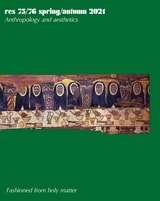
Res
Anthropology and Aesthetics, volume 75-76 number 1 (2021)The University of Chicago Press
University of Chicago Press Journals, 2021

Res
Anthropology and Aesthetics, volume 77-78 number 1 (2022)The University of Chicago Press
University of Chicago Press Journals, 2022

Res
Anthropology and Aesthetics, volume 79-80 number 1 (2023)The University of Chicago Press
University of Chicago Press Journals, 2023

Res
Anthropology and Aesthetics, volume 81-82 number 1 (2024)The University of Chicago Press
University of Chicago Press Journals, 2024

Res
Anthropology and Aesthetics, volume 83 number 1 (2025)The University of Chicago Press
University of Chicago Press Journals, 2025

Res
Anthropology and Aesthetics, volume 84 number 1 (Autumn 2025)The University of Chicago Press
University of Chicago Press Journals, 2025

Res
Anthropology and Aesthetics, volume 85 number 1 (Spring 2026)The University of Chicago Press
University of Chicago Press Journals, 2026

Rescue Me
On Dogs and Their HumansMargret Grebowicz
University of Minnesota Press, 2022
What exactly is it we want from dogs today?
This is a little book about the oldest relationship we humans have cultivated with another large animal—in something like the original interspecies space, as old or older than any other practice that might be called human. But it’s also about the role of this relationship in the attrition of life—especially social life—in late capitalism. As we become more and more obsessed with imagining ourselves as benevolent rescuers of dogs, it is increasingly clear that it is dogs who are rescuing us. But from what? And toward what? Exploring adoption, work, food, and training, this book considers the social as fundamentally more-than-human and argues that the future belongs to dogs—and the humans they are pulling along.
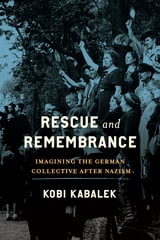
Rescue and Remembrance
Imagining the German Collective after NazismKobi Kabalek
University of Wisconsin Press, 2025
Kabalek argues that such simplistic depictions of the majority versus minority obscure the complex motivations and situations that led people in Nazi Germany to help persecuted Jews. Against the view that the rescuers were “forgotten” after the war, he shows that portrayals and interpretations of helping Jews appeared in various media and social discourses in East, West, and unified Germany and were used to actively debate questions of collective morality. Rescue and Remembrance analyzes the varied and changing depictions of rescue in the distinct German politics from the Nazi period, examining how the very notions of “majority” and “collective” were articulated and reformulated.

Rescue and Romance
Popular Novels Before World War IDiana Reep
University of Wisconsin Press, 1982
This study of the rescue motif in popular American novels before World War I focuses on the rescue convention as part of the romantic plot of the novels. The rescue as a structured convention that controls the movement of the romantic plot appears in all types of domestic novels, gothics, dime novels, historical romances, and westerns.

Rescued from the Nation
Anagarika Dharmapala and the Buddhist WorldSteven Kemper
University of Chicago Press, 2014
Drawing on huge stores of source materials—nearly one hundred diaries and notebooks—Kemper reconfigures Dharmapala as a world-renouncer first and a political activist second. Following Dharmapala on his travels between East Asia, South Asia, Europe, and the United States, he traces his lifelong project of creating a unified Buddhist world, recovering the place of the Buddha’s Enlightenment, and imitating the Buddha’s life course. The result is a needed corrective to Dharmapala’s embattled legacy, one that resituates Sri Lanka’s political awakening within the religious one that was Dharmapala’s life project.

Rescuing Ellisville Marsh
The Long Fight to Restore Lost ConnectionsEric P. Cody
University of Massachusetts Press, 2023
For hundreds of years, farmers and fishing communities maintained the inlet to Ellisville Marsh, a picturesque piece of coastline ten miles south of Plymouth, Massachusetts. Recognized as one of the most environmentally sensitive and ecologically valuable places in the state, the salt marsh and estuary are home to a diverse array of wildlife and a range of habitats, including low-tide mudflats, a saltwater pond, intertidal zone, and fields of tall marsh grass.
After agricultural and fishing activities faded away in the late twentieth century, it soon became apparent that protecting the marsh and its surroundings from development would not be enough to restore the natural equilibrium that had been lost when the inlet became blocked. Having witnessed government inaction over the years, Eric P. Cody and four other locals founded the Friends of Ellisville Marsh in 2007 to address erosion, revive tidal flows, and revitalize fisheries and wildlife in the face of climate change. Rescuing Ellisville Marsh presents the powerful case study of backyard activism, telling the story of a community that bonded with a natural place and decided to fight for it.

Rescuing the Children
A Holocaust MemoirVivette Samuel; Translated and with an introduction by Charles B. Paul; With a foreword by Elie Wiesel
University of Wisconsin Press, 2002

Rescuing the Enlightenment from the Europeans
Critical Theories of DecolonizationNikita Dhawan
Duke University Press, 2026
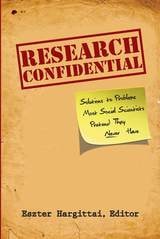
Research Confidential
Solutions to Problems Most Social Scientists Pretend They Never HaveEszter Hargittai
University of Michigan Press, 2009
"We all know that the actual process of empirical research is a messy, complicated business that at best only approximates the models we impart to students. Research Confidential pulls back the curtain on this process, laying bare the sordid details of the research process, but doing so in a way that respects the ideals of social research and that provides useful lessons for young scholars. It should be required reading for our research methods courses."
---Michael X. Delli Carpini, Dean, Annenberg School for Communication, University of Pennsylvania
"In this impressive volume, some of the brightest young lights in social research have taken us backstage to share what they learned from their innovative projects. Besides providing a wealth of help with methodological concerns, the book includes theoretical and career issues to consider when doing research. Anyone doing research should benefit from reading it."
---Caroline Hodges Persell, Professor of Sociology, New York University
"Research Confidential complements existing methods literature by providing refreshingly honest accounts of key challenges and decision forks-in-the-research-road. Each chapter enlightens and entertains."
---Kirsten Foot, Associate Professor of Communication, University of Washington
"A must-read for researchers embarking on new projects. Rather than the abstract descriptions of most methods textbooks, this volume provides rich accounts of the firsthand experiences of actual researchers. An invaluable resource of practical advice. Critically, it will make new researchers aware of the actual challenges that they are likely to face in their work."
---Christopher Winship, editor of Sociological Methods and Research and Professor of Sociology, Harvard University
This collection of essays aims to fill a notable gap in the existing literature on research methods in the social sciences. While the methods literature is extensive, rarely do authors discuss the practical issues and challenges they routinely confront in the course of their research projects. As a result, editor Eszter Hargittai argues, each new cohort is forced to reinvent the wheel, making mistakes that previous generations have already confronted and resolved. Research Confidential seeks to address this failing by supplying new researchers with the kind of detailed practical information that can make or break a given project. Written in an informal, accessible, and engaging manner by a group of prominent young scholars, many of whom are involved in groundbreaking research in online contexts, this collection promises to be a valuable tool for graduate students and educators across the social sciences.
Eszter Hargittai is Associate Professor of Communication Studies at Northwestern University and Fellow at the Berkman Center for Internet & Society at Harvard University.
Cover art courtesy of Dustin Gerard

Research Directions of Black Psychologists
Wade Boykin
Russell Sage Foundation, 1979

Research Guide to Japanese Film Studies
Abé Mark Nornes and Aaron Gerow
University of Michigan Press, 2009
Research Guide to People’s Daily Editorials, 1949–1975
Michel Oksenberg and Gail Henderson, Editors
University of Michigan Press, 1982

Research as More Than Extraction
Knowledge Production and Gender-Based Violence in African SocietiesAnnie Bunting, Allen Kiconco, Joel Quirk
Ohio University Press, 2023
Wartime violence and its aftermath present numerous practical, ethical, and political challenges that are especially acute for researchers working on gender-based and sexual violence. Drawing upon applied examples from across the African continent, this volume features unique contributions from researchers and practitioners with decades of experience developing research partnerships, designing and undertaking fieldwork, asking sensitive questions, negotiating access, collecting and evaluating information, and validating results. These are all endeavors that also raise pressing ethical questions, especially in relation to retraumatization, social stigma, and even payment of participants.
Ethical and methodological questions cannot be separated from political and institutional considerations. Systems of privilege and marginalization cannot be wished away, so they need to be both interrogated and contested. This is where precedents and power relations established under colonialism and imperialism take center stage. Europeans have been extracting valuable resources from the African continent for centuries. Research into gender-based violence risks being yet another extractive industry. There are times when committed individuals can make valuable contributions to a more equitable future, but funding streams, knowledge hierarchies, and institutional positions continue to have powerful effects.
Accordingly, the contributors to this volume also concentrate upon the layered effects of power and position, relationships between researchers, organizations, and communities, and the political economy of knowledge production; this brings into focus questions about how and why information gets generated, for which kinds of audiences, and for whose benefit.
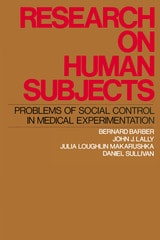
Research on Human Subjects
Problems of Social Control in Medical ExperimentationBernard Barber
Russell Sage Foundation, 1973

Research, Education and American Indian Partnerships at the Crow Canyon Archaeological Center
Susan C. Ryan
University Press of Colorado, 2024
Research, Education, and American Indian Partnerships at the Crow Canyon Archaeological Center guides Southwestern archaeology and public education beyond current practices—particularly regarding Indigenous partnerships—and provides a strategic handbook for readers into and through the mid-twenty-first century.
Open access edition supported by the Crow Canyon Archaeological Center King Family Fund and subvention supported in part by the Crow Canyon Archaeological Center and the Arizona Archaeological and Historical Society.

Researches Into the Physical History of Man
James Cowles Prichard
University of Chicago Press, 1973
In his extensive introductory essay, "From Chronology to Ethnology: Prichard and British Anthropology, 1800-1850," George W. Stocking, Jr., uses Prichard's career to illuminate this previously neglected period—the "dark age" between the Victorian evolutionists and their eighteenth-century Scottish precursors. Focusing on the heritage of Christian chronological writing as a source of nineteenth-century anthropological speculation, Professor Stocking shows how Prichard's work gradually transformed this tradition into "ethnology."
Prichard's central problem was to trace to a single source all the races of men from the earliest historical records to the dispersion of mankind after the Deluge. It was in the attempt to solve this "ethnological problem" that the "embracive" tradition of late nineteenth-century English and American anthropology had its roots. As Prichard's work illustrates, every type of evidence—linguistic, cultural, and physical—was brought forth to establish affinities between different human groups.
Expanded in subsequent editions to five volumes, Prichard's Researches was to remain the major compendium of ethnological knowledge in the English language until the second half of the nineteenth century. The present reprinting of the 1813 edition in its entirety should help to reestablish Prichard's reputation as one of the "fathers" of anthropology.

Researching American Culture
A Guide for Student AnthropologistsConrad Phillip Kottak, Editor
University of Michigan Press, 1982
Conducting original fieldwork is a science and an art. Anthropology students can easily get an A in Aborigines without ever understanding their own tribal behavior. American culture, like all others, has its share of ritual and myths, ranging from singles bars to sports events. This volume guides undergraduate students to correct scientific methods and successful personal approaches in their work.
Researching American Culture covers the universe of ethnography: the researcher’s role, interviewing, questionnaire construction, ethics, coping with the limitations of time and space. Guides for researchers, original research papers by undergraduates, and essays by professional anthropologists are all included. By applying anthropological techniques to today’’s behavior, students learn to be objective about their own culture and skeptical about practices rarely questioned.
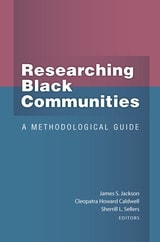
Researching Black Communities
A Methodological GuideJames S. Jackson, Cleopatra Howard Caldwell, Sherrill L. Sellers, editors
University of Michigan Press, 2014
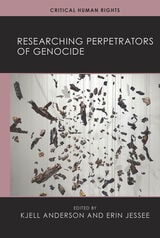
Researching Perpetrators of Genocide
Edited by Kjell Anderson and Erin Jessee
University of Wisconsin Press, 2021
This collection of case studies by scholars from a range of disciplinary backgrounds turns a critical and reflective eye toward qualitative fieldwork on the topic. Framed by an introduction that sets out key issues in perpetrator research and a conclusion that proposes and outlines a code of best practice, the volume provides an essential starting point for future research while advancing genocide studies, transitional justice, and related fields. This original, important, and welcome contribution will be of value to historians, political scientists, criminologists, anthropologists, lawyers, and legal scholars.
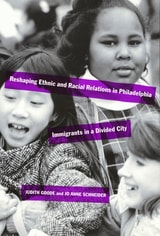
Reshaping Ethnic Relations
Immigrants in a Divided CityJudith Goode and Jo Anne Schneider
Temple University Press, 1994
What happens when people from diverse racial and ethnic backgrounds come together to live and work in the same neighborhood? Unlike other examinations of this question that focus on one group, this book looks at the interaction of both old and new immigrant populations in three Philadelphia neighborhoods.
In this ethnographic study, which is a result of the Ford Foundation-funded Changing Relations: Newcomers and Established Residents in Philadelphia Project, the authors consider five primary groups—whites, African Americans, Puerto Ricans, Koreans, and Eastern Europeans—in Olney, Kensington, and Port Richmond. Focusing on the interaction of racial, ethnic, and immigrant communities in schools, organized community celebrations and social events, the workplace, shopping areas, and neighborhood politics, the authors show that the contradictions of individual beliefs, actions, and strategies of power are not easily resolved.
By examining the local, citywide, and national economy and government, previous human relations efforts, changing immigration patterns, community-level power structures, real estate turnover, and gentrification, the authors evaluate current strategies to create harmony in communities with an ever-changing mix of established residents and newly arrived immigrants. Through their findings, Judith Goode and Jo Anne Schneider develop better alternatives that will encourage understanding and cooperation among different racial and ethnic groups sharing their lives and neighborhoods.
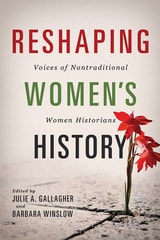
Reshaping Women's History
Voices of Nontraditional Women HistoriansJulie A. Gallagher, Barbara Winslow
University of Illinois Press, 2018

Reshaping the German Right
Radical Nationalism and Political Change after BismarckGeoff Eley
University of Michigan Press, 1991