Results by title
18284 books match the query 'United States' and 833 start with r
Riverine Dreams
Away to the Glorious and Forgotten Grassland Rivers of AmericaGeorge Frazier
University of Chicago Press, 2025
The North American grasslands that once covered vast areas of the central United States are now our most endangered ecosystems. But not far from any spot in the grasslands is a river. Grassland rivers are as central to the story of prairies as bison and bluestem. Defined as rivers that drain prairie watersheds, these waterways are crucial to plains ecosystems and no less endangered than the grasslands surrounding them. They are also enigmatic: some are restricted by local access laws and others have simply been forgotten. In any given year, fewer than a dozen people might lay eyes on tens of thousands of miles of America’s grassland rivers. But, as environmental writer George Frazier shows, following their twists and turns is one of the best ways to experience the wild essence of the prairies.
Riverine Dreams invites us on a trip along eight grassland rivers—including the Missouri, the Niobrara, and Purgatoire—traversing their environmental and cultural histories and introducing us to the people who study, paddle, and conserve them. This journey takes Frazier across the North American interior—from Montana and Colorado to Nebraska and Missouri—where he uncovers a remarkable movement to celebrate and preserve these natural treasures: nothing less than a grassland river revival.
The first accessible introduction to these waters, Riverine Dreams is a personal exploration of the rivers that are so vital to the health of the prairies.
Rivers by Design
State Power and the Origins of U.S. Flood ControlKaren M. O Neill
Duke University Press, 2006
O’Neill focuses on the creation of flood control programs along the lower Mississippi River and the Sacramento River, the first two rivers to receive federal flood control aid. She describes how, in the early to mid-nineteenth century, planters, shippers, and merchants from both regions campaigned for federal assistance with flood control efforts. She explains how the federal government was slowly and reluctantly drawn into water management to the extent that, over time, nearly every river in the United States was reengineered. Her narrative culminates in the passage of the national Flood Control Act of 1936, which empowered the Army Corps of Engineers to build projects for all navigable rivers in conjunction with local authorities, effectively ending nationwide, comprehensive planning for the protection of water resources.
Rivers of History
Life on the Coosa, Tallapoosa, Cahaba, and AlabamaHarvey H. Jackson, III
University of Alabama Press, 1995
An illuminating study of how rivers shaped the history, culture, and environment of Alabama and the American South.
In Rivers of History, acclaimed historian Harvey H. Jackson III blends environmental history with compelling storytelling and traces the evolving relationship between people and rivers—from Indigenous communities who first depended on these waterways, to European settlers, to the development of modern towns and industries. Along the way, readers encounter stories of transportation and trade, conflict and cooperation, ecological change and conservation, all tied to the flow of these essential rivers.
Far more than a geographical study, Rivers of History demonstrates how waterways act as lifelines of human experience. Rivers shaped patterns of settlement, enabled agricultural and economic growth, and served as critical channels for communication across the American South. At the same time, they created challenges—flooding, environmental degradation, and competing demands for natural resources—that continue to influence life in the region today.
Jackson shows how the history of Alabama cannot be understood apart from its rivers. The Coosa, Tallapoosa, Cahaba, and Alabama rivers emerge not simply as physical features on a map, but as powerful forces that connect past and present, nature and society. His interdisciplinary approach—bringing together history, geography, and environmental studies—makes this work especially valuable for students, scholars, and general readers alike.
Accessible yet authoritative, Rivers of History is essential reading for anyone interested in Southern history, environmental change, or the enduring relationship between landscapes and human communities. It offers a compelling reminder that the story of a place is often written in the movement of its waters.
Rivers on Fire and Corporate Liars
The Monitoring and Sanctioning of U.S. Water Pollution CrimesJoshua Ozymy
Rutgers University Press, 2026
For over four decades, the US federal government has undertaken efforts to police and prosecute environmental crimes to protect public health and the natural environment. Yet, we still know very little about how US federal agencies have monitored and sanctioned water pollution violations and if these actions actually deter crime. In Rivers on Fire and Corporate Liars, Joshua Ozymy and Melissa Jarrell Ozymy examined over one thousand federal water pollution investigations and prosecutions undertaken by the US EPA and Department of Justice from 1983 to 2023 to answer these questions. Their analysis provides the most comprehensive empirical examination to date of how the criminal enforcement of water pollution has evolved over time, patterns in prosecutions, and how criminals were sanctioned.
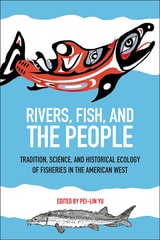
Rivers, Fish, and the People
Tradition, Science, and Historical Ecology of Fisheries in the American WestPei-Lin Yu
University of Utah Press, 2015
America’s western rivers are under assault from development, pollution, invasive species, and climate change. Returning these eco- systems to the time of European contact is often the stated goal for restoration efforts, yet neither the influence of indigenous societ- ies on rivers at the time of contact nor the deeper evolutionary relationships are yet understood by the scientific world. This volume presents a unique synthesis of scientific discoveries and traditional knowledge about the ecology of iconic river species in the American West.
Building from a foundation in fisheries biology and life history data about key species, the book reveals ancient human relationships with those species and describes time-tested Native resource management techniques, drawing from the archaeological record and original ethnographic sources. It evaluates current research trends, summarizes the conceptual foundations for the cultural and evolutionary significance of sustainable use of fish, and seeks pathways for future research. Geographic areas described include the Columbia Plateau, Idaho’s Snake River Plain, the Sacramento River Delta, and the mid-Fraser River of British Columbia. Previously unpublished information is included with the express permission and approval of tribal communities. This approach broadens and deepens the available body of data and establishes a basis for future collaboration between scientists and Native stakeholders toward mutual goals of river ecosystem health.
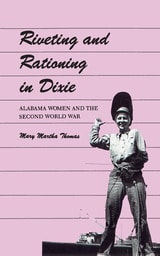
Riveting and Rationing in Dixie
Alabama Women and the Second World WarMary Martha Thomas
University of Alabama Press, 1987
Covers the experience of both black and white Alabama women as defense workers, volunteers, and homemakers. The most important change for women during the war years was their employment in jobs normally held by men, which posed an implicit challenge to traditional notions about femininity and female limitations.
Thomas describes the women employed in the defense industries—how they were recruited and trained, where they worked and under what conditions, and what changes employers made in the workplace to accommodate women, She also discusses the experience of the women who served as volunteers in the Ground Observer Corps, the Citizens’ Service Corps, the Red Cross, and other volunteer agencies. In addition, the author considers how homemakers coped during a time of rationing, housing shortages, lack of schools, and inadequate medical facilities.
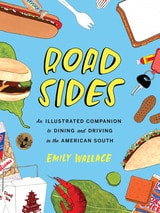
Road Sides
An Illustrated Companion to Dining and Driving in the American SouthBy Emily Wallace
University of Texas Press, 2019
An illustrated glovebox essential, Road Sides explores the fundamentals of a well-fed road trip through the American South, from A to Z. There are detours and destinations, accompanied by detailed histories and more than one hundred original illustrations that document how we get where we’re going and what to eat and do along the way.
Learn the backstory of food-shaped buildings, including the folks behind Hills of Snow, a giant snow cone stand in Smithfield, North Carolina, that resembles the icy treats it sells. Find out how kudzu was used to support a burgeoning highway system, and get to know Edith Edwards—the self-proclaimed Kudzu Queen—who turns the obnoxious vine into delicious teas and jellies. Discover the roots of kitschy roadside attractions, and have lunch with the state-employed mermaids of Weeki Wachee Springs in Florida.
Road Sides is for everyone—the driver in search of supper or superlatives (the biggest, best, and even worst), the person who cannot resist a local plaque or snack and pulls over for every historical marker and road stand, and the kid who just wants to gawk at a peach-shaped water tower.
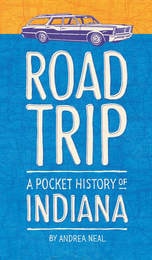
Road Trip
A Pocket History of IndianaAndrea Neal
Indiana Historical Society Press, 2016
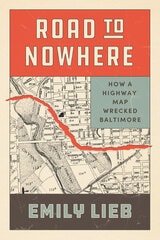
Road to Nowhere
How a Highway Map Wrecked BaltimoreEmily Lieb
University of Chicago Press, 2025
In the mid-1950s Baltimore’s Rosemont neighborhood was alive and vibrant with smart rowhouses, a sprawling park, corner grocery stores, and doctor’s offices. By 1957, a proposed expressway threatened to gut this Black, middle-class community from stem to stern.
That highway was never built, but it didn’t matter—even the failure to build it destroyed Rosemont economically, if not physically. In telling the history of the neighborhood and the notional East–West Expressway, Emily Lieb shows the interwoven tragedies caused by racism in education, housing, and transportation policy. Black families had been attracted to the neighborhood after Baltimore’s Board of School Commissioners converted several white schools into “colored” ones, which had also laid the groundwork for predatory real-estate agents who bought low from white sellers and sold high to determined Black buyers. Despite financial discrimination, Black homeowners built a thriving community before the city council formally voted to condemn some nine hundred homes in Rosemont for the expressway, leading to deflated home values and even more predatory real estate deals.
Drawing on land records, oral history, media coverage, and policy documents, Lieb demystifies blockbusting, redlining, and prejudicial lending, highlighting the national patterns at work in a single neighborhood. The result is an absorbing story about the deliberate decisions that produced racial inequalities in housing, jobs, health, and wealth—as well as a testament to the ingenuity of the residents who fought to stay in their homes, down to today.
Road to Safwan
The 1st Squadron, 4th Cavalry in the 1991 Persian Gulf WarStephen A. Bourque
University of North Texas Press, 2007

Road-Book America
Contemporary Culture and the New PicaresqueRowland A. Sherrill
University of Illinois Press, 2000
Road-Book America discloses how the old picaresque tradition, embodied in such novels as Henry Fielding's Tom Jones and Daniel Defoe's Moll Flanders, opens to include a number of new American texts, both fiction and nonfiction, that decisively share the characterizing form. Sherrill's discussion encompasses hundreds of American narratives published in the past four decades, including such examples of the genre as William Least Heat-Moon's Blue Highways, John Steinbeck's Travels with Charley, James Leo Herlihy's Midnight Cowboy, Bill Moyers's Listening to America, and E. L. Doctorow's Billy Bathgate.
Sketching the socially marginal, ingenuous, traveling characters common to both old and new versions, Sherrill shows how the "new American picaresque" transforms the satirical aims of the original into an effort to map and catalog the immensity and variety of America.
Open, resilient, perennially hopeful, and endowed with a protean adaptability, the protagonist of the new American picaresque follows a therapeutic path for the alienated modern self. Mining the relevance of the reformulated picaresque for American life, Road-Book America shows how this old form, adaptable as the picaro himself, lays the groundwork for spiritual renewal and a restoration of cultural confidence in some old ways of being American.
Roadrunner
A Song by Jonathan Richman and the Modern LoversJoshua Clover
Duke University Press, 2021
Roads Less Traveled and Other Perspectives on Nationally Competitive Scholarships
Suzanne McCray
University of Arkansas Press, 2017
For many, the applications present an unfamiliar territory, so students seek out informed advisors who can help them navigate the terrain. This volume of essays is a great way for anyone advising students through an application to become an expert. Roads Less Traveled and Other Perspectives on Nationally Competitive Scholarships provides critical information from scholarship foundations about the best ways to guide students—from considering a career path, to completing the application, to preparing for an interview. Experienced advisors also share helpful tips on practical topics like writing letters of endorsement or assisting those who want to study abroad, and they provide programmatic advice on how to broaden the pool of applicants, address those with financial needs, and make all who apply feel the process has value beyond winning. Roads Less Traveled and Other Perspectives on Nationally Competitive Scholarships is a must for anyone advising students on scholarships.
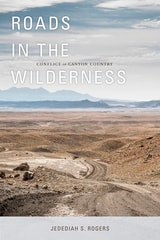
Roads in the Wilderness
Conflict in Canyon CountryJedediah S. Rogers
University of Utah Press, 2013
Winner of the Wallace Stegner Prize in American Environmental or Western History
The canyon country of southern Utah and northern Arizona—a celebrated desert of rock and sand punctuated by gorges and mesas—is a region hotly contested among vying and disparate interests, from industrial developers to wilderness preservation advocates. Roads are central to the conflicts raging in an area perceived as one of the last large roadless places in the continental United States. The canyon country in fact contains an extensive network of dirt trails and roads, many originally constructed under the authority of a one-sentence statute in an 1866 mining law, later known as R.S. 2477. While well-groomed and paved roads came to signify the industrialization of the modern age, twentiethcentury conservationists have regarded roads as intrusive human imprints on the nation’s wild lands. Roads connect rural communities, spur economic growth, and in some cases blend harmoniously into the landscape, but they also fracture and divide, disturb wildlife and habitat, facilitate industrial development, and spoil wilderness.
Roads of Home
Beck, Henry
Rutgers University Press, 1983
Long regarded as folklife classics, Henry Charlton Beck's books are vivid recreations of the back roads, small towns, and legends that give New Jersey its special character. Father Henry Charlton Beck, who lived in New Jersey nearly all his life, was the author of numerous books on New Jersey folklife, state editor of the Camden Courier-Post, and writer for the Newark Star-Ledger. He is considered New Jersey's first folklorist and his painstaking work has left us with a rich collection of tales.
Roads to Renewal
The Report of Activities and Accomplishments of the Civil Works Administration in Michigan, November 1933–March 1934James R. Anderson
Michigan State University Press, 2020
Robber Baron
The Life of Charles Tyson YerkesJohn Franch
University of Illinois Press, 2006
Robbers Roost Recollections
Pearl Baker
Utah State University Press, 1991
Robert Ashley
Kyle Gann
University of Illinois Press, 2012
Robert C. Byrd
Child of the Appalachian CoalfieldsRobert C. Byrd
West Virginia University Press, 2010
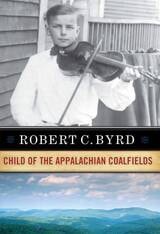
This autobiography follows United States Senator Robert C. Byrd’s experiences from his boyhood in the early 1920s to his election in 2000, which won him an unprecedented eighth term in the Senate. Along the way, Senator Byrd offers commentary on national and international events that occurred throughout his long life in public service. Senator Byrd’s journey from the hardscrabble coalfields to the marbled halls of Congress has inspired generations of people in West Virginia and throughout the nation. From reading the stories of the Founding Fathers as a young boy by the light of a kerosene lamp to the swearing of an oath for more than a half-century to guard the United States Constitution, Senator Byrd’s life is legendary. Byrd always stands by his principles, earning the affection of the people of his home state and the respect of Americans from all walks of life. With his beloved Erma ever by his side, Robert C. Byrd has never forgotten his roots, harkening back to those early lessons that he learned as a child of the Appalachian coalfields.
Robert C. Byrd
Child of the Appalachian CoalfieldsROBERT C. BYRD
West Virginia University Press, 2015
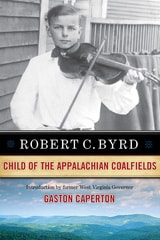
This autobiography follows West Virginia senator Robert C. Byrd’s experiences from his boyhood in the early 1920s to his election in 2000, which won him an unprecedented eighth term in the Senate. Within these pages, Senator Byrd offers commentary on national and international events that occurred throughout his long life in public service.
His journey from the hardscrabble coalfields to the marbled halls of Congress has inspired generations of people in West Virginia and throughout the nation. From reading the stories of the Founding Fathers as a young boy by the light of a kerosene lamp to the swearing of an oath for more than a half-century to guard the US Constitution, Senator Byrd’s life is legendary.
Until his death on June 28, 2010, Byrd stood by his principles, earning the affection of the people of his home state and the respect of Americans from all walks of life. With his beloved Erma ever by his side, Robert C. Byrd never forgot his roots, harkening back to those early lessons that he learned as a child of the Appalachian coalfields.
This new paperback edition includes a foreword by Gaston Caperton, governor of West Virginia from 1989–1997.
Robert Clifton Weaver and the American City
The Life and Times of an Urban ReformerWendell E. Pritchett
University of Chicago Press, 2008
Tracing Weaver’s career through the creation, expansion, and contraction of New Deal liberalism, Wendell E. Pritchett illuminates his instrumental role in the birth of almost every urban initiative of the period, from public housing and urban renewal to affirmative action and rent control. Beyond these policy achievements, Weaver also founded racial liberalism, a new approach to race relations that propelled him through a series of high-level positions in public and private agencies working to promote racial cooperation in American cities. But Pritchett shows that despite Weaver’s efforts to make race irrelevant, white and black Americans continued to call on him to mediate between the races—a position that grew increasingly untenable as Weaver remained caught between the white power structure to which he pledged his allegiance and the African Americans whose lives he devoted his career to improving.
Robert E. Sherwood
The Playwright in Peace and WarHarriet Hyman Alonso
University of Massachusetts Press, 2007
One of the nation's first film critics, an acclaimed speechwriter on his own and for President Franklin D. Roosevelt, a propagandist during World War II, and a leading producer on Broadway, Robert E. Sherwood scripted some of the most popular plays and films of his day, including Waterloo Bridge, The Best Years of Our Lives, Idiot's Delight, Abe Lincoln in Illinois, and Rebecca. His work brought him four Pulitzer Prizes and an Oscar. In his personal life, however, he was driven by a deep conviction that war was a societal evil that must be eradicated and human rights a moral responsibility that all governments should protect. At times, his belief in pacifism and his commitment to defending freedom and justice came into conflict with each other, causing frustration and emotional trauma which found their way into his writings and actions.
In this book, Harriet Hyman Alonso unravels Sherwood's inner struggle and portrays his political journey. Relying largely on his letters, diaries, plays, films, essays, and biography of Roosevelt and Harry Hopkins, she traces Sherwood's obsession with the world of politics and its effects on his life and art, from his experience as a soldier in World War I to the Cold War. She also describes his participation in the Algonquin Round Table, his friendships and working relationships with such notables as Alfred Lunt, Lynn Fontanne, Edna Ferber, Spencer Tracy, Harry Hopkins, and Franklin D. Roosevelt, his two marriages and uneasy relationship with his daughter, and his leadership role in the Broadway community.
Alonso brings together history, theater and film studies, and peace studies in this interdisciplinary political biography. In the process, she illuminates major currents in U.S. foreign policy, society, and culture from 1896 to 1955—the years of the remarkable life of Robert E. Sherwood.
Robert Frost and Feminine Literary Tradition
Karen L. Kilcup
University of Michigan Press, 1998
Robert Frost and the Challenge of Darwin
Robert Faggen
University of Michigan Press, 2001
Combining both intellectual history and detailed analysis of Frost's poems, Robert Faggen shows how Frost's reading of Darwin reflected the significance of science in American culture from Emerson and Thoreau, through James and pragmatism. He provides fresh and provocative readings of many of Frost's shorter lyrics and longer pastoral narratives as they illustrate the impact of Darwinian thought on the concept of nature, with particular exploration of man's relationship to other creatures, the conditions of human equality and racial conflict, the impact of gender and sexual differences, and the survival of religion.
The book shows that Frost was neither a pessimist lamenting the uncertainties of the Darwinian worldview, nor a humanist opposing its power. Faggen draws on Frost's unpublished notebooks to reveal a complex thinker who willingly engaged with the difficult moral and epistemological implications of natural science, and showed their consonance with myths and traditions stretching back to Milton, Lucretius, and the Old Testament. Frost emerges as a thinker for whom poetry was not only artistic expression, but also a forum for the trial of ideas and their impact on humanity.
Robert Frost and the Challenge of Darwin provides a deeper understanding not only of Frost and modern poetry, but of the meaning of Darwin in the modern world, the complex interrelations of literature and science, and the history of American thought.
"A forceful, appealing study of the Frost-Darwin relation, which has gone little noted by previous scholars, and a fresh explanation of Frost's ambivalent relation to modernism, which he scorned but also influenced" --William Howarth, Princeton University
Robert Faggen is Associate Professor of Literature, Claremont McKenna College and Adjunct Associate Professor, Claremont Graduate School.
Robert H. Gardiner and the Reunification of Worldwide Christianity in the Progressive Era
John F. Woolverton
University of Missouri Press, 2005
Robert Hayden in Verse
New Histories of African American Poetry and the Black Arts EraDerik Smith
University of Michigan Press, 2018
This book sheds new light on the work of Robert Hayden (1913–80) in response to changing literary scholarship. While Hayden’s poetry often reflected aspects of the African American experience, he resisted attempts to categorize his poetry in racial terms. This fresh appreciation of Hayden’s work recontextualizes his achievements against the backdrop of the Black Arts Movement and traces his influence on contemporary African American poets. Placing Hayden at the heart of a history of African American poetry and culture spanning the Harlem Renaissance to the Hip-Hop era, the book explains why Hayden is now a canonical figure in 20th-century American literature.
In deep readings that focus on Hayden’s religiousness, class consciousness, and historical vision, author Derik Smith inverts earlier scholarly accounts that figure Hayden as an outsider at odds with the militancy of the Black Arts movement. Robert Hayden in Verse offers detailed descriptions of the poet’s vigorous contributions to 1960s discourse about art, modernity, and blackness to show that the poet was, in fact, an earnest participant in Black Arts-era political and aesthetic debates.
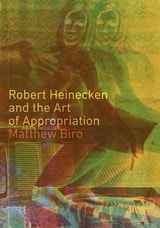
Robert Heinecken and the Art of Appropriation
Matthew Biro
University of Minnesota Press, 2022
The first comprehensive study of the artist Robert Heinecken and his critical views on the culture of mass media
This is the first book-length study dedicated to the artist Robert Heinecken, whose innovative photographic practices sought to interrogate how mass media imagery facilitated the construction of individual and collective identities. Appropriating, rephotographing, and layering pictures culled from newspapers, advertisements, pornography, and television, Heinecken recombined and transformed the ubiquitous images of mass culture to encourage viewers to critically reflect on their sense of self.
From the 1960s through the late 1990s, Heinecken’s controversial art continually challenged inherited ideas around consumerism, the facticity of reportage, and visual culture’s relationship to gender and identity politics. Embodying the evolution of contemporary art toward increasingly hybrid and conceptual approaches, his oeuvre includes examples of painting, sculpture, photomontage, performance, installation, time-based media, and artist’s books, all of which collectively exploit photography’s reproducibility to subvert society’s dominant ideologies and stereotypical modes of representation.
Author Matthew Biro presents an exhaustive look at Heinecken’s life and art, locating him within a lineage that encompasses the activities of the early twentieth-century avant-gardes and the postmodern strategies of the Pictures Generation artists. Assessing his career within the specific political and historical contexts from which he gleaned his material, and illustrated throughout with vibrant full-color reproductions of his art, this in-depth examination demonstrates Robert Heinecken’s significance as a key figure of twentieth-century art and an incisive commentator on modern life in America.
Robert Kennedy
Brother ProtectorJames Hilty
Temple University Press, 2000
The centerpiece of the book is the remarkable political partnership that formed between Robert and John. As the manager of John's political campaigns Robert proved himself "hard as nails" (in his father's admiring words), relentless in securing his brother's victory and unforgiving in overseeing his brother's presidency. Hilty marshals a great deal of evidence to show that while they did not always see eye to eye -- Lyndon Johnson's selection as John's running mate being a notable disagreement -- Robert and John discussed virtually every issue, gauging the likely political effects of every position. Robert was so close to the President that insiders called him "number one and a-half"; their consultations were so intimate that they spoke in a kind of code, barely intelligible to those around them. In Hilty's evocative but unsentimental recounting of the political crises of the Kennedy Administration, Robert and John prove to have been more calculating and astute leaders than today's pundits allow. Theirs was a partnership that was unprecedented and, thanks to an act signed into law by Lyndon Johnson, is never to be equaled.
The Kennedy family's story seems to have been lived in the public eye and Americans apparently never tire of the photographs and familiar anecdotes. Most of the written accounts, however, either highlight the multiple tragedies and scandals, preserve the latter-day Camelot myth, or follow the elusive traces of some conspiracy.
In contrast, Hilty's concern is for historical perspective -- for accuracy, plausibility, and thoroughness. With facts and reasoned conclusions, he challenges the stories about the Kennedys in relation to Marilyn Monroe, J. Edgar Hoover, and Martin Luther King, Jr. that have passed into American folklore. He develops a portrait of Robert Kennedy as a complex public figure, a man of centrist political allegiances and firm moral convictions who easily adapted to the crusader's role in working for Joseph McCarthy or pursuing James Hoffa for racketeering. Hilty's great care in sifting through the evidence and weighing competing theories gives us a sense of Kennedy as a public servant whose dedication to social justice intensified after he was in office and further deepened after his brother's assassination.
Even as he took charge of family matters and supported Jacqueline during the long ordeal of the state funeral, Robert's own crushing pain was evident to the world. It was then that "Bobby" ceased being a disparaging term and became a mark of respect and affection.
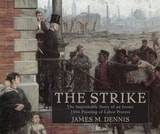
Robert Koehler’s The Strike
The Improbable Story of an Iconic 1886 Painting of Labor ProtestJames M. Dennis
University of Wisconsin Press, 2011
Every work of art has a story behind it. In 1886 the German American artist Robert Koehler painted a dramatic wide-angle depiction of an imagined confrontation between factory workers and their employer. He called this oil painting The Strike. It has had a long and tumultuous international history as a symbol of class struggle and the cause of workers’ rights. First exhibited just days before the tragic Chicago Haymarket riot, The Strike became an inspiration for the labor movement. In the midst of the campaign for an eight-hour workday, it gained international attention at expositions in Paris, Munich, and the 1893 Chicago World’s Fair. Though the painting fell into obscurity for decades in the early twentieth century, The Strike lived on in wood-engraved reproductions in labor publications. Its purchase, restoration, and exhibition by New Left activist Lee Baxandall in the early 1970s launched it to international fame once more, and collectors and galleries around the world scrambled to acquire it. It is now housed in the Deutsches Historisches Museum in Berlin, Germany.
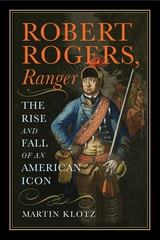
Robert Rogers, Ranger
The Rise and Fall of an American IconMartin Klotz
Westholme Publishing, 2026
Robert Rogers, Ranger: The Rise and Fall of an American Icon by Martin Klotz is a fresh look at the life of this famous, yet highly flawed man. Rogers undeniably had great personal strengths. He was brave nearly to the point of fearlessness. He was physically robust, always the one to cover the retreat, carry the wounded, or go for help when no one else could carry on. He was an intrepid explorer who wrote with eloquence about the splendors of the American frontier. He was bold and unconventional, good at thinking outside the box. He was an outstanding scout and intelligence gatherer who provided invaluable service to a British army inexperienced in woodland warfare. At the same time Rogers had enormous weaknesses that undermined his ability to lead effectively. His boldness was never tempered by judgment, and he was prone to grandiose schemes that came to nothing or, worse, to disaster. His constant self-promotion—including embellishing and lying about his battlefield successes—contributed to his popularity but damaged his reputation with peers and superiors. He succumbed to alcoholism and gambling, was profligate, especially with money—his debts were enormous—and routinely skirted the edges of the law. Rogers never found a comfortable place in America. Instead, his aristocratic patrons in London, who knew him mostly from his own self-description, gave him his most valuable opportunities, including commanding an important military and trading center on the colonial frontier and establishing the Queen’s Rangers to fight alongside Crown forces during the Revolution. But when the British cause failed in America, Rogers became an anathema on both sides of the Atlantic. A fascinating inquiry into an eighteenth-century life, Robert Rogers, Ranger presents this American legend as he lived, crossing the line between fame and misfortune.
Robert Wise
ShadowlandsWes D. Gehring
Indiana Historical Society Press, 2012
Rock 'n' Roll Movies
Sterritt, David
Rutgers University Press, 2018
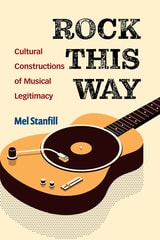
Rock This Way
Cultural Constructions of Musical LegitimacyMel Stanfill
University of Michigan Press, 2023
Any and all songs are capable of being remixed. But not all remixes are treated equally. Rock This Way examines transformative musical works—cover songs, remixes, mash-ups, parodies, and soundalike songs—to discover what contemporary American culture sees as legitimate when it comes to making music that builds upon other songs. Through examples of how popular discussion talked about such songs between 2009 and 2018, Mel Stanfill uses a combination of discourse analysis and digital humanities methods to interrogate our broader understanding of transformative works and where they converge at the legal, economic, and cultural ownership levels.
Rock This Way provides a new way of thinking about what it means to re-create and borrow music, how the racial identity of both the reusing artist and the reused artist matters, and the ways in which the law polices artists and their works. Ultimately, Stanfill demonstrates that the extent to which a work is seen as having new expression or meaning is contingent upon notions of creativity, legitimacy, and law, all of which are shaped by white supremacy.
Rock of Ages
Subcultural Religious Identity and Public Opinion among Young EvangelicalsJeremiah J. Castle
Temple University Press, 2019
Evangelicals and Republicans have been powerful—and active—allies in American politics since the 1970s. But as public opinions have changed, are young evangelicals’ political identities and attitudes on key issues changing too? And if so, why? In Rock of Ages, Jeremiah Castle answers these questions to understand their important implications for American politics and society.
Castle develops his own theory of public opinion among young evangelicals to predict and explain their political attitudes and voting behavior. Relying on both survey data and his own interviews with evangelical college students, he shows that while some young evangelicals may be more liberal in their attitudes on some issues, most are just as firmly Republican, conservative, and pro-life on abortion as the previous generation.
Rock of Ages considers not only what makes young evangelicals different from the previous generation, but also what that means for both the church and American politics.
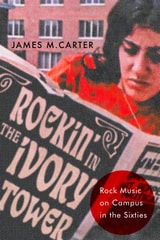
Rockin' in the Ivory Tower
Rock Music on Campus in the SixtiesJames M. Carter
Rutgers University Press, 2023
Histories of American rock music and the 1960s counterculture typically focus on the same few places: Woodstock, Monterey, Altamont. Yet there was also a very active college circuit that brought edgy acts like the Jefferson Airplane and the Velvet Underground to different metropolitan regions and smaller towns all over the country. These campus concerts were often programmed, promoted, and reviewed by students themselves, and their diverse tastes challenged narrow definitions of rock music.
Rockin’ in the Ivory Tower takes a close look at two smaller universities, Drew in New Jersey and Stony Brook on Long Island, to see how the culture of rock music played an integral role in student life in the late 1960s. Analyzing campus archives and college newspapers, historian James Carter traces connections between rock fandom and the civil rights protests, free speech activism, radical ideas, lifestyle transformations, and anti-war movements that revolutionized universities in the 1960s. Furthermore, he finds that these progressive students refused to segregate genres like folk, R&B, hard rock, and pop. Rockin’ in the Ivory Tower gives readers a front-row seat to a dynamic time for the music industry, countercultural politics, and youth culture.
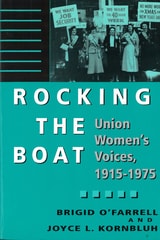
Rocking the Boat
Union Women's Voices, 1915-1975O'Farrell, Brigid
Rutgers University Press, 1996
Rocking the Boat is a celebration of strong, committed women who helped to build the American labor movement. Through the stories of eleven women from a wide range of backgrounds, we experience the turmoil, hardships, and accomplishments of thousands of other union women activists through the period spanning the Great Depression, the New Deal, World War II, the McCarthy era, the civil rights movement, and the women's movement. These women tell powerful stories that highlight and detail women's many roles as workers, trade unionists, and family members. They all faced difficulties in their personal lives, overcame challenges in their unions, and individually and collectively helped improve women's everyday working lives.
Maida Springer-Kemp came from New York City's Harlem, Local 22 of the International Ladies' Garment Workers' Union, to represent the AFL-CIO in Africa. In Chicago, Alice Peurala fought for her job in the steel mill and her place in the steel workers' union. Jessie De La Cruz organized farm workers in California. Esther Peterson, organizer, educator, and lobbyist, became an advisor to four U.S. presidents. In chapters based on oral history interviews, these women and others provide new perspectives and practical advice for today's working women. They share an idealistic and practical commitment to the labor movement. As Dorothy Haener of the United Auto Workers and a founding member of the National Organization of Women said, "You have to take a look at how to rock the boat. You don't want to spill yourself out if you can avoid it, but sometimes you have to rock the boat." From these women we, too, learn how to rock the boat.
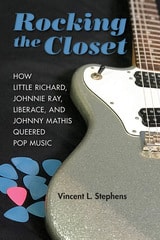
Rocking the Closet
How Little Richard, Johnnie Ray, Liberace, and Johnny Mathis Queered Pop MusicVincent Stephens
University of Illinois Press, 2019
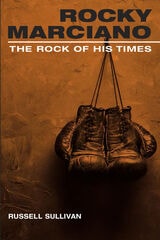
Rocky Marciano
The Rock of His TimesRussell Sullivan
University of Illinois Press, 2002
In this captivating and complex portrait of an American sports legend, Russell Sullivan confirms Rocky Marciano's place as a symbol and cultural icon of his era. As much as he embodied the wholesome, rags-to-riches patriotism of a true American hero, he also reflected the racial and ethnic tensions festering behind the country's benevolent facade.
Spirited, fast-paced, and rich in detail, Rocky Marciano is the first book to place the boxer in the context of his times. Capturing his athletic accomplishments against the colorful backdrop of the 1950s fight scene, Sullivan examines how Marciano's career reflected the glamour and scandal of boxing as well as tenor of his times.
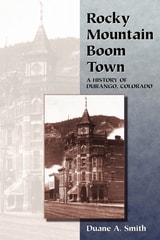
Rocky Mountain Boom Town
A History of Durango, ColoradoDuane A. Smith
University Press of Colorado, 1992
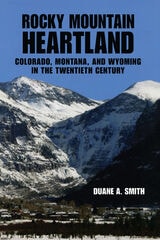
Rocky Mountain Heartland
Colorado, Montana, and Wyoming in the Twentieth CenturyDuane A. Smith
University of Arizona Press, 2008
This is the colorful saga of how the Old West became the New West. Beginning at the end of the nineteenth century and concluding after the turn of the twenty-first, Rocky Mountain Heartland explains how Colorado, Montana, and Wyoming evolved over the course of the century. Smith is mindful of all the factors that propelled the region: mining, agriculture, water, immigration, tourism, technology, and two world wars. And he points out how the three states responded in varying ways to each of these forces.
Although this is a regional story, Smith never loses sight of the national events that influenced events in the region. As Smith skillfully shows, the vast natural resources of the three states attracted optimistic, hopeful Americans intent on getting rich, enjoying the outdoors, or creating new lives for themselves and their families. How they resolved these often-conflicting goals is the modern story of the Rocky Mountain region.
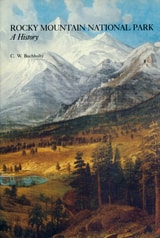
Rocky Mountain National Park
A HistoryC. W. Buchholtz
University Press of Colorado, 1983
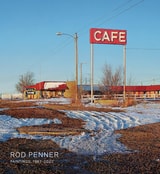
Rod Penner
Paintings, 1987–2022Rod Penner
The Artist Book Foundation, 2022
Rod Penner infuses his photorealistic paintings of the American southwest with a cinematic quality in the first major monograph on this contemporary realist artist.
The abandoned and forgotten landscapes of rural southwestern towns are the favored subjects of Rod Penner's paintings. His deft use of contrasts in his images—despondency and hope, isolation and nostalgia—evokes memories of The Last Picture Show and elicits complex responses from viewers. "I'm interested in the look of things and the quality of being there," he says. "A moment that is completely frozen with all the variety of textures; rust on poles, crumbling asphalt, light hitting the grass."
Penner's works are based on his photographs, digital video stills, and his experience of the rural landscapes of Texas and New Mexico. He depicts desolate, often deserted locations, the character of old houses and abandoned buildings, weather, and unique geography. His chosen scenes are infused with a cinematic quality that is the result of the exquisite light that he captures with his meticulous process. "The finished paintings should evoke contrasting responses of melancholy and warmth, desolation and serenity," he says.
Penner's hyperrealistic technique meticulously records both the iconic imagery and the beauty in the ashes of these once-prosperous streets and nighborhoods that still endure. The incredible poignant scenes evoke a universalism, a collective experience seen through the lens of Americana. "You won't find any hidden or overt socio-political meaning in my work and at the same time I hope that by utilizing what I find in the American landscape I'm able to connect to viewers on a deeper psychological level."
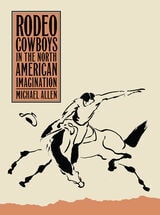
Rodeo Cowboys In The North American Imagination
Michael Allen
University of Nevada Press, 1998
Rodeo is an enduring relic of America’s popular culture, drawing capacity audiences to all its venues, from small western cowtowns to Madison Square Garden. The rodeo cowboy, that figure of rugged independence and solitary courage, continues to evoke the spirit of a vanished frontier and the hardy pioneers who conquered it. In this study historian Michael Allen examines the image of the rodeo cowboy and the role this image has played in popular culture over the past century. He sees rodeo as a significant American folk festival and the rodeo cowboy as the avatar of a nearly extinct authentic figure, the “real cowboy,” who embodies the skills and values of traditional western rural culture. Allen’s analysis explores the evolution of the myth of the rodeo man and its subsequent institutionalization and acculturation into the media of popular culture. He also examines the impact on this myth of significant changes in the rodeo milieu—the commercialization of the event and the professionalization of rodeo performers; the arrival on the rodeo scene of performers from outside the white, male, western, rural origins of the traditional cowboy performers. He discovers that America’s—and indeed the world’s—fascination with the rodeo cowboy reflects feelings far deeper than a taste for exciting entertainment. Allen’s discussion of the archetypal figure of the rodeo cowboy will change forever our perception of rodeo, but it will also help us understand how the ancient tension between frontier and civilization continues to play a role in our national imagination.
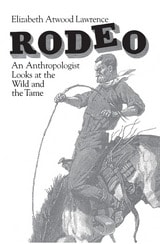
Rodeo
An Anthropologist Looks at the Wild and the TameElizabeth Atwood Lawrence
University of Chicago Press, 1984
Based on extensive field work and drawing on comparative materials from other stock-tending societies, Rodeo is a major contribution to an understanding of the role of performance in society, the culturally constructed view of man's place in nature, and the structure and meaning of social relationships and their representations.
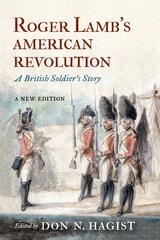
Roger Lamb's American Revolution
A British Soldier's StoryDon N. Hagist
Westholme Publishing, 2022
Of all the British soldiers who served in North America during the American Revolution, none wrote more about his experiences than Roger Lamb. He certainly had a lot to say: his service in two of the most important campaigns—the 1777 Saratoga campaign and the 1781 campaign through the Carolinas to Virginia—put him in the thick of some of the war’s most famous battles. Moreover, he was twice captured and twice escaped, making his way through hostile territory to rejoin the British army. Later in his life he wrote two books chronicling these experiences in great detail. Hundreds of British soldiers went through similar ordeals, sharing in the campaigns, the battles, the captivities, the escapes, but none recounted any aspect of these activities in the level of detail that Lamb did.
The first edition of this book, published in 2004, combined all of Roger Lamb’s first-hand recollections from his two books, An Original and Authentic Journal of Occurrences during the late American War, from its Commencement to the Year 1783 (Dublin, 1809) and Memoir of his Own Life (Dublin, 1811). Since that publication, two more important documents written by Lamb have come to light—an intelligence report written in 1782 recounting details of one of his escapes, and a “commonplace book” kept later in his life to record a vast range of memories, thoughts, and observations. Roger Lamb’s American Revolution: A British Soldier’s Story combines all of the material from these four sources pertaining to Lamb’s career as a soldier, from the time he joined the army to his departure from it, plus his recollections of childhood and post-military life. The result is the most comprehensive first-hand account by a British soldier in the American Revolution, an essential record for understanding the war in its totality.
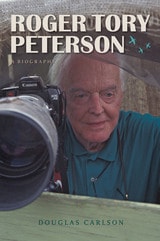
Roger Tory Peterson
A BiographyBy Douglas Carlson
University of Texas Press, 2007
Beginning with his 1934 Field Guide to the Birds, Roger Tory Peterson introduced literally millions of people to the pleasures of observing birds in the wild. His field guide, which has gone through five editions and sold more than four million copies, fostered an appreciation for the natural world that set the stage for the contemporary environmental movement. When Rachel Carson's Silent Spring sounded a warning about the threat to birds and their habitats in the 1960s, the Peterson field guides had already prepared the public and the scientific community to heed the warning and fight to save habitat and protect endangered species—a result that Peterson wholeheartedly approved.
In this authoritative, highly readable biography of Roger Tory Peterson (1908-1996), Douglas Carlson creates a fascinating portrait of the complex, often conflicted man behind the brand name. He describes how Peterson's obsession with birds began in boyhood and continued throughout a multifaceted career as a painter, writer, educator, environmentalist, and photographer. Carlson traces Peterson's long struggle to become both an accomplished bird artist and a scientific naturalist—competing goals that drove Peterson to work to the point of exhaustion and that also deprived him of many aspects of a normal personal life. Carlson also records Peterson's many lasting achievements, from the phenomenal success of the field guides, to the bird paintings that brought him renown as "the twentieth century's Audubon," to the establishment of the Roger Tory Peterson Institute to carry on his work in conservation and education.
Rogue Scholar
The Sinister Life and Celebrated Death of Edward H. RulloffRichard W. Bailey
University of Michigan Press, 2003
Richard Bailey's narrative, calm and impartial yet spiked with wit and suspense, captures perfectly the slightly haunted and overwrought air of Victorian rural America, calling on newspaper accounts, interviews, and eyewitness reports of the day. Inevitably, the quiet accumulation of details builds to a story that transcends its individual events to touch on the universal themes of any age.
Rogue Scholar is about the evil of one man who lived a life of deception and crime. Yet in a larger sense it is also the portrait of a condemned soul in its final hours, an examination of the death penalty, and a reminder that media sensationalism is nothing new.
Roll Away Saloon
Rowland W. Rider as told to Deirdre M. Paulsen
Utah State University Press, 1985
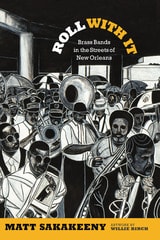
Roll With It
Brass Bands in the Streets of New OrleansMatt Sakakeeny
Duke University Press, 2013