Results by title
1218 books match the query 'African Americans' and 78 start with r
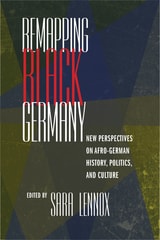
Remapping Black Germany
New Perspectives on Afro-German History, Politics, and CultureSara Lennox
University of Massachusetts Press, 2016
In 1984 at the Free University of Berlin, the African American poet Audre Lorde asked her Black, German-speaking women students about their identities. The women revealed that they had no common term to describe themselves and had until then lacked a way to identify their shared interests and concerns. Out of Lorde's seminar emerged both the term “Afro-German” (or “Black German”) and the 1986 publication of the volume that appeared in English translation as Showing Our Colors: Afro-German Women Speak Out. The book launched a movement that has since catalyzed activism and scholarship in Germany.
Remapping Black Germany collects thirteen pieces that consider the wide array of issues facing Black German groups and individuals across turbulent periods, spanning the German colonial period, National Socialism, divided Germany, and the enormous outpouring of Black German creativity after 1986.
In addition to the editor, the contributors include Robert Bernasconi, Tina Campt, Maria I. Diedrich, Maureen Maisha Eggers, Fatima El-Tayeb, Heide Fehrenbach, Dirk Göttsche, Felicitas Jaima, Katja Kinder, Tobias Nagl, Katharina Oguntoye, Peggy Piesche, Christian Rogowski, and Nicola Lauré al-Samarai.
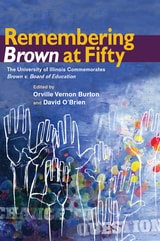
Remembering Brown at Fifty
The University of Illinois Commemorates Brown v. Board of EducationEdited by Orville Vernon Burton and David O'Brien
University of Illinois Press, 2009
Inspired by the University of Illinois's celebration of the Brown v. Board of Education decision's fiftieth anniversary, this collection addresses the significance of Brown in the contributors' lives or work in education and civil rights. Several authors describe their personal roles in the Brown case or similar cases, while others examine and illustrate events, performances, and exhibitions that were part of the anniversary commemoration. The book not only explores the repercussions of the Brown decision, but also stands as a historic document in its own right, preserving the reactions of many prominent intellectuals, artists, and activists fifty years after the decision.
Contributors are Kal Alston, Margaret L. Andersen, Kathryn H. Anthony, Nathaniel C. Banks, Bernice McNair Barnett, Christopher Benson, Ed Blankenheim, Julian Bond, Orville Vernon Burton, Jason Chambers, Constance Curry, Joseph A. De Laine Jr., Mary L. Dudziak, Joe R. Feagin, John Hope Franklin, Ophelia De Laine Gona, Lani Guinier, Darlene Clark Hine, Freeman A. Hrabowski III, John Jennings, Ralph Lemon, George Lipsitz, Jim Loewen, Laughlin McDonald, David O'Brien, James C. Onderdonk, Sekou Sundiata, Christopher Teal, Nicholas Watkins, Carrie Mae Weems, Juan Williams, and Joy Ann Williamson.
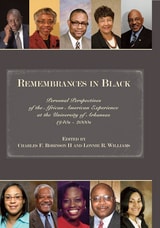
Remembrances in Black
Personal Perspectives of the African American Experience at the University of Arkansas, 1940s–2000sCharles F. Robinson II
University of Arkansas Press, 2015
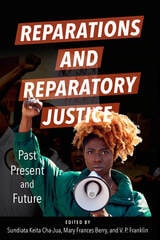
Reparations and Reparatory Justice
Past, Present, and FutureEdited by Sundiata Keita Cha-Jua, Mary Frances Berry, and V. P. Franklin
University of Illinois Press, 2024
Sharing a focus on reparations as an issue of justice, the contributors provide a historical primer of the movement; introduce the philosophical, political, economic, legal and ethical issues surrounding reparations; explain why government, corporations, universities, and other institutions must take steps to rehabilitate, compensate, and commemorate African Americans; call for the restoration of Black people’s human and civil rights and material and psychological well-being; lay out specific ideas about how reparations can and should be paid; and advance cutting-edge interpretations of the complex long-lasting effects that enslavement, police and vigilante actions, economic discrimination, and other behaviors have had on people of African descent.
Groundbreaking and innovative, Reparations and Reparatory Justice offers a multifaceted resource to anyone wishing to explore a defining moral issue of our time.
Contributors: Dedrick Asante-Muhammad, Hilary McDonald Beckles, Mary Frances Berry, Sundiata Keita Cha-Jua, Chuck Collins, Ron Daniels, V. P. Franklin, Danny Glover, Adom Gretachew, Charles Henry, Kamm Howard, Earl Ofari Hutchinson, Jesse Jackson, Sr., Brian Jones, Sheila Jackson Lee, James B. Stewart, the Movement 4 Black Lives, the National African American Reparations Commission, the National Coalition of Blacks for Reparations in America, the New Afrikan Peoples Organization/Malcolm X Grassroots Movement
Research Directions of Black Psychologists
Wade Boykin
Russell Sage Foundation, 1979

Resolving Racial Conflict
The Community Relations Service and Civil Rights, 1964-1989Bertram Levine
University of Missouri Press, 2005
Rethinking America's Past
Voices from the Kinsey African American Art and History CollectionEdited by Tim Gruenewald
University of Minnesota Press, 2019
Among the first scholarly books dedicated to a private African American collection, Rethinking America’s Past: Voices from the Kinsey African American Art and History Collection both chronicles the reach of this important cultural collection and contributes to its project by sharing selected objects and stories with a broader audience. Essays range in subject from iconic African American artists, such as Loïs Mailou Jones and Beauford Delaney, to important historical figures such as Frederick Douglas and Martin Luther King, to individuals whose experiences might be lost to history but for the found objects that preserve their stories. Rethinking America’s Past demonstrates how the African American story, from slavery through the present, is represented and can be actively remembered through the act of collecting.
Rethinking America’s Past will appeal to audiences interested in African American history as well as art history, but its real power is in linking the two, showing how important collections are in constructing and repairing historical narratives, and how in the words of editor Tim Gruenewald, “Collecting overlooked aspects of our past and sharing such collections enables a deeper understanding of the present moment, and facilitates a more inclusive and just future.”
Revisiting Racialized Voice
African American Ethos in Language and LiteratureDavid G. Holmes
Southern Illinois University Press, 2004
Revisiting Racialized Voice:African American Ethos in Language and Literature argues that past misconceptions about black identity and voice, codified from the 1870s through the 1920s, inform contemporary assumptions about African American authorship and ethos. Tracing elements of racial consciousness in the works of Frederick Douglass, Charles Chesnutt, W. E. B. DuBois, Zora Neale Hurston, and others, David G. Holmes urges a revisiting of narratives from this period to strengthen and advance notions about racialized writing and to shape contemporary composition pedagogies.
Pointing to the intersection of African American identity, literature, and rhetoric, Revisiting Racialized Voice begins to construct rhetorically workable yet ideologically flexible definitions of black voice. Holmes maintains that political pressure to embrace“color blindness” endangers scholars’ ability to uncover links between racialized discourses of the past and those of the present, and he calls instead for a reassessment of the material realities and theoretical assumptions race represents and with which it has been associated.
Revolutionaries to Race Leaders
Black Power and the Making of African American PoliticsCedric Johnson
University of Minnesota Press, 2007
The Black Power movement represented a key turning point in American politics. Disenchanted by the hollow progress of federal desegregation during the 1960s, many black citizens and leaders across the United States demanded meaningful self-determination. The popular movement they created was marked by a vigorous artistic renaissance, militant political action, and fierce ideological debate.
Exploring the major political and intellectual currents from the Black Power era to the present, Cedric Johnson reveals how black political life gradually conformed to liberal democratic capitalism and how the movement’s most radical aims—the rejection of white aesthetic standards, redefinition of black identity, solidarity with the Third World, and anticapitalist revolution—were gradually eclipsed by more moderate aspirations. Although Black Power activists transformed the face of American government, Johnson contends that the evolution of the movement as a form of ethnic politics restricted the struggle for social justice to the world of formal politics.
Johnson offers a compelling and theoretically sophisticated critique of the rhetoric and strategies that emerged in this period. Drawing on extensive archival research, he reinterprets the place of key intellectual figures, such as Harold Cruse and Amiri Baraka, and influential organizations, including the African Liberation Support Committee, the National Black Political Assembly, and the National Black Independent Political Party in postsegregation black politics, while at the same time identifying the contradictions of Black Power radicalism itself.
Documenting the historical retreat from radical, democratic struggle, Revolutionaries to Race Leaders ultimately calls for the renewal of popular struggle and class-conscious politics.
Cedric Johnson is assistant professor of political science at Hobart and William Smith Colleges.
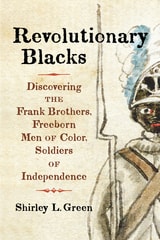
Revolutionary Blacks
Discovering the Frank Brothers, Freeborn Men of Color, Soldiers of IndependenceShirley L. Green
Westholme Publishing, 2026
In Revolutionary Blacks: Discovering the Frank Brothers, Freeborn Men of Color, Soldiers of Independence historian Shirley L. Green takes the reader on a journey based on her family’s history, rooted in its oral tradition. Putting together the pieces of this puzzle through archival research, interviews, and DNA evidence, the author authenticates and expands the family’s oral history. In addition to providing context and substance to the Black experience during the war years, the author underscores the significant distinction between free Blacks in military service and those who had been enslaved, and how they responded in different ways to the harsh realities of racism. An original and important contribution to American history, Revolutionary Blacks presents a complex account of Black life during the Revolutionary Era and demonstrates that free men of color shared with white soldiers the desire to improve their condition in life and to maintain their families safely in postcolonial North America.
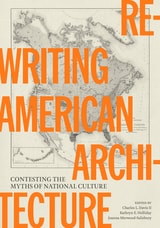
Rewriting American Architecture
Contesting the Myths of National CultureEdited by Charles L. Davis II, Kathryn E. Holliday, and Joanna Merwood-Salisbury
University of Texas Press, 2026
A critical reassessment of nineteenth‑century American architecture that uncovers how race, settler colonialism, and contested national identities shaped the built environment and its historiography.
Rewriting American Architecture offers a revisionist riposte to the canonical story of nineteenth-century American architecture. Drawing on new archival research and revisionist historiography, the essays in this volume reveal how American architecture was shaped not by inevitable progress toward a unified national culture but by the turbulent realities of race, labor, settler colonialism, and territorial expansion. Rather than treating architecture as an apolitical aesthetic expression, the contributors expose it as an active arena in which the meanings of nationhood were constructed, contested, and often violently enforced. From Indigenous spatial practices and Black institutional building to transnational exchanges and the racial politics embedded in professionalization, this collection reframes the built environment as central to the competing cultural, political, and geographic claims that defined the United States during this period.

Rewriting Exodus
American Futures from Du Bois to ObamaAnna Hartnell
Pluto Press, 2011
Exodus, as a powerful narrative of liberation, has been a central imaginative touchstone in the black American struggle against US racism. This book traces the concept in a number of pivotal black thinkers, and explores its signficance for contemporary America.
The exodus story is a fitting allegory for the painful experience of exile that disproportionately afflicted African Americans in the aftermath of Hurricane Katrina, and it also provides compelling imagery for the triumphant election of Barack Obama in 2008. Building around these themes, Anna Hartnell traces the intellectual development of one of the defining narratives of black American thinking on social justice in the United States.
In placing black America at the centre of the study of US culture, Rewriting Exodus suggests new ways of thinking about America's relationship with the Middle East and the wider postcolonial world. Hartnell's groundbreaking contribution marks a vital new chapter in American cultural and political history.
Rhetorics of Whiteness
Postracial Hauntings in Popular Culture, Social Media, and EducationEdited by Tammie M. Kennedy, Joyce Irene Middleton, Krista Ratcliffe, with a foreword by Lilia D. Monzó and Peter McLaren
Southern Illinois University Press, 2017
With the election of our first black president, many Americans began to argue that we had finally ended racism, claiming that we now live in a postracial era. Yet near-daily news reports regularly invoke white as a demographic category and recount instances of racialized violence as well as an increased sensitivity to expressions of racial unrest. Clearly, American society isn’t as color-blind as people would like to believe. In Rhetorics of Whiteness: Postracial Hauntings in Popular Culture, Social Media, and Education, contributors reveal how identifications with racialized whiteness continue to manifest themselves in American culture.
The sixteen essays that comprise this collection not only render visible how racialized whiteness infiltrates new twenty-first-century discourses and material spaces but also offer critical tactics for disrupting this normative whiteness. Specifically, contributors examine popular culture (novels, films, TV), social media (YouTube, eHarmony, Facebook), education (state law, the textbook industry, dual credit programs), pedagogy (tactics for teaching via narratives, emotional literacy, and mindfulness) as well as cultural theories (concepts of racialized space, anti-dialogicism, and color blindness). Offering new approaches to understanding racialized whiteness, this volume emphasizes the importance of a rhetorical lens for employing whiteness studies’ theories and methods to identify, analyze, interpret, and interrupt representations of whiteness.
Although whiteness studies has been waning as an active research field for the past decade, the contributors to Rhetorics of Whiteness assert that it hasn’t lost its relevancy because racialized whiteness and issues of systemic racism persist in American society and culture today. Few whiteness studies texts have been published in rhetoric and composition in the past decade, so this collection should quickly become mandatory reading. By focusing on common, yet often overlooked, contemporary examples of how racialized whiteness haunts U.S. society, Rhetorics of Whiteness serves as a valuable text for scholars in the field as well as anyone else interested in the topic.
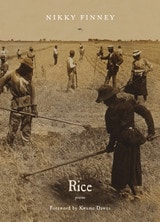
Rice
PoemsNikky Finney
Northwestern University Press, 2013
In Rice, her second volume of poetry, Nikky Finney explores the complexity of rice as central to the culture, economy, and mystique of the coastal South Carolina region where she was born and raised. The prized Carolina Gold rice paradoxically made South Carolina one of the most oppressive states for slaves and also created the remarkable Gullah culture on the coastal islands. The poems in Rice compose a profound and unflinching journey connecting family and the paradoxes of American history, from the tragic times when African slaves disembarked on the South Carolina coast to the triumphant day when Judge Ernest A. Finney Jr., Nikky’s father, was sworn in as South Carolina’s first African American chief justice. Images from the Finney family archive illustrate and punctuate this collection. Rice showcases Finney’s hungry intellect, her regional awareness and pride, and her sensitivity to how cultures are built and threatened.
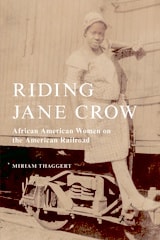
Riding Jane Crow
African American Women on the American RailroadMiriam Thaggert
University of Illinois Press, 2022
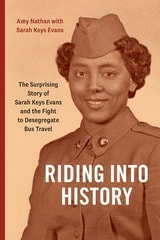
Riding into History
The Surprising Story of Sarah Keys Evans and the Fight to Desegregate Bus TravelAmy Nathan with Sarah Keys Evans
Duke University Press, 2026
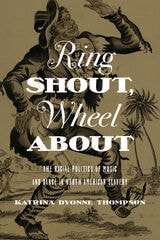
Ring Shout, Wheel About
The Racial Politics of Music and Dance in North American SlaveryKatrina D. Thompson
University of Illinois Press, 2014
In this ambitious project, historian Katrina Thompson examines the conceptualization and staging of race through the performance, sometimes coerced, of black dance from the slave ship to the minstrel stage. Drawing on a rich variety of sources, Thompson explicates how black musical performance was used by white Europeans and Americans to justify enslavement, perpetuate the existing racial hierarchy, and mask the brutality of the domestic slave trade. Whether on slave ships, at the auction block, or on plantations, whites often used coerced performances to oppress and demean the enslaved.
As Thompson shows, however, blacks' "backstage" use of musical performance often served quite a different purpose. Through creolization and other means, enslaved people preserved some native musical and dance traditions and invented or adopted new traditions that built community and even aided rebellion.
Thompson shows how these traditions evolved into nineteenth-century minstrelsy and, ultimately, raises the question of whether today's mass media performances and depictions of African Americans are so very far removed from their troublesome roots.

Riot Report and the News
How the Kerner Commission Changed Media Coverage of Black AmericaHrach Thomas J
University of Massachusetts Press, 0
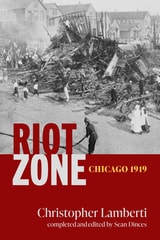
Riot Zone
Chicago 1919Christopher Lamberti, completed and edited by Sean Dinces
Temple University Press, 2027
Riot Zone presents a compelling forensic microhistory of the racial violence that exploded in Chicago starting on July 27, 1919, when a Black teenager named Eugene Williams drowned in Lake Michigan after white beachgoers attacked him as he swam with friends. In the days that followed, white gang members terrorized African Americans on the city’s South Side and Black Chicagoans armed and defended themselves in response. By the end of the first week of August, when the rioting finally ended, thirty-eight Chicagoans lay dead and hundreds nursed injuries as a result of what became known as America’s “Red Summer.”
The late Christopher Lamberti, with the help of editor Sean Dinces, recounts this sobering history using GIS software to map what occurred. The authors revisit and debunk ideas about the role race and ethnicity played in the riot and its aftermath, showing how the politics of housing and racial conflicts over residential space set the stage for the riots that ensued.
With insights that echo in today’s conflicts, Riot Zone proves that there is still plenty to learn about the history of America’s ongoing struggle with urban and racial violence.
Rise Up!
Activism as EducationAmalia Dache
Michigan State University Press, 2019
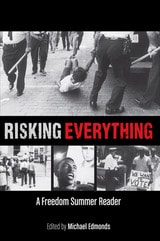
Risking Everything
A Freedom Summer ReaderMichael Edmonds
Wisconsin Historical Society Press, 2014
Risking Everything: A Freedom Summer Reader documents the 1964 Mississippi Freedom Summer Project, when SNCC and CORE workers and volunteers arrived in the Deep South to register voters and teach non-violence, and more than 60,000 black Mississippians risked everything to overturn a system that had brutally exploited them.
In the 44 original documents in this anthology, you’ll read their letters, eavesdrop on their meetings, shudder at their suffering, and admire their courage. You’ll witness the final hours of three workers murdered on the project’s first day, hear testimony by black residents who bravely stood up to police torture and Klan firebombs, and watch the liberal establishment betray them.
These vivid primary sources, collected by the Wisconsin Historical Society, provide both first-hand accounts of this astounding grassroots struggle as well as a broader understanding of the Civil Rights movement.
The selected documents are among the 25,000 pages about the Mississippi Freedom Summer Project in the archives of the Wisconsin Historical Society. The manuscripts were collected in the mid-1960s, at a time when few other institutions were interested in saving the stories of common people in McComb or Ruleville, Mississippi. Most have never been published before.
Robert Clifton Weaver and the American City
The Life and Times of an Urban ReformerWendell E. Pritchett
University of Chicago Press, 2008
Tracing Weaver’s career through the creation, expansion, and contraction of New Deal liberalism, Wendell E. Pritchett illuminates his instrumental role in the birth of almost every urban initiative of the period, from public housing and urban renewal to affirmative action and rent control. Beyond these policy achievements, Weaver also founded racial liberalism, a new approach to race relations that propelled him through a series of high-level positions in public and private agencies working to promote racial cooperation in American cities. But Pritchett shows that despite Weaver’s efforts to make race irrelevant, white and black Americans continued to call on him to mediate between the races—a position that grew increasingly untenable as Weaver remained caught between the white power structure to which he pledged his allegiance and the African Americans whose lives he devoted his career to improving.
Rock This Way
Cultural Constructions of Musical LegitimacyMel Stanfill
University of Michigan Press, 2023
Any and all songs are capable of being remixed. But not all remixes are treated equally. Rock This Way examines transformative musical works—cover songs, remixes, mash-ups, parodies, and soundalike songs—to discover what contemporary American culture sees as legitimate when it comes to making music that builds upon other songs. Through examples of how popular discussion talked about such songs between 2009 and 2018, Mel Stanfill uses a combination of discourse analysis and digital humanities methods to interrogate our broader understanding of transformative works and where they converge at the legal, economic, and cultural ownership levels.
Rock This Way provides a new way of thinking about what it means to re-create and borrow music, how the racial identity of both the reusing artist and the reused artist matters, and the ways in which the law polices artists and their works. Ultimately, Stanfill demonstrates that the extent to which a work is seen as having new expression or meaning is contingent upon notions of creativity, legitimacy, and law, all of which are shaped by white supremacy.
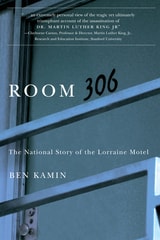
Room 306
The National Story of the Lorraine MotelBen Kamin
Michigan State University Press, 2012
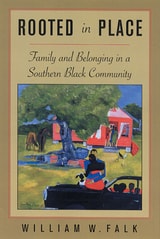
Rooted in Place
Family and Belongings in a Southern Black CommunityFalk, William W
Rutgers University Press, 2004
Throughout the twentieth century, millions of African Americans, many from impoverished, historically black counties, left the South to pursue what they thought would be a better life in the North. But not everyone moved away during what scholars have termed the Great Migration. What has life been like for those who stayed? Why would they remain in a place that many outsiders would see as grim, depressed, economically marginal, and where racial prejudice continues to place them at a disadvantage?
Through oral history William Falk tells the story of an extended family in the Georgia-South Carolina lowcountry. Family members talk about schooling, relatives, work, religion, race, and their love of the place where they have lived for generations. This “conversational ethnography” argues that an interconnection between race and place in the area helps explain African Americans’ loyalty to it. In Colonial County, blacks historically enjoyed a numerical majority as well as deep cultural roots and longstanding webs of social connections that, Falk finds, more than outweigh the racism they face and the economic disadvantages they suffer.

Roots of Disorder
Race and Criminal Justice in the American South, 1817-80Christopher Waldrep
University of Illinois Press, 1998
"Delivers what no other study has yet attempted. . . . Waldrep's book is one of the first systematically to use local trial data to explore questions of society and culture." -- Vernon Burton, author of "A Gentleman and an Officer": A Social and Military History of James B. Griffin's Civil War
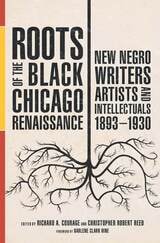
Roots of the Black Chicago Renaissance
New Negro Writers, Artists, and Intellectuals, 1893-1930Edited by Richard A. Courage and Christopher Robert Reed
University of Illinois Press, 2020
Richard A. Courage and Christopher Robert Reed have brought together essays that explore the intersections in the backgrounds, education, professional affiliations, and public lives and achievements of black writers, journalists, visual artists, dance instructors, and other creators working in the late nineteenth and early twentieth centuries. Organized chronologically, the chapters unearth transformative forces that supported the emergence of individuals and social networks dedicated to work in arts and letters. The result is an illuminating scholarly collaboration that remaps African American intellectual and cultural geography and reframes the concept of urban black renaissance.
Contributors: Richard A. Courage, Mary Jo Deegan, Brenda Ellis Fredericks, James C. Hall, Bonnie Claudia Harrison, Darlene Clark Hine, John McCluskey Jr., Amy M. Mooney, Christopher Robert Reed, Clovis E. Semmes, Margaret Rose Vendryes, and Richard Yarborough
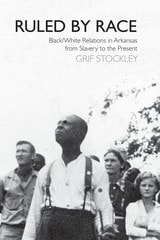
Ruled by Race
Black/White Relations in Arkansas From Slavery to the PresentGrif Stockley
University of Arkansas Press, 2008
Winner of the 2010 Booker Worthen Literary Prize, and the 2009 Ragsdale Award.
From the Civil War to Reconstruction, the Redeemer period, Jim Crow, and the modern civil rights era to the present, Ruled by Race describes the ways that race has been at the center of much of the state’s formation and image since its founding. Grif Stockley uses the work of published and unpublished historians and exhaustive primary source materials along with stories from authors as diverse as Maya Angelou and E. Lynn Harris to bring to life the voices of those who have both studied and lived the racial experience in Arkansas.
Topics range from the well-known Little Rock Central High Crisis of 1957 to lesser-known events such as the Elaine Race Massacres of 1919 and the shocking yet sadly commonplace attitudes found in newspaper reports and speeches. Through the words of the most powerful Arkansans such as racist Arkansas Govenor Jeff Davis (1901–1906) to the least powerful, including an unflinching look at the narratives of former slaves, readers will come away with increased awareness of the ways that race continues to affect where Arkansans live, send their children to school, work, travel, shop, spend leisure time, worship, and choose their friends and life partners.