Results by title
4413 books match the query 'Anthropology' and 221 start with r
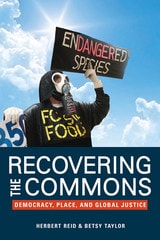
Recovering the Commons
Democracy, Place, and Global JusticeHerbert Reid and Betsy Taylor
University of Illinois Press, 2010
This penetrating work culls key concepts from grassroots activism to hold critical social theory accountable to the needs, ideas, and organizational practices of the global justice movement. The resulting critique of neoliberalism hinges on place-based struggles of groups marginalized by globalization and represents a brave rethinking of politics, economy, culture, and professionalism.
Providing new practical and conceptual tools for responding to human and environmental crises in Appalachia and beyond, Recovering the Commons radically revises the framework of critical social thought regarding our stewardship of the civic and ecological commons. Herbert Reid and Betsy Taylor ally social theory, field sciences, and local knowledge in search of healthy connections among body, place, and commons that form a basis for solidarity as well as a vital infrastructure for a reliable, durable world. Drawing particularly on the work of philosophers Maurice Merleau-Ponty, John Dewey, and Hannah Arendt, the authors reconfigure social theory by ridding it of the aspects that reduce place and community to sets of interchangeable components. Instead, they reconcile complementary pairs such as mind/body and society/nature in the reclamation of public space.
With its analysis embedded in philosophical and material contexts, this penetrating work culls key concepts from grassroots activism to hold critical social theory accountable to the needs, ideas, and organizational practices of the global justice movement. The resulting critique of neoliberalism hinges on place-based struggles of groups marginalized by globalization and represents a brave rethinking of politics, economy, culture, and professionalism.
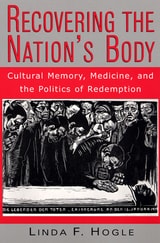
Recovering the Nation's Body
Cultural Memory, Medicine, and the Politics of RedemptionLinda F Hogle
Rutgers University Press, 1999
The body is both a site for medical practice and a source of therapeutic and scientific tools. As such, there are a variety of meanings ascribed to the body which both affect and are affected by cultural, economic, political and legal complexities. In order to access and use body parts, Linda F. Hogle states, transformative scientific and cultural processes are brought into play. Nowhere is this more evident than present-day Germany, where the spectre of Nazi medical experimentation still plays a large role in national policies governing the use of body parts and the way these policies are put into practice. In their efforts to be perceived as not repeating atrocities of the past, German medical practitioners and policy-makers reformulate ideas of bodily violation. To further confuse the issue, the reunification of East and West Germany has engendered new questions about the relationship between individuals’ bodies, science, and the state.
Hogle shows how “universal” medicine is reinterpreted through the lens of national and transnational politics and history, using comparative examples from her research in the United. States. Recovering the Nation’s Body is the first book to analyze the actual practices involved in procuring human tissue, and the first to examine how the German past and the unique present-day situation within the European Union are key in understanding the form that medical practices take within various contexts.
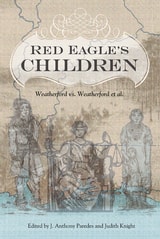
Red Eagle's Children
Weatherford vs. Weatherford et al.Edited by J. Anthony Paredes and Judith Knight
University of Alabama Press, 2012
Tracing identity, law, and legacy in an inheritance dispute that reveals the intersection of two cultural and legal systems: Creek Indian and Euro-American.
In 1846, in the Chancery Court of Mobile, Alabama, William “Red Eagle” Weatherford’s son, by the Indian woman Supalamy, sued his half siblings fathered by Weatherford with two other Creek women, Polly Moniac and Mary Stiggins, for a greater share of Weatherford’s estate. While the court recognized William Jr. as the son of William Sr., he nevertheless lost his petition for inheritance due to the lack of legal evidence concerning the marriage of his biological mother to William Sr. The case, which went to the Alabama Supreme Court in 1851, provides a record of an attempt to interrelate and, perhaps, manipulate differences in cultures as they played out within the ritualized, arcane world of antebellum Alabama jurisprudence.
Although the case has value in the classic mold of salvage ethnography of Creek Indian culture, Red Eagle’s Children, edited by J. Anthony Paredes and Judith Knight, shows that its more enduring value lies in being a source for historical ethnography—that is, for anthropological analyses of cultural dynamics of the past events that complement the narratives of professional historians.
CONTRIBUTORS: David I. Durham / Robbie Ethridge / Judith Knight / J. Anthony Paredes / Paul M. Pruitt Jr. / Nina Gail Thrower / Robert Thrower / Gregory A. Waselkov
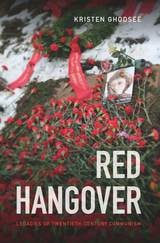
Red Hangover
Legacies of Twentieth-Century CommunismKristen Ghodsee
Duke University Press, 2017
Red Lights
The Lives of Sex Workers in Postsocialist ChinaTiantian Zheng
University of Minnesota Press, 2009
Zheng embarked on two years of intensely embedded ethnographic fieldwork in her birthplace, Dalian, a large northeastern Chinese seaport of over six million people. During this time, Zheng lived and worked with a group of hostesses in a karaoke bar, facing many of the same dangers that they did and forming strong, intimate bonds with them. The result is an especially engaging, moving story of young, rural women struggling to find meaning, develop a modern and autonomous identity, and, ultimately, survive within an oppressively patriarchal state system.
Moving from her case studies to broader theories of sex, gender, and power, Zheng connects a growth in capitalist entrepreneurialism to the emergence of an urban sex industry, brilliantly illuminating the ways in which hostesses, their clients, and the state are mutually created in postsocialist China.
Red Man's America
A History of Indians in the United StatesRuth Murray Underhill
University of Chicago Press, 1971
The material Professor Underhill has gathered from the fields of archaeology, ethnology, and history, together with that drawn from her own experience in the United States Indian Service, produces a fascinating narrative. Red Man's America is an important contribution to our heritage of Indian life and lore.
"A work for which both sociologist and historian will be forever grateful. The author has combined a long period of study with actual field work in the service of the Indian to produce a work that gives a brief, but well written and accurate, sketch of the origins, backgrounds, and customs of the various North American tribes. . . . There is no other modern single volume that contains as much information on the subject."—E.R. Vollmar, The Historical Bulletin
"Liveliness in style and illustration, together with perspicacity in content, makes this book a useful introduction to the civilization of the original inhabitants of the land."—Pacific Historical Review
Red Man's Religion
Beliefs and Practices of the Indians North of MexicoRuth Murray Underhill
University of Chicago Press, 1965
"The distinctive contribution of [Red Man's Religion] is the treatment of topics, the insight and the perspective of the author, and her ability to transmit these to the reader. . . . Trais and aspects of religion are not treated as abstract entitites, to be enumerated and summated, assigned a geographic distribution, and then abandoned. No page is a dry recital; each is an illumination. Insight and wisdom are framed in poetic prose. An offering of information in such a medium merits gratitude."—American Anthropologist
Red Tape
Bureaucracy, Structural Violence, and Poverty in IndiaAkhil Gupta
Duke University Press, 2012
Gupta conducted ethnographic research among officials charged with coordinating development programs in rural Uttar Pradesh. Drawing on that research, he offers insightful analyses of corruption; the significance of writing and written records; and governmentality, or the expansion of bureaucracies. Those analyses underlie his argument that care is arbitrary in its consequences, and that arbitrariness is systematically produced by the very mechanisms that are meant to ameliorate social suffering. What must be explained is not only why government programs aimed at providing nutrition, employment, housing, healthcare, and education to poor people do not succeed in their objectives, but also why, when they do succeed, they do so unevenly and erratically.
Redefining Japaneseness
Japanese Americans in the Ancestral HomelandYamashiro, Jane H
Rutgers University Press, 2017

Reel Power
Hollywood Cinema and American SupremacyMatthew Alford
Pluto Press, 2010
Hollywood is often characterised as a stronghold of left-liberal ideals. In Reel Power, Matthew Alford shows that it is in fact deeply complicit in serving the interests of the most regressive US corporate and political forces.
Films like Transformers, Terminator: Salvation and Black Hawk Down are constructed with Defence Department assistance as explicit cheerleaders for the US military, but Matthew Alford also emphasises how so-called 'radical' films like Three Kings, Hotel Rwanda and Avatar present watered-down alternative visions of American politics that serve a similar function.
Reel Power is the first book to examine the internal workings of contemporary Hollywood as a politicised industry as well as scores of films across all genres. No matter what the progressive impulses of some celebrities and artists, Alford shows how they are part of a system that is hard-wired to encourage American global supremacy and frequently the use of state violence.
Reel World
An Anthropology of CreationAnand Pandian
Duke University Press, 2015
Reencounters
On the Korean War and Diasporic Memory CritiqueCrystal Mun-hye Baik
Temple University Press, 2020
In Reencounters,Crystal Mun-hye Baik examines what it means to live with and remember an ongoing war when its manifestations—hypervisible and deeply sensed—become everyday formations delinked from militarization. Contemplating beyond notions of inherited trauma and post memory, Baik offers the concept of reencounters to better track the Korean War’s illegible entanglements through an interdisciplinary archive of diasporic memory works that includes oral history projects, performances, and video installations rarely examined by Asian American studies scholars.
Baik shows how Korean refugee migrations are repackaged into celebrated immigration narratives, how transnational adoptees are reclaimed by the South Korean state as welcomed “returnees,” and how militarized colonial outposts such as Jeju Island are recalibrated into desirable tourist destinations. Baik argues that as the works by Korean and Korean/American artists depict this Cold War historiography, they also offer opportunities to remember otherwise the continuing war.
Ultimately, Reencounters wrestles with questions of the nature of war, racial and sexual violence, and neoliberal surveillance in the twenty-first century.
Referential Practice
Language and Lived Space among the MayaWilliam F. Hanks
University of Chicago Press, 1990
As his central case, Hanks undertakes a comprehensive analysis of deixis—linguistic forms that fix reference in context, such as English I, you, this, that, here, and there. He shows that Maya deixis is a basic cultural construct linking language with body space, domestic space, agricultural and ritual practices, and other fields of social activity. Using this as a guide to ethnographic description, he discovers striking regularities in person reference and modes of participation, the role of perception in reference, and varieties of spatial orientation, including locative deixis. Traditionally considered a marginal area in linguistics and virtually untouched in the ethnographic literature, the study of referential deixis becomes in Hanks's treatment an innovative and revealing methodology.
Referential Practice is the first full-length study of actual deictic use in a non-Western language, the first in-depth study of speech practice in Yucatec Maya culture, and the first detailed account of the relation between routine conversation, embodiment, and ritual discourse.
Reflections of a Transborder Anthropologist
From Netzahualcóyotl to AztlánCarlos G. Vélez-Ibáñez
University of Arizona Press, 2020
In each chapter, Vélez-Ibáñez revisits a critical piece of his written work, providing a new introduction and discussion of ideas, sources, and influences for the piece. These are followed by the work, chosen because it accentuates key aspects of his development and formation as an anthropologist. By returning to these previously published works, Vélez-Ibáñez offers insight not only into the evolution of his own thinking and conceptualization but also into changes in the fields in which he has been so influential. Throughout his career, Vélez-Ibáñez has addressed why he does the work that he does, and in this volume he continues to address the personal and intellectual drives that have brought him from Netzahualcóyotl to Aztlán.
Reflections of a Transborder Anthropologist shows how both Vélez-Ibáñez and anthropology have changed and formed over a fifty-year period. Throughout, he has worked to understand how people survive and thrive against all odds. Vélez-Ibáñez has been guided by the burning desire to understand inequality, exploitation, and legitimacy, and, most importantly, to provide platforms for the voiceless to narrate their own histories.
Reflections on the Russian Soul
A MemoirDmitry S. Likhachev
Central European University Press, 2000
This compelling and often traumatic book is the memoir of one of the most important figures in modern Russian history, Dmitry S. Likhachev, revered as ‘a guardian of national culture’. Reflections on the Russian Soul is an incredible account of an intellectual’s turbulent journey through twentieth century Russia. Likhachev re-counts the fortunes of people with whom he came into contact and reproduces the air of passed years in Russia.
Likhachev vividly portrays his childhood years in St. Petersburg and continues into his student life at Leningrad University that led to an agonizing period of imprisonment and near death. He describes how a harmless prank caught the attention of the Secret Police, resulting in his exile and confinement within the infamous prison island of Solovki. He describes his first-hand experience of brutality in prison during the early Stalin years and the incident that not only saved him but also haunted him for the rest of his life.
He reflects on the years after his release from prison and the events leading up to the Second World War. His powerful recollection of the blockade of Leningrad provides the reader with a horrific insight into the harsh effects of war, hunger and survival. Lichachev goes on to describe post-war Russia and how his own livelihood developed from literary editor to a return to Leningrad University as Professor of History. This compelling autobiography finishes with Likhachev’s poignant return to Solovki as a free man.
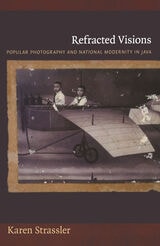
Refracted Visions
Popular Photography and National Modernity in JavaKaren Strassler
Duke University Press, 2010
Oriented to projects of selfhood, memory, and social affiliation, popular photographs recast national iconographies in an intimate register. They convey the longings of Indonesian national modernity: nostalgia for rural idylls and “tradition,” desires for the trappings of modernity and affluence, dreams of historical agency, and hopes for political authenticity. Yet photography also brings people into contact with ideas and images that transcend and at times undermine a strictly national frame. Photography’s primary practitioners in the postcolonial era have been Chinese Indonesians. Acting as cultural brokers who translate global and colonial imageries into national idioms, these members of a transnational minority have helped shape the visual contours of Indonesian belonging even as their own place within the nation remains tenuous. Refracted Visions illuminates the ways that everyday photographic practices generate visual habits that in turn give rise to political subjects and communities.
Reframing the Ethnographic Museum
Histories, Politics and FuturesEdited by Michael Rowlands, Nick Stanley, and Graeme Were
University College London, 2025
Ethnographic museums are at a crossroads; caught between colonial legacies, and the difficulties of captivating new audiences in a digital world. Reframing the Ethnographic Museum brings together leading scholars and curators to study the shifting role of these institutions in a rapidly changing cultural and political landscape. From Asia to Africa, the book explores how different museum strategies have grappled with decolonization and digital transformation, engaging in critical analysis and including case studies of innovative curatorial practices.
As museums confront calls for accountability and reconsider their collections, this volume provides a relevant exploration of the dilemmas and possibilities facing ethnographic display today. Reframing the Ethnographic Museum urges us to rethink how we engage with the past, and how museums can become spaces of dialogue and reflection.
Reframing the Northern Rio Grande Pueblo Economy
Edited by Scott G. Ortman
University of Arizona Press, 2019
Economists recognize scale, agglomeration, the division of labor, international trade, and control over violence as important determinants of socioeconomic development in the modern world. But is a development framework appropriate for understanding Rio Grande archaeology? What do we learn about contemporary Pueblo culture and its resiliency when Pueblo history is viewed through this lens? What does the exercise teach us about the determinants of economic growth more generally?
The contributors in this volume argue that ideas from economics and complexity science, when suitably adapted, provide a compelling approach to the archaeological record. Contributors consider what we can learn about socioeconomic development through archaeology and explore how Pueblo culture and institutions supported improvements in the material conditions of life over time. They examine demographic patterns; the production and exchange of food, cotton textiles, pottery, and stone tools; and institutional structures reflected in village plans, rock art, and ritual artifacts that promoted peaceful exchange. They also document change through time in various economic measures and consider their implications for theories of socioeconomic development.
The archaeological record of the Northern Rio Grande exhibits the hallmarks of economic development, but Pueblo economies were organized in radically different ways than modern industrialized and capitalist economies. This volume explores the patterns and determinants of economic development in pre-Hispanic Rio Grande Pueblo society, building a platform for more broadly informed research on this critical process.
Regarding Animals
Arnold Arluke, Clinton R. Sanders, and Leslie Irvine
Temple University Press, 2022
Winner of the Charles Horton Cooley Award, Society for the Study of Symbolic Interaction, 1997
The first edition of Regarding Animals provided insight into the history and practice of how human beings construct animals, and how we construct ourselves and others in relation to them. Considerable progress in how society regards animals has occurred since that time. However, shelters continue to euthanize companion animals, extinction rates climb, and wildlife “management” pits human interests against those of animals.
This revised and updated edition of Regarding Animals includes four new chapters, examining how relationships with pets help homeless people to construct positive personal identities; how adolescents who engage in or witness animal abuse understand their acts; how veterinary technicians experience both satisfaction and contamination in their jobs; and how animals are represented in mass media—both traditional editorial media and social media platforms.
The authors illustrate how modern society makes it possible for people to shower animals with affection and yet also to abuse or kill them. Although no culture or subculture provides solutions for resolving all moral contradictions, Regarding Animals illuminates how people find ways to live with inconsistent behavior.
Regenerating Japan
Organicism, Modernism and National Destiny in Oka Asajiro's Evolution and Human LifeGregory Sullivan
Central European University Press, 2018
As the first step toward a comprehensive reinterpretation of the role of evolutionary science and biomedicine in pre-1945 Japan, this book addresses the early writings of that era’s most influential exponent of shinkaron (evolutionism), the German-educated research zoologist and popularizer of biomedicine, Oka Asajirō (1868–1944). Concentrating on essays that Oka published in the years during and after the Russo-Japanese War (1904–5), the author describes the process by which Oka came to articulate a programmatic modernist vision of national regeneration that would prove integral to the ideological climate in Japan during the first half of the twentieth century. In contrast to other scholars who insist that Oka was merely a rationalist enlightener bent on undermining state Shinto orthodoxy, Gregory Sullivan maintains that Oka used notions from evolutionary biology of organic individuality—especially that of the nation as a super-organism—to underwrite the social and geopolitical aims of the Meiji state.
The author suggests that this generative scientism gained wide currency among early twentieth-century political and intellectual elites, including Emperor Hirohito himself, who had personal connections to Oka. The wartime ideology may represent an unfinished attempt to synthesize Shinto fundamentalism and the eugenically-oriented modernism that Oka was among the first to articulate.
Regulating Religious Coexistence
The Intricacies of Interfaith Cooperation in Coastal KenyaErik Meinema
Ohio University Press, 0
Regulating Religious Coexistence offers a compelling ethnographic analysis of how Muslims, Christians, and practitioners of indigenous African religions negotiate coexistence in Kenya’s coastal region. The book conceptualizes religious diversity as a dynamic field shaped by multiple partly intersecting and partly conflicting models of interaction. These include the political secularism promoted by the Kenyan state and civil society organizations focused on interfaith harmony, forms of competition between religious groups, and pluralistic practices in which individuals draw on multiple traditions to meet spiritual needs.
Through a close examination of civil society initiatives funded by Western donors to foster peacebuilding and to counter violent extremism, the book investigates how these models for coexistence are negotiated and contested and how they intersect with historical and contemporary patterns. It demonstrates that modes of religious coexistence in coastal Kenya have been shaped by colonial and postcolonial governance, transregional connections, and interactions between Christians, Muslims, and Traditionalists across time.
As one of the few monographs on political secularism in an African context, Regulating Religious Coexistence makes a significant contribution to scholarship on religious diversity and coexistence. It situates Christianity, Islam, and indigenous African traditions within a single conceptual framework, broadening earlier studies that mostly treated them in isolation. This book is essential reading for scholars of religion, anthropology, African studies, and political theory, offering fresh insights into the complex realities of religious diversity in Africa and beyond.
Reigning the River
Urban Ecologies and Political Transformation in KathmanduAnne M. Rademacher
Duke University Press, 2011
Rademacher conducted research during a volatile period in Nepal’s political history. As clashes between Maoist revolutionaries and the government intensified, the riverscape became a site of competing claims to a capital city that increasingly functioned as a last refuge from war-related violence. In this time of intense flux, efforts to ensure, create, or imagine ecological stability intersected with aspirations for political stability. Throughout her analysis, Rademacher emphasizes ecology as an important site of dislocation, entitlement, and cultural meaning.
Reimagining Livelihoods
Life beyond Economy, Society, and EnvironmentEthan Miller
University of Minnesota Press, 2019
A provocative reassessment of the concepts underlying the struggle for sustainable development
Much of the debate over sustainable development revolves around how to balance the competing demands of economic development, social well-being, and environmental protection. “Jobs vs. environment” is only one of the many forms that such struggles take. But what if the very terms of this debate are part of the problem? Reimagining Livelihoods argues that the “hegemonic trio” of economy, society, and environment not only fails to describe the actual world around us but poses a tremendous obstacle to enacting a truly sustainable future.
In a rich blend of ethnography and theory, Reimagining Livelihoods engages with questions of development in the state of Maine to trace the dangerous effects of contemporary stories that simplify and domesticate conflict. As in so many other places around the world, the trio of economy, society, and environment in Maine produces a particular space of “common sense” within which struggles over life and livelihood unfold. Yet the terms of engagement embodied by this trio are neither innocent nor inevitable. It is a contingent, historically produced configuration, born from the throes of capitalist industrialism and colonialism. Drawing in part on his own participation in the struggle over the Plum Creek Corporation’s “concept plan” for a major resort development on the shores of Moosehead Lake in northern Maine, Ethan Miller articulates a rich framework for engaging with the ethical and political challenges of building ecological livelihoods among diverse human and nonhuman communities.
In seeking a pathway for transformative thought that is both critical and affirmative, Reimagining Livelihoods provides new frames of reference for living together on an increasingly volatile Earth.
Reimagining National Belonging
Post-Civil War El Salvador in a Global ContextRobin Maria DeLugan
University of Arizona Press, 2012
Examining events that unfolded between 1992 and 2011, DeLugan both illustrates the idiosyncrasies of state and society in El Salvador and opens a larger portal into conditions of constructing a state in the present day around the globe—particularly the process of democratization in an age of neoliberalism. She demonstrates how academics, culture experts, popular media, and the United Nations and other international agencies have all helped shape ideas about national belonging in El Salvador. She also reveals the efforts that have been made to include populations that might have been overlooked, including indigenous people and faraway citizens not living inside the country’s borders. And she describes how history and memory projects have begun to recall the nation’s violent past with the goal of creating a more just and equitable nation.
This illuminating case study fills a gap in the scholarship about culture and society in contemporary El Salvador, while offering an “ethnography of the state” that situates El Salvador in a global context.
Reimagining Political Ecology
Aletta Biersack and James B. Greenberg, eds.
Duke University Press, 2006
Aletta Biersack’s introduction takes stock of where political ecology has been, assesses the field’s strengths, and sets forth a bold research agenda for the future. Two essays offer wide-ranging critiques of modernist ecology, with its artificial dichotomy between nature and culture, faith in the scientific management of nature, and related tendency to dismiss local knowledge. The remaining eight essays are case studies of particular constructions and appropriations of nature and the complex politics that come into play regionally, nationally, and internationally when nature is brought within the human sphere. Written by some of the leading thinkers in environmental anthropology, these rich ethnographies are based in locales around the world: in Belize, Papua New Guinea, the Gulf of California, Iceland, Finland, the Peruvian Amazon, Malaysia, and Indonesia. Collectively, they demonstrate that political ecology speaks to concerns shared by geographers, sociologists, political scientists, historians, and anthropologists alike. And they model the kind of work that this volume identifies as the future of political ecology: place-based “ethnographies of nature” keenly attuned to the conjunctural effects of globalization.
Contributors. Eeva Berglund, Aletta Biersack, J. Peter Brosius, Michael R. Dove, James B. Greenberg, Søren Hvalkof, J. Stephen Lansing, Gísli Pálsson, Joel Robbins, Vernon L. Scarborough, John W. Schoenfelder, Richard Wilk
Reinventing Chinese Tradition
The Cultural Politics of Late SocialismKa-ming Wu
University of Illinois Press, 2015
Ka-ming Wu's ethnographic account of contemporary Yan'an documents how people have reworked the revival of three rural practices--paper-cutting, folk storytelling, and spirit cults--within (and beyond) the socialist legacy. Moving beyond dominant views of Yan'an folk culture as a tool of revolution or object of market reform, Wu reveals how cultural traditions become battlegrounds where conflicts among the state, market forces, and intellectuals in search of an authentic China play out. At the same time, she shows these emerging new dynamics in the light of the ways rural residents make sense of rapid social change.
Alive with details, Reinventing Chinese Tradition is an in-depth, eye-opening study of an evolving culture and society within contemporary China.
Reinventing Practice in a Disenchanted World
Bourdieu and Urban Poverty in Oaxaca, MexicoBy Cheleen Ann-Catherine Mahar
University of Texas Press, 2010
Colonia Hermosa, now considered a suburb of Oaxaca, began as a squatter settlement in the 1950s. The original residents came in search of transformation from migrants to urban citizens, struggling from rural poverty for the chance to be part of the global economy in Oaxaca.
Cheleen Ann-Catherine Mahar charts the lives of a group of residents in Colonia Hermosa over a period of thirty years, as Mexico became more closely tied into the structures of global capital, and the residents of Colonia Hermosa struggled to survive. Residents shape their discussions within a larger narrative, and their talk is the language of the heroic individual, so necessary to the ideology and the functioning of capital. However, this logic only tenuously connects to the actual material circumstances of their lives.
Mahar applies the theories of French sociologist Pierre Bourdieu to her data from Mexico in order to examine the class trajectories of migrant families over more than three decades. Through this investigation, Mahar adds an important intergenerational study to the existing body of literature on Oaxaca, particularly concerning the factors that have reshaped the lives of urban working poor families and have created a working-class fraction of globalized citizenship.
Reinventing the Good Life
An Empirical Contribution to the Philosophy of CareJeannette Pols
University College London, 2023
Ever since Adam Smith’s musings on “the invisible hand” became more famous than his work on moral sentiments, social theorists started to pay less attention to everyday ethics and aesthetics. Smith’s metaphor of the invisible hand posits that social outcomes emerge by dint of the behaviors of individuals rather than their intentions or virtues.
Modernist and scientific approaches to determining the common good or good forms of governance have increasingly relied on techniques of generalization, rationalization, and universalization. Everyday ethics and aesthetics—and recently also matters of truth—came to be regarded as individual matters of taste. This shift, however, has meant that we no longer comprehend why and how people display a deep concern with everyday life values in their social practices. People continue to enact these values and live by them while academics lack the vocabulary and methods to grasp them.
By reconstructing the history of ideas about everyday-life values, and by analyzing the role of such values in contemporary care practices for patients with chronic disease in the Netherlands, Reinventing the Good Life seeks to explore new ways to study the values of everyday life, particularly in situations where the achievement of a clear-cut or uniform good is unlikely. The book presents a practice-based epistemology and methodology for studying everyday care practices and supporting their goodness. This analytical approach ultimately aims to generate ideas that will allow us to relate in more imaginative ways to the many pressing concerns that we are forced to live with today.
Reinvention and History Making in Huarochirí
A Local Narrative of Colonialism in the Peruvian AndesCarla Hernández Garavito
University of Arizona Press, 2026
Using archaeological and historical datasets and spatial modeling, this book centers on local memory and experience throughout colonized landscapes as the thread that connects the long history of Indigenous engagement with expanding colonial empires and the emergent Peruvian nation. The author builds on Andean epistemological frameworks to argue that in the face of drastic sociopolitical changes, the people of Huarochirí turned to their own history. They created analogies and shared spaces between local and Inka landscapes and materiality and incorporated written representations and ideas of settled lives to validate their claims.
This exciting new work moves the field of Andean archaeology into conversations with decolonial and decolonizing methodologies and shows how Indigenous communities captured and made sense of their long history, reframing colonialism as a local experience.
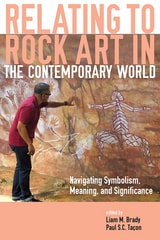
Relating to Rock Art in the Contemporary World
Navigating Symbolism, Meaning, and SignificanceLiam M. Brady
University Press of Colorado, 2016
One of the most visually striking forms of material culture embedded in landscapes, rock art is ascribed different meanings by diverse groups of people including indigenous peoples, governments, tourism offices, and the general public, all of whom relate to images and sites in unique ways. In this volume, leading scholars from around the globe shift the discourse from a primarily archaeological basis to one that examines the myriad ways that symbolism, meaning, and significance in rock art are being renegotiated in various geographical and cultural settings, from Australia to the British Isles. They also consider how people manage the complex meanings, emotions, and cultural and political practices tied to rock art sites and how these factors impact processes relating to identity construction and reaffirmation today.
Richly illustrated and geographically diverse, Relating to Rock Art in the Contemporary World connects archaeology, anthropology, and heritage studies. The book will appeal to students and scholars of archaeology, anthropology, heritage, heritage management, identity studies, art history, indigenous studies, and visual theory, as well as professionals and amateurs who have vested or avocational interests in rock art.
Contributors: Agustín Acevedo, Manuel Bea, Jutinach Bowonsachoti, Gemma Boyle, John J. Bradley, Noelene Cole, Inés Domingo, Kurt E. Dongoske, Davida Eisenberg-Degen, Dánae Fiore, Ursula K. Frederick, Kelley Hays-Gilpin, Catherine Namono, George H. Nash, John Norder, Marianna Ocampo, Joshua Schmidt, Duangpond Singhaseni, Benjamin W. Smith, Atthasit Sukkham, Noel Hidalgo Tan, Watinee Tanompolkrang, Luke Taylor, Dagmara Zawadzka
Relations
An Anthropological AccountMarilyn Strathern
Duke University Press, 2020
Relative Values
Reconfiguring Kinship StudiesSarah Franklin and Susan McKinnon, eds.
Duke University Press, 2001
Ideas about kinship are vital not only to understanding but also to forming many of the practices and innovations of contemporary society. How do the cultural logics of contemporary biopolitics, commodification, and globalization intersect with kinship practices and theories? In what ways do kinship analogies inform scientific and clinical practices; and what happens to kinship when it is created in such unfamiliar sites as biogenetic labs, new reproductive technology clinics, and the computers of artificial life scientists? How does kinship constitute—and get constituted by—the relations of power that draw lines of hierarchy and equality, exclusion and inclusion, ambivalence and violence? The contributors assess the implications for kinship of such phenomena as blood transfusions, adoption across national borders, genetic support groups, photography, and the new reproductive technologies while ranging from rural China to mid-century Africa to contemporary Norway and the United States. Addressing these and other timely issues, Relative Values injects new life into one of anthropology's most important disciplinary traditions.
Posing these and other timely questions, Relative Values injects an important interdisciplinary curiosity into one of anthropology’s most important disciplinary traditions.
Contributors. Mary Bouquet, Janet Carsten, Charis Thompson Cussins, Carol Delaney, Gillian Feeley-Harnik, Sarah Franklin, Deborah Heath, Stefan Helmreich, Signe Howell, Jonathan Marks, Susan McKinnon, Michael G. Peletz, Rayna Rapp, Martine Segalen, Pauline Turner Strong, Melbourne Tapper, Karen-Sue Taussig, Kath Weston, Yunxiang Yan
Religion and Adaptation
William Adams
CSLI, 2004
The volume uses a wide variety of ethnographic and historical sources to support its analysis, beginning with two detailed case studies of the religions practiced by Navajo Indians and Arab villagers. An intriguing comparison of these two systems of faith reveals the difficulty of finding one definition of religion. William Adams explores this problem of definition, suggesting that religion and science actually share the role of providing logical explanations in human society. In subsequent chapters, he considers the development of religious systems, the growth of religious consciousness in the individual, and the dynamics of religious change. The book ultimately aims to be a purely empirical study that probes the reasons for the existence of religion and its role as a moral and stabilizing force in human societies.
Religion and the Politics of Time
Noah Shusterman
Catholic University of America Press, 2010
Religion in Ancient Etruria
Jean-René Jannot, Translated by Jane K. Whitehead
University of Wisconsin Press, 2005
Provocative insights and thoughtful discussions contribute to an understanding of the prophetic nature of Etruscan culture. Jannot investigates the elaborate systems of defining space and time that so distinctly characterize this ancient society. Religion in Ancient Etruria offers a unique perspective that illuminates the origins of some of our own "modern" religious beliefs.
This updated edition includes more than 100 illustrations that demonstrate early temples, statues, mirrors, tablets, and sculptures.
1998 French edition, Picard
Religion on the Rocks
Hohokam Rock Art, Ritual Practice, and Social TransformationAaron M. Wright
University of Utah Press, 2014
We are nearly all intrigued by the petroglyphs and pictographs of the American Southwest, and we commonly ask what they “mean”. Religion on the Rocks redirects our attention to the equally important matter of what compelled ancient peoples to craft rock art in the first place. To examine this question, Aaron Wright presents a case study from Arizona's South Mountains, an area once flanked by several densely populated Hohokam villages. Synthesizing results from recent archaeological surveys, he explores how the mountains' petroglyphs were woven into the broader cultural landscape and argues that the petroglyphs are relics of a bygone ritual system in which people vied for prestige and power by controlling religious knowledge. The features and strategic placement of the rock art suggest this dimension of Hohokam ritual was participatory and prominent in village life. Around AD 1100, however, petroglyph creation and other ritual practices began to wane, denoting a broad transformation of the Hohokam social world. Wright’s examination of the South Mountains petroglyphs offers a novel narrative of how Hohokam villagers negotiated a concentration of politico-religious authority around platform mounds. Readers will come away with a better understanding of the Hohokam legacy and a greater appreciation for rock art's value to anthropology.
Religion, Media, and Marginality in Modern Africa
Felicitas Becker
Ohio University Press, 2018
In recent years, anthropologists, historians, and others have been drawn to study the profuse and creative usages of digital media by religious movements. At the same time, scholars of Christian Africa have long been concerned with the history of textual culture, the politics of Bible translation, and the status of the vernacular in Christianity. Students of Islam in Africa have similarly examined politics of knowledge, the transmission of learning in written form, and the influence of new media. Until now, however, these arenas—Christianity and Islam, digital media and “old” media—have been studied separately.
Religion, Media, and Marginality in Modern Africa is one of the first volumes to put new media and old media into significant conversation with one another, and also offers a rare comparison between Christianity and Islam in Africa. The contributors find many previously unacknowledged correspondences among different media and between the two faiths. In the process they challenge the technological determinism—the notion that certain types of media generate particular forms of religious expression—that haunts many studies. In evaluating how media usage and religious commitment intersect in the social, cultural, and political landscapes of modern Africa, this collection will contribute to the development of new paradigms for media and religious studies.
Contributors: Heike Behrend, Andre Chappatte, Maria Frahm-Arp, David Gordon, Liz Gunner, Bruce S. Hall, Sean Hanretta, Jorg Haustein, Katrien Pype, and Asonzeh Ukah.
Religion, Media, and the Marketplace
Clark, Lynn Schofield
Rutgers University Press, 2007
Religion is infiltrating the arena of consumer culture in increasingly visible ways. We see it in a myriad of forms-in movies, such as Mel Gibson's The Passion of the Christ, on Internet shrines and kitschy Web "altars," and in the recent advertising campaign that attacked fuel-guzzling SUVs by posing the question: What would Jesus drive?
In Religion, Media, and the Marketplace, scholars in history, media studies, and sociology explore this intersection of the secular and the sacred. Topics include how religious leaders negotiate between the competing aims of the mainstream and the devout in the commercial marketplace, how politics and religious beliefs combine to shape public policy initiatives, how the religious "other" is represented in the media, and how consumer products help define the practice of different faiths.
At a time when religious fundamentalism in the United States and throughout the world is inseparable from political aims, this interdisciplinary look at the mutual influences between religion and the media is essential reading for scholars from a wide variety of disciplines.
Religious Affects
Animality, Evolution, and PowerDonovan O. Schaefer
Duke University Press, 2015
Religious Bodies Politic
Rituals of Sovereignty in Buryat BuddhismAnya Bernstein
University of Chicago Press, 2013
Reluctant Landscapes
Historical Anthropologies of Political Experience in Siin, SenegalFrancois G. Richard
University of Chicago Press, 2018
Reluctant Landscapes is an exploration of the making and remaking of political experience and physical landscapes among rural communities in the Siin province of Senegal between the late 1500s and the onset of World War II. By recovering the histories of farmers and commoners who made up African states’ demographic core in this period, Richard shows their crucial—but often overlooked—role in the making of Siin history. The book also delves into the fraught relation between the Seereer, a minority ethnic and religious group, and the Senegalese nation-state, with Siin’s perceived “primitive” conservatism standing at odds with the country’s Islamic modernity. Through a deep engagement with oral, documentary, archaeological, and ethnographic archives, Richard’s groundbreaking study revisits the four-hundred-year history of a rural community shunted to the margins of Senegal’s national imagination.
Remaining Chickasaw in Indian Territory, 1830s-1907
Wendy St. Jean
University of Alabama Press, 2011
In the early 1800s, the U.S. government attempted to rid the Southeast of Indians in order to make way for trading networks, American immigration, optimal land use, economic development opportunities, and, ultimately, territorial expansion westward to the Pacific. The difficult removal of the Chickasaw Nation to Indian Territory—later to become part of the state of Oklahoma— was exacerbated by the U.S. government’s unenlightened decision to place the Chickasaws on lands it had previously provided solely for the Choctaw Nation.
This volume deals with the challenges the Chickasaw people had from attacking Texans and Plains Indians, the tribe’s ex-slaves, the influence on the tribe of intermarried white men, and the presence of illegal aliens (U.S. citizens) in their territory. By focusing on the tribal and U.S. government policy conflicts, as well as longstanding attempts of the Chickasaw people to remain culturally unique, St. Jean reveals the successes and failures of the Chickasaw in attaining and maintaining sovereignty as a separate and distinct Chickasaw Nation.
Remains of Ritual
Northern Gods in a Southern LandSteven M. Friedson
University of Chicago Press, 2009
Remains of Ritual, Steven M. Friedson’s second book on musical experience in African ritual, focuses on the Brekete/Gorovodu religion of the Ewe people. Friedson presents a multifaceted understanding of religious practice through a historical and ethnographic study of one of the dominant ritual sites on the southern coast of Ghana: a medicine shrine whose origins lie in the northern region of the country. Each chapter of this fascinating book considers a different aspect of ritual life, demonstrating throughout that none of them can be conceived of separately from their musicality—in the Brekete world, music functions as ritual and ritual as music. Dance and possession, chanted calls to prayer, animal sacrifice, the sounds and movements of wake keeping, the play of the drums all come under Friedson’s careful scrutiny, as does his own position and experience within this ritual-dominated society.
Remains of the Soviet Past in Estonia
An Anthropology of Forgetting, Repair and Urban TracesFrancisco Martinez
University College London, 2018
Francisco Martinez brings together a number of sites of interest to explore the vanquishing of the Soviet legacy in Estonia: a street market in Tallinn where concepts such as "market" and "employment" take on distinctly different meanings from their Western use; Linnahall, a multi-purpose venue, whose Soviet heritage now poses difficult questions of how to present the building’s history; Tallinn’s cityscape, where the social, spatial, and temporal coevolution of the city can be viewed and debated; Narva, a city that marks the border between the Russian Federation, NATO, and the European Union and represents a place of continual negotiation; and the new Estonian National Museum in Raadi, an area on the outskirts of Tartu that has avoided promoting a single narrative of the past.
By exploring these places of cultural and historical significance, which all contribute to our understanding of how the new generation in Estonia is not following the expectations and values of its predecessor, the book also demonstrates how we can understand generational change in a material sense.
Remaking Muslim Lives
Everyday Islam in Postwar Bosnia and HerzegovinaDavid Henig
University of Illinois Press, 2020
Provocative and laden with eyewitness detail, Remaking Muslim Lives offers a rare sustained look at what it means to be Muslim and live a Muslim life in contemporary Bosnia and Herzegovina.
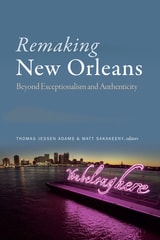
Remaking New Orleans
Beyond Exceptionalism and AuthenticityThomas J. Adams and Matt Sakakeeny, editors
Duke University Press, 2019
Contributors. Thomas Jessen Adams, Vincanne Adams, Vern Baxter, Maria Celeste Casati Allegretti, Shannon Lee Dawdy, Rien Fertel, Megan French-Marcelin, Cedric G. Johnson, Alecia P. Long, Vicki Mayer, Toby Miller, Sue Mobley, Marguerite Nguyen, Aaron Nyerges, Adolph Reed Jr., Helen A. Regis, Matt Sakakeeny, Heidi Schmalbach, Felipe Smith, Bryan Wagner
Remapping Sound Studies
Gavin Steingo and Jim Sykes, editors
Duke University Press, 2019
Contributors
Tripta Chandola, Michele Friedner, Louise Meintjes, Jairo Moreno, Ana María Ochoa Gautier, Michael Birenbaum Quintero, Jeff Roy, Jessica Schwartz, Shayna Silverstein, Gavin Steingo, Jim Sykes, Benjamin Tausig, Hervé Tchumkam
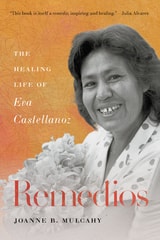
Remedios
The Healing Life of Eva Castellanoz, Updated EditionJoanne B. Mulcahy
Oregon State University Press, 2010
The result of a twenty-year friendship between Joanne Mulcahy and Eva Castellanoz, Remedios traces the transformation of an indigenous Mexican migrant worker to a curandera (healer), community activist, and winner of a National Heritage Fellowship from the National Endowment for the Arts. Blending creative nonfiction and ethnographic research, Mulcahy shares Eva’s stories, from her early years in Mexico and the Rio Grande Valley to her adult years as a wife, mother, and grandmother in Nyssa, Oregon. Her testimonios capture the hardships and resilience of her life and the lives of others in her community. As a healer, Eva combines rituals, metaphors, and herbs to attend to those who seek her help. The floral crowns she fashions for young women’s quinceañeras and other arts preserve traditions while offering life lessons. Remedios gives us an intimate glimpse into Eva’s family life, her passionate activism, and her complex identity as an indigenous, Catholic curandera.
This updated edition includes revisions throughout the text and a new afterword by the author underscoring the changes in Eva’s life and in the larger world since Remedios’s original publication. For her important work, Eva has been recognized by several organizations and programs including the Oregon Arts Commission, Arts Build Communities, and the Portland Opera. The Crown Maker, a youth opera by the Portland Opera To Go program, celebrates Eva Castellanoz’s legacy and displays how even in a time of fear and divisiveness, hope endures through people who advocate for others and inspire social change.
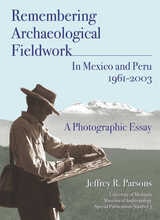
Remembering Archaeological Fieldwork in Mexico and Peru, 1961-2003
A Photographic EssayJeffrey R. Parsons
University of Michigan Press, 2019
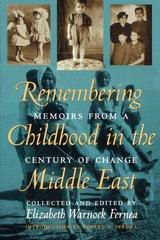
Remembering Childhood in the Middle East
Memoirs from a Century of ChangeCollected and edited by Elizabeth Warnock Fernea
University of Texas Press, 2002
Growing up is a universal experience, but the particularities of homeland, culture, ethnicity, religion, family, and so on make every childhood unique. To give Western readers insight into what growing up in the Middle East was like in the twentieth century, this book gathers thirty-six original memoirs written by Middle Eastern men and women about their own childhoods.
Elizabeth Warnock Fernea, a well-known writer of books and documentary films about women and the family in the Middle East, has collected stories of childhoods spent in Egypt, Iran, Iraq, Israel, Jordan, Kuwait, Lebanon, Morocco, Palestine, Saudi Arabia, Sudan, Syria, Tunisia, and Turkey. The accounts span the entire twentieth century, a full range of ethnicities and religions, and the social spectrum from aristocracy to peasantry. They are grouped by eras, for which Fernea provides a concise historical sketch, and include a brief biography of each contributor. The introduction by anthropologist Robert A. Fernea sets the memoirs in the larger context of Middle Eastern life and culture.
As a collection, the memoirs offer an unprecedented opportunity to look at the same period in history in the same region of the world from a variety of very different remembered experiences. At times dramatic, humorous, or tragic, and always deeply felt, the memoirs document the diversity and richness of people's lives in the modern Middle East.