Results by title
1882 books match the query 'Criticism and interpretation' and 105 start with r
Religious Experience in the Work of Richard Wagner
Marcel Hebert
Catholic University of America Press, 2015
Rembrandt's Enterprise
The Studio and the MarketSvetlana Alpers
University of Chicago Press, 1990
"With the publication [of Rembrandt's Enterprise], Svetlana Alpers has firmly established herself in the front ranks of art historians at work today. . . . The book is not a long one. Yet, there is more perceptive scholarship packed into its four chapters than is typically found in a whole shelf of the more common outpourings of academic writers. Rembrandt's Enterprise is less a book of archival discoveries than of fresh interpretation of the revered artist and his milieu. . . . Alpers makes us see how Rembrandt's complex and enormously popular art has embedded itself in our ways of thinking about who we are and how we live, even in the late 20th century."—Christopher Knight, Los Angeles Herald Examiner
Remixing Wong Kar-wai
Music, Bricolage, and the Aesthetics of OblivionGiorgio Biancorosso
Duke University Press, 2025
Renaissance Drama 38
William N. West
Northwestern University Press, 2010
Renaissance Drama, an annual interdisciplinary publication, is devoted to drama and performance as a central feature of Renaissance culture. The essays in each volume explore the traditional canon of drama, the significance of performance, broadly construed, to early modern culture, and the impact of new forms of interpretation on the study of Renaissance plays, theater, and performance.
Volume 38 includes essays that explore topics in early modern drama ranging from Shakespeare’s Jewish questions in The Merchant of Venice and the gender of rhetoric in Shakespeare’s sonnets and Jonson’s plays to improvisation in the commedia dell’arte and the rebirth of tragedy in 1940 Germany.
Renaissance Invention
Stradanus's Nova RepertaEdited by Lia Markey
Northwestern University Press, 2020
Renaissance Invention: Stradanus’s “Nova Reperta” seeks to understand why certain inventions or novelties were represented in the series and how that presentation reflected and fostered their adoption in the sixteenth century. What can Stradanus’s prints tell us about invention and cross-cultural encounter in the Renaissance? What was considered “new” in the era? Who created change and technological innovation?
Through images of group activities and interactions in workshops, Stradanus’s prints emphasize the importance of collaboration in the creation of new things, dispelling traditional notions of individual genius. The series also dismisses the assumption that the revival of the wonders of the ancient world in Italy was the catalyst for transformation. In fact, the Latin captions on the prints explain how contemporary inventions surpass those of the ancients. Together, word and image foreground the global nature of invention and change in the early modern period even as they promote specifically Florentine interests and activities.
Reparative Craft
Eve Kosofsky Sedgwick as a Textile ArtistJason Edwards
Duke University Press, 2026
Repeat Performances
Ovidian Repetition and the <i>Metamorphoses<i/>Edited by Laurel Fulkerson and Tim Stover
University of Wisconsin Press, 2016
A shared vision of the possibilities of Latin epic poetry unites the essays, as does a series of attempts to realize those opportunities. Some of the pieces represent a traditional vein of allusion and intertextuality; others are more innovative in their approaches. Each, in a sense, stands as a placeholder for a methodology of theorizing the repetitive practices of poetry, of epic, and of Ovid in particular.
Contributors: Antony Augoustakis, Neil W. Bernstein, Barbara Weiden Boyd, Andrew Feldherr, Peter Heslin, Stephen Hinds, Sharon L. James, Alison Keith, Peter E. Knox, Darcy Krasne
Repeating Žižek
Agon Hamza, ed.
Duke University Press, 2015
Contributors. Henrik Jøker Bjerre, Bruno Bosteels, Agon Hamza, Brian Benjamin Hansen, Adrian Johnston, Katja Kolšek, Adam Kotsko, Catherine Malabou, Benjamin Noys, Geoff Pfeifer, Frank Ruda, Oxana Timofeeva, Samo Tomšic, Gabriel Tupinambá, Fabio Vighi, Gavin Walker, Sead Zimeri, Slavoj Žižek
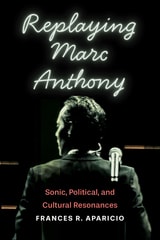
Replaying Marc Anthony
Sonic, Political, and Cultural ResonancesFrances R. Aparicio
The Ohio State University Press, 2025
Rereading Conrad
Daniel R.Schwarz
University of Missouri Press, 2001
Leading Conradian scholar Daniel R. Schwarz assembles his work from over the past two decades into one crucial volume, providing a significant reexamination of a seminal figure who continues to be a major focus in the twenty-first century. Schwarz touches on virtually all of Joseph Conrad's work including his masterworks and the later, relatively neglected fiction.
In his introduction and in the persuasive and insightful essays that follow, Schwarz explores how the study of Conrad has changed and why Conrad is such a focus of interest in terms of gender, postcolonial, and cultural studies. He also demonstrates how Conrad helps define the modernist cultural tradition.
Exploring such essential works as Heart of Darkness, Lord Jim, Nostromo, and "The Secret Sharer," Schwarz addresses issues raised by recent theory, discussing the ways in which contemporary readers, including, of course, himself, have come to read Conrad differently. He does so without abandoning crucial Conradian themes such as the disjunction between interior and articulated motives and the discrepancies between dimly acknowledged needs, obsessions, and compulsions and actual behavior.
Schwarz also touches on the extent to which Conrad's conservative desires for a few simple moral and political ideas were often at odds with his profound skepticism. A powerful close reader of Conrad's complex texts, Schwarz stresses how from their opening paragraphs Conrad's works establish a grammar of psychological, political, and moral cause and effect.
Rereading Conrad sheds new light on an author who has spoken to readers for over a century. Schwarz's essays take account of recent developments in theory and cultural studies, including postcolonial, feminist, gay, and ecological perspectives, and show how reading Conrad has changed in the face of the theoretical explosion that has occurred over the past two decades. Because for over three decades Schwarz has been an important figure in defining how we read Conrad and in studying modernism, including how we respond to the relationship between modern literature and modern art, scholars, teachers, and students will take great pleasure in this new collection of his work.
Rereading the Renaissance
Petrarch, Augustine, and the Language of HumanismCarol Everhart Quillen
University of Michigan Press, 1998
Carol Quillen argues that the essential role of Augustine's words and authority in the expression of Petrarch's humanism is best grasped through a study of the complex textual practices exemplified in the writings of both men. Petrarch's reliance on Augustine is most evident in his ways of reading and in his strategies of argument. Secondly, she maintains that Petrarch's appropriation of Augustine's words is only intelligible in light of his struggle to legitimate his cultural ideals in the face of compelling opposition. Finally, Quillen shows how Petrarch's uses of Augustine can simultaneously uphold his humanist ideals and challenge the legitimacy of the assumptions on which those ideals were founded.
Interdisciplinary in scope and method, this volume speaks to important debates that span the humanities. Scholars of literary and historical studies, as well as those in the fields of classical studies, patristics, and comparative literature, will find in Rereading the Renaissance a solid contribution to their interests.
Carol Everhart Quillen is Associate Professor of History, Rice University.
Responses to Oliver Stone’s Alexander
Film, History, and Cultural StudiesEdited by Paul Cartledge and Fiona Rose Greenland; Afterword by Oliver Stone
University of Wisconsin Press, 2009
This volume brings together an intriguing mix of leading scholars in Macedonian and Greek history, Persian culture, film studies, classical literature, and archaeology—including some who were advisors for the film—and includes an afterword by Oliver Stone discussing the challenges he faced in putting Alexander’s life on the big screen. The contributors scrutinize Stone’s project from its inception and design to its production and reception, considering such questions as: Can a film about Alexander (and similar figures from history) be both entertaining and historically sound? How do the goals of screenwriters and directors differ from those of historians? How do Alexander’s personal relationships—with his mother Olympias, his wife Roxane, his lover Hephaistion, and others—affect modern perceptions of Alexander? Several of the contributors also explore reasons behind the film’s tepid response at the box office and subsequent controversies.
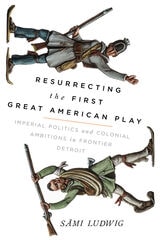
Resurrecting the First Great American Play
Imperial Politics and Colonial Ambitions in Frontier DetroitSämi Ludwig
University of Wisconsin Press, 2020
Sämi Ludwig contends that Ponteach's literary and artistic merits are worthy of further exploration. He investigates questions of authorship and analyzes the play's content, embracing its many contradictions as enriching windows into the era. In this way, he suggests using Ponteach as a tool to better understand British imperialism in North America and the emerging theatrical forms of the Young Republic.
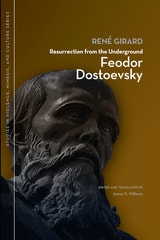
Resurrection from the Underground
Feodor DostoevskyRené Girard
Michigan State University Press, 2012
In a fascinating analysis of critical themes in Feodor Dostoevsky’s work, René Girard explores the implications of the Russian author’s “underground,” a site of isolation, alienation, and resentment. Brilliantly translated, this book is a testament to Girard’s remarkable engagement with Dostoevsky’s work, through which he discusses numerous aspects of the human condition, including desire, which Girard argues is “triangular” or “mimetic”—copied from models or mediators whose objects of desire become our own. Girard’s interdisciplinary approach allows him to shed new light on religion, spirituality, and redemption in Dostoevsky’s writing, culminating in a revelatory discussion of the author’s spiritual understanding and personal integration. Resurrection is an essential and thought-provoking companion to Dostoevsky’s Notes from the Underground.
Return to the Kingdom of Childhood
Re-envisioning the Legacy and Philosophical Relevance of NegritudeCheikh Thiam
The Ohio State University Press, 2014
Thiam contends that Senghor’s conception of race entails an innovative Afri-centered epistemology and ontology. For Senghor, races are the effects of particular groups’ relations to the world. The so-called “Negroes,” for example, are determined by their epistemology based on their fluid understanding of the ontological manifestations of being. The examination of this ontology and its ensuing epistemology, which is constitutive of the foundation of Senghor’s entire oeuvre, indicates that Negritude is a postcolonial philosophy that stands on its own.
The hermeneutics of Senghor’s race theory show that the Senegalese thinker’s pioneering postcolonial philosophy remains relevant in the postcolonial era. In fact, it questions and expands the works of major contemporary African-descended scholars such as Paul Gilroy, Edouard Glissant, and Molefi Asante. Thiam’s approach is thoroughly interdisciplinary, combining perspectives from philosophy, literary analysis, anthropology, and postcolonial, African, and cultural studies.
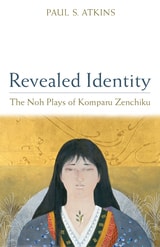
Revealed Identity
The Noh Plays of Komparu ZenchikuPaul S. Atkins
University of Michigan Press, 2006
Revelation and Convergence
Mark Bosco
Catholic University of America Press, 2017
Reveries of Community
French Epic in the Age of Henri IV, 1572–1616Katherine S. Maynard
Northwestern University Press, 2018
Traditionally united by une foi, une loi, un roi (one faith, one law, one king), France under Henri IV was cleaved into warring factions of Catholics and Huguenots. The country suffered episodes of bloodshed such as the St. Bartholomew’s Day Massacre, even as attempts were made to attenuate the violence through frequent edicts, including those of St. Germain (1570) and Nantes (1598). Maynard examines the rich and often dismissed body work written during these bloody decades: Pierre de Ronsard’s Franciade, Guillaume Salluste Du Bartas’s La Judit and La Sepmaine, Sébastian Garnier’s La Henriade, Agrippa d’Aubigné’s Les Tragiques, and others. She traces how French poets, taking classics such as Virgil’s Aeneid and Homer’s Iliad as their models, reimagined possibilities for French reconciliation and unity.
Revisiting Richardson
Rebecca Anne Barr
Bucknell University Press, 2025
Published by Bucknell University Press. Distributed by Rutgers University Press.
Richard Ford and the Ends of Realism
Ian McGuire
University of Iowa Press, 2015
McGuire also uses this idea of pragmatic realism to mount a larger defense of contemporary realist writing and uses Ford’s example to argue that realism itself remains a useful and necessary critical category. Contemporary realism, rather than being merely conventional or reactionary, as some of its critics have called it, can offer its proponents an aesthetically and philosophically sophisticated way of engaging with and contesting the particularities of contemporary, even postmodern, experience.
In offering this new reading of Richard Ford’s fiction, as well as a fresh understanding of the realist impulse in contemporary American fiction, both become richer, more resonant, and more immediate—reaching both backward into the past and forward to involve themselves in important contemporary debates about history, postmodernity, and moral relativism.
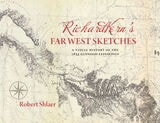
Richard Kern's Far West Sketches
A Visual History of the 1853 Gunnison ExpeditionRobert Shlaer
University of Utah Press, 2020
Robert Shlaer came across them many years later at the Newberry Library in Chicago and was inspired to locate the views depicted in the drawings and to photograph them, as nearly as was possible, from the same spot where Kern stood when he sketched them.
Richard Kern’s Far West Sketches juxtaposes Kern’s drawings with Shlaer's photographs, presenting 389 illustrations in geographic sequence from east to west, as well as a detailed narrative of the expedition. An associated website will include maps, drawings, and photographs so that they can be enlarged, compared, and studied in detail, providing an immersive experience of this important and ill-fated expedition.
Richard Linklater
David T. Johnson
University of Illinois Press, 2012
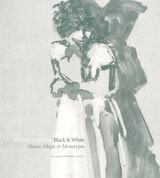
Richard Segalman Black & White
Muses, Magic & MonotypesRichard Segalman
The Artist Book Foundation, 2015
For many, the name Richard Segalman conjures up a vision of light-infused paintings of women gathered on a beach, gazing out the window of a New York City brownstone, or dressed in vcostumes from another era. But just as Edgar Degas, approaching his 60th year, surprised gallery goers with an exhibition not of ballerinas or race horses, but of highly atmospheric monotype landscapes, so too does Segalman surprise us with this exceptional collection of monotypes he began to produce in 1993, at nearly 60. "I reached a sort of plateau and needed a new direction," says the artist. "I came across a monotype... took a course... made one and I was hooked."
The significance of Segalman's shift into this medium is most powerfully conveyed through his arresting black-and-white prints that range from anonymous crowds on Coney Island beaches or New York City streets to a solitary figure in private contemplation. This monochromatic focus makes perfect sense: Segalman's first gallery appearance in New York—a sold-out show that gave him the courage to embrace the life of an artist—consisted entirely of black-and-white charcoal drawings, several stunning examples of which open this book.
Author Susan F. Castle's essay about the artist and his muses—the people, places, and things for which Richard Segalman has an abiding love—illuminates the exceptional work collected for this monograph. She combines excerpts from interviews with the artist and the three master printmakers with whom he has worked in Woodstock and Brooklyn, New York, and in Santa Fe, New Mexico. In addition, Anthony Kirk's insightful introudction provides an essential historical perspective on the artist and his printmaking process.

Richard Selzer and the Rhetoric of Surgery
Charles M. Anderson
Southern Illinois University Press, 1989
Anderson provides the context from which Selzer’s writing grows and a concept of language adequate to his purposes and accomplishments. He takes a careful look at Selzer’s writing to demonstrate that these abstract considerations do tell us why a surgeon would write. The works Anderson examines are "Jonah and the Whale" (an important early short story) and the first three essays in Mortal Lessons. These examples show the reader exactly how the symbols of literature interact directly with the world and the everyday communications of both writer and reader. According to Anderson, Mortal Lessons is also Selzer’s most artistic statement of his own sense of why and how he became a writer.
Selzer’s books include Rituals of Surgery, Mortal Lessons, Confessions of a Knife, Letters to a Young Doctor, and Taking the World in for Repairs.
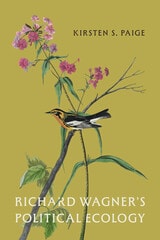
Richard Wagner's Political Ecology
Kirsten S. Paige
University of Chicago Press, 2026
A study of the deep history of the Wagnerian environmental imagination.
Richard Wagner’s operas are bursting with environmental imagery, from tittering birds to flowing rivers to towering trees. In Richard Wagner’s Political Ecology, Kirsten S. Paige asks where Wagner’s environmental imagination came from, how it was received by audience members and reconceived by stage directors, and how it refracts his politics. By tracing the ecological dimensions of the composer’s essays and dramas, Paige reveals how Wagner’s environmental imagination was inextricable from broader political concerns of his time.
The book begins by examining the way Wagner’s political ecology shape-shifted across its rhetorical, musical, scenographic, and technological permutations. Although Wagner’s essays and dramas invite a range of interpretations, for Paige, they point to an all-encompassing image of opera-as-climate. The book then turns to the ways Wagnerian drama—and opera more generally—at once participates in the industrial-technological lineage of climate change and helps spectators grapple with the challenges of living in a warming world. In providing the first close examination of Wagner’s artistic thought, practice, and reception in relation to nineteenth-century climate theory and the early history of environmentalism, Richard Wagner’s Political Ecology considers what it might mean to reimagine opera around ethical mandates of sustainability.
Rimbaud
The Cost of GeniusNeal Oxenhandler
The Ohio State University Press, 2009

Rimsky-Korsakov's Harmonic Theory
Practical Manual of Harmony, Its Sources, History, and TraditionsLarisa P. Jackson
University of North Texas Press, 2022
Rita Dove's Cosmopolitanism
POEMSMalin Pereira
University of Illinois Press, 2003
Ritual, Myth, and Mysticism in the Work of Mary Butts
Between Feminism and ModernismFOY ROSLYN
University of Arkansas Press, 2000
Rival Praises
Ovid and the Metamorphosis of the Hymnic TraditionCelia M. Campbell
University of Wisconsin Press, 2024
Roadrunner
A Song by Jonathan Richman and the Modern LoversJoshua Clover
Duke University Press, 2021
Roads Not Taken
Rereading Robert FrostEdited & Intro by Earl J. Wilcox & Jonathan N. Barron
University of Missouri Press, 2000
In Roads Not Taken, Earl J. Wilcox and Jonathan N. Barron bring a new freshness and depth to the study of one of America's greatest poets. While some critics discounted Frost as a poet without technical skill, rhetorical complexity, or intellectual depth, over the past decade scholars have begun to view Robert Frost's work from many new perspectives. Critical hermeneutics, culture studies, feminism, postmodernism, and textual editing all have had their impact on readings of the poet's life and work. This collection of essays is the first to account for the variety of these new perceptions.
Appealing to a wide literary community, and in keeping with Frost's own poetic goals, these twelve essays fall into four distinct categories: gender, biography and cultural studies, the intertext, and poetics and theory.
All the contributors, many of whom have written books on Frost, are widely recognized scholars. Their diverse viewpoints and collective expertise make this volume of essays the most significant contribution to Frost criticism to be published in over twenty years.
Robert Altman's Nashville
An Archival ExplorationJustin Wyatt
University of Michigan Press, 2026
This book explores Robert Altman’s classic film from a variety of critical perspectives inspired by the archival materials from the Altman archive in the Screen Arts Mavericks and Makers collection at the University of Michigan Special Collections Research Center. Each chapter is centered around materials on Nashville from the Altman archive: stills, contact sheets, advertising artwork (used and unused), Jean Pagliuso photo shoots, Joan Tewkesbury script drafts, contracts, reviews, internal accounting memos, and the Altman scrapbooks. (Each of his films has a scrapbook of reviews, interviews, and notes from fans.) Using these sources as a starting point, the book seeks to explain the relevance and importance of Nashville after more than half a century.
Robert Altman’s Subliminal Reality
Robert T. Self
University of Minnesota Press, 2002
The most complete and compelling analysis available of Altman’s films
With his complex and unconventional films, Robert Altman often draws an impassioned response from critics but bafflement and indifference from the general public. Some audiences have dismissed his movies as insignificant, unsatisfying, and unreadable. Ironically, Altman might agree: he makes films in order to challenge filmgoers’s expectations of straightforward narratives and easily understood endings.
In Robert Altman’s Subliminal Reality, Robert T. Self sheds light on Altman’s work and provides the most comprehensive analysis of his films to date. With close readings of classics like MASH, McCabe and Mrs. Miller, and Nashville, as well as more recent films like The Player, Short Cuts, and Cookie’s Fortune, Self asserts the value of Altman’s work not only to film theory and the entertainment industry but to American culture itself. In his analysis, Self identifies Altman’s films particularly as they address issues of form, identity, and industry. He explains how Altman critiques moviemaking forms by using an open, fragmented mode of storytelling and by turning conventional Hollywood genres inside out. He examines Altman’s characterization of social and individual identity as fragile and fragmentary and his depiction of antiheroic characters debilitated by their socially constructed gender roles. Finally, Self shows how Altman challenges the entertainment industry itself, questioning its methods and motives and critiquing its role in our cultural alienation. Self frames his study of Altman’s work with a discussion of the director’s efforts to create a "subliminal reality" in his narratives—to touch audiences on an unconscious level and to recognize the unspoken, and unspeakable, dimensions in human interactions. According to Self, this striving for "subliminal reality" makes Altman’s films not only exemplary of the potential of art cinema narration but instrumental in keeping such narrative alive.
Robert Ashley
Kyle Gann
University of Illinois Press, 2012
Robert Hayden in Verse
New Histories of African American Poetry and the Black Arts EraDerik Smith
University of Michigan Press, 2018
This book sheds new light on the work of Robert Hayden (1913–80) in response to changing literary scholarship. While Hayden’s poetry often reflected aspects of the African American experience, he resisted attempts to categorize his poetry in racial terms. This fresh appreciation of Hayden’s work recontextualizes his achievements against the backdrop of the Black Arts Movement and traces his influence on contemporary African American poets. Placing Hayden at the heart of a history of African American poetry and culture spanning the Harlem Renaissance to the Hip-Hop era, the book explains why Hayden is now a canonical figure in 20th-century American literature.
In deep readings that focus on Hayden’s religiousness, class consciousness, and historical vision, author Derik Smith inverts earlier scholarly accounts that figure Hayden as an outsider at odds with the militancy of the Black Arts movement. Robert Hayden in Verse offers detailed descriptions of the poet’s vigorous contributions to 1960s discourse about art, modernity, and blackness to show that the poet was, in fact, an earnest participant in Black Arts-era political and aesthetic debates.
Robert Hayden
Essays on the PoetryLaurence Goldstein and Robert Chrisman, Editors
University of Michigan Press, 2013
This collection of essays by leading critics and poets charts Robert Hayden’s growing reputation as a major writer of some of the twentieth century’s most important poems on African-American themes, including the famed “Middle Passage” and “Frederick Douglass.” The essays illuminate the themes and techniques that established Hayden as a modernist writer with affinities to T. S. Eliot, Federico Garcia Lorca, and W. B. Yeats, as well as to traditions of African-American writings that include such figures as Countee Cullen and Langston Hughes.
Robert Hayden: Essays on the Poetryis the first and only book to collect significant essays on this distinguished poet. Covering sixty years of commentary, book reviews, essays, and Hayden’s own published materials, this volume is an invaluable contribution to our understanding of the poet’s vision of experience, artistry, and influence. The book includes forty different works that examine the life and poetry of Hayden, the first African-American to serve as Consultant in Poetry to the Library of Congress (the post now called Poet Laureate) and to receive the Grand Prix de la Poesie at the First World Festival of Negro Arts, Dakar, Senegal, in 1966.
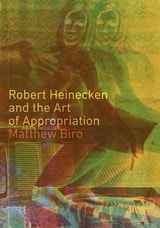
Robert Heinecken and the Art of Appropriation
Matthew Biro
University of Minnesota Press, 2022
The first comprehensive study of the artist Robert Heinecken and his critical views on the culture of mass media
This is the first book-length study dedicated to the artist Robert Heinecken, whose innovative photographic practices sought to interrogate how mass media imagery facilitated the construction of individual and collective identities. Appropriating, rephotographing, and layering pictures culled from newspapers, advertisements, pornography, and television, Heinecken recombined and transformed the ubiquitous images of mass culture to encourage viewers to critically reflect on their sense of self.
From the 1960s through the late 1990s, Heinecken’s controversial art continually challenged inherited ideas around consumerism, the facticity of reportage, and visual culture’s relationship to gender and identity politics. Embodying the evolution of contemporary art toward increasingly hybrid and conceptual approaches, his oeuvre includes examples of painting, sculpture, photomontage, performance, installation, time-based media, and artist’s books, all of which collectively exploit photography’s reproducibility to subvert society’s dominant ideologies and stereotypical modes of representation.
Author Matthew Biro presents an exhaustive look at Heinecken’s life and art, locating him within a lineage that encompasses the activities of the early twentieth-century avant-gardes and the postmodern strategies of the Pictures Generation artists. Assessing his career within the specific political and historical contexts from which he gleaned his material, and illustrated throughout with vibrant full-color reproductions of his art, this in-depth examination demonstrates Robert Heinecken’s significance as a key figure of twentieth-century art and an incisive commentator on modern life in America.
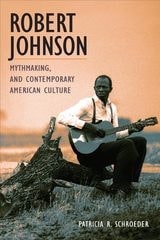
Robert Johnson, Mythmaking, and Contemporary American Culture
Patricia R. Schroeder
University of Illinois Press, 2004
Merging literary analysis with cultural criticism and biographical study, Patricia R. Schroeder explores Johnson's ongoing role as a cultural icon. Schroeder's detailed analysis engages key images and myths about the blues musician (such as the Faustian crossroads exchange of his soul for guitar virtuosity). Navigating the many competing interpretations that swirl around him, Schroeder reveals the cultural purposes served by the stories and the storytellers. The result is a fascinating examination of the relationships among Johnson's life, its subsequent portrayals, and the forces that drove the representations.
Offering penetrating insights into both Johnson and the society that perpetuates him, Robert Johnson, Mythmaking, and Contemporary American Culture is essential reading for blues fans and cultural critics interested in a foundational musical figure.
Robert Louis Stevenson
Writer of BoundariesEdited by Richard Ambrosini and Richard Dury
University of Wisconsin Press, 2006
Robert Louis Stevenson: Writer of Boundaries reinstates Stevenson at the center of critical debate and demonstrates the sophistication of his writings and the present relevance of his kaleidoscopic achievements. While most young readers know Robert Louis Stevenson (1850–1894) as the author of Treasure Island, few people outside of academia are aware of the breadth of his literary output. The contributors to Robert Louis Stevenson: Writer of Boundaries look, with varied critical approaches, at the whole range of his literary production and unite to confer scholarly legitimacy on this enormously influential writer who has been neglected by critics.
As the editors point out in their Introduction, Stevenson reinvented the “personal essay” and the “walking tour essay,” in texts of ironic stylistic brilliance that broke completely with Victorian moralism. His first full-length work of fiction, Treasure Island, provocatively combined a popular genre (subverting its imperialist ideology) with a self-conscious literary approach.
Stevenson, one of Scotland’s most prolific writers, was very effectively excluded from the canon by his twentieth-century successors and rejected by Anglo-American Modernist writers and critics for his play with popular genres and for his non-serious metaliterary brilliance. While Stevenson’s critical recognition has been slowly increasing, there have been far fewer published single-volume studies of his works than those of his contemporaries, Henry James and Joseph Conrad.
Robert Schumann's Advice to Young Musicians
Revisited by Steven IsserlisRobert Schumann
University of Chicago Press, 2017
There is no end to learning.
Originally published in1850, Advice to Young Musicians: Musical Rules for Home and in Life offered composer Robert Schumann’s (1810–56) combination of practical advice and poetic words of wisdom for young people beginning their musical education. Presented in aphorisms and short paragraphs, the book’s insights remain as valuable today as when it was written. Recognizing the continued resonance of Schumann’s words, world-renowned cellist Steven Isserlis, himself a writer of children’s books and many articles for young musicians, set out to rescue the work from history. Here, in this beautiful gift edition, he revisits Schumann’s work and contributes his own contemporary counsel for musicians and music lovers.
For this edition, Isserlis retranslated Schumann’s text and arranged it into four thematic sections: “On being a musician,” “Playing,” “Practicing,” and “Composing.” Each page is decoratively designed, and accompanying Schumann’s original quotation are Isserlis’s thoughtful and often humorous glosses. The book concludes with Isserlis’s own reflections on his life as a musician and performer: “My Own Bits of Advice (For What They’re Worth).” The result is a unique and thought-provoking book that will be treasured by aspiring musicians of any age.
Robert Walser
A CompanionEdited by Samuel Frederick and Valerie Heffernan
Northwestern University Press, 2018
The Swiss writer Robert Walser (1878-1956) is now recognized as one of the most important European authors of the modernist period, having garnered high praise from such prominent voices as Susan Sontag, W. G. Sebald, and J. M. Coetzee. Robert Walser: A Companion is the first comprehensive guide to Walser’s work in English. The twelve essays in this collection examine Walser’s literary output, historical milieu, and idiosyncratic writing process, addressing aspects of his biography; discussing the various genres in which he wrote (the novel, short prose, drama, lyric poetry, and letters); and analyzing his best-known novels and short stories alongside lesser-known but no less fascinating poems, plays, and prose pieces.
An essential addition to the scholarship about this eccentric, prolific, and influential writer’s work, Robert Walser: A Companion will be of interest both to established scholars and to those coming to Walser for the first time.

Robert de Cotte and the Perfection of Architecture in Eighteenth-Century France
Robert Neuman
University of Chicago Press, 1994
After describing de Cotte's training and the professional context in which he worked, Neuman offers a thorough survey of de Cotte's output. For each commission, he recreates the actual design process, showing how de Cotte manipulated an accepted vocabulary of architectural forms to meet the patron's specific requirements. De Cotte's own drawings, many reproduced here for the first time, and quotations from a wide variety of contemporary writings vividly supplement the case histories. Beautifully illustrated, Neuman's much-needed book reveals de Cotte as an innovative and strikingly modern architect.
Roger Zelazny
F. Brett Cox
University of Illinois Press, 2021
Roger Zelazny combined poetic prose with fearless literary ambition to become one of the most influential science fiction writers of the 1960s. Yet many critics found his later novels underachieving and his turn to fantasy a disappointment. F. Brett Cox surveys the landscape of Zelazny's creative life and contradictions. Launched by the classic 1963 short story "A Rose for Ecclesiastes," Zelazny soon won the Hugo Award for Best Novel with …And Call Me Conrad and two years later won again for Lord of Light. Cox looks at the author's overnight success and follows Zelazny into a period of continued formal experimentation, the commercial triumph of the Amber sword and sorcery novels, and renewed acclaim for Hugo-winning novellas such as "Home Is the Hangman" and "24 Views of Mt. Fuji, by Hokusai." Throughout, Cox analyzes aspects of Zelazny's art, from his preference for poetically alienated protagonists to the ways his plots reflected his determined individualism.
Clear-eyed and detailed, Roger Zelazny provides an up-to-date reconsideration of an often-misunderstood SF maverick.
Roman Polanski
James Morrison
University of Illinois Press, 2006
James Morrison's critical study offers a comprehensive and critically engaged treatment on Roman Polanski's immense body of work. Tracing the filmmaker's remarkably diverse career from its beginnings to 2007, the book provides commentary on all of Polanski's major films in their historical, cultural, social, and artistic contexts. Morrison locates Polanski's work within the genres of comedy and melodrama, arguing that he is not merely obsessed with the theme of repression, but that his true interest is in the concrete—what is out in the open—and why we so rarely see it.
The range of Polanski's filmmaking challenges traditional divisions between high and low culture. For example, The Ninth Gate is a brash pastiche of the horror genre, while The Pianist is an Academy Award-winner about the Holocaust. Dubbing Polanski a relentless critic of modernity, Morrison concludes that his career is representative of the fissures, victories, and rehabilitations of the last fifty years of international cinema.
A volume in the series Contemporary Film Directors, edited by James Naremore
Romantic Complexity
Keats, Coleridge, and WordsworthJack Stillinger
University of Illinois Press, 2005
In Romantic Complexity, Jack Stillinger examines three of the most admired poets of English Romanticism--Keats, Coleridge, and Wordsworth--with a focus on the complexity that results from the multiple authorship, the multiple textual representation, and the multiple reading and interpretation of their best works.
Specific topics include the joint authorship of Wordsworth and Coleridge in the Lyrical Ballads, an experiment of 1798 that established the most essential characteristics of modern poetry; Coleridge's creation of eighteen or more different versions of The Ancient Mariner and how this textual multiplicity affects interpretation; the historical collaboration between Keats and his readers to produce fifty-nine separate but entirely legitimate readings of The Eve of St. Agnes; and a number of practical and theoretical matters bearing on the relationships among these writers and their influences on one another.
Stillinger shows his deep understanding of the poets' lives, works, and the history of their reception, in chapters rich with intriguing questions and answers sure to engage students and teachers of the world's greatest poetry.
Romantic Things
A Tree, a Rock, a CloudMary Jacobus
University of Chicago Press, 2012
Romantic Vision, Ethical Context
Novalis and Artistic AutonomyGeza Molnar
University of Minnesota Press, 1987
Exploring the full range of Novalis's (the pen name of the German poet and philosopher Friedrich von Hardenberg) work, von Molnar shows how he dealt, in theory and practice, with a central issue in Romanticism-the emerging concept of the autonomous self and its relation.
Romanticism and Anthony Trollope
A Study in the Continuities of Nineteenth-Century Literary ThoughtL. J. Swingle
University of Michigan Press, 1990
Ronald Harwood's Tragic Vision
A Critical Analysis of His Novels, Plays, and ScreenplaysAnn C. Hall
University of Iowa Press, 2024
Ronald Harwood’s Tragic Vision offers the first critical analysis of prolific and award-winning British author Ronald Harwood (1934–2020). Though he received an Oscar for The Pianist, a knighthood, and numerous other awards and nominations, Harwood worked as a ghostwriter, script doctor, and veritable unknown for many years. As he became successful, many critics still misread his works and positioned him as a less-fashionable counterpart to his lifelong friend Harold Pinter. This study proposes a conceptual framework to approach his, and others’, work based on the genre of tragedy, offering a greater appreciation for and understanding of the Harwood canon.