Results by title
1993 books match the query 'Latin America' and 96 start with r
Reshaping New Spain
Government and Private Interests in the Colonial Bureaucracy, 1535-1550Ethelia Ruiz Medrano
University Press of Colorado, 2006
Drawing on extensive archival research, Ruiz examines the developing colonial institutions in Mexico and how they changed indigenous land ownership and labor laws to favor the new bureaucrats. This portrait of the emerging government in New Spain fills a critical niche in Latin American studies.
Resisting Brazil's Military Regime
An Account of the Battles of Sobral PintoBy John W. F. Dulles
University of Texas Press, 2007
Praised by his many admirers as a "courageous and fearless" defender of human rights, Heráclito Fontoura Sobral Pinto (1893-1991) was the most consistently forceful opponent of the regime of Brazilian dictator Getúlio Vargas. John W. F. Dulles chronicled Sobral's battles with the Vargas government in Sobral Pinto, "The Conscience of Brazil": Leading the Attack against Vargas (1930-1945), which History: Reviews of New Books called "a must-read for anyone wanting to understand twentieth-century Brazil."
In this second and final volume of his biography of Sobral Pinto, Professor Dulles completes the story of the fiery crusader's fight for democracy, morality, and justice, particularly for the downtrodden. Drawing on Sobral's vast correspondence, Dulles offers an extensive account of Sobral's opposition to the military regime that ruled Brazil from 1964 to 1985. He describes how Sobral Pinto defended those who had been politically influential before April, 1964, as well as other victims of the regime, including Communists, once-powerful labor leaders, priests, militant journalists, and students. Because Sobral Pinto participated in so many of the struggles against the military regime, his experiences provide vivid new insights into this important period in recent Brazilian history. They also shed light on developments in the Catholic Church (Sobral, a devout Catholic, vigorously opposed liberation theology), as well as on Sobral's key role in preserving Brazil's commission for defending human rights.
Resource Radicals
From Petro-Nationalism to Post-Extractivism in EcuadorThea Riofrancos
Duke University Press, 2020
Resurgent Voices in Latin America
Indigenous Peoples, Political Mobilization, and Religious ChangeCleary, Edward L.
Rutgers University Press, 2004
After more than 500 years of marginalization, Latin America’s forty million Indians have recently made major strides in gaining political recognition and civil rights. In this book, social scientists explore the important role of religion in indigenous activism, showing the ways that religion has strengthened indigenous identity and contributed to the struggle for indigenous rights in the region.
Drawing on case studies from Bolivia, Peru, Guatemala, Ecuador, Paraguay, and Mexico, the contributors explore four key questions. How have traditional religions interacted with Christianity to produce new practices and beliefs? What resources, motivations, and ideological legitimacies do religious institutions provide for indigenous social movements? How effective are these movements in achieving their goals? Finally, as new religious groups continue to compete for adherents in the region, how will individuals’ religious choices affect political outcomes?
Resurgent Voices in Latin America offers new insight into the dynamics of indigenous social movements and into the complex and changing world of Latin American religions. The essays show that religious beliefs, practices, and institutions have both affected and been affected by political activism.
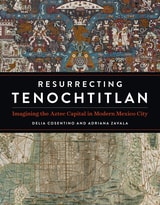
Resurrecting Tenochtitlan
Imagining the Aztec Capital in Modern Mexico CityDelia Cosentino and Adriana Zavala
University of Texas Press, 2023
Honorable Mention, ALAA-Arvey Foundation Book Award, Association of Latin American Art
Finalist, 2024 Charles Rufus Morey Book Award, College Art Association
How Mexican artists and intellectuals created a new identity for modern Mexico City through its ties to Aztec Tenochtitlan.
After archaeologists rediscovered a corner of the Templo Mayor in 1914, artists, intellectuals, and government officials attempted to revive Tenochtitlan as an instrument for reassessing Mexican national identity in the wake of the Revolution of 1910. What followed was a conceptual excavation of the original Mexica capital in relation to the transforming urban landscape of modern Mexico City.
Revolutionary-era scholars took a renewed interest in sixteenth century maps as they recognized an intersection between Tenochtitlan and the foundation of a Spanish colonial settlement directly over it. Meanwhile, Mexico City developed with modern roads and expanded civic areas as agents of nationalism promoted concepts like indigenismo, the embrace of Indigenous cultural expressions. The promotion of artworks and new architectural projects such as Diego Rivera’s Anahuacalli Museum helped to make real the notion of a modern Tenochtitlan. Employing archival materials, newspaper reports, and art criticism from 1914 to 1964, Resurrecting Tenochtitlan connects art history with urban studies to reveal the construction of a complex physical and cultural layout for Mexico’s modern capital.

Rethinking Past and Present in Cuba
essays in memory of Alistair HennessyEdited by Antoni Kapcia
University of London Press, 2018
Rethinking Protestantism in Latin America
David Stoll
Temple University Press, 1993
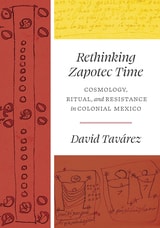
Rethinking Zapotec Time
Cosmology, Ritual, and Resistance in Colonial MexicoDavid Tavárez
University of Texas Press, 2022
2024 — Best Book in Colonial Latin American Studies — Colonial Section, Latin American Studies Association
2023 — Best Subsequent Book — Native American and Indigenous Studies Association
2023 — Honorable Mention, Best Book in the Social Sciences — Latin American Studies Association, Mexico Section
2022 — Marysa Navarro Best Book Prize — New England Council of Latin American Studies
As the first exhaustive translation and analysis of an extraordinary Zapotec calendar and ritual song corpus, seized in New Spain in 1704, this book expands our understanding of Mesoamerican history, cosmology, and culture.
In 1702, after the brutal suppression of a Zapotec revolt, the bishop of Oaxaca proclaimed an amnesty for idolatry in exchange for collective confessions. To evade conflict, Northern Zapotec communities denounced ritual specialists and surrendered sacred songs and 102 divinatory manuals, which preserve cosmological accounts, exchanges with divine beings, and protocols of pre-Columbian origin that strongly resemble sections of the Codex Borgia. These texts were sent to Spain as evidence of failed Dominican evangelization efforts, and there they remained, in oblivion, until the 1960s.
In this book, David Tavárez dives deep into this formidable archive of ritual and divinatory manuals, the largest calendar corpus in the colonial Americas, and emerges with a rich understanding of Indigenous social and cultural history, Mesoamerican theories of cosmos and time, and Zapotec ancestor worship. Drawing on his knowledge of Zapotec and Nahuatl, two decades of archival research, and a decade of fieldwork, Tavárez dissects Mesoamerican calendars as well as Native resistance and accommodation to the colonial conquest of time, while also addressing entangled transatlantic histories and shining new light on texts still connected to contemporary observances in Zapotec communities.
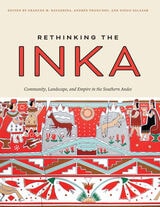
Rethinking the Inka
Community, Landscape, and Empire in the Southern AndesEdited by Frances M. Hayashida, Andrés Troncoso, and Diego Salazar
University of Texas Press, 2022
2023 Book Award, Society for American Archaeology
A dramatic reappraisal of the Inka Empire through the lens of Qullasuyu.
The Inka conquered an immense area extending across five modern nations, yet most English-language publications on the Inka focus on governance in the area of modern Peru. This volume expands the range of scholarship available in English by collecting new and notable research on Qullasuyu, the largest of the four quarters of the empire, which extended south from Cuzco into contemporary Bolivia, Argentina, and Chile.
From the study of Qullasuyu arise fresh theoretical perspectives that both complement and challenge what we think we know about the Inka. While existing scholarship emphasizes the political and economic rationales underlying state action, Rethinking the Inka turns to the conquered themselves and reassesses imperial motivations. The book’s chapters, incorporating more than two hundred photographs, explore relations between powerful local lords and their Inka rulers; the roles of nonhumans in the social and political life of the empire; local landscapes remade under Inka rule; and the appropriation and reinterpretation by locals of Inka objects, infrastructure, practices, and symbols. Written by some of South America’s leading archaeologists, Rethinking the Inka is poised to be a landmark book in the field.
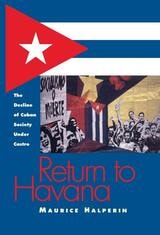
Return to Havana
The Decline of Cuban Society Under CastroMaurice Halperin
Vanderbilt University Press, 1994
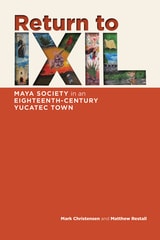
Return to Ixil
Maya Society in an Eighteenth-Century Yucatec TownMark Z. Christensen
University Press of Colorado, 2019
Supplemented with additional archival research, the wills provide new and detailed descriptions of various aspects of life in eighteenth-century Ixil. In each chapter, authors Mark Christensen and Matthew Restall examine a different dimension of Ixil’s colonial history, including the role of notaries, Maya participation in a coastal militia, economy and modes of production, religious life and records, and the structures and patterns of familial relationships. These details offer insight into the complex network of societies in colonial Yucatan, colonial Mesoamerica, and colonial Latin America.
Including an appendix presenting the original Maya texts as well as translations by Christensen and Restall, Return to Ixil not only analyzes the largest body of substantive wills in any Mayan language known today but also provides a rare closeup view of the inner workings of a colonial Maya town and the communal and familial affairs that made up a large part of the Maya colonial experience. It will be of great interest to Mayanists as well as to students and scholars of history, anthropology, ethnohistory, linguistics, and social history.
The publication of this book is supported in part byBrigham Young University and Penn State University.
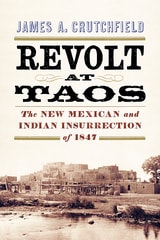
Revolt at Taos
The New Mexican and Indian Insurrection of 1847James A. Crutchfield
Westholme Publishing, 2025
On the morning of January 19, 1847, Charles Bent, the newly appointed governor of the American-claimed territory of New Mexico, was savagely killed at his home in Don Fernando de Taos, a small, remote town located north of Santa Fe. Those responsible for Bent’s murder were New Mexican settlers and Indians from nearby Taos Pueblo who refused to recognize the United States occupation. With emotions rubbed raw, the natives continued their bloodbath until five more leading citizens were massacred in Taos. During the ensuing months, American civilians and soldiers, along with scores of New Mexicans and Taos Indians, were killed and wounded throughout the region. Less than a month following Bent’s murder, in a two-day battle, volunteer and regular elements of an American army under the command of Colonel Sterling Price emerged victorious after bombarding the insurrectionists at their refuge in the church at Taos Pueblo. Surviving participants in the earlier Taos murders were arrested, tried in American-dominated courts, and, within weeks, hanged for their actions. The murder of Bent and the others at Taos and the subsequent trials and executions brought with them misunderstanding, controversy, mistrust, and recrimination on both sides of the issue. The events also subjected President James K. Polk’s administration to censure over what some critics believed was an overextension of presidential authority in claiming New Mexico as a territory.
In Revolt at Taos: The New Mexican and Indian Insurrection of 1847, writer and historian James A. Crutchfield explores the fast-moving events surrounding the bloody revolt which left native inhabitants of New Mexico wondering how their neighbors and kinsmen could be legally tried, found guilty, and executed for acts they considered to have been honorable ones committed in defense of their country. These concerns have never been adequately addressed and their struggle has been all but scrubbed from the history of American expansion.
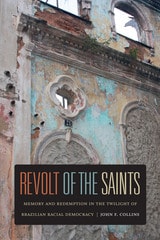
Revolt of the Saints
Memory and Redemption in the Twilight of Brazilian Racial DemocracyJohn F. Collins
Duke University Press, 2015
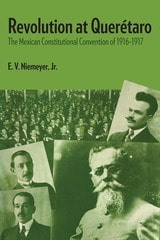
Revolution at Querétaro
The Mexican Constitutional Convention of 1916–1917By E. V. Niemeyer, Jr.
University of Texas Press, 1974
In two of the most fateful months of Mexican history, the delegates to the Constitutional Convention of 1916–1917 came to grips with the basic problem of twentieth-century Mexico. They hammered out pragmatic solutions to establish the legal foundations of the Mexican Revolution, the definitive break between the old Mexico and the new, the constitutional bases for the socioeconomic changes from 1917 onward. Honored and obeyed, dishonored and disobeyed, many times amended, the constitution they wrote still serves as the instrument for achieving the national purpose.
Revolution at Querétaro is the first book in English to study in depth the remarkable convention that produced the Constitution of 1917. It chronicles the unfolding of ideas expressed in the debates on the most significant articles of the constitution, those that have given it a revolutionary flavor and have served the groundwork for the emergence of Mexico as a modern nation. These articles concern the Catholic church and its role in the sphere of education (Article 3); the relationship of the church to the state (Articles 24 and 130); the attack on vested interest and the establishment of guidelines for agrarian reform (Article 27); the drafting of a detailed labor code (Article 123); and attempts to implement municipal reform (Article 114). Other debates described in the book concern unsuccessful attempts to institute prohibition, outlaw bullfights, abolish capital punishment, and grant suffrage to women.
This study also sheds light on the delegates themselves, who they were and where they came from, their idiosyncrasies and attitudes, and their individual contributions to the writing of the constitution. Much material is taken from unpublished albums in which the delegates recorded their sentiments during the convention.
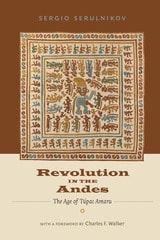
Revolution in the Andes
The Age of Túpac AmaruSergio Serulnikov
Duke University Press, 2013
Revolution on the Pampas
A Social History of Argentine Wheat, 1860–1910By James R. Scobie
University of Texas Press, 1964
On the Argentine pampas, between the years 1860 and 1910, a dramatic social and agricultural revolution took place. The haunts of wild cattle, native peoples, and gauchos were transformed into cultivated fields and rich pastures. A land that had produced only scrawny sheep and cattle became one of the world’s leading exporters of wheat, corn, beef, mutton, and wool. A country that had had only a sparse and scattered Spanish and mestizo population now boasted a metropolis of one and a half million, and a national population of eight million people, nearly a third of whom were born in Europe. These were significant changes, and wheat growing played a major role in all of them. This study traces the development of the Argentine wheat zone, focusing on the part wheat played in forming the Argentina of today.
James R. Scobie begins his account with the first settlers who colonized Santa Fe in the 1850s and shows how they and thousands of other European immigrants converted this vast grassland into a world breadbasket. He explains why these small farmer-owners soon gave way to tenant farmers, and how crop farming developed primarily as servant to the predominant sheep and cattle interests. He expands on several factors responsible for this evolvement: the elimination of indigenous threat, the coming of the railroad, the agricultural policy—or lack of policy—of the Argentine government, and the urban orientation of the Argentine people.
The railroads, by suppressing the building of other roads through the pampas, had the effect of isolating the wheatgrowers. By making the products of the pampas available to world markets, the railroads opened up new trade, which helped the growth of cities tremendously; but this very prosperity pushed the cost of land far beyond the wheatgrower’s ability to buy it. The result was a pampas without settlers, a frontier filled with migrant sharecroppers and tenant farmers, a land exploited but not possessed. Transiency as well as isolation became the common denominators of these families, who were forced to move every few years to make way for more valued tenants—sheep and cattle. They left behind them no schools, no churches, no roads, no villages. Immigrants came to labor but not to sink their roots in the pampas.
Without sentimentality but with understanding and compassion, Scobie explores every facet of the lives of these laborers who created Argentina’s agricultural greatness. His examination of Argentina’s broad policies toward land, immigration, and tariffs shows that the national government had little lasting or effective interest in the country’s agricultural development. In a social sense, the thousands of immigrants who toiled the pampas were looked upon as the wild cattle or fertile soil—blessings which neither needed nor warranted official attention. Scobie’s conclusion is that Argentina got better than it deserved.
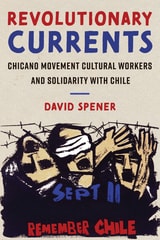
Revolutionary Currents
Chicano Movement Cultural Workers and Solidarity with ChileDavid Spener
University of Arizona Press, 2027
On September 11, 1973, General Augusto Pinochet led a bloody military coup in Chile that overthrew Salvador Allende’s democratically elected socialist government. The coup ushered in a cruelly repressive dictatorship that would govern the country for the next seventeen years, constituting a watershed moment in Cold War history.
This book recounts the untold story of how Chicano Movement poets, artists, musicians, and theater groups in the United States used their work to express solidarity with the international campaign to restore democracy in Chile. Such expressions of solidarity were especially prominent in the San Francisco Bay Area, where hundreds of Chilean exiles settled following the coup. Upon arrival, they joined a diverse Latinx population that was home to a Chicanx arts community whose members’ political orientations primed them to lend their talents to anti-imperialist causes. These Chicanxs were also drawn to the campaign against the dictatorship through friendship and acquaintance with members of the Chilean exile community.
David Spener shows how the Bay Area’s unique cosmopolitan social context offered Chicanxs and Chileans meaningful opportunities for dialogue and collaboration with each other as well as with Latinxs of other national origins. Chicanxs often adopted a pan-ethnic raza identity that they could share with Chilean, Nicaraguan, Puerto Rican, Salvadoran, and other Latinx activists. This did not mean, however, that they abandoned the political identities that they had gained from the Chicano Movement. Instead, many came to see themselves as uniting with other Latinxs, first Chileans and then Nicaraguans and Salvadorans, in a struggle against U.S. imperialism throughout the Americas.
Revolutionary Parks
Conservation, Social Justice, and Mexico’s National Parks, 1910–1940Emily Wakild
University of Arizona Press, 2011
Revolutionary Parks tells the surprising story of how forty national parks were created in Mexico during the latter stages of the first social revolution of the twentieth century. By 1940 Mexico had more national parks than any other country. Together they protected more than two million acres of land in fourteen states. Even more remarkable, Lázaro Cárdenas, president of Mexico in the 1930s, began to promote concepts akin to sustainable development and ecotourism.
Conventional wisdom indicates that tropical and post-colonial countries, especially in the early twentieth century, have seldom had the ability or the ambition to protect nature on a national scale. It is also unusual for any country to make conservation a political priority in the middle of major reforms after a revolution. What emerges in Emily Wakild’s deft inquiry is the story of a nature protection program that takes into account the history, society, and culture of the times. Wakild employs case studies of four parks to show how the revolutionary momentum coalesced to create early environmentalism in Mexico.
According to Wakild, Mexico’s national parks were the outgrowth of revolutionary affinities for both rational science and social justice. Yet, rather than reserves set aside solely for ecology or politics, rural people continued to inhabit these landscapes and use them for a range of activities, from growing crops to producing charcoal. Sympathy for rural people tempered the radicalism of scientific conservationists. This fine balance between recognizing the morally valuable, if not always economically profitable, work of rural people and designing a revolutionary state that respected ecological limits proved to be a radical episode of government foresight.
Revolutionary Women in Postrevolutionary Mexico
Jocelyn Olcott
Duke University Press, 2005
Olcott demonstrates an extraordinary grasp of the complexity of postrevolutionary Mexican politics, exploring the goals and outcomes of women’s organizing in Mexico City and the port city of Acapulco as well as in three rural locations: the southeastern state of Yucatán, the central state of Michoacán, and the northern region of the Comarca Lagunera. Combining the strengths of national and regional approaches, this comparative perspective sets in relief the specificities of citizenship as a lived experience.
Revolutionizing Repertoires
The Rise of Populist Mobilization in PeruRobert S. Jansen
University of Chicago Press, 2017
Drawing on pragmatist theories of social action, Revolutionizing Repertoires sets out to examine what happens when the repertoire of practices available to political actors is dramatically reconfigured. Taking as his case study the development of a distinctively Latin American style of populist mobilization, Robert S. Jansen analyzes the Peruvian presidential election of 1931. He finds that, ultimately, populist mobilization emerged in the country at this time because newly empowered outsiders recognized the limitations of routine political practice and understood how to modify, transpose, invent, and recombine practices in a whole new way. Suggesting striking parallels to the recent populist turn in global politics, Revolutionizing Repertoires offers new insights not only to historians of Peru but also to scholars of historical sociology and comparative politics, and to anyone interested in the social and political origins of populism.
Revolutions in Mexican Catholicism
Reform and Revelation in Oaxaca, 1887–1934Edward Wright-Rios
Duke University Press, 2009
Wright-Rios demonstrates that pastors, peasants, and laywomen sought to enliven and shape popular religion in Oaxaca. The clergy tried to adapt the Vatican’s blueprint for Catholic revival to Oaxaca through institutional reforms and attempts to alter the nature and feel of lay religious practice in what amounted to a religious modernization program. Yet some devout women had their own plans. They proclaimed their personal experiences of miraculous revelation, pressured priests to recognize those experiences, marshaled their supporters, and even created new local institutions to advance their causes and sustain the new practices they created. By describing female-led visionary movements and the ideas, traditions, and startling innovations that emerged from Oaxaca’s indigenous laity, Wright-Rios adds a rarely documented perspective to Mexican cultural history. He reveals a remarkable dynamic of interaction and negotiation in which priests and parishioners as well as prelates and local seers sometimes clashed and sometimes cooperated but remained engaged with one another in the process of making their faith meaningful in tumultuous times.
Rewriting Maya Religion
Domingo de Vico, K’iche’ Maya Intellectuals, and the Theologia IndorumGarry G. Sparks
University Press of Colorado, 2019
Centered on the specific work of Dominicans among the Highland Maya of Guatemala in the decades prior to the arrival of the Catholic Reformation in the late sixteenth century, the book focuses on the various understandings of religious analyses—Hispano-Catholic and Maya—and their strategic exchanges, reconfigurations, and resistance through competing efforts of religious translation. Sparks historically contextualizes Vico’s theological treatise within both the wider set of early literature in K’iche’an languages and the intellectual shifts between late medieval thought and early modernity, especially the competing theories of language, ethnography, and semiotics in the humanism of Spain and Mesoamerica at the time.
Thorough and original, Rewriting Maya Religion serves as an ethnohistorical frame for continued studies on Highland Maya religious symbols, discourse, practices, and logic dating back to the earliest documented evidence. It will be of great significance to scholars of religion, ethnohistory, linguistics, anthropology, and Latin American history.
Rhythms of the Pachakuti
Indigenous Uprising and State Power in BoliviaRaquel Gutiérrez Aguilar
Duke University Press, 2014
"In Rhythms of the Pachakuti we can sense the reverberations of an extraordinary historical process that took place in Bolivia at the start of the twenty-first century. The book is the product of Raquel Gutiérrez Aguilar's political engagement in that historical process. . . . Though of Mexican nationality, [she] was intimately involved in Bolivian politics for many years and acquired a quasi-legendary status there as an intense, brilliant activist and radical intellectual. . . . [Her account is] . . . itself a revolutionary document. . . . Rhythms of the Pachakuti deserves to stand as a key text in the international literature of radicalism and emancipatory politics in the new century."—Sinclair Thomson, from the foreword
Rigoberta Menchu Controversy
Arturo Arias
University of Minnesota Press, 2001
A balanced appraisal of the bitter debate surrounding the autobiography of Guatemala’s 1992 Nobel Peace Prize recipient.
Guatemalan indigenous rights activist Rigoberta Menchú first came to international prominence following the 1983 publication of her memoir, I, Rigoberta Menchú, which chronicled in compelling detail the violence and misery that she and her people suffered during her country’s brutal civil war. The book focused world attention on Guatemala and led to her being awarded the Nobel Peace Prize in 1992. In 1999, a book by David Stoll challenged the veracity of key details in Menchú’s account, generating a storm of controversy. Journalists and scholars squared off regarding whether Menchú had lied about her past and, if so, what that would mean about the larger truths revealed in her book.
In The Rigoberta Menchú Controversy, Arturo Arias has assembled a casebook that offers a balanced perspective. The first section of this volume collects the primary documents-newspaper articles, interviews, and official statements-in which the debate raged, many translated into English for the first time. In the second section, a distinguished group of international scholars assesses the political, historical, and cultural contexts of the debate and considers its implications for such issues as the “culture wars,” historical truth, and the politics of memory. Included is a new essay by David Stoll in which he responds to his critics.Contributors: Luis Aceituno; Juan Jesús Aznárez; John Beverley, U of Pittsburgh; Allen Carey-Webb, Western Michigan U; Margarita Carrera; Duncan Earle, U of Texas, El Paso; Carolina Escobar Sarti; Claudia Ferman, U of Richmond; Dina Fernández García; Eduardo Galeano; Dante Liano, U of Milan; W. George Lovell, Queen’s U, Canada; Christopher H. Lutz; Octavio Martí; Victor D. Montejo, UC Davis; Rosa Montero; Mario Roberto Morales, U of Northern Iowa; Jorge Palmieri; Daphne Patai, U of Massachusetts, Amherst; Mary Louise Pratt, Stanford U; Danilo Rodríguez; Ileana Rodríguez, Ohio State U; Larry Rohter; Jorge Skinner-Kleé; Elzbieta Sklodowska, Washington U; Carol A. Smith, UC Davis; Doris Sommer, Harvard U; David Stoll, Middlebury College; Manuel Vásquez Montalbán; and Kay B. Warren, Harvard U.
Rim of Christendom
A Biography of Eusebio Francisco Kino, Pacific Coast PioneerHerbert Eugene Bolton; Foreword by John L. Kessell
University of Arizona Press, 1984
"This is truly an epic work, an absolute standard for any Southwestern collection."—Book Talk
Select maps from the 1984 edition of Rim of Christendom are now available online through the UA Campus Repository.
Riot and Rebellion in Mexico
The Making of a Race War ParadigmAna Sabau
University of Texas Press, 2022
2023 Best Book in the Humanities, Latin American Studies Association Mexico Section
Challenging conventional narratives of Mexican history, this book establishes race-making as a central instrument for the repression of social upheaval in nineteenth-century Mexico rather than a relic of the colonial-era caste system.
Many scholars assert that Mexico’s complex racial hierarchy, inherited from Spanish colonialism, became obsolete by the turn of the nineteenth century as class-based distinctions became more prominent and a largely mestizo population emerged. But the residues of the colonial caste system did not simply dissolve after Mexico gained independence. Rather, Ana Sabau argues, ever-present fears of racial uprising among elites and authorities led to persistent governmental techniques and ideologies designed to separate and control people based on their perceived racial status, as well as to the implementation of projects for development in fringe areas of the country.
Riot and Rebellion in Mexico traces this race-based narrative through three historical flashpoints: the Bajío riots, the Haitian Revolution, and the Yucatán’s caste war. Sabau shows how rebellions were treated as racially motivated events rather than political acts and how the racialization of popular and indigenous sectors coincided with the construction of “whiteness” in Mexico. Drawing on diverse primary sources, Sabau demonstrates how the race war paradigm was mobilized in foreign and domestic affairs and reveals the foundations of a racial state and racially stratified society that persist today.
Rise and Fall of the Cosmic Race
The Cult of Mestizaje in Latin AmericaBy Marilyn Grace Miller
University of Texas Press, 2004
Latin America is characterized by a uniquely rich history of cultural and racial mixtures known collectively as mestizaje. These mixtures reflect the influences of indigenous peoples from Latin America, Europeans, and Africans, and spawn a fascinating and often volatile blend of cultural practices and products. Yet no scholarly study to date has provided an articulate context for fully appreciating and exploring the profound effects of distinct local invocations of syncretism and hybridity. Rise and Fall of the Cosmic Race fills this void by charting the history of Latin America's experience of mestizaje through the prisms of literature, the visual and performing arts, social commentary, and music.
In accessible, jargon-free prose, Marilyn Grace Miller brings to life the varied perspectives of a vast region in a tour that stretches from Mexico and the Caribbean to Brazil, Ecuador and Argentina. She explores the repercussions of mestizo identity in the United States and reveals the key moments in the story of Latin America's cult of synthesis. Rise and Fall of the Cosmic Race examines the inextricable links between aesthetics and politics, and unravels the threads of colonialism woven throughout national narratives in which mestizos serve as primary protagonists.
Illuminating the ways in which regional engagements with mestizaje represent contentious sites of nation building and racial politics, Miller uncovers a rich and multivalent self-portrait of Latin America's diverse populations.
Rising Up, Living On
Re-Existences, Sowings, and Decolonial CracksCatherine E. Walsh
Duke University Press, 2023
Ritual Encounters
Otavalan Modern and Mythic CommunityMichelle Wibbelsman
University of Illinois Press, 2008
This book examines ritual practices and public festivals in the Otavalo and Cotacachi areas of northern Andean Ecuador's Imbabura province. Otavaleños are a unique group in that they maintain their traditional identity but also cultivate a cosmopolitanism through frequent international travel. Ritual Encountersexplores the moral, mythic, and modern crossroads at which Otavaleños stand, and how, at this junction, they come to define themselves as millennial people.
Michelle Wibbelsman shows that Otavaleños are deeply engaged in transnational mobility and in the cultural transformations that have resulted from Otavalan participation in global markets, international consumer trends, and technological developments. Rituals have persisted among this ethnic community as important processes for symbolically capturing and critically assessing cultural changes in the face of modern influences. As religious expression, political commentary, transcendental communication, moral judgment, and transformative experience, Otavalan rituals constitute enduring practices that affirm ethnic identities, challenge dominant narratives, and take issue with power inequalities behind hegemony. Ritual Encounters thus offers an appreciation of the modern and mythic community as a single and emergent condition.
Ritual and Remembrance in the Ecuadorian Andes
Rachel Corr
University of Arizona Press, 2010
In this book Rachel Corr provides a knowledgeable account of the Salasacan religion and rituals and their respective histories. Based on eighteen years of fieldwork in Salasaca, as well as extensive research in Church archives—including never-before-published documents—Corr’s book illuminates how Salasacan culture adapted to Catholic traditions and recentered, reinterpreted, and even reshaped them to serve similarly motivated Salasacan practices, demonstrating the link between formal and folk Catholicism and pre-Columbian beliefs and practices. Corr also explores the intense connection between the local Salasacan rituals and the mountain landscapes around them, from peak to valley.
Ritual and Remembrance in the Ecuadorian Andes is, in its portrayal of Salasacan religious culture, both thorough and all-encompassing. Sections of the book cover everything from the performance of death rituals to stories about Amazonia as Salasacans interacted with outsiders—conquistadors and camera-toting tourists alike. Corr also investigates the role of shamanism in modern Salasacan culture, including shamanic powers and mountain spirits, and the use of reshaped, Andeanized Catholicism to sustain collective memory. Through its unique insider’s perspective of Salasacan spirituality, Ritual and Remembrance in the Ecuadorian Andes is a valuable anthropological work that honestly represents this people’s great ability to adapt.
Rituals and Sisterhoods
Single Women's Households in Mexico, 1560–1750Amos Megged
University Press of Colorado, 2019
Megged analyzes these women’s life stories recorded during the Spanish Inquisition, as well as wills and bequests, petitions, parish records, and private letters that describe—in their own words—how they exercised agency in male-dominated and religious spaces. Translations of select documents and accompanying analysis illustrate the conditions in which women dissolved their marriages, remained in long-lasting extramarital cohabitations, and formed female-led households and “sisterhoods” of their own. Megged provides evidence that single women in colonial Mexico played a far more active and central role in economic systems, social organizations, cults, and political activism than has been previously thought, creating spaces for themselves in which they could initiate and maintain autonomy and values distinct from those of elite society.
The institutionalization of female-headed households in mid-colonial Mexico had wide-ranging repercussions and effects on general societal values. Rituals and Sisterhoods details the particular relevance of these changes to the history of emotions, sexuality, gender concepts, perceptions of marriage, life choices, and views of honor and shame in colonial society. This book will be of significant interest to students and scholars of colonial Latin American history, the history of Early Modern Spain and Europe, and gender and women’s studies.
River of Hope
Forging Identity and Nation in the Rio Grande BorderlandsOmar S. Valerio-Jiménez
Duke University Press, 2012
Diverse influences transformed the borderlands as Spain, Mexico, and the United States competed for control of the region. Indian slaves joined Spanish society; Mexicans allied with Indians to defend river communities; Anglo Americans and Mexicans intermarried and collaborated; and women sued to confront spousal abuse and to secure divorces. Drawn into multiple conflicts along the border, Mexican nationals and Mexican Texans (tejanos) took advantage of their transnational social relations and ambiguous citizenship to escape criminal prosecution, secure political refuge, and obtain economic opportunities. To confront the racialization of their cultural practices and their increasing criminalization, tejanos claimed citizenship rights within the United States and, in the process, created a new identity.
Published in cooperation with the William P. Clements Center for Southwest Studies, Southern Methodist University.
Romans in a New World
Classical Models in Sixteenth-Century Spanish AmericaDavid A. Lupher
University of Michigan Press, 2006
In the course of this debate, many Spaniards were inspired to think more deeply on their own ethnic ancestry and identity, as Spanish treatment of the New World natives awakened the slumbering memory of Roman treatment of the Iberian tribes whom modern Spaniards were now embracing as their truest ancestors. At the same time, growing awareness of the cultural practices--especially the religious rituals--of the American natives framed a new perspective on both the pre-Christian ancestors of modern Europeans and even on the survival of "pagan" customs among modern Europeans themselves. In this incisive study, David A. Lupher addresses the increasingly debated question of the impact the discovery of the New World had upon Europeans' perceptions of their identity and place in history.
Romans in a New World holds much to interest both classicists and students of the history and culture of early modern Europe--especially, though not exclusively, historians of Spain. David A. Lupher's concern with the ideology of imperialism and colonization and with cross-cultural negotiations will be useful to students of cultural studies, as well.
David A. Lupher is Professor of Classics, University of Puget Sound.
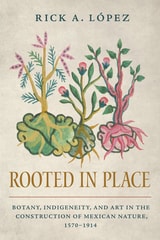
Rooted in Place
Botany, Indigeneity, and Art in the Construction of Mexican Nature, 1570–1914Rick A. López
University of Arizona Press, 2025
Prize for Best Book in Environmental Studies, Latin American Studies Association
Honorable mention for Best Book Prize in Visual Culture, Latin American Studies Association
Honorable mention for Best Book on Mexico, Latin American Studies Association
Since the first moment of conquest, colonizers and the colonized alike in Mexico confronted questions about what it meant to be from this place, what natural resources it offered, and who had the right to control those resources and on what basis.
Focusing on the ways people, environment, and policies have been affected by political boundaries, historian Rick A. López explores the historical connections between political identities and the natural world. López analyzes how scientific intellectuals laid claim to nature within Mexico, first on behalf of the Spanish Empire and then in the name of the republic, during three transformative moments: the Hernández expedition of the late sixteenth century; the Royal Botanical Expedition of the late eighteenth century; and the heyday of scientific societies such as the Sociedad Mexicana de Historia Natural of the late nineteenth century.
This work traces how scientific intellectuals studied and debated what it meant to know and claim the flora that sprang from Mexican soil—ranging from individual plants to forests and vegetated landscapes—and the importance they placed on indigeneity. It also points to the short- and long-term consequences of these efforts. López draws on archival and published sources produced from the sixteenth century through the start of the twentieth century and gives special attention to the use of visual images such as scientific illustrations and landscape art. López employs the term “visualization” in recognition of the degree to which officials, botanists, and draftsmen produced imagery and also how they and others viewed nature.
Rooted in Place reveals how scientific endeavors were not just about cataloging flora but were deeply intertwined with the construction of identity and the political landscape at three pivotal moments in Mexican history.
Roots of Resistance
A Story of Gender, Race, and Labor on the North Coast of HondurasSuyapa G. Portillo Villeda
University of Texas Press, 2021
Winner of the 2021 Sara A. Whaley Prize of the National Women’s Studies Association (NWSA)
A first-of-its-kind study of the working-class culture of resistance on the Honduran North Coast and the radical organizing that challenged US capital and foreign intervention at the onset of the Cold War, examining gender, race, and place.
On May 1, 1954, striking banana workers on the North Coast of Honduras brought the regional economy to a standstill, invigorating the Honduran labor movement and placing a series of demands on the US-controlled banana industry. Their actions ultimately galvanized a broader working-class struggle and reawakened long-suppressed leftist ideals. The first account of its kind in English, Roots of Resistance explores contemporary Honduran labor history through the story of the great banana strike of 1954 and centers the role of women in the narrative of the labor movement.
Drawing on extensive firsthand oral history and archival research, Suyapa G. Portillo Villeda examines the radical organizing that challenged US capital and foreign intervention in Honduras at the onset of the Cold War. She reveals the everyday acts of resistance that laid the groundwork for the 1954 strike and argues that these often-overlooked forms of resistance should inform analyses of present-day labor and community organizing. Roots of Resistance highlights the complexities of transnational company hierarchies, gender and race relations, and labor organizing that led to the banana workers' strike and how these dynamics continue to reverberate in Honduras today.
Routine Crisis
An Ethnography of DisillusionSarah Muir
University of Chicago Press, 2021
Anthropologist Sarah Muir offers a cogent meditation on the limits of critique at this historical moment, drawing on deep experience in Argentina but reflecting on a truly global condition. If we feel things are being upended in a manner that is ongoing, tumultuous, and harmful, what would we need to do—and what would we need to give up—to usher in a revitalized critique for today's world? Routine Crisis is an original provocation and a challenge to think beyond the limits of exhaustion and reimagine a form of criticism for the twenty-first century.
Royal Commentaries of the Incas and General History of Peru, Part One
By Garcilaso de la Vega; translated by Harold V. Livermore
University of Texas Press, 1966
Garcilaso de la Vega, the first native of the New World to attain importance as a writer in the Old, was born in Cuzco in 1539, the illegitimate son of a Spanish cavalier and an Inca princess. Although he was educated as a gentleman of Spain and won an important place in Spanish letters, Garcilaso was fiercely proud of his Indian ancestry and wrote under the name EI Inca.
Royal Commentaries of the Incas is the account of the origin, growth, and destruction of the Inca empire, from its legendary birth until the death in 1572 of its last independent ruler. For the material in Part One of Royal Commentaries—the history of the Inca civilization prior to the arrival of the Spaniards—Garcilaso drew upon "what I often heard as a child from the lips of my mother and her brothers and uncles and other elders . . . [of] the origin of the Inca kings, their greatness, the grandeur of their empire, their deeds and conquests, their government in peace and war, and the laws they ordained so greatly to the advantage of their vassals."
The conventionalized and formal history of an oral tradition, Royal Commentaries describes the gradual imposition of order and civilization upon a primitive and barbaric world. To this Garcilaso adds facts about the geography and the flora and fauna of the land; the folk practices, religion, and superstitions; the agricultural and the architectural and engineering achievements of the people; and a variety of other information drawn from his rich store of traditional knowledge, personal observation, or speculative philosophy.
Important though it is as history, Garcilaso's classic is much more: it is also a work of art. Its gracious and graceful style, skillfully translated by Harold V. Livermore, succeeds in bringing to life for the reader a genuine work of literature.
Part One covers the history of the Incas up to the arrival of the Spanish.
Royal Commentaries of the Incas and General History of Peru, Part Two
By Garcilaso de la Vega; translated by Harold V. Livermore
University of Texas Press, 1966
Garcilaso de la Vega, the first native of the New World to attain importance as a writer in the Old, was born in Cuzco in 1539, the illegitimate son of a Spanish cavalier and an Inca princess. Although he was educated as a gentleman of Spain and won an important place in Spanish letters, Garcilaso was fiercely proud of his Indian ancestry and wrote under the name El Inca.
Royal Commentaries of the Incas is the account of the origin, growth, and destruction of the Inca empire, from its legendary birth until the death in 1572 of its last independent ruler. For the material in Part One of Royal Commentaries—the history of the Inca civilization prior to the arrival of the Spaniards—Garcilaso drew upon "what I often heard as a child from the lips of my mother and her brothers and uncles and other elders . . . [of] the origin of the Inca kings, their greatness, the grandeur of their empire, their deeds and conquests, their government in peace and war, and the laws they ordained so greatly to the advantage of their vassals."
The conventionalized and formal history of an oral tradition, Royal Commentaries describes the gradual imposition of order and civilization upon a primitive and barbaric world. To this Garcilaso adds facts about the geography and the flora and fauna of the land; the folk practices, religion, and superstitions; the agricultural and the architectural and engineering achievements of the people; and a variety of other information drawn from his rich store of traditional knowledge, personal observation, or speculative philosophy.
Important though it is as history, Garcilaso's classic is much more: it is also a work of art. Its gracious and graceful style, skillfully translated by Harold V. Livermore, succeeds in bringing to life for the reader a genuine work of literature.
Part Two covers the Spanish conquest of the Incas.
Royal Commentaries of the Incas and General History of Peru, Parts One and Two
Harold V. Garcilaso de la Vega
University of Texas Press, 2014
Garcilaso de la Vega, the first native of the New World to attain importance as a writer in the Old, was born in Cuzco in 1539, the illegitimate son of a Spanish cavalier and an Inca princess. Although he was educated as a gentleman of Spain and won an important place in Spanish letters, Garcilaso was fiercely proud of his Indian ancestry and wrote under the name El Inca.
Royal Commentaries of the Incas is the account of the origin, growth, and destruction of the Inca empire, from its legendary birth until the death in 1572 of its last independent ruler. For the material in Part One of Royal Commentaries—the history of the Inca civilization prior to the arrival of the Spaniards—Garcilaso drew upon "what I often heard as a child from the lips of my mother and her brothers and uncles and other elders . . . [of] the origin of the Inca kings, their greatness, the grandeur of their empire, their deeds and conquests, their government in peace and war, and the laws they ordained so greatly to the advantage of their vassals."
The conventionalized and formal history of an oral tradition, Royal Commentaries describes the gradual imposition of order and civilization upon a primitive and barbaric world. To this Garcilaso adds facts about the geography and the flora and fauna of the land; the folk practices, religion, and superstitions; the agricultural and the architectural and engineering achievements of the people; and a variety of other information drawn from his rich store of traditional knowledge, personal observation, or speculative philosophy.
Important though it is as history, Garcilaso's classic is much more: it is also a work of art. Its gracious and graceful style, skillfully translated by Harold V. Livermore, succeeds in bringing to life for the reader a genuine work of literature.
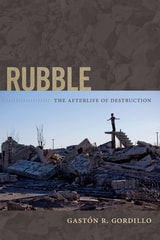
Rubble
The Afterlife of DestructionGastón R. Gordillo
Duke University Press, 2014
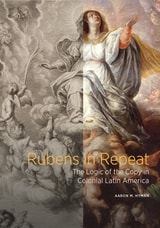
Rubens in Repeat
The Logic of the Copy in Colonial Latin AmericaAaron M. Hyman
J. Paul Getty Trust, The, 2021
Winner of the Latin American Studies Association's 2022 Best Book in Colonial Latin American Studies.
This book examines the reception in Latin America of prints designed by the Flemish artist Peter Paul Rubens, showing how colonial artists used such designs to create all manner of artworks and, in the process, forged new frameworks for artistic creativity.
Peter Paul Rubens (1577–1640) never crossed the Atlantic himself, but his impact in colonial Latin America was profound. Prints made after the Flemish artist’s designs were routinely sent from Europe to the Spanish Americas, where artists used them to make all manner of objects.
Rubens in Repeat is the first comprehensive study of this transatlantic phenomenon, despite broad recognition that it was one of the most important forces to shape the artistic landscapes of the region. Copying, particularly in colonial contexts, has traditionally held negative implications that have discouraged its serious exploration. Yet analyzing the interpretation of printed sources and recontextualizing the resulting works within period discourse and their original spaces of display allow a new critical reassessment of this broad category of art produced in colonial Latin America—art that has all too easily been dismissed as derivative and thus unworthy of sustained interest and investigation. This book takes a new approach to the paradigms of artistic authorship that emerged alongside these complex creative responses, focusing on the viceroyalties of New Spain and Peru in the seventeenth and eighteenth centuries. It argues that the use of European prints was an essential component of the very framework in which colonial artists forged ideas about what it meant to be a creator.
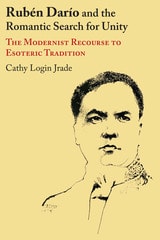
Rubén Darío and the Romantic Search for Unity
The Modernist Recourse to Esoteric TraditionBy Cathy Login Jrade
University of Texas Press, 1983
Modernism was the major Spanish American literary movement of the late nineteenth and early twentieth centuries. Leader of that influential movement was Rubén Darío, the Nicaraguan now recognized as one of the most important Hispanic poets of all time.
Like the Romantics in England and the Symbolists on the Continent, Darío and other Modernists were strongly influenced by occultist thought. But, as the poet Octavio Paz has written, "academic criticism has ... preferred to close its eyes to the stream of occultism that runs throughout Darío's work. This silence damages our comprehension of his poetry."
Cathy Login Jrade's groundbreaking study corrects this critical oversight. Her work clearly demonstrates that esoteric tradition is central to Modernism and that an understanding of this centrality clarifies both the nature of the movement and its relationship to earlier European literature.
After placing Modernism in a broad historical and literary perspective, Jrade examines the impact of esoteric beliefs upon Darío's view of the world and the role of poetry in it. Through detailed and insightful analyses of key poems, she explores the poet's quest for solutions to the nineteenth-century crisis of belief.
The movement that Ruben Darío headed brought Hispanic poetry into the mainstream of the "modern tradition," with its sense of fragmentation and alienation and its hope for integration and reconciliation with nature. Rubén Darío and the Romantic Search for Unity enriches our understanding of that movement and the work of its leading poet.
Rudo Ensayo
A Description of Sonora and Arizona in 1764Juan Nentvig; Translated, Clarified, and Annotated by Alberto Francisco Pradeau and Robert R. Rasmussen
University of Arizona Press, 1980
Rules and Precepts of the Jesuit Missions of Northwestern New Spain
Charles W. Polzer
University of Arizona Press, 1976
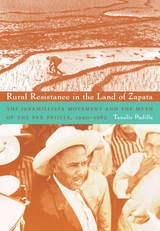
Rural Resistance in the Land of Zapata
The Jaramillista Movement and the Myth of the Pax-Priísta, 1940–1962Tanalís Padilla
Duke University Press, 2008
The peasants known in popular memory as Jaramillistas were led by Rubén Jaramillo (1900–1962). An agrarian leader from Morelos who participated in the Mexican Revolution and fought under Zapata, Jaramillo later became an outspoken defender of the rural poor. The Jaramillistas were inspired by the legacy of the Zapatistas, the peasant army that fought for land and community autonomy with particular tenacity during the Revolution. Padilla examines the way that the Jaramillistas used the legacy of Zapatismo but also transformed, expanded, and updated it in dialogue with other national and international political movements.
The Jaramillistas fought persistently through legal channels for access to land, the means to work it, and sustainable prices for their products, but the Mexican government increasingly closed its doors to rural reform. The government ultimately responded with repression, pushing the Jaramillistas into armed struggle, and transforming their calls for local reform into a broader critique of capitalism. With Rural Resistance in the Land of Zapata, Padilla sheds new light on the decision to initiate armed struggle, women’s challenges to patriarchal norms, and the ways that campesinos framed their demands in relation to national and international political developments.
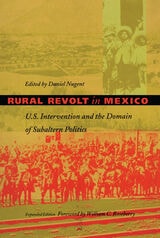
Rural Revolt in Mexico
U.S. Intervention and the Domain of Subaltern PoliticsDaniel Nugent, ed.
Duke University Press, 1998
Through their studies of social movements and popular mobilization in the Mexican countryside, the contributors argue for understanding rural revolts in terms of the specific historical contexts of particular regions and peoples, as well as the broader context of unequal cultural, political, and economic relations between Mexico and the United States. Exploring the connections between external and internal factors in social movements, these essays reveal the wide range of organized efforts through which peasants and Indians have struggled to shape their own destiny while confronted by the influence of U.S. capital and military might. Originally published as a limited edition in 1988 by the Center for U. S.–Mexican Studies, this volume presents a pioneering effort by Latin Americanist scholars to sympathetically embrace and enrich work begun in Subaltern Studies between 1982 and 1987 by projecting it onto a different region of historical experience. This revised and expanded edition includes a new introduction by Daniel Nugent and an extensive essay by Adolfo Gilly on the recent Chiapas uprising.