Results by title
4155 books match the query 'State & Local' and 144 start with r
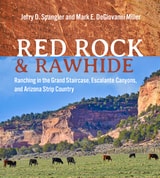
Red Rock and Rawhide
Ranching in the Grand Staircase, Escalante Canyons, and Arizona Strip CountryJerry D. Spangler and Mark E. DeGiovanni Miller
University of Utah Press, 2024
Today, the relatively few cattle ranchers who continue to operate in southern Utah are part of a complex political and social mix of peoples and interests, as Indigenous nations, environmentalists, politicians, and tourists all have differing positions on land use in the region. In Red Rock and Rawhide, Jerry D. Spangler and Mark E. DeGiovanni Miller provide the first comprehensive examination of the history of livestock grazing in the Grand Staircase-Escalante National Monument and surrounding areas, drawing on years of research to show how the culture and industry have changed and continue to evolve.
Red Scare
Right-Wing Hysteria, Fifties Fanaticism, and Their Legacy in TexasBy Don Carleton
University of Texas Press, 2014
Red Skelton
The Mask behind the MaskWes Gehring
Indiana Historical Society Press, 2008
Red State
An Insider's Story of How the GOP Came to Dominate Texas PoliticsBy Wayne Thorburn
University of Texas Press, 2014
In November 1960, the Democratic party dominated Texas. The newly elected vice president, Lyndon Johnson, was a Texan. Democrats held all thirty statewide elective positions. The state legislature had 181 Democrats and no Republicans or anyone else. Then fast forward fifty years to November 2010. Texas has not voted for a Democratic president since 1976. Every statewide elective office is held by Republicans. Representing Texas in Washington is a congressional delegation of twenty-five Republicans and nine Democrats. Republicans control the Texas Senate by a margin of nineteen to twelve and the Texas House of Representatives by 101 to 49.
Red State explores why this transformation of Texas politics took place and what these changes imply for the future. As both a political scientist and a Republican party insider, Wayne Thorburn is especially qualified to explain how a solidly one-party Democratic state has become a Republican stronghold. He analyzes a wealth of data to show how changes in the state’s demographics—including an influx of new residents, the shift from rural to urban, and the growth of the Mexican American population—have moved Texas through three stages of party competition, from two-tiered politics, to two-party competition between Democrats and Republicans, and then to the return to one-party dominance, this time by Republicans. His findings reveal that the shift from Democratic to Republican governance has been driven not by any change in Texans’ ideological perspective or public policy orientation—even when Texans were voting Democrat, conservatives outnumbered liberals or moderates—but by the Republican party’s increasing identification with conservatism since 1960.
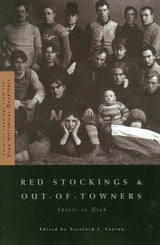
Red Stockings and Out-of-Towners
Sports in UtahStanford J. Layton
Signature Books, 2003
In team sports, the nearly forgotten Salt Lake Seagulls of 1946-47 competed against the best pro football teams in the West, while two baseball teams, the Salt Lake Deserets and their inner-city rival, the Red Stockings, played successfully in 1878-79 against the Cheyenne Reds, the Chicago White Stockings, the Denver Browns, the Nebraska Omahas, and the Rochester Hop Bitters.
Added to these, such pastimes as horse racing at the state fairgrounds, a winter ascent of Mt. Timpanogos in 1916, and angling at Fish Lake National Forest show the diversity and evolution of athletics in Utah. Like replaying the 1998 title game between the Utah Jazz and the Chicago Bulls, these assembled tales of perseverance, skill, exuberance, and heartbreak from long ago are equally thrilling.
Red, White, Black, and Blue
A Dual Memoir of Race and Class in AppalachiaWilliam M. Drennen Jr., Kojo (William T.) Jones Jr.
Ohio University Press, 2004
Redeeming a People
The Critical Role of Historical Examination in Moving Cultural and Moral TrajectoriesDarius Gray
Utah State University Press, 2020
The Arrington Lecture series, established by one of the twentieth-century West's most distinguished historians, Leonard Arrington, has become a leading forum for prominent historians to address topics related to Mormon history. Utah State University hosts the Leonard J. Arrington Mormon History Lecture Series through the Merrill-Cazier Library Special Collections and Archives department.
Rediscover the Hidden New Jersey
Roberts, Russell
Rutgers University Press, 2015
Rediscovering Northwest Denver
Its History, Its People, Its LandmarksRuth Eloise Wiberg
University Press of Colorado, 1995
Rediscovering Northwest Denver is a chatty, enjoyable read that tells of the tycoons and entrepreneurs whose fine Victorian homes still dot the area, and of the immigrants from various European cultures who clung together for comfort in the face of prejudice. It includes maps, photographs, past and present street names, a bibliography, index, and suggested tours. Northwest Denver today is typified by traditions, beauty, and pride, all of which the author captures in this ever-popular book.
Winner of the 1993 Hubert Humphrey Award for the book's contribution to the historical appreciation and preservation of Northwest Denver.
Rediscovering the Maine Woods
Thoreau's Legacy in an Unsettled LandJohn J. Kucich
University of Massachusetts Press, 2019
Inspired partly by this expedition, the accessible and engaging essays here offer valuable new perspectives on conservation, the cultural ties that connect Native communities to the land, and the profound influence the geography of the Maine Woods had on Thoreau and writers and activists who followed in his wake. Together, these essays offer a rich and multifaceted look at this special place and the ways in which Thoreau's Maine experiences continue to shape understandings of the environment a century and a half later.
Contributors include the volume editor, Kathryn Dolan, James S. Finley, James Francis, Richard W. Judd, Dale Potts, Melissa Sexton, Chris Sockalexis, Stan Tag, Robert M. Thorson, and Laura Dassow Walls.
Reel Freedom
Black Film Culture in Early Twentieth-Century New York CityAlyssa Lopez
Temple University Press, 2025
Lopez investigates how ordinary people, labor activists, journalists, filmmakers, theater managers, and owners all shaped Black film culture. Black girls and women used moviegoing as a means of independence and control over their lives. Race filmmaker Oscar Micheaux fought with New York State’s censorship board to get his films screened with limited edits in local theaters. And Harlem’s Black projectionists battled for unionization and fair pay, while journalists linked cinema to Black New Yorkers’ lived experiences.
In Reel Freedom, Lopez chronicles the wide-ranging and remarkable pervasiveness of Black film culture in New York City, redefining a period and place most associated with the Harlem Renaissance. In doing so, she illustrates how Black New Yorkers leveraged cinema to make the city their own and to enjoy urban living to its fullest.
In the series Urban Life, Landscape, and Policy

Reflecting a Prairie Town
A Year in PetersonDrake Hokanson
University of Iowa Press, 1994
In Reflecting a Prairie Town Drake Hokanson takes a prolonged look at a common place in an uncommon fashion. He presents Peterson, Iowa, through a singular combination of words and images, a remarkable synthesis of history, geography, direct observation, climatology, botany, oral history, archaeology, agricultural science, literature, geology, photography, and even a bit of astronomy. This vernacular landscape study is lavishly illustrated with photographs taken by the author, including stunning panoramic views.
The fundamental truth of experience on this continent has always lain in the challenges and opportunities of space. Place mattered because we were so few before the immensity of the land. But place at the same time rooted us in that immensity. Even now our appreciation for place is not quite dead; locked in our urban environments we continue to crave a “view,” be it of mountains, forests, or prairies. These “views” crop up unexpectedly as photographic murals in office buildings or posters in dentists' offices. It is to this stifled sense of the importance of place that Hokanson speaks; he invites us to remember and to be revitalized.
The magic of Reflecting a Prairie Town is the revelation that Peterson, Iowa, is a small town that is also uncannily large. In capturing the essence of this one place Hokanson helps us to understand our own worlds better—he asks the simple questions many of us would like to ask were we given the opportunity. To enter this book is to come back to a place we have never really seen before.
Reflections in Bullough’s Pond
Economy and Ecosystem in New EnglandDiana Muir
University Press of New England, 2002
Reflections on the Pandemic
COVID and Social Crises in the Year Everything ChangedTeresa Politano
Rutgers University Press, 2024
Contributors include: Patricia Akhimie, Marc Aronson, Ulla D. Berg, Stephanie Bonne, Stephanie Boyer, Kimberly Camp, Jordan Casteel, Kelly-Jane Cotter, Mark Doty, David Dreyfus, Adrienne E. Eaton, Katherine C. Epstein, Leah Falk, Paul G. Falkowski, Rigoberto González, James Goodman, David Greenberg, Angelique Haugerud, Grace Lynne Haynes, Leslieann Hobayan, Jonathan Holloway, James W. Hughes, Naomi Jackson, Amy Jordan, Vikki Katz, Mackenzie Kean, Robert E. Kopp, Christian Lighty, Stephen Masaryk, Louis P. Masur, Revathi V. Machan, Yalidy Matos, Belinda McKeon, Susan L. Miller, Yehoshua November, Joyce Carol Oates, Mary E. O’Dowd, Katherine Ognyanova, David Orr, Gregory Pardlo, Steve Pikiell, Teresa Politano, en Purkert, Nick Romanenko, Evie Shockley, Caridad Svich, and Didier William.
Reforming Philadelphia, 1682–2022
Richardson Dilworth
Temple University Press, 2023
Reforming Philadelphia examines the cyclical efforts of insurgents to change the city’s government over nearly 350 years. Political scientist Richardson Dilworth tracks reformers as they create a new purpose for the city or reshape the government to reflect emerging ideas. Some wish to thwart the “corrupt machine,” while others seek to gain control of the government via elections. These actors formed coalitions and organizations that disrupted the status quo in the hope of transforming the city (and perhaps also enriching themselves).
Dilworth addresses Philadelphia’s early development through the present day, including momentous changes from its new city charter in 1885 and the Republican machine that emerged around the same time to its transformation to a Democratic stronghold in the 1950s, when the city also experienced a racial transition. Focusing primarily on the twentieth and twenty-first centuries, Dilworth evaluates the terms of Mayors Frank Rizzo, Wilson Goode, and Ed Rendell, as well as John Street, Michael Nutter, and Jim Kenney to illustrate how power and resistance function, and how Philadelphia’s political history and reform cycles offer a conceptual model that can easily be applied to other cities.
Reforming Philadelphia provides a new framework for understanding the evolving relationship between national politics and local, city politics.
Regional Governance and the Politics of Housing in the San Francisco Bay Area
Paul G. Lewis and Nicholas J. Marantz
Temple University Press, 2023
The authors evaluate six potential reforms, arguing that targeted changes to local and regional institutions could generate durable improvements to the region’s housing opportunities. The main lesson from the case of the San Francisco Bay Area is the need to focus on governance when addressing the housing challenge. As the authors effectively illustrate, leaving a solution up to individual cities is unlikely to lead to increased housing supply.

Rehab on the Range
A History of Addiction and Incarceration in the American WestHolly M. Karibo
University of Texas Press, 2024
2026 Texas Christian University (TCU) Texas Book Award Winner
2025 Coral Horton Tullis Memorial Prize, Texas State Historical Association
2025 Outstanding Academic Title, CHOICE
The first study of the Fort Worth Narcotic Farm, an institution that played a critical role in fusing the War on Drugs, mass incarceration, and public health in the American West.
In 1929, the United States government approved two ground-breaking and controversial drug addiction treatment programs. At a time when fears about a supposed rise in drug use reached a fevered pitch, the emergence of the nation’s first “narcotic farms” in Fort Worth, Texas, and Lexington, Kentucky, marked a watershed moment in the treatment of addiction. Rehab on the Range is the first in-depth history of the Fort Worth Narcotic Farm and its impacts on the American West. Throughout its operation from the 1930s to the 1970s, the institution was the only federally funded drug treatment center west of the Mississippi River. Designed to blend psychiatric treatment, physical rehabilitation, and vocational training, the Narcotic Farm, its proponents argued, would transform American treatment policies for the better. The reality was decidedly more complicated.
Holly M. Karibo tells the story of how this institution—once framed as revolutionary for addiction care—ultimately contributed to the turn towards incarceration as the solution to the nation’s drug problem. Blending an intellectual history of addiction and imprisonment with a social history of addicts’ experiences, Rehab on the Range provides a nuanced picture of the Narcotic Farm and its cultural impacts. In doing so, it offers crucial historical context that can help us better understand our current debates over addiction, drug policy, and the rise of mass incarceration.
Reimagining Environmental History
Ecological Memory in the Wake of Landscape ChangeChristian Knoeller
University of Nevada Press, 2017
Reading across centuries and genres, Knoeller gives us a vibrant new appraisal of Midwestern/North American interior literary traditions and makes clear how vital environmental writing is to this region. To date, no one has written such an eloquent and comprehensive cross-genre analysis of Midwestern environmental literature.
Religion in the Modern American West
Ferenc Morton Szasz
University of Arizona Press, 2000
When Americans migrated west, they carried with them not only their hopes for better lives but their religious traditions as well. Yet the importance of religion in the forging of a western identity has seldom been examined.
In this first historical overview of religion in the modern American West, Ferenc Szasz shows the important role that organized religion played in the shaping of the region from the late-nineteenth to late-twentieth century. He traces the major faiths over that time span, analyzes the distinctive response of western religious institutions to national events, and shows how western cities became homes to a variety of organized faiths that cast only faint shadows back east.
While many historians have minimized the importance of religion for the region, Szasz maintains that it lies at the very heart of the western experience. From the 1890s to the 1920s, churches and synagogues created institutions such as schools and hospitals that shaped their local communities; during the Great Depression, the Latter-day Saints introduced their innovative social welfare system; and in later years, Pentecostal groups carried their traditions to the Pacific coast and Southern Baptists (among others) set out in earnest to evangelize the Far West. Beginning in the 1960s, the arrival of Asian faiths, the revitalization of evangelical Protestantism, the ferment of post-Vatican II Catholicism, the rediscovery of Native American spirituality, and the emergence of New Age sects combined to make western cities such as Los Angeles and San Francisco among the most religiously pluralistic in the world.
Examining the careers of key figures in western religion, from Rabbi William Friedman to Reverend Robert H. Schuller, Szasz balances specific and general trends to weave the story of religion into a wider social and cultural context. Religion in the Modern American West calls attention to an often-overlooked facet of regional history and broadens our understanding of the American experience.
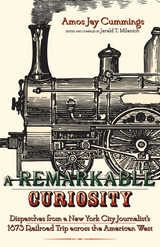
Remarkable Curiosity
Dispatches from a New York City Journalist's 1873 Railroad Trip across the American WestJerald T. Milanich
University Press of Colorado, 2008
Although today he is virtually unknown, during his lifetime Cummings was one of the most famous newspapermen in the United States, in part because of stories like these. Complete with a biographical sketch and historical introduction, A Remarkable Curiosity is an enjoyable read for anybody interested in the American West in the latter half of the nineteenth century.

Remarks on the Philosophy of Psychology, Volume 1
Ludwig Wittgenstein
University of Chicago Press, 1980
This bilingual edition of the Remarks on the Philosophy of Psychology presents the first English translation of an essential body of Wittegenstein's work. It elaborates Wittgenstein's views on psychological concepts such as expectation, sensation, knowing how to follow a rule, and knowledge of the sensations of other persons. It also shows strong emphasis on the "anthropological" aspect of Wittgenstein's thought. Philosophers, as well as anthropologists, psychologists, and sociologists will welcome this important publication.
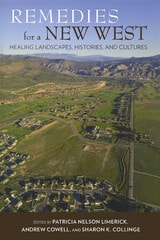
Remedies for a New West
Healing Landscapes, Histories, and CulturesEdited by Patricia Nelson Limerick, Andrew Cowell, and Sharon K. Collinge
University of Arizona Press, 2009
The signs of illness and trauma can seem omnipresent in today’s West: land and soil disrupted from mining, overgrazing, logging, and farming; wildlife habitat reduced and fragmented; native societies disturbed and threatened; open space diminished by cities and suburbs; wilderness destroyed by roads and recreation-seekers. But as these essays suggest, the “treatment program” for healing the West has many healthful side effects. Engaging in the kinds of projects suggested by contributors is therapeutic not only for the environment but for participants as well. Restoration, repair, and recovery can counter symptoms of despair with concentrated doses of promise and possibility.
The more “lesions” the West has, this book suggests, the more opportunities there are for westerners to revive and ultimately cure the ailing patient they have helped to create. The very idea of restoring the West to health, contributors and editors contend, unleashes our imaginations, sharpens our minds, and gives meaning to the ways we choose to live our lives. At the same time, acknowledging the profound difficulties of the work that lies ahead immunizes us against our own arrogance as we set about the task of healing the West.
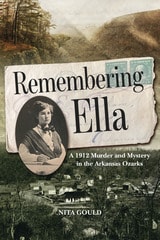
Remembering Ella
A 1912 Murder and Mystery in the Arkansas OzarksNita Gould
Butler Center for Arkansas Studies, 2018
This examination of the murder of Ella Barham and the trial of her alleged killer opens a window into the meaning of community and due process during a time when politicians and judges sought to professionalize justice, moving from local hangings to state-run executions. Davidson’s appeal has been cited as a precedent in numerous court cases and his brief was reviewed by the lawyers in Georgia who prepared Leo Frank’s appeal to the U.S. Supreme Court in 1915.
Author Nita Gould is a descendant of the Barhams of Boone County and Ella Barham’s cousin. Her tenacious pursuit to create an authoritative account of the community, the crime, and the subsequent legal battle spanned nearly fifteen years. Gould weaves local history and short biographies into her narrative and also draws on the official case files, hundreds of newspaper accounts, and personal Barham family documents. Remembering Ella reveals the truth behind an event that has been a staple of local folklore for more than a century and still intrigues people from around the country.
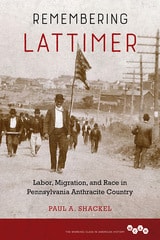
Remembering Lattimer
Labor, Migration, and Race in Pennsylvania Anthracite CountryPaul A. Shackel
University of Illinois Press, 2018
Paul A. Shackel confronts the legacies and lessons of the Lattimer event. Beginning with a dramatic retelling of the incident, Shackel traces how the violence, and the acquittal of the deputies who perpetrated it, spurred membership in the United Mine Workers. By blending archival and archaeological research with interviews, he weighs how the people living in the region remember--and forget--what happened. Now in positions of power, the descendants of the slain miners have themselves become rabidly anti-union and anti-immigrant as Dominicans and other Latinos change the community. Shackel shows how the social, economic, and political circumstances surrounding historic Lattimer connect in profound ways to the riven communities of today.
Compelling and timely, Remembering Lattimer restores an American tragedy to our public memory.
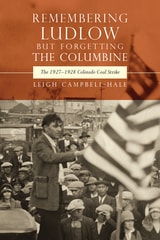
Remembering Ludlow but Forgetting the Columbine
The 1927-1928 Colorado Coal Strikeby Leigh Campbell-Hale
University Press of Colorado, 2025
Remembering Ludlow but Forgetting the Columbine examines the causes, context, and legacies of the 1927 Columbine Massacre in relation to the history of labor organizing and coal mining in both Colorado and the United States. While historians have written prolifically about the 1914 Ludlow Massacre, there has been a lack of attention to the violent event remembered now as the Columbine Massacre in which police shot and killed six striking coal miners and wounded sixty more protestors during the 1927–1928 Colorado Coal Strike, even though its aftermath exerted far more influence upon subsequent national labor policies.
This volume is a comparative biography of three key participants before, during, and after the strike: A. S. Embree, the IWW strike leader; Josephine Roche, the owner of the coal mine property where the Columbine Massacre took place; and Powers Hapgood, who came to work for Roche four months after she signed the 1928 United Mine Worker’s contract. The author demonstrates the significance of this event to national debates about labor during the period, as well as changes and continuities in labor history starting in the progressive era and continuing with 1930s New Deal labor policies and through the 1980s.
This examination of the 1927–1928 Colorado Coal Strike reorients understandings of labor history from the 1920s through the 1960s and the construction of public memory—and forgetting—surrounding those events. Remembering Ludlow but Forgetting the Columbine appeals to academic and general readers interested in Colorado history, labor history, mining history, gender studies, memory, and historiography.
Remembering the Alamo
Memory, Modernity, and the Master SymbolBy Richard R. Flores
University of Texas Press, 2002
"Remember the Alamo!" reverberates through Texas history and culture, but what exactly are we remembering? Over nearly two centuries, the Mexican victory over an outnumbered band of Alamo defenders has been transformed into an American victory for the love of liberty. Why did the historical battle of 1836 undergo this metamorphosis in memory and mythology to become such a potent master symbol in Texan and American culture?
In this probing book, Richard Flores seeks to answer that question by examining how the Alamo's transformation into an American cultural icon helped to shape social, economic, and political relations between Anglo and Mexican Texans from the late nineteenth to the mid-twentieth centuries. In the first part of the book, he looks at how the attempts of heritage society members and political leaders to define the Alamo as a place have reflected struggles within Texas society over the place and status of Anglos and Mexicans. In the second part, he explores how Alamo movies and the transformation of Davy Crockett into an Alamo hero/martyr have advanced deeply racialized, ambiguous, and even invented understandings of the past.
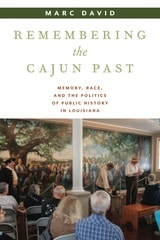
Remembering the Cajun Past
Memory, Race, and the Politics of Public History in LouisianaMarc David
University of Massachusetts Press, 2025
Exploring how public history creates collective memory of this white ethnic group through memorials
Cajuns arrived in southern Louisiana in the 18th century after the British exiled them from eastern Canada. Also known as Acadians, they retain a unique dialect of French, and their distinctive music, food, and other cultural traits characterized them as an ethnic group. Until the 1960s, authorities viewed them as a serious problem, allegedly blocking the state’s progress as they clung to their antiquated ways. Few Cajun residents in the region remembered the remote past of their ancestors, but by the 1970s, organizations ranging from local non-profits to the National Park Service created sites that commemorated their history, such as the Acadian Memorial in St. Martinville, allowing Cajuns to connect their lives to their past and claim it as their own.
In Remembering the Cajun Past, anthropologist Marc David studies the cultural and political dynamics that reconfigured Cajun memory and identity. Focusing on St. Martinville and the Acadian Memorial, he explores how authorities changed their minds about Cajuns and demonstrates how Cajuns’ historical memories took shape. Part ethnography and part history, David examines the racial aspects of the Memorial’s creation in the wake of the Civil Rights movement and the growth of a new Cajun history, one through which individual Cajuns rejected the label’s connotation of “white trash” and embraced belonging within a storied white ethnic group. Based on decades of fieldwork and deep engagement with public history practices, David explores how historical memory and the historic sites that foster it are intertwined with the politics of civic life.
Remembering the Holocaust
Michael E. Stevens
Wisconsin Historical Society Press, 1997
Rendezvous Reader
James H. Maguire
University of Utah Press, 1997
The early plans for Mount Rushmore called for blasting heroic likenesses of mountain men--Kit Carson, Jim Bridger, and John Colter-—into the solid mountain granite of South Dakota. Readers of this colorful volume will see the heroics and the brutally rugged individualism that made these fur trappers candidates for legend and infamy.
The accounts of the mountain men are spun from the experiences of a nation moving westward: a trapper returns from the dead; hunters feast on buffalo intestines served on a dirty blanket; a missionary woman is astounded by the violence and vulgarity of the trappers’ rendezvous. These are just a few of the narratives, tall tales, and just plain lies that make up A Rendezvous Reader.
The writers represented in this book include a dyed-in-the wool trappers, adventuring European nobles, upward-gazing eastern missionaries, and just plain hacks who never unsheathed a Green River knife or traveled farther west that the Ohio River. What these writers have in common is that all of them, whether they dealt mostly in fact of entirely in fantasy, helped to create a uniquely American icon: the mountain man.
Though A Rendezvous Reader will certainly be of interest to the historian and the historically curious, the true purpose of this anthology is to bring together in one volume the liveliest most readable accounts by and about the mountain men. Whether you sample or devour this anthology of mountain horrors and delights, it is a book guaranteed to entertain as well as inform.
Reno Confidential
Eleven Historic InfluencersRichard Moreno
University of Nevada Press, 2027
In Reno Confidential, veteran Nevada historian Richard Moreno pulls back the curtain on the Biggest Little City to reveal eleven men and women who shaped its destiny—some celebrated, others nearly forgotten. Heavyweights like George Wingfield and William Harrah loom large, but Moreno digs deeper, spotlighting bold reformers, civil rights leaders, architects, club owners, and even underworld figures who steered Reno’s image in lasting ways.
From free-thinking mayor Edwin E. Roberts to trailblazing attorney Felice Cohn, from visionary designer Frederic DeLongchamps to colorful dealmakers working behind the scenes, these were the original influencers—long before social media—who used newspapers, politics, business, and sheer force of personality to leave their mark.
Lively, accessible, and rich with story, Reno Confidential brings the city’s past into sharp focus through eleven unforgettable characters whose ambitions, rivalries, and vision helped make Reno what it is today.
Reno, Las Vegas, and the Strip
A Tale of Three CitiesEugene P. Moehring
University of Nevada Press, 2024
Moehring brings the story of the three cities to the present day, examining lessons learned from the Great Recession and the efforts under way in all three metropolises to diversify their economies. Moehring makes an important contribution with the only current study of Nevada’s cities, focusing on urban development issues rather than social history or the gaming industry. As the service economy continues to grow, not only in Nevada but throughout the United States, Moehring’s work has many implications for urban studies and particularly the study of urban development in other metropolitan areas.
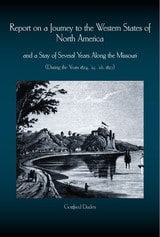
Report on a Journey to the Western States of North America
and a Stay of Several Years Along the Missouri (During the Years 1824-1827)Gottfried Duden; James W. Goodrich, General Editor; George H. Kellner, Elsa Nagel, Adolf E. Schroeder, and W. M. Senner, Editors and Translators
University of Missouri Press, 1980
The mass migrations to the United States from Europe that began in the 1830s were strongly influenced by what is known today as emigration literature--travelers' writings about their experiences in the New World. Such accounts were particularly popular with German readers; over 150 examples of the genre were published in Germany between 1827 and 1856. Gottfried Duden's Report on a Journey to the Western States of North America, published in 1829, was one of the most influential of these books. The timing, format, coverage, and literary qualities of the Report, and its idyllic descriptions of pioneer farming in Missouri, combined to make it an instant success. It attracted thousands of Germans to the Midwest, and particularly to Missouri, the focus of Duden's account. This edited and annotated translation is the first complete version to be published in English. It provides for the general public and the professional historian a significant contribution to U.S. immigration history and a unique and delightful fragment of Missouri's rich German heritage.
Duden presented his account in the form of personal letters, a style that helped make the book believable. The Mississippi- Missouri valley reminded him of his native Rhineland where the rivers facilitated trade and transportation, and fertile river bottomland offers the perfect environment for agriculture. Duden farmed the land he bought during his sojourn in Missouri, and his book includes meticulous descriptions of clearing, fencing, and harvesting. His pro-emigration bias, colored by the fact that he himself had been able to hire help on his Missouri farm, made his view of the farmer's life, it turned out, more idyllic than practical. Many would-be gentlemen farmers, inspired by his book to come to Missouri, found pioneer farming more strenuous than they had expected.
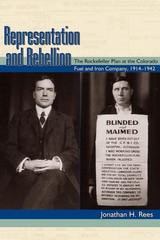
Representation and Rebellion
The Rockefeller Plan at the Colorado Fuel and Iron Company, 1914-1942Jonathan H. Rees
University Press of Colorado, 2010
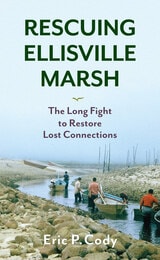
Rescuing Ellisville Marsh
The Long Fight to Restore Lost ConnectionsEric P. Cody
University of Massachusetts Press, 2023
For hundreds of years, farmers and fishing communities maintained the inlet to Ellisville Marsh, a picturesque piece of coastline ten miles south of Plymouth, Massachusetts. Recognized as one of the most environmentally sensitive and ecologically valuable places in the state, the salt marsh and estuary are home to a diverse array of wildlife and a range of habitats, including low-tide mudflats, a saltwater pond, intertidal zone, and fields of tall marsh grass.
After agricultural and fishing activities faded away in the late twentieth century, it soon became apparent that protecting the marsh and its surroundings from development would not be enough to restore the natural equilibrium that had been lost when the inlet became blocked. Having witnessed government inaction over the years, Eric P. Cody and four other locals founded the Friends of Ellisville Marsh in 2007 to address erosion, revive tidal flows, and revitalize fisheries and wildlife in the face of climate change. Rescuing Ellisville Marsh presents the powerful case study of backyard activism, telling the story of a community that bonded with a natural place and decided to fight for it.
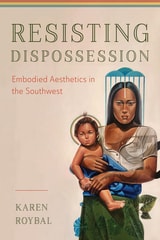
Resisting Dispossession
Embodied Aesthetics in the SouthwestKaren R. Roybal
University of Arizona Press, 2027
Illuminating the impacts of ongoing dispossession across the modern American Southwest
Resisting Dispossession examines how Native/Indigenous, Chicana/o/x, and Black communities in the American Southwest have confronted displacement and dispossession from the nineteenth century to the present. Moving beyond abstract theory, Karen R. Roybal centers cultural expression and embodied knowledge, revealing how colonialism, preservation, urban renewal, and gentrification continue to shape relationships to land, place, and belonging.
Drawing on Indigenous, Chicana feminist, and Black epistemologies, Roybal explores a diverse cultural archive of photographs, literature, musical compositions, oral histories, and storytelling practices. Through analyses of figures such as Kali Fajardo-Anstine, Raven Chacon, and Louis Carlos Bernal, alongside the stories of Chicana land grant heirs in New Mexico and southern Colorado, she demonstrates how artistic and cultural expression becomes a powerful tool for resisting erasure and reclaiming presence. Contesting representations of the Southwest made popular by figures like Ansel Adams and Georgia O’Keeffe, these works preserve alternative histories, challenge dominant narratives, and illuminate the ongoing impacts of dispossession across the region.
Interdisciplinary in scope, this work offers a fresh perspective on the intersections of aesthetics, embodiment, and power in the West and Southwest.
Resort City In The Sunbelt, Second Edition
Las Vegas, 1930-2000Eugene P. Moehring
University of Nevada Press, 2000
Restaurant Republic
The Rise of Public Dining in BostonKelly Erby
University of Minnesota Press, 2016
Before the 1820s, the vast majority of Americans ate only at home. As the nation began to urbanize and industrialize, home and work became increasingly divided, resulting in new forms of commercial dining.
In this fascinating book, Kelly Erby explores the evolution of such eating alternatives in Boston during the nineteenth century. Why Boston? Its more modest assortment of restaurants, its less impressive—but still significant—expansion in commerce and population, and its growing diversity made it more typical of the nation’s other urban centers than New York. Restaurants, clearly segmented along class, gender, race, ethnic, and other lines, helped Bostonians become more comfortable with deepening social stratification in their city and young republic even as the experience of eating out contributed to an emerging public consumer culture.
Restaurant Republic sheds light on how commercial dining both reflected and helped shape growing fragmentation along lines of race, class, and gender—from the elite Tremont House, which served fashionable French cuisine, to such plebeian and ethnic venues as oyster saloons and Chinese chop suey houses. The epilogue takes us to the opening, in 1929 near Boston, of the nation’s first Howard Johnson’s and that restaurant’s establishment as a franchise in the next decade. The result is a compelling story that continues to shape America.
Retracing the Dragoon Trail in Iowa
Environmental Transformation along the Des Moines RiverKevin T. Mason
Michigan State University Press, 2026
In Retracing the Dragoon Trail in Iowa, historian Kevin T. Mason presents a vivid and deeply researched account of Iowa’s evolving landscape, beginning with the 1835 expedition of the First U.S. Dragoons. Drawing from archival records, maps, government surveys, Indigenous histories, and ecological data, Mason explores how Iowa’s prairies and wetlands gave way to farms, towns, and transportation networks. He situates these environmental shifts within the broader forces of Manifest Destiny, military expansion, and settler colonialism, while amplifying the voices of the Sauk, Meskwaki, Dakota, and other Indigenous nations whose histories are often marginalized.
But Mason doesn’t just write about history—he walks it. His 371-mile journey retracing the original dragoon route across Iowa blends scholarship with storytelling, captured through video essays, photography, and writing. This modern-day trek, featured on Iowa PBS’s Iowa Life and Iowa Public Radio’s Talk of Iowa, brings the past into the present, offering a compelling look at how landscapes remember. The result is a powerful contribution to environmental history, regional studies, and Indigenous scholarship—one that reveals the layered interactions between land use, policy, and historical change.
Return to Wake Robin
One Cabin in the Heyday of Northwoods ResortsMarnie O. Mamminga
Wisconsin Historical Society Press, 2012
Five generations of Marnie O. Mamminga’s family have been rejuvenated by times together in Wisconsin’s Northwoods. In a series of evocative remembrances accompanied by a treasure trove of vintage family photos, Mamminga takes us to Wake Robin, the cabin her grandparents built in 1929 on Big Spider Lake near Hayward, on land adjacent to Moody’s Camp. Along the way she preserves the spirit and cultural heritage of a vanishing era, conveying the heart of a place and the community that gathered there.
Bookended by the close of the logging era and the 1970s shift to modern lake homes, condos, and Jet Skis, the 1920s to 1960s period covered in these essays represents the golden age of Northwoods camps and cabins—a time when retreats such as Wake Robin were the essence of simplicity. In Return to Wake Robin, Mamminga describes the familiar cadre of fishing guides casting their charm, the camaraderie and friendships among resort workers and vacationers, the call of the weekly square dance, the splash announcing a perfectly executed cannonball, the lodge as gathering place. By tracing the history of one resort and cabin, she recalls a time and experience that will resonate with anyone who spent their summers Up North—or wishes they had.
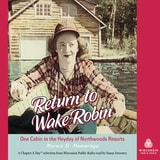
Return to Wake Robin
One Cabin in the Heyday of Northwoods ResortsMarnie O. Mamminga
Wisconsin Historical Society Press, 2013
Five generations of Marnie O. Mamminga’s family have been rejuvenated by times together in Wisconsin’s Northwoods. In a series of evocative remembrances accompanied by a treasure trove of vintage family photos, Mamminga takes us to Wake Robin, the cabin her grandparents built in 1929 on Big Spider Lake near Hayward, on land adjacent to Moody’s Camp. Along the way she preserves the spirit and cultural heritage of a vanishing era, conveying the heart of a place and the community that gathered there.
Bookended by the close of the logging era and the 1970s shift to modern lake homes, condos, and Jet Skis, the 1920s to 1960s period covered in these essays represents the golden age of Northwoods camps and cabins—a time when retreats such as Wake Robin were the essence of simplicity. In Return to Wake Robin, Mamminga describes the familiar cadre of fishing guides casting their charm, the camaraderie and friendships among resort workers and vacationers, the call of the weekly square dance, the splash announcing a perfectly executed cannonball, the lodge as gathering place. By tracing the history of one resort and cabin, she recalls a time and experience that will resonate with anyone who spent their summers Up North—or wishes they had.
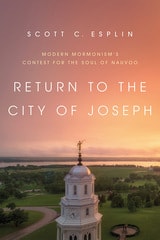
Return to the City of Joseph
Modern Mormonism's Contest for the Soul of NauvooScott C. Esplin
University of Illinois Press, 2018
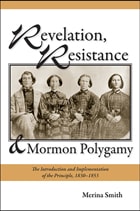
Revelation, Resistance, and Mormon Polygamy
The Introduction and Implementation of the Principle, 1830–1853Merina Smith
Utah State University Press, 2013
When Joseph Smith began to reveal and teach the doctrine of plural marriage in 1841, even stalwart members like Brigham Young were shocked and confused. In this thoughtful study, Smith argues that the secret introduction of plural marriage among the leadership coincided with an evolving public theology that provided a contextualizing religious narrative that persuaded believers to accept the principle.
This fresh interpretation draws from diaries, letters, newspapers, and other primary sources and is especially effective in its use of family narratives. It will be of great interest not only to scholars and the general public interested in Mormon history but in American history, religion, gender and sexuality, and the history of marriage and families.
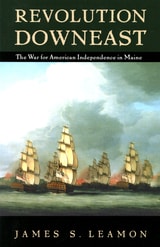
Revolution Downeast
The War for American Independence in MaineJames S. Leamon
University of Massachusetts Press, 1993
The history of the Revolution in Maine is the story of a people who did not really want a revolution—at least at first.
Since the middle of the seventeenth century, the powerful Massachusetts Bay Colony had exercised an increasing hegemony over the settlements downeast—a hegemony legalized in the Massachusetts royal charter of 1691. From then until 1820, when it became a state, Maine remained an integral part of Massachusetts. Geographically isolated from the Bay Colony by the province of New Hampshire, and dependent on Massachusetts for its very existence, Maine was indeed a colony, in every sense of the word.
The larger Massachusetts context has tended to obscure Maine as a legitimate object of study, nowhere more than in the period of the American Revolution. Even historians in Maine have slighted the period of the American Revolution. Where appropriate, town historians devote a chapter or so to the event, but only in the context of a particular community.
In his book, Leamon aims to meet that deficiency by drawing together town and general histories, specialized studies, and primary sources, both published and unpublished. He examines why and how Maine fought the Revolution and the changes that occurred in Maine during and after the war.
Revolutionary Feminists
The Women's Liberation Movement in SeattleBarbara Winslow
Duke University Press, 2023
Revolutionary Generation
Harvard Men and the Consequences of IndependenceConrad Edick Wright
University of Massachusetts Press, 2005
Conrad Edick Wright draws on extensive research on the classes that graduated from Harvard immediately before the start of the war to follow their members as they passed through life's common and predictable events from birth and childhood through youth to maturity, careers, marriage, the increasing civic and family responsibilities of midlife, old age, and death. He is also sensitive to his subjects' thoughts and feelings. Unusually articulate and frequently reflective, the men of the Harvard College classes of 1771 through 1774 often revealed their ambitions and concerns through their letters and diaries.
Revolutionary Generation provides the most sustained application of life course and life cycle analysis to be found in any study of late-eighteenth- or early-nineteenth-century America. At the same time, it shows on a personal level through the lives of its subjects many of the most important consequences of the War for Independence.
Rice and Slaves
Ethnicity and the Slave Trade in Colonial South CarolinaDaniel C. Littlefield
University of Illinois Press, 1991
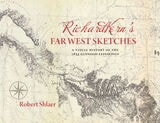
Richard Kern's Far West Sketches
A Visual History of the 1853 Gunnison ExpeditionRobert Shlaer
University of Utah Press, 2020
Robert Shlaer came across them many years later at the Newberry Library in Chicago and was inspired to locate the views depicted in the drawings and to photograph them, as nearly as was possible, from the same spot where Kern stood when he sketched them.
Richard Kern’s Far West Sketches juxtaposes Kern’s drawings with Shlaer's photographs, presenting 389 illustrations in geographic sequence from east to west, as well as a detailed narrative of the expedition. An associated website will include maps, drawings, and photographs so that they can be enlarged, compared, and studied in detail, providing an immersive experience of this important and ill-fated expedition.
Richard Neuberger
Oregon Politics and the Making of a US SenatorStephen A. Forrester
Oregon State University Press, 2025
Richard L. Neuberger is a consequential but often forgotten figure in Oregon history, largely due to his early death at forty-seven, near the end of his only term in the United States Senate. But his life and legacy continue to inspire Oregonians and influence politicians.
In 1954, Neuberger was the first Democrat elected to the Senate from Oregon in forty years. His election moved Oregon from a solidly Republican state to one where liberal Democrats could control the legislature as well as statewide offices. He was an especially productive freshman, on both Oregon natural resource issues and national matters. Neuberger was also only the second Jewish person elected to the Senate following passage of the 17th Amendment, which required the direct election of senators.
Prior to entering politics, Neuberger was best known as a journalist. He was a prolific freelance writer, publishing 750 magazine articles and six books. In 1933, at the age of twenty-one, he visited Germany and penned the first firsthand account of Brownshirt violence written by an American; his editor at The Nation called it “an epoch-making article.”
Neuberger was ahead of his time in his advocacy of conservation, in his political partnership with his wife Maurine—who successfully ran for his Senate seat after his untimely death in 1960—and in his outspoken liberal advocacy at a time when Oregon was considerably more conservative than it is today. Tom McCall, later one of the most influential governors in the state’s history, considered Neuberger his role model as a conservationist.
In this definitive biography—more than forty years in the making—Stephen Forrester documents Neuberger’s extraordinary life and career, highlighting a legacy that includes shaping Oregon’s renowned conservation policies and developing the state’s modern Democratic party.
Richmond's Priests and Prophets
Race, Religion, and Social Change in the Civil Rights EraDouglas E. Thompson
University of Alabama Press, 2017
Douglas E. Thompson’s Richmond’s Priests and Prophets: Race, Religion, and Social Change in the Civil Rights Era presents a compelling study of religious leaders’ impact on the political progression of Richmond, Virginia, during the time of desegregation. Scrutinizing this city as an entry point into white Christians’ struggles with segregation during the 1950s, Thompson analyzes the internal tensions between ministers, the members of their churches, and an evolving world.
In the mid-twentieth-century American South, white Christians were challenged repeatedly by new ideas and social criteria. Neighborhood demographics were shifting, public schools were beginning to integrate, and ministers’ influence was expanding. Although many pastors supported the transition into desegregated society, the social pressure to keep life divided along racial lines placed Richmond’s ministers on a collision course with forces inside their own congregations. Thompson reveals that, to navigate the ideals of Christianity within a complex historical setting, white religious leaders adopted priestly and prophetic roles.
Moreover, the author argues that, until now, the historiography has not viewed white Christian churches with the nuance necessary to understand their diverse reactions to desegregation. His approach reveals the ways in which desegregationists attempted to change their communities’ minds, while also demonstrating why change came so slowly—highlighting the deeply emotional and intellectual dilemma of many southerners whose worldview was fundamentally structured by race and class hierarchies.
Ridge Stories
Herding Hens, Powdering Pigs, and Other Recollections from a Boyhood in the DriftlessGary Jones
Wisconsin Historical Society Press, 2019
Raised on a small dairy farm in the Driftless Area in the mid-twentieth century, Gary Jones gets real about his rural roots. In this collection of interrelated stories, Jones writes with plainspoken warmth and irreverence about farm, family, and folks on the ridge. Readers will meet Gramp Jones, whose oversized overalls saved him from losing a chunk of flesh to an irate sow; the young one-room-school teacher who helped the kids make sled jumps at recess; Charlotte, the lawn-mowing sheep who once ended up in the living room; Victor the pig-cutter, who learned his trade from folk tradition rather than vet school; and other colorful characters of the ridge. Often humorous and occasionally touching, Jones’s essays paint a vivid picture that will entertain city and country folk alike.