Results by title
28167 books match the query 'History' and 1206 start with r
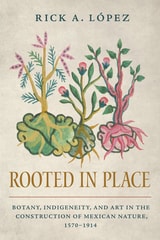
Rooted in Place
Botany, Indigeneity, and Art in the Construction of Mexican Nature, 1570–1914Rick A. López
University of Arizona Press, 2025
Prize for Best Book in Environmental Studies, Latin American Studies Association
Honorable mention for Best Book Prize in Visual Culture, Latin American Studies Association
Honorable mention for Best Book on Mexico, Latin American Studies Association
Since the first moment of conquest, colonizers and the colonized alike in Mexico confronted questions about what it meant to be from this place, what natural resources it offered, and who had the right to control those resources and on what basis.
Focusing on the ways people, environment, and policies have been affected by political boundaries, historian Rick A. López explores the historical connections between political identities and the natural world. López analyzes how scientific intellectuals laid claim to nature within Mexico, first on behalf of the Spanish Empire and then in the name of the republic, during three transformative moments: the Hernández expedition of the late sixteenth century; the Royal Botanical Expedition of the late eighteenth century; and the heyday of scientific societies such as the Sociedad Mexicana de Historia Natural of the late nineteenth century.
This work traces how scientific intellectuals studied and debated what it meant to know and claim the flora that sprang from Mexican soil—ranging from individual plants to forests and vegetated landscapes—and the importance they placed on indigeneity. It also points to the short- and long-term consequences of these efforts. López draws on archival and published sources produced from the sixteenth century through the start of the twentieth century and gives special attention to the use of visual images such as scientific illustrations and landscape art. López employs the term “visualization” in recognition of the degree to which officials, botanists, and draftsmen produced imagery and also how they and others viewed nature.
Rooted in Place reveals how scientific endeavors were not just about cataloging flora but were deeply intertwined with the construction of identity and the political landscape at three pivotal moments in Mexican history.
Roots and Resilience
California Ranchers in Their Own WordsSusan Edinger Marshall
University of Nevada Press, 2024
The editors have drawn together these stories, poems, and musings from ranchers across the state, calling upon real people to share their experiences, and beckoning readers to find a shared understanding concerning often divisive land-use topics. Many perspectives are considered, including those of transplanted suburbanites to seventh-generation heirs. Notably, many women’s writings are including in the book, offering unique and valuable perspectives on ranching culture.
Roots and Resilience gives voice to California’s Indigenous, Mexican American, Basque and other European American ranchers, asking the reader to find common ground in the name of land stewardship and conservation.
Roots and Wings
Virginia Tanner's Dance Life and LegacyMary-Elizabeth Manley with Mary Ann Lee and Robert Bruce Bennett
University of Utah Press, 2023
Roots and Wings recounts Virginia Tanner’s remarkable career as a dancer, artist, and educator. From her early experiences assisting at Evelyn Davis’s dance school in Washington, DC, to the creation of the Tanner Dance Program at the University of Utah, her influence on the field was pervasive. She channeled children’s energy, sharpened their senses, and encouraged youthful, authentic dance expression.
Manley’s extensive archival research and personal interviews depict Virginia Tanner as an innovative dance artist and ambitious leader in the field of modern dance. While exploring Tanner’s story, Roots and Wings emphasizes the value of unique instructional methodologies for teaching dance to young children and the vital role the arts play in children’s lives. Tanner’s work endures, continuing to echo with sensitivity and spirit in young dancers throughout the United States and abroad.

Roots of Disorder
Race and Criminal Justice in the American South, 1817-80Christopher Waldrep
University of Illinois Press, 1998
"Delivers what no other study has yet attempted. . . . Waldrep's book is one of the first systematically to use local trial data to explore questions of society and culture." -- Vernon Burton, author of "A Gentleman and an Officer": A Social and Military History of James B. Griffin's Civil War
Roots of Our Renewal
Ethnobotany and Cherokee Environmental GovernanceClint Carroll
University of Minnesota Press, 2015
Honorable Mention: Labriola Center American Indian National Book Award
In Roots of Our Renewal, Clint Carroll tells how Cherokee people have developed material, spiritual, and political ties with the lands they have inhabited since removal from their homelands in the southeastern United States. Although the forced relocation of the late 1830s had devastating consequences for Cherokee society, Carroll shows that the reconstituted Cherokee Nation west of the Mississippi eventually cultivated a special connection to the new land—a connection that is reflected in its management of natural resources.
Until now, scant attention has been paid to the interplay between tribal natural resource management programs and governance models. Carroll is particularly interested in indigenous environmental governance along the continuum of resource-based and relationship-based practices and relates how the Cherokee Nation, while protecting tribal lands, is also incorporating associations with the nonhuman world. Carroll describes how the work of an elders’ advisory group has been instrumental to this goal since its formation in 2008.
An enrolled citizen of the Cherokee Nation, Carroll draws from his ethnographic observations of Cherokee government–community partnerships during the past ten years. He argues that indigenous appropriations of modern state forms can articulate alternative ways of interacting with and “governing” the environment.
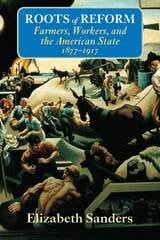
Roots of Reform
Farmers, Workers, and the American State, 1877-1917Elizabeth Sanders
University of Chicago Press, 1999
Based on new evidence from legislative records and other sources, Sanders shows that this tenuous alliance of "producers versus plutocrats" shaped early regulatory legislation, remained powerful through the populist and progressive eras, and developed a characteristic method of democratic state expansion with continued relevance for subsequent reform movements.
Roots of Reform is essential reading for anyone interested in this crucial period of American political development.
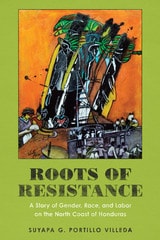
Roots of Resistance
A Story of Gender, Race, and Labor on the North Coast of HondurasSuyapa G. Portillo Villeda
University of Texas Press, 2021
Winner of the 2021 Sara A. Whaley Prize of the National Women’s Studies Association (NWSA)
A first-of-its-kind study of the working-class culture of resistance on the Honduran North Coast and the radical organizing that challenged US capital and foreign intervention at the onset of the Cold War, examining gender, race, and place.
On May 1, 1954, striking banana workers on the North Coast of Honduras brought the regional economy to a standstill, invigorating the Honduran labor movement and placing a series of demands on the US-controlled banana industry. Their actions ultimately galvanized a broader working-class struggle and reawakened long-suppressed leftist ideals. The first account of its kind in English, Roots of Resistance explores contemporary Honduran labor history through the story of the great banana strike of 1954 and centers the role of women in the narrative of the labor movement.
Drawing on extensive firsthand oral history and archival research, Suyapa G. Portillo Villeda examines the radical organizing that challenged US capital and foreign intervention in Honduras at the onset of the Cold War. She reveals the everyday acts of resistance that laid the groundwork for the 1954 strike and argues that these often-overlooked forms of resistance should inform analyses of present-day labor and community organizing. Roots of Resistance highlights the complexities of transnational company hierarchies, gender and race relations, and labor organizing that led to the banana workers' strike and how these dynamics continue to reverberate in Honduras today.
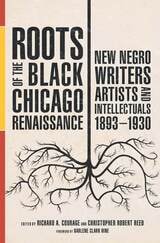
Roots of the Black Chicago Renaissance
New Negro Writers, Artists, and Intellectuals, 1893-1930Edited by Richard A. Courage and Christopher Robert Reed
University of Illinois Press, 2020
Richard A. Courage and Christopher Robert Reed have brought together essays that explore the intersections in the backgrounds, education, professional affiliations, and public lives and achievements of black writers, journalists, visual artists, dance instructors, and other creators working in the late nineteenth and early twentieth centuries. Organized chronologically, the chapters unearth transformative forces that supported the emergence of individuals and social networks dedicated to work in arts and letters. The result is an illuminating scholarly collaboration that remaps African American intellectual and cultural geography and reframes the concept of urban black renaissance.
Contributors: Richard A. Courage, Mary Jo Deegan, Brenda Ellis Fredericks, James C. Hall, Bonnie Claudia Harrison, Darlene Clark Hine, John McCluskey Jr., Amy M. Mooney, Christopher Robert Reed, Clovis E. Semmes, Margaret Rose Vendryes, and Richard Yarborough
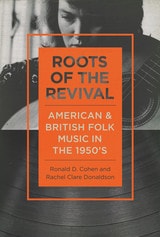
Roots of the Revival
American and British Folk Music in the 1950sRonald D. Cohen and Rachel Clare Donaldson
University of Illinois Press, 2014
After setting the stage with the work of music collectors in the nineteenth century, the authors explore the so-called recovery of folk music practices and performers by Alan Lomax and others, including journeys to and within the British Isles that allowed artists and folk music advocates to absorb native forms and facilitate the music's transatlantic exchange. Cohen and Donaldson place the musical and cultural connections of the twin revivals within the decade's social and musical milieu and grapple with the performers' leftist political agendas and artistic challenges, including the fierce debates over "authenticity" in practice and repertoire that erupted when artists like Harry Belafonte and the Kingston Trio carried folk into the popular music mainstream.
From work songs to skiffle, from the Weavers in Greenwich Village to Burl Ives on the BBC, Roots of the Revival offers a frank and wide-ranging consideration of a time, a movement, and a transformative period in American and British pop culture.
Rosa Luxemburg and the Struggle for Democratic Renewal
Jon Nixon
Pluto Press, 2018
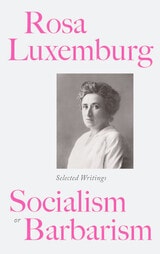
Rosa Luxemburg
Socialism or Barbarism: Selected WritingsRosa Luxemburg
Pluto Press, 2010
Rosa Luxemburg (1871-1919) was one of the most brilliant and passionate minds drawn to the revolutionary socialist movement. An outstanding social and economic theorist of the twentieth century, and a dedicated political activist, she proved willing to go to prison and even give her life for her beliefs.
Providing an extensive overview of her writings, this volume contains a number of items never before anthologised. Her work was broad in scope tackling capitalism and socialism; globalisation and imperialism; history; war and peace; social struggles, trade unions, political parties; class, gender, race; the interconnection of humanity with the natural environment. The editors provide an extensive and informative introduction outlining and evaluating her life and thought.
This is the most comprehensive introduction to the range of Rosa Luxemburg’s thought.
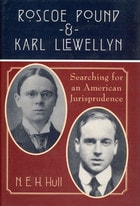
Roscoe Pound and Karl Llewellyn
Searching for an American JurisprudenceN. E. H. Hull
University of Chicago Press, 1997
Through meticulous archival research, Hull shows how the intellectual battles of the day took place against a network of private and public relationships and demonstrates how Pound's and Llewellyn's ideas of jurisprudence sprang from a kind of intellectual bricolage, the pragmatic assemblage of parts rather than the development of a unified whole, that is peculiarly American. Humorous, engaging, and provocative, Roscoe Pound and Karl Llewellyn uncovers the roots of American jurisprudence in the lives of two of its most compelling figures.
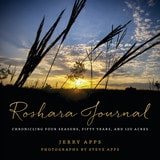
Roshara Journal
Chronicling Four Seasons, Fifty Years, and 120 AcresJerry Apps
Wisconsin Historical Society Press, 2016
A photographic diary of a small Midwestern farm and the family who’ve made it their home
In Roshara Journal, father-and-son team Jerry and Steve Apps share the monthly happenings at their family’s farm in central Wisconsin. Featuring Steve’s stunning photos and fifty years of Jerry’s journal entries, Roshara Journal captures the changes—both from month to month and over the decades—on the landscape and farmstead.
The Apps family has owned Roshara since 1966. There they nurture a prairie restoration and pine plantation, maintain a large garden that feeds three generations, observe wildlife species by the dozens, and support a population of endangered butterflies. In documenting life on this piece of land, Jerry and Steve remind us how, despite the pace and challenges of modern life, the seasons continue to influence our lives in ways large and small. Jerry explains that his journal entries become much more than mere observations: "It seems that when I write about something—a bur oak tree, for example—that old tree becomes a part of me. . . . Writing takes me to a place that goes beyond observation and understanding, a place filled with feeling and meaning."
In the tradition of Bernd Heinrich in Maine, Barry Lopez in the Canadian Arctic, and Aldo Leopold just an hour down the road in Baraboo, Jerry and Steve Apps combine observation, experience, and reflection to tell a profound story about one place in the world.
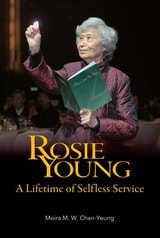
Rosie Young
A Lifetime of Selfless ServiceMoira M. W. Chan-Yeung
Hong Kong University Press, 2024
In Rosie Young: A Lifetime of Selfless Service, Moira Chan-Yeung presents a brief history of professor Young’s remarkable career in medical education and administration at the University of Hong Kong (HKU) and her wide-ranging public service to the community over many decades. As the first female dean of HKU’s Faculty of Medicine, her career was deeply intertwined with the socio-economic development of Hong Kong. After she retired from HKU, she continued to serve HKU and the community until the present. This book illustrates her many contributions to the development of medical education in Hong Kong and the university administration at HKU. Young’s extensive public service in the field of medicine also helped improve primary care, hospital care, and public health in Hong Kong. In short, this book provides a valuable record of a female giant in medical history and documents her selfless and enduring service to the HKU community and Hong Kong society.
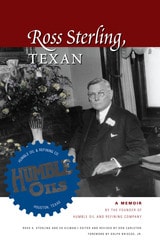
Ross Sterling, Texan
A Memoir by the Founder of Humble Oil and Refining CompanyBy Ross S. Sterling and Ed Kilman
University of Texas Press, 2007
Born on a farm near Anahuac, Texas, in 1875 and possessed of only a fourth-grade education, Ross Sterling was one of the most successful Texans of his generation. Driven by a relentless work ethic, he become a wealthy oilman, banker, newspaper publisher, and, from 1931 to 1933, one-term governor of Texas. Sterling was the principal founder of the Humble Oil and Refining Company, which eventually became the largest division of the ExxonMobil Corporation, as well as the owner of the Houston Post.
Eager to "preserve a narrative record of his life and deeds," Ross Sterling hired Ed Kilman, an old friend and editorial page editor of the Houston Post, to write his biography. Though the book was nearly finished before Sterling's death in 1949, it never found a publisher due to Kilman's florid writing style and overly hagiographic portrayal of Sterling.
In this volume, by contrast, editor Don Carleton uses the original oral history dictated by Ross Sterling to Ed Kilman to present the former governor's life story in his own words. Sterling vividly describes his formative years, early business ventures, and active role in developing the Texas oil industry. He also recalls his political career, from his appointment to the Texas Highway Commission to his term as governor, ending with his controversial defeat for reelection by "Ma" Ferguson. Sterling's reminiscences constitute an important primary source not only on the life of a Texan who deserves to be more widely remembered, but also on the history of Houston and the growth of the American oil industry.
Rotten Boroughs, Political Thickets, and Legislative Donnybrooks
Redistricting in TexasEdited by Gary A. Keith
University of Texas Press, 2013
Every ten years, the Texas legislature redistricts itself and the state’s congressional districts in an attempt to ensure equality in representation. With a richly textured cultural fabric, Texas often experiences redistricting battles that are heated enough to gain national attention. Collecting a variety of voices, including legislators themselves, in addition to lawyers, community organizers, political historians, and political scientists, Rotten Boroughs, Political Thickets, and Legislative Donnybrooks delivers a multidimensional picture of how redistricting works in Texas today, and how the process evolved.
In addition to editor Gary Keith’s historical narrative, which emphasizes the aftermath of the Warren Court’s redistricting decisions, longtime litigators David Richards and J. D. Pauerstein describe the contentious lines drawn from the 1970s into the 2000s. Former state legislator and congressman Craig Washington provides an insider’s view, while redistricting attorney and grassroots organizer Jose Garza describes the repercussions for Mexican Americans in Texas. Balancing these essays with a quantitative perspective, political scientists Seth McKee and Mark McKenzie analyze the voting data for the 2000 decade to describe the outcomes of redistricting. The result is a timely tour that provides up-to-date context, particularly on the role of the Voting Rights Act in the twenty-first century. From local community engagement to the halls of the Capitol, this is the definitive portrait of redistricting and its repercussions for all Texans.
Rotten States?
Corruption, Post-Communism, and NeoliberalismLeslie Holmes
Duke University Press, 2006
Drawing on data including surveys commissioned especially for this study, Holmes examines the causes and consequences of official corruption as well as ways of combating it. He focuses particular attention on the timing of the recent increase in reports of corruption, the relationship between post-communism and corruption, and the interplay between corruption and the delegitimation and weakening of the state. Holmes argues that the global turn toward neoliberalism—with its focus on ends over means, flexibility, and a reduced role for the state—has generated much of the corruption in post-communist states. At the same time, he points out that neoliberalism is perhaps the single most powerful tool for overcoming the communist legacy, which is an even more significant cause of corruption. Among the conclusions that Holmes draws is that a strong democratic state is needed in the early stages of the transition from communism in order to prevent corruption from taking hold.
Rough Justice
Lynching and American Society, 1874-1947Michael J. Pfeifer
University of Illinois Press, 2004
Rough Rider in the White House
Theodore Roosevelt and the Politics of DesireSarah Watts
University of Chicago Press, 2003
In this book, Sarah Watts probes this dark side of the Rough Rider, presenting a fascinating psychological portrait of a man whose personal obsession with masculinity profoundly influenced the fate of a nation. Drawing on his own writings and on media representations of him, Watts attributes the wide appeal of Roosevelt's style of manhood to the way it addressed the hopes and anxieties of men of his time. Like many of his contemporaries, Roosevelt struggled with what it meant to be a man in the modern era. He saw two foes within himself: a fragile weakling and a primitive beast. The weakling he punished and toughened with rigorous, manly pursuits such as hunting, horseback riding, and war. The beast he unleashed through brutal criticism of homosexuals, immigrants, pacifists, and sissies—anyone who might tarnish the nation's veneer of strength and vigor. With his unabashed paeans to violence and aggressive politics, Roosevelt ultimately offered American men a chance to project their longings and fears onto the nation and its policies. In this way he harnessed the primitive energy of men's desires to propel the march of American civilization—over the bodies of anyone who might stand in its way.
Written with passion and precision, this powerful revisioning of an American icon will forever alter the way we see Theodore Roosevelt and his political legacy.
"A superb scholarly study of how Roosevelt built his political base on the aspiration and fears of men in a rapidly changing nation and world."—Charles K. Piehl, Library Journal
"A thought-provoking and innovative study of the dark side of Roosevelt's personality. . . . [Watt's] arguments are clear, passionate, and thoroughly supported."—Elizabeth A. Bennion, Journal of Interdisciplinary History
Rough-Water Man
Elwyn Blake'S Colorado River ExpeditionsRichard E. Westwood
University of Nevada Press, 2013
Route for the Overland Stage
James H. Simpson's 1859 Trail Across the Great BasinJesse G. Petersen
Utah State University Press, 2008
The 1859 exploration of the Great Basin by army topographical engineer James Simpson opened up one of the West's most important transportation and communication corridors, a vital link between the Pacific Coast and the rest of the nation. It became the route of the Pony Express and the Overland Mail and Stage, the line of the Pacific telegraph, a major wagon road for freighters and emigrants, and, later, the first transcontinental auto road, the Lincoln Highway, now Highway 50.
No one has accurately tracked or mapped Simpson's original route, until now. Jesse Petersen shows in words, maps, and photos exactly where the explorer went. Sharing his detective-like reasoning as he walked or drove the entire trail west and Simpson's variant route returning east, Petersen takes readers on a mountain and desert trek through some of America's most remote and striking landscapes.
Routes of Passage
Rethinking the African Diaspora: Volume 1, Part 1Ruth Simms Hamilton
Michigan State University Press, 2007
Routes of Passage provides a conceptual, substantive, and empirical orientation to the study of African people worldwide. The book addresses issues of geographical mobility and geosocial displacement; changing culture, political, and economic relationships between Africa and its diaspora; interdiaspora relations; political and economic agency and social mobilization, including cultural production and psychocultural transformation; existence in hostile and oppressive political and territorial space; and confronting interconnected relations of social inequality, especially class, gender, nationality, and race.
Routes of Passage
Rethinking the African Diaspora: Volume 1, Part 2Ruth Simms Hamilton
Michigan State University Press, 2007
Routes of Passage provides a conceptual, substantive, and empirical orientation to the study of African people worldwide. Routes of Passage addresses issues of geographical mobility and geosocial displacement; changing cultural, political, and economic relationships between Africa and its diaspora; interdiaspora relations; political and economic agency and social mobilization, including cultural production and psychocultural transformation; existence in hostile and oppressive political and territorial space; and confronting interconnected relations of social inequality, especially class, gender, nationality, and race.
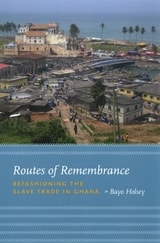
Routes of Remembrance
Refashioning the Slave Trade in GhanaBayo Holsey
University of Chicago Press, 2008
Routes of Remembrance tackles these questions by analyzing the slave trade’s absence from public versions of coastal Ghanaian family and community histories, its troubled presentation in the country’s classrooms and nationalist narratives, and its elaboration by the transnational tourism industry. Bayo Holsey discovers that in the past, African involvement in the slave trade was used by Europeans to denigrate local residents, and this stigma continues to shape the way Ghanaians imagine their historical past. Today, however, due to international attention and the curiosity of young Ghanaians, the slave trade has at last entered the public sphere, transforming it from a stigmatizing history to one that holds the potential to contest global inequalities.
Holsey’s study will be crucial to anyone involved in the global debate over how the slave trade endures in history and in memory.
Routine Crisis
An Ethnography of DisillusionSarah Muir
University of Chicago Press, 2021
Anthropologist Sarah Muir offers a cogent meditation on the limits of critique at this historical moment, drawing on deep experience in Argentina but reflecting on a truly global condition. If we feel things are being upended in a manner that is ongoing, tumultuous, and harmful, what would we need to do—and what would we need to give up—to usher in a revitalized critique for today's world? Routine Crisis is an original provocation and a challenge to think beyond the limits of exhaustion and reimagine a form of criticism for the twenty-first century.
Rowdy Carousals
The Bowery Boy on Stage, 1848-1913J. Chris Westgate
University of Iowa Press, 2024
The book’s examination of working-class whiteness on stage, in the theatre, and in print culture invites theatre historians and critics to check the impulse to downplay or ignore questions about race and ethnicity in discussion of the Bowery Boy. J. Chris Westgate further explores links between the Bowery Boy’s rowdyism in the nineteenth century and the resurgence of white supremacy in the early twenty-first century.
Roxana's Children
The Biography of a Nineteenth-Century Vermont FamilyLynn A. Bonfield
University of Massachusetts Press, 1995
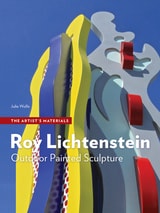
Roy Lichtenstein
Outdoor Painted SculptureJulie Wolfe
J. Paul Getty Trust, The, 0
Vibrant color was essential to the paintings of the American pop artist Roy Lichtenstein (1923–1997), and when he began exploring the creation of outdoor sculpture in the late 1970s, vivid hues remained an important part of his artistic vocabulary. Today, preserving these remarkable works after they have endured decades in outdoor environments around the world is an issue of pressing concern.
This abundantly illustrated volume is based on extensive archival research of Lichtenstein’s studio materials, interviews with his assistants, and a thorough technical analysis of the sculpture Three Brushstrokes. The book concludes with a chapter showing various options for the care, conservation, and restoration of his sculptural works, making this an essential resource for conservators, curators, and others interested both in the iconic artist and modern sculpture in general.

Roy Pascal and Georg Lukács
Towards a Re-Evaluation of the History of Marxist Literary Criticism in Britain?Helmut Peitsch
University of London Press, 2018
Roy Reuther and the UAW
Fighting for Workers and Civil RightsAlan Reuther
Michigan State University Press, 2025
Many of the injustices that Reuther fought continue to plague America today. This book provides important context for the current efforts of workers to organize, for the Black Lives Matter movement, and for efforts to reform the filibuster rule and stop voter suppression. It shows how dedicated individuals can overcome enormous odds to win great victories for social justice and emphasizes the potential connections between the labor and civil rights movements, offering hope for a more just future.
Royal Apologetic in the Ancient Near East
Andrew Knapp
SBL Press, 2015
A fresh exploration of apologetic material that pushes beyond form criticism
Andrew Knapp applies modern genre theory to seven ancient Near Eastern royal apologies that served to defend the legitimacy of kings who came to power under irregular circumstances. Knapp examines texts and inscriptions related to Telipinu, Hattusili III, David, Solomon, Hazael, Esarhaddon, and Nabonidus to identify transhistorical common issues that unite each discourse.
Features:
- Compares Hittite, Israelite, Aramean, Assyrian, and Babylonian apologies
- Examination of apologetic as a mode instead of a genre
- Charts and illustrations
Royal Capitalism
Wealth, Class, and Monarchy in ThailandPuangchon Unchanam
University of Wisconsin Press, 2022
The kingdom positioned itself to connect business elites, patronize local industries, and form strategic partnerships with global corporations. Instead of restraining or regulating royal power, white-collar workers joined with the crown to form a dynamic, symbiotic force that has left the lower classes to struggle in their wake. Unchanam presents a surprising case study that kings and queens live long and large in cooperation with the bourgeoisie's interests and ideology.
Royal Commentaries of the Incas and General History of Peru, Part One
By Garcilaso de la Vega; translated by Harold V. Livermore
University of Texas Press, 1966
Garcilaso de la Vega, the first native of the New World to attain importance as a writer in the Old, was born in Cuzco in 1539, the illegitimate son of a Spanish cavalier and an Inca princess. Although he was educated as a gentleman of Spain and won an important place in Spanish letters, Garcilaso was fiercely proud of his Indian ancestry and wrote under the name EI Inca.
Royal Commentaries of the Incas is the account of the origin, growth, and destruction of the Inca empire, from its legendary birth until the death in 1572 of its last independent ruler. For the material in Part One of Royal Commentaries—the history of the Inca civilization prior to the arrival of the Spaniards—Garcilaso drew upon "what I often heard as a child from the lips of my mother and her brothers and uncles and other elders . . . [of] the origin of the Inca kings, their greatness, the grandeur of their empire, their deeds and conquests, their government in peace and war, and the laws they ordained so greatly to the advantage of their vassals."
The conventionalized and formal history of an oral tradition, Royal Commentaries describes the gradual imposition of order and civilization upon a primitive and barbaric world. To this Garcilaso adds facts about the geography and the flora and fauna of the land; the folk practices, religion, and superstitions; the agricultural and the architectural and engineering achievements of the people; and a variety of other information drawn from his rich store of traditional knowledge, personal observation, or speculative philosophy.
Important though it is as history, Garcilaso's classic is much more: it is also a work of art. Its gracious and graceful style, skillfully translated by Harold V. Livermore, succeeds in bringing to life for the reader a genuine work of literature.
Part One covers the history of the Incas up to the arrival of the Spanish.
Royal Commentaries of the Incas and General History of Peru, Part Two
By Garcilaso de la Vega; translated by Harold V. Livermore
University of Texas Press, 1966
Garcilaso de la Vega, the first native of the New World to attain importance as a writer in the Old, was born in Cuzco in 1539, the illegitimate son of a Spanish cavalier and an Inca princess. Although he was educated as a gentleman of Spain and won an important place in Spanish letters, Garcilaso was fiercely proud of his Indian ancestry and wrote under the name El Inca.
Royal Commentaries of the Incas is the account of the origin, growth, and destruction of the Inca empire, from its legendary birth until the death in 1572 of its last independent ruler. For the material in Part One of Royal Commentaries—the history of the Inca civilization prior to the arrival of the Spaniards—Garcilaso drew upon "what I often heard as a child from the lips of my mother and her brothers and uncles and other elders . . . [of] the origin of the Inca kings, their greatness, the grandeur of their empire, their deeds and conquests, their government in peace and war, and the laws they ordained so greatly to the advantage of their vassals."
The conventionalized and formal history of an oral tradition, Royal Commentaries describes the gradual imposition of order and civilization upon a primitive and barbaric world. To this Garcilaso adds facts about the geography and the flora and fauna of the land; the folk practices, religion, and superstitions; the agricultural and the architectural and engineering achievements of the people; and a variety of other information drawn from his rich store of traditional knowledge, personal observation, or speculative philosophy.
Important though it is as history, Garcilaso's classic is much more: it is also a work of art. Its gracious and graceful style, skillfully translated by Harold V. Livermore, succeeds in bringing to life for the reader a genuine work of literature.
Part Two covers the Spanish conquest of the Incas.
Royal Commentaries of the Incas and General History of Peru, Parts One and Two
Harold V. Garcilaso de la Vega
University of Texas Press, 2014
Garcilaso de la Vega, the first native of the New World to attain importance as a writer in the Old, was born in Cuzco in 1539, the illegitimate son of a Spanish cavalier and an Inca princess. Although he was educated as a gentleman of Spain and won an important place in Spanish letters, Garcilaso was fiercely proud of his Indian ancestry and wrote under the name El Inca.
Royal Commentaries of the Incas is the account of the origin, growth, and destruction of the Inca empire, from its legendary birth until the death in 1572 of its last independent ruler. For the material in Part One of Royal Commentaries—the history of the Inca civilization prior to the arrival of the Spaniards—Garcilaso drew upon "what I often heard as a child from the lips of my mother and her brothers and uncles and other elders . . . [of] the origin of the Inca kings, their greatness, the grandeur of their empire, their deeds and conquests, their government in peace and war, and the laws they ordained so greatly to the advantage of their vassals."
The conventionalized and formal history of an oral tradition, Royal Commentaries describes the gradual imposition of order and civilization upon a primitive and barbaric world. To this Garcilaso adds facts about the geography and the flora and fauna of the land; the folk practices, religion, and superstitions; the agricultural and the architectural and engineering achievements of the people; and a variety of other information drawn from his rich store of traditional knowledge, personal observation, or speculative philosophy.
Important though it is as history, Garcilaso's classic is much more: it is also a work of art. Its gracious and graceful style, skillfully translated by Harold V. Livermore, succeeds in bringing to life for the reader a genuine work of literature.
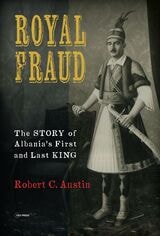
Royal Fraud
The Story of Albania’s First and Last KingRobert Austin
Central European University Press, 2024
Beginning its narrative in 1961, when Albanian King Zog I died in a Paris hospital after 22 years in exile, this book tells the colourful story of this Balkan country's first and only monarch. The road to becoming Europe's youngest president in 1925 and then king of Albania in 1928 was paved with feuds and assassinations, a political career-path common in the region. He craved the throne for several reasons; the Balkans were mostly run by kings, and Zog wanted to impress his mother and also give his six sisters an easy social rise.
Once king, his accomplishments were decidedly meagre. He spent most of his time keeping up appearances as a monarch despite the obvious fraud he had imposed on an illiterate and uninterested population. His one great success was that he had almost all his opponents assassinated, usually in broad daylight abroad.
Zog retained his power until his "friend" Mussolini ousted him in 1939. On the surface a Westernizer, this self-proclaimed ruler left Albania almost as he found it, with almost no roads or trains, thoroughly uneducated and utterly impoverished.
In his book, Robert Austin combines Zog’s adventurous life story with a studious analysis of Albania's political history from the fall of the Ottoman Empire to the threshold of Euro-Atlantic integration.
Royal Hittite Instructions and Related Administrative Texts
Jared L. Miller
SBL Press, 2013
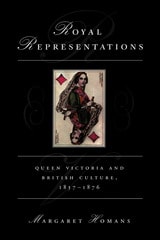
Royal Representations
Queen Victoria and British Culture, 1837-1876Margaret Homans
University of Chicago Press, 1998
Arguing that being, seeming, and appearing were crucial to Victoria's "rule," Homans explores the variability of Victoria's agency and of its representations using a wide array of literary, historical, and visual sources. Along the way she shows how Victoria provided a deeply equivocal model for women's powers in and out of marriage, how Victoria's dramatic public withdrawal after Albert's death helped to ease the monarchy's transition to an entirely symbolic role, and how Victoria's literary self-representations influenced debates over political self-representation.
Homans considers versions of Victoria in the work of Elizabeth Barrett Browning, George Eliot, John Ruskin, Margaret Oliphant, Lewis Carroll, Alfred Lord Tennyson, and Julia Margaret Cameron.
Rubble Films
German Cinema In Shadow Of 3Rd ReichRobert R. Shandley
Temple University Press, 2001
Rubble Films is a close look at German cinema in the immediate postwar era, and a careful examination of its relationship to Allied occupation. Shandley reveals how German film borrowed -- both literally and figuratively -- from its Nazi past, and how the occupied powers (specifically the US) used its position as victor to open Europe to Hollywood movie products and aesthetics.
Incorporating a careful reading of several important postwar films, Shandley also discusses how the German studio system operated immediately after the war, in the east and the west, giving special focus on DEFA, the east German studio that rose during Soviet occupation.
Pathbreaking in its research, Rubble Films sheds new light on a significant moment of German cultural rebirth, and adds a new dimension to the study of the history of film.
Rubble
The Afterlife of DestructionGastón R. Gordillo
Duke University Press, 2014
Rube Tube
CBS and Rural Comedy in the SixtiesSara K. Eskridge
University of Missouri Press, 2022
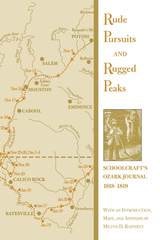
Rude Pursuits and Rugged Peaks
Schoolcraft's Ozark Journal, 1818-1819H. Schoolcraft
University of Arkansas Press, 1996
The journal kept by Schoolcraft as he traveled ninety days in the rugged terrain of southern Missouri and northern Arkansas was originally published in 1821 and has become an essential record of Ozark territorial society and natural history documenting some of the earliest American settlers in the region, the power and beauty of many lost portions of the White River, the majesty of the open prairies, and the wealth of wildlife once found in the Ozarks.
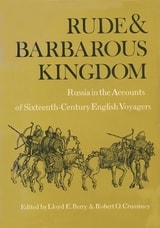
Rude and Barbarous Kingdom
Russia in the Accounts of Sixteenth-Century English VoyagersEdited by Lloyd E. Berry and Robert O. Crummey
University of Wisconsin Press, 1972
Lloyd E. Berry and Robert O. Crummey offer edited accounts of six English voyagers and their experiences in Muscovy Russia between 1553 and 1600. With modernized spelling and presentation, these accounts are accompanied by a glossary of Russian terms, introductions of their authors, and annotations that help put the travelers’ narratives into perspective.
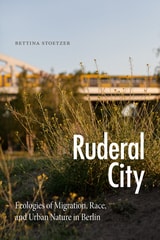
Ruderal City
Ecologies of Migration, Race, and Urban Nature in BerlinBettina Stoetzer
Duke University Press, 2022
Rudo Ensayo
A Description of Sonora and Arizona in 1764Juan Nentvig; Translated, Clarified, and Annotated by Alberto Francisco Pradeau and Robert R. Rasmussen
University of Arizona Press, 1980
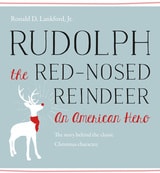
Rudolph the Red-Nosed Reindeer
An American HeroRonald D. Lankford
University Press of New England, 2016
Rugged and Sublime
The Civil War in ArkansasMark Christ
University of Arkansas Press, 1994
When one thinks of the American Civil War, such names as Vicksburg, Gettysburg, and Chancellorsville come immediately to mind. Few recall the battles in the Trans-Mississippi theater.
Rugged and Sublime goes a long way toward filling regrettable blanks in our memory of Arkansas’s role in Civil War. It explore the major clashes and locales of the war, including the state secession convention, seizure of the Little Rock Arsenal, the Battle of Wilson’s Creek, the Pea Ridge campaign, Marmaduke’s invasion of Missouri, the Battle of Helena, and the fall of Little Rock, as well as other actions. Rounding out this new and very readable account are studies of the devolution of Arkansas society when bands of guerillas and jayhawkers menaced the state, the surrender of the Confederate armies, and an assessment of losses.
Ruins and Rivals
The Making of Southwest ArchaeologyJames E. Snead
University of Arizona Press, 2001
William P. Clements Center for Southwest Studies, Southern Methodist University
Ruins are as central to the image of the American Southwest as are its mountains and deserts, and antiquity is a key element of modern southwestern heritage. Yet prior to the mid-nineteenth century this rich legacy was largely unknown to the outside world. While military expeditions first brought word of enigmatic relics to the eastern United States, the new intellectual frontier was seized by archaeologists, who used the results of their southwestern explorations to build a foundation for the scientific study of the American past.
In Ruins and Rivals, James Snead helps us understand the historical development of archaeology in the Southwest from the 1890s to the 1920s and its relationship with the popular conception of the region. He examines two major research traditions: expeditions dispatched from the major eastern museums and those supported by archaeological societies based in the Southwest itself. By comparing the projects of New York's American Museum of Natural History with those of the Southwest Museum in Los Angeles and the Santa Fe-based School of American Archaeology, he illustrates the way that competition for status and prestige shaped the way that archaeological remains were explored and interpreted. The decades-long competition between institutions and their advocates ultimately created an agenda for Southwest archaeology that has survived into modern times.
Snead takes us back to the days when the field was populated by relic hunters and eastern "museum men" who formed uneasy alliances among themselves and with western boosters who used archaeology to advance their own causes. Richard Wetherill, Frederic Ward Putnam, Charles Lummis, and other colorful characters all promoted their own archaeological endeavors before an audience that included wealthy patrons, museum administrators, and other cultural figures. The resulting competition between scholarly and public interests shifted among museum halls, legislative chambers, and the drawing rooms of Victorian America but always returned to the enigmatic ruins of Chaco Canyon, Bandelier, and Mesa Verde.
Ruins and Rivals contains a wealth of anecdotal material that conveys the flavor of digs and discoveries, scholars and scoundrels, tracing the origins of everything from national monuments to "Santa Fe Style." It rekindles the excitement of discovery, illustrating the role that archaeology played in creating the southwestern "past" and how that image of antiquity continues to exert its influence today.
Ruins
Classical Theater and Broken MemoryOdai Johnson
University of Michigan Press, 2018
Much of the theater of antiquity is marked by erasures: missing origins, broken genres, fragments of plays, ruins of architecture, absented gods, remains of older practices imperfectly buried and ghosting through the civic productions that replaced them. Ruins: Classical Theater and Broken Memory traces the remains, the remembering, and the forgetting of performance traditions of classical theater. The book argues that it is only when we look back over the accumulation of small evidence over a thousand-year sweep of classical theater that the remarkable and unequaled endurance of the tradition emerges. In the absence of more evidence, Odai Johnson turns instead to the absence itself, pressing its most legible gaps into a narrative about scars, vanishings, erasures, and silence: all the breakages that constitute the ruins of antiquity.
In ten wide-ranging case studies, theater history and performance theory are brought together to examine the texts, artifacts, and icons left behind, reading them in fresh ways to offer an elegantly written, extended meditation on “how the aesthetic of ruins offered a model for an ideal that dislodged and ultimately stood in for the historic.”
Rule Of Racialization
Class, Identity, GovernanceSteve Martinot
Temple University Press, 2002