Results by title
5159 books match the query 'Biography' and 217 start with r

Remission Quest
A Medical Sociologist Navigates CancerVirginia Adams O’Connell
Temple University Press, 2025
In the course of diagnosis, treatment, and recovery, Adams O’Connell lived through theories she had researched and applied her sociological ideas to help make sense of her personal experiences. Remission Quest chronicles how the reality of living with cancer changed her perspective on what she had studied. Adams O’Connell found her knowledge illustrated and enriched her sociological analysis of our medical institutions and that her own illness narrative shone new light on her theories.
With moving prose, Remission Quest captures the emotions of having cancer and dealing with elaborate medical systems, learning how to be a “good patient” while also managing indescribable fear and fatigue, and confronting questions about the meaning of life. Adams O’Connell’s experiences are both personal and universal. They provide inspiration, compassion, and understanding.
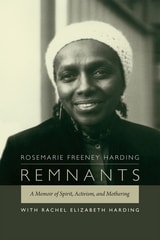
Remnants
A Memoir of Spirit, Activism, and MotheringRosemarie Freeney Harding with Rachel Elizabeth Harding
Duke University Press, 2015
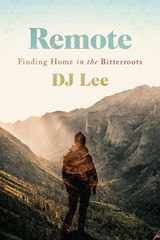
Remote
Finding Home in the BitterrootsDJ Lee
Oregon State University Press, 2020
When DJ Lee’s dear friend vanishes in the vast Selway-Bitterroot Wilderness of Idaho and Montana, she travels there to seek answers. The journey unexpectedly brings to an end her fifteen-year quest to uncover the buried history of her family in this remote place. Although Lee doesn’t find all the answers, she comes away with a penetrating memoir that weaves her present-day story with past excursions into the region, wilderness history, and family secrets.
As she grapples with wild animal stand-offs, bush plane flights in dense fog, raging forest fires, and strange characters who have come to the wilderness to seek or hide, Lee learns how she can survive emotionally and how the wilderness survives as an ecosystem. Her growing knowledge of the life cycles of salmon and wolverine, the regenerative role of fire, and Nimíipuu land practices helps her find intimacy in this remote landscape.
Skillfully intertwining history, outdoor adventure, and mystery, Lee’s memoir is an engaging contribution to the growing body of literature on women and wilderness and a lyrical tribute to the spiritual connection between people and the natural world.
Remote
Reflections on Life in the Shadow of CelebrityDavid Shields
University of Wisconsin Press, 2003
In this truly one-of-a-kind book, the author/narrator—a representative, in extremis, of contemporary American obsession with beauty, celebrity, transmitted image—finds himself suspended, fascinated, in the remoteness of our wall-to-wall mediascape. It is a remoteness that both perplexes and enthralls him.
Through dazzling sleight of hand in which the public becomes private and the private becomes public, the entire book—clicking from confession to family-album photograph to family chronicle to sexual fantasy to pseudo-scholarly footnote to reportage to personal essay to stand-up comedy to cultural criticism to literary criticism to film criticism to prose-poem to litany to outtake —becomes both an anatomy of American culture and a searing self-portrait.
David Shields reads his own life—reads our life—as if it were an allegory about remoteness and finds persuasive, hilarious, heartbreaking evidence wherever he goes.
Winner of the PEN / Revson Award?
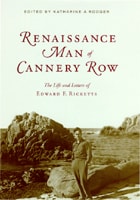
Renaissance Man of Cannery Row
The Life and Letters of Edward F. RickettsEdward F. Ricketts, edited by Katharine A. Rodger
University of Alabama Press, 2002
This portrait of one of John Steinbeck's closest friends illuminates the life and work of a figure central to the development of scientific and literary thought in the 20th century.
Marine biologist Edward F. Ricketts is perhaps best known as the inspiration for John Steinbeck's most empathic literary characters Doc in Cannery Row, Slim in Of Mice and Men, Jim Casy in The Grapes of Wrath, and Lee in East of Eden. The correspondence of this accomplished scientist, writer, and philosopher reveals the influential exchange of ideas he shared with such prominent thinkers and artists as Henry Miller, Joseph Campbell, Ellwood Graham, and James Fitzgerald, in addition to Steinbeck, all of whom were drawn to Ricketts's Monterey Bay laboratory, a haven of intellectual discourse and Bohemian culture in the 1930s and 1940s.
The 125 previously unpublished letters of this collection, housed at the Stanford University Library, document the broad range of Ricketts's interests and accomplishments during the last 12 and most productive years of his life. His handbook on Pacific marine life, Between Pacific Tides, is still in print, now in its fifth edition. The biologist's devotion to ecological conservation and his evolving philosophy of science as a cross-disciplinary, holistic pursuit led to the publication of The Sea of Cortez. Many of Ricketts's letters discuss his studies of the Pacific littoral and his theories of “phalanx” and transcendence. Epistles to family members, often tender and humorous, add dimension and depth to Steinbeck's mythologized depictions of Ricketts. Katharine A. Rodger has enriched the correspondence with an introductory biographical essay and a list of works cited.
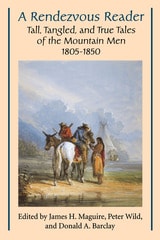
Rendezvous Reader
James H. Maguire
University of Utah Press, 1997
The early plans for Mount Rushmore called for blasting heroic likenesses of mountain men--Kit Carson, Jim Bridger, and John Colter-—into the solid mountain granite of South Dakota. Readers of this colorful volume will see the heroics and the brutally rugged individualism that made these fur trappers candidates for legend and infamy.
The accounts of the mountain men are spun from the experiences of a nation moving westward: a trapper returns from the dead; hunters feast on buffalo intestines served on a dirty blanket; a missionary woman is astounded by the violence and vulgarity of the trappers’ rendezvous. These are just a few of the narratives, tall tales, and just plain lies that make up A Rendezvous Reader.
The writers represented in this book include a dyed-in-the wool trappers, adventuring European nobles, upward-gazing eastern missionaries, and just plain hacks who never unsheathed a Green River knife or traveled farther west that the Ohio River. What these writers have in common is that all of them, whether they dealt mostly in fact of entirely in fantasy, helped to create a uniquely American icon: the mountain man.
Though A Rendezvous Reader will certainly be of interest to the historian and the historically curious, the true purpose of this anthology is to bring together in one volume the liveliest most readable accounts by and about the mountain men. Whether you sample or devour this anthology of mountain horrors and delights, it is a book guaranteed to entertain as well as inform.
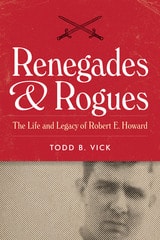
Renegades and Rogues
The Life and Legacy of Robert E. HowardBy Todd B. Vick
University of Texas Press, 2021
2022 Atlantean Award, Robert E. Howard Foundation
You may not know the name Robert E. Howard, but you probably know his work. His most famous creation, Conan the Barbarian, is an icon of popular culture. In hundreds of tales detailing the exploits of Conan, King Kull, and others, Howard helped to invent the sword and sorcery genre.
Todd B. Vick delves into newly available archives and probes Howard’s relationships, particularly with schoolteacher Novalyne Price, to bring a fresh, objective perspective to Howard's life. Like his many characters, Howard was an enigma and an outsider. He spent his formative years visiting the four corners of Texas, experiences that left a mark on his stories. He was intensely devoted to his mother, whom he nursed in her final days, and whose impending death contributed to his suicide in 1936 when he was just thirty years old.
Renegades and Rogues is an unequivocal journalistic account that situates Howard within the broader context of pulp literature. More than a realistic fantasist, he wrote westerns and horror stories as well, and engaged in avid correspondence with H. P. Lovecraft and other pulp writers of his day. Vick investigates Howard’s twelve-year writing career, analyzes the influences that underlay his celebrated characters, and assesses the afterlife of Conan, the figure in whom Howard's fervent imagination achieved its most durable expression.
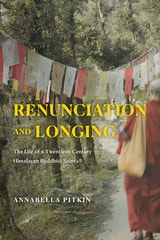
Renunciation and Longing
The Life of a Twentieth-Century Himalayan Buddhist SaintAnnabella Pitkin
University of Chicago Press, 2022
In the early twentieth century, Khunu Lama journeyed across Tibet and India, meeting Buddhist masters while sometimes living, so his students say, on cold porridge and water. Yet this elusive wandering renunciant became a revered teacher of the Fourteenth Dalai Lama. At Khunu Lama’s death in 1977, he was mourned by Himalayan nuns, Tibetan lamas, and American meditators alike. The many surviving stories about him reveal significant dimensions of Tibetan Buddhism, shedding new light on questions of religious affect and memory that reimagines cultural continuity beyond the binary of traditional and modern.
In Renunciation and Longing, Annabella Pitkin explores devotion, renunciation, and the teacher-student lineage relationship as resources for understanding Tibetan Buddhist approaches to modernity. By examining narrative accounts of the life of a remarkable twentieth-century Himalayan Buddhist and focusing on his remembered identity as a renunciant bodhisattva, Pitkin illuminates Tibetan and Himalayan practices of memory, affective connection, and mourning. Refuting long-standing caricatures of Tibetan Buddhist communities as unable to be modern because of their religious commitments, Pitkin shows instead how twentieth- and twenty-first-century Tibetan and Himalayan Buddhist narrators have used themes of renunciation, devotion, and lineage as touchstones for negotiating loss and vitalizing continuity.
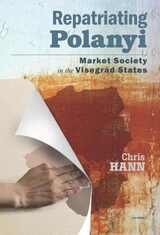
Repatriating Polanyi
Market Society in the Visegrád StatesChris Hann
Central European University Press, 2019
Karl Polanyi’s “substantivist” critique of market society has found new popularity in the era of neoliberal globalization. The author reclaims this polymath for contemporary anthropology, especially economic anthropology, in the context of Central Europe, where Polanyi (1886–1964) grew up. The Polanyian approach illuminates both the communist era, in particular the “market socialist” economy which evolved under János Kádár in Hungary, as well as the post-communist transformations of property relations, civil society and ethno-national identities throughout the region.
Hann’s analyses are based primarily on his own ethnographic investigations in Hungary and South-East Poland. They are pertinent to the rise of neo-nationalism in those countries, which is theorized as a malign countermovement to the domination of the market. At another level, Hann’s adaptation of Polanyi’s social philosophy points beyond current political turbulence to an original concept of “social Eurasia”.
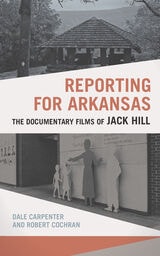
Reporting for Arkansas
The Documentary Films of Jack HillDale Carpenter
University of Arkansas Press, 2022
Jack Hill was a pioneering Arkansas documentary filmmaker dedicated to sharing his state’s history with a wider public. Following a decade as an award-winning investigative journalist and news anchor at KAIT in Jonesboro, Hill was pushed out by new management for his controversial reporting on corruption in a local sheriff’s office. What seemed like a major career setback turned out to be an opportunity: he founded the production company TeleVision for Arkansas, through which he produced dozens of original films. Although Hill brought an abiding interest in education and public health to this work from the beginning, he found his true calling in topics based in Arkansas history. Convinced that a greater acquaintance with the state’s most significant historical events would nurture a greater sense of homegrown pride, Hill tirelessly crisscrossed the state to capture the voices of hundreds of Arkansans recalling significant chapters in the state’s history, such as the oil boom in El Dorado and Smackover, the crucial contributions of the Arkansas Ordnance Plant in Jacksonville during World War II, and the role of Rosenwald Schools in expanding educational opportunities.
In Reporting for Arkansas, Dale Carpenter and Robert Cochran present a biography of Hill alongside an annotated selected filmography designed to accompany sixteen of his best films on subjects related to Arkansas history—all newly hosted online by the Center for Arkansas and Regional Studies at the University of Arkansas.
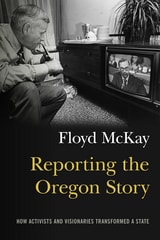
Reporting the Oregon Story
How Activists and Visionaries Transformed a StateFloyd J. McKay
Oregon State University Press, 2016
As a political reporter for The Oregon Statesman in Salem, and then as news analyst for KGW-TV in Portland, McKay was known for asking tough questions and pulling no punches. His reporting and commentaries ranged from analysis of the “Tom and Bob” rivalry, to the Vietnam War’s impact on Senators Wayne Morse and Mark Hatfield and the emergence of a new generation of Portland activists in the 1970s.
McKay and his colleagues were on the beaches as Oregon crafted its landmark Beach Bill, ensuring the protection of beaches for public use. They watched as activists turned back efforts to build a highway on the sand at Pacific City. Pitched battles over Oregon’s Bottle Bill, and the panic-inducing excitement of “Vortex”—the nation’s only state-sponsored rock festival—characterized the period. Covering the period from 1964-1986, McKay remembers the action, the players and the consequences, in this compelling and personal account.
As major actors fade from the scene and new leaders emerge, McKay casts a backwards glance at enduring Oregon legends. Half a century later, amid today’s cynicism and disillusionment with media, politics, and politicians, Reporting the Oregon Story serves as a timely reminder that charged politics and bitter rivalries can also come hand-in-hand with lasting social progress.
Reporting the Oregon Story will be relished by those who lived the history, and it will serve as a worthy introduction to Oregonians young and old who want a first-hand account of Oregon’s mid- twentieth-century political history and legislative legacy.
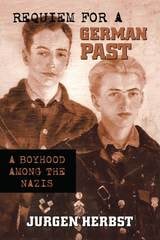
Requiem for a German Past
A Boyhood among the NazisJurgen Herbst
University of Wisconsin Press, 2002
Jurgen Herbst’s account of growing up in Nazi Germany from 1928 to 1948 is a boy’s experience of anti-Semitism and militarism from the inside. Herbst was a middle-class boy in a Lutheran family that saw value in Prussian military ideals and a mythic German past. His memoir is a compelling, understated tale of moral awakening.
Requiem for the Living
A MemoirMetcalf
University of Utah Press, 2014
Recipient of the Mayor's Award in Literary Arts at the Utah Arts Festival in 2015.
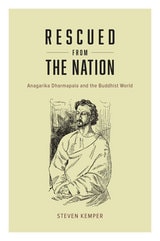
Rescued from the Nation
Anagarika Dharmapala and the Buddhist WorldSteven Kemper
University of Chicago Press, 2014
Drawing on huge stores of source materials—nearly one hundred diaries and notebooks—Kemper reconfigures Dharmapala as a world-renouncer first and a political activist second. Following Dharmapala on his travels between East Asia, South Asia, Europe, and the United States, he traces his lifelong project of creating a unified Buddhist world, recovering the place of the Buddha’s Enlightenment, and imitating the Buddha’s life course. The result is a needed corrective to Dharmapala’s embattled legacy, one that resituates Sri Lanka’s political awakening within the religious one that was Dharmapala’s life project.
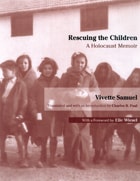
Rescuing the Children
A Holocaust MemoirVivette Samuel; Translated and with an introduction by Charles B. Paul; With a foreword by Elie Wiesel
University of Wisconsin Press, 2002
Resistance and Obedience to God
David Ferris
QuakerPress, 2001
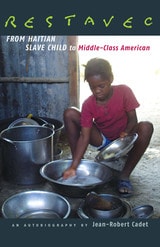
Restavec
From Haitian Slave Child to Middle-Class AmericanAn Autobiography by Jean-Robert Cadet
University of Texas Press, 1998
African slaves in Haiti emancipated themselves from French rule in 1804 and created the first independent black republic in the Western Hemisphere. But they reinstituted slavery for the most vulnerable members of Haitian society—the children of the poor—by using them as unpaid servants to the wealthy. These children were—and still are—restavecs, a French term whose literal meaning of "staying with" disguises the unremitting labor, abuse, and denial of education that characterizes the children's lives.
In this memoir, Jean-Robert Cadet recounts the harrowing story of his youth as a restavec, as well as his inspiring climb to middle-class American life. He vividly describes what it was like to be an unwanted illegitimate child "staying with" a well-to-do family whose physical and emotional abuse was sanctioned by Haitian society. He also details his subsequent life in the United States, where, despite American racism, he put himself through college and found success in the Army, in business, and finally in teaching.
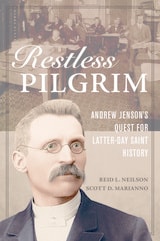
Restless Pilgrim
Andrew Jenson's Quest for Latter-day Saint HistoryReid L. Neilson and Scott D. Marianno
University of Illinois Press, 2022
Engaging and informed, Restless Pilgrim is a groundbreaking study of an important figure in Latter-day Saint intellectual life during a transformative era in Church history.

Restoring Baird's Image
Donald F. McLean
The Institution of Engineering and Technology, 2000
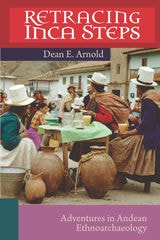
Retracing Inca Steps
Adventures in Andean EthnoarchaeologyDean E. Arnold
University of Utah Press, 2021
This first-person narrative reveals the challenges of living and working in another culture and the many obstacles one can encounter while doing field research. Arnold shares how his feelings of frustration and perceived failure led him to refocus his project, a shift that ultimately led to an entirely new perspective on pottery production in the Andes. Masterfully weaving details about Peru’s geography, ecology, history, prehistory, and culture into his story, he chronicles his change from small-town Midwesterner to a person of much broader vision, newly aware of his North American views and values.
Retracing Inca Steps is an excellent read for the lay person wishing to learn about the environment, prehistory, history, and culture of Peru as well as for students wanting to know more about the joys and rigors of fieldwork.
Return To Babylon
B Fagan
University Press of Colorado, 2007
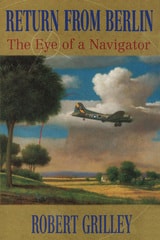
Return from Berlin
The Eye of a NavigatorRobert Grilley
University of Wisconsin Press, 2003
Wakened with flashlights on their faces in the predawn hours, he and his crew repeatedly face the Luftwaffe in battles five miles high, flying through flak "so thick you could get out and walk on it." Stretching their stamina to the limits, they succeed time after time in their missions to bomb munitions works, railyards, the Leüna synthetic oil plant at Merseburg in eastern Germany, the V2 rocket research center at Peenemünde on the distant Baltic Coast, and even to strike Hitler’s capital city, Berlin.
But Grilley finds interludes of unexpected grace and restoration on his days off, making serious drawings from nature at the neighboring Yokehill Farm. There he slowly cultivates a friendship with a curious eight-year-old, the lively child Elizabeth, who becomes for the combat flyer a symbol of survival.
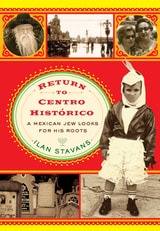
Return to Centro Histórico
A Mexican Jew Looks for His RootsStavans, Ilan
Rutgers University Press, 2012
After a stirring e-mail exchange with his father, awardwinning essayist and cultural commentator Ilan Stavans decided to do something bizarre: revisit his hometown, Mexico City, accompanied by a tourist guide. But rather than seeking his roots in the neighborhood where he grew up, he headed to the Centro Histórico, the downtown area at the heart of the world’s largest metropolis. It was there that conversos, the hidden Jews escaping the might of the Holy Office of the Inquisition, were burned at the stake. And, centuries later, it was the same section where Jewish immigrants, both Yiddish-speaking Ashkenazim and Sephardim from the Ottoman Empire, made their homes as peddlers. In a sense, Centro Histórico is to Mexico what the Lower East Side is to the United States: a platform for reinventing one’s self in the New World.
With the same linguistic verve and insight that has made him one of the most distinguished voices in American literature today, Ilan Stavans invites readers along for a personal journey that is not only his own, but that of an entire culture. In Return to Centro Histórico he makes it possible to understand the intimate role that Jews have played in the development of Hispanic civilization.
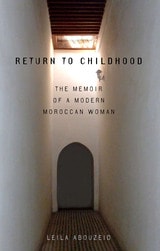
Return to Childhood
The Memoir of a Modern Moroccan WomanBy Leila Abouzeid
University of Texas Press, 1998
Leila Abouzeid, whose novel Year of the Elephant has gone through six reprintings, has now translated her childhood memoir into English. Published in Rabat in 1993 to critical acclaim, the work brings to life the interlocking dramas of family ties and political conflict.
Against a background of Morocco's struggle for independence from French colonial rule, Abouzeid charts the development of personal relationships, between generations as well as between husbands and wives. Abouzeid's father is a central figure; as a strong advocate of Moroccan nationalism, he was frequently imprisoned by the French and his family forced to flee the capital. Si Hmed was a public hero, but the young daughter's memories of her famous father and of the family's plight because of his political activities are not so idyllic.
The memoir utilizes multiple voices, especially those of women, in a manner reminiscent of the narrative strategies of the oral tradition in Moroccan culture. Return to Childhood may also be classified as an autobiography, a form only now gaining respect as a valid literary genre in the Middle East. Abouzeid's own introduction and Elizabeth Fernea's foreword discuss this new development in Arabic literature.
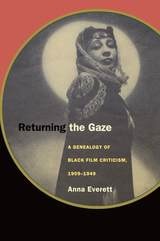
Returning the Gaze
A Genealogy of Black Film Criticism, 1909–1949Anna Everett
Duke University Press, 2001
Culling black newspapers, magazines, scholarly and political journals, and monographs, Everett has produced an unparalleled investigation of black critical writing on the early cinema during the era of racial segregation in America. Correcting the notion that black critical interest in the cinema began and ended with the well-documented press campaign against D. W. Griffith’s Birth of a Nation, she discovers that as early as 1909 black newspapers produced celebratory discourses about the cinema as a much-needed corrective to the predominance of theatrical blackface minstrelsy. She shows how, even before the Birth of a Nation controversy, the black press succeeded in drawing attention to both the callous commercial exploitation of lynching footage and the varied work of black film entrepreneurs. The book also reveals a feast of film commentaries that were produced during the “roaring twenties” and the jazz age by such writers as W.E.B. DuBois, Langston Hughes, and Zora Neale Hurston, as well as additional pieces that were written throughout the Depression and the pre– and post–war periods. Situating this wide-ranging and ideologically complex material in its myriad social, political, economic, and cultural contexts, Everett aims to resuscitate a historical tradition for contemporary black film literature and criticism.
Returning the Gaze will appeal to scholars and students of film, black and ethnic studies, American studies, cultural studies, literature, and journalism.
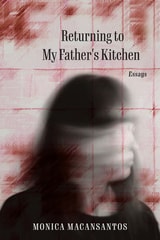
Returning to My Father's Kitchen
EssaysMonica Macansantos
Northwestern University Press, 2025
Feeling untethered after her beloved poet father passes away while she is living abroad, Monica Macansantos decides to return to the Philippines to regain her bearings. But with her father gone and her adult life rooted in the United States and New Zealand, can the land of her birth still serve as a place of healing?
In fifteen richly felt essays, Macansantos considers her family’s history in the Philippines, her own experiences as an exile, and the parent who was the heart of her family’s kitchen, whether standing at the stove to prepare dinner or sitting at the table to scribble in his notebook. Macansantos finds herself remaking her father’s chicken adobo, but also closely rereading his poems. As she reckons with his identity as an artist, she also comes into her own as a writer, and she invites us to consider whether it is possible to carry our homes with us wherever we go.
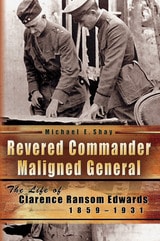
Revered Commander, Maligned General
The Life of Clarence Ransom Edwards, 1859-1931Michael E. Shay
University of Missouri Press, 2011
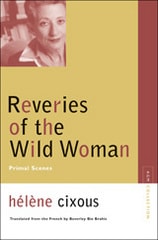
Reveries of the Wild Woman
Primal ScenesHelene Cixous
Northwestern University Press, 2006
I dreamt of one day arriving in Algeria.
Born in Oran, Algeria, Hélène Cixous spent her childhood in France's former colony. Reveries of the Wild Woman is her visceral memoir of a preadolescence that shaped her with intense feelings of alienation, yet also contributed, in a paradoxically essential way, to her development as a writer and philosopher.
Born to a French father and an Austro-German mother, both Jews, Cixous experienced a childhood fraught with racial and gender crisis. In her moving story she recounts how small events--a new dog, the gift of a bicycle--reverberate decades later as symbols filled with social and psychological meaning. She and her family endure a double alienation, by Algerians for being French and by the French for being Jewish, and Cixous builds her story on the themes of isolation and exclusion she felt in particular under the Vichy government and during the Algerian Civil War. Yet she also concedes that memories of Algeria awaken in her a longing for her home country, and ponders how that stormy relationship has influenced her life and thought.
A meditation on postcolonial identity and gender, Reveries of the Wild Woman is also a poignant recollection of how a girl's childhood is, indeed, author to the woman.
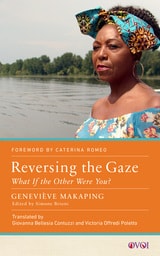
Reversing the Gaze
What If the Other Were You?Geneviève Makaping
Rutgers University Press, 2023
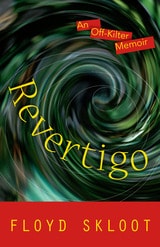
Revertigo
An Off-Kilter MemoirFloyd Skloot
University of Wisconsin Press, 2014
This intimate memoir—tenuous, shifting, sometimes humorous—demonstrates Skloot’s considerable literary skill honed as an award-winning essayist, memoirist, novelist, and poet. His recollections of a strange, spinning world prompt further musings on the forces of uncertainty, change, and displacement that have shaped him from childhood to late middle age, repeatedly knocking him awry, realigning his hopes and plans, even his perceptions. From the volatile forces of his mercurial, shape-shifting early years to his obsession with reading, acting, and writing, from the attack of vertigo to a trio of postvertigo (but nevertheless dizzying) journeys to Spain and England, and even to a place known only in his mother’s unhinged fantasies, Skloot makes sense of a life’s phantasmagoric unpredictability.
Finalist, Sarah Winnemucca Award for Creative Nonfiction, Oregon Book Awards
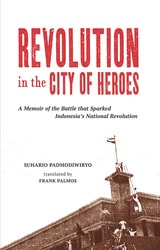
Revolution in the City of Heroes
A Memoir of the Battle that Sparked Indonesia's National RevolutionSuhario Padmodiwiryo
National University of Singapore Press, 2016
alias ‘Hario Kecik,” Revolution in the City of Heroes is an evocative first-hand
account of the popular uprising in Surabaya. It vividly portrays the chaotic swirl
of events and the heady emotion of young people ready to sacrifice their lives
for independence.
Newly liberated from nearly four brutal years under Japanese control, the
people of Indonesia faced great uncertainty in October 1945. As the British
Army attempted to take control of the city of Surabaya, maintain order and
deal with surrendered Japanese personnel, their actions were interpreted by
the young residents of Surabaya as a plan to restore Dutch colonial rule. In
response, the youth of the city seized Japanese arms and repelled the force sent
to occupy the city. They then held off British reinforcements for two weeks,
battling tanks and heavy artillery with little more than light weapons and sheer
audacity. Though eventually defeated, Surabaya’s defenders had set the stage
for Indonesia’s national revolution.
Rewrite Man
The Life and Career of Screenwriter Warren SkaarenBy Alison Macor
University of Texas Press, 2017
In Rewrite Man, Alison Macor tells an engrossing story about the challenges faced by a top screenwriter at the crossroads of mixed and conflicting agendas in Hollywood. Whether writing love scenes for Tom Cruise on the set of Top Gun, running lines with Michael Keaton on Beetlejuice, or crafting Nietzschean dialogue for Jack Nicholson on Batman, Warren Skaaren collaborated with many of New Hollywood’s most powerful stars, producers, and directors. By the time of his premature death in 1990, Skaaren was one of Hollywood’s highest-paid writers, although he rarely left Austin, where he lived and worked. Yet he had to battle for shared screenwriting credit on these films, and his struggles yield a new understanding of the secretive screen credit arbitration process—a process that has only become more intense, more litigious, and more public for screenwriters and their union, the Writers Guild of America, since Skaaren’s time. His story, told through a wealth of archival material, illuminates crucial issues of film authorship that have seldom been explored.
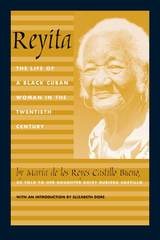
Reyita
The Life of a Black Cuban Woman in the Twentieth CenturyMaría de los Reyes Castillo Bueno
Duke University Press, 2000
Sensitive to and deeply knowledgeable of the systemic causes and consequences of poverty, Reyita’s testimony considers the impact of slavery on succeeding generations, her mother’s internalized racism, and Cuba’s residual discrimination. The humiliation and poverty inflicted on the black Cuban community as well as her decision to marry a white man to ensure a higher standard of living form the basis of other chapters. Reyita actively participated in the life of the community—often caring for the children of prostitutes along with her own eight children and giving herbal medicine and “spiritualist” guidance to ill or troubled neighbors. She describes her growing resistance, over five decades of marriage, to her husband’s sexism and negativity. Strong-willed and frank about her sexuality as well as her religious and political convictions, Reyita recounts joining the revolutionary movement in the face of her husband’s stern objections, a decision that added significant political purpose to her life. At book’s end, Reyita radiates gratification that her 118 descendants have many different hues of skin, enjoy a variety of professions, and—“most importantly”—are free of racial prejudice.
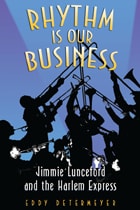
Rhythm Is Our Business
Jimmie Lunceford and the Harlem ExpressEddy Determeyer
University of Michigan Press, 2010
"The first detailed study of one of the swing era's most important bands and the first biography of its leader, Jimmie Lunceford. This is a most welcome and significant contribution to the literature of jazz, to our understanding of a vital period in jazz history, and to the music of an outstanding and unique ensemble that was emblematic of the swing era."
---Dan Morgenstern, Director, Institute of Jazz Studies, Rutgers University, and author of Living with Jazz
"We were more popular than Benny Goodman! We were the first black band that played the Paramount Theater, downtown New York. Not Duke Ellington, not Count Basie. Six weeks in a row, four or five shows daily, and it was packed every day, people lining up around the corner constantly! We could outdraw any band in the country."
---Gerald Wilson
"Jimmie Lunceford was a key swing-era figure, and no book covers his biography and music like this one does. Grounded in years of research and inspired by the writer's love of his subject, the book fills a critical gap in the jazz literature and will be essential reading for all swing aficionados."
---Jeffrey Magee, Associate Professor of Musicology, University of Illinois, Urbana-Champaign, and author of The Uncrowned King of Swing: Fletcher Henderson and Big Band Jazz
"It was Jimmie Lunceford and his orchestra that inspired me to become a musician. I was eleven years old at the time. When I heard that band play I said to myself, 'That's for me. I want to become a musician.' I still get inspired when I listen to some of their recordings. The Jimmie Lunceford Orchestra is one of the great jazz orchestras of all time."
---Horace Silver
"Jimmie Lunceford has the best of all bands. Duke is great, Basie is remarkable, but Lunceford tops them both."
---Glenn Miller
In the 1930s, swing music reigned, and the Jimmie Lunceford Orchestra was the hottest and hippest attraction on the black dance circuits. Known for its impeccable appearance and infectious rhythms, Lunceford's group was able to out-swing and outdraw any band. For ten consecutive years, they were the best-loved attraction at Harlem's famed Apollo Theater. The group's hit recordings sold in the hundreds of thousands, and Jimmie Lunceford's band rivaled Ellington's for popularity in the African American community.
Jimmie Lunceford was also an innovator, elevating big-band showmanship to an art and introducing such novel instruments as the electric guitar and bass. The band's arrangements, written by Sy Oliver, Edwin Wilcox, Gerald Wilson, Billy Moore, Jr., and Tadd Dameron, were daring and forward looking, influencing generations of big-band writers.
Rhythm Is Our Business traces the development of the Jimmie Lunceford Orchestra from its infant days as a high school band in Memphis to its record-breaking tours across the United States, Canada, and Europe. The book also unveils Lunceford's romantic yet ill-fated involvement with Yolande Du Bois, daughter of famous writer and opinion leader W.E.B. Du Bois. And by reconstructing Lunceford's last day, the book offers a glimpse into the mysteries surrounding the leader's untimely death. This is essential reading for anyone interested in the history and legacy of swing.
Eddy Determeyer has been a freelance music journalist for more than three decades. In 1984 Determeyer wrote a seven-part series on Jimmie Lunceford for the Dutch magazine Jazz Nu. Determeyer has written thousands of articles on music for a variety of Dutch publications and is the author of several books. He currently produces the Holiday for Hipsters radio show for Dutch station Concertzender.
Cover image: Lunceford brass section, ca. late 1936. Left to right: Paul Webster, Eddie Durham, Sy Oliver, Elmer Crumbley, Eddie Tompkins, Russell Bowles. (Bertil Lyttkens Collection)
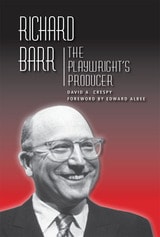
Richard Barr
The Playwright's ProducerDavid A. Crespy
Southern Illinois University Press, 2013
In Richard Barr: The Playwright’s Producer, author David A. Crespy investigates the career of one of the theatre’s most vivid luminaries, from his work on the film and radio productions of Orson Welles to his triumphant—and final—production of Stephen Sondheim’s Sweeney Todd: The Demon Barber of Fleet Street. Explored in detail along the way are the producer’s relationship with playwright Edward Albee, whose major plays such as A Zoo Story and Who’s Afraid of Virginia Woolf Barr was the first to produce, and his innovative productions of controversial works by playwrights like Samuel Beckett, Terrence McNally, and Sam Shepard. Crespy draws on Barr’s own writings on the theatre, his personal papers, and more than sixty interviews with theatre professionals to offer insight into a man whose legacy to producers and playwrights resounds in the theatre world. Also included in the volume are a foreword and an afterword by Edward Albee, a three-time Pulitzer Prize–winning playwright and one of Barr’s closest associates.
Richard Bong
World War II Flying AcePete Barnes
Wisconsin Historical Society Press, 2009
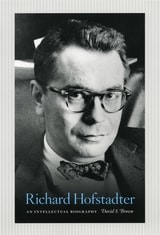
Richard Hofstadter
An Intellectual BiographyDavid S. Brown
University of Chicago Press, 2006
In this masterful biography, David Brown explores Hofstadter’s life within the context of the rise and fall of American liberalism. A fierce advocate of academic freedom, racial justice, and political pluralism, Hofstadter charted in his works the changing nature of American society from a provincial Protestant foundation to one based on the values of an urban and multiethnic nation. According to Brown, Hofstadter presciently saw in rural America’s hostility to this cosmopolitanism signs of an anti-intellectualism that he believed was dangerously endemic in a mass democracy.
By the end of a life cut short by leukemia, Hofstadter had won two Pulitzer Prizes, and his books had attracted international attention. Yet the Vietnam years, as Brown shows, culminated in a conservative reaction to his work that is still with us. Whether one agrees with Hofstadter’s critics or with the noted historian John Higham, who insisted that Hofstadter was “the finest and also the most humane intelligence of our generation,” the importance of this seminal thinker cannot be denied. As this fascinating biography ultimately shows, Hofstadter’s observations on the struggle between conservative and liberal America are relevant to our own times, and his legacy challenges us to this day.
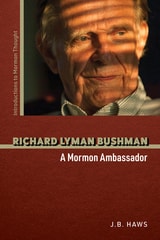
Richard Lyman Bushman
A Mormon AmbassadorJ.B. Haws
University of Illinois Press, 2026
As a historian, theologian, and mentor, Richard Lyman Bushman greatly influenced the shaping of how those inside and outside the Church perceived Latter-day Saint history. J.B. Haws’s examination of Bushman’s life and thought tells the story of a scholar with a foot in both the LDS faith and secular society, and his efforts to bridge their two very different worldviews.
Bushman integrated his acquired fluency and comfort inside academia with his native understanding of the Church of Jesus Christ of Latter-day Saints. In his work, he translated, interpreted, and explained the LDS faith to the wider world. His professional status strengthened his arguments for an honest, transparent, and responsible approach to Church history. His devoted religious practice convinced his co-religionists of his sincerity. To his academic colleagues, Bushman advocated for a religious perspective in scholarship, while widespread respect for his work opened the door to his ideas.
Perceptive and illuminating, Richard Lyman Bushman explores the far-reaching contributions of an important LDS historian, theologian, and teacher.
Richard Neuberger
Oregon Politics and the Making of a US SenatorStephen A. Forrester
Oregon State University Press, 2025
Richard L. Neuberger is a consequential but often forgotten figure in Oregon history, largely due to his early death at forty-seven, near the end of his only term in the United States Senate. But his life and legacy continue to inspire Oregonians and influence politicians.
In 1954, Neuberger was the first Democrat elected to the Senate from Oregon in forty years. His election moved Oregon from a solidly Republican state to one where liberal Democrats could control the legislature as well as statewide offices. He was an especially productive freshman, on both Oregon natural resource issues and national matters. Neuberger was also only the second Jewish person elected to the Senate following passage of the 17th Amendment, which required the direct election of senators.
Prior to entering politics, Neuberger was best known as a journalist. He was a prolific freelance writer, publishing 750 magazine articles and six books. In 1933, at the age of twenty-one, he visited Germany and penned the first firsthand account of Brownshirt violence written by an American; his editor at The Nation called it “an epoch-making article.”
Neuberger was ahead of his time in his advocacy of conservation, in his political partnership with his wife Maurine—who successfully ran for his Senate seat after his untimely death in 1960—and in his outspoken liberal advocacy at a time when Oregon was considerably more conservative than it is today. Tom McCall, later one of the most influential governors in the state’s history, considered Neuberger his role model as a conservationist.
In this definitive biography—more than forty years in the making—Stephen Forrester documents Neuberger’s extraordinary life and career, highlighting a legacy that includes shaping Oregon’s renowned conservation policies and developing the state’s modern Democratic party.
Richard Owen
Biology without DarwinNicolaas A. Rupke
University of Chicago Press, 2009
In the mid-1850s, no scientist in the British Empire was more visible than Richard Owen. Mentioned in the same breath as Isaac Newton and championed as Britain’s answer to France’s Georges Cuvier and Germany’s Alexander von Humboldt, Owen was, as the Times declared in 1856, the most “distinguished man of science in the country.” But, a century and a half later, Owen remains largely obscured by the shadow of the most famous Victorian naturalist of all, Charles Darwin. Publicly marginalized by his contemporaries for his critique of natural selection, Owen suffered personal attacks that undermined his credibility long after his name faded from history.
With this innovative biography, Nicolaas A. Rupke resuscitates Owen’s reputation. Arguing that Owen should no longer be judged by the evolution dispute that figured in only a minor part of his work, Rupke stresses context, emphasizing the importance of places and practices in the production and reception of scientific knowledge. Dovetailing with the recent resurgence of interest in Owen’s life and work, Rupke’s book brings the forgotten naturalist back into the canon of the history of science and demonstrates how much biology existed with, and without, Darwin
Richard Wagner
A Life in MusicMartin Geck
University of Chicago Press, 2013
Wagner has always inspired passionate admirers as well as numerous detractors, with the result that he has achieved a mythical stature nearly equal to that of the Valkyries and Viking heroes he popularized. There are few, if any, scholars today who know more about Wagner and his legacy than Geck, who builds upon his extensive research and considerable knowledge as one of the editors of the Complete Works to offer a distinctive appraisal of the composer and the operas. Using a wide range of sources, from contemporary scholars to the composer’s own words, Geck explores key ideas in Wagner’s life and works, while always keeping the music in the foreground. Geck discusses not only all the major operas, but also several unfinished operas and even the composer’s early attempts at quasi-Shakespearean drama.
Richard Wagner: A Life in Music is a landmark study of one of music’s most important figures, offering something new to opera enthusiasts, Wagnerians, and anti-Wagnerians alike.
Richer of Saint-Remi
Justin Lake
Catholic University of America Press, 2013
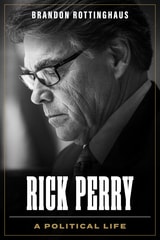
Rick Perry
A Political LifeBrandon Rottinghaus
University of Texas Press, 2024
How Rick Perry navigated and shaped Texas politics as the state’s longest serving governor.
Rick Perry, the charming rancher, pilot, and politician from West Texas who was governor from 2000 to 2015, is one of the most important but polarizing figures in the state's history. Over the nearly forty years he spent in the political arena, his political instincts served as a radar primed to sense future political opportunities. Hugging the arc of Texas political change, he shifted from a rural, “blue dog” Democrat to one of the most conservative politicians the state had elected up to that time, overseeing the enactment of controversial redistricting, voting, and abortion measures. Yet his evolution was complicated and incomplete, as his stands on such topics as immigration, vaccine requirements, and the use of state funds to attract business ran into opposition from a growing and ever-more conservative wing of the Republican Party in Texas—and the nation.
Rick Perry is both a biography of Perry as a politician and a study of the shifts in state politics that took place during his time in office. Demonstrating that Perry ranks among the most consequential governors in Texas history, Brandon Rottinghaus chronicles the profound ways he accumulated power and shaped the governorship.
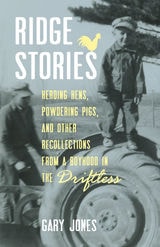
Ridge Stories
Herding Hens, Powdering Pigs, and Other Recollections from a Boyhood in the DriftlessGary Jones
Wisconsin Historical Society Press, 2019
Raised on a small dairy farm in the Driftless Area in the mid-twentieth century, Gary Jones gets real about his rural roots. In this collection of interrelated stories, Jones writes with plainspoken warmth and irreverence about farm, family, and folks on the ridge. Readers will meet Gramp Jones, whose oversized overalls saved him from losing a chunk of flesh to an irate sow; the young one-room-school teacher who helped the kids make sled jumps at recess; Charlotte, the lawn-mowing sheep who once ended up in the living room; Victor the pig-cutter, who learned his trade from folk tradition rather than vet school; and other colorful characters of the ridge. Often humorous and occasionally touching, Jones’s essays paint a vivid picture that will entertain city and country folk alike.
Riding
Pardis Mahdavi
Duke University Press, 2025
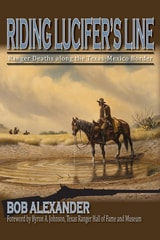
Riding Lucifer's Line
Ranger Deaths along the Texas-Mexico BorderBob Alexander
University of North Texas Press, 2013
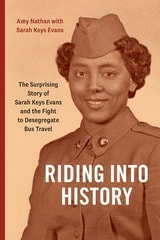
Riding into History
The Surprising Story of Sarah Keys Evans and the Fight to Desegregate Bus TravelAmy Nathan with Sarah Keys Evans
Duke University Press, 2026
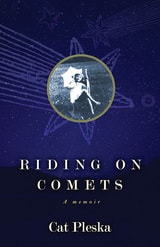
Riding on Comets
A MemoirCat Pleska
West Virginia University Press, 2015
Riding on Comets is the true story of an only child growing up in a working-class family during the 1950s and ‘60s.
As the family storyteller, Cat Pleska whispers and shouts about her life growing up around savvy, strong women and hard-working, hard-drinking men. Unlike many family stories set within Appalachia, this story provides an uncommon glimpse into this region: not coal, but an aluminum plant; not hollers, but small-town America; not hillbillies, but a hard-working family with traditional values.
From the dinner table, to the back porch, to the sprawling countryside, Cat Pleska reveals the sometimes tender, sometimes frightening education of a child who listens at the knees of these giants. She mimics and learns every nuance, every rhythm—how they laugh, smoke, cuss, fight, love, and tell stories—as she unwittingly prepares to carry their tales forward, their words and actions forever etched in her mind. And finally, she discovers a life story of her own.
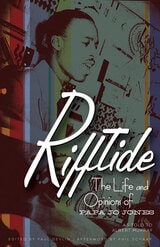
Rifftide
The Life and Opinions of Papa Jo JonesPapa Jo Jones
University of Minnesota Press, 2011
Finalist for Best Jazz Book of the Year Award from the Jazz Journalists Association
The things that I have, I’ll give to you. This is my legacy with you, Albert. This is my last hoo-rah. So begins the autobiography of Jonathan David Samuel Jones—or as the world better knows him, Papa Jo Jones. Playing with Count Basie and his orchestra when they exploded out of Kansas City in 1936 and took the world by storm, Jones went on to inspire generations of jazz drummers, but until now few have had access to his own remarkable story.
Rifftide presents Jones’s inimitable life and opinions, as originally told by Jones to the prominent jazz historian and novelist Albert Murray and now transcribed, arranged, and introduced by Paul Devlin. Drawn from fourteen tapes recorded over eight years beginning in 1977, Rifftide is an impressionistic series of riffs and tales by Jones: his life as a musician on the road in segregated America, his outstanding solo career following his years with the Basie band, and his interactions with iconic artists and cultural figures of the time, including Ralph Ellison, James Baldwin, Langston Hughes, Duke Ellington, Louis Armstrong, Bill “Bojangles” Robinson, and Satchell Paige.
A true American original and jazz luminary, Papa Jo Jones bedazzled and intrigued many with his outrageous, volatile personality and his innovative drumming—and nowhere does his fierce intellect and humor shine more marvelously than in his life’s telling. With a fascinating introduction and annotations by Paul Devlin and an afterword by Phil Schaap, jazz historian and longtime friend of Jones, Rifftide reveals a man at the forefront of both a whole new form of music and a country in the midst of incredible turmoil and opportunity. As Jones himself puts it: Listen man, I’ve had a hell of a time . . .

Right Back Where I Started
A Memoir in MusicDavid Itkin
University of North Texas Press, 2025