28167 books match the query 'History' and 1206 start with r
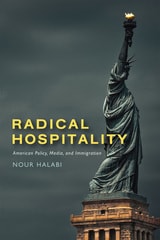
cover of Radical Hospitality: American Policy, Media, and Immigration

Radical Hospitality

American Policy, Media, and Immigration

Nour Halabi

Rutgers University Press, 2022
Radical Hospitality: American Policy, Media, and Immigration re-imagines the ethical relationship of host societies towards newcomers by applying the concept of hospitality to two specific realms that impact the lives of immigrants in the United States: policy and media. The book calls attention to the moral responsibility of the host in welcoming a stranger. It sets the stage for the analysis with a historical background of the first host-guest diads of American hospitality, arguing that the early history of American hospitality was marked by the degeneration of the host-guest relationship into one of host-hostage, normalizing a racial discrimination that continues to plague immigration hospitality to this day. Author Nour Halabi presents a historical policy and media discourse analysis of immigration regulation and media coverage during three periods of US history: the 1880s and the Chinese Exclusion Act, the 1920s and the National Origins Act and the 2000s and the Muslim travel ban. In so doing, it demonstrates how U.S. immigration hospitality, from its peaks in the post-Independence period to its nadir in the Muslim travel ban, has fallen short of true hospitality in spite of the nation’s oft-touted identity as a “nation of immigrants.” At the same time, the book calls attention to how a discourse of hospitality, although fraught, may allow a radical reimagining of belonging and authority that unsettles settler-colonial assumptions of belonging and welcome a restorative outlook to immigration policy and its media coverage in society.
[more]
cover of Radical Jewish Politics: A Global Perspective

Radical Jewish Politics

A Global Perspective

Nathaniel Deutsch

Rutgers University Press, 2026
For the first time, this volume centers the rich but little known history of radical Jewish politics in the Middle East and North Africa and puts it into conversation with developments in the Americas, South Africa, Soviet Asia, and Europe. Jews were attracted to radical politics in the nineteenth and twentieth centuries to transform the societies they lived in but also out of a deep desire to belong. Somewhat paradoxically, then, radical politics held out the enticing possibility of normalization for Jews, even as it frequently resulted in their further alienation or persecution. In some cases, Jewish radicals sought recognition and autonomy as Jews; in others, Jews labored to be accepted as full-fledged citizens of their home countries; in still others, they tried to escape Jewishness altogether.  Jewish experiences of modernity, colonialism, race, nationalism, emancipation, war, and migration, serve as the connective tissue that binds together radical Jewish politics from Baghdad to Buenos Aires.
 
[more]
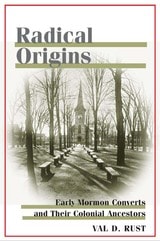
cover of Radical Origins: Early Mormon Converts and Their Colonial Ancestors

Radical Origins

Early Mormon Converts and Their Colonial Ancestors

Val D. Rust

University of Illinois Press, 2004

Val D. Rust's Radical Origins investigates whether the unconventional religious beliefs of their colonial ancestors predisposed early Mormon converts to embrace the (radical( message of Joseph Smith Jr. and his new church.
 
Utilizing a unique set of meticulously compiled genealogical data, Rust uncovers the ancestors of early church members throughout what we understand as the radical segment of the Protestant Reformation. Coming from backgrounds in the Antinomians, Seekers, Anabaptists, Quakers, and the Family of Love, many colonial ancestors of the church(s early members had been ostracized from their communities.  Expelled from the Massachusetts Bay Colony, some were whipped, mutilated, or even hanged for their beliefs.
 
Rust shows how family traditions can be passed down through the generations, and can ultimately shape the outlook of future generations. This, he argues, extends the historical role of Mormons by giving their early story significant implications for understanding the larger context of American colonial history. Featuring a provocative thesis and stunning original research, Radical Origins is a remarkable contribution to our understanding of religion in the development of American culture and the field of Mormon history.
 
[more]
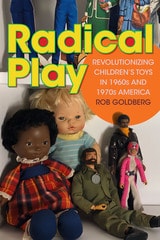
cover of Radical Play: Revolutionizing Children’s Toys in 1960s and 1970s America

Radical Play

Revolutionizing Children’s Toys in 1960s and 1970s America

Rob Goldberg

Duke University Press, 2023
In Radical Play Rob Goldberg recovers a little-known history of American children’s culture in the 1960s and 1970s by showing how dolls, guns, action figures, and other toys galvanized and symbolized new visions of social, racial, and gender justice. From a nationwide movement to oppose the sale of war toys during the Vietnam War to the founding of the company Shindana Toys by Black Power movement activists and the efforts of feminist groups to promote and produce nonsexist and racially diverse toys, Goldberg returns readers to a defining moment in the history of childhood when politics, parenting, and purchasing converged. Goldberg traces not only how movement activists brought their progressive politics to the playroom by enlisting toys in the era’s culture wars but also how the children’s culture industry navigated the explosive politics and turmoil of the time in creative and socially conscious ways. Outlining how toys shaped and were shaped by radical visions, Goldberg locates the moment Americans first came to understand the world of toys—from Barbie to G.I. Joe—as much more than child’s play.
[more]
cover of Radical Protest and Social Structure: The Southern Farmers' Alliance and Cotton Tenancy, 1880-1890

Radical Protest and Social Structure

The Southern Farmers' Alliance and Cotton Tenancy, 1880-1890

Michael Schwartz

University of Chicago Press, 1988
"Michael Schwartz's book is really three books in one—an analysis of the structural changes that produced one of the most oppressive social systems the world has known (the one-crop cotton tenancy economy and the system of institutionalized racism and authoritarian one-party politics that was required to preserve the fragile economic arrangement); a theoretical analysis of the origins, mobilization, and outcome of insurgent challenges; and a meticulous application of that theory to the rise and collapse of the Populist movement."—Craig Jenkins, Theory and Society


[more]
cover of Radical Representations: Politics and Form in U.S. Proletarian Fiction, 1929–1941

Radical Representations

Politics and Form in U.S. Proletarian Fiction, 1929–1941

Barbara Foley

Duke University Press, 1994

In this revisionary study, Barbara Foley challenges prevalent myths about left-wing culture in the Depression-era U.S. Focusing on a broad range of proletarian novels and little-known archival material, the author recaptures an important literature and rewrites a segment of American cultural history long obscured and distorted by the anti-Communist bias of contemporaries and critics.
Josephine Herbst, William Attaway, Jack Conroy, Thomas Bell and Tillie Olsen, are among the radical writers whose work Foley reexamines. Her fresh approach to the U.S. radicals' debates over experimentalism, the relation of art to propaganda, and the nature of proletarian literature recasts the relation of writers to the organized left. Her grasp of the left's positions on the "Negro question" and the "woman question" enables a nuanced analysis of the relation of class to race and gender in the proletarian novel. Moreover, examining the articulation of political doctrine in different novelistic modes, Foley develops a model for discussing the interplay between politics and literary conventions and genres.
Radical Representations recovers a literature of theoretical and artistic value meriting renewed attention form those interested in American literature, American studies, the U. S. left, and cultural studies generally.
[more]
cover of Radical Roots: Public History and a Tradition of Social Justice Activism

Radical Roots

Public History and a Tradition of Social Justice Activism

Denise D. Meringolo

Amherst College Press, 2021

While all history has the potential to be political, public history is uniquely so: public historians engage in historical inquiry outside the bubble of scholarly discourse, relying on social networks, political goals, practices, and habits of mind that differ from traditional historians. Radical Roots: Public History and a Tradition of Social Justice Activism theorizes and defines public history as future-focused, committed to the advancement of social justice, and engaged in creating a more inclusive public record. Edited by Denise D. Meringolo and with contributions from the field’s leading figures, this groundbreaking collection addresses major topics such as museum practices, oral history, grassroots preservation, and community-based learning. It demonstrates the core practices that have shaped radical public history, how they have been mobilized to promote social justice, and how public historians can facilitate civic discourse in order to promote equality.

"This is a much-needed recalibration, as professional organizations and practitioners across genres of public history struggle to diversify their own ranks and to bring contemporary activists into the fold." — Catherine Gudis, University of California, Riverside.

"Taken all together, the articles in this volume highlight the persistent threads of justice work that has characterized the multifaceted history of public history as well as the challenges faced in doing that work."—Patricia Mooney-Melvin, The Public Historian
[more]
cover of Radical Science: Plants, Agency, and Nineteenth-Century British Narrative

Radical Science

Plants, Agency, and Nineteenth-Century British Narrative

Mary Bowden

The Ohio State University Press, 2026
Can plants move? Can they think? Can they act? In Radical Science, Mary Bowden shows that debates about plants’ capabilities are not new but can be traced to the nineteenth century, where they moved from scientific inquiries to popular articles and literary fiction. Examining the work of nineteenth-century physiological botanists, Bowden expands beyond Charles Darwin’s work in the field to uncover the full story of these debates and the impacts they had on literature, culture, and people. While many have interpreted the frequent comparisons between plants and people in nineteenth-century literature to be exemplary of aesthetic values or sexual symbolism, Bowden maintains that comparisons between plants and women, members of the working class, and people of color reiterate botanical debates about how to recognize agency in beings that are assumed to be passive. Studying the scientific texts of Darwin and Maria Elizabetha Jacson alongside social problem novels by Elizabeth Gaskell and Charles Kingsley and early science fiction by H. G. Wells, Radical Science foregrounds the connection between science and literature and ultimately suggests that we look to the propositions of nineteenth-century physiological botany to find more sustaining models of social and environmental relationship.
[more]
cover of Radical Sensations: World Movements, Violence, and Visual Culture

Radical Sensations

World Movements, Violence, and Visual Culture

Shelley Streeby

Duke University Press, 2013
The significant anarchist, black, and socialist world-movements that emerged in the late nineteenth century and early twentieth adapted discourses of sentiment and sensation and used the era's new forms of visual culture to move people to participate in projects of social, political, and economic transformation. Drawing attention to the vast archive of images and texts created by radicals prior to the 1930s, Shelley Streeby analyzes representations of violence and of abuses of state power in response to the Haymarket police riot, of the trial and execution of the Chicago anarchists, and of the mistreatment and imprisonment of Ricardo and Enrique Flores Magón and other members of the Partido Liberal Mexicano. She considers radicals' reactions to and depictions of U.S. imperialism, state violence against the Yaqui Indians in the U.S.-Mexico borderlands, the failure of the United States to enact laws against lynching, and the harsh repression of radicals that accelerated after the United States entered the First World War. By focusing on the adaptation and critique of sentiment, sensation, and visual culture by radical world-movements in the period between the Haymarket riots of 1886 and the deportation of Marcus Garvey in 1927, Streeby sheds new light on the ways that these movements reached across national boundaries, criticized state power, and envisioned alternative worlds.
[more]
cover of Radical Sisters: Second-Wave Feminism and Black Liberation in Washington, D.C.

Radical Sisters

Second-Wave Feminism and Black Liberation in Washington, D.C.

Anne M. Valk

University of Illinois Press, 2010
Radical Sisters offers a fresh exploration of the ways that 1960s political movements shaped local, grassroots feminism in Washington, D.C. Rejecting notions of a universal sisterhood, Anne M. Valk argues that activists periodically worked to bridge differences for the sake of alleviating women's plight, even while maintaining distinct political bases. While most historiography on the subject tends to portray the feminist movement as deeply divided over issues of race, Valk presents a more nuanced account, showing feminists of various backgrounds both coming together to promote a notion of "sisterhood" and being deeply divided along the lines of class, race, and sexuality.
[more]
cover of Radical Sociologists

Radical Sociologists

Martin Oppenheimer

Temple University Press, 1991

[more]
cover of Radical Subject: Third Worldism and the Politics of Race in Asian American Studies, 1968–2000

Radical Subject

Third Worldism and the Politics of Race in Asian American Studies, 1968–2000

Calvin Cheung-Miaw

Duke University Press, 2027
[more]
cover of Radical Thought in Italy: A Potential Politics

Radical Thought in Italy

A Potential Politics

Paolo Virno

University of Minnesota Press, 2006

Over the past several decades, Italian revolutionary politics has offered a model for new forms of political thinking. Radical Thought in Italy continues that tradition by providing an original view of the potential for a radical democratic politics today that speaks not only to the Italian situation but also to a broadly international context. First, the essays settle accounts with the culture of cynicism, opportunism, and fear that has come to permeate the Left. They then proceed to analyze the new difficulties and possibilities opened by current economic conditions and the crisis of the welfare state. Finally, the authors propose a series of new concepts that are helpful in rethinking revolution for our times. Contributors: Giorgio Agamben, U of Verona and Collège Internationale de Philosophie, Paris; Massimo De Carolis, U of Salerno; Alisa Del Re, U of Padua; Augusto Illuminati, U of Urbino; Maurizio Lazzarato; Antonio Negri, U of Paris VIII; Franco Piperno, U of Calabria; Marco Revelli, U of Turin; Rossana Rossanda; Carlo Vercellone; Adelino Zanini. Paolo Virno is the author of several books, including the recently translated A Grammar of the Multitude. Michael Hardt is professor of literature and romance studies at Duke University.
[more]
cover of Radical Tragedy: Religion, Ideology and Power in the Drama of Shakespeare and His Contemporaries

Radical Tragedy

Religion, Ideology and Power in the Drama of Shakespeare and His Contemporaries

Jonathan Dollimore

Duke University Press, 2004
When it was first published, Radical Tragedy was hailed as a groundbreaking reassessment of the drama of Shakespeare and his contemporaries. An engaged reading of the past with compelling contemporary significance, Radical Tragedy remains a landmark study of Renaissance drama. The third edition of this critically acclaimed work includes a new foreword by Terry Eagleton and an extensive new introduction by the author.
[more]
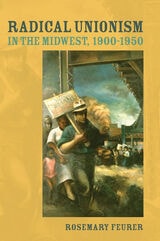
cover of Radical Unionism in the Midwest, 1900-1950

Radical Unionism in the Midwest, 1900-1950

Rosemary Feurer

University of Illinois Press, 2006

District 8 of the United Electrical, Radio, and Machine Workers (UE) developed a style of unionism designed to confront corporate power but also act as a force for social transformation in their community and nation.

Rosemary Feurer examines the fierce battles between these Midwestern electrical workers and the bitterly anti-union electrical and metal industry, Exploring the role of radicals in local movement formation, Feurer reveals a "civic" unionism that could connect community and union concerns to build solidarity and contest the political economy. District 8's spirited unionism included plant occupations in St. Louis and Iowa; campaigns to democratize economic planning; and strategies for national bargaining that elected officials inevitably branded as part of a communist conspiracy. Though destroyed by reactionaries and an anticommunist backlash, District 8 molded a story that tells another side of the labor movement's formation in the 1930s and 1940s, and can inform current struggles against corporate power in the modern global economy.
[more]
cover of Radicalism and Reputation: The Career of Bronterre O'Brien

Radicalism and Reputation

The Career of Bronterre O'Brien

Michael J. Turner

Michigan State University Press, 2017
A thematic analysis of the career of Bronterre O’Brien, one of the most influential leaders of Chartism, this book relates his activities—and the Chartist movement—to broader themes in the history of Britain, Europe, and America during the nineteenth century. O’Brien (1804–64) came to be known as the “schoolmaster” of Chartism because of his efforts to describe and explain its intellectual foundations. The campaign for the People’s Charter (with its promise of political democratization) was a highpoint in O’Brien’s career as writer and orator, but he was already well known before the campaign began, and during the 1840s he distanced himself from other Chartist leaders and from several important Chartist initiatives. This book examines the personal, tactical, and ideological reasons for O’Brien’s departure, as well as his development of a social and economic agenda to accompany “constitutional” Chartism, in line with the evolution of radical thought after the Great Reform Act of 1832. It also evaluates O’Brien’s reputation, among his contemporaries and among modern historians, in order better to understand his contribution to radicalism in Britain and beyond.
 
[more]
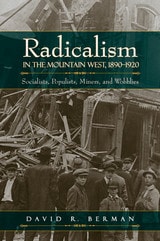
cover of Radicalism in the Mountain West, 1890-1920: Socialists, Populists, Miners, and Wobblies

Radicalism in the Mountain West, 1890-1920

Socialists, Populists, Miners, and Wobblies

David R. Berman

University Press of Colorado, 2013

Radicalism in the Mountain West, 1890-1920 traces the history of radicalism in the Populist Party, Socialist Party, Western Federation of Miners, and Industrial Workers of the World in Arizona, Utah, Nevada, Idaho, Montana, Wyoming, Colorado, and New Mexico.

Focusing on the populist and socialist movements, David R. Berman sheds light on American radicalism with this study of a region that epitomized its rise and fall. As the frontier industrialized, self-reliant pioneers and prospectors transformed into wage- laborers for major corporations with government, military, and church ties. Economically and politically stymied, westerners rallied around homegrown radicals such as William "Big Bill" Haywood and Vincent "the Saint" St. John and touring agitators such as Eugene Debs and Mary "Mother" Jones. Radicalism in the Mountain West tells how volleys of strikes, property damage, executions, and deportations ensued in the absence of negotiation.

Drawing on years of archival research and diverse materials such as radical newspapers, reports filed by labor spies and government agents, and records of votes, subscriptions, and memberships, Berman offers Western historians and political scientists an unprecedented view into the region's radical past.

[more]
cover of Radicalism in the States: The Minnesota Farmer-Labor Party and the American Political Economy

Radicalism in the States

The Minnesota Farmer-Labor Party and the American Political Economy

Richard M. Valelly

University of Chicago Press, 1989

Concentrated in states outside the Northeast and the South, state-level third-party radical politics has been more widespread than many realize. In the 1920s and 1930s, American political organizations strong enough to mount state-wide campaigns, and often capable of electing governors and members of Congress, emerged not only in Minnesota but in Wisconsin and Washington, in Oklahoma and Idaho, and in several other states.

Richard M. Valelly treats in detail the political economy of the Minnesota Farmer-Labor Party (1918-1944), the most successful radical, state-level party in American history. With the aid of numerous interviews of surviving organizers and participants in the party's existence, Valelly recreates the party's rise to power and subsequent decline, seeking answers to some broad, developmental questions. Why did this type of politics arise, and why did it collapse when it did? What does the party's history tell us about national political change? The answers lie, Valelly argues, in America's transition from the political economy of the 1920s to the New Deal. Combining case study and comparative state politics, he reexamines America's political economy prior to the New Deal and the scope and ironies of the New Deal's reorganization of American politics. The results compellingly support his argument that the federal government's increasing intervention in the economy profoundly transformed state politics. The interplay between national economy policy-making and federalism eventually reshaped the dynamics of interest-group politics and closed off the future of "state-level radicalism." The strength of this argument is highlighted by Valelly's cross-national comparison with Canadian politics. In vivid contrast to the fate of American movements, "province level radicalism" thrived in the Canadian political environment.

In the course of analyzing one of the "supressed alternatives" of American politics, Valelly illuminates the influence of the national political economy on American political development. Radicalism in the States will interest students of economic protest, of national policy-making, of interest-group politics and party politics.
[more]
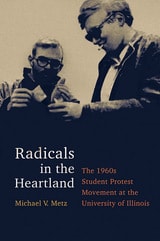
cover of Radicals in the Heartland: The 1960s Student Protest Movement at the University of Illinois

Radicals in the Heartland

The 1960s Student Protest Movement at the University of Illinois

Michael V. Metz

University of Illinois Press, 2019

In 1969, the campus tumult that defined the Sixties reached a flash point at the University of Illinois. Out-of-town radicals preached armed revolution. Students took to the streets and fought police and National Guardsmen. Firebombs were planted in lecture halls while explosions rocked a federal building on one side of town and a recruiting office on the other. Across the state, the powers-that-be expressed shock that such events could take place at Illinois's esteemed, conservative, flagship university—how could it happen here, of all places?

Positioning the events in the context of their time, Michael V. Metz delves into the lives and actions of activists at the center of the drama. A participant himself, Metz draws on interviews, archives, and newspaper records to show a movement born in demands for free speech, inspired by a movement for civil rights, and driven to the edge by a seemingly never-ending war. If the sudden burst of irrational violence baffled parents, administrators, and legislators, it seemed inevitable to students after years of official intransigence and disregard. Metz portrays campus protesters not as angry, militant extremists but as youthful citizens deeply engaged with grave moral issues, embodying the idealism, naiveté, and courage of a minority of a generation.

[more]
cover of Radicals of the Worst Sort: Laboring Women in Lawrence, Massachusetts, 1860-1912

Radicals of the Worst Sort

Laboring Women in Lawrence, Massachusetts, 1860-1912

Ardis Cameron

University of Illinois Press, 1993
Ardis Cameron focuses on the textile workers' strikes of 1882 and 1912 in this examination of class and gender formation as drawn from the experience and language of the working-class neighborhoods of Lawrence, Massachusetts. Using the neighborhood perspective to explore the role of women in worker militancy, Cameron reveals the importance of female networks and organizational life in working-class culture and politics. Unionized women were labeled "radicals of the worst sort" because, in fighting for equality, they also rebelled against traditional economic and sexual hierarchies. Oral histories and detailed maps illuminate the setting and the dramatic story behind the famous Bread and Roses strike of 1912.
[more]
cover of Radio Free Boston: The Rise and Fall of WBCN

Radio Free Boston

The Rise and Fall of WBCN

Carter Alan

University Press of New England, 2013
Blaring the Cream anthem “I Feel Free,” WBCN went on the air in March 1968 as an experiment in free-form rock on the fledgling FM radio band. It broadcast its final song, Pink Floyd’s “Shine On You Crazy Diamond,” in August 2009. In between, WBCN became the musical, cultural, and political voice of the young people of Boston and New England, sustaining a vibrant local music scene that launched such artists as the J. Geils Band, Aerosmith, James Taylor, Boston, the Cars, and the Dropkick Murphys, as well as paving the way for Bruce Springsteen, Tom Petty, U2, and many others. Along the way, WBCN both pioneered and defined progressive rock radio, the dominant format for a generation of listeners. Brilliantly told by Carter Alan—and featuring the voices of station insiders and the artists they loved—Radio Free Boston is the story of a city; of artistic freedom, of music and politics and identity; and of the cultural, technological, and financial forces that killed rock radio.
[more]
cover of Radio Man: The remarkable rise and fall of C.O. Stanley

Radio Man

The remarkable rise and fall of C.O. Stanley

Mark Frankland

The Institution of Engineering and Technology, 2002
Radio Man tells the story of C.O. Stanley, the unconventional Irishman who acquired Pye Radio at the beginning of the broadcasting age. Although he started with little experience and even less money, he was to make Pye a major player in the British electronics industry - only to crash it spectacularly forty years later. From the romance of early radio to the birth of the mobile, Stanley and Pye were players in some of the key moments of twentieth century Britain. His obsession with the infant medium of television allowed Pye to provide the equipment that put radar into planes in time for the Battle of Britain. His energy also drove Pye's pioneering work on the proximity fuse - work that would revolutionise antiaircraft warfare - and the company's manufacture of the war's most successful army radios.
[more]
cover of Radio Nation: Communication, Popular Culture, and Nationalism in Mexico, 1920-1950

Radio Nation

Communication, Popular Culture, and Nationalism in Mexico, 1920-1950

Joy Elizabeth Hayes

University of Arizona Press, 2000

The role of mass communication in nation building has often been underestimated, particularly in the case of Mexico. Following the Revolution, the Mexican government used the new medium of radio to promote national identity and build support for the new regime. Joy Hayes now tells how an emerging country became a radio nation.

This groundbreaking book investigates the intersection of radio broadcasting and nation building. Hayes tells how both government-controlled and private radio stations produced programs of distinctly Mexican folk and popular music as a means of drawing the country's regions together and countering the influence of U.S. broadcasts.

Hayes describes how, both during and after the period of cultural revolution, Mexican radio broadcasting was shaped by the clash and collaboration of different social forces--including U.S. interests, Mexican media entrepreneurs, state institutions, and radio audiences. She traces the evolution of Mexican radio in case studies that focus on such subjects as early government broadcasting activities, the role of Mexico City media elites, the "paternal voice" of presidential addresses, and U.S. propaganda during World War II.

More than narrative history, Hayes's study provides an analytical framework for understanding the role of radio in building Mexican nationalism at a critical time in that nation's history. Radio Nation expands our appreciation of an overlooked medium that changed the course of an entire country.
[more]
cover of Radio Utopia: Postwar Audio Documentary in the Public Interest

Radio Utopia

Postwar Audio Documentary in the Public Interest

Matthew Ehrlich

University of Illinois Press, 2017
As World War II drew to a close and radio news was popularized through overseas broadcasting, journalists and dramatists began to build upon the unprecedented success of war reporting on the radio by creating audio documentaries. Focusing particularly on the work of radio luminaries such as Edward R. Murrow, Fred Friendly, Norman Corwin, and Erik Barnouw, Radio Utopia: Postwar Audio Documentary in the Public Interest traces this crucial phase in American radio history, significant not only for its timing immediately before television, but also because it bridges the gap between the end of the World Wars and the beginning of the Cold War.
 
Matthew C. Ehrlich closely examines the production of audio documentaries disseminated by major American commercial broadcast networks CBS, NBC, and ABC from 1945 to 1951. Audio documentary programs educated Americans about juvenile delinquency, slums, race relations, venereal disease, atomic energy, arms control, and other issues of public interest, but they typically stopped short of calling for radical change. Drawing on rare recordings and scripts, Ehrlich traces a crucial phase in the evolution of news documentary, as docudramas featuring actors were supplanted by reality-based programs that took advantage of new recording technology. Paralleling that shift from drama to realism was a shift in liberal thought from dreams of world peace to uneasy adjustments to a cold war mentality.
 
Influenced by corporate competition and government regulations, radio programming reflected shifts in a range of political thought that included pacifism, liberalism, and McCarthyism. In showing how programming highlighted contradictions within journalism and documentary, Radio Utopia reveals radio's response to the political, economic, and cultural upheaval of the post-war era.
[more]
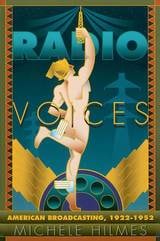
cover of Radio Voices: American Broadcasting, 1922-1952

Radio Voices

American Broadcasting, 1922-1952

Michele Hilmes

University of Minnesota Press, 1997

The Shadow. Fibber McGee and Molly. Amos 'n' Andy. When we think back on the golden age of radio, we think of the shows. In Radio Voices, Michele Hilmes looks at the way radio programming influenced and was influenced by the United States of the 1920s, 1930s, and 1940s, tracing the history of the medium from its earliest years through the advent of television. Hilmes places the development of radio within the context of the turmoils of the 1920s: immigration and urbanization, the rise of mass consumer culture, and the changing boundaries of the public and private spheres. Early practices and structures--the role of the announcer, the emergence of program forms from vaudeville, minstrel shows, and the concert stage--are examined. Central to Radio Voices is a discussion of programs and their relations to popular understandings of race, ethnicity, and gender in the United States of this era. Hilmes explores Amos 'n' Andy and its negotiations of racial tensions and The Rise of the Goldbergs and its concern with ethnic assimilation. She reflects upon the daytime serials--the first soap operas--arguing that these much-disparaged programs provided a space in which women could discuss conflicted issues of gender. Hilmes also explores industry practices, considering the role of advertising agencies and their areas of conflict and cooperation with the emerging networks as well as the impact of World War II on the "mission" of radio. Radio Voices places the first truly national medium of the United States in its social context, providing an entertaining account of the interplay between programming and popular culture. "Radio Voices is the most-cited publication in a recent spate of cultural studies of radio. Hilmes analyzes the early practices and programs of radio-such as the daytime serial drama that would evolve into the soap opera-in relation to the emergence, after World War I, of mass consumerism. She argues that, as the United States rose to world power during the Age of Radio, the medium was crucial in helping to form an American national identity and to blur the boundaries between the public and private spheres." Chronicle of Higher Education "Hilmes offers a fresh, exciting, path-breaking and insightful history of radio broadcasting. Radio Voices provides an innovative and accessible history of U.S. broadcasting that promises to inspire a new wave of critical cultural analysis of the radio era. Radio Voices may prove to be the most important for the research it promises to inspire by rethinking and enlivening the field of radio history." Journal of Communication "The title, Radio Voices, is well chosen: the voices of the radio pioneers, which one might too easily assume to be irrecoverable, emerge through the book's frequent extracts from correspondence and scripts. Radio Voices will remind scholars of popular culture of the pleasures and rewards of archival study." Journal of American History "The author's extensive research has turned up many delicious tales not recounted elsewhere." Historical Journal of Film, Radio, and Television
[more]
cover of Radio and Television Broadcasting on the European Continent

Radio and Television Broadcasting on the European Continent

Burton Paulu

University of Minnesota Press, 1967

Radio and Television Broadcasting on the European Continent was first published in

1967. Minnesota Archive Editions uses digital technology to make long-unavailable books once again accessible, and are published unaltered from the original University of Minnesota Press editions.

In this book Dr. Paulu provides a comprehensive survey based on firsthand study of the development and current status of radio and television broadcasting in continental Europe. He discusses the technical, organizational, financial, and programming aspects of European broadcasting in both Communist and Western countries. The material is organized, not on a country-by-country basis, but as it relates to broad basic issues, and it is presented in a framework of such interrelated factors as geography, history politics, international relations, religious traditions, language, national economic standards, and cultural and social life. The broadcasting systems studied include those of the Soviet Union and other Communist countries, France, West Germany, Belgium, the Netherlands, Italy, Sweden, and Switzerland.

The account is particularly timely in view of the concern and discussion about the future course of broadcasting in the United States. It has relevance not only for communications specialists but for political scientists and other scholars in the social sciences as well as for the growing public which is interested in the improvement of American broadcasting.
[more]
cover of Radio and the Performance of Government: Broadcasting by the Czechoslovaks in Exile in London, 1939–1945

Radio and the Performance of Government

Broadcasting by the Czechoslovaks in Exile in London, 1939–1945

Erica Harrison

Karolinum Press, 2023

An original study of radio propaganda in Czechoslovakia.

Between 1939 and 1945, Czechoslovakia disappeared from the maps, existing only as an imagined ‘free republic’ on the radio waves. Following the German invasion and annexation of Bohemia and Moravia and the declaration of independence by Slovakia on 15 March 1939, the Czechoslovak Republic was gone. From their position in exile in wartime London, former Czechoslovak President Edvard Beneš and the government that formed around him depended on radio to communicate with the public they strove to represent. The broadcasts made by government figures in London enabled a performance of authority to impress their hosts, allies, occupying enemies, and claimed constituents.

This book examines this government program for the first time, making use of previously unstudied archival sources to examine how the exiles understood their mission and how their propaganda work was shaped by both British and Soviet influences. This study assesses the strengths, weaknesses, and limitations of the government’s radio propaganda as they navigated the complexities of exile, with chapters examining how they used the radio to establish their authority, how they understood the past and future of the Czechoslovak nation, and how they struggled to include Slovakia and Subcarpathian Ruthenia within it.
[more]
cover of Radio's America: The Great Depression and the Rise of Modern Mass Culture

Radio's America

The Great Depression and the Rise of Modern Mass Culture

Bruce Lenthall

University of Chicago Press, 2007

Orson Welles’s greatest breakthrough into the popular consciousness occurred in 1938, three years before Citizen Kane, when his War of the Worlds radio broadcast succeeded so spectacularly that terrified listeners believed they were hearing a genuine report of an alien invasion—a landmark in the history of radio’s powerful relationship with its audience. In Radio’s America, Bruce Lenthall documents the enormous impact radio had on the lives of Depression-era Americans and charts the formative years of our modern mass culture.

Many Americans became alienated from their government and economy in the twentieth century, and Lenthall explains that radio’s appeal came from its capability to personalize an increasingly impersonal public arena. His depictions of such figures as proto-Fascist Charles Coughlin and medical quack John Brinkley offer penetrating insight into radio’s use as a persuasive tool, and Lenthall’s book is unique in its exploration of how ordinary Americans made radio a part of their lives. Television inherited radio’s cultural role, and as the voting tallies for American Idol attest, broadcasting continues to occupy a powerfully intimate place in American life. Radio’s America reveals how the connections between power and mass media began.
[more]
cover of Radio, Morality, & Culture: Britain, Canada, and the United States, 1919 - 1945

Radio, Morality, & Culture

Britain, Canada, and the United States, 1919 - 1945

Robert S. Fortner

Southern Illinois University Press, 2005

Radio, Morality, and Culture: Britain, Canada, and the United States, 1919–1945 examines the moral controversies surrounding radio’s development during its formative years. In comparing the fledgling medium in Great Britain, Canada, and the United States, Robert S. Fortner documents how the church failed to participate in radio’s moral development and instead engaged in internecine warfare over issues of legitimacy and orthodoxy.

The church was arguing about theological turf and dealing with internal disputes while radio policy was being developed and communications history was being written. Fortner reveals how the church, doomed to play little more than a bit part in the future of radio, eventually lost its voice altogether in the continuing development of electronic media. Fortner effectively synthesizes cultural history and theory, communication studies, and the role religious organizations played in shaping the content and character of early radio. Geared to scholars of history, communications, and theology, Radio, Morality, and Culture provides a useful resource for research, scholarship, and public policy.

[more]
cover of Radioactive Ghosts

Radioactive Ghosts

Gabriele Schwab

University of Minnesota Press, 2020

A pioneering examination of nuclear trauma, the continuing and new nuclear peril, and the subjectivities they generate

Amid resurgent calls for widespread nuclear energy and “limited nuclear war,” the populations that must live with the consequences of these decisions are increasingly insecure. The nuclear peril combined with the looming threat of climate change means that we are seeing the formation of a new kind of subjectivity: humans who are in a position of perpetual ontological insecurity. In Radioactive Ghosts, Gabriele Schwab articulates a vision of these “nuclear subjectivities” that we all live with.

Focusing on the legacies of the Manhattan Project, Hiroshima, and nuclear energy politics, Radioactive Ghosts takes us on a tour of the little-seen sides of our nuclear world. Examining devastating uranium mining on Native lands, nuclear sacrifice zones, the catastrophic accidents at Chernobyl and Fukushima, and the formation of a new transspecies ethics, Schwab shows how individuals threatened with extinction are creating new adaptations, defenses, and communal spaces. Ranging from personal accounts of experiences with radiation to in-depth readings of literature, film, art, and scholarly works, Schwab gives us a complex, idiosyncratic, and personal analysis of one of the most overlooked issues of our time.
[more]
cover of Radium and the Secret of Life

Radium and the Secret of Life

Luis A. Campos

University of Chicago Press, 2015

Before the hydrogen bomb indelibly associated radioactivity with death, many chemists, physicians, botanists, and geneticists believed that radium might hold the secret to life. Physicists and chemists early on described the wondrous new element in lifelike terms such as “decay” and “half-life,” and made frequent references to the “natural selection” and “evolution” of the elements. Meanwhile, biologists of the period used radium in experiments aimed at elucidating some of the most basic phenomena of life, including metabolism and mutation.

From the creation of half-living microbes in the test tube to charting the earliest histories of genetic engineering, Radium and the Secret of Life highlights previously unknown interconnections between the history of the early radioactive sciences and the sciences of heredity. Equating the transmutation of radium with the biological transmutation of living species, biologists saw in metabolism and mutation properties that reminded them of the new element. These initially provocative metaphoric links between radium and life proved remarkably productive and ultimately led to key biological insights into the origin of life, the nature of heredity, and the structure of the gene. Radium and the Secret of Life recovers a forgotten history of the connections between radioactivity and the life sciences that existed long before the dawn of molecular biology.

[more]
cover of Rage and Carnage in the Name of God: Religious Violence in Nigeria

Rage and Carnage in the Name of God

Religious Violence in Nigeria

Abiodun Alao

Duke University Press, 2022
In Rage and Carnage in the Name of God, Abiodun Alao examines the emergence of a culture of religious violence in postindependence Nigeria, where Christianity, Islam, and traditional religions have all been associated with violence. He investigates the root causes and historical evolution of Nigeria’s religious violence, locating it in the forced coming together of disparate ethnic groups under colonial rule, which planted the seeds of discord that religion, elites, and domestic politics exploit. Alao discusses the histories of Christianity, Islam, and traditional religions in the territory that became Nigeria, the effects of colonization on the role of religion, the development of Islamic radicalization and its relation to Christian violence, the activities of Boko Haram, and how religious violence intermixes with politics and governance. In so doing, he uses religious violence as a way to more fully understand intergroup relations in contemporary Nigeria.
[more]
cover of Ragged Revolutionaries: The Lumpenproletariat and African American Marxism in Depression-Era Literature

Ragged Revolutionaries

The Lumpenproletariat and African American Marxism in Depression-Era Literature

Nathaniel Mills

University of Massachusetts Press, 2017

In Marxism, the concept of the lumpenproletariat refers to the masses in rags, outsiders on the edge of society, drifters and criminals, of little or no use politically. But in Ragged Revolutionaries, Nathaniel Mills argues that the lumpenproletariat was central to an overlooked yet vibrant mode of African American Marxism formulated during the Great Depression by black writers on the Communist left.

By analyzing multiple published and unpublished works from the period, Mills shows how Richard Wright, Ralph Ellison, and Margaret Walker used the lumpenproletariat to imagine new forms of revolutionary knowledge and agency. In their writings, hobos riding the rails, criminals hustling to make ends meet, heroic black folk-outlaws, and individuals who fall out of the proletariat into the social margins all furnish material for thinking through resistance to the exploitations of capitalism, patriarchy, and Jim Crow. Ragged Revolutionaries introduces the lumpenproletariat into literary study, offers a new account of the place of Marxism in African American literature and politics, and clarifies the political and aesthetic commitments of three major modern black writers.
[more]
cover of Railroad Labor Disputes: The Beginnings of Federal Strike Policy

Railroad Labor Disputes

The Beginnings of Federal Strike Policy

Gerald G. Eggert

University of Michigan Press, 1967
At Martinsburg, West Virginia, on July 16, 1877, angry laborers struck the B & O Railroad because of a 10 percent wage cut. Spontaneous strikes soon choked railroad service from Baltimore to St. Louis and from Buffalo to Louisville. The violent wave of discontent developed into the country's first national labor crisis. The use of federal troops to restore order was only one of many decisions—sometimes blundering or biased, sometimes enlightened—the government would make during the next twenty years in coping with railway strikes. Not until the defeat of the Pullman Strike in 1894 did railway labor disorders subside. Railroad Labor Disputes describes the federal government's methods of dealing with railroad labor problems in the last quarter of the nineteenth century and shows how the beginnings of federal strike policy evolved. To explain the bias of government officials against the working man and for railroad management, Gerald Eggert examines the backgrounds, interests, and ambitions of the shapers of federal policy. Eggert also underscores the lack of congressional leadership and the erratic planning of the executive branch, which compelled the federal courts to play a large part in making policy. Particularly in times of crisis, accident and chance determined the policy as much as reason and forethought. Occasionally decisions supported strikers, but policy became increasingly anti-labor in its bias. "Riots" and "insurrections" were quelled by troops; "conspiring to obstruct the mails" justified federal strikebreaking; hampering interstate commerce produced federal reprisal. Court injunctions were first used to protect railroads in receivership, later any railroad at any time. Strikes were even judged violations of the Sherman Antitrust Act. After the Pullman strike of 1894, government policy grew more reasonable. Eggert emphasizes that the Erdman Act reflected this trend. Thereafter, railroad officials increasingly accepted the principle of collective bargaining. 
[more]
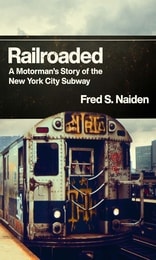
cover of Railroaded: A Motorman's Story of the New York City Subway

Railroaded

A Motorman's Story of the New York City Subway

Fred S. Naiden

Rutgers University Press, 0

“A fascinating insider’s view of a vital and dangerous profession.” —The Wall Street Journal
“An instant classic of labor and transportation history.” —Library Journal, starred review

The New York City subway system is one of the largest and oldest in the world, still carrying traces of the transport systems that came before it. Some of its elevated tracks are remnants of steam railroads, and some tunnels run where canoes served as ferries. For passengers, riding the subway can feel like stepping into another world, dark and dank and sometimes dangerous. Now just imagine what it’s like to work there every day.

One of the few subway workers who went on to earn a PhD from Harvard, historian Fred Naiden gives readers a firsthand look at what it was like to work as a subway porter, a motorman, and a locomotive engineer during the 1980s. He recounts the labor activism of his fellow MTA employees, who advocated for better conditions, higher pay, and less institutional racism. He also shares wild stories about the riders he encountered, from a homeless former realtor who worked as a mob frontman to an angry passenger who pulled a gun on him while the train was stuck at a stop signal. Above all, Railroaded will answer many questions about the New York subway system, including how it could be improved.
[more]
cover of Railroads for Michigan

Railroads for Michigan

Graydon M. Meints

Michigan State University Press, 2013

In this thoroughly researched history, Graydon Meints tells the fascinating story of the railroad’s arrival and development in Michigan. An engaging and accessible text, the book describes the long-awaited and often-troubled advent of the railroad in the state, the building of which shifted from private to public efforts and back again, amid tumultuous social, business, and political developments. The railroad would come to play a role in almost every critical event in Michigan’s history, including the Civil War, the Granger Movement, and the Gilded Age, before beginning to wane following the arrival of the automobile, the Interstate Commerce Commission, World War I, and the Great Depression. A brief growth spurt during World War II was short-lived, and it was followed by the collapse of several major railroads and the formation of Amtrak and Conrail. Looking ahead to the future of the railroad in the Great Lakes region, Meints assesses the strengths and shortcomings of this revolutionary invention. With careful attention to the personal impact of the railroad, Meints recognizes in brief biographies the many men and women responsible for the development and operation of Michigan railroads, as well as the triumphs, tragedies, and spaces that shaped their lives and work.
[more]
cover of Railroads in the Heartland: Steam and Traction in the Golden Age of Postcards

Railroads in the Heartland

Steam and Traction in the Golden Age of Postcards

H. Roger Grant

University of Iowa Press, 1997

Historians of midwestern railroading during the early part of the twentieth century have generally focused on the production of railroad company histories while ignoring the regional view. Fortunately for railway historians and buffs, coincidentally with the zenith of the Railway Age, the national fad for producing and mailing postcards was at its height. Millions of cards, including "real-photo" images, were produced between 1905 and 1915. Roger Grant has selected more than a hundred representative picture postcards to visualize the principal themes and characteristics that gave this dynamic industry its distinctive regional features.

By the turn of the century, the railroad map of the Midwest was unequaled. Anyone who examined it carefully sensed that this was the vital center of America's massive network of steel rails. Depots erected in the western prairie environment were spartan, with only minor decoration, but those in the Midwest usually mirrored more ornate New England styles. These features are often reflected in the images in this heavily illustrated book, which depicts the spare but strong pioneering spirit of the enterprise.
[more]
cover of Railroads of Nevada and Eastern California: Volume 3: More on the Northern Roads

Railroads of Nevada and Eastern California

Volume 3: More on the Northern Roads

David F. Myrick

University of Nevada Press, 2007

Valuable as these volumes are in relation to railroad operations in Nevada and California, their usefulness as authoritative reference sources embraces a much broader scope. Railroads of Nevada and Eastern California is as much a history of the region as it is a study of the railroads. The principal mines and mills and their production are scrupulously detailed, together with the personalities who created them.

The final volume in the complete history of Nevada and Eastern California railroads David Myrick's monumental railroad histories have become essential reference works for railroaders, historians, and hobbyists. Volume III contains additional information about the northern roads, including some not covered in previous volumes, and about developments since the publication of the first two volumes in the railroads of the region. It provides new facts gleaned from the correspondence of Collis P. Huntington, one of the builders of the Central Pacific and Southern Pacific railroads. It also covers roads connected with the lumber industry and the construction of electric power plants, and Southern Pacific branch lines, including some that never advanced beyond surveys.
[more]
cover of Railroads of the Civil War: An Illustrated History

Railroads of the Civil War

An Illustrated History

Michael Leavy

Westholme Publishing, 2010

The Photographic Record of the First Wide-Scale Mechanization of War
Over the course of the first half of the nineteenth century, America would find itself following two increasingly divergent tracks: an industrialized North and an agricultural South. By 1860 railroads were firmly entrenched in our culture, reshaping our cities and steering us through the industrial age towards worldwide prominence. From sleepy post towns to the largest east coast cities, the distant hooting of the locomotive whistle drew ever closer and louder, filling listeners with fascination while brightening the eyes of profit-driven industrialists. But this admirable invention, lavishly adorned in brass and iron trimmings, was about to take on a new and deadly role. America’s regional differences would result in a spectacular collision over slavery, and between 1861–1865, the nation fought a savage war. The “iron horse” became a major weapon in the first war fully dependent on railroads. Moreover railroads would escalate and prolong the war, leading to its terrible carnage. Trains were used to move troops rapidly and over great distances, completely changing military strategy. Trains were also used as mobile artillery, armed with large-caliber cannons that could pound cities and fortifications. Trains were a crucial means for supplying the armies on both sides, and it was the severing of the railway lines providing food and munitions to the Army of Northern Virginia that led to Robert E. Lee’s surrender at Appomattox Court House.

In Railroads of the Civil War: An Illustrated History, Michael Leavy uses compelling period photographs and drawings and a rich narrative to reevaluate and illuminate the role of railroads in the Civil War. In addition to identifying details about the various trains and ancillary equipment and buildings in the illustrations, the author explains how trains influenced the outcome of battles and the war in general. 
[more]
cover of Rainbow Bridge

Rainbow Bridge

Hank Hassell

Utah State University Press, 1999

On the morning of August 14, 1909, a small, diverse group including Professor Byron Cummings of the University of Utah, Government Land Office surveyor William Douglass, pioneer archaeologist and trader John Weatherill, and Paiute guide Nasja Begay gazed at the largest structure of its kind in the world-Rainbow Bridge. Their presence marked the official discovery of the magnificent natural bridge, which spans 275 feet and towers 291 feet above the stream bed below it. Of the discovery party, only Nasja Begay had seen the stone arch before; he was one of a probably small number of Paiutes and Navajos, the true modern discoverers, who had visited it. In 1910, an executive order issued under the still fresh Antiquities Act created Rainbow Bridge National Monument, one of the first.

This was only the beginning of the Rainbow Bridge historical record. Its fame was soon widespread, but for many years its visitors would be few, their numbers restricted by the long arduous trail around Navajo Mountain to the site. Those few and the tour guides and businesses that emerged to serve them, especially at Rainbow Lodge, were an interesting mix though. The bridge's story included such western figures as trader Louisa Weatherill, wife of John and a Navajo speaker who was the first Anglo to hear of the bridge; Barry Goldwater, who for a time owned and operated Rainbow Lodge; Zane Grey, who wrote about the bridge; and David Brower, the Sierra Club leader who got wrapped up in the intersection of the Rainbow Bridge story with that of Glen Canyon Dam. Its construction and the filling of Lake Powell behind it made Rainbow Bridge a battleground, key territory in the larger war over water and conservation in the West. The remote, hard to reach national monument was supposed to define a limit to Colorado River reclamation but instead was inundated by Lake Powell and the tide of visitors who then could reach the foot of the bridge by boat. Though Rainbow is now easily and frequently visited and National Park Service amenities are in place, access to Rainbow Bridge is still an evolving and controversial issue.
[more]
cover of Rainbow Dust: Three Centuries of Butterfly Delight

Rainbow Dust

Three Centuries of Butterfly Delight

Peter Marren

University of Chicago Press, 2016

Like fluttering shards of stained glass, butterflies possess a unique power to pierce and stir the human soul. Indeed, the ancient Greeks explicitly equated the two in a single word, psyche, so that from early times butterflies were not only a form of life, but also an idea. Profound and deeply personal, written with both wisdom and wit, Peter Marren’s Rainbow Dust explores this idea of butterflies—the why behind the mysterious power of these insects we do not flee, but rather chase.

At the age of five, Marren had his “Nabokov Moment,” catching his first butterfly and feeling the dust of its colored scales between his fingers. It was a moment that would launch a lifetime’s fascination rivaling that of the famed novelist—a fascination that put both in good company. From the butterfly collecting and rearing craze that consumed North America and Europe for more than two hundred years (a hobby that in some cases bordered on madness), to the potent allure of butterfly iconography in contemporary advertisements and their use in spearheading calls to conserve and restore habitats (even though butterflies are essentially economically worthless), Marren unveils the many ways in which butterflies inspire us as objects of beauty and as symbols both transient and transcendent.

Floating around the globe and through the whole gamut of human thought, from art and literature to religion and science, Rainbow Dust is a cultural history rather than merely a natural one, a tribute to butterflies’ power to surprise, entertain, and obsess us. With a sway that far surpasses their fragile anatomy and gentle beat, butterfly wings draw us into the prismatic wonders of the natural world—and, in the words of Marren, these wonders take flight.
[more]
cover of Rainbow Quest: The Folk Music Revival and American Society, 1940-1970

Rainbow Quest

The Folk Music Revival and American Society, 1940-1970

Ronald D. Cohen

University of Massachusetts Press, 2002

For a brief period from the late 1950s to the mid-1960s, folk music captured a mass audience in the United States, as college students and others swarmed to concerts by the likes of Peter, Paul & Mary, Joan Baez, and Bob Dylan. In this comprehensive study, Ronald D. Cohen reconstructs the history of this singular cultural moment, tracing its origins to the early decades of the twentieth century. Drawing on scores of interviews and numerous manuscript collections, as well as his own extensive files, Cohen shows how a broad range of traditions—from hillbilly, gospel, blues, and sea shanties to cowboy, ethnic, and political protest music—all contributed to the genre known as folk. He documents the crucial work of John Lomax and other collectors who, with the assistance of recording companies, preserved and distributed folk music in the 1920s. 

During the 1930s and 1940s, the emergence of left-wing politics and the rise of the commercial music marketplace helped to stimulate wider interest in folk music. Stars emerged, such as Woody Guthrie, Leadbelly, Pete Seeger, Burl Ives, and Josh White. With the success of the Weavers and the Kingston Trio in the 1950s, the stage was set for the full-blown “folk revival” of the early 1960s. Centered in New York's Greenwich Village and sustained by a flourishing record industry, the revival spread to college campuses and communities across the country. It included a wide array of performers and a supporting cast of journalists, club owners, record company executives, political activists, managers, and organizers. By 1965 the boom had passed its peak, as rock and roll came to dominate the marketplace, but the folk revival left an enduring musical legacy in American culture.

[more]
cover of Rainbow at Midnight: LABOR AND CULTURE IN THE 1940S

Rainbow at Midnight

LABOR AND CULTURE IN THE 1940S

George Lipsitz

University of Illinois Press, 1994
Rainbow at Midnight details the origins and evolution of working-class strategies for independence during and after World War II. Arguing that the 1940s may well have been the most revolutionary decade in U.S. history, George Lipsitz combines popular culture, politics, economics, and history to show how war mobilization transformed the working class and how that transformation brought issues of race, gender, and democracy to the forefront of American political culture. This book is a substantially revised and expanded work developed from the author's heralded 1981 Class and Culture in Cold War America.
 
[more]
cover of Rainforest Capitalism: Power and Masculinity in a Congolese Timber Concession

Rainforest Capitalism

Power and Masculinity in a Congolese Timber Concession

Thomas Hendriks

Duke University Press, 2022
Congolese logging camps are places where mud, rain, fuel smugglers, and village roadblocks slow down multinational timber firms; where workers wage wars against trees while evading company surveillance deep in the forest; where labor compounds trigger disturbing colonial memories; and where blunt racism, logger machismo, and homoerotic desires reproduce violence. In Rainforest Capitalism Thomas Hendriks examines the rowdy world of industrial timber production in the Democratic Republic of the Congo to theorize racialized and gendered power dynamics in capitalist extraction. Drawing on ethnographic fieldwork among Congolese workers and European company managers as well as traders, farmers, smugglers, and barkeepers, Hendriks shows how logging is deeply tied to feelings of existential vulnerability in the face of larger forces, structures, and histories. These feelings, Hendriks contends, reveal a precarious side of power in an environment where companies, workers, and local residents frequently find themselves out of control. An ethnography of complicity, ecstasis, and paranoia, Rainforest Capitalism queers assumptions of corporate strength and opens up new ways to understand the complexities and contradictions of capitalist extraction.
[more]
cover of Rainforest Cowboys: The Rise of Ranching and Cattle Culture in Western Amazonia

Rainforest Cowboys

The Rise of Ranching and Cattle Culture in Western Amazonia

By Jeffrey Hoelle

University of Texas Press, 2015

This ambitious interdisciplinary study is the first to examine the interlinked economic uses and cultural practices and beliefs surrounding cattle in Western Amazonia, where cattle raising is at the center of debates about economic development and environ

Winner, Brazil Section Book Award, Latin American Studies Association, 2016

The opening of the Amazon to colonization in the 1970s brought cattle, land conflict, and widespread deforestation. In the remote state of Acre, Brazil, rubber tappers fought against migrant ranchers to preserve the forest they relied on, and in the process, these “forest guardians” showed the world that it was possible to unite forest livelihoods and environmental preservation. Nowadays, many rubber tappers and their children are turning away from the forest-based lifestyle they once sought to protect and are becoming cattle-raisers or even caubois (cowboys). Rainforest Cowboys is the first book to examine the social and cultural forces driving the expansion of Amazonian cattle raising in all of their complexity.

Drawing on eighteen months of fieldwork, Jeffrey Hoelle shows how cattle raising is about much more than beef production or deforestation in Acre, even among “carnivorous” environmentalists, vilified ranchers, and urbanites with no land or cattle. He contextualizes the rise of ranching in relation to political economic structures and broader meanings to understand the spread of “cattle culture.” This cattle-centered vision of rural life builds on local experiences and influences from across the Americas and even resembles East African cultural practices. Written in a broadly accessible and interdisciplinary style, Rainforest Cowboys is essential reading for a global audience interested in understanding the economic and cultural features of cattle raising, deforestation, and the continuing tensions between conservation and development in the Amazon.
[more]
cover of Raised at Rutgers: A President's Story

Raised at Rutgers

A President's Story

McCormick, Richard L

Rutgers University Press, 2014

In Raised at Rutgers, Richard L. McCormick tells what it is like to run a major state university and vividly portrays the often contentious environment in which a university president operates today. He unsparingly recounts his decade of leadership, including his own missteps—those we know about and those we didn’t—as he strove to obtain adequate resources for the university, to overhaul the often confusing organization of the New Brunswick campus, to manage the growth and success of intercollegiate athletics, and to deepen Rutgers’s acceptance of its obligations as the state university of New Jersey.

With understandable pride, McCormick recalls and relates Rutgers’s academic achievements during his presidency, including a renewed focus on undergraduate education and a significant increase in funding for research. Most dramatically, he chronicles the University’s protracted efforts to reclaim Robert Wood Johnson Medical School (and ultimately to acquire most of UMDNJ), a goal that was finally realized with crucial help from Governor Chris Christie and former governor Tom Kean.

Among the most honest accounts ever written of a college presidency, Raised at Rutgers takes the reader inside one of the best, and liveliest, public universities in America and highlights many of the most critical issues facing higher education today.
[more]
cover of Raising Arizona's Dams: Daily Life, Danger, and Discrimination in the Dam Construction Camps of Central Arizona, 1890s-1940s

Raising Arizona's Dams

Daily Life, Danger, and Discrimination in the Dam Construction Camps of Central Arizona, 1890s-1940s

A. E. Rogge, D. Lorne McWatters, Melissa Keane, and Richard P. Emanuel

University of Arizona Press, 1995
This is the engrossing story of the unsung heroes who did the day-to-day work of building Arizona's dams, focusing on the lives of laborers and their families who created temporary construction communities during the building of seven major dams in central Arizona. The book focuses primarily on the 1903-1911 Roosevelt Dam camps and the 1926-1927 Camp Pleasant at Waddell Dam, although other camps dating from the 1890s through the 1940s are discussed as well. The book is liberally illustrated with historic photographs of the camps and the people who occupied them while building the dams.
[more]
cover of Raising Cane in the 'Glades: The Global Sugar Trade and the Transformation of Florida

Raising Cane in the 'Glades

The Global Sugar Trade and the Transformation of Florida

Gail M. Hollander

University of Chicago Press, 2008

Over the last century, the Everglades underwent a metaphorical and ecological transition from impenetrable swamp to endangered wetland.  At the heart of this transformation lies the Florida sugar industry, which by the 1990s was at the center of the political storm over the multi-billion dollar ecological “restoration” of the Everglades.  Raising Cane in the ’Glades is the first study to situate the environmental transformation of the Everglades within the economic and historical geography of global sugar production and trade.

Using, among other sources, interviews, government and corporate documents, and recently declassified U.S. State Department memoranda, Gail M. Hollander demonstrates that the development of Florida’s sugar region was the outcome of pitched battles reaching the highest political offices in the U.S. and in countries around the world, especially Cuba—which emerges in her narrative as a model, a competitor, and the regional “other” to Florida’s “self.”  Spanning the period from the age of empire to the era of globalization, the book shows how the “sugar question”—a label nineteenth-century economists coined for intense international debates on sugar production and trade—emerges repeatedly in new guises. Hollander uses the sugar question as a thread to stitch together past and present, local and global, in explaining Everglades transformation.
[more]
cover of Raising Secular Jews: Yiddish Schools and Their Periodicals for American Children, 1917–1950

Raising Secular Jews

Yiddish Schools and Their Periodicals for American Children, 1917–1950

Naomi Prawer Kadar

Brandeis University Press, 2016
This unique literary study of Yiddish children’s periodicals casts new light on secular Yiddish schools in America in the first half of the twentieth century. Rejecting the traditional religious education of the Talmud Torahs and congregational schools, these Yiddish schools chose Yiddish itself as the primary conduit of Jewish identity and culture. Four Yiddish school networks emerged, which despite their political and ideological differences were all committed to propagating the Yiddish language, supporting social justice, and preparing their students for participation in both Jewish and American culture. Focusing on the Yiddish children’s periodicals produced by the Labor Zionist Farband, the secular Sholem Aleichem schools, the socialist Workmen’s Circle, and the Ordn schools of the Communist-aligned International Workers Order, Naomi Kadar shows how secular immigrant Jews sought to pass on their identity and values as they prepared their youth to become full-fledged Americans.
[more]
cover of Raising Your Kids Right: Children's Literature and American Political Conservatism

Raising Your Kids Right

Children's Literature and American Political Conservatism

Abate, Michelle Ann

Rutgers University Press, 2011

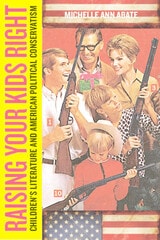
Dr. Seuss's classic character the Lorax has delighted children for decades while passing along a powerful message about environmental responsibility. The book's young readers, and their parents, would likely be surprised by the emergence of a new character, Truax, a kindly logger created by a longtime employee of the wood products industry, who, not surprisingly, has a far different viewpoint to share. Yet the Truax character, and the book of the same name, is just one example of a growing genre of conservative-themed narratives for young readers spawned by the continuing strength of the American political right.

Highlighting the works of William Bennett, Lynne Cheney, Bill O'Reilly, and others, Michelle Ann Abate brings together such diverse fields as cultural studies, literary criticism, political science, childhood studies, brand marketing, and the cult of celebrity. Raising Your Kids Right dispels lingering societal attitudes that narratives for young readers are unworthy of serious political study by examining a variety of texts that offer information, ideology, and even instructions on how to raise kids right, not just figuratively but politically.
[more]