Results by title
3027 books match the query 'Sociology' and 157 start with r
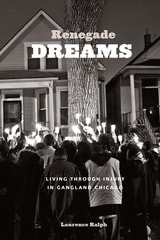
Renegade Dreams
Living through Injury in Gangland ChicagoLaurence Ralph
University of Chicago Press, 2014
Going deep into a West Side neighborhood most Chicagoans only know from news reports—a place where children have been shot just for crossing the wrong street—Ralph unearths the fragile humanity that fights to stay alive there, to thrive, against all odds. He talks to mothers, grandmothers, and pastors, to activists and gang leaders, to the maimed and the hopeful, to aspiring rappers, athletes, or those who simply want safe passage to school or a steady job. Gangland Chicago, he shows, is as complicated as ever. It’s not just a warzone but a community, a place where people’s dreams are projected against the backdrop of unemployment, dilapidated housing, incarceration, addiction, and disease, the many hallmarks of urban poverty that harden like so many scars in their lives. Recounting their stories, he wrestles with what it means to be an outsider in a place like this, whether or not his attempt to understand, to help, might not in fact inflict its own damage. Ultimately he shows that the many injuries these people carry—like dreams—are a crucial form of resilience, and that we should all think about the ghetto differently, not as an abandoned island of unmitigated violence and its helpless victims but as a neighborhood, full of homes, as a part of the larger society in which we all live, together, among one another.
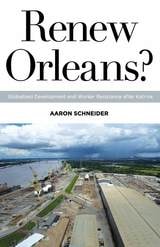
Renew Orleans?
Globalized Development and Worker Resistance after KatrinaAaron Schneider
University of Minnesota Press, 2018
Urban development after disaster, the fading of black political clout, and the onset of gentrification
Like no other American city, New Orleans since Hurricane Katrina offers powerful insight into issues of political economy in urban development and, in particular, how a city’s character changes after a disaster that spurs economic and political transition. In New Orleans, the hurricane upset an existing stalemate among rival factions of economic and political elites, and its aftermath facilitated the rise of a globally oriented faction of local capital.
In Renew Orleans? Aaron Schneider shows how some city leaders were able to access fragmented local institutions and capture areas of public policy vital to their development agenda. Through interviews and surveys with workers and advocates in construction, restaurants, shipyards, and hotel and casino cleaning, Schneider contrasts sectors prioritized during post-Katrina recovery with neglected sectors. The result is a fine-grained view of the way labor markets are structured to the advantage of elites, emphasizing how dual development produces wealth for the few while distributing poverty and exclusion to the many on the basis of race, gender, and ethnicity.
Schneider shows the way exploitation operates both in the workplace and the community, tracing working-class resistance that joins struggles for dignity at home and work. In the process, working classes and popular sectors put forth their own alternative forms of development.
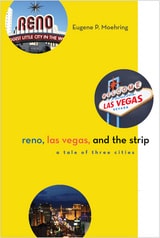
Reno, Las Vegas, and the Strip
A Tale of Three CitiesEugene P. Moehring
University of Nevada Press, 2024
Moehring brings the story of the three cities to the present day, examining lessons learned from the Great Recession and the efforts under way in all three metropolises to diversify their economies. Moehring makes an important contribution with the only current study of Nevada’s cities, focusing on urban development issues rather than social history or the gaming industry. As the service economy continues to grow, not only in Nevada but throughout the United States, Moehring’s work has many implications for urban studies and particularly the study of urban development in other metropolitan areas.
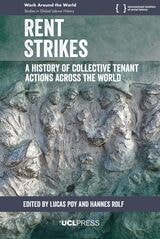
Rent Strikes
A History of Collective Tenant Actions Across the WorldEdited by Lucas Poy and Hannes Rolf
University College London, 2025
Since the late nineteenth century, tenants across various historical and geographic contexts have engaged in collective action, including rent strikes, to improve their standard of living. Rent Strikes brings together an international cohort of researchers to identify common patterns and global trajectories in this rich history, spanning from the early twentieth century to the COVID-19 pandemic. Encompassing various continents and periods, it explores tenants’ struggles on both the local and national levels in North and Latin America, Northern and Southern Europe, and Oceania. Not only does this volume expand the scope of previous studies to consider the role of ethnicity, nationality, and gender in tenant mobilization, but it also aims to engage a wider audience beyond academia, including activists, policymakers, and the general public interested in housing.

Repertoires and Cycles of Collective Action
Mark Traugott, editor
Duke University Press, 1995
The significance of repertoires—recurrent forms or tactics of social protest— is explored in an essay on eighteenth- and nineteenth-century Britain by the originator of the concept, Charles Tilly. Sidney Tarrow, whose work has most directly linked the concept of repertoires with that of cycles—the recurrent peaks and troughs in the historical incidence of collective action—contributes an essay that focuses on twentieth-century Italy. Other essays investigate the rhythms and logic of social change in contexts as diverse as sixteenth- through nineteenth-century Japan, nineteeth-century Europe, and twentieth-century America. Through inquiries into the consequences of violent repression for social mobilization, the struggle to control the linguistic terms of social conflict, the unacknowledged antecedents of contemporary movements, and the importance of "movement families," this volume demonstrates the usefulness of these two concepts and defines the relationship between them.
Collected from past issues of Social Science History, with a new introduction and two new essays, Repertoires and Cycles of Collective Action will reward an interdisciplinary audience of readers with the extraordinary vitality that emerges from this rich blend of historical perspectives.
Contributors. Charles Brockett, Craig Calhoun, Doug McAdam, Marc Steinberg, Sidney Tarrow, Charles Tilly, Mark Traugott, James White
Representing Talent
Hollywood Agents and the Making of MoviesViolaine Roussel
University of Chicago Press, 2017
The book takes readers behind the scenes to observe the day-to-day activities of agents, revealing their influence on artistic careers and the prospects of Hollywood’s forthcoming projects. Agents are crucial to understanding how creative and economic power are intertwined in Hollywood today. They play a key role in the process by which artistic worth and economic value are evaluated and attributed to people and projects. Roussel’s fieldwork examines what “having relationships” really means for agents, and how they perform the relationship work that’s at the heart of their professional existence and success. Representing Talent helps us to understand the players behind the definition of entertainment itself, as well as behind its current transformations.
Reproducing Jews
A Cultural Account of Assisted Conception in IsraelSusan Martha Kahn
Duke University Press, 2000
In this ethnographic study of the new reproductive technologies in Israel, Susan Martha Kahn explores the cultural meanings and contemporary rabbinic responses to artificial insemination, in-vitro fertilization, egg donation, and surrogacy. Kahn draws on fieldwork with unmarried Israeli women who are using state-subsidized artificial insemination to get pregnant and on participant-observation in Israeli fertility clinics. Through close readings of traditional Jewish texts and careful analysis of Israeli public discourse, she explains how the Israeli embrace of new reproductive technologies has made Jewish beliefs about kinship startlingly literal. Kahn also reveals how a wide range of contemporary Israelis are using new reproductive technologies to realize their reproductive futures, from ultraorthodox infertile married couples to secular unmarried women.
As the first scholarly account of assisted conception in Israel, this multisited ethnography will contribute to current anthropological debates on kinship studies. It will also interest those involved with Jewish studies.
Republic of the Dispossessed
The Exceptional Old-European Consensus in AmericaRowland Berthoff
University of Missouri Press, 1997
Do Americans, in all their cultural diversity, share any fundamental consensus? Does such a consensus, or anything else, make America exceptional in the modern world?
Since 1960 most historians have answered no--except perhaps for the current nostalgia for the Eisenhower years (the "Ozzie and Harriet" years of popular recollection) of middle-class American prosperity.
In Republic of the Dispossessed social historian Rowland Berthoff maintains not only that there was--and still is--a middle-class consensus and that America is exceptional in it but that it goes back some five hundred years. The consensus stems from all those European peasants and artisans who, from 1600 to 1950, fled dispossession in the Old World. They brought with them basic social values that acted as a template for middle-class American values. To consider modern American society as exceptional--that is, as distinctive and different from any contemporary European pattern of thought--is therefore, in Berthoff's theory, not at all the "illogical absurdity" that current conventional wisdom makes it.
The Berthoff thesis, as he develops it in these ten essays from throughout the course of his career, is well worth a second look by those within and beyond the field of social history. It suggests that the ideal--both peasant and classical republican-- of maintaining a balance between personal liberty and communal equality has long inspired American reaction to the drastic modern changes of industrialization, urbanization, and immigration.
Observing that most Americans still see themselves as independent, basically equal, middle-class citizens, Berthoff explains the current apprehension among Americans that at the end of the twentieth century they are once again being dispossessed-- thus, the current emphasis on "traditional values." Because that problem is the same that worried their European ancestors as much as five hundred years ago, Berthoff argues, the time has come to face the question head-on.
Requirements for Certification of Teachers, Counselors, Librarians, Administrators for Elementary and Secondary Schools, Ninetieth Edition, 2025–2026
Edited by Alain Park
University of Chicago Press, 2025
This annual volume offers the most complete and current listings of the requirements for certification of a wide range of educational professionals at the elementary and secondary levels. Requirements for Certification is a valuable resource, making much-needed knowledge available in one straightforward volume.

Researches Into the Physical History of Man
James Cowles Prichard
University of Chicago Press, 1973
In his extensive introductory essay, "From Chronology to Ethnology: Prichard and British Anthropology, 1800-1850," George W. Stocking, Jr., uses Prichard's career to illuminate this previously neglected period—the "dark age" between the Victorian evolutionists and their eighteenth-century Scottish precursors. Focusing on the heritage of Christian chronological writing as a source of nineteenth-century anthropological speculation, Professor Stocking shows how Prichard's work gradually transformed this tradition into "ethnology."
Prichard's central problem was to trace to a single source all the races of men from the earliest historical records to the dispersion of mankind after the Deluge. It was in the attempt to solve this "ethnological problem" that the "embracive" tradition of late nineteenth-century English and American anthropology had its roots. As Prichard's work illustrates, every type of evidence—linguistic, cultural, and physical—was brought forth to establish affinities between different human groups.
Expanded in subsequent editions to five volumes, Prichard's Researches was to remain the major compendium of ethnological knowledge in the English language until the second half of the nineteenth century. The present reprinting of the 1813 edition in its entirety should help to reestablish Prichard's reputation as one of the "fathers" of anthropology.
Resilient City
The Economic Impact of 9/11Howard Chernick
Russell Sage Foundation, 2005

Resistance to Innovation
Its Sources and ManifestationsShaul Oreg and Jacob Goldenberg
University of Chicago Press, 2015
Shaul Oreg and Jacob Goldenberg bring the insights of marketing and organizational behavior to bear on the attitudes and behaviors of the remaining 80 percent who resist innovation. The authors identify two competing definitions of resistance: In marketing, resistance denotes a reluctance to adopt a worthy new product, or one that offers a clear benefit and carries little or no risk. In the field of organizational behavior, employees are defined as resistant if they are unwilling to implement changes regardless of the reasons behind their reluctance. Seeking to clarify the act of rejecting a new product from the reasons—rational or not—consumers may have for doing so, Oreg and Goldenberg propose a more coherent definition of resistance less encumbered by subjective, context-specific factors and personality traits. The application of this tighter definition makes it possible to disentangle resistance from its sources and ultimately offers a richer understanding of consumers’ underlying motivations. This important research is made clear through the use of many real-life examples.
Resort City In The Sunbelt, Second Edition
Las Vegas, 1930-2000Eugene P. Moehring
University of Nevada Press, 2000
Restoring America's Neighborhoods
How Local People Make a DifferenceMichael R Greenberg
Rutgers University Press, 1999
What does it take to mobilize a grass-roots force dedicated to bringing new life into a decaying neighborhood? Can any one person or group successfully halt physical deterioration, drug-related crime, or the encroachment of clusters of factories, highways, and other noxious land uses? Michael Greenberg demonstrates in this book that it can and has been done against all odds.
Restoring America's Neighborhoods profiles twenty-four such cases from across the United States. It tells the story of people determined to make the blighted, crime-ridden urban enclaves in which they live and work a better place for everybody. These are people from many different walks of life: ministers working to bring jobs to their communities; city planners and federal employees trying to relocated residents of potential disaster areas; and locals taking matters into their own hands to create a healthier, more pleasing living environment for their children. Greenberg's is a heartening account of courage and unwavering resolve as well as of hope that individuals can make a difference, that violent criminals and uncaring bureaucrats need not carry the day. He calls them "streetfighters," a fitting tribute to their efforts to take back their neighborhoods, block by block and street by street.
Restructuring the Philadelphia Region
Metropolitan Divisions and InequalityCarolyn Adams, David W. Bartelt, David Elesh and Ira Goldstein with Joshua Freely Michelle Schmitt
Temple University Press, 2008
Restructuring the Philadelphia Region offers one of the most comprehensive and careful investigations written to date about metropolitan inequalities in America’s large urban regions. Moving beyond simplistic analyses of cities-versus-suburbs, the authors use a large and unique data set to discover the special patterns of opportunity in greater Philadelphia, a sprawling, complex metropolitan region consisting of more than 350 separate localities. With each community operating its own public services and competing to attract residents and businesses, the places people live offer them dramatically different opportunities.
The book vividly portrays the region’s uneven development—paying particular attention to differences in housing, employment and educational opportunities in different communities—and describes the actors who are working to promote greater regional cooperation. Surprisingly, local government officials are not prominent among those actors. Instead, a rich network of “third-sector” actors, represented by nonprofit organizations, quasi-governmental authorities and voluntary associations, is shaping a new form of regionalism.
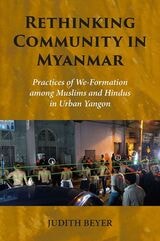
Rethinking Community in Myanmar
Practices of We-Formation among Muslims and Hindus in Urban YangonJudith Beyer
National University of Singapore Press, 2023

Rethinking Expertise
Harry Collins and Robert Evans
University of Chicago Press, 2007
What does it mean to be an expert? In Rethinking Expertise, Harry Collins and Robert Evans offer a radical new perspective on the role of expertise in the practice of science and the public evaluation of technology.
Collins and Evans present a Periodic Table of Expertises based on the idea of tacit knowledge—knowledge that we have but cannot explain. They then look at how some expertises are used to judge others, how laypeople judge between experts, and how credentials are used to evaluate them. Throughout, Collins and Evans ask an important question: how can the public make use of science and technology before there is consensus in the scientific community? This book has wide implications for public policy and for those who seek to understand science and benefit from it.
“Starts to lay the groundwork for solving a critical problem—how to restore the force of technical scientific information in public controversies, without importing disguised political agendas.”—Nature
“A rich and detailed ‘periodic table’ of expertise . . . full of case studies, anecdotes and intriguing experiments.”—Times Higher Education Supplement (UK)

Rethinking Pastoralism In Africa
Gender, Culture, and the Myth of the Patriarchal PastoralistDorothy L. Hodgson
Ohio University Press, 2001
The dominant trend in pastoralist studies has long assumed that pastoralism and pastoral gender relations are inherently patriarchal. The contributors to this collection, in contrast, use diverse analytic approaches to demonstrate that pastoralist gender relations are dynamic, relational, historical, and produced through complex local-translocal interactions. Combining theoretically sophisticated analysis with detailed case studies, this collection will appeal to those doing research and teaching in African studies, gender studies, anthropology, and history. Among the topics discussed are pastoralism, patriarchy, and history among Maasai in Tanganyika; women’s roles in peacemaking in Somali society; the fertility of houses and herds; gender, aging, and postchildbearing experience in a Tuareg community; and milk selling among Fulani women in Northern Burkina Faso.
Rethinking Rental Housing
John Gilderbloom
Temple University Press, 1987
In recent years, almost daily media attention has been focused on the plight of the homeless in cities across the United States. Drawing upon experiences in the U.S. and Europe, John Gilderbloom and Richard Appelbaum challenge conventional assumptions concerning the operation of housing markets and provide policy alternatives directed at the needs of low- and moderate-income families. Rethinking Rental Housing is a ground-breaking analysis that shows the value of applying a broad sociological approach to urban problems, one that takes into account the basic economic, social, and political dimensions of the urban housing crisis.
Gilderbloom and Appelbaum predict that this crisis will worsen in the 1990s and argue that a "supply and demand" approach will not work in this case because housing markets are not competitive. They propose that the most effective approach to affordable housing is to provide non-market alternatives fashioned after European housing programs, particularly the Swedish model.
An important feature of this book is the discussion of tenant movements that have tried to implement community values in opposition to values of development and landlord capital. One of the very few publications on rental housing, it is unique in applying a sociological framework to the study of this topic.

Rethinking Sexual Harrassment
Clare Brant
Pluto Press, 1994
'Serious and scholarly ... deserves a wide audience' Journal of the Institute of Health Education
'Excellent ... However familiar the subject may seem - or precisely because we all think we know what term 'sexual harassment' means - these discussions open up a series of vital questions, both theoretical and practical. Rethinking Sexual Harassment is a valuable contribution to a debate that continues all around us' Parallax
Sexual harassment continues to stimulate controversy and attract partisan responses. This is an exciting and original exploration of how it came to be defined, what institutional forces and contexts shape our understanding of it. This multidisciplinary study brings together essays from feminist scholars in the fields of law, literature, the social sciences, history and cultural studies.
The contributors' central argument is an awareness of the social and discursive contexts required to challenge sexual harassment effectively. Offering insight into current limitations and making practical suggestions for ways forward, this wide-ranging collection addresses general readers and professionals alike.
Contributors include Suzanne Gibson; Helen Watson; Gargi Bhattacharyya; Ruth Jamieson; Celia Kitzinger; Suzanne Raitt; Ros Hunt; Diane Purkiss; Padma Anagol-McGinn and Jane Beckett
Rethinking Therapeutic Culture
Edited by Timothy Aubry and Trysh Travis
University of Chicago Press, 2015
Rethinking the Youth Question
Education, Labour, and Cultural StudiesPhil Cohen
Duke University Press, 1999
With a preface that contextualizes Cohen’s essays for an American audience, Rethinking the Youth Question reflects his tenure as a community organizer and activist in inner-city London and includes ethnographic, theoretical, and historical studies of Britain’s urban youth. Cohen offers an enlightening analysis of British educational policy, develops historical and structural accounts of generational and gendered divisions of labor, and discusses such topics as racism and the rise of the New Right. Also exploring broader questions such as the theoretical and sociological significance of youth as a category, this book is a model of useful methodology and engaged cultural reflection.
With empirical research that combines biographical, autobiographical, critical, cultural, and social elements, Rethinking the Youth Question is sure to impact debates surrounding the pedagogical value of cultural studies and the nature and future of this field in both the United States and Britain. This collection will be informative reading for students and scholars of cultural studies, sociologists, and others interested in the category of youth.
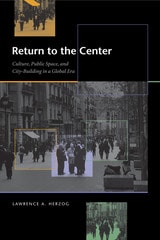
Return to the Center
Culture, Public Space, and City Building in a Global EraBy Lawrence A. Herzog
University of Texas Press, 2006
The redesign and revitalization of traditional urban centers is the cutting edge of contemporary urban planning, as evidenced by the intense public and professional attention to the rebuilding of city cores from Berlin to New York City's "Ground Zero." Spanish and Latin American cities have never received the recognition they deserve in the urban revitalization debate, yet they offer a very relevant model for this "return to the center." These cultures have consistently embraced the notion of a city whose identity is grounded in its organic public spaces: plazas, promenades, commercial streets, and parks that invite pedestrian traffic and support a rich civic life. This groundbreaking book explores Spanish, Mexican, and Mexican-American border cities to learn what these urban areas can teach us about effectively using central public spaces to foster civic interaction, neighborhood identity, and a sense of place.
Herzog weaves the book around case studies of Madrid and Barcelona, Spain; Mexico City and Querétaro, Mexico; and the Tijuana-San Diego border metropolis. He examines how each of these urban areas was formed and grew through time, with attention to the design lessons of key public spaces. The book offers original and incisive discussions that challenge current urban thinking about politics and public space, globalization, and the future of privatized communities, from gated suburbs to cyberspace. Herzog argues that well-designed, human-scaled city centers are still vitally necessary for maintaining community and civic life. Applicable to urban renewal projects around the globe, Herzog's book will be important reading for planners, architects, designers, and all citizens interested in creating more livable cities.
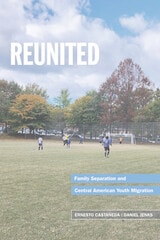
Reunited
Family Separation and Central American Youth MigrationErnesto Castañeda
Russell Sage Foundation, 2024
In interviews with Central American youth, their sponsors, and social services practitioners in and around Washington, D.C., Castañeda and Jenks find that Central American minors migrate on their own mainly for three reasons: gang violence, lack of educational and economic opportunity, and a longing for family reunification. The authors note that youth who feel comfortable leaving and have feelings of belonging upon arrival integrate quickly and easily while those who experience trauma in their home countries and on their way to the United States face more challenges.
Castañeda and Jenks recount these young migrants’ journey from Central America to the U.S. border, detailing the youths’ difficulties passing through Mexico, proving to U.S. Customs and Border Protection officials that they have a legitimate fear of returning or are victims of trafficking, and staying in shelters while their sponsorship, placement, and departure are arranged. The authors also describe the tensions the youth face when they reunite with family members they may view as strangers. Despite their biological, emotional, and financial bonds to these relatives, the youth must learn how to relate to new authority figures and decide whether or how to follow their rules.
The experience of migrating can have a lasting effect on the mental health of young migrants, Castañeda and Jenks note. Although the authors find that Central American youths’ mental health improves after migrating to the United States, the young migrants remain at risk of further problems. They are likely to have lived through traumatizing experiences that inhibit their integration. Difficulty integrating, in turn, creates new stressors that exacerbate PTSD, depression, and anxiety. Consequently, schools and social service organizations are critical, the authors argue, for enhancing youth migrants’ sense of belonging and their integration into their new communities. Bilingual programs, Spanish-speaking PTA groups, message boards, mentoring of immigrant children, and after-school programs for members of reunited families are all integral in supporting immigrant youth as they learn English, finish high school, apply to college, and find jobs.
Offering a complex exploration of youth migration and family reunification, Reunited provides a moving account of how young Central American migrants make the journey north and ultimately reintegrate with their families in the United States.

Reverberations across Small-Scale British Theatre
Politics, Aesthetics and FormsEdited by Patrick Duggan and Victor Ukaegbu
Intellect Books, 2013
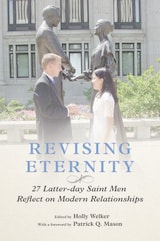
Revising Eternity
27 Latter-day Saint Men Reflect on Modern RelationshipsEdited by Holly Welker
University of Illinois Press, 2022
An insightful exploration of the gap between human realities and engrained ideals, Revising Eternity sheds light on how Latter-day Saint men view and experience marriage today.
Revising State Theory
Essays in Politics and PostindustrialismFred Block
Temple University Press, 1987
Revolution Beyond the Event
The Afterlives of Radical PoliticsEdited by Charlotte Al-Khalili, Narges Ansari, Myriam Lamrani, and Kaya Uzel
University College London, 2023
Revolution Beyond the Event brings together leading international anthropologists and emerging scholars to examine revolutionary legacies from the MENA region, Latin America, and the Caribbean. It explores the idea that revolutions have varied afterlives that complicate the assumptions about their duration, pace, and progression, and argues that a renewed focus on the temporality of radical politics is essential to our understanding of revolution. Through a careful selection of case studies, the book provides a critical perspective on the lived realities of revolutionary afterlives, challenging the liberal humanist assumptions implicit in the modern idea of revolution and reappraising the political agency of people caught up in revolutionary situations across a variety of ethnographic contexts.
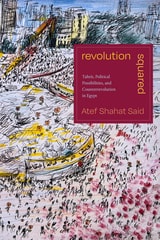
Revolution Squared
Tahrir, Political Possibilities, and Counterrevolution in EgyptAtef Shahat Said
Duke University Press, 2024
Revolutionary Passage
From Soviet To Post-Soviet RussiaMarc Garcelon
Temple University Press, 2005
Revolutionary Suicide and Other Desperate Measures
Narratives of Youth and Violence from Japan and the United StatesAdrienne Carey Hurley
Duke University Press, 2011
Revolutionizing Repertoires
The Rise of Populist Mobilization in PeruRobert S. Jansen
University of Chicago Press, 2017
Drawing on pragmatist theories of social action, Revolutionizing Repertoires sets out to examine what happens when the repertoire of practices available to political actors is dramatically reconfigured. Taking as his case study the development of a distinctively Latin American style of populist mobilization, Robert S. Jansen analyzes the Peruvian presidential election of 1931. He finds that, ultimately, populist mobilization emerged in the country at this time because newly empowered outsiders recognized the limitations of routine political practice and understood how to modify, transpose, invent, and recombine practices in a whole new way. Suggesting striking parallels to the recent populist turn in global politics, Revolutionizing Repertoires offers new insights not only to historians of Peru but also to scholars of historical sociology and comparative politics, and to anyone interested in the social and political origins of populism.
Rhyming Hope and History
Activists, Academics, and Social Movement ScholarshipDavid Croteau
University of Minnesota Press, 2005
Contributors: Kevin M. Carragee, Suffolk U; Catherine Corrigall-Brown, U of California, Irvine; Myra Marx Ferree, U of Wisconsin, Madison; Richard Flacks, U of California, Santa Barbara; Adria D. Goodson; Richard Healy and Sandra Hinson, Grassroots Policy Project; David Meyer, U of California, Irvine; Cynthia Peters, Worker Education Program of the Service Employees International Union, Local 2020; Barbara Risman, North Carolina State U; Robert J. S. Ross, Clark U; Leila J. Rupp, U of California, Santa Barbara; Cassie Schwerner, Schott Foundation; Valerie Sperling, Clark U; David A. Snow, U of California, Irvine; Verta Taylor, U of California, Santa Barbara.
David Croteau is formerly associate professor of sociology and anthropology at Virginia Commonwealth University. William Hoynes is professor of sociology and director of media studies at Vassar College. Charlotte Ryan is codirector of the Media Research and Action Project at Boston College. William A. Gamson is professor of sociology at Boston College.
Rights on Trial
How Workplace Discrimination Law Perpetuates InequalityEllen Berrey, Robert L. Nelson, and Laura Beth Nielsen
University of Chicago Press, 2017
On the surface, America’s commitment to equal opportunity in the workplace has never been clearer. Virtually every company has antidiscrimination policies in place, and there are laws designed to protect these rights across a range of marginalized groups. But, as Ellen Berrey, Robert L. Nelson, and Laura Beth Nielsen compellingly show, this progressive vision of the law falls far short in practice. When aggrieved individuals turn to the law, the adversarial character of litigation imposes considerable personal and financial costs that make plaintiffs feel like they’ve lost regardless of the outcome of the case. Employer defendants also are dissatisfied with the system, often feeling “held up” by what they see as frivolous cases. And even when the case is resolved in the plaintiff’s favor, the conditions that gave rise to the lawsuit rarely change. In fact, the contemporary approach to workplace discrimination law perversely comes to reinforce the very hierarchies that antidiscrimination laws were created to redress.
Based on rich interviews with plaintiffs, attorneys, and representatives of defendants and an original national dataset on case outcomes, Rights on Trial reveals the fundamental flaws of workplace discrimination law and offers practical recommendations for how we might better respond to persistent patterns of discrimination.
Rio as Method
Collective Resistance for a New GenerationPaul Amar, editor
Duke University Press, 2024
Contributors. Rosiane Rodrigues de Almeida, José Claudio Souza Alves, Tamires Maria Alves, Paul Amar, Marcelo Caetano Andreoli, Beatriz Bissio, Thaddeus Gregory Blanchette, Fernando Brancoli, Thayane Brêtas, Victoria Broadus, Fatima Cecchetto, Leonard Cortana, Marcos Coutinho, Monica Cunha, Luiz Henrique Eloy Amado, Marielle Franco, Cristiane Gomes Julião, Benjamin Lessing, Roberto Kant de Lima, Amanda De Lisio, Bryan McCann, Flávia Medeiros, Ana Paula Mendes de Miranda, Sean T. Mitchell, Rodrigo Monteiro, Vitória Moreira, Jacqueline de Oliveira Muniz, Laura Rebecca Murray, Cesar Pinheiro Teixeira, Osmundo Pinho, Paulo Pinto, María Victoria Pita, João Gabriel Rabello Sodré, Luciane Rocha, Marcos Alexandre dos Santos Albuquerque, Ana Paula da Silva, Denise Ferreira da Silva, Soraya Simões, Indianare Siqueira, Antonio Carlos de Souza Lima, Leonardo Vieira Silva
Rise Of Social Theory
Johan Heilbron
University of Minnesota Press, 1995
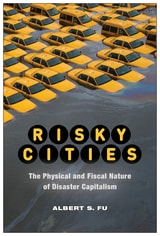
Risky Cities
The Physical and Fiscal Nature of Disaster CapitalismAlbert S. Fu
Rutgers University Press, 2022
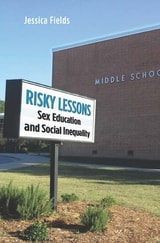
Risky Lessons
Sex Education and Social InequalityFields, Jessica
Rutgers University Press, 2008
Risky Lessons brings readers inside three North Carolina middle schools to show how students and teachers support and subvert the official curriculum through their questions, choices, viewpoints, and reactions. Most important, the book highlights how sex education's formal and informal lessons reflect and reinforce gender, race, and class inequalities.
Ultimately critical of both conservative and liberal approaches, Fields argues for curricula that promote social and sexual justice. Sex education's aim need not be limited to reducing the risk of adolescent pregnancies, disease, and sexual activity. Rather, its lessons should help young people to recognize and contend with sexual desires, power, and inequalities.

Roads to Dystopia
Sociological Essays on the Postmodern ConditionStanford Lyman
University of Arkansas Press, 2001

Roberto Michels’ First Lectures in Political Sociology
Roberto MichelsTranslated by Alfred de GraziaIntroduction by Alfred de Grazia
University of Minnesota Press, 1949
Roberto Michels' First Lectures in Political Sociology was first published in 1949. Minnesota Archive Editions uses digital technology to make long-unavailable books once again accessible, and are published unaltered from the original University of Minnesota Press editions.
A number of papers on key ideas in the social sciences are made available to Americans for the first time in this book. Representative of Western European culture, Roberto Michels, author of the famous Political Parties and many other works, asks and gives answers to a number of questions basic to the further study of political behavior, socialeconomic institutions, and public law.
There parade before the reader of this volume the really great European contributors to social science of the last century: Saint-Simon, Karl Marx, Gabriel Tarde, Gaetano Mosca, Vilfredo Pareto, Max Weber, Werner Sombart, Georges Sorel, and many other critics and scholars. At every step the sociologist, the economist, the psychologist, and the political scientist — for Michels was all of these—intermingle and reinforce each other.
German born, Roberto Michels studied at Paris, Munich, Leipzig, Halle, and Turin, and taught successively in some of Europe's greatest universities. In 1927 he lectured in America at the University of Chicago and elsewhere.

Rodeo
An Anthropologist Looks at the Wild and the TameElizabeth Atwood Lawrence
University of Chicago Press, 1984
Based on extensive field work and drawing on comparative materials from other stock-tending societies, Rodeo is a major contribution to an understanding of the role of performance in society, the culturally constructed view of man's place in nature, and the structure and meaning of social relationships and their representations.
Roman Corinth
An Alternative Model for the Classical CityDonald Engels
University of Chicago Press, 1990
Examining a wealth of archaelogical and literary evidence in light of central place theory, and using sound statistical techniques, Engels reconstructs the human geography of the Corinthia, including an estimate of the population. He shows that—given the amount of cultivatable land—rents and taxes levied onthe countryside could not have supported a highly populated city like Corinth. Neither could its inhabitants have supported themselves directly by farming.
Rather, the city constituted a thriving market for domestic, regional, and overseas raw materials, agricultural products, and manufactured goods, at the same time satisfying the needs of those who plied the various land and sea routes that converged there. Corinth provided key governmental and judicial services to the province of Achaea, and its religious festivals, temples, and monuments attracted numerous visitors from all corners of the Roman world. In accounting for the large portion of residents who participated in these various areas outside of the traditional consumer model, Engels reveals the depth and sophistication of the economics of ancient cities.
Roman Corinth is a much-needed critique of the currently dominant approach of ancient urbanism. It will be of crucial interest to scholars and students in classics, ancient history, and urban studies.

Romancing the Sperm
Shifting Biopolitics and the Making of Modern FamiliesDiane Tober
Rutgers University Press, 2019
In Romancing the Sperm, Diane Tober explores the intersections between sperm donation and the broader social and political environment in which “modern families” are created and regulated. Through tangible and intimate stories, this book provides a captivating read for anyone interested in family and kinship, genetics and eugenics, and how ever-expanding assisted reproductive technologies continue to redefine what it means to be human.
Rubbish Theory
The Creation and Destruction of Value - New EditionMichael Thompson
Pluto Press, 2017
When his highly influential Rubbish Theory, first published in 1979, Michael Thompson launched the discipline of waste studies. It remains the most comprehensive analysis on the culture of waste to date. Thompson argues that there are two mutually exclusive cultural categories that are socially imposed on the world of objects: a transient category and a durable category. However, he identifies a region of flexibility, wherein a transient object that declines in value and life span can linger in a valueless and timeless limbo of rubbish, until it is discovered by a creative individual and transferred into something deemed durable. He links stability and change on one hand, with materiality on the other, providing a rich analysis of social and cultural dynamics. His instrumental theory of rubbish draws on case studies and anthropological fieldwork to highlight the ever-changing subtleties of object value and our complex relationship to waste.
Bringing Rubbish Theory back into print, this updated edition includes a new introduction, preface, foreword, and afterword, thoroughly exploring how Thompson’s key theories have affected our world in the four decades since it was first published and placing it in a contemporary context that shines light on the continued relevance of the book today.
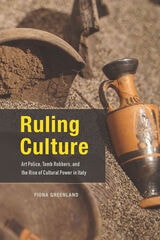
Ruling Culture
Art Police, Tomb Robbers, and the Rise of Cultural Power in ItalyFiona Greenland
University of Chicago Press, 2021
In 2006, the then-president of Italy declared his country to be “the world’s greatest cultural power.” With Ruling Culture, Fiona Greenland traces how Italy came to wield such extensive legal authority, global power, and cultural influence—from the nineteenth century unification of Italy and the passage of novel heritage laws, to current battles with the international art market. Today, Italy’s belief in its cultural superiority is evident through interactions between citizens, material culture, and the state—crystallized in the Art Squad, the highly visible military-police art protection unit. Greenland reveals the contemporary actors in this tale, taking a close look at the Art Squad and state archaeologists on one side and unauthorized excavators, thieves, and smugglers on the other. Drawing on years in Italy interviewing key figures and following leads, Greenland presents a multifaceted story of art crime, cultural diplomacy, and struggles between international powers.
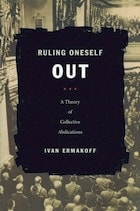
Ruling Oneself Out
A Theory of Collective AbdicationsIvan Ermakoff
Duke University Press, 2008
Ermakoff distinguishes several mechanisms of alignment in troubled and uncertain times and assesses their significance through a fine-grained examination of actors’ beliefs, shifts in perceptions, and subjective states. To this end, he draws on the analytical and methodological resources of perspectives that usually stand apart: primary historical research, formal decision theory, the phenomenology of group processes, quantitative analyses, and the hermeneutics of testimonies. In elaborating this dialogue across disciplinary boundaries, Ruling Oneself Out restores the complexity and indeterminate character of pivotal collective decisions and demonstrates that an in-depth historical exploration can lay bare processes of crucial importance for understanding the formation of political preferences, the paradox of self-deception, and the makeup of historical events as highly consequential.

Rumors of Indiscretion
The University of Missouri's "Sex Questionnaire" Scandal in the Jazz AgeLawrence J. Nelson
University of Missouri Press, 2003
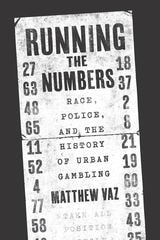
Running the Numbers
Race, Police, and the History of Urban GamblingMatthew Vaz
University of Chicago Press, 2020
How the politics of gambling became snarled in disputes over race, power, and law enforcement.
Every day in the United States, people test their luck in numerous lotteries, from state-run games to massive programs like Powerball and Mega Millions. Yet few are aware that the origins of today’s lotteries can be found in an African American gambling economy that flourished in urban communities in the mid-twentieth century. In Running the Numbers, Matthew Vaz reveals how the politics of gambling became enmeshed in disputes over racial justice and police legitimacy.
As Vaz highlights, early urban gamblers favored low-stakes games built around combinations of winning numbers. When these games became one of the largest economic engines in nonwhite areas like Harlem and Chicago’s south side, police took notice of the illegal business—and took advantage of new opportunities to benefit from graft and other corrupt practices. Eventually, governments found an unusual solution to the problems of illicit gambling and abusive police tactics: coopting the market through legal state-run lotteries, which could offer larger jackpots than any underground game. By tracing this process and the tensions and conflicts that propelled it, Vaz brilliantly calls attention to the fact that, much like education and housing in twentieth-century America, the gambling economy has also been a form of disputed terrain upon which racial power has been expressed, resisted, and reworked.
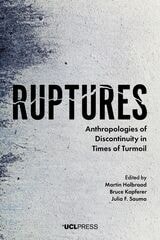
Ruptures
Anthropologies of Discontinuity in Times of TurmoilEdited by Martin Holbraad, Bruce Kapferer, and Julia F. Sauma
University College London, 2019
With Ruptures, editors Martin Holbraad, Bruce Kapferer, and Julia F. Sauma have brought together leading and emerging international anthropologists to explore the concept of rupture in select ethnographic and historical contexts. Among the contributions are chapters that look at images of the guillotine in the French Revolution, reactions to Trump’s election in the United States, the motivations of young Danes who join ISIS in Syria, “butterfly effect” activism among environmental anarchists in northern Europe, the experiences of political trauma and its “repair” through privately sponsored museums of Mao’s revolution in China, people’s experience of the devastating 2001 earthquake in Gujarat; the rupture of Protestant faith among Danish nationalist theologians, and the attempt to invent ex nihilo an alphabet for use in Christian prophetic movements in Congo and Angola.