Results by title
3369 books match the query 'Cultural & Social' and 172 start with r
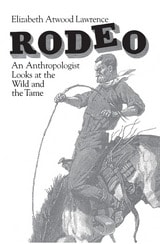
Rodeo
An Anthropologist Looks at the Wild and the TameElizabeth Atwood Lawrence
University of Chicago Press, 1984
Based on extensive field work and drawing on comparative materials from other stock-tending societies, Rodeo is a major contribution to an understanding of the role of performance in society, the culturally constructed view of man's place in nature, and the structure and meaning of social relationships and their representations.
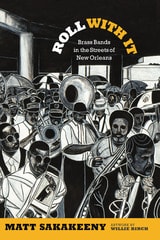
Roll With It
Brass Bands in the Streets of New OrleansMatt Sakakeeny
Duke University Press, 2013
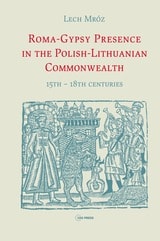
Roma-Gypsy Presence in the Polish-Lithuanian Commonwealth
15th – 18th centuriesLech Mróz
Central European University Press, 2017

Romancing the Sperm
Shifting Biopolitics and the Making of Modern FamiliesDiane Tober
Rutgers University Press, 2019
In Romancing the Sperm, Diane Tober explores the intersections between sperm donation and the broader social and political environment in which “modern families” are created and regulated. Through tangible and intimate stories, this book provides a captivating read for anyone interested in family and kinship, genetics and eugenics, and how ever-expanding assisted reproductive technologies continue to redefine what it means to be human.
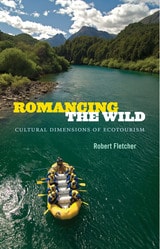
Romancing the Wild
Cultural Dimensions of EcotourismRobert Fletcher
Duke University Press, 2014

Rome's Visceral Reactions
Politics and Poetics in Flesh and BloodCaitlin Hines
University of Michigan Press, 2026
Caitlin Hines follows the history of viscera from its earliest attestations through the end of the Julio-Claudian period and considers the works of Lucretius, Cicero, Vergil, Livy, Ovid, Seneca, and Lucan. Applying theories of embodied cognition and semantic change, Hines demonstrates how Roman authors influenced the development of their language through the invention, reception, and affirmation of innovative meanings and how pressing political and cultural crises could shape, and be shaped in return, by the sophisticated linguistic games of the Roman literary elite.
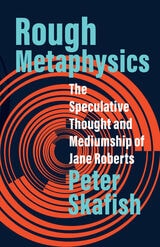
Rough Metaphysics
The Speculative Thought and Mediumship of Jane RobertsPeter Skafish
University of Minnesota Press, 2023
A powerful case for why anthropology should study outsiders of thought and their speculative ideas
What sort of thinking is needed to study anomalies in thought? In this trenchantly argued and beautifully written book, anthropologist Peter Skafish explores this provocative question by examining the writings of the medium and “rough metaphysician” Jane Roberts (1929–1984). Through a close interpretation of her own published texts as well as those she understood herself to have dictated for her cohort of channeled personalities—including one, named “Seth,” who would inspire the New Age movement—Skafish shows her intuitive and dreamlike work to be a source of rigorously inventive ideas about science, ontology, translation, and pluralism. Arguing that Roberts’s writings contain philosophies ahead of their time, he also asks: How might our understanding of speculative thinking change if we consider the way untrained writers, occult visionaries, and their counterparts in other cultural traditions undertake it? What can outsider thinkers teach us about the limitations of even our most critical intellectual habits?
Rough Metaphysics is at once an ethnography of the books of a strange and yet remarkable writer, a commentary on the unlikely philosophy contained in them, and a call for a new way of doing (and undoing) philosophy through anthropology, and vice versa. In guiding the reader through Roberts’s often hallucinatory “world of concepts,” Skafish also develops a series of original interpretations of thinkers—from William James to Claude Lévi-Strauss to Paul Feyerabend—who have been vital to anthropologists and their fellow travelers.
Seductively written and surprising in its turns of thought, Rough Metaphysics is a feast for anyone who wants to learn how to think something new, especially about thought.
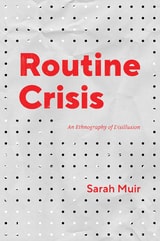
Routine Crisis
An Ethnography of DisillusionSarah Muir
University of Chicago Press, 2021
Anthropologist Sarah Muir offers a cogent meditation on the limits of critique at this historical moment, drawing on deep experience in Argentina but reflecting on a truly global condition. If we feel things are being upended in a manner that is ongoing, tumultuous, and harmful, what would we need to do—and what would we need to give up—to usher in a revitalized critique for today's world? Routine Crisis is an original provocation and a challenge to think beyond the limits of exhaustion and reimagine a form of criticism for the twenty-first century.
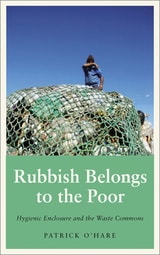
Rubbish Belongs to the Poor
Hygienic Enclosure and the Waste CommonsPatrick O’Hare
Pluto Press, 2021

Rubbish Belongs to the Poor
Hygienic Enclosure and the Waste CommonsPatrick O’Hare
Pluto Press, 2021
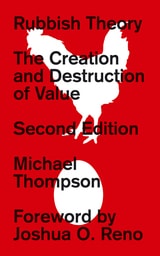
Rubbish Theory
The Creation and Destruction of Value - New EditionMichael Thompson
Pluto Press, 2017
When his highly influential Rubbish Theory, first published in 1979, Michael Thompson launched the discipline of waste studies. It remains the most comprehensive analysis on the culture of waste to date. Thompson argues that there are two mutually exclusive cultural categories that are socially imposed on the world of objects: a transient category and a durable category. However, he identifies a region of flexibility, wherein a transient object that declines in value and life span can linger in a valueless and timeless limbo of rubbish, until it is discovered by a creative individual and transferred into something deemed durable. He links stability and change on one hand, with materiality on the other, providing a rich analysis of social and cultural dynamics. His instrumental theory of rubbish draws on case studies and anthropological fieldwork to highlight the ever-changing subtleties of object value and our complex relationship to waste.
Bringing Rubbish Theory back into print, this updated edition includes a new introduction, preface, foreword, and afterword, thoroughly exploring how Thompson’s key theories have affected our world in the four decades since it was first published and placing it in a contemporary context that shines light on the continued relevance of the book today.
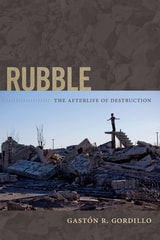
Rubble
The Afterlife of DestructionGastón R. Gordillo
Duke University Press, 2014
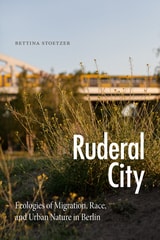
Ruderal City
Ecologies of Migration, Race, and Urban Nature in BerlinBettina Stoetzer
Duke University Press, 2022
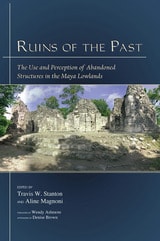
Ruins of the Past
The Use and Perception of Abandoned Structures in the Maya LowlandsTravis W. Stanton
University Press of Colorado, 2008
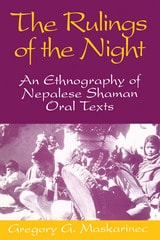
Rulings Of The Night
An Ethnography Of Nepalese Shaman Oral TextsGregory G. Maskarinec
University of Wisconsin Press, 1995
It is impossible to discuss what shamans are and what they do, contends Gregory G. Maskarinec, without knowing what shamans say. When Maskarinec took an interest in shaman rituals on his first visit to Nepal, he was told by many Nepalis and Westerners that the shamans he had encountered in the Himalayan foothills of western Nepal engaged in "meaningless mumblings." But in the course of several years of fieldwork he learned from the shamans that both their long, publicly chanted rituals and their whispered, secretive incantations are oral texts meticulously memorized through years of training. In The Rulings of the Night, he shows how the shamans, during their dramatic night-long performances, create the worlds of words in which shamans exist.
Maskarinec analyzes several complete repertoires of the texts that the shamans use to diagnose and treat afflictions that trouble their clients. Through these texts, they intervene to manipulate and change the world, replacing its unbalanced, inexpressible chaos with orderly, balanced, grammatical, and eloquently expressible states. They negotiate the relations between language, action, and social realities, providing a well-constructed and thoroughly consistent intentional universe—and only in that universe can all shaman actions and beliefs be fully comprehended.

Rumba Rules
The Politics of Dance Music in Mobutu’s ZaireBob W. White
Duke University Press, 2008
Drawing partly on his experiences as a member of a local dance band in the country’s capital city Kinshasa, White offers extraordinarily vivid accounts of the live music scene, including the relatively recent phenomenon of libanga, which involves shouting the names of wealthy or powerful people during performances in exchange for financial support or protection. With dynamic descriptions of how bands practiced, performed, and splintered, White highlights how the ways that power was sought and understood in Kinshasa’s popular music scene mirrored the charismatic authoritarianism of Mobutu’s rule. In Rumba Rules, Congolese speak candidly about political leadership, social mobility, and what it meant to be a bon chef (good leader) in Mobutu’s Zaire.
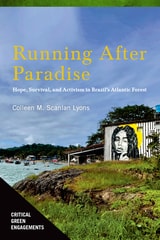
Running After Paradise
Hope, Survival, and Activism in Brazil's Atlantic ForestColleen M. Scanlan Lyons
University of Arizona Press, 2022
The pressures on this tropical forest are palpable. So are people’s responses to these pressures. What was once the state’s economic mainstay, cacao production, is only now beginning to make a comeback after a disease decimated the crops of large and small farmers alike. Tourism, another economic hope, is susceptible to economic crises and pandemics. And the threat of a massive state-led infrastructure project involving mining, a railroad, and an international port has loomed over the region for well over a decade.
Southern Bahia is at a crossroads: develop a sustainable, forest-based economy or run the risk of losing the identity and soul of this place forevermore. Through the lives of environmentalists, farmers, quilombolas, and nativos—people who are in and of this place—this book brings alive the people who are grappling with this dilemma.
Anthropologist Colleen M. Scanlan Lyons brings the eye of a storyteller to present this complex struggle, weaving in her own challenges of balancing family and fieldwork alongside the stories of the people who live in this dynamic region. Intertwined tales, friendships, and hope emerge as people both struggle to sustain their lives in a biodiversity hotspot and strive to create their paradise.

Running Amok
An Historical InquiryJohn C. Spores
Ohio University Press, 1988
Spores presents a basic etiological distinction between reactive-motivated and a spontaneous, unmotivated amok; the one an intentional act capable of establishing or restoring dignity and self-respect; the other a result of organic disturbance. He also explores the social-psychological dynamics of engagement in the two types of solitary amok and suggests possible behavioral chains. Further, his study demonstrates the impact of social forces and processes of the late nineteenth and early twentieth century which significantly altered factors in traditional Malay society important in generating expressions of solitary amok.
Running amok demonstrates the utility of bringing historical data to bear on the examination of specific social phenomena, particularly suggesting that the understanding of some present-day forms of mental disorder or other aberrant or deviant behavior can be facilitated and enriched through such analysis.
Running on Hope
Female Community Health Labor in Rajasthan, IndiaSvea Closser and Surendra Singh Shekhawat
Vanderbilt University Press, 2025
This book is freely available in an open-access edition thanks to the generous support of Johns Hopkins University.
Throughout India, Accredited Social Health Activists (ASHAs) visit households in their communities to deliver essential health services and link community members with key health benefits. Like many other female Community Health Workers across the world, ASHAs are often portrayed as virtuous, passive volunteers, selflessly providing services to their neighbors.
The reality is more complicated and much more interesting. Drawing on ethnographic work in Rajasthan, Running on Hope follows ASHAs through striking personal transformations. From their positions as rural daughters‑in‑law—a particularly low‑power position in Rajasthan—ASHAs have, over years of work, gained unprecedented autonomy for young rural women. They have also gained a deep understanding of what many argue is the exploitation involved in their low‑ranking position in the health system. ASHAs often earn less than $100 per month for extensive work, well below the legal minimum wage.
To counter this, many ASHAs have joined unions—an endeavor that has ultimately proven disappointing: union leaders’ desires for political advancement are often at odds with ASHAs’ own needs. However, ASHAs do not have connections, money, or social power to organize effectively on their own, without a political patron. In Running on Hope, authors Svea Closser and Surendra Singh Shekhawat interview women who work as ASHAs to learn about their organizing goals, their roles in their community as conduits to health education and resources, and their hopes for a better future.
Ruptures
Anthropologies of Discontinuity in Times of TurmoilEdited by Martin Holbraad, Bruce Kapferer, and Julia F. Sauma
University College London, 2019
With Ruptures, editors Martin Holbraad, Bruce Kapferer, and Julia F. Sauma have brought together leading and emerging international anthropologists to explore the concept of rupture in select ethnographic and historical contexts. Among the contributions are chapters that look at images of the guillotine in the French Revolution, reactions to Trump’s election in the United States, the motivations of young Danes who join ISIS in Syria, “butterfly effect” activism among environmental anarchists in northern Europe, the experiences of political trauma and its “repair” through privately sponsored museums of Mao’s revolution in China, people’s experience of the devastating 2001 earthquake in Gujarat; the rupture of Protestant faith among Danish nationalist theologians, and the attempt to invent ex nihilo an alphabet for use in Christian prophetic movements in Congo and Angola.
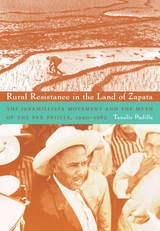
Rural Resistance in the Land of Zapata
The Jaramillista Movement and the Myth of the Pax-Priísta, 1940–1962Tanalís Padilla
Duke University Press, 2008
The peasants known in popular memory as Jaramillistas were led by Rubén Jaramillo (1900–1962). An agrarian leader from Morelos who participated in the Mexican Revolution and fought under Zapata, Jaramillo later became an outspoken defender of the rural poor. The Jaramillistas were inspired by the legacy of the Zapatistas, the peasant army that fought for land and community autonomy with particular tenacity during the Revolution. Padilla examines the way that the Jaramillistas used the legacy of Zapatismo but also transformed, expanded, and updated it in dialogue with other national and international political movements.
The Jaramillistas fought persistently through legal channels for access to land, the means to work it, and sustainable prices for their products, but the Mexican government increasingly closed its doors to rural reform. The government ultimately responded with repression, pushing the Jaramillistas into armed struggle, and transforming their calls for local reform into a broader critique of capitalism. With Rural Resistance in the Land of Zapata, Padilla sheds new light on the decision to initiate armed struggle, women’s challenges to patriarchal norms, and the ways that campesinos framed their demands in relation to national and international political developments.

Russia's New Fin de Siècle
Contemporary Culture between Past and PresentEdited by Birgit Beumers
Intellect Books, 2013