Results by title
4743 books match the query 'Religion' and 288 start with r
Religion, Empire, and Torture
The Case of Achaemenian Persia, with a Postscript on Abu GhraibBruce Lincoln
University of Chicago Press, 2007
Lincoln identifies three core components of an imperial theology that have transhistorical and contemporary relevance: dualistic ethics, a theory of divine election, and a sense of salvific mission. Beyond this, he asks, how did the Achaemenians understand their place in the cosmos and their moral status in relation to others? Why did they feel called to intervene in the struggle between good and evil? What was their sense of historic purpose, especially their desire to restore paradise lost? And how did this lead them to deal with enemies and critics as imperial power ran its course? Lincoln shows how these religious ideas shaped Achaemenian practice and brought the Persians unprecedented wealth, power, and territory, but also produced unmanageable contradictions, as in a gruesome case of torture discussed in the book’s final chapter. Close study of that episode leads Lincoln back to the present with a postscript that provides a searing and utterly novel perspective on the photographs from Abu Ghraib.
Religion, Families, and Health
Population-Based Research in the United StatesEllison, Christopher G
Rutgers University Press, 2010
Religion, Fundamentalism, and Violence
An Interdisciplinary DialogueEdited by Andrew L. Gluck
University of Scranton Press, 2010
In Religion, Fundamentalism, and Violence, Andrew Gluck brings together distinguished scholars to address a fiercely debated topic: the intersection of religion and violence. Among the contributions is an anthropological analysis of the violence associated with the Abrahamic monotheistic religions of the Middle East, a compelling essay accounting for the violence in Hindu religious traditions, an informative look at the Israeli-Palestinian tensions of more recent times, and an essay on the Catholic just war theory. Each chapter is followed by a commentary and reply, making this volume indispensable for students and scholars of the history of religions.
Religion, History, and Place in the Origin of Settled Life
Ian Hodder
University Press of Colorado, 2018
Contributors argue that the long-term social relationships characteristic of delayed-return agricultural systems must be based on historical ties to place and to ancestors. They define different forms of history-making, including nondiscursive routinized practices as well as commemorative memorialization. They consider the timing in the Neolithic of an emerging concern with history-making in place in relation to the adoption of farming and settled life in regional sequences. They explore whether such correlations indicate the causal processes in which history-making, ritual practices, agricultural intensification, population increase, and social competition all played a role.
Religion, History, and Place in the Origin of Settled Life takes a major step forward in understanding the adoption of farming and a settled way of life in the Middle East by foregrounding the roles of history-making and religious ritual. This work is relevant to students and scholars of Near Eastern archaeology, as well as those interested in the origins of agriculture and social complexity or the social role of religion in the past.
Contributors: Kurt W. Alt, Mark R. Anspach, Marion Benz, Lee Clare, Anna Belfer-Cohen, Morris Cohen, Oliver Dietrich, Güneş Duru, Yilmaz S. Erdal, Nigel Goring-Morris, Ian Hodder, Rosemary A. Joyce, Nicola Lercari, Wendy Matthews, Jens Notroff, Vecihi Özkaya, Feridun S. Şahin, F. Leron Shults, Devrim Sönmez, Christina Tsoraki, Wesley Wildman
Religion, Media, and Marginality in Modern Africa
Felicitas Becker
Ohio University Press, 2018
In recent years, anthropologists, historians, and others have been drawn to study the profuse and creative usages of digital media by religious movements. At the same time, scholars of Christian Africa have long been concerned with the history of textual culture, the politics of Bible translation, and the status of the vernacular in Christianity. Students of Islam in Africa have similarly examined politics of knowledge, the transmission of learning in written form, and the influence of new media. Until now, however, these arenas—Christianity and Islam, digital media and “old” media—have been studied separately.
Religion, Media, and Marginality in Modern Africa is one of the first volumes to put new media and old media into significant conversation with one another, and also offers a rare comparison between Christianity and Islam in Africa. The contributors find many previously unacknowledged correspondences among different media and between the two faiths. In the process they challenge the technological determinism—the notion that certain types of media generate particular forms of religious expression—that haunts many studies. In evaluating how media usage and religious commitment intersect in the social, cultural, and political landscapes of modern Africa, this collection will contribute to the development of new paradigms for media and religious studies.
Contributors: Heike Behrend, Andre Chappatte, Maria Frahm-Arp, David Gordon, Liz Gunner, Bruce S. Hall, Sean Hanretta, Jorg Haustein, Katrien Pype, and Asonzeh Ukah.
Religion, Media, and the Marketplace
Clark, Lynn Schofield
Rutgers University Press, 2007
Religion is infiltrating the arena of consumer culture in increasingly visible ways. We see it in a myriad of forms-in movies, such as Mel Gibson's The Passion of the Christ, on Internet shrines and kitschy Web "altars," and in the recent advertising campaign that attacked fuel-guzzling SUVs by posing the question: What would Jesus drive?
In Religion, Media, and the Marketplace, scholars in history, media studies, and sociology explore this intersection of the secular and the sacred. Topics include how religious leaders negotiate between the competing aims of the mainstream and the devout in the commercial marketplace, how politics and religious beliefs combine to shape public policy initiatives, how the religious "other" is represented in the media, and how consumer products help define the practice of different faiths.
At a time when religious fundamentalism in the United States and throughout the world is inseparable from political aims, this interdisciplinary look at the mutual influences between religion and the media is essential reading for scholars from a wide variety of disciplines.
Religion, Order, and Law
David Little
University of Chicago Press, 1984
Religion, Politics and the American Experience
Reflections on Religion and American Public LifeEdith L. Blumhofer
University of Alabama Press, 2002
This challenging collection of essays offers a refreshing approach to the troubling--and timely--subject of religion and public policy in America, and the ways in which issues of church and state affect our national identity.
The result of a series of conferences on religion and politics conducted by the Public Religion project at the University of Chicago, funded by a grant from the Pew Charitable Trust, this collection brings together an extraordinarily diverse set of contributors. Represented within its pages are the ideas and opinions of scholars, politicians, and religious leaders with backgrounds in law, politics, history, and divinity, among them Senator Paul Simon of Illinois. With its wide range of critical approaches and varied perspectives, this volume makes a vibrant contribution to the national dialogue on politics and religion.
Chief among the essay topics are the evangelical roots of American political life; early conflicts between Enlightenment thinking and spiritual impulses in developing a national identity; the practical problems that today's politicians face in campaigning; the impact of constitutional and legal language regarding our definitions of religion; and the way in which the media's treatment of our spiriutal life frames our perceptions of it. These thought-provoking essays will inspire readers to rethink, argue, perhaps act, but most importantly, to converse about this timely and important issue.
This volume will have wide cross-disciplinary appeal. Students and scholars of history, religious studies, and political science will find great value within its pages, as will scholars of divinity and law, and members of this general public concerned with the intersection of faith and politics in American life.
Religion, Politics, and Sugar
The LDS Church, the Federal Government, and the Utah-Idaho Sugar Company, 1907-1927Matthew C. Godfrey
Utah State University Press, 2007
Mary Lois Walker Morris was a Mormon woman who challenged both American ideas about marriage and the U.S. legal system. Before the Manifesto provides a glimpse into her world as the polygamous wife of a prominent Salt Lake City businessman, during a time of great transition in Utah. This account of her life as a convert, milliner, active community member, mother, and wife begins in England, where her family joined the Mormon church, details her journey across the plains, and describes life in Utah in the 1880s. Her experiences were unusual as, following her first husband's deathbed request, she married his brother as a plural wife in the Old Testament tradition of levirate marriage.
Mary Morris's memoir frames her 1879 to 1887 diary with both reflections on earlier years and passages that parallel entries in the day book, giving readers a better understanding of how she retrospectively saw her life. The thoroughly annotated diary offers the daily experience of a woman who kept a largely self-sufficient household, had a wide social network, ran her own business, wrote poetry, and was intellectually curious. The years of "the Raid" (federal prosecution of polygamists) led Mary and Elias Morris to hide their marriage on "the underground," and her to perjury during Elias's trial for unlawful cohabitation. The book ends with Mary Lois's arrival at the Salt Lake Depot after three years in exile in Mexico with a polygamist colony.
Religion, Secularism, and Political Belonging
Leerom Medovoi and Elizabeth Bentley, editors
Duke University Press, 2021
Contributors. Markus Balkenhol, Elizabeth Bentley, Kambiz GhaneaBassiri, David N. Gibbs, Ori Goldberg, Marcia Klotz, Zeynep Kurtulus Korkman, Leerom Medovoi, Eva Midden, Mohanad Mustafa, Mu-chou Poo, Shaul Setter, John Vignaux Smith, Pooyan Tamimi Arab, Ernst van den Hemel, Albert Welter, Francis Ching-Wah Yip, Raef Zreik

Religion, Society, and Utopia in Nineteenth Century America
Mandelker Ira L.
University of Massachusetts Press, 0

Religion
North American Style, Third EditionDowdy, Thomas
Rutgers University Press, 1996
Religions/Globalizations
Theories and CasesDwight N. Hopkins, Lois Ann Lorentzen, Eduardo Mendieta, and David Batstone, eds.
Duke University Press, 2001
As the contributors to this work suggest, a crucial component of globalization—the breakdown of familiar boundaries and power balances—may open a space in which religion can be deployed to help refabricate new communities. Examples of such deployments can be found in the workings of liberation theology in Latin America. In other cases, however, the operations of globalization have provided a space for strident religious nationalism and identity disputes to flourish. Is there in fact a dialectical tension between religion and globalization, a codependence and codeterminism? While religion can be seen as a globalizing force, it has also been transformed and even victimized by globalization.
A provocative assessment of a contemporary phenomenon with both cultural and political dimensions, Religions/Globalizations will interest not only scholars in religious studies but also those studying Latin America, the Middle East, South Asia, and Africa.
Contributors. David Batstone, Berit Bretthauer, Enrique Dussel, Dwight N. Hopkins, Mark Juergensmeyer, Lois Ann Lorentzen, Eduardo Mendieta, Vijaya Rettakudi Nagarajan, Kathryn Poethig, Lamin Sanneh, Linda E. Thomas
Religious Affects
Animality, Evolution, and PowerDonovan O. Schaefer
Duke University Press, 2015
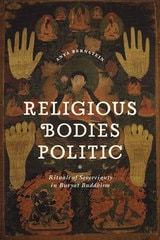
Religious Bodies Politic
Rituals of Sovereignty in Buryat BuddhismAnya Bernstein
University of Chicago Press, 2013
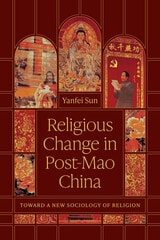
Religious Change in Post-Mao China
Toward a New Sociology of ReligionYanfei Sun
University of Chicago Press, 2026
In Religious Change in Post-Mao China, sociologist Yanfei Sun examines the transformation of major religions and the broader religious ecology in China in the wake of the death of Mao Zedong. Drawing on two decades of research that integrates ethnographic, historical, and comparative methods, this book explores the remarkable rise of Protestantism, the challenges faced by Catholicism, the revival of Chinese popular religion, the complex dynamics of Chinese Buddhism, and the unrealized potential of new religious movements. Why do some religions thrive and others struggle in post-Mao China? Sun describes both the internal institutional factors that allow some religions to flourish and the wider sociopolitical context that supports or discourages religious expansion. She thereby introduces an ambitious theoretical framework—one whose applicability extends beyond China, offering a template for analyzing religious dynamics in other parts of the world.
A must-read for scholars of religious studies, sociology, and China studies, Religious Change in Post-Mao China not only provides critical insights into China’s evolving religious landscape but also offers a powerful lens for examining the forces behind religious change, both past and present.
Religious Competition in the Greco-Roman World
Nathaniel P. DesRosiers
SBL Press, 2016
Essays that broaden the historical scope and sharpen the parameters of competitive discourses
Scholars in the fields of late antique Christianity, neoplatonism, New Testament, art history, and rabbinics examine issues related to authority, identity, and change in religious and philosophical traditions of late antiquity. The specific focus of the volume is the examination of cultural producers and their particular viewpoints and agendas in an attempt to shed new light on the religious thinkers, texts, and material remains of late antiquity. The essays explore the major creative movements of the era, examining the strategies used to develop and designate orthodoxies and orthopraxies. This collection of essays reinterprets dialogues between individuals and groups, illuminating the mutual competition and influence among these ancient thinkers and communities.
Features:
- Essays feature competitive discourse as the central organizing theme
- Articles present unique theoretical models that are adaptable to different contexts and highly applicable to religious discourses before and after the Late Antique Period
- Scholars cover a much wider range of traditions including Judaism, Christianity, paganism, and philosophy in order to provide the most complete portrait of the religious landscape
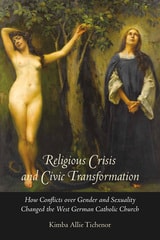
Religious Crisis and Civic Transformation
How Conflicts over Gender and Sexuality Changed the West German Catholic ChurchKimba Allie Tichenor
Brandeis University Press, 2016
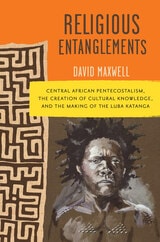
Religious Entanglements
Central African Pentecostalism, the Creation of Cultural Knowledge, and the Making of the Luba KatangaDavid Maxwell
University of Wisconsin Press, 2023
Through the careful reconstruction of knowledge pathways, Maxwell brings into focus the role of Africans in shaping texts, collections, and images as well as in challenging and adapting Western-imported presuppositions and prejudices. Ultimately, Maxwell illustrates the mutually constitutive nature of discourses of identity in colonial Africa and reveals not only how the Luba shaped missionary research but also how these coproducers of knowledge constructed and critiqued custom and convened new ethnic communities.
Making a significant intervention in the study of both the history of African Christianity and the cultural transformations effected by missionary encounters across the globe, Religious Entanglements excavates the subculture of African Pentecostalism, revealing its potentiality for radical sociocultural change.
Religious Experience in the Work of Richard Wagner
Marcel Hebert
Catholic University of America Press, 2015
Religious Failure, Geopolitics, and Forced Displacement in Russia, Eastern Europe, and the South Caucasus
Lucian N. Leustean
Central European University Press, 2026
Religious Freedom after the Sexual Revolution
A Catholic GuideHelen Alvare
Catholic University of America Press, 2022
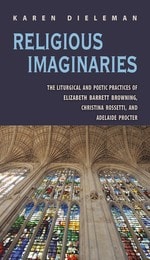
Religious Imaginaries
The Liturgical and Poetic Practices of Elizabeth Barrett Browning, Christina Rossetti, and Adelaide ProcterKaren Dieleman
Ohio University Press, 2012
Explores liturgical practice as formative for how three Victorian women poets imagined the world and their place in it and, consequently, for how they developed their creative and critical religious poetics.
This new study rethinks several assumptions in the field: that Victorian women’s faith commitments tended to limit creativity; that the contours of church experiences matter little for understanding religious poetry; and that gender is more significant than liturgy in shaping women’s religious poetry.
Exploring the import of bodily experience for spiritual, emotional, and cognitive forms of knowing, Karen Dieleman explains and clarifies the deep orientations of different strands of nineteenth-century Christianity, such as Congregationalism’s high regard for verbal proclamation, Anglicanism’s and Anglo-Catholicism’s valuation of manifestation, and revivalist Roman Catholicism’s recuperation of an affective aesthetic. Looking specifically at Elizabeth Barrett Browning, Christina Rossetti, and Adelaide Procter as astute participants in their chosen strands of Christianity, Dieleman reveals the subtle textures of these women’s religious poetry: the different voices, genres, and aesthetics they create in response to their worship experiences. Part recuperation, part reinterpretation, Dieleman’s readings highlight each poet’s innovative religious poetics.
Dieleman devotes two chapters to each of the three poets: the first chapter in each pair delineates the poet’s denominational practices and commitments; the second reads the corresponding poetry. Religious Imaginaries has appeal for scholars of Victorian literary criticism and scholars of Victorian religion, supporting its theoretical paradigm by digging deeply into primary sources associated with the actual churches in which the poets worshipped, detailing not only the liturgical practices but also the architectural environments that influenced the worshipper’s formation. By going far beyond descriptions of various doctrinal positions, this research significantly deepens our critical understanding of Victorian Christianity and the culture it influenced.
Religious Imaginations
How Narratives of Faith are Shaping Today’s WorldEdited by James Walters
Gingko, 2018
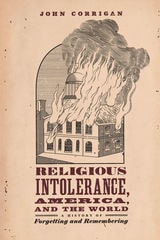
Religious Intolerance, America, and the World
A History of Forgetting and RememberingJohn Corrigan
University of Chicago Press, 2020
Religious Intolerance, America, and the World spans from Christian colonists’ intolerance of Native Americans and the role of religion in the new republic’s foreign-policy crises to Cold War witch hunts and the persecution complexes that entangle Christians and Muslims today. Corrigan reveals how US churches and institutions have continuously campaigned against intolerance overseas even as they’ve abetted or performed it at home. This selective condemnation of intolerance, he shows, created a legacy of foreign policy interventions promoting religious freedom and human rights that was not reflected within America’s own borders. This timely, captivating book forces America to confront its claims of exceptionalism based on religious liberty—and perhaps begin to break the grotesque cycle of projection and oppression.
Religious Intolerance, America, and the World
A History of Forgetting and RememberingJohn Corrigan
University of Chicago Press, 2020
This is an auto-narrated audiobook edition of this book.
As the news shows us every day, contemporary American culture and politics are rife with people who demonize their enemies by projecting their own failings and flaws onto them. But this is no recent development. Rather, as John Corrigan argues here, it’s an expression of a trauma endemic to America’s history, particularly involving our long domestic record of religious conflict and violence.
Religious Intolerance, America, and the World spans from Christian colonists’ intolerance of Native Americans and the role of religion in the new republic’s foreign-policy crises to Cold War witch hunts and the persecution complexes that entangle Christians and Muslims today. Corrigan reveals how US churches and institutions have continuously campaigned against intolerance overseas even as they’ve abetted or performed it at home. This selective condemnation of intolerance, he shows, created a legacy of foreign policy interventions promoting religious freedom and human rights that was not reflected within America’s own borders. This timely, captivating book forces America to confront its claims of exceptionalism based on religious liberty—and perhaps begin to break the grotesque cycle of projection and oppression.
Religious Knowledge, Authority, and Charisma
Islamic and Jewish PerspectivesDaphna Ephrat
University of Utah Press, 2014
The issue of religious authority has long fascinated and ignited scholars across a range of disciplines: history, anthropology, the sociology of religion, and political science. Religious Knowledge, Authority, and Charisma juxtaposes religious leadership in premodern and modern Islam with examples from the Judaic tradition. By illustrating various iterations of authority in numerous historical and cultural contexts, this volume offers fresh insights into the nature of institutions of learning and other systems of establishing and disseminating authority, the mechanisms for cultivating committed adherents, and the processes by which religious leadership is polarized and fragmented.
Religious Liberty in America
The First Amendment in Historical and Contemporary PerspectiveBruce T. Murray
University of Massachusetts Press, 2008
A nation founded on church-state separation is still debating where the line is drawn
In recent years a series of highly publicized controversies has focused attention on what are arguably the sixteen most important words in the U.S. Constitution: “Congress shall make no law respecting an establishment of religion, or prohibiting the free exercise thereof.” The ongoing court battles over the inclusion of the words “under God” in the Pledge of Allegiance, the now annual cultural quarrel over “Merry Christmas” vs. “Happy Holidays,” and the political promotion of “faith-based initiatives” to address social problems—all reflect competing views of the meaning of the religious liberty clauses of the First Amendment.
Such disputes, as Bruce T. Murray shows, are nothing new. For more than two hundred years Americans have disagreed about the proper role of religion in public life and where to draw the line between church and state. In this book, he reexamines these debates and distills the volumes of commentary and case law they have generated. He analyzes not only the changing contours of religious freedom but also the phenomenon of American civil religion, grounded in the notion that the nation's purpose is sanctified by a higher authority—an idea that can be traced back to the earliest New England colonists and remains deeply ingrained in the American psyche.
Throughout the book, Murray connects past and present, tracing the historical roots of contemporary controversies. He considers why it is that a country founded on the separation of church and state remains singularly religious among nations, and concludes by showing how the Supreme Court's thinking about the religious liberty clauses has evolved since the late eighteenth century.

Religious Objects as Psychological Structures
Moshe Halevi Spero
University of Chicago Press, 1992
By constructing a halakhic metapsychology within which psychological phenomena can be given specific halakhic identities, Spero arrives at a unique perspective on the development of religious objects and God representations. He traces two lines of development: one for relationships between humans, anthropocentric, and another for relationships between God and humans, deocentric. The second aspect of his argument is that these two distinct but parallel lines allow one to conceptualize the revolutionary possibility of transference displacements—the shift of religious symbology—not only from interpersonal relationships onto the God concept (Freud's model) but also from an objective human-God relationship onto interpersonal relationships. Filled with clinical as well as theoretical illustrations, Spero's work is a rich resource for both the religious patient and the religious therapist.
In the last few decades, a great deal of literature has been written on the relationship between theology and psychotherapy; none of this work, however, has addressed its subject using Judaism as a point of reference. Spero successfully takes up the task of bridging this gap in previous scholarship.
Religious Pluralism and the Nigerian State
Mis Af#66Simeon O. Ilesanmi
Ohio University Press, 1996
Religious Tolerance in World Religions
Jacob Neusner
Templeton Press, 2008
Today, and historically, religions often seem to be intolerant, narrow-minded, and zealous. But the record is not so one-sided. In Religious Tolerance in World Religions, numerous scholars offer perspectives on the "what" and "why" traditions of tolerance in world religions, beginning with the pre-Christian West, Greco-Roman paganism, and ancient Israelite Monotheism and moving into modern religions such as Christianity, Judaism, Islam, Buddhism, and Hinduism. By tolerance the authors mean "the capacity to live with religious difference, and by toleration, the theory that permits a majority religion to accommodate the presence of a minority religion."
The volume is introduced with a summary of a recent survey that sought to identify the capacity of religions to tolerate one another in theory and in practice. Eleven religious communities in seven nations were polled on questions that ranged from equality of religious practitioners to consequences of disobedience. The essays frame the provocative analysis of how a religious system in its political statement produces categories of tolerance that can be explained in that system’s logical context. Past and present beliefs, practices, and definitions of social order are examined in terms of how they support tolerance for other religious groups as a matter of public policy.
Religious Tolerance in World Religions focuses attention on the attitude "that the ’infidel’ or non-believer may be accorded an honorable position within the social order defined by Islam or Christianity or Judaism or Buddhism or Hinduism, and so on." It is a timely reference for colleges and universities and for makers of public policy.
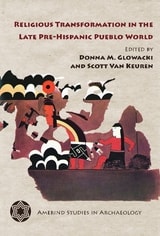
Religious Transformation in the Late Pre-Hispanic Pueblo World
Edited by Donna M. Glowacki and Scott Van Keuren
University of Arizona Press, 2012
The mid-thirteenth century AD marks the beginning of tremendous social change among Ancestral Pueblo peoples of the northern US Southwest that foreshadow the emergence of the modern Pueblo world. Regional depopulations, long-distance migrations, and widespread resettlement into large plaza-oriented villages forever altered community life. Archaeologists have tended to view these historical events as adaptive responses to climatic, environmental, and economic conditions. Recently, however, more attention is being given to the central role of religion during these transformative periods, and to how archaeological remains embody the complex social practices through which Ancestral Pueblo understandings of sacred concepts were expressed and transformed.
The contributors to this volume employ a wide range of archaeological evidence to examine the origin and development of religious ideologies and the ways they shaped Pueblo societies across the Southwest in the centuries prior to European contact. With its fresh theoretical approach, it contributes to a better understanding of both the Pueblo past and the anthropological study of religion in ancient contexts This volume will be of interest to both regional specialists and to scholars who work with the broader dimensions of religion and ritual in the human experience.
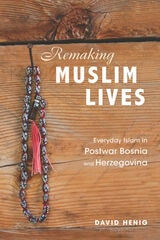
Remaking Muslim Lives
Everyday Islam in Postwar Bosnia and HerzegovinaDavid Henig
University of Illinois Press, 2020
Provocative and laden with eyewitness detail, Remaking Muslim Lives offers a rare sustained look at what it means to be Muslim and live a Muslim life in contemporary Bosnia and Herzegovina.
Remaking the Godly Marriage
Gender Negotiation in Evangelical FamiliesBartkowski, John
Rutgers University Press, 2001
While religious leaders often have enormous influence over their members’ beliefs and how they translate their beliefs into action in everyday life, the individual family remains the place where religious values are practiced through and ultimately transferred to the next generation. As such, the family is an extremely important, though frequently overlooked, topic of study for sociologists of religion.
In Remaking the Godly Marriage, John Bartkowski studies evangelical Protestants and their views on marriage and gender relations and how they are lived within individual families. The author compares elite evangelical prescriptions for godly family living with the day-to-day practices in conservative Protestant households. He asks: How serious are the debates over gender and the family that are manifested within contemporary evangelicalism? What are the values that underlie this debate? Have these internecine disputes been altered by the emergence of new evangelical movements such as biblical feminism and the Promise Keepers? And given the fact that leading evangelicals advance competing visions of godly family life, how do conservative religious spouses make sense of their own family relationships and gender identities?
Through in-depth interviews with evangelical married couples and an exhaustive study of evangelical family advice manuals, Bartkowski explores the disputes and ambivalence concerning traditional gender roles and patriarchal models of family life, which derive from the tension between evangelical Protestantism as a religious subculture and the broader American secular culture in which it is embedded. Bartkowski reveals how evangelical men and women jointly negotiate gender roles within their families and selectively appropriate values of the larger culture even as they attempt to cope with the conflicting messages of their own faith.
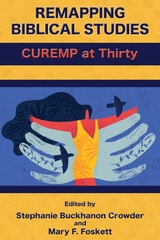
Remapping Biblical Studies
CUREMP at ThirtyStephanie Buckhanon Crowder
SBL Press, 2023
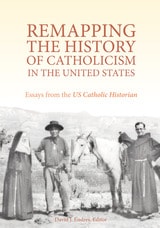
Remapping the History of Catholicism in the United States
David J. Endres
Catholic University of America Press, 2017
Timothy Matovina’s opening essay sets the theme for the volume, encouraging a remapping of U.S. Catholic history to more widely encompass its various localities and peoples, especially the significance of non-European ethnic groups and the role of Catholics in the American Southwest. Jeanne Petit explores Catholic womanhood’s strength and organizational zeal in the post-World War I era, noting the obstacles and successes of women’s attempts to be recognized fully as American citizens and members of the Church. Anne Klejment weaves together the lives of Dorothy Day and Cesar Chavez to illustrate their use of nonviolence and “weapons of the spirit” to respond to societal injustice. Amanda Bresie provides a window into the life of Mother Katharine Drexel, noting the generosity of the millionaire heiress, but also her meticulous record keeping and close supervision of her funding of educational and evangelization eorts among Native and African Americans. Kristine Ashton Gunnell analyzes the ways in which the Daughters of Charity crossed cultural boundaries to offer charitable assistance to Mexican and Japanese communities in Los Angeles. Matthew Cressler explores the intersection of Black Power and distinctive African American-inspired liturgies, arguing that the liturgy became a site of struggle as black self-determination and nationalism impacted worship and black Catholic identity. Finally, Joseph Chinnici offers an important essay on re-envisioning post-conciliar U.S. Catholicism in its global context, offering a new approach to how we consider the American Catholic narrative and write its history.
Together these path-breaking studies serve as a model for historians seeking to engage in the cartographic task of remapping the U.S. Catholic experience.
Remembering Nicaea
The Ecclesiastical History of Anonymous CyzicenusMartin Shedd
SBL Press, 2024
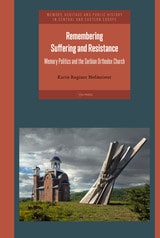
Remembering Suffering and Resistance
Memory Politics and the Serbian Orthodox ChurchKarin Roginer Hofmeister
Central European University Press, 2024
Assessing issues related to the Orthodox Church from an academic, secular point of view is a sensitive matter. However, by tracing and interpreting the engagement of the Serbian Church with the memory of Serbian heroic victimhood in World War II through a kind of “methodological agnosticism,” this volume has managed to tackle the subtle topic in a very delicate and value-neutral way. Arguing that the search for a collective memory is particularly urgent in the face of societal uncertainty and that religious institutions often use their memory potential to reaffirm their public relevance, the book examines the motivations, forms, strategies, and outcomes of a wide range of mnemonic activities the Serbian Orthodox Church engaged in following the upheavals caused by the collapse of Yugoslav socialism, the violent dissolution of the country, and the fall of the Milošević regime. These activities, taking place within the memory fields framed by the post-socialist, post-conflict, and post-secular horizons, took liturgical and non-liturgical forms, often involving a hybrid fusion of the two. As a result of this mnemonic endeavor, the author argues, the Church was successful in reasserting its power and legitimacy in the public sphere of post-2000 Serbia.
Remembering and Repeating
On Milton's Theology and PoeticsRegina M. Schwartz
University of Chicago Press, 1993
"A brilliant study that quietly but powerfully recharacterizes many of the contexts of discussion in Milton criticism. Particularly noteworthy is Schwartz's ability to introduce advanced theoretical perspectives without ever taking the focus of attention away from the dynamics and problematics of Milton's poem."—Stanley Fish
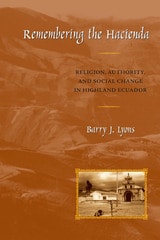
Remembering the Hacienda
Religion, Authority, and Social Change in Highland EcuadorBy Barry J. Lyons
University of Texas Press, 2006
From the colonial period through the mid-twentieth century, haciendas dominated the Latin American countryside. In the Ecuadorian Andes, Runa—Quichua-speaking indigenous people—worked on these large agrarian estates as virtual serfs. In Remembering the Hacienda: Religion, Authority, and Social Change in Highland Ecuador, Barry Lyons probes the workings of power on haciendas and explores the hacienda's contemporary legacy.
Lyons lived for three years in a Runa village and conducted in-depth interviews with elderly former hacienda laborers. He combines their wrenching accounts with archival evidence to paint an astonishing portrait of daily life on haciendas. Lyons also develops an innovative analysis of hacienda discipline and authority relations. Remembering the Hacienda explains the role of religion as well as the reshaping of Runa culture and identity under the impact of land reform and liberation theology.
This beautifully written book is a major contribution to the understanding of social control and domination. It will be valuable reading for a broad audience in anthropology, history, Latin American studies, and religious studies.
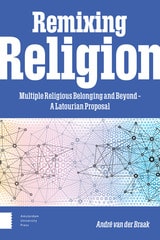
Remixing Religion
Multiple Religious Belonging and Beyond – A Latourian ProposalAndré van der Braak
Amsterdam University Press, 2026
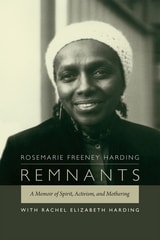
Remnants
A Memoir of Spirit, Activism, and MotheringRosemarie Freeney Harding with Rachel Elizabeth Harding
Duke University Press, 2015
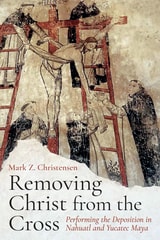
Removing Christ from the Cross
Performing the Deposition in Nahuatl and Yucatec MayaMark Z. Christensen
University Press of Colorado, 2026
Employed on Good Friday, the texts provided mute actors with roles and props with which to reenact the removal of Christ from his cross, his placement into the arms of his grieving mother, and his burial—his Deposition. Through rare translations, vivid historical accounts, and rich cultural insight, the book uncovers how these ceremonies moved audiences to tears, shaped local Catholicisms, and still have the power to stir hearts today.
Such theatrical reenactments were common among Nahuas and Mayas during the colonial period only to become largely overlooked by the scholarly literature on religion. The texts examined here provide not only examples of performances but also insight into how translation altered their content and meaning. More than simply plays or sermons, these hybrid performances merged European tradition with Nahua and Maya storytelling, creating unforgettable moments of faith, grief, and beauty. Familiarized through local worldviews, concerns, preferences, and language, these texts provide additional and important insights into myriad issues including those of gender, agency, and how Christianity adapted its message of the Deposition to accommodate Indigenous audiences of different cultures. Christensen also mines the deep well of existing European literature on the subject to clearly distinguish the aspects derived from the Old World from those from the New.
The first book examining how the Aztec and Maya were taught about and engaged in the Deposition, Removing Christ from the Cross exposes the colonial origins of modern Latin American commemorations, showing the past clearly reflected in the present and making a significant contribution to the literature on the evangelization of New Spain. This is more than history—it is the rediscovery of performances that connected worlds.
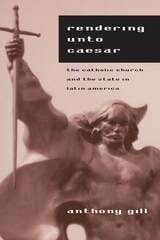
Rendering unto Caesar
The Catholic Church and the State in Latin AmericaAnthony Gill
University of Chicago Press, 1997
Renewal
Liberal Protestants and the American City after World War IIMark Wild
University of Chicago Press, 2019
Renewal explores the rise and fall of this movement, which began as an effort to restore the church’s standing but wound up as nothing less than an openhearted crusade to remake our nation’s cities. These campaigns reached beyond church walls to build or lend a hand to scores of organizations fighting for welfare, social justice, and community empowerment among the increasingly nonwhite urban working class. Church leaders extended their efforts far beyond traditional evangelicalism, often dovetailing with many of the contemporaneous social currents coursing through the nation, including black freedom movements and the War on Poverty.
Renewal illuminates the overlooked story of how religious institutions both shaped and were shaped by postwar urban America.
Renewal
Liberal Protestants and the American City after World War IIMark Wild
University of Chicago Press, 2019
In the decades following World War II, a movement of clergy and laity sought to restore liberal Protestantism to the center of American urban life. Chastened by their failure to avert war and the Holocaust, and troubled by missionaries’ complicity with colonial regimes, they redirected their energies back home.
Renewal explores the rise and fall of this movement, which began as an effort to restore the church’s standing but wound up as nothing less than an openhearted crusade to remake our nation’s cities. These campaigns reached beyond church walls to build or lend a hand to scores of organizations fighting for welfare, social justice, and community empowerment among the increasingly nonwhite urban working class. Church leaders extended their efforts far beyond traditional evangelicalism, often dovetailing with many of the contemporaneous social currents coursing through the nation, including black freedom movements and the War on Poverty.
Renewal illuminates the overlooked story of how religious institutions both shaped and were shaped by postwar urban America.
Renewing Catholic Schools
How to Regain a Catholic Vision for a Secular AgeR. Jared Staudt
Catholic University of America Press, 2020
Renewing Islam by Service
Pim Valkenberg
Catholic University of America Press, 2015
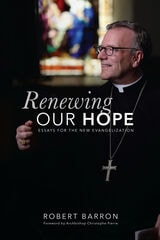
Renewing Our Hope
Essays for the New EvangelizationRobert Barron
Catholic University of America Press, 2020
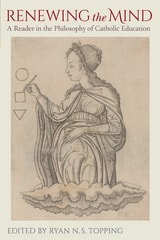
Renewing the Mind
Ryan N.S. Topping
Catholic University of America Press, 2015