Results by title
4038 books match the query 'Social aspects' and 216 start with r
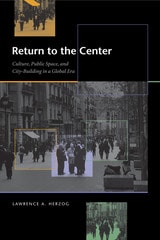
Return to the Center
Culture, Public Space, and City Building in a Global EraBy Lawrence A. Herzog
University of Texas Press, 2006
The redesign and revitalization of traditional urban centers is the cutting edge of contemporary urban planning, as evidenced by the intense public and professional attention to the rebuilding of city cores from Berlin to New York City's "Ground Zero." Spanish and Latin American cities have never received the recognition they deserve in the urban revitalization debate, yet they offer a very relevant model for this "return to the center." These cultures have consistently embraced the notion of a city whose identity is grounded in its organic public spaces: plazas, promenades, commercial streets, and parks that invite pedestrian traffic and support a rich civic life. This groundbreaking book explores Spanish, Mexican, and Mexican-American border cities to learn what these urban areas can teach us about effectively using central public spaces to foster civic interaction, neighborhood identity, and a sense of place.
Herzog weaves the book around case studies of Madrid and Barcelona, Spain; Mexico City and Querétaro, Mexico; and the Tijuana-San Diego border metropolis. He examines how each of these urban areas was formed and grew through time, with attention to the design lessons of key public spaces. The book offers original and incisive discussions that challenge current urban thinking about politics and public space, globalization, and the future of privatized communities, from gated suburbs to cyberspace. Herzog argues that well-designed, human-scaled city centers are still vitally necessary for maintaining community and civic life. Applicable to urban renewal projects around the globe, Herzog's book will be important reading for planners, architects, designers, and all citizens interested in creating more livable cities.

Revenant Ecologies
Defying the Violence of Extinction and ConservationAudra Mitchell
University of Minnesota Press, 2024
Engaging a broad spectrum of ecological thought to articulate the ethical scale of global extinction
As global rates of plant and animal extinctions mount, anxieties about the future of the earth’s ecosystems are fueling ever more ambitious efforts at conservation, which draw on Western scientific principles to manage species and biodiversity. In Revenant Ecologies, Audra Mitchell argues that these responses not only ignore but also magnify powerful forms of structural violence like colonialism, racism, genocide, extractivism, ableism, and heteronormativity, ultimately contributing to the destruction of unique life forms and ecosystems.
Critiquing the Western discourse of global extinction and biodiversity through the lens of diverse Indigenous philosophies and other marginalized knowledge systems, Revenant Ecologies promotes new ways of articulating the ethical enormity of global extinction. Mitchell offers an ambitious framework—(bio)plurality—that focuses on nurturing unique, irreplaceable worlds, relations, and ecosystems, aiming to transform global ecological–political relations, including through processes of land return and critically confronting discourses on “human extinction.”
Highlighting the deep violence that underpins ideas of “extinction,” “conservation,” and “biodiversity,” Revenant Ecologies fuses political ecology, global ethics, and violence studies to offer concrete, practical alternatives. It also foregrounds the ways that multi-life-form worlds are actively defying the forms of violence that drive extinction—and that shape global efforts to manage it.
Retail e-book files for this title are screen-reader friendly with images accompanied by short alt text and/or extended descriptions.

Revisiting Race in a Genomic Age
Koenig, Barbara
Rutgers University Press, 2008
With the completion of the sequencing of the human genome in 2001, the debate over the existence of a biological basis for race has been revived. In Revisiting Race in a Genomic Age, interdisciplinary scholars join forces to examine the new social, political, and ethical concerns that are attached to how we think about emerging technologies and their impact on current conceptions of race and identity.
Essays explore a range of topics that include drug development and the production of race-based therapeutics, the ways in which genetics could contribute to future health disparities, the social implications of ancestry mapping, and the impact of emerging race and genetics research on public policy and the media.
As genetic research expands its reach, this volume takes an important step toward creating a useful interdisciplinary dialogue about its implications.
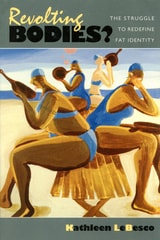
Revolting Bodies?
The Struggle to Redefine Fat IdentityKathleen LeBesco
University of Massachusetts Press, 2004
Viewed as both unhealthy and unattractive, fat people are widely represented in popular culture and in interpersonal interactions as revolting—as agents of abhorrence and disgust. Yet if we think about “revolting” in a different way, Kathleen LeBesco argues, we can recognize fatness as not simply an aesthetic state or a medical condition, but a political one. If we think of revolting in terms of overthrowing authority, rebelling, protesting, and rejecting, then corpulence carries a whole new weight as a subversive cultural practice that calls into question received notions about health, beauty, and nature.
Revolting Bodies examines a number of sites of struggle over the cultural meaning of fatness. The book is grounded in scholarship on identity politics, the social construction of beauty, and the subversion of hegemonic medical ideas about the dangers of fatness. It explains how the redefinition of fat identities has been undertaken by people who challenge conventional understandings of nature, health, and beauty and, in so doing, alter their individual and collective relationships to power.
LeBesco explores how the bearer of a fat body is marked as a failed citizen, inasmuch as her powers as a worker, shopper, and sexually “desirable” subject are called into question. At the same time, she highlights fat fashion, relations among fat, queer, and disability politics and activism, and online communities as opportunities for transforming these pejorative stereotypes of fatness. Her discussion of the long-term ramifications of denying bodily agency—in effect, letting biological determinism run rampant—has implications not only for our understanding of fatness but also for future political practice.
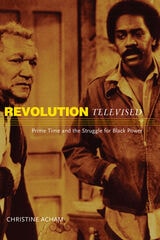
Revolution Televised
Prime Time and the Struggle for Black PowerChristine Acham
University of Minnesota Press, 2005
In Revolution Televised, Christine Acham offers a more complex reading of this period in African American television history, finding within these programs opposition to dominant white constructions of African American identity. She explores the intersection of popular television and race as witnessed from the documentary coverage of the civil rights and Black Power movements, the personal politics of Flip Wilson and Soul Train’s Don Cornelius, and the ways in which notorious X-rated comic Redd Foxx reinvented himself for prime time.
Reflecting on both the potential of television to effect social change as well as its limitations, Acham concludes with analyses of Richard Pryor’s politically charged and short-lived sketch comedy show and the success of outspoken comic Chris Rock. Revolution Televised deftly illustrates how black television artists operated within the constraints of the television industry to resist and ultimately shape the mass media’s portrayal of African American life.
Christine Acham is assistant professor in African American and African studies at the University of California, Davis.
Revolutions of Capitalism
The Politics of the EventMaurizio Lazzarato. Translated by Brian Whitener and Geo Maher.
Duke University Press, 2026
Reworking English in Rhetoric and Composition
Global Interrogations, Local InterventionsEdited by Bruce Horner and Karen Kopelson
Southern Illinois University Press, 2014
In Reworking English in Rhetoric and Composition, editors Bruce Horner and Karen Kopelson gather leading scholars and new voices in the field of rhetoric and composition to offer a dynamic new perspective on English as it is used today. This provocative volume explores the myriad ways in which English is constantly redefined, revised, and redirected through specific, located acts of writing, rhetoric, teaching, and learning. Contributors provide insightful contributions to the study of English from both national and international perspectives, revealing the language as a fluid and constantly changing manner of expression that challenges established notions.
In part one, “Reworking Language,” writers call into question the idea of language as a static, stable entity. In part two, “Locations and Migrations: Global/Local Interrogations,” contributors explore the impact of writing and teaching English in both in the United States and abroad, from Arkansas and Oklahoma to China, Jamaica, and Lebanon. Part three, “Pedagogical/Institutional Interventions,” addresses English in institutional settings and the implications for future pedagogical work. Each essay in this revolutionary volume substantiates two key premises for the rethinking of English: first, that languages are susceptible to constant change through the very acts of writing, teaching, and learning, and second, that this reworking occurs as it moves between various temporal and spatial locations.
Throughout the volume, the variety and flexibility of English across the globe are both advocated and revealed, rejecting dominant Anglophone perspectives and instead placing language in cross-cultural contexts. Brimming with informative and thought-provoking insights, Reworking English in Rhetoric and Composition breathes new life into the field and provides direction for scholars and teachers looking to the future of English.
Reworking Modernity
Capitalisms and Symbolic DiscontentPred, Allan
Rutgers University Press, 1992
Using both grand conceptualizations and grounded case studies, Allan Pred and Michael Watts look at how people cope with and give meaning to capitalism and modernity in different times and places. As capital accumulation has grown and taken new forms, it has affected technology and labor relations which in turn have affected people's daily lives. These changes have not always been either welcome or easy. Pred and Watts focus on the symbolic discontent and cultural confrontations that accompany capitalism. They depict people struggling over the meaning of change in their lives and over new relations of power.
Modernity is experienced differently in different times and places. To illustrate this point, Pred and Watts offer four case studies that range across time and space. These studies remind us that there are multiple capitalisms and mutiple reactions to capitalisms. Watts begins with a study of a Muslim millenarian movement that arose alongside the Nigerian oil boom of the 1970s. When a Muslim prophet and disenfranchised followers tried to create a distinctive community and identity, they came into brutal conflict with state authorities. Thousands died in the resulting oppression. Watts's next case is less bloody, at least in the short run. He tell us what happened when technological change was introduced in rice production in West African peasant society. Peasants were drawn into the world economy as contract farmers. This changed work relations and affected everyday life in peasant households. Families began to fight over who would work and under what conditions. They struggled over gender indentity and property rights. We move back in time and across space for ther third case study. Pred discusses changes in the daily life of the Stockholm working class at the end of the nineteenth century. He writes of the various forms their discontent took as they struggled with economic restructuring. Even conflict over street names took on special meaning. For the last case Pred takes us to a steel mill in California. When a South Korean company became half owner of the mill, there was money for modernization and the threat of layoffs was reduced. But the workers remained unhappy. They protested low wages, unsafe conditions, and unfair recruitment practices. Their labor issues turned into issues of nationalism, morality and identity. All four case studies demonstrate the shock of modernity and how the resulting struggles affect daily life.

Rhetoric and Guns
Lydia Wilkes
Utah State University Press, 2021
Guns hold a complex place in American culture. Over 30,000 Americans die each year from gun violence, and guns are intimately connected to issues of public health, as is evident whenever a mass shooting occurs. But guns also play an important role in many Americans’ lives that is not reducible to violence and death—as tools, sporting equipment, and identity markers. They are also central to debates about constitutional rights, as seen in ongoing discussions about the Second Amendment, and they are a continuous source of legislative concern, as apparent in annual ratings of gun-supporting legislators.
Even as guns are wrapped up with other crucial areas of concern, they are also fundamentally a rhetorical concern. Guns and gun violence occupy a unique rhetorical space in the United States, one characterized by silent majorities, like most gun owners; vocal minorities, like the firearm industry and gun lobby; and a stalemate that fails to stem the flood of the dead. How Americans talk, deliberate, and fight about guns is vital to how guns are marketed, used, and regulated. A better understanding of the rhetorics of guns and gun violence can help Americans make better arguments about them in the world. However, where guns are concerned, rhetorical studies is not terribly different from American culture more generally. Guns are ever-present and exercise powerful effects, but they are commonly talked about in oblique, unsystematic ways.
Rhetoric and Guns advances more direct, systematic engagement in the field and beyond by analyzing rhetoric about guns, guns in rhetoric, and guns as rhetoric, particularly as they relate to specific instances of guns in culture. The authors attempt to understand rhetoric’s relationship to guns by analyzing rhetoric about guns and how they function in and as rhetoric related to specific instances—in media coverage, political speech, marketing, and advertising. Original chapters from scholars in rhetorical studies, communication, education, and related fields elucidate how rhetoric is used to maintain and challenge the deadly status quo of gun violence in the United States and extend rhetoricians’ sustained interest in the fields’ relationships to violence, brutality, and atrocity.
Contributors: Ira J. Allen, Brian Ballentine, Matthew Boedy, Peter Buck, Lisa Corrigan, Rosa Eberly, Kendall Gerdes, Ian E. J. Hill, Nathalie Kuriowa-Lewis, Patricia Roberts-Miller, Craig Rood, Bradley Serber, Catherine R. Squires, Scott Gage
Rhetoric and Writing Studies in the New Century
Historiography, Pedagogy, and PoliticsEdited by Cheryl Glenn and Roxanne Mountford
Southern Illinois University Press, 2017
Rhetoric and the Republic
Politics, Civic Discourse, and Education in Early AmericaMark Garrett Longaker
University of Alabama Press, 2007
Rhetoric as a Posthuman Practice
Casey Boyle
The Ohio State University Press, 2018
Through case studies of the media art of glitch, urban explorers’ use of social media, and DIY digital networks, this book then reconsiders how practice/exercise functions when the once essential bodies of the individual and a society—the two primary categories authorized by a humanist paradigm—become less reliable categories from which we might orient rhetorical action. In sum, the book argues that rhetorical practice is irreducible to the traditions and categories of humanism and must now exercise its posthuman capacities.
Rhetoric, Through Everyday Things
Edited by Scot Barnett and Casey Boyle
University of Alabama Press, 2016
The fifteen essays in Rhetoric, Through Everyday Things persuasively overturn the stubborn assumption that objects are passive tools in the hands of objective human agents. Rhetoric has proved that forms of communication such as digital images, advertising, and political satires do much more than simply lie dormant, and Rhetoric, Through Everyday Things shows that objects themselves also move, circulate, and produce opportunities for new rhetorical publics and new rhetorical actions. Objects are not simply inert tools but are themselves vibrant agents of measurable power.
Organizing the work of leading and emerging rhetoric scholars into four broad categories, the collection explores the role of objects in rhetorical theory, histories of rhetoric, visual rhetoric, literacy studies, rhetoric of science and technology, computers and writing, and composition theory and pedagogy. A rich variety of case studies about objects such as women’s bicycles in the nineteenth century, the QWERTY keyboard, and little free libraries ground this study in fascinating, real-life examples and build on human-centered approaches to rhetoric to consider how material elements—human and nonhuman alike—interact persuasively in rhetorical situations.
Taken together, Rhetoric, Through Everyday Things argues that the field of rhetoric’s recent attention to material objects should go further than simply open a new line of inquiry. To maximize the interdisciplinary turn to things, rhetoricians must seize the opportunity to reimagine and perhaps resolve rhetoric’s historically problematic relationship to physical reality and ontology. By tapping the rich resource of inanimate agents such as "fish, political posters, plants, and dragonflies,” rhetoricians can more fully grasp the rhetorical implications at stake in such issues.
Rhetorical Bodies
Jack Selzer
University of Wisconsin Press, 1999
What significance does the physical, material body still have in a world of virtual reality and genetic cloning? How do technology and postmodern rhetoric influence our understanding of the body? And how can our discussion of the body affect the way we handle crises in public policy—the politics of race and ethnicity; issues of "family values" that revolve around sexual and gender identities; the choices revolving around reproduction and genome projects, and the spread of disease?
Leading scholars in rhetoric and communication, as well as literary and cultural studies, address some of the most important topics currently being discussed in the human sciences. The essays collected here suggest the wide range of public arenas in which rhetoric is operative—from abortion clinics and the World Wide Web to the media's depiction of illiteracy and the Donner Party. These studies demonstrate how the discourse of AIDS prevention or Demi Moore's "beautiful pregnancy" call to mind the physical nature of being human and the ways in which language and other symbols reflect and create the physical world.
Rhetorical Economies of Whiteness
Exploring the Intersections of Power, Privilege, and RaceEdited by Robert Asen and Casey Ryan Kelly
The Ohio State University Press, 2024
Contributors:
Godfried Asante, Robert Asen, Charles Athanasopoulos, Paulami Banerjee, Anne Bonds, Linsay M. Cramer, Derek G. Handley, V. Jo Hsu, Kelly Jensen, Casey Ryan Kelly, Kyle R. Larson, George (Guy) F. McHendry Jr., Thomas K. Nakayama, Adedoyin Ogunfeyimi, Rico Self, Stacey K. Sowards, Corinne Mitsuye Sugino
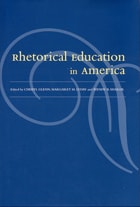
Rhetorical Education In America
Cheryl Jean Glenn
University of Alabama Press, 2009
A timely collection of essays by prominent scholars in the field—on the past, present, and future of rhetoric instruction.
From Isocrates and Aristotle to the present, rhetorical education has consistently been regarded as the linchpin of a participatory democracy, a tool to foster civic action and social responsibility. Yet, questions of who should receive rhetorical education, in what form, and for what purpose, continue to vex teachers and scholars.
The essays in this volume converge to explore the purposes, problems, and possibilities of rhetorical education in America on both the undergraduate and graduate levels and inside and outside the academy. William Denman examines the ancient model of the "citizen-orator" and its value to democratic life. Thomas Miller argues that English departments have embraced a literary-research paradigm and sacrificed the teaching of rhetorical skills for public participation. Susan Kates explores how rhetoric is taught at nontraditional institutions, such as Berea College in Kentucky, where Appalachian dialect is espoused. Nan Johnson looks outside the academy at the parlor movement among women in antebellum America. Michael Halloran examines the rhetorical education provided by historical landmarks, where visitors are encouraged to share a common public discourse. Laura Gurak presents the challenges posed to traditional notions of literacy by the computer, the promises and dangers of internet technology, and the necessity of a critical cyber-literacy for future rhetorical curricula.
Collectively, the essays coalesce around timely political and cross-disciplinary issues. Rhetorical Education in America serves to orient scholars and teachers in rhetoric, regardless of their disciplinary home, and help to set an agenda for future classroom practice and curriculum design.
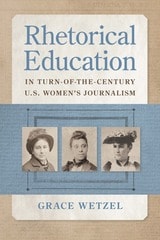
Rhetorical Education in Turn-of-the-Century U.S. Women's Journalism
Grace Wetzel, with a foreword by Shari J. Stenberg
Southern Illinois University Press, 2022
At the end of the nineteenth century, newspapers powerfully shaped the U.S. reading public, fostering widespread literacy development and facilitating rhetorical education. With new opportunities to engage audiences, female journalists repurposed the masculine tradition of journalistic writing by bringing together intimate forms of rhetoric and pedagogy to create innovative new dialogues. Rhetorical Education in Turn-of-the-Century U.S. Women’s Journalism illuminates the pedagogical contributions of three newspaperwomen to show how the field became a dynamic site of public participation, relationship building, education, and activism in the 1880s and 1890s.
Grace Wetzel introduces us to the work of Omaha correspondent Susette La Flesche Tibbles (Inshta Theamba), African American newspaper columnist Gertrude Bustill Mossell, and white middle-class reporter Winifred Black (“Annie Laurie”). Journalists by trade, these three writers made the mass-circulating newspaper their site of teaching and social action, inviting their audiences and communities—especially systematically marginalized voices—to speak, write, and teach alongside them.
Situating these journalists within their own specific writing contexts and personas, Wetzel reveals how Mossell promoted literacy learning and community investment among African American women through a reader-centered pedagogy; La Flesche modeled relational news research and reporting as a survivance practice while reporting for the Omaha Morning World-Herald at the time of the Wounded Knee Massacre; and Black inspired public writing and activism among children from different socioeconomic classes through her “Little Jim” story. The teachings of these figures serve as enduring examples of how we can engage in meaningful public literacy and ethical journalism.
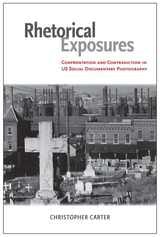
Rhetorical Exposures
Confrontation and Contradiction in US Social Documentary PhotographyChristopher Carter
University of Alabama Press, 2015
Exposing the politics of seeing: how documentary photographs confront inequality and reshape public understanding.
In Rhetorical Exposures, Christopher Carter explores social documentary photography from the nineteenth century to the present in order to illuminate the political dimensions and consequences of photographs taken and selected to highlight social injustice. Documentary photography aims to capture the material reality of life. Carter demonstrates how the creation and display of documentary photographs—often now called “imagetexts”—both invite analysis and raise persistent questions about the political and social causes for the bleak scenes of poverty and distress captured on film.
Carter’s carefully reasoned monograph examines both formal qualities of composition and the historical contexts of the production and display of documentary photographs. In Rhetorical Exposures, Carter explores Jacob Riis’s heartrending photos of Manhattan’s poor in late nineteenth-century New York, Walker Evans’s iconic images of tenant farmers in west Alabama, Ted Streshinsky’s images of 1960s social movements, Camilo José Vergara’s photographic landscapes of urban dereliction in the 1970s, and Chandra McCormick’s portraits of New Orleans’s Ninth Ward scarred by Hurricane Katrina.
While not ascribing specifically political or Marxist intentions to the photographers discussed, Carter frames his arguments in a class-based dialectic that addresses material want as an ineluctable result of social inequality. Carter argues that social documentary photography has the powerful capacity to disrupt complacent habits of viewing and to prompt viewers to confront injustice. Though photography may induce socially disruptive experiences, it remains vulnerable to the same power dynamics it subverts. Therefore, Carter offers a “rhetoric of exposure” that outlines how such social documentary images can be treated as highly tensioned rhetorical objects. His framework enables the analysis of photographs as heterogeneous records of the interaction of social classes and expressions of specific built environments. Rhetorical Exposures also discusses how photographs interact with oral and print media and relate to creations as diverse as public memorials, murals, and graphic novels.
As the creation and dissemination of new media continues to evolve in an environment of increasing anxiety about growing financial inequality, Rhetorical Exposures offers a very apt and timely discussion of the ways social documentary photography is created, employed, and understood.
Rhetorical Secrets
Mapping Gay Identity and Queer Resistance in Contemporary AmericaDavin Allen Grindstaff
University of Alabama Press, 2006
Exploring how language shapes sexuality, power, and belonging.
Davin Allen Grindstaff, through a series of close textual analyses examining public discourse, uncovers the rhetorical modes of persuasion surrounding the construction of gay male sexual identity. In Part One, Grindstaff establishes his notion of the "rhetorical secret" central to constructions of gay male identity: the practice of sexual identity as a secret, its promise of a coherent sexual self, and the perpetuation of secrecy as a product and strategy of heteronormative discourse.
Grindstaff continues in Part Two to examine major issues related to contemporary conceptions of gay male identity: overturning sodomy laws; public debates over same-sex marriages; medical and social responses to the HIV/AIDS crisis; the rhetorical power of hyper-masculine body images and homoeroticism to creative communities; and, finally, what Grindstaff considers to be the most mysterious and significant rhetorical practice of all: coming out of the closet.
By investigating the public discourse--texts and images that circulate, produce knowledge, and become means of persuasion--surrounding the constructions of sexual identity, Grindstaff challenges heteronormative concepts of sexuality itself, thus creating new maps of social power and new paths of resistance.
Rhetorics of Motherhood
Lindal Buchanan
Southern Illinois University Press, 2013
Becoming a mother profoundly alters one’s perception of the world, as Lindal Buchanan learned firsthand when she gave birth. Suddenly attentive to representations of mothers and mothering in advertisements, fiction, film, art, education, and politics, she became intrigued by the persuasive force of the concept of motherhood, an interest that unleashed a host of questions: How is the construct defined? How are maternal appeals crafted, presented, and performed? What do they communicate about gender and power? How do they affect women? Her quest for answers has produced Rhetorics of Motherhood, the first book-length consideration of the topic through a feminist rhetorical lens.
Although both male and female rhetors employ motherhood to promote themselves and their agendas, Buchanan argues it is particularly slippery terrain for women—on the one hand, affording them authority and credibility but, on the other, positioning them disadvantageously within the gendered status quo. Rhetorics of Motherhood investigates that paradox by detailing the cultural construction and performance of the Mother in American public discourse, tracing its use and impact in three case studies, and by theorizing how, when, and why maternal discourses work to women’s benefit or detriment. In the process, the reader encounters a fascinating array of issues—including birth control, civil rights, and abortion—and rhetors, ranging from Diane Nash and Margaret Sanger to Sarah Palin and Michelle Obama.
As Buchanan makes clear, motherhood is a rich site for investigating the interrelationships among gender, power, and public discourse. Her latest book contributes to the discipline of rhetoric by attending to and making a convincing case for the significance of this understudied subject. With its examination of timely controversies, contemporary and historical figures, and powerful women, Rhetorics of Motherhood will appeal to a wide array of readers in rhetoric, communications, American studies, women’s studies, and beyond.
Rhetorics of Refusal
Medical Dissent and the US-Somali DiasporaKari Campeau
The Ohio State University Press, 2025
Rhetorics of Refusal focuses on a recent public health crisis—Minnesota’s 2017 measles outbreak—to recast vaccine refusals less as products of poor health literacy or disinformation and more as strategic and generative acts of noncompliance. The outbreak, which primarily affected unvaccinated Somali children, occurred at the nexus of declining vaccination rates, spiking autism concerns, antivaccination predation, and a fraying public health infrastructure. However, during a year-long ethnographic study at a Somali health center, Kari Campeau found that personal stories from parents offered a much different picture of vaccine refusal than the one painted by news media. Tracking refusals across four sites, Campeau argues for the importance of approaching refusals as rhetorical and participatory strategies that hold institutions accountable, press for change, and practice care within emergent biosocial communities. Moreover, she views refusal as necessary and potentially transformative in situations where refusers have little access to power or platform. By contextualizing refusals in longer cultural and political histories, Campeau unsettles traditional narratives of medical dissent while offering new entry points into discussions on racialized biopolitics, care, disability, and public health.
Rhetorics of Value
Exhibition Design and Communication in Museums and BeyondCorinne A. Kratz
Duke University Press, 2025
Rhetorics of Whiteness
Postracial Hauntings in Popular Culture, Social Media, and EducationEdited by Tammie M. Kennedy, Joyce Irene Middleton, Krista Ratcliffe, with a foreword by Lilia D. Monzó and Peter McLaren
Southern Illinois University Press, 2017
With the election of our first black president, many Americans began to argue that we had finally ended racism, claiming that we now live in a postracial era. Yet near-daily news reports regularly invoke white as a demographic category and recount instances of racialized violence as well as an increased sensitivity to expressions of racial unrest. Clearly, American society isn’t as color-blind as people would like to believe. In Rhetorics of Whiteness: Postracial Hauntings in Popular Culture, Social Media, and Education, contributors reveal how identifications with racialized whiteness continue to manifest themselves in American culture.
The sixteen essays that comprise this collection not only render visible how racialized whiteness infiltrates new twenty-first-century discourses and material spaces but also offer critical tactics for disrupting this normative whiteness. Specifically, contributors examine popular culture (novels, films, TV), social media (YouTube, eHarmony, Facebook), education (state law, the textbook industry, dual credit programs), pedagogy (tactics for teaching via narratives, emotional literacy, and mindfulness) as well as cultural theories (concepts of racialized space, anti-dialogicism, and color blindness). Offering new approaches to understanding racialized whiteness, this volume emphasizes the importance of a rhetorical lens for employing whiteness studies’ theories and methods to identify, analyze, interpret, and interrupt representations of whiteness.
Although whiteness studies has been waning as an active research field for the past decade, the contributors to Rhetorics of Whiteness assert that it hasn’t lost its relevancy because racialized whiteness and issues of systemic racism persist in American society and culture today. Few whiteness studies texts have been published in rhetoric and composition in the past decade, so this collection should quickly become mandatory reading. By focusing on common, yet often overlooked, contemporary examples of how racialized whiteness haunts U.S. society, Rhetorics of Whiteness serves as a valuable text for scholars in the field as well as anyone else interested in the topic.
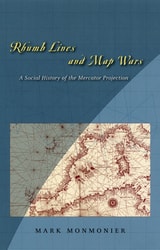
Rhumb Lines and Map Wars
A Social History of the Mercator ProjectionMark Monmonier
University of Chicago Press, 2004
Because it distorts the proportionate size of countries, the Mercator map was criticized for inflating Europe and North America in a promotion of colonialism. In 1974, German historian Arno Peters proffered his own map, on which countries were ostensibly drawn in true proportion to one another. In the ensuing "map wars" of the 1970s and 1980s, these dueling projections vied for public support—with varying degrees of success.
Widely acclaimed for his accessible, intelligent books on maps and mapping, Monmonier here examines the uses and limitations of one of cartography's most significant innovations. With informed skepticism, he offers insightful interpretations of why well-intentioned clerics and development advocates rallied around the Peters projection, which flagrantly distorted the shape of Third World nations; why journalists covering the controversy ignored alternative world maps and other key issues; and how a few postmodern writers defended the Peters worldview with a self-serving overstatement of the power of maps. Rhumb Lines and Map Wars is vintage Monmonier: historically rich, beautifully written, and fully engaged with the issues of our time.

Riding
Pardis Mahdavi
Duke University Press, 2025

Right to DREAM
Immigration Reform and America’s FutureWilliam A. Schwab
University of Arkansas Press, 2013
Right to Rock
The Black Rock Coalition and the Cultural Politics of RaceMaureen Mahon
Duke University Press, 2004
Righteous Sisterhood
The Politics and Power of an All-Women's Motorcycle ClubSarah L. Hoiland
Temple University Press, 2025
Granted unprecedented access to the MC’s initiation rituals, annual ceremonies, and the extensive socialization process, Hoiland investigates this fascinating subculture, why women choose to join, and why, in some cases, they exit or become exiled.
Righteous Sisterhood also reveals complex and contradictory gender and political dynamics within the club and within the larger subculture. The MC provides a unique, liberatory, womanist space within the larger male-dominated MC social world, but these women remain outsiders, with political voices that are lost in the misogyny of alt-right spaces. As Hoiland emphasizes, the quest for righteous sisterhood is about finding individual excellence and camaraderie while seeking recognition and immortality within the MC.
Rings of Dissent
Boxing and Performances of RebellionEdited by Rudy Mondragón, Gaye Theresa Johnson, and David J. Leonard
University of Illinois Press, 2025

Riotous Flesh
Women, Physiology, and the Solitary Vice in Nineteenth-Century AmericaApril R. Haynes
University of Chicago Press, 2015
As April R. Haynes shows, the crusade against female masturbation was rooted in a generally shared agreement on some major points: that girls and women were as susceptible to masturbation as boys and men; that “self-abuse” was rooted in a lack of sexual information; and that sex education could empower women and girls to master their own bodies. Yet the groups who made this education their goal ranged widely, from “ultra” utopians and nascent feminists to black abolitionists. Riotous Flesh explains how and why diverse women came together to popularize, then institutionalize, the condemnation of masturbation, well before the advent of sexology or the professionalization of medicine.

Ripples of the Universe
Spirituality in Sedona, ArizonaSusannah Crockford
University of Chicago Press, 2021
Many people move to Sedona because, they claim, they are called there by its special energy. But they are also often escaping job loss, family breakdown, or foreclosure. Spirituality, Crockford shows, offers a way for people to distance themselves from and critique current political and economic norms in America. Yet they still find themselves monetizing their spiritual practice as a way to both “raise their vibration” and meet their basic needs. Through an analysis of spirituality in Sedona, Crockford gives shape to the failures and frustrations of middle- and working-class people living in contemporary America, describing how spirituality infuses their everyday lives. Exploring millenarianism, conversion, nature, food, and conspiracy theories, Ripples of the Universe combines captivating vignettes with astute analysis to produce a unique take on the myriad ways class and spirituality are linked in contemporary America.

Rise Of Fashion
A ReaderDaniel Leonhard Purdy
University of Minnesota Press, 2004
A remarkable anthology of key writings that parallels the history of fashion with modern life
Writing more than a century before Vogue, no less a figure than G. W. F. Hegel reviewed the fashion of his day and found it wanting because, in becoming outmoded so quickly, it drew attention away from the timeless beauty of the human form. And Hegel is not unique among philosophers in his interest in fashion’s role; for more than 250 years, social thinkers have considered fashion—its transitive nature, the conformity it inspires, the vast range of its influence—as a defining feature of modern life.
In The Rise of Fashion, Daniel Leonhard Purdy brings together key writings from the Enlightenment to the twentieth century that explore fashion as the ultimate expression of modernity. Making available many previously untranslated or otherwise unfamiliar works from French, German, and English, Purdy establishes an extraordinary lineage of fashion commentary dating back to Mandeville and Voltaire, which laid the groundwork for the writings on commodity culture of Adorno, Benjamin, and the Frankfurt School. From critiques of aristocratic excess to accounts of fashion’s influence on our ideals of masculinity or femininity, from the figure of the dandy and the eroticism of clothing to the class politics of fashion, this landmark reader includes works by philosophers (Carlyle, Rousseau, Georg Simmel) and social theorists (Herbert Spencer, Veblen), as well as writers (Goethe, Baudelaire, Mallarmé, Wilde) and critics (Karl Kraus, Adolf Loos, Simone de Beauvoir).Collecting and contextualizing many of the earliest and most significant formulations of fashion theory, The Rise of Fashion provocatively examines the proposition that to be modern is to be fashionable.
Rise Up!
Activism as EducationAmalia Dache
Michigan State University Press, 2019
Risk Acceptability According to the Social Sciences
Mary Douglas
Russell Sage Foundation, 1985

Risk Principles for Public Utility Regulators
Janice A. Beecher
Michigan State University Press, 2016
This book provides those in the regulatory policy community with a basic theoretical and practical grounding in risk as it relates specifically to economic regulation in order to focus and elevate discourse about risk in the utility sector in the contemporary context of economic, technological, and regulatory change. This is not a “how-to” book with regard to calculating risks and returns but rather a resource that aims to improve understanding of the nature of risk. It draws from the fields of corporate finance, behavioral finance, and decision theory as well as the broader legal and economic theories that undergird institutional economics and the economic regulatory paradigm.
We exist in a world of scarce resources and abundant uncertainties, the combination of which can exacerbate and distort our sense of risk. Although there is understandable impulse to reduce risk, attempts to mitigate may be as likely to shift risk, and some measures might actually increase risk exposure. Many of the concepts explored here apply not just to financial decisions, such as those by utility investors, but also to regulatory and utility decision-making in general.

Risky Medicine
Our Quest to Cure Fear and UncertaintyRobert Aronowitz
University of Chicago Press, 2015
Exploring the transformation of health care over the last several decades that has led doctors to become more attentive to treating risk than treating symptoms or curing disease, Aronowitz shows how many aspects of the health system and clinical practice are now aimed at risk reduction and risk control. He argues that this transformation has been driven in part by the pharmaceutical industry, which benefits by promoting its products to the larger percentage of the population at risk for a particular illness, rather than the smaller percentage who are actually affected by it. Meanwhile, for those suffering from chronic illness, the experience of risk and disease has been conflated by medical practitioners who focus on anticipatory treatment as much if not more than on relieving suffering caused by disease. Drawing on such controversial examples as HPV vaccines, cancer screening programs, and the cancer survivorship movement, Aronowitz argues that patients and their doctors have come to believe, perilously, that far too many medical interventions are worthwhile because they promise to control our fears and reduce uncertainty.
Risky Medicine is a timely call for a skeptical response to medicine’s obsession with risk, as well as for higher standards of evidence for risk-reducing interventions and a rebalancing of health care to restore an emphasis on the actual curing of and caring for people suffering from disease.
Risky Rhetoric
AIDS and the Cultural Practices of HIV TestingJ. Blake Scott
Southern Illinois University Press, 2003
Risky Rhetoric: AIDS and the Cultural Practices of HIV Testing is the first book-length study of the rhetoric inherent in and surrounding HIV testing. In addition to providing a history of HIV testing in the United States from 1985 to the present, J. Blake Scott explains how faulty arguments about testing’s power and effects have promoted unresponsive and even dangerous testing practices for so-called healthy subjects as well as those deemed risky.A new afterword to the paperback edition discusses changes in testing technology, treatments, and public health responses in the last ten years. The ultimate goal of Risky Rhetoric is to offer strategies to policy makers, HIV educators and test counselors, and other rhetors for developing more responsive and egalitarian testing-related rhetorics and practices.
Rites of Place
Public Commemoration in Russia and Eastern EuropeJulie Buckler and Emily D Johnson
Northwestern University Press, 2013
Ranging widely across time and geography, Rites of Place is to date the most comprehensive and diverse example of memory studies in the field of Russian and East European studies. Leading scholars consider how public rituals and the commemoration of historically significant sites facilitate a sense of community, shape cultural identity, and promote political ideologies. The aims of this volume take on unique importance in the context of the tumultuous events that have marked Eastern European history—especially the revolutions of 1905 and 1917, World War II, and the collapse of the Soviet Union. With essays on topics such as the founding of St. Petersburg, the battle of Borodino, the Katyn massacre, and the Lenin cult, this volume offers a rich discussion of the uses and abuses of memory in cultures where national identity has repeatedly undergone dramatic shifts and remains riven by internal contradictions.
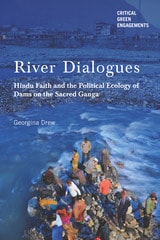
River Dialogues
Hindu Faith and the Political Ecology of Dams on the Sacred GangaGeorgina Drew
University of Arizona Press, 2017
India’s sacred Ganga River is arguably one of the most iconic sites for worship, with a continuity of rituals for the living and the dead that span over two millennia. Along the river, from high in the Himalaya to the vast plains below, people gather daily to worship the Ganga through prayer and song. But large government-sponsored dams threaten to upend these practices.
In River Dialogues, Georgina Drew offers a detailed ethnographic engagement with the social movements contesting hydroelectric development on the Ganga. The book examines the complexity of the cultural politics that, on the one hand, succeeded in influencing an unprecedented reversal of government plans for three contested hydroelectric projects, and how, on the other hand, this decision sparked ripples of discontent after being paired with the declaration of a conservation zone where the projects were situated.
The book follows the work of women who were initially involved in efforts to stop the disputed projects. After looking to their discourses and actions, Drew argues for the use of a political ecology analysis that incorporates the everyday practice and everyday religious connections that animated the cultural politics of development. Drew offers a nuanced understanding of the struggles that communities enact to assert their ways of knowing and caring for resources that serves as an example for others critically engaging with the growing global advocacy of the “green economy” model for environmental stewardship.

River of Tears
Country Music, Memory, and Modernity in BrazilAlexander Sebastian Dent
Duke University Press, 2009
Since 1998, Alexander Sebastian Dent has analyzed rural music in the state of São Paulo, interviewing and spending time with listeners, musicians, songwriters, journalists, record-company owners, and radio hosts. Dent not only describes the production and reception of this music, he also explains why the genre experienced such tremendous growth as Brazil transitioned from an era of dictatorship to a period of intense neoliberal reform. Dent argues that rural genres reflect a widespread anxiety that change has been too radical and has come too fast. In defining their music as rural, Brazil’s country musicians—whose work circulates largely in cities—are criticizing an increasingly inescapable urban life characterized by suppressed emotions and an inattentiveness to the past. Their performances evoke a river of tears flowing through a landscape of loss—of love, of life in the countryside, and of man’s connections to the natural world.

Roadrunner
A Song by Jonathan Richman and the Modern LoversJoshua Clover
Duke University Press, 2021

Roads to Dystopia
Sociological Essays on the Postmodern ConditionStanford Lyman
University of Arkansas Press, 2001

Roadside Crosses in Contemporary Memorial Culture
Holly Everett
University of North Texas Press, 2002

Robert Johnson, Mythmaking, and Contemporary American Culture
Patricia R. Schroeder
University of Illinois Press, 2004
Merging literary analysis with cultural criticism and biographical study, Patricia R. Schroeder explores Johnson's ongoing role as a cultural icon. Schroeder's detailed analysis engages key images and myths about the blues musician (such as the Faustian crossroads exchange of his soul for guitar virtuosity). Navigating the many competing interpretations that swirl around him, Schroeder reveals the cultural purposes served by the stories and the storytellers. The result is a fascinating examination of the relationships among Johnson's life, its subsequent portrayals, and the forces that drove the representations.
Offering penetrating insights into both Johnson and the society that perpetuates him, Robert Johnson, Mythmaking, and Contemporary American Culture is essential reading for blues fans and cultural critics interested in a foundational musical figure.

Rock Art of the Caribbean
Edited by Michele Hayward, Lesley-Gail Atkinson, and Michael A. Cinquino
University of Alabama Press, 2009
Rock Eras
Interpretations of Music and Society, 1954-1984Jim Curtis
University of Wisconsin Press, 1987
Paper is temporarily out of stock, Cloth (0-87972-368-8) is available at the paper price until further notice.

Rockin' Out Of The Box
Gender Maneuvering in Alternative Hard RockSchippers, Mimi
Rutgers University Press, 2002
Given the long history of feminism and its contested place in popular culture, important, practical questions arise: What effect, if any, have feminist ideas and practices had on the lives of young men and women who grew up with them? How do these individuals negotiate the realities of gender in their daily lives?
In Rockin’ Out of the Box, Mimi Schippers, employing the crucial feminist insight that gender is a constantly shifting performance and not an essential quality related to sex, explores the gender roles, assumptions, and transgressions of the men and women involved in the alternative hard rock scene. The author focuses on this sizable section of rock music both because it is widely inclusive of men and women and because it explicitly adopted feminism as its point of departure from mainstream music. Schippers uses the innovative term gender maneuvering to explain her observations that gender and sexuality are negotiated and always changing features of social relations. This process, she demonstrates, operates as a cultural practice and as an individual strategy of resistance to socially prescribed gender roles.
Schippers, who spent more than two years frequenting alternative hard rock clubs and concerts in Chicago, conducted extensive interviews with fans as well as musicians, including Ian MacKaye of Fugazi, Eddie Vedder of Pearl Jam, Kim Thayil of Soundgarden, Donita Sparks and Jennifer Finch of L7, Kat Bjelland and Lori Barbero of Babes in Toyland, Rose of Poster Children, Louise Post and Nina Gordon of Veruca Salt, and Liz Davis and Valerie Agnew of 7 Year Bitch. As it documents the development of a rock music genre that has so far received little academic attention, this book also demonstrates how this musical culture contributes to our understanding of the daily practices of gender relations among young people.
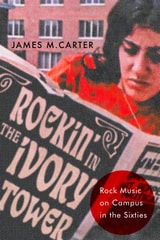
Rockin' in the Ivory Tower
Rock Music on Campus in the SixtiesJames M. Carter
Rutgers University Press, 2023
Histories of American rock music and the 1960s counterculture typically focus on the same few places: Woodstock, Monterey, Altamont. Yet there was also a very active college circuit that brought edgy acts like the Jefferson Airplane and the Velvet Underground to different metropolitan regions and smaller towns all over the country. These campus concerts were often programmed, promoted, and reviewed by students themselves, and their diverse tastes challenged narrow definitions of rock music.
Rockin’ in the Ivory Tower takes a close look at two smaller universities, Drew in New Jersey and Stony Brook on Long Island, to see how the culture of rock music played an integral role in student life in the late 1960s. Analyzing campus archives and college newspapers, historian James Carter traces connections between rock fandom and the civil rights protests, free speech activism, radical ideas, lifestyle transformations, and anti-war movements that revolutionized universities in the 1960s. Furthermore, he finds that these progressive students refused to segregate genres like folk, R&B, hard rock, and pop. Rockin’ in the Ivory Tower gives readers a front-row seat to a dynamic time for the music industry, countercultural politics, and youth culture.
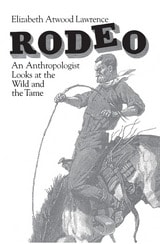
Rodeo
An Anthropologist Looks at the Wild and the TameElizabeth Atwood Lawrence
University of Chicago Press, 1984
Based on extensive field work and drawing on comparative materials from other stock-tending societies, Rodeo is a major contribution to an understanding of the role of performance in society, the culturally constructed view of man's place in nature, and the structure and meaning of social relationships and their representations.
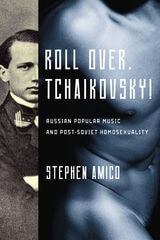
Roll Over, Tchaikovsky!
Russian Popular Music and Post-Soviet HomosexualityStephen Amico
University of Illinois Press, 2017
Centered on the musical experiences of homosexual men in St. Petersburg and Moscow, this ground-breaking study examines how post-Soviet popular music both informs and plays off of a corporeal understanding of Russian male homosexuality.
Drawing upon ethnography, musical analysis, and phenomenological theory, Stephen Amico offers an expert technical analysis of Russian rock, pop, and estrada music, dovetailing into an illuminating discussion of homosexual men's physical and bodily perceptions of music. He also outlines how popular music performers use song lyrics, drag, physical movements, images of women, sexualized male bodies, and other tools and tropes to implicitly or explicitly express sexual orientation through performance. Finally, Amico uncovers how such performances help homosexual Russian men to create their own social spaces and selves, in meaningful relation to others with whom they share a "nontraditional orientation."