Results by title
22279 books match the query 'Social Science' and 1072 start with r
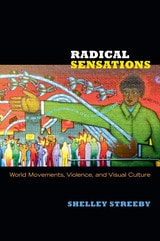
Radical Sensations
World Movements, Violence, and Visual CultureShelley Streeby
Duke University Press, 2013
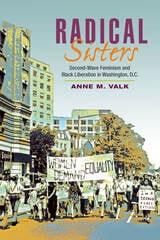
Radical Sisters
Second-Wave Feminism and Black Liberation in Washington, D.C.Anne M. Valk
University of Illinois Press, 2010
Radical Sociologists
Martin Oppenheimer
Temple University Press, 1991

Radical Subject
Third Worldism and the Politics of Race in Asian American Studies, 1968–2000Calvin Cheung-Miaw
Duke University Press, 2027
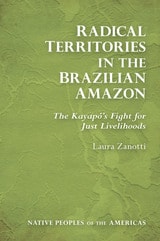
Radical Territories in the Brazilian Amazon
The Kayapó’s Fight for Just LivelihoodsLaura Zanotti
University of Arizona Press, 2016
Radical Territories in the Brazilian Amazon sheds light on the creative and groundbreaking efforts Kayapó peoples deploy to protect their lands and livelihoods. Now at the front lines of cultivating diversified strategies for resistance, the Kayapó are creating a powerful activist base, experimenting with nontimber forest projects, and forging strong community conservation partnerships. Tracing the complex politics of the Kayapó’s homeland, Laura Zanotti advances approaches to understanding how indigenous peoples cultivate self-determination strategies in conflict-ridden landscapes.
Kayapó peoples are providing a countervision of what Amazonia can look like in the twenty-first century, dominated neither by agro-industrial interests nor by uninhabited protected landscapes. Instead, Kayapó peoples see their homeland as a living landscape where indigenous vision engages with broader claims for conservation and development in the region.
Weaving together anthropological and ethnographic research with personal interactions with the Kayapó, Zanotti tells the story of activism and justice in the Brazilian Amazon, and how Kayapó communities are using diverse pathways to make a sustainable future for their peoples and lands. The author interweaves Kayapó perspectives with a political ecology framework to show how working with indigenous peoples is vital to addressing national and global challenges in the present time, when many environmentally significant conditions and processes are profoundly altered by human activities.
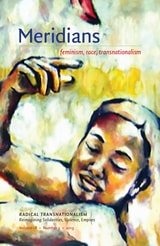
Radical Transnationalism
Reimagining Solidarities, Violence, EmpiresLaura Briggs, Ginetta E. B. Candelario, and Robyn C. Spencer, special issue editors
Duke University Press, 0
Contributors. Elisabeth Armstrong, Maile Arvin, Maylei Blackwell, Laura Briggs, Ginetta E. B. Candelario, Ching-In Chen, Tara Daly, Nathan H. Dize, Deema Kaedbey, Nancy Kang, Rosamond S. King, Karen J. Leong, Brooke Lober, Neda Maghbouleh, Melissa A. Milkie, Nadine Naber, Laila Omar, Ito Peng, Robyn C. Spencer, Stanlie James, Evelyne Trouillot, Denisse D. Velázquez, Mandira Venkat, Judy Tzu-Chun Wu
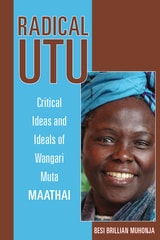
Radical Utu
Critical Ideas and Ideals of Wangari Muta MaathaiBesi Brillian Muhonja
Ohio University Press, 2020
Radicalisms in Transition, Volume 2002
Mansour Bonakdarian and Yvonne Lassalle, eds.
Duke University Press, 0
Radicalizing Men
Fascist Desires, Great Replacement Propaganda, and Political ViolenceJessica Johnson
Duke University Press, 2026
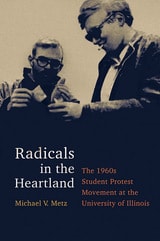
Radicals in the Heartland
The 1960s Student Protest Movement at the University of IllinoisMichael V. Metz
University of Illinois Press, 2019
Positioning the events in the context of their time, Michael V. Metz delves into the lives and actions of activists at the center of the drama. A participant himself, Metz draws on interviews, archives, and newspaper records to show a movement born in demands for free speech, inspired by a movement for civil rights, and driven to the edge by a seemingly never-ending war. If the sudden burst of irrational violence baffled parents, administrators, and legislators, it seemed inevitable to students after years of official intransigence and disregard. Metz portrays campus protesters not as angry, militant extremists but as youthful citizens deeply engaged with grave moral issues, embodying the idealism, naiveté, and courage of a minority of a generation.

Radicals of the Worst Sort
Laboring Women in Lawrence, Massachusetts, 1860-1912Ardis Cameron
University of Illinois Press, 1993
Radicals, Volume 1
Fiction, Poetry, and Drama: Audacious Writings by American Women, 1830-1930Meredith Stabel and Zachary Turpin
University of Iowa Press, 2021
In Volume 1: Fiction, Poetry, and Drama, selections span from early works like Sarah Louise Forten’s anti-slavery poem “The Grave of the Slave” (1831) and Fanny Fern’s Ruth Hall (1855), a novel about her struggle to break into the male-dominated field of journalism, to Charlotte Perkins Gilman’s revenge fantasy, “When I Was a Witch” (1910) and Georgia Douglas Johnson’s poem on the fraught nature of African American motherhood, “Maternity” (1922). In between, readers will discover many vibrant and challenging lesser-known texts that are rarely collected today. Some, indeed, have been out of print for more than a century.
Unique among anthologies of American literature, Radicals undoes such silences by collecting the underrepresented, the uncategorizable, the unbowed—powerful writings by American women of genius and audacity who looked toward, and wrote toward, what Charlotte Perkins Gilman called “a lifted world.”
Radicals, Volume 2
Memoir, Essays, and Oratory: Audacious Writings by American Women, 1830-1930Merdith Stabel and Katha Pollitt
University of Iowa Press, 2021
In Volume 2: Memoir, Essays, and Oratory, selections span from early works like Sarah Mapps Douglass’s anti-slavery appeal “A Mother’s Love” (1832) and Maria W. Stewart’s “Address Delivered at the African Masonic Hall” (1833), to Zitkala-Sa’s memories in “The Land of Red Apples” (1921) and Charlotte Perkins Gilman’s moving final essay “The Right to Die” (1935). In between, readers will discover a whole host of vibrant and challenging lesser-known texts that are rarely collected today. Some, indeed, have been out of print for more than a century.
Unique among anthologies of American literature, Radicals undoes such silences by collecting the underrepresented, the uncategorizable, the unbowed—powerful writings by American women of genius and audacity who looked toward, and wrote toward, what Charlotte Perkins Gilman called “a lifted world.”

Radio Content in the Digital Age
The Evolution of a Sound MediumEdited by Angeliki Gazi, Guy Starkey, and Stanislaw Jedrzejewski
Intellect Books, 2011
The traditional radio medium has seen significant changes in recent years as part of the current global shift toward multimedia content, with both digital and FM making significant use of new technologies, including mobile communications and the Internet. This book focuses on the important role these new technologies play—and will play as radio continues to evolve. This series of essays by top academics in the field examines new options for radio technology as well as a summary of the opportunities and challenges that characterize academic and professional debates around radio today.
Radio's Second Century
Past, Present, and Future PerspectivesJohn Allen Hendricks
Rutgers University Press, 2020
One of the first books to examine the status of broadcasting on its one hundredth anniversary, Radio’s Second Century investigates both vanguard and perennial topics relevant to radio’s past, present, and future. As the radio industry enters its second century of existence, it continues to be a dominant mass medium with almost total listenership saturation despite rapid technological advancements that provide alternatives for consumers. Lasting influences such as on-air personalities, audience behavior, fan relationships, and localism are analyzed as well as contemporary issues including social and digital media. Other essays examine the regulatory concerns that continue to exist for public radio, commercial radio, and community radio, and discuss the hindrances and challenges posed by government regulation with an emphasis on both American and international perspectives. Radio’s impact on cultural hegemony through creative programming content in the areas of religion, ethnic inclusivity, and gender parity is also explored. Taken together, this volume compromises a meaningful insight into the broadcast industry’s continuing power to inform and entertain listeners around the world via its oldest mass medium--radio.
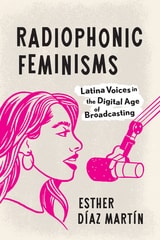
Radiophonic Feminisms
Latina Voices in the Digital Age of BroadcastingEsther Díaz Martín
University of Texas Press, 2025
2026 Gold Medal for the Best Women's Issues Book, Conference on Latin American History (CLAH)
How Latina voices in commercial radio and podcasting subvert cultural norms and bring feminism to the fore of their work.
What does Latina feminism sound like in popular culture? Drawing on case studies of commercial radio programs and podcasts hosted by Latinas and oriented toward Latinx listenership, Esther Díaz Martín explores how Latina voices create female-specific aural spaces that interrupt the misogynist status quo in US mainstream media.
Radiophonic Feminisms focuses on radio/podcasting as a medium in which women find methods for resisting oppressive gendered cultural imaginaries. Through their specific articulations—that is, the quality of their voices—their music choices, and the soundscapes they construct, Latina hosts since the early 1990s have offered feminist responses to a cultural moment marked by the demographic changes brought on by the political economy of migration and the social changes wrought by media in the digital age. Drawing attention to the invisible antisexist work of creating sound, and to its reception, Díaz Martín bridges the epistemic insights of Chicana feminist theory and sound studies, enriching and further decolonizing our thinking about auditory meaning making.
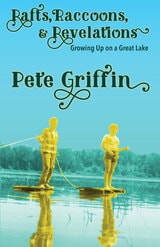
Rafts, Raccons, & Revelations
Growing Up on a Great LakePete Griffin
Parkhurst Brothers, Inc., 2021
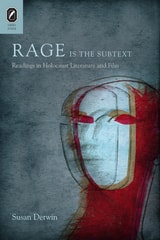
Rage Is the Subtext
Readings in Holocaust Literature and FilmSusan Derwin
The Ohio State University Press, 2012
Rage Is the Subtext charts the internal shifts of Holocaust survivors who tell their stories of suffering, loss, and endurance. Susan Derwin locates the healing effect of literary testimony in its capacity to represent the reactions of survivors to traumatic experience, while concealing other more unsettling responses from view. Beneath the explicit concerns of works by Primo Levi, Saul Friedländer, Binjamin Wilkomirski, Imre Kertész and Liliana Cavani, Derwin uncovers unspoken reserves of rage, which then become legible as formal properties of the text.
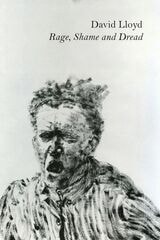
Rage, Shame and Dread
David Lloyd
Seagull Books, 2026
A radical rethinking of dark emotion as critical responses to capitalism, colonial violence, and authoritarian power.
Rage, Shame and Dread is a bold and unsettling exploration of three emotions that resist consolation, correction, or easy political use. In this triptych of essays, David Lloyd dwells with rage, shame, and dread not as states to be managed or redeemed, but as objectless, intransitive forces that interrupt social life and expose its underlying wrongness.
Reading rage as “sheer manifestation,” shame as a catastrophic rupture of self-relation, and dread as anticipation without an object, Lloyd traces how these unpromising emotions emerge from—and register—the violences of capitalism, colonialism, racialization, and authoritarian power. Drawing on Walter Benjamin, Sigmund Freud, Jacques Derrida, Frantz Fanon, Aimé Césaire, Joseph Conrad, Oscar Wilde, and Søren Kierkegaard, the book moves between philosophy, literature, and political theory to challenge therapeutic and liberal accounts that treat these feelings as errors to be corrected or tools for socialization.
Rather than pathologizing these states, Lloyd reads them as signals of damaged social relations and as thresholds to alternative forms of life-in-common. At once philosophically rigorous and politically urgent, Rage, Shame and Dread offers a radical rethinking of feeling as a site of critique, resistance, and collective possibility.
Ragged Dicks
Masculinity, Steel, and the Rhetoric of the Self-Made ManJames V. Catano
Southern Illinois University Press, 2001
Portraits of self-made men are rife in Western culture, as James V. Catano observes. Positive and negative, admittedly fictional and ostensibly factual, these portraits endure because the general rhetorical practice embodied in the myth of the self-made man enacts both the need and the very means for making oneself masculine: verbal power and prowess. The myth of the self-made man, in short, is part of ongoing rhetorical practices that constitute society, culture, and subjects.
To explain those practices and their effectiveness, Catano argues that the basic narrative achieves much of its effectiveness by engaging and enacting the traditional psychological dynamics of the family romance: preoedipal separation, oedipal conflict, and “proper” postoedipal self-definition and socialization.
To focus on the combined social, psychological, and rhetorical dynamics that constitute the ongoing activity he calls masculine self-making, Catano emphasizes a particular strand: masculinity and steelmaking. Pursuing that strand, he argues that these representations of masculine self-making are rhetorical enactments of cultural needs and desires, and that they are ongoing and formative arguments about what society and its individuals either are or should be.

Rain Forest Literatures
Amazonian Texts And Latin American CultureLucia Sa
University of Minnesota Press, 2004
Recaptures native literatures of the Amazonian rain forest
Native texts of the Amazonian rain forest have been viewed as myth or ethnographic matter—the raw material of literature—rather than as significant works in their own right. But in this unprecedented study, Lúcia Sá approaches indigenous texts as creative works rather than source material.
Disclosing the existence and nature of long-standing, rich, and complex Native American literary and intellectual traditions that have typically been neglected or demeaned by literary criticism, Rain Forest Literatures analyzes four indigenous cultural traditions: the Carib, Tupi-Guarani, Upper Rio Negro, and Western Arawak. In each case, Sá considers principal native texts and, where relevant, their publication history. She offers a historical overview of the impact of these texts on mainstream Spanish-American and Brazilian literatures, detailing comparisons with native sources and making close analyses of major instances, such as Mário de Andrade’s classic Macunaima (1928) and Mario Vargas Llosa’s The Storyteller (1986). A redrawing of the lineage of Brazilian and Spanish-American literatures, this book advocates an understanding of the relationships between cultures as a process of “transculturation” rather than “acculturation,” emphasizing the often-ignored impact of the peripheral culture on the one that assumes dominance.
Rainbow Quest
The Folk Music Revival and American Society, 1940-1970Ronald D. Cohen
University of Massachusetts Press, 2002
For a brief period from the late 1950s to the mid-1960s, folk music captured a mass audience in the United States, as college students and others swarmed to concerts by the likes of Peter, Paul & Mary, Joan Baez, and Bob Dylan. In this comprehensive study, Ronald D. Cohen reconstructs the history of this singular cultural moment, tracing its origins to the early decades of the twentieth century. Drawing on scores of interviews and numerous manuscript collections, as well as his own extensive files, Cohen shows how a broad range of traditions—from hillbilly, gospel, blues, and sea shanties to cowboy, ethnic, and political protest music—all contributed to the genre known as folk. He documents the crucial work of John Lomax and other collectors who, with the assistance of recording companies, preserved and distributed folk music in the 1920s.
During the 1930s and 1940s, the emergence of left-wing politics and the rise of the commercial music marketplace helped to stimulate wider interest in folk music. Stars emerged, such as Woody Guthrie, Leadbelly, Pete Seeger, Burl Ives, and Josh White. With the success of the Weavers and the Kingston Trio in the 1950s, the stage was set for the full-blown “folk revival” of the early 1960s. Centered in New York's Greenwich Village and sustained by a flourishing record industry, the revival spread to college campuses and communities across the country. It included a wide array of performers and a supporting cast of journalists, club owners, record company executives, political activists, managers, and organizers. By 1965 the boom had passed its peak, as rock and roll came to dominate the marketplace, but the folk revival left an enduring musical legacy in American culture.
Rainforest Capitalism
Power and Masculinity in a Congolese Timber ConcessionThomas Hendriks
Duke University Press, 2022
Rainforest Cowboys
The Rise of Ranching and Cattle Culture in Western AmazoniaBy Jeffrey Hoelle
University of Texas Press, 2015
This ambitious interdisciplinary study is the first to examine the interlinked economic uses and cultural practices and beliefs surrounding cattle in Western Amazonia, where cattle raising is at the center of debates about economic development and environ
Winner, Brazil Section Book Award, Latin American Studies Association, 2016
The opening of the Amazon to colonization in the 1970s brought cattle, land conflict, and widespread deforestation. In the remote state of Acre, Brazil, rubber tappers fought against migrant ranchers to preserve the forest they relied on, and in the process, these “forest guardians” showed the world that it was possible to unite forest livelihoods and environmental preservation. Nowadays, many rubber tappers and their children are turning away from the forest-based lifestyle they once sought to protect and are becoming cattle-raisers or even caubois (cowboys). Rainforest Cowboys is the first book to examine the social and cultural forces driving the expansion of Amazonian cattle raising in all of their complexity.
Drawing on eighteen months of fieldwork, Jeffrey Hoelle shows how cattle raising is about much more than beef production or deforestation in Acre, even among “carnivorous” environmentalists, vilified ranchers, and urbanites with no land or cattle. He contextualizes the rise of ranching in relation to political economic structures and broader meanings to understand the spread of “cattle culture.” This cattle-centered vision of rural life builds on local experiences and influences from across the Americas and even resembles East African cultural practices. Written in a broadly accessible and interdisciplinary style, Rainforest Cowboys is essential reading for a global audience interested in understanding the economic and cultural features of cattle raising, deforestation, and the continuing tensions between conservation and development in the Amazon.
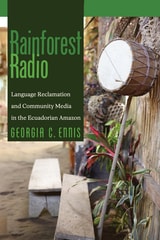
Rainforest Radio
Language Reclamation and Community Media in the Ecuadorian AmazonGeorgia C. Ennis
University of Arizona Press, 2025
Napo Kichwa communities in the Upper Ecuadorian Amazon find themselves doubly marginalized by settler colonialism and well-intentioned language revitalization projects.
In Rainforest Radio Georgia C. Ennis provides a comprehensive ethnographic exploration of Amazonian Kichwa community media, offering a unique look at how Indigenous broadcast and performance media facilitate linguistic and cultural reclamation in the Ecuadorian Amazon.
This work offers a critical analysis of how standardized language revitalization efforts, like the imposition of Unified Kichwa, can inadvertently perpetuate linguistic oppression. Ennis follows producers, performers, and consumers to understand the role of media in language reclamation. Through extensive fieldwork, she provides vivid portrayals of community efforts to sustain the language and cultural practices of their elders amid environmental and social upheaval.
Meticulously researched and beautifully written, Rainforest Radio is an essential work for anthropologists, linguists, and social scientists interested in language revitalization, Indigenous media, and environmental justice. This book showcases the transformative potential of community-driven media initiatives, highlighting the innovative responses of Napo Kichwa activists to the unique challenges they face. It serves as a powerful model for those working on similar issues worldwide, demonstrating the critical role of community media in language reclamation and cultural sustainability.
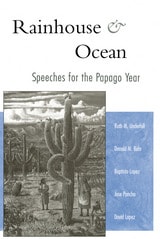
Rainhouse and Ocean
Speeches for the Papago YearRuth M. Underhill
University of Arizona Press, 1997
This book is a restudy of speeches and ritual information collected by anthropologist Underhill beginning in 1931 and published in her book Papago Indian Religion (1946). It describes the Native—as opposed to the Christian—side of the yearly ritual cycle of the Tohono O'odham, showing how seven rites form a system of meanings that grew from the relation between these people and their desert homeland. The rites presented focus on the summer wine feast, salt pilgrimage, hunting, war, and flood.
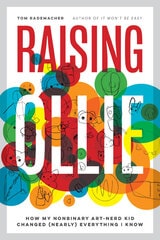
Raising Ollie
How My Nonbinary Art-Nerd Kid Changed (Nearly) Everything I KnowTom Rademacher
University of Minnesota Press, 2021
The account of one radically new school year for a Teacher of the Year and for his nonbinary, art-obsessed, brilliant child
Seven-year-old Ollie was researching local advanced school programs—because every second grader does that, right? Ollie, who used to hate weekends because they meant no school, was crying on the way to school almost every day. Sure, there were the slings and arrows of bullies and bad teachers, but, maybe worse, Ollie, a funny, anxious, smart kid with a thing for choir and an eye for graphic art, was gravely underchallenged and also struggling with identity and how to live totally as themselves. Ollie begged to switch to a new school with “kids like me,” where they wouldn’t feel so alone, or so bored, and so they made the change.
Raising Ollie is dad Tom Rademacher’s story (really, many stories) of that eventful and sometimes painful school year, parenting Ollie and relearning every day what it means to be a father and teacher. As Ollie—who is nonbinary and uses they/them pronouns, and prefers art to athletics, vegetables to cake, and animals to most humans—flourishes in their new school, Rademacher is making an eye-opening adjustment to a new school of his own, one that’s whiter and more suburban than anywhere he has previously taught, with a history of racial tension that he tries to address and navigate.
While Ollie is learning to code, 3D model, animate, speak Japanese, and finally feel comfortable at school, Rademacher increasingly sees how his own educational struggles, anxieties, and childhood upbringing are reflected in his teaching, writing, and parenting, as well as in Ollie’s experience. And with this story of one anything-but-academic year of inquiry and wonder, doubt and revelation, he shows us how raising a kid changes everything—and how much raising a kid like Ollie can teach us about who we are and what we’re doing in the world.
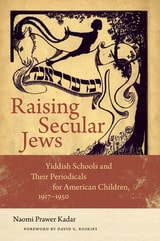
Raising Secular Jews
Yiddish Schools and Their Periodicals for American Children, 1917–1950Naomi Prawer Kadar
Brandeis University Press, 2016
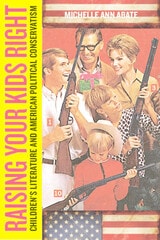
Raising Your Kids Right
Children's Literature and American Political ConservatismAbate, Michelle Ann
Rutgers University Press, 2011
Highlighting the works of William Bennett, Lynne Cheney, Bill O'Reilly, and others, Michelle Ann Abate brings together such diverse fields as cultural studies, literary criticism, political science, childhood studies, brand marketing, and the cult of celebrity. Raising Your Kids Right dispels lingering societal attitudes that narratives for young readers are unworthy of serious political study by examining a variety of texts that offer information, ideology, and even instructions on how to raise kids right, not just figuratively but politically.
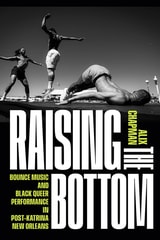
Raising the Bottom
Bounce Music and Black Queer Performance in Post-Katrina New OrleansAlix Chapman
Duke University Press, 2026
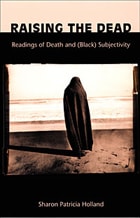
Raising the Dead
Readings of Death and (Black) SubjectivitySharon Patricia Holland
Duke University Press, 2000
Holland argues that the presence of blacks, Native Americans, women, queers, and other “minorities” in society is, like death, “almost unspeakable.” She gives voice to—or raises—the dead through her examination of works such as the movie Menace II Society, Toni Morrison’s novel Beloved, Leslie Marmon Silko’s Almanac of the Dead, Randall Kenan’s A Visitation of Spirits, and the work of the all-white, male, feminist hip-hop band Consolidated. In challenging established methods of literary investigation by putting often-disparate voices in dialogue with each other, Holland forges connections among African-American literature and culture, queer and feminist theory.
Raising the Dead will be of interest to students and scholars of American culture, African-American literature, literary theory, gender studies, queer theory, and cultural studies.
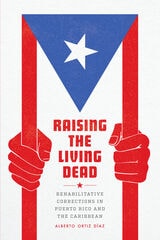
Raising the Living Dead
Rehabilitative Corrections in Puerto Rico and the CaribbeanAlberto Ortiz Díaz
University of Chicago Press, 2023
Raising the Living Dead is a history of Puerto Rico’s carceral rehabilitation system that brings to life the interactions of incarcerated people, their wider social networks, and health care professionals. Alberto Ortiz Díaz describes the ways that multiple communities of care came together both inside and outside of prisons to imagine and enact solution-oriented cultures of rehabilitation from the 1930s to the 1960s. Scientific and humanistic approaches to well-being were deliberately fused to raise the “living dead,” an expression that reemerged in the modern Caribbean to refer to prisoners. These reform groups sought to raise incarcerated people physically, mentally, socially, spiritually, and civically.
The book is based on deep, original archival research into the Oso Blanco (White Bear) penitentiary in Puerto Rico, yet it situates its study within Puerto Rico’s broader carceral archipelago and other Caribbean prisons. The agents of this history include not only physical health professionals, but also psychologists and psychiatrists, social workers, spiritual and religious practitioners, and, of course, the prisoners and their families. By following all these groups and emphasizing the interpersonal exercise of power, Ortiz Díaz tells a story that goes beyond debates about structural and social control.
The book addresses key issues in the history of prisons and the histories of medicine and belief, including how prisoners’ different racial, class, and cultural identities shaped their incarceration and how professionals living in a colonial society dealt with the challenge of rehabilitating prisoners for citizenship.
Raising the Living Dead is not just about convicts, their immediate interlocutors, and their contexts, however, but about how together these open a window into the history of social uplift projects within the (neo)colonial societies of the Caribbean. There is no book like this in Caribbean historiography; few examine these themes in the larger literature on the history of prisons.
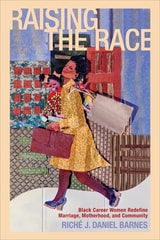
Raising the Race
Black Career Women Redefine Marriage, Motherhood, and CommunityBarnes, Riché J. Daniel
Rutgers University Press, 2015
Popular discussions of professional women often dwell on the conflicts faced by the woman who attempts to “have it all,” raising children while climbing up the corporate ladder. Yet for all the articles and books written on this subject, there has been little work that focuses on the experience of African American professional women or asks how their perspectives on work-family balance might be unique.
Raising the Race is the first scholarly book to examine how black, married career women juggle their relationships with their extended and nuclear families, the expectations of the black community, and their desires to raise healthy, independent children. Drawing from extensive interviews with twenty-three Atlanta-based professional women who left or modified careers as attorneys, physicians, executives, and administrators, anthropologist Riché J. Daniel Barnes found that their decisions were deeply rooted in an awareness of black women’s historical struggles. Departing from the possessive individualistic discourse of “having it all,” the women profiled here think beyond their own situation—considering ways their decisions might help the entire black community.
Giving a voice to women whose perspectives have been underrepresented in debates about work-family balance, Barnes’s profiles enable us to perceive these women as fully fledged individuals, each with her own concerns and priorities. Yet Barnes is also able to locate many common themes from these black women’s experiences, and uses them to propose policy initiatives that would improve the work and family lives of all Americans.
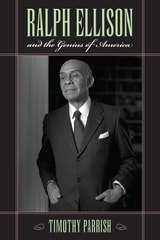
Ralph Ellison and the Genius of America
Timothy Parrish
University of Massachusetts Press, 2012
Ralph Ellison has long been admired as the author of one of the most important American novels of the twentieth century, Invisible Man. Yet he has also been dismissed by some critics as a writer who only published one major work of fiction and a black intellectual out of touch with his times. In this book, Timothy Parrish offers a fundamentally different assessment of Ellison's legacy, describing him as the most important American writer since William Faulkner and someone whose political and cultural achievements have not been fully recognized.
Embracing jazz artist Wynton Marsalis's characterization of Ellison as the unacknowledged “political theorist” of the civil rights movement, Parrish argues that the defining event of Ellison's career was not Invisible Man but the 1954 Supreme Court decision that set his country on the road to racial integration. In Parrish's view, no other American intellectual, black or white, better grasped the cultural implications of the new era than Ellison did; no other major American writer has been so misunderstood.
Drawing on Ellison's recently published “unfinished” novel, newly released archival materials, and unpublished correspondence, Parrish provides a sustained reconsideration of the writer's crucial friendships with Richard Wright, Robert Penn Warren, and C. Vann Woodward to show how his life was dedicated to creating an American society in which all could participate equally. By resituating Ellison's career in the historical context of its making, Parrish challenges the premises that distorted the writer's reception in his own lifetime to make the case for Ellison as the essential visionary of post–Civil War America.
Ralph Ellison
The Next Fifty Years, Volume 23Ronald A. T. Judy and Jonathan Arac, eds.
Duke University Press, 0
Several essays in this collection focus on an area of Ellison’s thinking that has yet to be adequately scrutinized—his study of, and writing about, music, specifically jazz and the blues. Although not a systematic philosopher of music, Ellison exhibited the seriousness and rigor associated with the critical musical writings of Theodor Adorno and Edward Said. Other essays in this special issue examine salient questions raised by Ellison’s work, including the nature of the connection between the novel and the democratic mind, Vietnam and the crisis of liberal society, and the problematic of modernism and freedom. Ralph Ellison addresses the ways in which Ellison’s writings about art were also efforts to think about and discuss political agency.
Contributors. Jonathan Arac, Kevin Bell, Adam Gussow, Ronald A. T. Judy, Robert O’Meally, Donald E. Pease, Barry Shank, Hortense Spillers, Kenneth Warren, Alexander G. Weheliye, John Wright

Ralph J. Bunche
Selected Speeches and WritingsCharles P. Henry, Editor
University of Michigan Press, 1996
Bunche was a pioneer in every sense of the word. The first black American to hold a doctorate in political science, Bunche established the political science department at Howard University and co-founded the National Negro Congress. He served as the first African- American section head in the Office of Strategic Services and later moved to the State Department. He played a major part in the delegation that established the United Nations and, when he retired as Under Secretary General, was the highest- ranking black in that organization. In 1950, he was awarded the Nobel Peace Prize and thus became the first black Nobel laureate.
Bunche's thinking and writing was broad, ranging from the political left to the center. Early works flirt with socialist or even Bolshevist ideas, while later works maintained that a flawed American democracy was better than an impending threat of Nazi-influenced fascism. Bunche was one of the first African Americans to do academic work in Africa, forcing him to think through notions of colonialism and class that would influence his work at the United Nations. Although his passion for peace and civil rights never faltered, his relationship with American black movements vascillated from an early embrace of radicalism to a significant distancing during the mid-sixties to a final rapprochement during the last years of his life. A monumental contribution, Ralph J. Bunche: Selected Speeches and Writings reasserts the thinking of a great American whose views are entirely relevant to a generation still striving for the world Bunche envisioned.
Charles P. Henry is Associate Professor of African American Studies at the University of California, Berkeley.
From the book:
"I abhor racism as a dangerous virus, whether it is spread by white or black peoples. I seek total integration, which to me means the Negro taking his place in the very mainstream of American life . . . . My ancestors have contributed very much to the development of this country and therefore I have a vested interest in it that I intend to realize and protect."
"It seems painfully clear to me that there is no possibility in the affluent, highly industrialized and technological white-majority American society for anyone to be at once black, separate and equal."
"The colonial system in its modern version, implicitly arrogant and self-serving, was instituted and perpetuated chiefly by self-righteous and superior- minded Europeans. Its positive achievements notwithstanding, colonialism's evil legacies will bedevil the world for years to come."
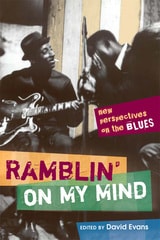
Ramblin' on My Mind
New Perspectives on the BluesEdited by David Evans
University of Illinois Press, 2007
This compilation of essays takes the study of the blues to a welcome new level. Distinguished scholars and well-established writers from such diverse backgrounds as musicology, anthropology, musicianship, and folklore join together to examine blues as literature, music, personal expression, and cultural product. Ramblin' on My Mind contains pieces on Ella Fitzgerald, Son House, and Robert Johnson; on the styles of vaudeville, solo guitar, and zydeco; on a comparison of blues and African music; on blues nicknames; and on lyric themes of disillusionment.
Contributors are Lynn Abbott, James Bennighof, Katharine Cartwright, Andrew M. Cohen, David Evans, Bob Groom, Elliott Hurwitt, Gerhard Kubik, John Minton, Luigi Monge, and Doug Seroff.
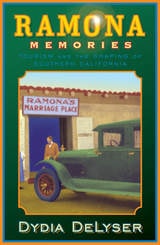
Ramona Memories
Tourism and the Shaping of Southern CaliforniaDydia DeLyser
University of Minnesota Press, 2005
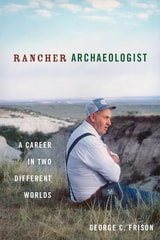
Rancher Archaeologist
A Career in Two Different WorldsGeorge Frison
University of Utah Press, 2014
In this memoir, Frison shares his life’s work and his atypical journey from rancher to professor and archaeologist. Herding cattle, chopping watering holes in sub-zero weather, and guiding hunters in the fall were very different than teaching classes, performing laboratory work, and attending faculty and committee meetings in air-conditioned buildings. But his practical and observational experience around both domestic and wild animals proved a valuable asset to his research. His knowledge of specific animal behaviors gave insight to his studies of the Paleoindians of the northern plains as he sought to understand how their stone tools were used most effectively for hunting and how bison jumps, mammoth kills, and sheep traps actually worked. Frison’s careful research and strong involvement in the scholarly and organizational aspects of archaeology made him influential not only as an authority on the prehistory of the northern plains but also as a leader in Wyoming archaeology and Northern American archaeology at large.
This book will appeal to both the professional and the lay reader with interests in archaeology, anthropology, paleontology, plains history, animal science, hunting, or game management. Frison’s shift from ranching into the academic world of archaeology serves as a reminder that you are never too old to change your life.
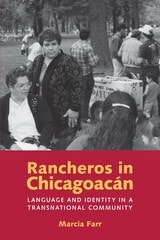
Rancheros in Chicagoacán
Language and Identity in a Transnational CommunityBy Marcia Farr
University of Texas Press, 2006
Rancheros hold a distinct place in the culture and social hierarchy of Mexico, falling between the indigenous (Indian) rural Mexicans and the more educated city-dwelling Mexicans. In addition to making up an estimated twenty percent of the population of Mexico, rancheros may comprise the majority of Mexican immigrants to the United States. Although often mestizo (mixed race), rancheros generally identify as non-indigenous, and many identify primarily with the Spanish side of their heritage. They are active seekers of opportunity, and hence very mobile. Rancheros emphasize progress and a self-assertive individualism that contrasts starkly with the common portrayal of rural Mexicans as communal and publicly deferential to social superiors.
Marcia Farr studied, over the course of fifteen years, a transnational community of Mexican ranchero families living both in Chicago and in their village-of-origin in Michoacán, Mexico. For this ethnolinguistic portrait, she focuses on three culturally salient styles of speaking that characterize rancheros: franqueza (candid, frank speech); respeto (respectful speech); and relajo (humorous, disruptive language that allows artful verbal critique of the social order maintained through respeto). She studies the construction of local identity through a community's daily talk, and provides the first book-length examination of language and identity in transnational Mexicans.
In addition, Farr includes information on the history of rancheros in Mexico, available for the first time in English, as well as an analysis of the racial discourse of rancheros within the context of the history of race and ethnicity in Mexico and the United States. This work provides groundbreaking insight into the lives of rancheros, particularly as seen from their own perspectives.
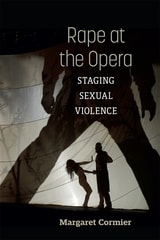
Rape at the Opera
Staging Sexual ViolenceMargaret Cormier
University of Michigan Press, 2024
Drawing on archival footage as well as attendance at live events, Cormier analyzes productions of canonic operas from German, Italian, and French traditions from the eighteenth to the early twentieth century, including Die Entführung aus dem Serail, Don Giovanni, La forza del destino, Un ballo in maschera, Salome, and Turandot. In doing so, Cormier highlights the dynamism of twenty-first-century opera performance practice with regard to sexual violence, establishes methods to evaluate representations of sexual violence on the opera stage, and reframes the primary responsibility of opera critics and creators as being not to opera composers and librettists but to the public.
Rape by the Numbers
Producing and Contesting Scientific Knowledge about Sexual ViolenceEthan Czuy Levine
Rutgers University Press, 2021
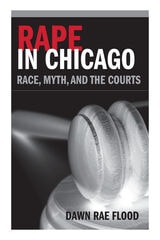
Rape in Chicago
Race, Myth, and the CourtsDawn Rae Flood
University of Illinois Press, 2018
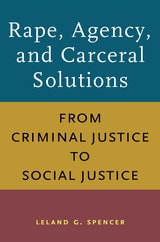
Rape, Agency, and Carceral Solutions
From Criminal Justice to Social JusticeLeland G. Spencer
University of Massachusetts Press, 2023
Winner of the 2023 National Communication Association's American Studies Division Outstanding Book Award
News media and popular culture in the United States have produced a conventional narrative of the outcomes of sexual abuse: someone perpetrates sexual violence, goes to trial, and is then punished with prison time. Survivors recede into the background, becoming minor characters in their own stories as intrepid prosecutors, police officers, and investigators gather evidence and build a case.
Leland G. Spencer explains how the stories we tell about sexual assault serve to reinforce rape culture, privileging criminal punishment over social justice and community-based responses to sexual violence. Examining a broad range of popular media, including news coverage of the Brock Turner case, Naomi Iizuka’s popular play Good Kids, the television program Criminal Minds, and the book turned television show 13 Reasons Why, Spencer demonstrates how these representations shore up the carceral state, perpetuate rape myths, blame victims, and excuse those who harm. While increased discussion about sexual violence represents feminist progress, these narratives assume that policing and prosecution are the only means of achieving justice, sidelining other potential avenues for confronting perpetrators and supporting victims.
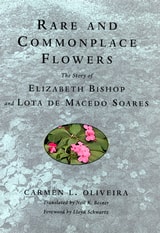
Rare and Commonplace Flowers
The Story of Elizabeth Bishop and Lota de Macedo SoaresOliveira, Carmen
Rutgers University Press, 2003
Rare and Commonplace Flowers—a Brazilian bestseller—tells the story of two women. Elizabeth Bishop, the Pulitzer Prize–winning American poet, sought artistic inspiration in Brazil. There she met and fell in love with Lota de Macedo Soares, a self-trained Brazilian architect. This dual biography—brilliantly researched, and written in a lively, novelistic style—follows their relationship from 1951 to 1967, the time when the two lived together in Brazil. The fact that these two women had an intimate relationship caused an uproar when it first came to public notice.
The relationship started out happily, yet ended tragically. In 1961, Soares became increasingly obsessed with building and administering Flamengo Park, Rio de Janeiro’s equivalent to New York City’s Central Park. Though she had been the driving force behind the park’s inception, the ultimate credit that was due her was stripped away because of petty politics and chicanery. As Soares’s career declined and Bishop’s flourished, their relationship crumbled.
Rare and Commonplace Flowers is a tale of two artists and two cultures, offering unique perspectives on both women and their work. Carmen L. Oliveira provides an unparalleled level of detail and insight, due to both her familiarity with Brazil as well as her access to the country’s artistic elite, many of whom had a direct connection with Bishop and Soares. Rare pictures of the two artists and their home bring this unique story to life.
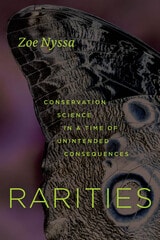
Rarities
Conservation Science in a Time of Unintended ConsequencesZoe Nyssa
University of Chicago Press, 2026
A sweeping study that reveals how conservation science does more than simply protect by inadvertently making nature valuable in new ways.
Climate change and other environmental transformations are causing species to go extinct at accelerating rates. What, then, should a science of saving nature look like? In Rarities, Zoe Nyssa traces how conservation emerged as a distinct scientific endeavor in the United States over the twentieth century and how this history has shaped environmental research practices and policy today. Drawing on archival and ethnographic research with leading conservation labs and programs, Nyssa explores how conservation science appears to generate contradictory, even counterintuitive, results as scientists, policymakers, and the public all take up, respond to, and repurpose scientists’ ideas about rarity, vulnerability, and endangerment. The designation of new nature reserves can lead to increased poaching and habitat destruction. The listing of a species as endangered fuels their black-market consumption as pets, food, or luxury items. Protection of natural resources can push resource extraction into unprotected areas. Other effects are less simple to calculate; persuading the public to care about one species might siphon support for another, and paying for one kind of conservation behavior can discourage other forms of conservation activity.
The science of saving nature spans a century of work by ecologists and others to develop a scientific basis for conservation. Yet Nyssa shows how their efforts to understand the natural world in terms of endangerment and extinction unleashed new ways for nonscientists to experience and understand nature as well. The scientific values that emerge, she argues, can transform the complex interconnections between human and nonhuman life. Rarities offers a framework for understanding these surprising socio-ecological dynamics and why they matter, both for contemporary science and for the planet.
Rascuache Lawyer
Toward a Theory of Ordinary LitigationAlfredo Mirandé
University of Arizona Press, 2011
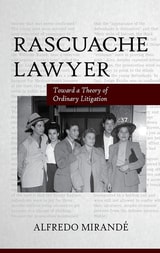
Every chapter presents an actual case from Mirandé’s experience (only the names and places have been changed). His clients have been charged with everything from carrying a concealed weapon, indecent exposure, and trespassing to attempted murder, domestic violence, and child abuse. Among them are recent Mexican immigrants, drug addicts, gang members, and the homeless. All of them are destitute, and many are victims of racial profiling. Some “pay” Mirandé with bartered services such as painting, home repairs, or mechanical work on his car. And Mirandé doesn’t always win their cases. But, as he recounts, he certainly works tirelessly to pursue all legal remedies.
Each case is presented as a letter to a fascinating (fictional) “Super Chicana” named Fermina Gabriel, who we are told is an accomplished lawyer, author, and singer. This narrative device allows the author to present his cases as if he were recounting them to a friend, drawing in the reader as a friend as well.
Bookending the individual cases, Mirandé’s introductions and conclusions offer a compelling vision of progressive legal practice grounded in rascuache lawyering.
Rated RX
Sheree Rose with and after Bob FlanaganEdited by Yetta Howard
The Ohio State University Press, 2020
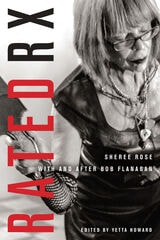
Curated with attention to queer-crip subjectivities and transgressive feminisms, Rated RX includes essays by and interviews with scholars, artists, and Rose’s collaborators that address gender politics, archival practices, minority embodiment, and disability in Rose’s work as well as more than eighty photographs and rare archival materials reflecting Rose’s recent and past performances. Offering a necessary corrective, Rated RX is the first collection to underscore Sheree Rose as a legendary figure in performance art and BDSM subcultural history, reflecting her lifetime of involvement in documenting the underground and the transformative role her work plays in sexual, subcultural, and art exhibitionism.
Rational Lives
Norms and Values in Politics and SocietyDennis Chong
University of Chicago Press, 2000
Chong's book yields insights about the circumstances under which preferences, beliefs, values, norms and group identifications are formed. It offers a provocative explanation of how ingrained social norms and values can change over time despite the forces maintaining the status quo.
"Going beyond the tired polemics on both sides, [Chong] constructs a new interpretation of human behavior in which culture and individual rationality both matter. The synthesis is a more comprehensive and powerful explanatory framework than either side could have produced, and Chong's creativity should influence subsequent interpretations of our social life in fundamental ways."—Christopher H. Achen, University of Michigan
Rationalizing Capitalist Democracy
The Cold War Origins of Rational Choice LiberalismS.M. Amadae
University of Chicago Press, 2003