Results by title
8113 books match the query 'Literary Criticism' and 415 start with r
Renaissance Quarterly, volume 79 number 2 (Summer 2026)
The University of Chicago Press
University of Chicago Press Journals, 2026
Renaissance Quarterly, volume 79 number 3 (Fall 2026)
The University of Chicago Press
University of Chicago Press Journals, 2026

Renaissance Reflections
Selected EssaysArthur F. Kinney
University of Massachusetts Press, 2014
Renaissance Self-Fashioning
From More to ShakespeareStephen Greenblatt
University of Chicago Press, 1983
"No one who has read [Greenblatt's] accounts of More, Tyndale, Wyatt, and others can fail to be moved, as well as enlightened, by an interpretive mode which is as humane and sympathetic as it is analytical. These portraits are poignantly, subtly, and minutely rendered in a beautifully lucid prose alive in every sentence to the ambivalences and complexities of its subjects."—Harry Berger Jr., University of California, Santa Cruz
Renaissance Self-Fashioning
From More to ShakespeareStephen Greenblatt
University of Chicago Press, 2005
"No one who has read [Greenblatt's] accounts of More, Tyndale, Wyatt, and others can fail to be moved, as well as enlightened, by an interpretive mode which is as humane and sympathetic as it is analytical. These portraits are poignantly, subtly, and minutely rendered in a beautifully lucid prose alive in every sentence to the ambivalences and complexities of its subjects."—Harry Berger Jr., University of California, Santa Cruz
Renaissance Shakespeare/Shakespeare Renaissances
Proceedings of the Ninth World Shakespeare CongressMartin Procházka
University of Delaware Press, 2014
Published by University of Delaware Press. Distributed worldwide by Rutgers University Press.
Renaissance Transactions
Ariosto and TassoValeria Finucci, ed.
Duke University Press, 1999
Resituating these writers’ works in the context of the Renaissance while also offering appraisals of their uncanny “postmodernity,” the contributors to this volume focus primarily on Ariosto’s Orlando furioso and Tasso’s Gerusalemme liberata. Essays center on questions of national and religious identity, performative representation, and the theatricality of literature. They also address subjects regarding genre and gender, social and legal anthropology, and reactionary versus revolutionary writing. Finally, they advance the historically significant debate about what constitutes modern literature by revisiting with new perspective questions first asked centuries ago: Did Ariosto invent a truly national, and uniquely Italian, literary genre—the chivalric romance? Or did Tasso alone, by equaling the epic standards of Homer and Virgil, make it possible for a literature written in Italian to attain the status of its classical Greek and Latin antecedents?
Arguing that Ariosto and Tasso are still central to the debate on what constitutes modern narrative, this collection will be invaluable to scholars of Italian literature, literary history, critical theory, and the Renaissance.
Contributors. Jo Ann Cavallo, Valeria Finucci, Katherine Hoffman, Daniel Javitch, Constance Jordan, Ronald L. Martinez, Eric Nicholson, Walter Stephens, Naomi Yavneh, Sergio Zatti
Renegade Poetics
Black Aesthetics and Formal Innovation in African American PoetryEvie Shockley
University of Iowa Press, 2011
Beginning with a deceptively simple question—What do we mean when we designate behaviors, values, or forms of expression as “black”?—Evie Shockley’s Renegade Poetics separates what we think we know about black aesthetics from the more complex and nuanced possibilities the concept has long encompassed. The study reminds us, first, that even among the radicalized young poets and theorists who associated themselves with the Black Arts Movement that began in the mid-1960s, the contours of black aesthetics were deeply contested and, second, that debates about the relationship between aesthetics and politics for African American artists continue into the twenty-first century.

Renunciation as a Tragic Focus
A Study of Five PlaysEugene H. Falk
University of Minnesota Press, 1954
Renunciation as a Tragic Focus was first published in 1954. Minnesota Archive Editions uses digital technology to make long-unavailable books once again accessible, and are published unaltered from the original University of Minnesota Press editions.
Norman J. DeWitt explains, in an introduction to this volume, that these essays are written in terms of a personal humanism.
"Personal humanism," Mr. DeWitt says, "comes from an awareness of a world in which pain is real, and it leads to the traditional virtues of wisdom and justice, terms that are seldom heard in academic circles today."
Traditionalist though he may be in the basic virtues, Professor Falk, in these studies, challenges a traditional concept. By analyzing the conflicting values in five plays, he demonstrates why the traditional definition of tragedy should be broadened. He shows that martyrdom and self-sacrifice, when they involve an act of renunciation, should be included in the realm of tragedy. The older concept ruled out these elements by its insistence that the death of a martyr is not the defeat but the victory of an individual.
The five plays studied here are Sophocles' Oedipus the King and Antigone,Corneille's Polyeucte,Maeterlinck's Aglavaine and Selysette,and Samain's Polypheme.In all of them, the tragic experience of man's defeat in an unequal struggle against destiny is examined in the light of the conflict between his worldly and his spiritual aspirations. The plays illustrate the tenet that renunciation becomes a tragic experience only if the character's devotion to both worldly and spiritual values is genuine. In succession, the five plays represent a progression from authentic to seeming renunciation.
The studies are pertinent to many interests in the broad academic field of the humanities as well as to such specific disciplines as comparative literature, drama, French literature, and the classics.
René Girard's Mimetic Theory
Wolfgang Palaver
Michigan State University Press, 2013
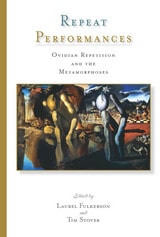
Repeat Performances
Ovidian Repetition and the <i>Metamorphoses<i/>Edited by Laurel Fulkerson and Tim Stover
University of Wisconsin Press, 2016
A shared vision of the possibilities of Latin epic poetry unites the essays, as does a series of attempts to realize those opportunities. Some of the pieces represent a traditional vein of allusion and intertextuality; others are more innovative in their approaches. Each, in a sense, stands as a placeholder for a methodology of theorizing the repetitive practices of poetry, of epic, and of Ovid in particular.
Contributors: Antony Augoustakis, Neil W. Bernstein, Barbara Weiden Boyd, Andrew Feldherr, Peter Heslin, Stephen Hinds, Sharon L. James, Alison Keith, Peter E. Knox, Darcy Krasne
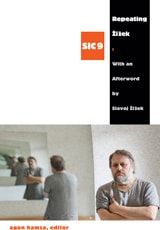
Repeating Žižek
Agon Hamza, ed.
Duke University Press, 2015
Contributors. Henrik Jøker Bjerre, Bruno Bosteels, Agon Hamza, Brian Benjamin Hansen, Adrian Johnston, Katja Kolšek, Adam Kotsko, Catherine Malabou, Benjamin Noys, Geoff Pfeifer, Frank Ruda, Oxana Timofeeva, Samo Tomšic, Gabriel Tupinambá, Fabio Vighi, Gavin Walker, Sead Zimeri, Slavoj Žižek
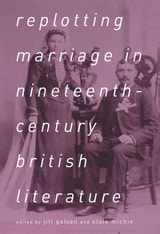
Replotting Marriage in Nineteenth-Century British Literature
Edited by Jill Galvan and Elsie Michie
The Ohio State University Press, 2018
In Replotting Marriage in Nineteenth-Century British Literature, Jill Galvan and Elsie Michie bring together top Victorian scholars to scrutinize nineteenth-century marriage in incisive ways. The volume puts marriage in conversation with many aspects of culture, from education and anthropology to Darwinism and crime. It aims to widen the repertoire of critical questions we ask about how fiction represents conjugal coupling, employing, among other approaches, transimperial reading, queer theory, disability studies, and philosophies of the formation of human society. By paying close attention to elements of genre and narrative, moreover, the collection analyzes the story of marriage as formally and structurally diverse, rather than as a familiar plot line.
These essays point to nineteenth-century marriage studies as a new field of inquiry. With contributions by Ian Duncan, Elisha Cohn, Kathy Psomiades, Kelly Hager, Lauren Goodlad, Marlene Tromp, Sukanya Banerjee, Holly Furneaux, Talia Schaffer, and Helena Michie, and an afterword by Mary Jean Corbett, Replotting Marriage in Nineteenth-Century British Literature demonstrates how both established and developing fields can be brought to bear on a long-examined institution—ultimately prompting a rethinking of the nineteenth century itself.
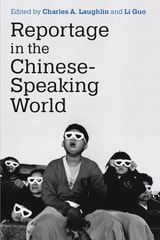
Reportage in the Chinese-Speaking World
Edited by Charles A. Laughlin and Li Guo
University of Michigan Press, 2026
Reportage in the Chinese-Speaking World examines reportage as an important aesthetic form of cultural production in the Sinophone world. Originating as a proletarian nonfiction form in interwar Europe, reportage spread around the world, coming into its own in the Sinophone world from the 1930s to today. Going beyond fact-based journalism, reportage is pursued through a variety of artistic forms and media, from nonfiction writing to photography to documentary film. Reportage’s plurimedial representations facilitate and amplify intersectional struggles against multiple forms of social and political oppression. Engaging its audiences in affective ethico-political exchanges with (human or nonhuman) subjects, reportage promotes audiences’ empathetic responses to the democratic appeals of marginalized groups whose status, identity, or situation manifest emergent ethical challenges in the society of their time.
This work offers new understandings of reportage’s dialectical relationship with its readership by evoking sympathetic identifications with personal contemplations of place, hearth, and senses of belonging. Covering a breadth of media across mainland China, Taiwan, and the Sinophone diaspora in the United States and Japan, this book examines how intermediality cultivates distinctive expressions in reportage, cross-cultural empathy, and ethico-political relationships between the reporter, photographer, filmmaker, and their surroundings.
Represent and Destroy
Rationalizing Violence in the New Racial CapitalismJodi Melamed
University of Minnesota Press, 2011
In the global convulsions in the aftermath of World War II, one dominant world racial order broke apart and a new one emerged. This is the story Jodi Melamed tells in Represent and Destroy, portraying the postwar racial break as a transition from white supremacist modernity to a formally antiracist liberal capitalist modernity in which racial violence works normatively by policing representations of difference.
Following the institutionalization of literature as a privileged domain for Americans to get to know difference—to describe, teach, and situate themselves with respect to race—Melamed focuses on literary studies as a cultural technology for transmitting liberal racial orders. She examines official antiracism in the United States and finds that these were key to ratifying the country’s global ascendancy. She shows how racial liberalism, liberal multiculturalism, and neoliberal multiculturalism made racism appear to be disappearing, even as they incorporated the assumptions of global capitalism into accepted notions of racial equality.
Yet Represent and Destroy also recovers an anticapitalist “race radical” tradition that provides a materialist opposition to official antiracisms in the postwar United States—a literature that sounds out the violence of liberal racial orders, relinks racial inequality to material conditions, and compels desire for something better than U.S. multiculturalism.
Representing Modernist Texts
Editing as InterpretationGeorge Bornstein, Editor
University of Michigan Press, 1991
In Representing Modernist Texts, thirteen internationally known scholars provide major explorations of the topic in the work of particular writers. The issues they raise include the construction of a writer’s canon and the effect of newly available “uncanonical” manuscript materials on existing works and orderings; the replacement of the older idea of a fixed, stable text by a more contemporary notion of the text as process; and the interrogation by advanced textual theory of many of the same notions of “author,” “intention,” and “stability of the text” questioned by advanced literary theory.
Representing Women
Law, Literature, and FeminismSusan Sage Heinzelman and Zipporah Batshaw Wiseman, eds.
Duke University Press, 1994
Beginning with an exploration of the ways in which women are represented—how they either tell or have their stories told in literature, in the law, in a courtroom—this collection demonstrates the interrelatedness of the legal and the literary. Whether considering the status of medieval women readers or assessing the effectiveness and extent of contemporary rape law reform, the essays show that power first comes with telling one’s own story, and that the degree and effect of that power are determined by the cultural significance of the forum in which the story is presented. But telling the story is not enough. One must also be aware of how the story is contained within traditional constructs or boundaries and is thus limited in its effects, as Carol Sanger’s essay on mothers and legal/sexual identity makes clear. One must also recognize how a story might perpetuate an ideological agenda that is not in the best interests of the storyteller, as Elizabeth Butler Cullingford shows in her reading of Yeats’s "Leda and the Swan" and one must know the historical context of a story and of its telling, as Anne B. Goldstein’s essay on lesbian narratives discloses.
Breaking down the boundaries between law and literature, this anthology makes evident the ways in which the effect of women’s stories has been constrained and expands the range of possibilities for those who represent women, tell women’s stories, or present women’s issues. Representing Women makes the retelling of old stories about women compelling and the telling of new ones both necessary and possible.
Contributors. Kathryn Abrams, Linda Brodkey, Rita Copeland, Elizabeth Butler Cullingford, Margaret Anne Doody, Susan B. Estrich, Michelle Fine, Anne B. Goldstein, Angela P. Harris, Susan Sage Heinzelman, Christine L. Krueger, Martha Minow, Carol Sanger, Judy Scales-Trent

Rereading Conrad
Daniel R.Schwarz
University of Missouri Press, 2001
Leading Conradian scholar Daniel R. Schwarz assembles his work from over the past two decades into one crucial volume, providing a significant reexamination of a seminal figure who continues to be a major focus in the twenty-first century. Schwarz touches on virtually all of Joseph Conrad's work including his masterworks and the later, relatively neglected fiction.
In his introduction and in the persuasive and insightful essays that follow, Schwarz explores how the study of Conrad has changed and why Conrad is such a focus of interest in terms of gender, postcolonial, and cultural studies. He also demonstrates how Conrad helps define the modernist cultural tradition.
Exploring such essential works as Heart of Darkness, Lord Jim, Nostromo, and "The Secret Sharer," Schwarz addresses issues raised by recent theory, discussing the ways in which contemporary readers, including, of course, himself, have come to read Conrad differently. He does so without abandoning crucial Conradian themes such as the disjunction between interior and articulated motives and the discrepancies between dimly acknowledged needs, obsessions, and compulsions and actual behavior.
Schwarz also touches on the extent to which Conrad's conservative desires for a few simple moral and political ideas were often at odds with his profound skepticism. A powerful close reader of Conrad's complex texts, Schwarz stresses how from their opening paragraphs Conrad's works establish a grammar of psychological, political, and moral cause and effect.
Rereading Conrad sheds new light on an author who has spoken to readers for over a century. Schwarz's essays take account of recent developments in theory and cultural studies, including postcolonial, feminist, gay, and ecological perspectives, and show how reading Conrad has changed in the face of the theoretical explosion that has occurred over the past two decades. Because for over three decades Schwarz has been an important figure in defining how we read Conrad and in studying modernism, including how we respond to the relationship between modern literature and modern art, scholars, teachers, and students will take great pleasure in this new collection of his work.
Rereading the Black Legend
The Discourses of Religious and Racial Difference in the Renaissance EmpiresEdited by Margaret R. Greer, Walter D. Mignolo, and Maureen Quilligan
University of Chicago Press, 2008
A distinguished group of contributors here examine early modern imperialisms including the Ottomans in Eastern Europe, the Portuguese in East India, and the cases of Mughal India and China, to historicize the charge of unique Spanish brutality in encounters with indigenous peoples during the Age of Exploration. The geographic reach and linguistic breadth of this ambitious collection will make it a valuable resource for any discussion of race, national identity, and religious belief in the European Renaissance.
Rereading the Machine in the Garden
Nature and Technology in American CultureEdited by Eric C. Erbacher, Nicole Maruo-Schröder, and Florian Sedlmeier
Campus Verlag, 2014
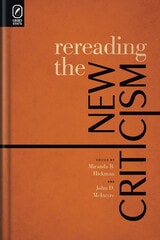
Rereading the New Criticism
Edited by Miranda B. Hickman and John D. McIntyre
The Ohio State University Press, 2012
Committed to rigorous “close reading” and engagement with the “text itself” rather than information “extrinsic” to the text, John Crowe Ransom and a group of colleagues in the American South of the 1930s established a vanguard approach to literary criticism they called the “New Criticism.” By the 1940s, New Critical methods had become the dominant pedagogy in departments of English at colleges and universities across America, enjoying disciplinary hegemony until the late 1960s, when an influx of new theoretical work in literary studies left the New Criticism in shadow. Inspired by a range of new commentary reconsidering the New Criticism (from critics including Jane Gallop, Terry Eagleton, Charles Altieri, and Camille Paglia), the essays in Rereading the New Criticism reevaluate the New Critical corpus, trace its legacy, and explore resources it might offer for the future of theory, criticism, and pedagogy. Addressing the work of New Critics such as Ransom, Cleanth Brooks, and Robert Penn Warren, as well as important forerunners of the New Critics such as I. A. Richards and William Empson, these ten essays shed new light on the genesis of the New Criticism and its significant contributions to the development of academic literary studies in North America; revisit its chief arguments and methods; interrogate received ideas about the movement; and consider how its theories and techniques might inform new methodologies for literary and cultural studies in the twenty-first century.
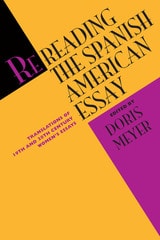
Rereading the Spanish American Essay
Translations of 19th and 20th Century Women’s EssaysEdited by Doris Meyer
University of Texas Press, 1995
Latin American intellectual history is largely founded on essayistic writing. Women's essays have always formed a part of this rich tradition, yet they have seldom received the respect they merit and are often omitted entirely from anthologies.
This volume and its earlier companion, Reinterpreting the Spanish American Essay: Women Writers of the 19th and 20th Centuries, seek to remedy that neglect. This book collects thirty-six notable essays by twenty-two women writers, including Flora Tristan, Gertrudis Gómez de Avellaneda, Clorinda Matto de Turner, Victoria Ocampo, Alfonsina Storni, Rosario Ferré, Christina Peri Rossi, and Elena Poniatowska. All of the essays are here translated into English for the first time, many by the same scholars who wrote critical studies of the authors in the first volume. Each author's work is also prefaced by a brief biographical sketch.
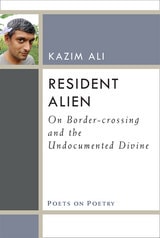
Resident Alien
On Border-crossing and the Undocumented DivineKazim Ali
University of Michigan Press, 2015
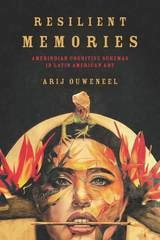
Resilient Memories
Amerindian Cognitive Schemas in Latin American ArtArij Ouweneel
The Ohio State University Press, 2018
Exploring works ranging in popularity, from Alfonso Cuarón’s Y Tu Mamá También to the paintings of Peruvian artists Claudia Coca and Jorge Miyagui, and from Mexican Zapatistas to hip-hop, Ouweneel details the ways in which artists interact with the embodied memory of the community but also assert their own place within it as crucial, furthering their audiences’ understanding of and interaction with existing cultural schemas. In this way, Ouweneel shows that memories must serve the present or they will be forgotten.
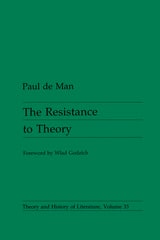
Resistance To Theory
Paul De Man
University of Minnesota Press, 1986
Explores reasons why the theoretical enterprise is blind to, or “resists,” the radical nature of reading, in six essays that offer a new level of critical and cultural understanding in reference to the works of Jauss, Riffaterre, Benjamin, and Bakhtin.
In a brilliant collection of essays, de Man explores his views, that, the resistance to theory is inherent in the theoretical enterprise itself, and the real debate is with its own methodological assumptions and possibilities.
“Indispensable. . . . There is resistance to ‘theory’ and also confusion about its status with reference to both philosophy and criticism.” -Frank Kermode, Columbia University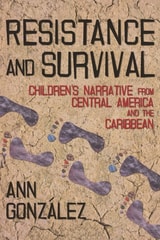
Resistance and Survival
Children’s Narrative from Central America and the CaribbeanAnn González
University of Arizona Press, 2009
Many of these stories are in some way lessons in resistance and survival in a world where “the toughest kid on the block,” often an outsider, demands that a group of children “play or pay,” on his terms. González demonstrates that where traditional strategies have proposed the model of the “trickster” or the “paradoxically astute fool,” to mock the pretensions of the would-be oppressor, new trends indicate that the region’s children—and those who write for them—show increasing interest in playing the game on their own terms, getting to know the Other, embracing difference, and redefining their identity and role within the new global culture.
Resistance and Survival emphasizes the hope underlying this contemporary children’s literature for a world in which all voices can be heard and valued—the hope of an authentic happy ending.
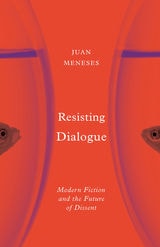
Resisting Dialogue
Modern Fiction and the Future of DissentJuan Meneses
University of Minnesota Press, 2019
A bold new critique of dialogue as a method of eliminating dissent
Is dialogue always the productive political and communicative tool it is widely conceived to be? Resisting Dialogue reassesses our assumptions about dialogue and, in so doing, about what a politically healthy society should look like. Juan Meneses argues that, far from an unalloyed good, dialogue often serves as a subtle tool of domination, perpetuating the underlying inequalities it is intended to address.
Meneses investigates how “illusory dialogue” (a particular dialogic encounter designed to secure consensus) is employed as an instrument that forestalls—instead of fostering—articulations of dissent that lead to political change. He does so through close readings of novels from the English-speaking world written in the past hundred years—from E. M. Forster’s A Passage to India and Jeanette Winterson’s The Passion to Indra Sinha’s Animal’s People and more. Resisting Dialogue demonstrates how these novels are rhetorical exercises with real political clout capable of restoring the radical potential of dialogue in today’s globalized world. Expanding the boundaries of postpolitical theory, Meneses reveals how these works offer ways to practice disagreement against this regulatory use of dialogue and expose the pitfalls of certain other dialogic interventions in relation to some of the most prominent questions of modern history: cosmopolitanism at the end of empire, the dangers of rewriting the historical record, the affective dimension of neoliberalism, the racial and nationalist underpinnings of the “war on terror,” and the visibility of environmental violence in the Anthropocene.
Ultimately, Resisting Dialogue is a complex, provocative critique that, melding political and literary theory, reveals how fiction can help confront the deployment of dialogue to preempt the emergence of dissent and, thus, revitalize the practice of emancipatory politics.

Resisting Dispossession
Embodied Aesthetics in the SouthwestKaren R. Roybal
University of Arizona Press, 2027
Illuminating the impacts of ongoing dispossession across the modern American Southwest
Resisting Dispossession examines how Native/Indigenous, Chicana/o/x, and Black communities in the American Southwest have confronted displacement and dispossession from the nineteenth century to the present. Moving beyond abstract theory, Karen R. Roybal centers cultural expression and embodied knowledge, revealing how colonialism, preservation, urban renewal, and gentrification continue to shape relationships to land, place, and belonging.
Drawing on Indigenous, Chicana feminist, and Black epistemologies, Roybal explores a diverse cultural archive of photographs, literature, musical compositions, oral histories, and storytelling practices. Through analyses of figures such as Kali Fajardo-Anstine, Raven Chacon, and Louis Carlos Bernal, alongside the stories of Chicana land grant heirs in New Mexico and southern Colorado, she demonstrates how artistic and cultural expression becomes a powerful tool for resisting erasure and reclaiming presence. Contesting representations of the Southwest made popular by figures like Ansel Adams and Georgia O’Keeffe, these works preserve alternative histories, challenge dominant narratives, and illuminate the ongoing impacts of dispossession across the region.
Interdisciplinary in scope, this work offers a fresh perspective on the intersections of aesthetics, embodiment, and power in the West and Southwest.

Resisting Regionalism
Gender And Naturalism In American Fiction, 1885-1915Donna Campbell
Ohio University Press, 1997
When James Lane Allen defined the “Feminine Principle” and the “Masculine Principle” in American fiction for the Atlantic Monthly in 1897, he in effect described local color fiction and naturalism, two branches of realism often regarded as bearing little relationship to each other. In this award-winning study of both movements, Resisting Regionalism explores the effect the cultural dominance of women’s local color fiction in the 1890’s had on young male naturalist writers, who rebelled against the local colorists and their “teacup tragedies.”
An immensely popular genre, local color fiction reached its peak in the 1880s in such literary journals as Harper’s Monthly, Scribner’s, the Atlantic Monthly, and the Century. These short stories exhibited local “characters,” depicted marginal groups and vanishing folkways, and addressed issues of absence, loss, limitation, and the past. Despite such prickly themes, according to Donna Campbell, local color fiction “fulfilled some specific needs of the public – for nostalgia, for a retreat into mildly exotic locales, for a semblance of order preserved in ritual.”
By the turn of the century, however, local color fiction was fading from the scene, supplanted by writers of adventure fiction and historical romances, with whom local colorists increasingly merged, and opposed by the naturalists. In examining this historic shift, Resisting Regionalism shows that far from being distanced from local color fiction, nationalism emerged in part as a dissenting response to its popularity and to the era’s concerns about the dominance of feminine influence in American literature. The new generation of authors, including Crane, Norris, London, Frederic, Wharton, resisted the cultural myths and narrative strategies common to local colorists Sarah Orne Jewett, Rose Terry Cooke, Mary E. Wilkins Freeman, and Constance Fenimore Woolson. Yet, as Campbell underscores in her analysis of Stephan Crane’s The Monster, the naturalists could, and did, integrate local color conventions with the grotesque and horrifying to powerful effect.
In clear, accessible prose, Resisting Regionalism provides fresh readings of naturalistic works in the context of the dispute between local color and naturalism. In the process, this book shows the debt naturalism owes to local color fiction and illuminates a neglected but significant literary era.
Resisting Texts
Authority and Submission in Constructions of MeaningPeter L. Shillingsburg
University of Michigan Press, 1998
Shillingsburg argues that as humans we are and always will be interested in the past, in what was meant, in what was revealed inadvertently by a text--and that is all to the good. But we learn more and can compare notes better when we understand the principles that govern the ways we read. Resisting Texts approaches crucial questions about the practice of textual editing and literary criticism by posing questions in the form "If we take such and such to be the goal of our reading, then what will follow from that assumption?"
With humor and a lively imagination, Shillingsburg takes the reader on a fresh theoretical investigation of communication, understanding and misunderstanding, and textual satisfactions, drawing examples from Thackeray, Wordsworth, Melville, and others.
Resisting Texts will appeal to all who enjoy the varieties of critical approaches to the written word.
Peter L. Shillingsburg is Professor of English, University of North Texas.
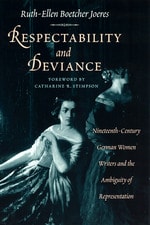
Respectability and Deviance
Nineteenth-Century German Women Writers and the Ambiguity of RepresentationRuth-Ellen Boetcher Joeres
University of Chicago Press, 1998
Studying a period of German literary history that has been largely ignored by modern readers, Ruth-Ellen Boetcher Joeres demonstrates that these writings offer intriguing opportunities to examine such critical topics as canon formation; the relationship between gender, class, and popular culture; and women, professionalism, and technology. The writers she explores range from Annette von Droste-Hülshoff, who managed to work her way into the German canon, to the popular serial novelist E. Marlitt, from liberal writers such as Louise Otto and Fanny Lewald, to the virtually unknown novelist and journalist Claire von Glümer. Through this investigation, Boetcher Joeres finds ambiguities, compromises, and subversions in these texts that offer an extensive and informative look at the exciting and transformative epoch that so much shaped our own.

Respecting the Wicked Child
A Philosophy of Secular Jewish Identity and EducationMitchell Silver
University of Massachusetts Press, 1998
Responding to Crisis in Contemporary Mexico
The Political Writings of Paz, Fuentes, Monsiváis, and PoniatowskaClaire Brewster
University of Arizona Press, 2005
Claire Brewster has mined direct quotations from a host of publications to illustrate the techniques that they used in combating government and editorial restraints. Brewster first addresses the Student Movement of 1968—the violent suppression of which was a watershed in the relationship between the Mexican government and people—and illustrates the ways in which the student crisis affected the writers’ relationships with presidents Luis Echeverría Alvarez and José López Portillo. She next considers the profound social and political repercussions of the 1985 earthquake as described by Poniatowska and Monsiváis and the consequent emergence of Mexican civil society. She then outlines Paz’s and Monsiváis’s vociferous responses to the 1988 presidential election campaigns and their highly contentious result, and lastly she examines the Chiapas rebellion from January to July 1994.
The eloquent Zapatista spokesman, Subcomandante Marcos, challenged Mexican writers to a duel of words, and Brewster analyzes the ways in which the four writers took up the gauntlet—and in so doing reveals the development of their political thoughts and their relationships with the Mexican people and the federal government. The work of these four authors charts an important historical era, and a close examination of their essays reveals their maturation as writers and provides an understanding of the development of Mexican society. By bringing their opinions and attitudes to light, Brewster unearths a rich lode of insight into the inner workings of Mexican intellectuals and invites observers of contemporary Mexico to reconsider their role in reflecting social change.
Ressentiment
Reflections on Mimetic Desire and SocietyStefano Tomelleri
Michigan State University Press, 2015
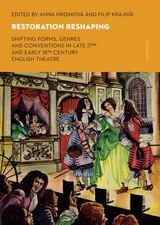
Restoration Reshaping
Shifting Forms, Genres and Conventions in Late 17th and Early 18th Century English TheatreEdited by Anna Hrdinová and Filip Krajník
Karolinum Press, 2026
An Interdisciplinary study of British theater between 1660 and 1737.
Restoration Reshaping explores English theater between the reopening of the playhouses in 1660 and the Licensing Act of 1737, examining both the dramatic works and the social, political, and cultural contexts in which they were produced. Drawing on papers from two international symposia, the volume investigates a wide range of genres—from comedies of manners and heroic plays to musical dramas, pantomimes, and ballad operas—while highlighting innovations in stagecraft, adaptation, and performance practices. Contributors consider the theatre’s connections to politics, gender, and society, its transnational influences, and its ongoing relevance for modern theatre, offering a rich, multi-perspective resource for scholars, students, and theatre practitioners.
Restoring Relations Through Stories
From Dinétah to DenendehRenae Watchman; Foreword by Luci Tapahonso
University of Arizona Press, 2024
While the Diné (those from the four sacred mountains in Dinétah in the southwestern United States) are not now politically and economically cohesive with the Dene (who are in Denendeh in Canada), they are ancestral and linguistic relatives. In this book, Watchman turns to literary and visual texts to explore how relations are restored through stories, showing how literary linkages from land-based stories affirm Diné and Dene kinship. She explores the power of story to forge ancestral and kinship ties between the Diné and Dene across time and space through re-storying of relations.
*A complex Diné worldview and philosophy that cannot be defined with one word in the English language. Hózhǫ́ means to continually strive for harmony, beauty, balance, peace, and happiness, but most importantly the Diné have a right to it.
Resurrection from the Underground
Feodor DostoevskyRené Girard
Michigan State University Press, 2012
In a fascinating analysis of critical themes in Feodor Dostoevsky’s work, René Girard explores the implications of the Russian author’s “underground,” a site of isolation, alienation, and resentment. Brilliantly translated, this book is a testament to Girard’s remarkable engagement with Dostoevsky’s work, through which he discusses numerous aspects of the human condition, including desire, which Girard argues is “triangular” or “mimetic”—copied from models or mediators whose objects of desire become our own. Girard’s interdisciplinary approach allows him to shed new light on religion, spirituality, and redemption in Dostoevsky’s writing, culminating in a revelatory discussion of the author’s spiritual understanding and personal integration. Resurrection is an essential and thought-provoking companion to Dostoevsky’s Notes from the Underground.
Resurrection
Comics in Post-Soviet RussiaJosé Alaniz
The Ohio State University Press, 2022
Resurrection: Comics in Post-Soviet Russia traces the “kopecks to rubles” journey of Russian comics at the turn of the century. As the follow-up to José Alaniz’s groundbreaking Komiks: Comic Art in Russia (2010), Resurrection authoritatively and exhaustively details the Russian comic landscape of the last three decades: beginning after the 1991 fall of the Soviet Union and encompassing the fourth Putin administration, the COVID-19 crisis, and beyond. Bolstering his analysis with interviews with some of the major figures in Russia’s comics industry, Alaniz particularly focuses on the representation of masculinity, disability, historical trauma, and superheroes, as well as on the recent rise of fandom, alternative micropresses, and nonfiction graphic narrative. Resurrection is a sweeping discussion of the metamorphosis of contemporary Russian comic art from its rebirth to its entry into mainstream culture.

Retelling / Rereading
The Fate of Storytelling in Modern TimesKroeber, Karl
Rutgers University Press, 1992
In this highly readable and thoroughly original book, Karl Kroeber questions the assumptions about storytelling we have inherited from the exponents of modernism and postmodernism. These assumptions have led to overly formalistic and universalizing conceptions of narrative that mystify the social functions of storytelling. Even "politically correct" critics have Eurocentrically defined story as too "primitive" to be taken seriously as art. Kroeber reminds us that the fundamental value of storytelling lies in retelling, this paradoxical remaking anew that constitutes story's role as one of the essential modes of discourse. His work develops some recent anthropological and feminist criticism to delineate the participative function of audience in narrative performances.
In depicting how audiences contribute to storytelling transactions, Kroeber carries us into a surprising array of examples, ranging from a Mesopotamian sculpture to Derek Walcott's Omeros; startling juxtapositions, such as Cervantes to Vermeer; and innovative readings of familiar novels and paintings. Tom Wolfe's comparison of his Bonfire of the Vanities to Vanity Fair is critically analyzed, as are the differences between Thackeray's novel and Joyce's Ulysses and Flaubert's Madame Bovary. Other discussions focus on traditional Native American stories, Henry James's The Ambassadors, Calvino's If on a winter's night a traveler, and narrative paintings of Giotto, Holman Hunt, and Roy Lichtenstein. Kroeber deploys the ideas of Ricoeur and Bakhtin to reassess dramatically the field of narrative theory, demonstrating why contemporary narratologists overrate plot and undervalue story's capacity to give meaning to the contingencies of real experience. Retelling/Rereading provides solid theoretical grounding for a new understanding of storytelling's strange role in twentieth-century art and of our need to develop a truly multicultural narrative criticism.

Retelling the Siege of Jerusalem in Early Modern England
Vanita Neelakanta
University of Delaware Press, 2019
Published by University of Delaware Press. Distributed worldwide by Rutgers University Press.
Rethinking Bakhtin
Extensions and ChallengesGary Saul Morson and Caryl Emerson
Northwestern University Press, 1989
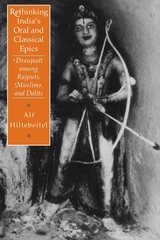
Rethinking India's Oral and Classical Epics
Draupadi among Rajputs, Muslims, and DalitsAlf Hiltebeitel
University of Chicago Press, 1999
Using his own fieldwork as a starting point, Alf Hiltebeitel analyzes how the oral tradition of the south Indian cult of the goddess Draupadi and five regional martial oral epics compare with one another and tie in with the Sanskrit epics. Drawing on literary theory and cultural studies, he reveals the shared subtexts of the Draupadi cult Mahabharata and the five oral epics, and shows how the traditional plots are twisted and classical characters reshaped to reflect local history and religion. In doing so, Hiltebeitel sheds new light on the intertwining oral traditions of medieval Rajput military culture, Dalits ("former Untouchables"), and Muslims.
Breathtaking in scope, this work is indispensable for those seeking a deeper understanding of South Asia's Hindu and Muslim traditions.
This work is the third volume in Hiltebeitel's study of the Draupadi cult. Other volumes include Mythologies: From Gingee to Kuruksetra (Volume One), On Hindu Ritual and the Goddess (Volume Two), and Rethinking the Mahabharata (Volume Four).
Rethinking Reality
Lucretius and the Textualization of NatureDuncan F. Kennedy
University of Michigan Press, 2002
The book engages in a sustained argument about realist assumptions in scientific and other discourses through detailed analysis and discussion of some of the most important recent contributions to this debate. Engaging sympathetically but not uncritically with constructivist accounts of scientific knowledge, the book takes up a sustained critique of recent contributions to that debate, including those of Ian Hacking, Evelyn Fox Keller, Bruno Latour, and Hans-Jörg Rheinberger. What are the implications of regarding such knowledge as "discovered" or "invented"? How is the rhetoric of such claims to be identified and the pretentions of those claims assessed?In what ways can realist and constructivist approaches be reconciled? How do these considerations affect the way we read scientific texts from the past and regard them historically?
What emerges is a fresh and challenging assessment of the role of time and temporal perspective in assessing claims to knowledge in scientific thought and of the importance of textuality to the history of knowledge. A wide variety of readers, from classicists and intellectual historians to epistemologists of science, will enjoy and learn from Rethinking Reality.
Duncan Kennedy is Reader in Latin Literature and the Theory of Criticism, University of Bristol. He is also the author of The Arts of Love: Five Studies in the Discourse of Roman Love Elegy.

Retrofitting Blade Runner
Issues in Ridley Scott's Blade Runner and Phillip K. Dick's Do Androids Dream of Electric Sheep?Judith B. Kerman
University of Wisconsin Press, 1997
Return to the Kingdom of Childhood
Re-envisioning the Legacy and Philosophical Relevance of NegritudeCheikh Thiam
The Ohio State University Press, 2014
Thiam contends that Senghor’s conception of race entails an innovative Afri-centered epistemology and ontology. For Senghor, races are the effects of particular groups’ relations to the world. The so-called “Negroes,” for example, are determined by their epistemology based on their fluid understanding of the ontological manifestations of being. The examination of this ontology and its ensuing epistemology, which is constitutive of the foundation of Senghor’s entire oeuvre, indicates that Negritude is a postcolonial philosophy that stands on its own.
The hermeneutics of Senghor’s race theory show that the Senegalese thinker’s pioneering postcolonial philosophy remains relevant in the postcolonial era. In fact, it questions and expands the works of major contemporary African-descended scholars such as Paul Gilroy, Edouard Glissant, and Molefi Asante. Thiam’s approach is thoroughly interdisciplinary, combining perspectives from philosophy, literary analysis, anthropology, and postcolonial, African, and cultural studies.
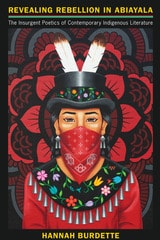
Revealing Rebellion in Abiayala
The Insurgent Poetics of Contemporary Indigenous LiteratureHannah Burdette
University of Arizona Press, 2019
Revealing Rebellion in Abiayala explores the intersections between Indigenous literature and social movements over the past thirty years through the lens of insurgent poetics. Author Hannah Burdette is interested in how Indigenous literature and social movements are intertwined and why these phenomena arise almost simultaneously in disparate contexts across the Americas.
Literature constitutes a key weapon in political struggles as it provides a means to render subjugated knowledge visible and to envision alternatives to modernity and coloniality. The surge in Indigenous literature and social movements is arguably one of the most significant occurrences of the twenty-first century, and yet it remains understudied. Revealing Rebellion in Abiayala bridges that gap by using the concept of Abiayala as a powerful starting point for rethinking inter-American studies through the lens of Indigenous sovereignty.
Revelation and Convergence
Mark Bosco
Catholic University of America Press, 2017

Revels in Madness
Insanity in Medicine and LiteratureAllen Thiher
University of Michigan Press, 2004
---Louis Sass, author of Madness and Modernism
"The scope of this book is daunting, ranging from madness in the ancient Greco-Roman world, to Christianized concepts of medieval folly, through the writings of early modern authors such as Shakespeare, Cervantes, and Descartes, and on to German Romantic philosophy, fin de siècle French poetry, and Freud . . . Artaud, Duras, and Plath."
---Isis
"This provocative and closely argued work will reward many readers."
---Choice
In Revels in Madness, Allen Thiher surveys a remarkable range of writers as he shows how conceptions of madness in literature have reflected the cultural assumptions of their era. Thiher underscores the transition from classical to modern theories of madness-a transition that began at the end of the Enlightenment and culminates in recent women's writing that challenges the postmodern understanding of madness as a fall from language or as a dysfunction of culture.
Reveries of Community
French Epic in the Age of Henri IV, 1572–1616Katherine S. Maynard
Northwestern University Press, 2018
Traditionally united by une foi, une loi, un roi (one faith, one law, one king), France under Henri IV was cleaved into warring factions of Catholics and Huguenots. The country suffered episodes of bloodshed such as the St. Bartholomew’s Day Massacre, even as attempts were made to attenuate the violence through frequent edicts, including those of St. Germain (1570) and Nantes (1598). Maynard examines the rich and often dismissed body work written during these bloody decades: Pierre de Ronsard’s Franciade, Guillaume Salluste Du Bartas’s La Judit and La Sepmaine, Sébastian Garnier’s La Henriade, Agrippa d’Aubigné’s Les Tragiques, and others. She traces how French poets, taking classics such as Virgil’s Aeneid and Homer’s Iliad as their models, reimagined possibilities for French reconciliation and unity.
Reverse Colonization
Science Fiction, Imperial Fantasy, and Alt-victimhoodDavid M. Higgins
University of Iowa Press, 2021
Higgins shows that this reverse colonization stance depends upon a science fictional logic that achieved dominance within imperial fantasy during the 1960s and has continued to gain momentum ever since. By identifying with fantastic forms of victimhood, subjects who already enjoy social hegemony are able to justify economic inequality, expansions of police and military power, climatological devastation, new articulations of racism, and countless other forms of violence—all purportedly in the name of security, self-defense, and self-protection.