Results by title
18284 books match the query 'United States' and 833 start with r
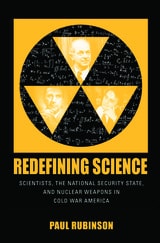
Redefining Science
Scientists, the National Security State, and Nuclear Weapons in Cold War AmericaPaul Rubinson
University of Massachusetts Press, 2016
The Cold War forced scientists to reconcile their values of internationalism and objectivity with the increasingly militaristic uses of scientific knowledge. For decades, antinuclear scientists pursued nuclear disarmament in a variety of ways, from grassroots activism to transnational diplomacy and government science advising. The U.S. government ultimately withstood these efforts, redefining science as a strictly technical endeavor that enhanced national security and deeming science that challenged nuclear weapons on moral grounds “emotional” and patently unscientific. In response, many activist scientists restricted themselves to purely technical arguments for arms control. When antinuclear protest erupted in the 1980s, grassroots activists had moved beyond scientific and technical arguments for disarmament. Grounding their stance in the idea that nuclear weapons were immoral, they used the “emotional” arguments that most scientists had abandoned.
Redefining Science shows that the government achieved its Cold War “consensus” only by active opposition to powerful dissenters and helps explain the current and uneasy relationship between scientists, the public, and government in debates over issues such as security, energy, and climate change.
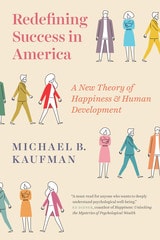
Redefining Success in America
A New Theory of Happiness and Human DevelopmentMichael Kaufman
University of Chicago Press, 2019
Returning to the legendary Harvard Student Study of undergraduates from the 1960s and interviewing participants almost fifty years later, Kaufman shows that formative experiences in family, school, and community largely shape a future adult’s worldview and well-being by late adolescence, and that fundamental change in adulthood, when it occurs, is shaped by adult family experiences, not by ever-greater competitive success. Published research on general samples shows that these patterns, and the book’s findings generally, are broadly applicable to demographically varied populations in the United States.
Leveraging biography-length clinical interviews and quantitative evidence unmatched even by earlier landmark studies of human development, Redefining Success in America redefines the conversation about the nature and origins of happiness, and about how adults develop. This longitudinal study pioneers a new paradigm in happiness research, developmental science, and personality psychology that will appeal to scholars and students in the social sciences, psychotherapy professionals, and serious readers navigating the competitive journey.
Redefining the Political
Black Feminism and the Politics of Everyday LifeAlex J. Moffett-Bateau
Temple University Press, 2024
Moffett-Bateau uses radical Black feminist political theory and develops a framework called the political possible-self, which argues that belonging to a community and developing political imagination foment change. These women employ grassroots efforts to subvert oppressive power structures by protesting institutions within their communities, addressing the benign neglect of their housing development, organizing community art shows and meals, volunteering at local public schools, and holding meetings to increase the political confidence of public-housing tenants by educating them on navigating government bureaucracies.
Ultimately, Redefining the Political shows how political engagement at both the individual and community levels can be fruitful for nontraditional political contributions.
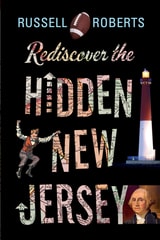
Rediscover the Hidden New Jersey
Roberts, Russell
Rutgers University Press, 2015
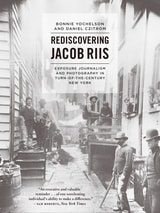
Rediscovering Jacob Riis
Exposure Journalism and Photography in Turn-of-the-Century New YorkBonnie Yochelson and Daniel Czitrom
University of Chicago Press, 2014
With Rediscovering Jacob Riis, art historian Bonnie Yochelson and historian Daniel Czitrom place Jacob Riis’s images in historical context even as they expose a clear sightline to the present. In the first half of their book, Czitrom explores Riis’s reporting and activism within the gritty specifics of Gilded Age New York: its new immigrants, its political machines, its fiercely competitive journalism, its evangelical reformers, and its labor movement. In delving into Riis’s intellectual education and the lasting impact of How the Other Half Lives, Czitrom shows that though Riis argued for charity, not sociopolitical justice, the empathy that drove his work continues to inspire urban reformers today.
In the second half of the book, Yochelson describes for the first time Riis’s photographic practice: his initial reliance on amateur photographers to take the photographs he needed, his own use of the camera, and then his collecting of photographs by professionals, who by 1900 were documenting social reform efforts for government agencies and charities. She argues that while Riis is rightly considered a revolutionary in the history of photography, he was not a photographic artist. Instead, Riis was a writer and lecturer who first harnessed the power of photography to affect social change.
As staggering inequality continues to be an urgent political topic, this book, illustrated with nearly seventy of Riis’s photographs, will serve as a stunning reminder of what has changed, and what has not.
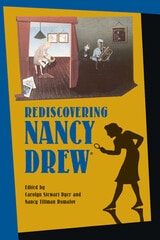
Rediscovering Nancy Drew
Carolyn Stewart Dyer
University of Iowa Press, 1995

Rediscovering National Parks in the Spirit of John Muir
Michael Frome
University of Utah Press, 2015
As a journalist, advocate, and professor, Michael Frome has spent decades engaged with conservation topics and has taken particular interest in America’s national parks. He draws on this experience and knowledge to address what remains to be done in order to truly value and preserve these special places. Part memoir, part history, and part broadside against those who would diminish this heritage, Rediscovering National Parks in the Spirit of John Muir, through thoughtful reflections and ruminations, bears witness to the grandeur of our parks and to the need for a renewed sense of appreciation and individual responsibility for their care.
In recollections of his encounters and conversations with key people in national park history, Frome discusses park politics, conflicts between use and preservation, and impacts of commercialization. He proposes a dedicated return to the true spirit in which the parks were established, in the manner of John Muir. He advocates maintaining these lands as wild sanctuaries, places where we can find inspiration, solitude, silence, balance, and simplicity, reminding us why we must preserve our national treasures and why we need to connect with the deeper values they hold.
Rediscovering Northwest Denver
Its History, Its People, Its LandmarksRuth Eloise Wiberg
University Press of Colorado, 1995
Rediscovering Northwest Denver is a chatty, enjoyable read that tells of the tycoons and entrepreneurs whose fine Victorian homes still dot the area, and of the immigrants from various European cultures who clung together for comfort in the face of prejudice. It includes maps, photographs, past and present street names, a bibliography, index, and suggested tours. Northwest Denver today is typified by traditions, beauty, and pride, all of which the author captures in this ever-popular book.
Winner of the 1993 Hubert Humphrey Award for the book's contribution to the historical appreciation and preservation of Northwest Denver.

Rediscovering the Maine Woods
Thoreau's Legacy in an Unsettled LandJohn J. Kucich
University of Massachusetts Press, 2019
Inspired partly by this expedition, the accessible and engaging essays here offer valuable new perspectives on conservation, the cultural ties that connect Native communities to the land, and the profound influence the geography of the Maine Woods had on Thoreau and writers and activists who followed in his wake. Together, these essays offer a rich and multifaceted look at this special place and the ways in which Thoreau's Maine experiences continue to shape understandings of the environment a century and a half later.
Contributors include the volume editor, Kathryn Dolan, James S. Finley, James Francis, Richard W. Judd, Dale Potts, Melissa Sexton, Chris Sockalexis, Stan Tag, Robert M. Thorson, and Laura Dassow Walls.
Redlining To Reinvestment
edited by Gregory D. Squires
Temple University Press, 1992
After decades of suffering redlining and disinvestment by financial institutions, many communities have learned to fight back successfully. In more than seventy U.S. cities, over 300 community-based organizations have negotiated at least eighteen billion dollars in reinvestment commitments in recent years. In original essays, well-known community activists and activist academics tell the stories of some of the most successful reinvestment campaigns in Boston, Pittsburgh, Detroit, Chicago, Milwaukee, Atlanta, and California.
In the series Conflicts in Urban and Regional Development, edited by John R. Logan and Todd Swanstrom.
Redrawing the Western
A History of American Comics and the Mythic WestWilliam Grady
University of Texas Press, 2024
2025 Best Single Author Book, Midwest Popular Culture Association
2025 Longlist, Reading the West Book Award in Nonfiction, Mountains & Plains Independent Booksellers Association
A history of American Western genre comics and how they interacted with contemporaneous political and popular culture.
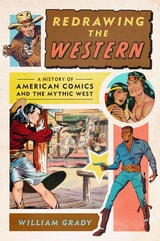
Redrawing the Western charts a history of the Western genre in American comics from the late 1800s through the 1970s and beyond. Encompassing the core years in which the genre was forged and prospered in a range of popular media, Grady engages with several key historical timeframes, from the origins of the Western in the nineteenth-century illustrated press; through fin de siècle anxieties with the closing of the frontier, and the centrality of cowboy adventure across the interwar, postwar, and high Cold War years; to the revisions of the genre in the wake of the Vietnam War and the Western’s continued vitality in contemporary comics storytelling.
In its study of stories about vengeance, conquest, and justice on the contested frontier, Redrawing the Western highlights how the “simplistic” conflicts common in Western adventure comics could disguise highly political undercurrents, providing young readers with new ways to think about the contemporaneous social and political milieu. Besides tracing the history, forms, and politics of American Western comics in and around the twentieth century, William Grady offers an original reassessment of the important role of comics in the development of the Western genre, ranking them alongside popular fiction and film in the process.
Redress for Historical Injustices in the United States
On Reparations for Slavery, Jim Crow, and Their LegaciesMichael T. Martin and Marilyn Yaquinto, eds.
Duke University Press, 2007
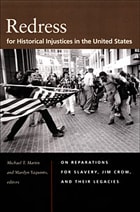
Written by activists and scholars of law, political science, African American studies, philosophy, economics, and history, the twenty-six essays include both previously published articles and pieces written specifically for this volume. Essays theorize the historical and legal bases of claims for redress; examine the history, strengths, and limitations of the reparations movement; and explore its relation to human rights and social justice movements in the United States and abroad. Other essays evaluate the movement’s primary strategies: legislation, litigation, and mobilization. While all of the contributors support the campaign for redress in one way or another, some of them engage with arguments against reparations.
Among the fifty-three primary documents included in the volume are federal, state, and municipal acts and resolutions; declarations and statements from organizations including the Black Panther Party and the NAACP; legal briefs and opinions; and findings and directives related to the provision of redress, from the Oklahoma Commission to Study the Tulsa Race Riot of 1921 to the mandate for the Greensboro Truth and Reconciliation Commission. Redress for Historical Injustices in the United States is a thorough assessment of the past, present, and future of the modern reparations movement.
Contributors. Richard F. America, Sam Anderson, Martha Biondi, Boris L. Bittker, James Bolner, Roy L. Brooks, Michael K. Brown, Robert S. Browne, Martin Carnoy, Chiquita Collins, J. Angelo Corlett, Elliott Currie, William A. Darity, Jr., Adrienne Davis, Michael C. Dawson, Troy Duster, Dania Frank, Robert Fullinwider, Charles P. Henry, Gerald C. Horne, Robert Johnson, Jr., Robin D. G. Kelley, Jeffrey R. Kerr-Ritchie, Theodore Kornweibel, Jr., David Lyons, Michael T. Martin, Douglas S. Massey , Muntu Matsimela , C. J. Munford, Yusuf Nuruddin, Charles J. Ogletree Jr., Melvin L. Oliver, David B. Oppenheimer, Rovana Popoff, Thomas M. Shapiro, Marjorie M. Shultz, Alan Singer, David Wellman, David R. Williams, Eric K. Yamamoto, Marilyn Yaquinto
Reed Smoot Hearings
The Investigation of a Mormon Senator and the Transformation of an American ReligionMichael Harold Paulos
Utah State University Press, 2022
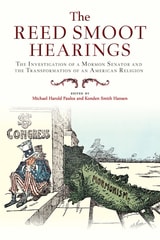
The work adds new insights into the role religion and the secular played in the shaping of US political institutions and national policies. Chapters also look at the history of anti-polygamy laws, the persistence of post-1890 plural marriage, the continuation of anti-Mormon sentiment, the intimacies and challenges of religious privatization, the dynamic of federal power on religious reform, and the more intimate role individuals played in effecting these institutional and national developments.
The Smoot hearings stand as an important case study that highlights the paradoxical history of religious liberty in America and the principles of exclusion and coercion that history is predicated on. Framed within a liberal Protestant sensibility, these principles of secular progress mapped out the relationship of religion and the nation-state for the new modern century. The Reed Smoot Hearings will be of significant interest to students and scholars of Mormon, western, American, and religious history.
Publication supported, in part, by Gonzaba Medical Group.
Contributors: Gary James Bergera, John Brumbaugh, Kenneth L. Cannon II, Byron W. Daynes, Kathryn M. Daynes, Kathryn Smoot Egan, D. Michael Quinn
Reel Freedom
Black Film Culture in Early Twentieth-Century New York CityAlyssa Lopez
Temple University Press, 2025
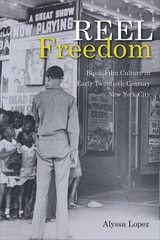
Lopez investigates how ordinary people, labor activists, journalists, filmmakers, theater managers, and owners all shaped Black film culture. Black girls and women used moviegoing as a means of independence and control over their lives. Race filmmaker Oscar Micheaux fought with New York State’s censorship board to get his films screened with limited edits in local theaters. And Harlem’s Black projectionists battled for unionization and fair pay, while journalists linked cinema to Black New Yorkers’ lived experiences.
In Reel Freedom, Lopez chronicles the wide-ranging and remarkable pervasiveness of Black film culture in New York City, redefining a period and place most associated with the Harlem Renaissance. In doing so, she illustrates how Black New Yorkers leveraged cinema to make the city their own and to enjoy urban living to its fullest.
In the series Urban Life, Landscape, and Policy
Reel Inequality
Hollywood Actors and RacismNancy Wang Yuen
Rutgers University Press, 2016
Reel Patriotism
The Movies and World War ILeslie Midkiff DeBauche
University of Wisconsin Press, 1997
Leslie Midkiff DeBauche shows how the United States government’s need to garner public support for the war, conserve food, raise money, and enlist soldiers was met by the film industry. Throughout the nineteen months of American involvement in World War I, film studios supported the war effort through the production of short instructional films, public speaking activities of movie stars, the civic forum provided by movie theaters, and the National Association of the Motion Picture Industry’s provision of administrative personnel to work directly with government agencies. While feature films about the war itself never dominated the release schedules of film distributors, they did become a staple film industry offering throughout the late 1910s and 1920s.
The film industry had much to gain, DeBauche demonstrates, from working closely with the U.S. government. Though the war posed a direct challenge to the conduct of business as usual, the industry successfully weathered the war years. After the war, film producers, distributors, and exhibitors were able to capitalize on the good will of the movie-goer and the government that the industry’s war work created. It provided a buffer against national censorship when movie stars became embroiled in scandal, and it served as a selling point in the 1920s when major film companies began to trade their stock on Wall Street.

Reel Power
Hollywood Cinema and American SupremacyMatthew Alford
Pluto Press, 2010
Hollywood is often characterised as a stronghold of left-liberal ideals. In Reel Power, Matthew Alford shows that it is in fact deeply complicit in serving the interests of the most regressive US corporate and political forces.
Films like Transformers, Terminator: Salvation and Black Hawk Down are constructed with Defence Department assistance as explicit cheerleaders for the US military, but Matthew Alford also emphasises how so-called 'radical' films like Three Kings, Hotel Rwanda and Avatar present watered-down alternative visions of American politics that serve a similar function.
Reel Power is the first book to examine the internal workings of contemporary Hollywood as a politicised industry as well as scores of films across all genres. No matter what the progressive impulses of some celebrities and artists, Alford shows how they are part of a system that is hard-wired to encourage American global supremacy and frequently the use of state violence.
Reel Vulnerability
Power, Pain, and Gender in Contemporary American Film and TelevisionHagelin, Sarah
Rutgers University Press, 2013
The book examines the shifting constructions of vulnerability in the wake of the cultural upheavals of World War II, the Cold War, and 9/11, placing defenseless male bodies onscreen alongside representations of the female body in the military, in the interrogation room, and on the margins. Sarah Hagelin challenges the ways film theory and cultural studies confuse vulnerability and femaleness. Such films as G.I. Jane and Saving Private Ryan, as well as such post-9/11 television shows as Battlestar Galactica and Deadwood, present vulnerable men who demand our sympathy, abused women who don’t want our pity, and images of the body in pain that do not portray weakness.
Hagelin’s intent is to help scholarship catch up to the new iconographies emerging in theaters and in living rooms—images that offer viewers reactions to the suffering body beyond pity, identification with the bleeding body beyond masochism, and feminist images of the female body where we least expect to find them.

Reference Sources and Services for Youth
Meghan Harper
American Library Association, 2011
Reference Sources for Small and Medium-Sized Libraries
Jack O'Gorman
American Library Association, 2014
Refiguring Race and Risk
Counternarratives of Care in the US Security StateRoberta Wolfson
The Ohio State University Press, 2024
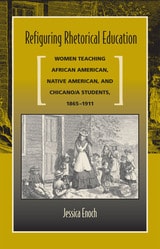
Refiguring Rhetorical Education
Women Teaching African American, Native American, and Chicano/a Students, 1865-1911Jessica Enoch
Southern Illinois University Press, 2008
Refiguring Rhetorical Education: Women Teaching African American, Native American, and Chicano/a Students, 1865-1911 examines the work of five female teachers who challenged gendered and cultural expectations to create teaching practices that met the civic and cultural needs of their students.
The volume analyzes Lydia Maria Child’s The Freedmen’s Book, a post–Civil War educational textbook for newly freed slaves; Zitkala Ša’s autobiographical essays published in the Atlantic Monthly in 1900 that questioned the work of off-reservation boarding schools for Native American students; and Jovita Idar, Marta Peña, and Leonor Villegas de Magnón’s contributions to the Spanish-language newspaper La Crónica in 1910 and 1911—contributions that offered language and cultural instruction their readers could not receive in Texas public schools.
Author Jessica Enoch explores the possibilities and limitations of rhetorical education by focusing on the challenges that Child, Zitkala Ša, Idar, Peña, and Villegas made to dominant educational practices. Each of these teachers transformed their seemingly apolitical occupation into a site of resistance, revising debilitating educational methods to advance culture-based and politicized teachings that empowered their students to rise above their subjugated positions.
Refiguring Rhetorical Education considers how race, culture, power, and language are both implicit and explicit in discussions of rhetorical education for marginalized students and includes six major tenets to guide present-day pedagogies for civic engagement.
Refining Child Pornography Law
Crime, Language, and Social ConsequencesEdited by Carissa Byrne Hessick
University of Michigan Press, 2016
Reflecting Black
African-American Cultural CriticismMichael Eric Dyson
University of Minnesota Press, 1993
From rap music to preaching, from Toni Morrison to Leonard Jeffries, from Michael Jackson to Michael Jordan, Reflecting Black explores as never before the varied and complex dimensions of African-American culture through personal reflection, expository journalism, scholarly investigation and even homily.
"A landmark text in Afro-American cultural criticism. There is simply nothing like it that exists. The level of theoretical sophistication and political engagement is rare-and badly needed." -Cornel West"As Reflecting Black so richly demonstrates, Michael Eric Dyson combines cutting-edge theoretical acuity with the passionate, engaged, and accessible stance of a public intellectual. His critical purview encompasses scholarly tomes and mass market periodicals, trends in theology and in hip-hop culture alike. This book is a splendid introduction to a singularly important voice." -Henry Louis Gates, Jr."Dyson is a young black cultural, political and religious critic whose new book directs its nastiest commentary at racism, sexism, capitalism and straight-up immorality. His is a fresh voice seemingly unfazed by Blackademe's battle royal. Dyson's project is very much in the tradition of recent work by a number of young African-American cultural critics like Tricia Rose, Hilton Als, bell hooks, Greg Tate, Wahneema Lubiano, Elizabeth Alexander and Herman Gray, to name but a few. Reflecting Black is much more than a cultural critique in the formal sense. It interrogates the political, social and moral crises confronting American society generally and African-American communities in particular. In the end, Dyson is not one of those cultural studies scholars concerned with debating the fine points of discourse theory. He is an 'oppositional' critic with a much higher purpose than developing analytical tools to make sense of African-American culture. The Reverend Dyson is not only operating within a rich Marxist tradition but within a very old and continuing African-American tradition. Black communities, through newspaper columns, church groups, street corner gatherings, beauty parlor and barber shop discussions, have always debated and taken responsibility for their culture(s). Dyson's constant lecturing, chiding and encouraging embodies what Antonio Gramsci and his own mama expected us to do all along: not just interpret culture but actively change it--through struggle." -The Nation"Where Michael Jackson meets spirituality, where Martin Luther King meets Malcolm X, where the consolidating 'narrative of racial unity' meets the 'perplexing and chaotic politics of racial identity': These are the border zones of Michael Eric Dyson's compassionate, postmodern, eclectic critical project. Reflecting Black is an invigorating reader for our perplexing and chaotic times." -Voice Literary Supplement"He shows an admirable breadth, ranging from issues such as racism and political correctness in the seminary to examinations of such icons of popular culture as filmaker Spike Lee, singer Michael Jackson and athlete Michael Jordan. One entire section of the book is devoted to black religion, and includes an examination of the lives and examples of Martin Luther King, Jr. and Malcom X." -Washington Post Book World"Yet, if Dyson stumbles in his discussions of black popular culture, he soars in his section titled 'Beyond the Mantra: Reflections on Race, Gender, and Class.' In 'Remembering Emmett Till,' Dyson writes not just with his mind, but with his heart." -Boston Globe"Yet his insights are just as often incisive and challenging, and they demand serious consideration. By insisting that we acknowledge the complexities of race in America and by refusing to accept easy answers, Reflecting Black forces us to think harder about how we can create alterna
Reflecting a Prairie Town
A Year in PetersonDrake Hokanson
University of Iowa Press, 1994
In Reflecting a Prairie Town Drake Hokanson takes a prolonged look at a common place in an uncommon fashion. He presents Peterson, Iowa, through a singular combination of words and images, a remarkable synthesis of history, geography, direct observation, climatology, botany, oral history, archaeology, agricultural science, literature, geology, photography, and even a bit of astronomy. This vernacular landscape study is lavishly illustrated with photographs taken by the author, including stunning panoramic views.
The fundamental truth of experience on this continent has always lain in the challenges and opportunities of space. Place mattered because we were so few before the immensity of the land. But place at the same time rooted us in that immensity. Even now our appreciation for place is not quite dead; locked in our urban environments we continue to crave a “view,” be it of mountains, forests, or prairies. These “views” crop up unexpectedly as photographic murals in office buildings or posters in dentists' offices. It is to this stifled sense of the importance of place that Hokanson speaks; he invites us to remember and to be revitalized.
The magic of Reflecting a Prairie Town is the revelation that Peterson, Iowa, is a small town that is also uncannily large. In capturing the essence of this one place Hokanson helps us to understand our own worlds better—he asks the simple questions many of us would like to ask were we given the opportunity. To enter this book is to come back to a place we have never really seen before.
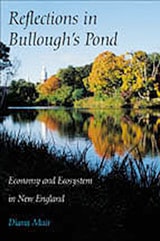
Reflections in Bullough’s Pond
Economy and Ecosystem in New EnglandDiana Muir
University Press of New England, 2002
Reflections in a Bloodshot Lens
America, Islam and the War of IdeasLawrence Pintak
Pluto Press, 2006
There exists today a tragic rift between Americans and the world’s Muslims. Yet in the immediate aftermath of 9/11, there was widespread sympathy for the U.S. throughout the Muslim world. This book explores what happened. It examines the disconnect that leads Americans and Muslims to view the same words and images in fundamentally different ways. Partly a result of a centuries-old 'us' against 'them' dichotomy, the problem is exacerbated by an increasingly polarised media and by leaders on both sides who either don't understand or don't care what impact their words and policies have in the world at large.
Journalist-scholar Lawrence Pintak, a former CBS News Middle East correspondent, argues that the Arab media revolution and the rise of 'patriot-journalists' in the US marginalized voices of moderation, distorting perceptions on both sides of the divide with potentially disastrous results.
Built on the author's extensive journalistic experience, the book will appeal to policymakers, students of media studies, Middle East studies and Islamic studies, and general current affairs readers.
Reflections of a Civil War Historian
Essays on Leadership, Society, and the Art of WarHerman Hattaway & Foreword by Frank E. Vandiver
University of Missouri Press, 2003
Reflections of a Pragmatic Economist
My Intellectual JourneyEmery N. Castle
Oregon State University Press, 2010
Reflections of a Transborder Anthropologist
From Netzahualcóyotl to AztlánCarlos G. Vélez-Ibáñez
University of Arizona Press, 2020
In each chapter, Vélez-Ibáñez revisits a critical piece of his written work, providing a new introduction and discussion of ideas, sources, and influences for the piece. These are followed by the work, chosen because it accentuates key aspects of his development and formation as an anthropologist. By returning to these previously published works, Vélez-Ibáñez offers insight not only into the evolution of his own thinking and conceptualization but also into changes in the fields in which he has been so influential. Throughout his career, Vélez-Ibáñez has addressed why he does the work that he does, and in this volume he continues to address the personal and intellectual drives that have brought him from Netzahualcóyotl to Aztlán.
Reflections of a Transborder Anthropologist shows how both Vélez-Ibáñez and anthropology have changed and formed over a fifty-year period. Throughout, he has worked to understand how people survive and thrive against all odds. Vélez-Ibáñez has been guided by the burning desire to understand inequality, exploitation, and legitimacy, and, most importantly, to provide platforms for the voiceless to narrate their own histories.
Reflections on the Pandemic
COVID and Social Crises in the Year Everything ChangedTeresa Politano
Rutgers University Press, 2024
Contributors include: Patricia Akhimie, Marc Aronson, Ulla D. Berg, Stephanie Bonne, Stephanie Boyer, Kimberly Camp, Jordan Casteel, Kelly-Jane Cotter, Mark Doty, David Dreyfus, Adrienne E. Eaton, Katherine C. Epstein, Leah Falk, Paul G. Falkowski, Rigoberto González, James Goodman, David Greenberg, Angelique Haugerud, Grace Lynne Haynes, Leslieann Hobayan, Jonathan Holloway, James W. Hughes, Naomi Jackson, Amy Jordan, Vikki Katz, Mackenzie Kean, Robert E. Kopp, Christian Lighty, Stephen Masaryk, Louis P. Masur, Revathi V. Machan, Yalidy Matos, Belinda McKeon, Susan L. Miller, Yehoshua November, Joyce Carol Oates, Mary E. O’Dowd, Katherine Ognyanova, David Orr, Gregory Pardlo, Steve Pikiell, Teresa Politano, en Purkert, Nick Romanenko, Evie Shockley, Caridad Svich, and Didier William.
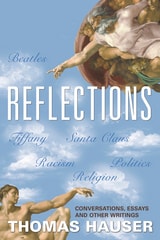
Reflections
Conversations, Essays, and Other WritingsThomas Hauser
University of Arkansas Press, 2014
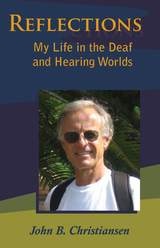
Reflections
My Life in the Deaf and Hearing WorldsJohn B. Christiansen
Gallaudet University Press, 2010
Hard of hearing since early childhood, John Christiansen spent the first 30 years of his life trying to fit in to a hearing world that did little to accommodate his communication needs. Although he excelled in academics, Christiansen found social situations stressful at every level, until he obtained a position as a professor of sociology at Gallaudet University. There he learned sign language and joined a new community. Reflections: My Life in the Deaf and Hearing Worlds grew out of his personal experiences inhabiting these two worlds.
As a sociologist, Christiansen could identify the toll that trying to communicate with hearing people took on his psyche, the classic looking-glass self in action: I am what I think you think I am. He saw that people with hearing loss frequently blame themselves for social awkwardness and gaffs, even though the responsibility for clear communication should be shared. Still, after living in the hearing world for most of his life, he opted to undergo a cochlear implantation to try to improve interaction with his hearing friends, wife, and children.
His description of adjusting to his cochlear implant brings fresh reality to the implant process. As he puts it, he was not a superstar. After ten years, though, he feels positive enough about his experience to endorse it. As a denouement to his affecting memoir, he describes the disruptive 2006 protest at Gallaudet over the choice of a new president from his vantage point as a member of the search committee. Reflections stands as a remarkable account of one person’s navigation through the intricacies of two different and occasionally opposing worlds.
Reformed America
The Middle and Southern States 1783-1837Fred J. Hood
University of Alabama Press, 1980
The success of the Reformed of the middle and southern states at shaping a distinctly American ideology of the relationship of religion and government was truly amazing. Unlike their New England counterparts, many of whom continued to enjoy some sort of establishment well into the nineteenth century, these Reformed entered the national experience with a backlog of experience in religious diversity and practical disestablishment, and even, in the South, as religious dissenters. They would have preferred a religious establishment that would have essentially recognized the validity of their understanding of Christianity. It was perhaps their own rigidity that caused them to fail in that attempt, especially in Virginia. But for such a rigid people, and they were rigid, they demonstrated a remarkable flexibility. When it became apparent that the American legal settlement would be one in which the state disengaged from the support of religion, the Reformed of the middle and southern states welcomed it and declared it to be the solution that would be most conducive to the spread and ultimate domination of Reformed Christianity. Unlike twentieth-century liberals, the Reformed interpreted disestablishment as the legal and official recognition of the twin Reformation doctrines of the priesthood of all believers and the absolute and unquestioned authority of the Christian Scriptures. And, to a very large degree, it was their definition, rather than the thinking of Jefferson and Madison, that captured the imagination of the American people and became the dominant popular opinion in the land.
But perhaps of even greater significance, the Reformed of the middle and southern states forged an ideology that ultimately based American national prosperity on national adherence to Reformed Christianity. Under the tutelage of John Witherspoon and Samuel Stanhope Smith, the Reformed captured the Enlightenment and brought it into the service of Reformed Christianity, altering traditional Calvinism in the process. Witherspoon and Smith, declaring that the truth of the law of nations could be devised by observation and reason alone, propounded a doctrine of natural law and political science that substantially reinforced the Calvinistic doctrine of providence in an era of skepticism and enlightenment. All history, they argued, proved beyond any reasonable doubt that those nations that adhered to the moral principles taught by Christianity had prospered and those that had taken a contrary route had fallen into ruin. The Reformed preachers of whatever denomination picked up this message and proclaimed it throughout the land. The United States, if it were to prosper, was required to be a Christian nation.
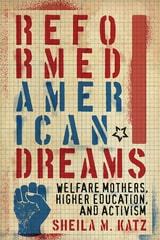
Reformed American Dreams
Welfare Mothers, Higher Education, and ActivismSheila M. Katz
Rutgers University Press, 2019
Reformers, Teachers, Writers
Curricular and Pedagogical InquiriesNeal Lerner
Utah State University Press, 2019
Lerner’s mixed-methods approach—quantitative, qualitative, textual, historical, narrative, and theoretical—reflects the importance and effects of curriculum in a wide variety of settings, whether in writing centers, writing classrooms, or students’ out-of-school lives, as well as the many methodological approaches available to understand curriculum in writing studies. The richness of this approach allows for multiple considerations of the distinction and relationship between pedagogy and curriculum. Chapters are grouped into three parts: disciplinary inquiries, experiential inquiries, and empirical inquiries, exploring the presence and effect of curriculum and its relationship to pedagogy in multiple sites, both historical and contemporary, and for multiple stakeholders.
Reformers, Teachers, Writers calls out writing studies’ inattention to curriculum, which hampers efforts to enact meaningful reform and to have an impact on larger conversations about education and writing. The book will be invaluable to scholars, teachers, and administrators interested in rhetoric and composition, writing studies, and education.
Reforming Legislatures
American Voters and State Ballot Measures, 1792-2020Peverill Squire
University of Missouri Press, 2024
Legislatures are ubiquitous in the American political experience. First created in Virginia in 1619, they have existed continuously ever since. Indeed, they were established in even the most unlikely of places, notably in sparsely populated frontier settlements, and functioned as the focal point of every governing system devised.
Despite the ubiquity of state legislatures, we know remarkably little about how Americans have viewed them as organizations, in terms of their structures, rules, and procedures. But with the rise of modern public opinion surveys in the twentieth century, we now have extensive data on how Americans have gauged legislative performance throughout the many years. That said, the responses to the questions pollsters typically pose reflect partisanship, policy, and personality. Generally, respondents respond favorably to legislatures controlled by their own political party and those in power during good economic times. Incumbent lawmakers get ratings boosts from having personalities, “home styles” that mesh with those of their constituents. These relationships are important indicators of people’s thoughts regarding the current performance of their legislatures and legislators, but they tell us nothing about attitudes toward the institution and its organizational characteristics.
This study offers a unique perspective on what American voters have historically thought about legislatures as organizations and legislators as representatives. Rather than focusing on responses to surveys that ask respondents how they rate the current performance of lawmakers and legislatures, this study leverages the most significant difference between national and state politics: the existence of ballot propositions in the latter. At the national level Americans have never had any say over Congress’s structure, rules, or procedures. In contrast, at the state level they have had ample opportunities over the course of more than two centuries to shape their state legislatures. The data examined here look at how people have voted on more than 1,500 state ballot propositions targeting a wide array of legislative organizational and parliamentary features. By linking the votes on these measures with the public debates preceding them, this study documents not only how American viewed various aspects of their legislatures, but also whether their opinions held constant or shifted over time. The findings reported paint a more nuanced picture of Americans’ attitudes toward legislatures than the prevailing one derived from survey research. When presented with legislative reform measures on which concrete choices were offered and decisions on them had to be made, the analyses presented here reveal that, counter to the conventional wisdom that people loved their representatives but hated the legislature, voters usually took charitable positions toward the institution while harboring skeptical attitudes about lawmakers’ motives and behaviors.
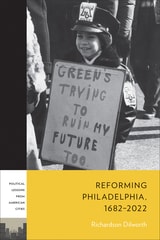
Reforming Philadelphia, 1682–2022
Richardson Dilworth
Temple University Press, 2023
Reforming Philadelphia examines the cyclical efforts of insurgents to change the city’s government over nearly 350 years. Political scientist Richardson Dilworth tracks reformers as they create a new purpose for the city or reshape the government to reflect emerging ideas. Some wish to thwart the “corrupt machine,” while others seek to gain control of the government via elections. These actors formed coalitions and organizations that disrupted the status quo in the hope of transforming the city (and perhaps also enriching themselves).
Dilworth addresses Philadelphia’s early development through the present day, including momentous changes from its new city charter in 1885 and the Republican machine that emerged around the same time to its transformation to a Democratic stronghold in the 1950s, when the city also experienced a racial transition. Focusing primarily on the twentieth and twenty-first centuries, Dilworth evaluates the terms of Mayors Frank Rizzo, Wilson Goode, and Ed Rendell, as well as John Street, Michael Nutter, and Jim Kenney to illustrate how power and resistance function, and how Philadelphia’s political history and reform cycles offer a conceptual model that can easily be applied to other cities.
Reforming Philadelphia provides a new framework for understanding the evolving relationship between national politics and local, city politics.
Reforming the Reform
Problems of Public Schooling in the American Welfare StateSusan L. Moffitt, Michaela Krug O'Neill, and David K. Cohen
University of Chicago Press, 2023
School reform is almost always born out of big dreams and well-meaning desires to change the status quo. But between lofty reform legislation and the students whose education is at stake, there are numerous additional policies and policymakers who determine how reforms operate. Even in the best cases, school reform initiatives can perpetuate problems created by earlier reforms or existing injustices, all while introducing new complications. In Reforming the Reform, political scientist Susan L. Moffitt, education policy scholar Michaela Krug O’Neill, and the late policy and education scholar David K. Cohen take on a wide-ranging examination of the many intricacies of school reform.
With a particular focus on policymakers in the spaces between legislation and implementation, such as the countless school superintendents and district leaders tasked with developing new policies in the unique context of their district or schools, the authors identify common problems that arise when trying to operationalize ambitious reform ideas. Their research draws on more than 250 interviews with administrators in Tennessee and California (chosen as contrasts for their different political makeup and centralization of the education system) and is presented here alongside survey data from across the United States as well as archival data to demonstrate how public schools shoulder enormous responsibilities for the American social safety net. They provide a general explanation for problems facing social policy reforms in federalist systems (including healthcare) and offer pathways forward for education policy in particular.
Reforming the World
Social Activism and the Problem of Fiction in Nineteenth-Century AmericaMaria Carla Sanchez
University of Iowa Press, 2009
In her informed and innovative work, Sánchez considers those authors both familiar (Lydia Maria Child, Harriet Jacobs, and Harriet Beecher Stowe) and those all but lost to history (Timothy Shay Arthur). Along the way, she refers to some of the most notable American writers in the period (Emerson, Thoreau, and Poe). Illuminating the intersection of reform and fiction, Reforming the World visits important questions about the very purpose of literature, telling the story of “a revolution that never quite took place," one that had no grandiose or even catchy name. But it did have numerous settings and participants: from the slums of New York, where prostitutes and the intemperate made their homes, to the offices of lawyers who charted the downward paths of broken men, to the tents for revival meetings, where land and souls alike were “burned over” by the grace of God.
Refounding Democracy through Intersectional Activism
How Progressive Era Feminists Redefined Who We Are, and What It Means TodayWendy Sarvasy
Temple University Press, 2024
Sarvasy shows how these activists worked to incorporate women by combining political democracy with the creation of a welfare state. They embedded this nation-state project within a new humanitarian transnational level as they evolved their multileveled social citizenship.
Refounding Democracy through Intersectional Activism demonstrates how a theory-activist dynamic played out in experimental socializing spaces and democratic conversations. It offers an inspirational method for intersectional activists today.
Reframing Rhetorical History
Cases, Theories, and MethodologiesEdited by Kathleen J. Turner and Jason Edward Black
University of Alabama Press, 2022
A collection of essays providing insights into new directions in rhetorical history
Kathleen J. Turner’s 1998 multicontributor volume Doing Rhetorical History: Concepts and Cases quickly became a foundational text in the field, and the studies in the book have served as an important roadmap for scholars undertaking such scholarship. In the decades since its publication, developments in rhetorical-historical research, engaged scholarship, and academic interventionism have changed the practice of rhetorical history tremendously.
To address this shift, Turner and Jason Edward Black have edited a much-anticipated follow-up volume: Reframing Rhetorical History: Cases, Theories, and Methodologies, which reassesses both history as rhetoric and rhetorical history as practice. This new book attends to a number of topics that have become not just hot-button issues in rhetorical scholarship but have entrenched themselves as anchors within the field. These include digital rhetoric, public memory, race and ethnicity, gender dynamics and sexualities, health and well-being, transnationalism and globalization, social justice, archival methods and politics, and colonialism and decoloniality.
The sixteen essays are divided into four major parts: “Digital Humanities and Culture” introduces methods and cases using twenty-first century technologies; “Identities, Cultures, and Archives” addresses race and gender within the contexts of critical race theory, gendered health rhetoric, race-based public memory, and class/sectionalism; “Approaches to Nationalism and Transnationalism” explores ideologies related to US and international cultures; and “Metahistories and Pedagogies” explores creative ways to approach the frame of metarhetorical history given what the field has learned since the publication of Doing Rhetorical History.
CONTRIBUTORS
Andrew D. Barnes / Jason Edward Black / Bryan Crable / Adrienne E. Hacker Daniels / Matthew deTar / Margaret Franz / Joe Edward Hatfield / J. Michael Hogan / Andre E. Johnson / Madison A. Krall / Melody Lehn / Lisbeth A. Lipari / Chandra A. Maldonado / Roseann M. Mandziuk / Christina L. Moss / Christopher J. Oldenburg / Sean Patrick O’Rourke / Daniel P. Overton / Shawn J. Parry-Giles / Philip Perdue / Kathleen J. Turner
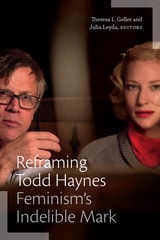
Reframing Todd Haynes
Feminism’s Indelible MarkTheresa L. Geller and Julia Leyda, editors
Duke University Press, 2022
Contributors. Danielle Bouchard, Nick Davis, Jigna Desai, Mary R. Desjardins, Patrick Flanery, Theresa L. Geller, Rebecca M. Gordon, Jess Issacharoff, Lynne Joyrich, Bridget Kies, Julia Leyda, David E. Maynard, Noah A. Tsika, Patricia White, Sharon Willis
Reframing Transracial Adoption
Adopted Koreans, White Parents, and the Politics of KinshipKristi Brian
Temple University Press, 2012
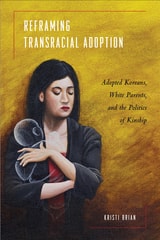
Until the late twentieth century, the majority of foreign-born children adopted in the United States came from Korea. In the absorbing book Reframing Transracial Adoption, Kristi Brian investigates the power dynamics at work between the white families, the Korean adoptees, and the unknown birth mothers. Brian conducts interviews with adult adopted Koreans, adoptive parents, and adoption agency facilitators in the United States to explore the conflicting interpretations of race, culture, multiculturalism, and family.
Brian argues for broad changes as she critiques the so-called "colorblind" adoption policy in the United States. Analyzing the process of kinship formation, the racial aspects of these adoptions, and the experience of adoptees, she reveals the stifling impact of dominant nuclear-family ideologies and the crowded intersections of competing racial discourses.
Brian finds a resolution in the efforts of adult adoptees to form coherent identities and launch powerful adoption reform movements.
Refuge in the Lord
Lawrence J. McAndrews
Catholic University of America Press, 2015
Refugees in America
Stories of Courage, Resilience, and Hope in Their Own WordsLee T Bycel
Rutgers University Press, 2019
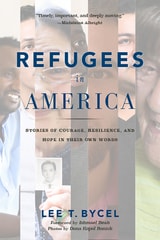
Each chapter of Refugees in America focuses on an individual from a different country, from a 93-year-old Polish grandmother who came to the United States after surviving the horrors of Auschwitz to a young undocumented immigrant from El Salvador who became an American college graduate, despite being born impoverished and blind. Some have found it easy to reinvent themselves in the United States, while others have struggled to adjust to America, with its new culture, language, prejudices, and norms.
Each of them speaks candidly about their experiences to author Lee T. Bycel, who provides illuminating background information on the refugee crises in their native countries. Their stories help reveal the real people at the center of political debates about US immigration.
Giving a voice to refugees from such far-flung locations as South Sudan, Guatemala, Syria, and Vietnam, this book weaves together a rich tapestry of human resilience, suffering, and determination.
Profits from the sale of this book will be donated to two organizations that are doing excellent refugee resettlement work and offer many opportunities to support refugees: HIAS (founded as the Hebrew Immigrant Aid Society) hias.org International Rescue Committee (IRC) rescue.org
Refusing Care
Forced Treatment and the Rights of the Mentally IllElyn R. Saks
University of Chicago Press, 2002
Focusing on overinterventionist approaches, Refusing Care explores when, if ever, the mentally ill should be treated against their will. Basing her analysis on case and empirical studies, Elyn R. Saks explores dilemmas raised by forced treatment in three contexts—civil commitment (forced hospitalization for noncriminals), medication, and seclusion and restraints. Saks argues that the best way to solve each of these dilemmas is, paradoxically, to be both more protective of individual autonomy and more paternalistic than current law calls for. For instance, while Saks advocates relaxing the standards for first commitment after a psychotic episode, she also would prohibit extreme mechanical restraints (such as tying someone spread-eagled to a bed). Finally, because of the often extreme prejudice against the mentally ill in American society, Saks proposes standards that, as much as possible, should apply equally to non-mentally ill and mentally ill people alike.
Mental health professionals, lawyers, disability rights activists, and anyone who wants to learn more about the way the mentally ill are treated—and ought to be treated—in the United States should read Refusing Care.
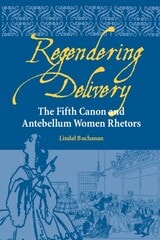
Regendering Delivery
The Fifth Canon and Antebellum Women RhetorsLindal Buchanan
Southern Illinois University Press, 2005
Lindal Buchanan thoroughly analyzes how antebellum women infiltrated the male-dominated realm of public speaking by adapting elocutionary instruction to subversive ends, developing distinctive delivery styles, and reconciling conflicting public and private roles. By detailing the education and oratorical practices of pioneering female public speakers, Regendering Delivery: The Fifth Canon and Antebellum Women Rhetors theorizes how gender impacted the fifth rhetorical canon of delivery and how cultural constructions of the feminine have shaped public performance.
Buchanan argues that restrictive gender norms encouraged antebellum women rhetors to develop unique styles and methods of rhetorical production and performance. She examines how schoolgirls devised ways to learn and practice elocution in academic settings and how women developed inventive delivery strategies to maintain the appearance of femininity even as they participated in conventionally masculine discursive activities from general public speaking to political lobbying. She also identifies collaborative methods that enabled antebellum women to negotiate conflicts between their domestic and rhetorical commitments and thus reach public platforms
Assessing the calculable impact of gender on rhetorical performance, Buchanan maintains that delivery holds particular sexual and textual connotations for women rhetors. Regendering Delivery notably contributes to ongoing feminist efforts to incorporate women into the rhetorical tradition by probing such gendered—and largely overlooked—aspects of oratorical delivery as cultural context, gender norms, elocutionary education, sexuality, maternity, feminine ethos, and collaboration.

Regina Anderson Andrews, Harlem Renaissance Librarian
Ethelene Whitmire
University of Illinois Press, 2015
Andrews also played a key role in the Harlem Renaissance, supporting writers and intellectuals with dedicated workspace at her 135th Street Branch Library. After hours she cohosted a legendary salon that drew the likes of Langston Hughes and Zora Neale Hurston. Her work as an actress and playwright helped establish the Harlem Experimental Theater, where she wrote plays about lynching, passing, and the Underground Railroad.
Ethelene Whitmire's new biography offers the first full-length study of Andrews's activism and pioneering work with the NYPL. Whitmire's portrait of her sustained efforts to break down barriers reveals Andrews's legacy and places her within the NYPL's larger history.

Reginald and Gladys Laubin, American Indian Dancers
Starr West Jones
University of Illinois Press, 2000
Reginald and Gladys Laubin devoted their lives to preserving vanishing Indigenous American cultures. Their authentic Indian dances, costumes, and songs helped white Americans appreciate expressions of Native culture as an art that should be preserved. Native Americans of many peoples praised the Laubins as worthy envoys of their cultures. Audiences in the US, Europe, Israel, and Africa applauded their performances. Starr West Jones provides the historical context for the Laubins’ accomplishments by following their career through their long history of live appearances and discussing their books on American Indian tipis, dances, and archery.