Results by title
187 books match the query 'African American women' and 22 start with s
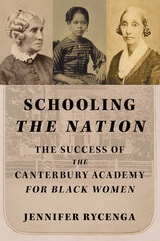
Schooling the Nation
The Success of the Canterbury Academy for Black WomenJennifer Rycenga
University of Illinois Press, 2025
Jennifer Rycenga recovers a pioneering example of antiracism and Black-white cooperation. At once an inspirational and cautionary tale, Canterbury Academy succeeded thanks to far-reaching networks, alliances, and activism that placed it within Black, women’s, and abolitionist history. Rycenga focuses on the people like Sarah Harris, the Academy’s first Black student; Maria Davis, Crandall’s Black housekeeper and her early connection to the embryonic abolitionist movement; and Crandall herself. Telling their stories, she highlights the agency of Black and white women within the currents, and as a force changing those currents, in nineteenth-century America.
Insightful and provocative, Schooling the Nation tells the forgotten story of remarkable women and a collaboration across racial and gender lines.
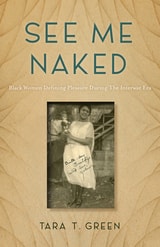
See Me Naked
Black Women Defining Pleasure in the Interwar EraTara T. Green
Rutgers University Press, 2022
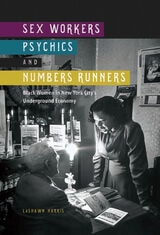
Sex Workers, Psychics, and Numbers Runners
Black Women in New York City's Underground EconomyLaShawn Harris
University of Illinois Press, 2016
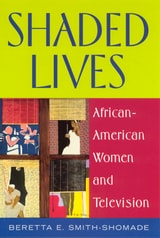
Shaded Lives
African American Women and TelevisionBeretta E Smith-Shomade
Rutgers University Press, 2002
In Shaded Lives, Beretta Smith-Shomade sets out to dissect images of the African American woman in television from the 1980s. She calls their depiction "binaristic," or split. African American women, although an essential part of television programming today, are still presented as distorted and deviant. By closely examining the television texts of African-American women in comedy, music video, television news and talk shows (Oprah Winfrey is highlighted), Smith-Shomade shows how these voices are represented, what forces may be at work in influencing these images, and what alternate ways of viewing might be available.
Smith-Shomade offers critical examples of where the sexist and racist legacy of this country collide with the cultural strength of Black women in visual and real-lived culture. As the nation's climate of heightened racial divisiveness continues to relegate the representation of Black women to depravity and display, her study is not only useful, it is critical.
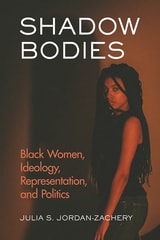
Shadow Bodies
Black Women, Ideology, Representation, and PoliticsJordan-Zachery, Julia S.
Rutgers University Press, 2018
Grounded in Black feminist thought, Julia S. Jordan-Zachery looks at the functioning of scripts ascribed to Black women’s bodies in the framing of HIV/AIDS, domestic abuse, and mental illness and how such functioning renders some bodies invisible in Black politics in general and Black women’s politics specifically.
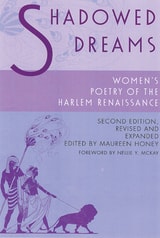
Shadowed Dreams
Women's Poetry of the Harlem RenaissanceMcKay, Nellie
Rutgers University Press, 2006
The first edition of Shadowed Dreams was a groundbreaking anthology that brought to light the contributions of women poets to the Harlem Renaissance. This revised and expanded version contains twice the number of poems found in the original, many of them never before reprinted, and adds eighteen new voices to the collection to once again strike new ground in African American literary history. Also new to this edition are nine period illustrations and updated biographical introductions for each poet.
Shadowed Dreams features new poems by Gwendolyn Bennett, Anita Scott Coleman, Mae Cowdery, Blanche Taylor Dickinson, Alice Dunbar-Nelson, Jessie Fauset, Angelina Weld Grimké, Gladys Casely Hayford (a k a Aquah Laluah), Virginia Houston, Georgia Douglas Johnson, Helene Johnson, Effie Lee Newsome, Esther Popel, and Anne Spencer, as well as writings from newly discovered poets Carrie Williams Clifford, Edythe Mae Gordon, Alvira Hazzard, Gertrude Parthenia McBrown, Beatrice Murphy, Lucia Mae Pitts, Grace Vera Postles, Ida Rowland, and Lucy Mae Turner, among others.
Covering the years 1918 through 1939 and ranging across the period’s major and minor journals, as well as its anthologies and collections, Shadowed Dreams provides a treasure trove of poetry from which to mine deeply buried jewels of black female visions in the early twentieth century.
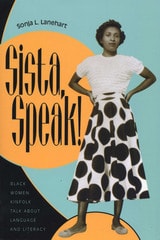
Sista, Speak!
Black Women Kinfolk Talk about Language and LiteracyBy Sonja L. Lanehart
University of Texas Press, 2002
2003 — Honorable Mention, Myers Outstanding Book Award – The Gustavus Myers Center for the Study of Bigotry and Human Rights in North America
The demand of white, affluent society that all Americans should speak, read, and write "proper" English causes many people who are not white and/or middle class to attempt to "talk in a way that feel peculiar to [their] mind," as a character in Alice Walker's The Color Purple puts it. In this book, Sonja Lanehart explores how this valorization of "proper" English has affected the language, literacy, educational achievements, and self-image of five African American women—her grandmother, mother, aunt, sister, and herself.
Through interviews and written statements by each woman, Lanehart draws out the life stories of these women and their attitudes toward and use of language. Making comparisons and contrasts among them, she shows how, even within a single family, differences in age, educational opportunities, and social circumstances can lead to widely different abilities and comfort in using language to navigate daily life. Her research also adds a new dimension to our understanding of African American English, which has been little studied in relation to women.
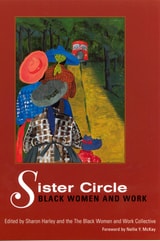
Sister Circle
Black Women and WorkHarley, Sharon
Rutgers University Press, 2002
Although black women’s labor was essential to the development of the United States, studies of these workers have lagged far behind those of working black men and white women. Adding insult to injury, a stream of images in film, television, magazines, and music continues to portray the work of black women in a negative light.
Sister Circle offers an innovative approach to representing work in the lives of black women. Contributors from many fields explore an array of lives and activities, allowing us to see for the first time the importance of black women’s labor in the aftermath of slavery. A brand new light is shed on black women’s roles in the tourism industry, as nineteenth-century social activists, as labor leaders, as working single mothers, as visual artists, as authors and media figures, as church workers, and in many other fields. A unique feature of the book is that each contributor provides an autobiographical statement, connecting her own life history to the subject she surveys.
The first group of essays, “Work It Sista!” identifies the sites of black women’s paid and unpaid work. In “Foremothers: The Shoulders on Which We Stand,” contributors look to the past for the different kinds of work that black women have performed over the last two centuries. Essays in “Women’s Work through the Artist’s Eyes” highlight black women’s work in literature, drama, and the visual arts. The collection concludes with “Detours on the Road to Work: Blessings in Disguise,” writings surveying connections between black women’s personal and professional lives.
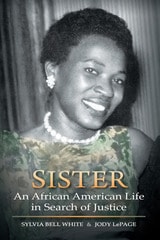
Sister
An African American Life in Search of JusticeSylvia Bell White and Jody LePage
University of Wisconsin Press, 2013
Winner, Wisconsin Historical Society Book Award of Merit
Sistuhs in the Struggle
An Oral History of Black Arts Movement Theater and PerformanceLa Donna L. Forsgren
Northwestern University Press, 2021
Outstanding Academic Title, CHOICE
The first oral history to fully explore the contributions of black women intellectuals to the Black Arts Movement, Sistuhs in the Struggle reclaims a vital yet under-researched chapter in African American, women’s, and theater history. This groundbreaking study documents how black women theater artists and activists—many of whom worked behind the scenes as directors, designers, producers, stage managers, and artistic directors—disseminated the black aesthetic and emboldened their communities.
Drawing on nearly thirty original interviews with well-known artists such as Ntozake Shange and Sonia Sanchez as well as less-studied figures including distinguished lighting designer Shirley Prendergast, dancer and choreographer Halifu Osumare, and three-time Tony-nominated writer and composer Micki Grant, La Donna L. Forsgren centers black women’s cultural work as a crucial component of civil rights and black power activism. Sistuhs in the Struggle is an essential collection for theater scholars, historians, and students interested in learning how black women’s art and activism both advanced and critiqued the ethos of the Black Arts and Black Power movements.
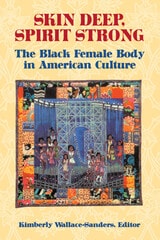
Skin Deep, Spirit Strong
The Black Female Body in American CultureKimberly Wallace-Sanders, Editor
University of Michigan Press, 2002
The collection blends original and classic essays to reveal the interconnections among art, literature, public policy, the history of medicine, and theories about sexuality with regard to bodies that are both black and female. Contributors include Rachel Adams, Elizabeth Alexander, Lisa Collins, Bridgette Davis, Lisa E.Farrington, Anne Fausto-Sterling, Beverly Guy-Sheftall, Evelynn Hammonds, Terri Kapsalis, Jennifer L. Morgan, Siobhan B. Somerville, Kimberly Wallace-Sanders, Carla Williams, and Doris Witt.
Skin Deep, Spirit Strong: The Black Female Body in American Culture will appeal to both the academic reader attempting to integrate race into discussion about the female body and to the general reader curious about the history of black female representation.
Kimberly Wallace-Sanders is Assistant Professor, Graduate Institute of Liberal Arts and Institute of Women's Studies, Emory University.

Sojourner Truth's America
Margaret Washington
University of Illinois Press, 2009
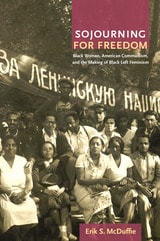
Sojourning for Freedom
Black Women, American Communism, and the Making of Black Left FeminismErik S. McDuffie
Duke University Press, 2011
Songs in Black and Lavender
Race, Sexual Politics, and Women's MusicEileen M. Hayes, Foreword by Linda Tillery
University of Illinois Press, 2010
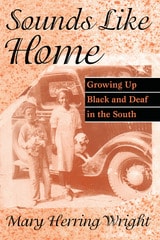
Sounds Like Home
Growing Up Black and Deaf in the SouthMary Herring Wright
Gallaudet University Press, 1999
New edition available: Sounds Like Home: Growing Up Black and Deaf in the South, 20th Anniversary Edition, ISBN 978-1-944838-58-4
Features a new introduction by scholars Joseph Hill and Carolyn McCaskill
Mary Herring Wright’s memoir adds an important dimension to the current literature in that it is a story by and about an African American deaf child. The author recounts her experiences growing up as a deaf person in Iron Mine, North Carolina, from the 1920s through the 1940s. Her story is unique and historically significant because it provides valuable descriptive information about the faculty and staff of the North Carolina school for Black deaf and blind students from the perspective of a student as well as a student teacher. In addition, this engrossing narrative contains details about the curriculum, which included a week-long Black History celebration where students learned about important Blacks such as Madame Walker, Paul Laurence Dunbar, and George Washington Carver. It also describes the physical facilities as well as the changes in those facilities over the years. In addition, Sounds Like Home occurs over a period of time that covers two major events in American history, the Depression and World War II.
Wright’s account is one of enduring faith, perseverance, and optimism. Her keen observations will serve as a source of inspiration for others who are challenged in their own ways by life’s obstacles.
Sounds Like Home
Growing Up Black and Deaf in the SouthMary Herring Wright
Gallaudet University Press, 2019
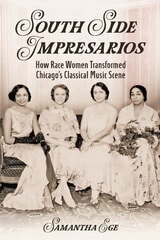
South Side Impresarios
How Race Women Transformed Chicago's Classical Music SceneSamantha Ege
University of Illinois Press, 2024
Ege focuses on composers like Florence Price, Nora Holt, and Margaret Bonds not as anomalies but as artists within an expansive cultural flowering. Overcoming racism and sexism, Black women practitioners instilled others with the skill and passion to make classical music while Race women like Maude Roberts George, Estella Bonds, Neota McCurdy Dyett, and Beulah Mitchell Hill built and fostered institutions central to the community. Ege takes readers inside the backgrounds, social lives, and female-led networks of the participants while shining a light on the scene’s audiences, supporters, and training grounds. What emerges is a history of Black women and classical music in Chicago and the still-vital influence of the world they created.
A riveting counter to a history of silence, South Side Impresarios gives voice to an overlooked facet of the Black Chicago Renaissance.
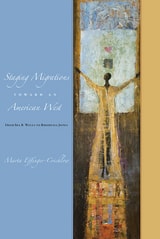
Staging Migrations toward an American West
From Ida B. Wells to Rhodessa JonesMarta Effinger-Crichlow
University Press of Colorado, 2014
Four case studies consider how the featured women—activist Ida B. Wells, singer Sissieretta "Black Patti” Jones, World War II black female defense-industry workers, and performance artist Rhodessa Jones—imagined and experienced the American West geographically and symbolically at different historical moments. Dissecting the varied ways they used migration to survive in the world from the viewpoint of theater and performance theory, Effinger-Crichlow reconceptualizes the migration histories of black women in nineteenth- and twentieth-century America.
This interdisciplinary study expands the understanding of the African American struggle for unconstrained movement and full citizenship in the United States and will interest students and scholars of American and African American history, women and gender studies, theater, and performance theory.
Stepping Forward
Black Women in Africa and the AmericasCatherine Higgs
Ohio University Press, 2002
A unique and important study, Stepping Forward examines the experiences of nineteenth- and twentieth-century black women in Africa and African diaspora communities from a variety of perspectives in a number of different settings.
This wide-ranging collection designed for classroom use explores the broad themes that have shaped black women’s goals, options, and responses: religion, education, political activism, migration, and cultural transformation. Essays by leading scholars in the field examine the lives of black women in the United States and the Caribbean Basin; in the white settler societies of Kenya, Zimbabwe, and South Africa; and in the black settler societies of Liberia and Sierra Leone.
Among the contributors to this volume are historians, political scientists, and scholars of literature, music, and law. What emerges from their work is an image of black women’s agency, self-reliance, and resiliency. Despite cultural differences and geographical variations, black women have provided foundations on which black communities have not only survived, but also thrived. Stepping Forward is a valuable addition to our understanding of women’s roles in these diverse communities.

Sugar's Life in the Hood
The Story of a Former Welfare MotherBy Sugar Turner and Tracy Bachrach Ehlers
University of Texas Press, 2002
All her life, Sugar Turner has had to hustle to survive. An African American woman living in the inner city, she has been a single mother juggling welfare checks, food stamps, boyfriends and husbands, illegal jobs, and home businesses to make ends meet for herself and her five children. Her life's path has also wandered through the wilderness of crack addiction and prostitution, but her strong faith in God and her willingness to work hard for a better life pulled her through. Today, Turner is off welfare and is completing her education. She is computer literate, holds a job in the local school system, has sent three of her children to college, and is happily married.
In this engrossing book, Sugar Turner collaborates with anthropologist Tracy Bachrach Ehlers in telling her story. Through conversations with Ehlers, diary entries, and letters, Turner vividly and openly describes all aspects of her life, including motherhood, relationships with men, welfare and work, and her attachment to her friends, family, and life in the "hood." Ehlers also gives her reactions to Turner's story, discussing not only how it belies the "welfare queen" stereotype, but also how it forced her to confront her own lingering confusions about race, her own bigotry.
What emerges from this book is a fascinating story of two women from radically different backgrounds becoming equal witnesses to each other's lives. By allowing us into the real world of an inner-city African American mother, they replace with compassion and insight the stereotypes, half-truths, and scorn that too often dominate public discourse.
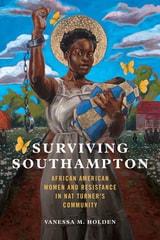
Surviving Southampton
African American Women and Resistance in Nat Turner's CommunityVanessa M. Holden
University of Illinois Press, 2021
The 1831 Southampton Rebellion led by Nat Turner involved an entire community. Vanessa M. Holden rediscovers the women and children, free and enslaved, who lived in Southampton County before, during, and after the revolt. Mapping the region's multilayered human geography, Holden draws a fuller picture of the inhabitants, revealing not only their interactions with physical locations but also their social relationships in space and time. Her analysis recasts the Southampton Rebellion as one event that reveals the continuum of practices that sustained resistance and survival among local Black people. Holden follows how African Americans continued those practices through the rebellion’s immediate aftermath and into the future, showing how Black women and communities raised children who remembered and heeded the lessons absorbed during the calamitous events of 1831.
A bold challenge to traditional accounts, Surviving Southampton sheds new light on the places and people surrounding Americas most famous rebellion against slavery.
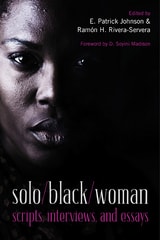
solo/black/woman
scripts, interviews, and essaysEdited by E. Patrick Johnson and Ramón H. Rivera-Servera and with a foreword by D. Soyini Madison
Northwestern University Press, 2013