Results by title
3576 books match the query 'American' and 241 start with s
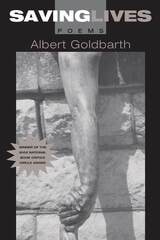
SAVING LIVES
POEMSAlbert Goldbarth
The Ohio State University Press, 2001

SIGN BROKEN, MESSAGE INSIDE
PoemsSusanna Schantz
University of Massachusetts Press, 2027
A debut collection of poems that question authority with wit and clarity
“Words lead on to words” is both provocation and method in SIGN BROKEN, MESSAGE INSIDE, Susanna Schantz’s debut collection rooted in examining the roadside church signs near her South Carolina home. These poems are at turns humorous and polemical, a deft call-and-response, taking the lure and scold of these marquees as prompts for close reading and reinvention. From the local, she sketches a portrait of the national, offering an “orison / from the republic of readers,” and asking with one illuminated placard, “what will our words be like today?”
Treating church signs as a public language—communal, persuasive, sometimes backhanded—these poems expose the friction between proclamation and reception, between belonging and exclusion. They press on questions of gender and agency in faith and civic life: what role women are meant to play in the church, and what might happen if a woman were to “sail beyond this place on her / own wings and a prayer.” Formally alive, Schantz’s lines stretch, scatter, and rearrange across the page, their shapes mirroring a refusal to be contained by the cramped wit of the marquee. Her diction is tactile and bodily, reconnecting language to sensation: “fall[ing] to one’s knees / not in surrender, but / simply to luxuriate / in the cool mud.” Elsewhere, a more bristling music rises: “alphabets of tick bytes / and sacramental snaps / Climbing into our avatars / we thread our way in.” The poems’ bold sounds and rhythms echo the urgency of the signs themselves even as they reclaim their message.
“She has seen signs, and wonders,” the epigraph promises; this book delivers both. In Schantz’s hands, the roadside semaphore becomes a threshold and a mirror, inviting readers to decide: When is it enough to observe, and when must we answer back?
SPOT IN THE DARK
BETH GYLYS
The Ohio State University Press, 2004
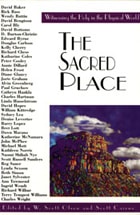
Sacred Place
W Scott Olsen
University of Utah Press, 1996
Some of today's most significant writers and poets explore the relation between what we call the sacred and what we witness in the apparent world.
This unprecedented anthology brings together a provocative mix of new and well known writers whose poetry and prose broaches the possibility of something "bigger" going on, something more significant at stake. Is some powerful agency at work in what we see or are we just wishing (or fearing) that there were? Who can say? Who would dare? What’s most intriguing about the selections in this volume is that the authors do dare. What’s most attractive about them is that they resist answering that dare with reductions. They prefer the swoon of multiple possibilities over the relative comfort of conclusions. Various as they are, the works collected in The Sacred Place share a common reverence for the word itself, and perhaps best of all—they share a common understanding that no one of them comprehends fully what that means. They seem to desire instead a sense that the humble stuff surrounding us affords a likely enough habitation for the sacred, even now.
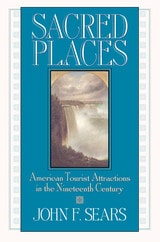
Sacred Places
American Tourist Attractions in the Nineteenth CenturyJohn F. Sears
University of Massachusetts Press, 1999
Drawing on this fascinating body of material, Sacred Places examines the vital role which tourism played in fulfilling the cultural needs of nineteenth-century Americans. America was a new country in search of a national identity. Educated Americans desperately wished to meet European standards of culture and, at the same time, to develop a distinctly American literature and art. Tourism offered a means of defining America as a place and taking pride in the special features of its landscape. The country's magnificent natural wonders were a substitute for the cathedrals and monuments, the sense of history that Europe had built over the centuries. Moreover, Sears argues, tourist attractions like Mammoth Cave, Mount Auburn Cemetery, Yosemite, and Yellowstone functioned as sacred places for a nation with a diversity of religious sects and without ancient religious and national shrines. For nineteenth-century Americans, whose vision was shaped by the aesthetics of the sublime and the picturesque and by the popular nineteenth-century Romantic view of nature as temple, such places fulfilled their urgent need for cultural monuments and for places to visit which transcended ordinary reality.
But these nineteenth-century tourist attractions were also arenas of consumption. Niagara Falls was the most sublime of God's creations, a sacred place, which, like Mount Auburn Cemetery, was supposed to have a profound moral effect on the spectator. But it was also an emporium of culture where the tourist shopped for Niagara's wonders and for little replicas of the Falls in the form of souvenirs. In Sacred Places, Sears describes how this strange, sometimes amusing, juxtaposition of the mythic and the trivial, the sacred and the profane, the spiritual and the commercial remained a significant feature of American tourist attractions even after efforts were made at Yosemite, Yellowstone, and Niagara Falls to curb commercial and industrial intrusions.
Sears also explores how the nineteenth-century idealization of home stimulated the tourists' response to such places as the Willey House in the White Mountains, the rural cemeteries, and even the newly established asylums for the deaf, dumb, blind, and insane. And, in an intriguing account of Mauch Chunk, Pennsylvania, he examines the reasons why an important nineteenth-century anthracite transportation center was also a major tourist attraction.
Most of the attractions discussed in this book are still visited by millions of Americans. By illuminating their cultural meaning, Sacred Places prompts us to reflect on our own motivations and responses as tourists and reveals why tourism was and still is such an important part of American life.
Sacred Uncertainty
Religious Difference and the Shape of Melville's CareerBrian Yothers
Northwestern University Press, 2015

Saga / Circus
Lyn Hejinian
Omnidawn, 2008
Sailing by Ravens
Holly J. Hughes
University of Alaska Press, 2014
“These poems of the sea begin with a school girl’s fascination for ‘the blue sea holding captive all the land’ and end as the seasoned sailor learns that ‘even the old charts/ can’t navigate the wild shoals of your heart.’ Along the way we are shipmates through days of fishing, sailing, loving, and losing as Hughes navigates the lure, lore, and loneliness of a sea that is both natural force and metaphor. I love Sailing by Ravens with its salt of the sea, salt of our deepest lives.”
—Gary Thompson, author of One Thing After Another
Salms
Aaron McCollough
University of Iowa Press, 2024
Salt
Renee Ashley
University of Wisconsin Press, 1991
Renée Ashley describes Salt as an attempt, in part, to mythologize a period of the 1950s and early 1960s in the California Bay Area suburb where she grew up, “a racially rich, economically varied section of town east of El Camino Real—the major road and the ‘tracks’, so to speak, that one grew up on the right or wrong side of.” Many of the poems in the collection explore Ashley’s adjustment to the East Coast after a virtual lifetime in “that one place.” They deal with landscape, with marriage, with the insight distance seems to lend to hindsight, with amusement, with regret.
“Renée Ashley can tune our ears to the thoughts of a wounded sparrow, to the sibilance of snow on stone, even to the song rocks make as they thaw in spring. . . . She wakes us to an intricate, enthralling world behind, beneath, beyond the one we thought we knew, alive with particulars, laced with compassion, luminous with humor.”—Donald Finkel
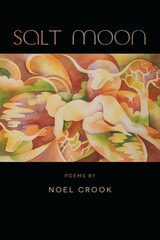
Salt Moon
Noel Crook
Southern Illinois University Press, 2015
Crab Orchard Review First Book Prize
Co-Winner, Julie Suk Prize
Finalist, INDIEFAB Book fo the Year
Throughout Salt Moon, Noel Crook forges the kind of tragic vision Howard Nemerov described as the mark of our finest poets: drawing on myth and memory, Crook’s fierce lyrics reveal a world that is at once “hopeless and beautiful . . . giving equal emphasis to both words.” Sacrifice and betrayal, parental love and patricide, unleashed desire and cornered despair—these antitheses fuel Crook’s Ovidian imagination, which ranges freely from Comanche raids in Texas to a slave plantation in North Carolina, from a carpet maker in Istanbul to beggars in Delhi, from her daughter’s hospital room to the war in Iraq. Rendered in unforgettable images, Salt Moon is that rare book which grows richer with each reading.
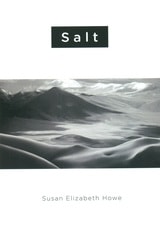
Salt
PoetrySusan Elizabeth Howe
Signature Books, 2013
Howe’s poems are Western but unmistakably modern, drawn from the astute observation of humanity of both rural and urban settings. Her weekly commute from the heart of Sanpete County to Utah Valley causes her to reflect on her culture and to contemplate recent events as she winds through the long, broad canyons. She sees an occasional deer chased from the road, pinyon jays, and magpies. She thinks about death, marriage, blood, and yes, even the dreamy (and occasionally steamy), country girl’s attraction to men.
In her verse, she journeys into the psyche of several women: Charles Dickens’s wife Catherine; Charlotte Brontë; an Argentine woman who unknowingly carried a fetus for several years; a woman whose pet snake tried to squeeze her to death. She recalls the rhododendrons of Kew Gardens, the house of Shakespeare’s grandmother, the sheep of Ireland, and the dogs of the Sierra Madres, but mostly she writes about the Mountain West and her home there.
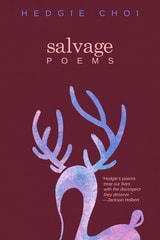
Salvage
Hedgie Choi
University of Wisconsin Press, 2025
“Delightfully spiteful. . . . Choi’s voice has the defiant confidence of youth, which we all need exposure to. The poems are a little bit insulting . . . in the most appealing way, like an argument that actually changes your mind.”— New York Times, Best Poetry of 2025
Part blasphemous prayer, part stand-up comedy, wholly unique, this breathtaking collection is by turns devastating, funny, and startling. Whether the site of exploration is Star Trek, Leonard Cohen, roadkill, or etymology, sublime bewilderment rubs shoulders with half-buried humiliations and accidental salvations. The voice in these poems tenderly and tenaciously inquires into how to survive—not how to survive violence but how to survive surviving. Choi is the rare poet who can elicit laughter, sober reflection, and wry bemusement all within the space of a few lines—or sometimes only one. This is a collection that you can read through in a single sitting, then return to again and again.
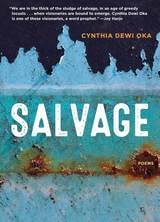
Salvage
PoemsCynthia Dewi Oka
Northwestern University Press, 2018
Throughout it insistently interrogates what it means to reach for our humanity through the guises of nation, race, and gender. Oka’s language transports us through the many bodies of fluid poetics that inhabit our migrating senses and permeate across generations into a personal diaspora. Salvage invites us to be without borders.
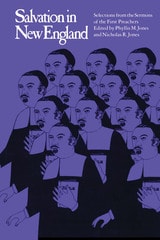
Salvation in New England
Selections from the Sermons of the First PreachersEdited by Phyllis M. Jones and Nicholas R. Jones
University of Texas Press, 1977
The sermon as crafted by the early New England preachers was the most prominent literary form of its day, yet the earliest Puritan texts have as a rule been available only in rare-book collections. This anthology of sermons of the first generation of preachers fills a serious gap in American literature. The preachers collected here, the most widely published of their time, were among the eighty or more who emigrated to Massachusetts Bay during the 1630s. They are John Cotton of Boston, Thomas Shepard of Cambridge, and Thomas Hooker of Hartford, the three foremost "lights of the western churches," and two eminent colleagues, Peter Bulkeley of Concord and John Davenport, first of New Haven and later of Boston.
The selections are chosen to be representative of the lengthy works from which they are drawn, to reflect the major concerns and styles of the preachers' work as a whole, and to demonstrate the genre of the sermon as developed by the early American Puritans. Not only does this anthology represent an important contribution to literary history, but the sermons also illustrate a doctrine uniquely elaborated in this period—a consistent and emphatic narrative, mythlike in its repetition and heroics, of the progress of the soul from a state of nature to a state of salvation. This theme may be seen as a three-stage-development, although individual sermons may vary. These stages—preparation, vocation, and regeneration—determine the order of the selections.
The editors' introductory material supplies a comprehensive and thorough discussion of the early New England sermons, concentrating on their role, history, structure, style, and subject matter. A separate essay on the texts of the sermons describes the relationship between the early printed versions and their form as delivered in the pulpit. The introduction preceding each selection presents original research on the historical circumstances of the preaching and publication of the work from which the sermon is drawn. The editors have also provided brief biographies of the preacfiers represented here, an annotated list of recommended background reading, and the most exhaustive checklist available of authoritative editions of the sermons of these five preachers.
This book will be useful to colonial specialists as well as to students of early American literature, religion, and history. The texts are critically edited for readability, with modernized spelling and annotations of unfamiliar phrases and allusions.
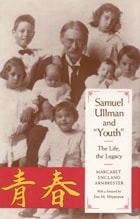
Samuel Ullman and "Youth"
The Life, the LegacyMargaret E. Armbrester
University of Alabama Press, 2009
Thousands of wonderful and sometimes strange fads have captured the public fancy in the almost five decades since the end of World War II. Most have been short-lived and soon faded away. There is, however, a poem that has not only withstood the vicissitudes of time, but has spread around the world like the waves lapping at a beach. This is the poem "Youth," by Samuel Ullman.
In December 1945, the Reader’s Digest published the poem and reported that General Douglas MacArthur, Commander of the Allied Forces, Far East, kept a copy of the poem near his desk.
Around that time, Yoshio Okada, a Japanese businessman, bought a copy of that December 1945 edition of the Reader's Digest, read the poem and was deeply affected by it. He translated it into Japanese and displayed it in his office as a guiding inspiration. Many of Okada's friends read the poem and were fascinated by its beauty. It began to receive national publicity through newspapers and magazines and became popular throughout Japan, especially among the intellectual community. Part of the reason for this widespread popularity is the excellence of the translation. Yoshio Okada, a man of noble character, gifted with a profound philosophy of life and literary talent, translated the poem into a beautiful, soulstirring Japanese version.
Samuel Ullman's “Youth” reflects the truth of life, and his outcry of spirituality touches the intrinsic nature of man.
Sanity Plea
Schizophrenia in the Novels of Kurt VonnegutLawrence R. Broer
University of Alabama Press, 1994
Sapphic Primitivism
Productions of Race, Class, and Sexuality in Key Works of Modern FictionHackett, Robin
Rutgers University Press, 2003
In this book, Robin Hackett examines portrayals of race, class, and sexuality in modernist texts by white women to argue for the existence of a literary device that she calls “Sapphic primitivism.” The works vary widely in their form and content and include Olive Schreiner’s proto-modernist exploration of New Womanhood, The Story of an African Farm; Virginia Woolf’s high modernist “play-poem,” The Waves; Sylvia Townsend Warner’s historical novel, Summer Will Show; and Willa Cather’s Southern pastoral, Sapphira and the Slave Girl. In each, blackness and working-class culture are figured to represent sexual autonomy, including lesbianism, for white women. Sapphic primitivism exposes the ways several classes of identification were intertwined with the development of homosexual identities at the turn of the century. Sapphic primitivism is not, however, a means of disguising lesbian content. Rather, it is an aesthetic displacement device that simultaneously exposes lesbianism and exploits modern, primitivist modes of self-representation. Hackett’s revelations of the mutual interests of those who study early twentieth-century constructions of race and sexuality and twenty-first-century feminists doing anti-racist and queer work are a major contribution to literary studies and identity theory.
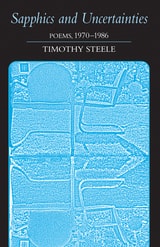
Sapphics and Uncertainties
Poems 1970-1986Timothy Steele
University of Arkansas Press, 1995
Sapphics and Uncertainties: Poems 1970–1986 draws together these two books into a single volume. This collection offers the most substantial gathering yet from a body of work widely praised for its tonal and thematic range and for its wit and warmth of feeling.

Sarah Orne Jewett
Reconstructing GenderMargaret Roman
University of Alabama Press, 1992
With the details of Jewett’s free-spirited life, Roman’s book represents a solid work of literary scholarship, which traces a gender-dissolving theme throughout Jewett’s writing. Whereas previous critics have focused primarily on her best-known works, including “A White Heron,” Deephaven, A Country Doctor, and The Country of the Pointed Firs, Roman encompasses within her own discussion virtually all of the stories found in the nineteen volumes Jewett published during her lifetime. And although much recent criticism has centered around Jewett’s strong female characters, Roman is the first to explore in depth Jewett’s male characters and married couples.
The book progresses through distinct phases that roughly correspond to Jewett’s psychological development as a writer. In general, the characters in her early works exhibit one of two modes of behavior. Youngsters, free as Jewett was to explore the natural world of woods and field, glimpse the possibility of escape from the confining standards that society has set, though some experience turbulent and confusing adolescences where those norms have become more pressing, more demanding. At the opposite extreme are those who have mindlessly accepted the roles in which they have been trapped since youth—greedy, selfish men, dutiful women who tend emotionally empty houses, young couples unable to communicate either between themselves or with others—in short, characters who are too alienated within their roles to function as whole human beings.
On the other hand, Jewett approaches the men and women of her later works with a higher degree of optimism, in that each person is free to live according to the dictates of his or her inherent personality—each character is able to measure life from within rather than from without. This group includes the self-confident men who are not reluctant to present a nurturing side, and the warm, giving women who are unafraid of displaying a decided inner strength. As Roman summarizes, “In her writings, Jewett attempts to shift society’s focus from a grasping power over people to the personal development of each member of society.”
Ahead of her time in many ways, Sarah Orne Jewett confronted the Victorian polarized gender system, presaging the modern view that men and women should be encouraged to develop along whatever paths are most comfortable and most natural for them.

Sarah's Choice
Eleanor Wilner
University of Chicago Press, 1989
"There is so much that is impressive in Wilner's mature poems. In an era which has been labelled 'The End of History,' she examines history's less obvious lessons. If the past is to teach us, she seems to say, then we must re-invent and re-shape it."—Poetry
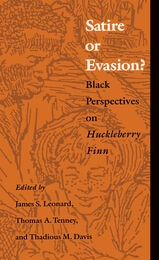
Satire or Evasion?
Black Perspectives on Huckleberry FinnJames S. Leonard, Thomas A. Tenney and Thadious M. Davis, eds.
Duke University Press, 1992
Ranging from the laudatory to the openly hostile, these essays include personal impressions of Huckleberry Finn, descriptions of classroom experience with the book, evaluations of its ironic and allegorical aspects, explorations of its nineteenth-century context, and appraisal of its effects on twentieth-century African American writers. Among the issues the authors contend with are Twain’s pervasive use of the word “nigger,” his portrayal of the slave Jim according to the conventions of the minstrel show “darky,” and the thematic chaos created by the “evasion” depicted in the novel’s final chapters.
Sure to provoke thought and stir debate, Satire or Evasion? provides a variety of new perspectives on one of this country’s most troubling classics.
Contributors. Richard K. Barksdale, Bernard W. Bell, Mary Kemp Davis, Peaches M. Henry, Betty Harris Jones, Rhett S. Jones, Julius Lester, Donnarae MacCann, Charles H. Nichols, Charles H. Nilon, Arnold Rampersad, David L. Smith, Carmen Dubryan, John H. Wallace, Kenny Jackson Williams, Fredrick Woodard
Saving The Young Men Of Vienna
David Kirby
University of Wisconsin Press, 1987
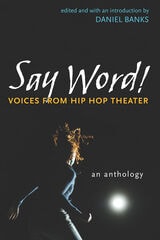
Say Word!
Voices from Hip Hop TheaterAn Anthology Edited and with an Introduction by Daniel Banks
University of Michigan Press, 2011
The phenomenon known as Hip Hop encompasses a global, multiethnic, grassroots culture committed to social justice and self-expression through performance. Hip Hop Theater emerged from that culture, mixing spoken-word performance with music and dance and marked by Hip Hop's strong sense of activism and resistance. Hip Hop Theater is engaged with questions of identity – culture, heritage, ethnicity, class, gender, sexuality, and difference—narrating the experiences of historically marginalized peoples and putting them in dialogue with other oppressed communities.
Say Word! Voices from Hip Hop Theater collects eight works by contemporary artists who confront today's compelling issues, ranging from racial profiling and police brutality to women's empowerment and from the commercial exploitation of Hip Hop to identity politics. Editor Daniel Banks has assembled work by Abiola Abrams, Zakiyyah Alexander, Chadwick Boseman, Kristoffer Diaz, Rha Goddess, Antoy Grant, Joe Hernandez-Kolski, Rickerby Hinds, and Ben Snyder, augmented with an extensive introduction and other informative commentary. The book also includes a roundtable moderated by Holly Bass and featuring Hip Hop pioneers Eisa Davis, Danny Hoch, Sarah Jones, and Will Power, a conversation that traces the roots of Hip Hop Theater and imagines its future directions.
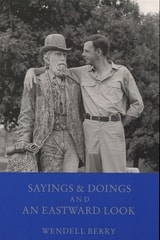
Sayings and Doings and An Eastward Look
Wendell Berry
Ohio University Press, 1990
Published in 1990 by Gnomon Press
This volume combines two small books of poetry by Wendell Berry, both with expanded texts. In Sayings and Doings the inner lives of the country people Berry knows so well surface in sayings, stories, reminiscences, and a number of jocular dialogues. Many are expressions we hear and often mean to remember but, when we start to retell them, find that we have forgotten the exact wording, without which they lose their effectiveness. Here the poet remembers well. One can hear as one reads, and the rural speech has been whittled so that not a syllable is wasted.
The condensed nature of Sayings and Doings is mirrored in the Asian influence of An Eastward Look, which includes haiku, the journal-like sequence "A Long Journey and a Small Notebook," and the masterful "Chinese Painting Poems."
For those familiar with many other collections of Berry's poems, this volume will acquaint them with other facets of his work, until now too little known.
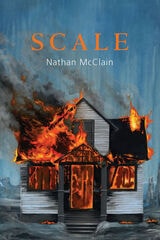
Scale
Nathan McClain
Four Way Books, 2017
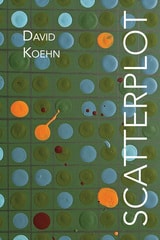
Scatterplot
David Koehn
Omnidawn, 2019
Koehn diagrams connections from media, art, film, music, nature, history, and his own family into a web of coordinates that form constellations of beauty and tragedy. He moves from the music of the Bad Brains, to the grotesque lifecycle of the Tongue-Eating Louse, to the deconstruction of Mutant Mania toys, and on through the poems of David Antin and the suicide of Anthony Bourdain, building a fantastical world from the wild realities of the real one. In a universe so full of imperfection one can’t help but both laugh and cry, the poet embraces the present while taking responsibility for his own insufficiencies. Amounting to a mix of experiments—erasures, surreal narratives, collage, walking poems, and more—the delta between right now and forever feels both inescapably present and delightfully confused. Immense vulnerability, infinitely odd observations, and uninhibited daring populate the psychological terrain in the poems of Scatterplot as Koehn invites us to join his spiraling poetic exploration.
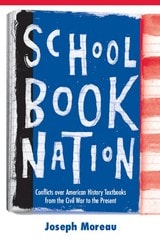
Schoolbook Nation
Conflicts over American History Textbooks from the Civil War to the PresentJoseph Moreau
University of Michigan Press, 2004
-Gary B. Nash, Director of the National Center for History in the Schools
Taking Frances FitzGerald's textbook study America Revised as a point of departure, Joseph Moreau in Schoolbook Nation challenges FitzGerald's premise that the 1960s were the beginning of the end of the glory days of American history education.
Moreau recounts how in the late twentieth century, cultural commentators such as historian Arthur Schlesinger Jr. and politician Newt Gingrich preached that a new identity crisis had shaken American history in the sixties, and that the grand unified view of our past had given way to various interest groups, who dismantled the old national narrative while demanding a more "inclusive" curriculum for their children.
Moreau discovered, however, that American history, while grand, has never been unified. Delving into more than 100 history books from the last 150 years, the author reveals that the efforts of pressure groups to influence the history curriculum are nearly as old as the mustiest textbook. "For those who would influence textbooks and teaching-Protestant elites in the 1870s, Irish-Americans in the 1920s, and conservative politicians today-the sky has always been falling," according to Moreau.
Schoolbook Nation offers a history lesson of its own: when the story of the past is written or rewritten, truth is often a victim. With its comprehensive treatment of the subjects of honesty and politics in the teaching of history, this is an essential book on the side of truth in a complex debate.
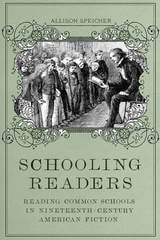
Schooling Readers
Reading Common Schools in Nineteenth-Century American FictionAllison Speicher
University of Alabama Press, 2016
Despite hailing from different regions with diverse histories and cultures, authors in all parts of the US produced remarkably similar school fictions. These stories, rather than offering idealized depictions of earnest schoolchildren in humble, rough-hewn schoolhouses, expose common schools as sites of both community bonding and social strife. These stories, Speicher shows, reflect surprisingly contemporary problems like school violence and apprehensions about assessments.
In four insightful sections, Speicher illuminates the plotlines that define the common school narrative: school exhibitions, in which common schools were opened to the public for a day of student performances; romances between teachers and students; violence against teachers; and teachers adopting their students. She offers rich examples from one hundred and thirty school stories by well-known authors such as Mark Twain, Bret Harte, Catharine Maria Sedgwick, and Edward Eggleston, as well as by educational reform pioneers such as C. W. Bardeen and long-forgotten contributors to nineteenth-century magazines.
By reading these fictions alongside the discourse of reformers like Horace Mann, Speicher illustrates the utility of fiction for uncovering the diverse reactions nineteenth-century Americans had to the expansion of public education as well as the role fiction played in shaping these responses. Throughout she maintains a dual focus, drawing on both literary and educational history, thereby offering much of value to those interested in either field.
Scrap Iron
Mark Jay Brewin
University of Utah Press, 2013
South Jersey farmland, flooded and made an island. Through landscapes and captivating visuals we begin Mark Jay Brewin’s debut collection of poems. Scrap Iron quickly and fluidly moves from this isolated plot of land—the poet’s childhood home—to the memories associated with that place, its people, and his youth. Throughout the volume, Brewin’s attention to sound and cadence offers the reader a burning exploration of beautiful imagery, while also providing a sharp contrast to the sometimes harsh and dark subject matter. He asks how one grows while remaining rooted. Confronting the age-old question of whether one can ever really go home again, Brewin’s soft, prayerful, and thoughtful approach provides the reader with an answer: Whether it is possible or not, the wish to return will always remain.
The intricacies and complexities of human relationships—especially between family members—are at the forefront of Scrap Iron. Brewin acknowledges the tender violence that often exists within familial relationships and highlights the fragility of not only these connections, but of the land, of memory, and of the future. While some poems may focus on tenuous ties, the tone of Brewin’s work as a whole is one of hopefulness. His poetry reminds us that to move is not to abandon, to question is not to criticize, and to love is to at once remember and forget.
Screening the Beats
Media Culture and the Beat SensibilityDavid Sterritt
Southern Illinois University Press, 2004
Film critic David Sterritt’s Screening the Beats: Media Culture and the Beat Sensibility showcases the social and aesthetic viewpoints of lynchpin Beat writers Jack Kerouac, William S. Burroughs, and Allen Ginsberg, juxtaposing their artistry with 1950s culture and achieving what Kerouac might have called a “bookmovie” riff. In clear prose, Sterritt captures the raw energy of the Beats and joins in their celebration of aesthetic freakishness. Tapping into the diversified spirit of the Beat Generation and its nuanced relationship with postwar American culture, Sterritt considers how the Beats variously foreground, challenge, and illuminate major issues in Hollywood and avant-garde film, critical and cultural theory, and music in the mass-media age.
Sterritt engages the creative and spiritual facets of the Beats, emulating their desire to evoke ephemeral aspects of human existence. Dealing with both high and low cultures as well as various subcultures, he highlights the complementary contributions to cultural creativity made by these authors. Screening the Beats grapples with paradoxes in Beat writing, in particular the conflict between spiritual purity and secular connectedness, which often materialized in the beatific bebop spontaneity, Zen-like transcendentalism, and plain hipster smarts that characterized the writings of Kerouac, Burroughs, and Ginsberg.
This interdisciplinary study tackles such topics as Ginsberg’s and Kerouac’s uses of racial and ethnic stereotypes prevalent in the popular movies of the 1950s era; the uses and limitations of improvisation as a creative tool in literature, jazz, and film; Kerouac’s use of cinematic metaphor to evoke Buddhist concepts; and intersections of the grotesque and carnivalesque in works as seemingly diverse as autobiographical novels by Kerouac, a radio play by Antonin Artaud, cultural theories of Gilles Deleuze and Félix Guattari, and the boisterous lunacy of Three Stooges farce. Deftly threading literary, musical, and cinematic works with a colorful array of critical theories, Screening the Beats illuminates the relationship between American culture and the imaginative forces of the Beat Generation.
Sea of Faith
John Brehm
University of Wisconsin Press, 2004
In a masterful blending of lyric and narrative, Sea of Faith ranges widely across interior states and external worlds. From the Sierra Nevadas to New York City subways, from an imagined friendship with Lao Tzu to a rueful meditation on Coney Island, from a comic and poignant classroom discussion of "Dover Beach" to a sexual fantasy spawned by a tedious poetry reading, John Brehm’s poems explore the human predicament with tenderness, compassion, and unforgettable humor.
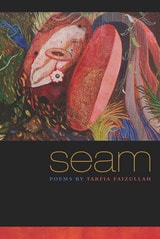
Seam
Tarfia Faizullah
Southern Illinois University Press, 2014
Winner, Great Lakes Colleges Association New Writers Award, 2014
Winner, Binghamton University Milt Kessler Poetry Book Award, 2015
Winner, Drake University Emerging Writers Award, 2015
The poems in this captivating collection weave beauty with violence, the personal with the historic as they recount the harrowing experiences of the two hundred thousand female victims of rape and torture at the hands of the Pakistani army during the 1971 Liberation War. As the child of Bangladeshi immigrants, the poet in turn explores her own losses, as well as the complexities of bearing witness to the atrocities these war heroines endured.
Throughout the volume, the narrator endeavors to bridge generational and cultural gaps even as the victims recount the horror of grief and personal loss. As we read, we discover the profound yet fragile seam that unites the fields, rivers, and prisons of the 1971 war with the poet’s modern-day hotel, or the tragic death of a loved one with the holocaust of a nation.
Moving from West Texas to Dubai, from Virginia to remote villages in Bangladesh and back again, the narrator calls on the legacies of Willa Cather, César Vallejo, Tomas Tranströmer, and Paul Celan to give voice to the voiceless. Fierce yet loving, devastating and magical at once, Seam is a testament to the lingering potency of memory and the bravery of a nation’s victims.
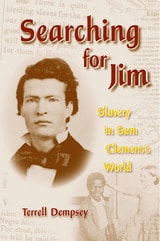
Searching for Jim
Slavery in Sam Clemens's WorldTerrell Dempsey
University of Missouri Press, 2005
During Sam’s earliest years, his father, John Marshall Clemens, had significant interaction with slaves. Newly discovered court records show the senior Clemens in his role as justice of the peace in Hannibal enforcing the slave ordinances. With the death of his father, young Sam was apprenticed to learn the printing and newspaper trade. It was in the newspaper that slaves were bought and sold, masters sought runaways, and life insurance was sold on slaves. Stories the young apprentice typeset helped Clemens learn to write in black dialect, a skill he would use throughout his writing, most notably in Huckleberry Finn.
Missourians at that time feared abolitionists across the border in Illinois and Iowa. Slave owners suspected every traveling salesman, itinerant preacher, or immigrant of being an abolition agent sent to steal slaves. This was the world in which Sam Clemens grew up. Dempsey also discusses the stories of Hannibal’s slaves: their treatment, condition, and escapes. He uncovers new information about the Underground Railroad, particularly about the role free blacks played in northeast Missouri.
Carefully reconstructed from letters, newspaper articles, sermons, speeches, books, and court records, Searching for Jim offers a new perspective on Clemens’s writings, especially regarding his use of race in the portrayal of individual characters, their attitudes, and worldviews. This fascinating volume will be valuable to anyone trying to measure the extent to which Clemens transcended the slave culture he lived in during his formative years and the struggles he later faced in dealing with race and guilt. It will forever alter the way we view Sam Clemens, Hannibal, and Mark Twain.
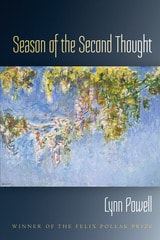
Season of the Second Thought
Lynn Powell
University of Wisconsin Press, 2017
Season of the Second Thought begins in a deep blue mood, longing to find words for what feels beyond saying. Lynn Powell's poems journey through the seasons, quarreling with the muse, reckoning with loss, questioning the heart and its "pedigree of Pentecost," and seeking out paintings in order to see inside the self. With their crisp observations and iridescent language, these poems accumulate the bounty of an examined life. These lines emerge from darkness into a shimmering equilibrium—witty, lush, and hard-won.
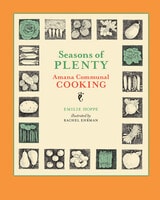
Seasons of Plenty
Amana Communal CookingEmilie Hoppe
University of Iowa Press, 2008
Seasons of Plenty provides colorful descriptions, folk stories, appealing photgraphs and illustrations, excerpts from journals and ledgers, recipes for good food like savory dumpling soup, mashed potatoes with browned bread crumbs, Sauerbraten, and feather light apple fritters.

Second Nature
An Environmental History of New EnglandRichard W. Judd
University of Massachusetts Press, 2014
Winner of the 2014 New England Historical Association's James P. Hanlan Book Award
Bounded by the St. Lawrence Valley to the north, Lake Champlain to the west, and the Gulf of Maine to the east, New England may be the most cohesive region in the United States, with a long and richly recorded history. In this book, Richard W. Judd explores the mix of ecological process and human activity that shaped that history over the past 12,000 years. He traces a succession of cultures through New England's changing postglacial environment down to the 1600s, when the arrival of Europeans interrupted this coevolution of nature and culture.
A long period of tension and warfare, inflected by a variety of environmental problems, opened the way for frontier expansion. This in turn culminated in a unique landscape of forest, farm, and village that has become the embodiment of what Judd calls “second nature”—culturally modified landscapes that have superseded a more pristine “first nature.”
In the early 1800s changes in farm production and industrial process transformed central New England, while burgeoning markets at the geographical margins brought rapid expansion in fishing and logging activities. Although industrialization and urbanization severed connections to the natural world, the dominant cultural expression of the age, Romanticism, provided new ways of appreciating nature in the White Mountains and Maine woods. Spurred by these Romantic images and by a long tradition of local resource management, New England gained an early start in rural and urban conservation.
In the 1970s environmentalists, inspired by a widespread appreciation for regional second-nature landscapes, moved quickly from battling pollution and preserving wild lands to sheltering farms, villages, and woodlands from intrusive development. These campaigns, uniquely suited to the region's land-use history, ecology, and culture, were a fitting capstone to the environmental history of New England.
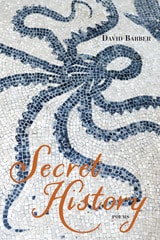
Secret History
PoemsDavid Barber
Northwestern University Press, 2020
In David Barber’s third collection of poetry, the past makes its presence felt from first to last. Drawing on a wealth of eclectic sources and crafted in an array of nonce forms, these poems range across vast stretches of cultural and natural history in pursuit of the forsaken, long-gone, and unsung.
Here is the stuff of lost time unearthed from all over: ballyhoo and murder ballad, the lacrimarium and the xylotheque, the Game of Robbers and the Indian Rope Trick, the obsolete o’o, the old-school word hoard, sunshowers and beaters and breaker boys. Here, to mark the twilight of print and type, are gleanings and borrowings from a mixed bag of throwback bound volumes: The Magic Moving Picture Book, Mandeville’s Travels, The Golden Bough, Franklin Arithmetic, The Millennial Laws of the Shakers, A Conjuror’s Confessions.
Here too are guiding spirits whose like will not pass this way again: Cab Calloway at the Cotton Club; Henry Walter Bates in darkest Amazon; George Catlin among the Choctaw; Little Nemo in Slumberland; Yogi Berra in all his oracular glory. Reveling in vernacular lingo of every vintage even while brooding on dark ages without end, Secret History chronicles a world of long shadows and distant echoes that bears more than a passing resemblance to our own.
Secret Spaces of Childhood
Elizabeth Goodenough, Editor
University of Michigan Press, 2003
Secretaries of the Moon
The Letters of Wallace Stevens and José Rodriguez FeoBeverly Coyle and Alan Filreis, eds.
Duke University Press, 1986
Coyle and Filreis present the entire extant correspondence between the two men. The fifty-one Rodriguez Feo letters and ten of the numerous Stevens letters are printed here for the first time, and the exchange between the two is unusually complete. The work includes a critical introduction and complete annotation of the letters.
Secular Scriptures
Modern Theological Poetics in the Wake of DanteWilliam Franke
The Ohio State University Press, 2015
Secular Scriptures examines, through its own original speculative outlook, some of the most compelling exemplars of religious-poetic revelation in modern Western literature. The essays taken as an ensemble revolve around and are bookended by Dante, but they also explore the work of Chaucer, Shakespeare, Milton, Blake, Leopardi, Baudelaire, Dickinson, and Yeats. Looking both backward and forward from the vantage of Dante, Franke explores the roots of secularized religious vision in antiquity and the Middle Ages, even as he also looks forward toward its fruits in modern poetry and poetics. Ultimately, Franke’s analyses demonstrate the possibilities opened by understanding literature as secularized religious revelation.
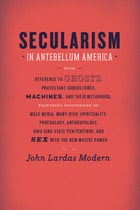
Secularism in Antebellum America
John Lardas Modern
University of Chicago Press, 2011
Ghosts. Railroads. Sing Sing. Sex machines. These are just a few of the phenomena that appear in John Lardas Modern’s pioneering account of religion and society in nineteenth-century America. This book uncovers surprising connections between secular ideology and the rise of technologies that opened up new ways of being religious. Exploring the eruptions of religion in New York’s penny presses, the budding fields of anthropology and phrenology, and Moby-Dick, Modern challenges the strict separation between the religious and the secular that remains integral to discussions about religion today.
Modern frames his study around the dread, wonder, paranoia, and manic confidence of being haunted, arguing that experiences and explanations of enchantment fueled secularism’s emergence. The awareness of spectral energies coincided with attempts to tame the unruly fruits of secularism—in the cultivation of a spiritual self among Unitarians, for instance, or in John Murray Spear’s erotic longings for a perpetual motion machine. Combining rigorous theoretical inquiry with beguiling historical arcana, Modern unsettles long-held views of religion and the methods of narrating its past.
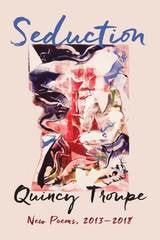
Seduction
New Poems, 2013-2018Quincy Troupe
Northwestern University Press, 2019
time is a bald eagle, a killer soaring high in the blue, / music to men
dodging bullets in speeding cars, / knew death, hoped it'd never come . . .
In this collection we are seduced by Troupe's opus. This is the poet's art laid bare. He is our "Eye." Visions of the transatlantic slave trade, portraits of American violence, pop culture, and historical voices are the lyrical relics in Troupe's masterful verse. One of American literature's most important rhythmical artists, Troupe has created a chronicle reaching through history for the collective "I/Eye" that is all of us.
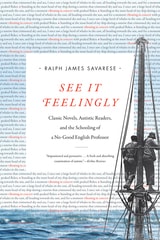
See It Feelingly
Classic Novels, Autistic Readers, and the Schooling of a No-Good English ProfessorRalph James Savarese
Duke University Press, 2018
Since the 1940s researchers have been repeating claims about autistic people's limited ability to understand language, to partake in imaginative play, and to generate the complex theory of mind necessary to appreciate literature. In See It Feelingly Ralph James Savarese, an English professor whose son is one of the first nonspeaking autistics to graduate from college, challenges this view.
Discussing fictional works over a period of years with readers from across the autism spectrum, Savarese was stunned by the readers' ability to expand his understanding of texts he knew intimately. Their startling insights emerged not only from the way their different bodies and brains lined up with a story but also from their experiences of stigma and exclusion.
For Mukhopadhyay Moby-Dick is an allegory of revenge against autism, the frantic quest for a cure. The white whale represents the autist's baffling, because wordless, immersion in the sensory. Computer programmer and cyberpunk author Dora Raymaker skewers the empathetic failings of the bounty hunters in Philip K. Dick's Do Androids Dream of Electric Sheep? Autistics, some studies suggest, offer instruction in embracing the nonhuman. Encountering a short story about a lonely marine biologist in Antarctica, Temple Grandin remembers her past with an uncharacteristic emotional intensity, and she reminds the reader of the myriad ways in which people can relate to fiction. Why must there be a norm?
Mixing memoir with current research in autism and cognitive literary studies, Savarese celebrates how literature springs to life through the contrasting responses of unique individuals, while helping people both on and off the spectrum to engage more richly with the world.
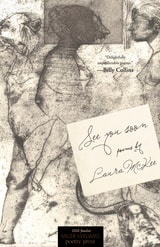
See You Soon
PoemsLaura McKee
University of Arkansas Press, 2016
Finalist, 2016 Miller Williams Poetry Prize
The poems in See You Soon explore the limits of metaphor and language as their voices speak from the beauty and strangeness of daily experience, testing how we make sense of ourselves to ourselves and to one another. There is love in these poems, there is failure and absurdity. The characters, in their various situations and guises, find themselves outside of time, space, and identity—at sunset, in an airport, outside a hookah lounge, as a birthday party clown, after a flood. Its message is the invitation of the title. See You Soon is a statement of the complexity of our mutual direction in time, of camaraderie along the way.
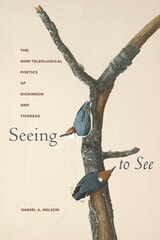
Seeing to See
The Non-Teleological Poetics of Dickinson and ThoreauDaniel A. Nelson
University of Massachusetts Press, 2025
Seeing to See focuses on two American authors who are notoriously hard to classify: Emily Dickinson and Henry David Thoreau. Dickinson proves challenging due to her short and obscure poems and Thoreau due to his insistence on capturing even the most seemingly mundane information. Daniel A. Nelson uncovers evidence that the works of these authors are often intentionally and painstakingly without aim or purpose. He argues that in their texts there is in fact an avoidance of teleological structures of writing and thinking, whereby a thing’s—or a word’s, or a text’s—value hinges on its relation to the world or other contexts.
In Nelson’s reading, Thoreau and Dickinson seem to be able to set aside all thought of distinct personal and professional goals, through which readers typically try to make an overarching sense out of, and to derive some form of profit from, disparate experiences, events, actions, and feelings. Further, both authors seem to be able to get outside of the worldview according to which the value and meaning of something, be it a natural object, a word, or an experience, is a function of its participation in a larger system. Examples of such systems include an ecosystem, taxonomic system, or syntactic system; a writer’s career, or life, or philosophy; even a single poem or journal entry. In the absence of such connections to broader categorical spheres, both writers force readers to contemplate the ineffable, constantly changing relation between words and the natural world. This contemporary reading of two iconic writers reframes their work and how readers think of nature, accepting, as these authors did, the potential freedom of the unknown.
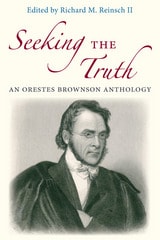
Seeking the Truth
Richard Reinsch II
Catholic University of America Press, 2016
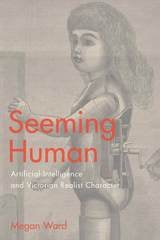
Seeming Human
Artificial Intelligence and Victorian Realist CharacterMegan Ward
The Ohio State University Press, 2018
In Seeming Human, Megan Ward contends that mid-twentieth-century versions of artificial intelligence (AI) offer a theory of verisimilitude omitted by traditional histories of character, which often focus on the development of interiority and the shift from “flat” to “round” characters in the Victorian era. Instead, by reading character through AI, Megan Ward’s Seeming Human argues that routinization, predictability, automation, and even flatness are all features of realist characters.
Early artificial intelligence movements such as cybernetics, information theory, and the Turing test define ways of seeming—rather than being—human. Using these theories of verisimilitude to read Victorian novelists such as Elizabeth Gaskell, Margaret Oliphant, Anthony Trollope, Thomas Hardy, and Henry James, Seeming Human argues that mechanicity has been perceived as anti-realist because it is the element that we least want to identify as human. Because AI produces human-like intelligence, it makes clear that we must actually turn to machines in order to understand what makes realist characters seem so human.

Selected Letters of Walt Whitman
Edwin Haviland Miller
University of Iowa Press, 1990
There has never been an edition of the selected letters of Walt Whitman, a remarkable fact considering how accustomed we are to becoming acquainted with major writers through their letters. Now Edwin Haviland Miller, editor of the six-volume collected writings of Whitman, has used his intimate knowledge of the "good gray poet's" correspondence to produce this revealing selection of 250 letters, introduced and annotated concisely and evocatively. Whitman in these letters is simple, direct, colloquial, adding a counterpoint to his artistic voice and persona as a poet.
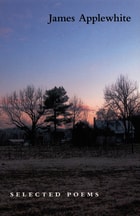
Selected Poems
James Applewhite
Duke University Press, 2005
In impeccable and surprising language, Applewhite depicts the social conventions, changes, frictions, and continuities of small southern towns. He celebrates that which he values as decent and life-enhancing, and his veneration is perhaps most apparent in his response to the natural world, to the rivers and trees and flowers. Yet Applewhite’s love for his native land is not straightforward. His verse chronicles his conflicted feelings for the region that gave him the initial, evocative language of place and immersed him in a blazing sensory world while it also bequeathed the distortions, denials, and prejudices that make it so painful a labyrinth. Rendering troubled legacies as well as profound decency, Applewhite reveals the universally human in a distinctively local voice, within dramatic and mundane moments of hope and sorrow and faith.