Results by title
664 books match the query 'Ancient & Classical' and 42 start with s
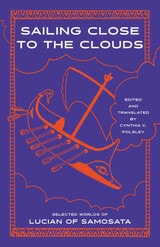
Sailing Close to the Clouds
Selected Worlds of Lucian of SamosataLucian of Samosata
University of Chicago Press, 0
Approachable translations and discussions of Lucian that reveal his world-building, world-bending, and multiversal thinking.
Lucian of Samosata was ahead of his time. A rhetorician and writer active in the second century CE, he was one of the earliest known worldbuilders and science-fiction enthusiasts. Popular and prolific in antiquity—more than eighty texts attributed to him have come down to us today, including satires, dialogues, and part of a fictional work called True History—Lucian crafted astonishing tales that unfold on the surface of the moon or other planets, high above in Earth’s atmosphere, or through the eyes of underworld inhabitants or other entities who view mortal humans as otherworldly beings.
Ideal for readers interested in science fiction, fantasy, and mythology, this accessible collection offers a guided journey through Lucian’s many worlds. Bringing together fresh vernacular translations of eight works with substantial discussion, this selection showcases Lucian as a proto-multiversal thinker, presenting multiform narratives that herald developments in modern genres ranging from literature and film to gaming and fan fiction. Translator and editor Cynthia Polsley introduces each with a short excerpt from another piece of classical literature, showing how other ancient authors—including Homer, Ovid, and Vergil—influenced Lucian’s literary landscapes or were inspired by him in turn.
Satire and the Threat of Speech
Horace's Satires, Book 1Catherine M. Schlegel
University of Wisconsin Press, 2006
Satires and Epistles
Horace
University of Chicago Press, 1959
The Satires and Epistles spans the poet's career as a satirist, critic, and master of lyric poetry, as man of the world, friend of the great, and relentless enemy of the mediocre. "Horace," writes translator Smith Palmer Bovie, "is the best antidote in the world for anxiety. His Satires and Epistles demonstrate the good-humored freedom of a man who has cheerfully assumed the responsibility for making his own life not so much a 'success' as the occasion for a true enjoyment of virtue and knowledge." Bovie's impeccable translation, along with Clancy's edition of the Odes and Epodes, offers the reader a complete and modern Horace.
Seeming and Being in Plato’s Rhetorical Theory
Robin Reames
University of Chicago Press, 2018
Robin Reames’s Seeming & Being in Plato’s Rhetorical Theory marks a shift in Plato scholarship. Reames argues that an appropriate understanding of rhetorical theory in Plato’s dialogues illuminates how he developed the technical vocabulary needed to construct the very distinctions between seeming and being that separate true from false speech. By engaging with three key movements of twentieth- and twenty-first-century Plato scholarship—the rise and subsequent marginalization of “orality and literacy theory,” Heidegger’s controversial critique of Platonist metaphysics, and the influence of literary or dramatic readings of the dialogues—Reames demonstrates how the development of Plato’s rhetorical theory across several of his dialogues (Gorgias, Phaedrus, Protagoras, Theaetetus, Cratylus, Republic, and Sophist) has been both neglected and misunderstood.
Selected Epigrams
Martial, Translated with notes by Susan McLean, Introduction by Marc Kleijwegt
University of Wisconsin Press, 2014
Self
Ancient and Modern Insights about Individuality, Life, and DeathRichard Sorabji
University of Chicago Press, 2006
Seneca
Fifty Letters of a Roman StoicLucius Annaeus Seneca
University of Chicago Press, 2021
“There is only one course of action that can make you happy. . . . rejoice in what is yours. What is it that is yours? Yourself; the best part of you.”
In the year 62, citing health issues, the Roman philosopher Seneca withdrew from public service and devoted his time to writing. His letters from this period offer a window onto his experience as a landowner, a traveler, and a man coping with the onset of old age. They share his ideas on everything from the treatment of enslaved people to the perils of seafaring, and they provide lucid explanations for many key points of Stoic philosophy.
This selection of fifty letters brings out the essentials of Seneca’s thought, with much that speaks directly to the modern reader. Above all, they explore the inner life of the individual who proceeds through philosophical inquiry from a state of emotional turmoil to true friendship, self-determination, and personal excellence.
Setting Plato Straight
Translating Ancient Sexuality in the RenaissanceTodd W. Reeser
University of Chicago Press, 2015
In Setting Plato Straight, Todd W. Reeser undertakes the first sustained and comprehensive study of Renaissance textual responses to Platonic same-sex sexuality. Reeser mines an expansive collection of translations, commentaries, and literary sources to study how Renaissance translators transformed ancient eros into non-erotic, non-homosexual relations. He analyzes the interpretive lenses translators employed and the ways in which they read and reread Plato’s texts. In spite of this cleansing, Reeser finds surviving traces of Platonic same-sex sexuality that imply a complicated, recurring process of course-correction—of setting Plato straight.
Shadows of the Enlightenment
Tragic Drama during Europe’s Age of ReasonEdited by Blair Hoxby
The Ohio State University Press, 2022
Shakespeare's Rome
Republic and EmpirePaul A. Cantor
University of Chicago Press, 2017
In Shakespeare’s Rome, Cantor examines the political settings of Shakespeare’s Roman plays, Coriolanus and Antony and Cleopatra, with references as well to Julius Caesar. Cantor shows that Shakespeare presents a convincing portrait of Rome in different eras of its history, contrasting the austere republic of Coriolanus, with its narrow horizons and martial virtues, and the cosmopolitan empire of Antony and Cleopatra, with its “immortal longings” and sophistication bordering on decadence.
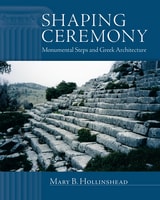
Shaping Ceremony
Monumental Steps and Greek ArchitectureMary B. Hollinshead
University of Wisconsin Press, 2014
The heart of the study is a close reading of thirty-eight sites with monumental steps from the sixth through second centuries B.C. Organized by century, the book tracks the development of built pathways and grandstands for crowds of worshippers as evidence of the Greeks' increasing awareness of the power of architecture to shape behavior and concentrate social energy. With photographs and illustrations of plans, Shaping Ceremony offers a clear account of how Greeks' adaptation of terrain for human use promoted social cohesion and integrated architectural compositions.
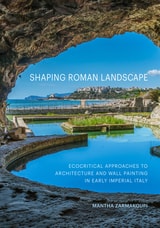
Shaping Roman Landscape
Ecocritical Approaches to Architecture and Wall Painting in Early Imperial ItalyMantha Zarmakoupi
J. Paul Getty Trust, The, 0
Landscape emerged as a significant theme in the Roman Late Republican and Early Imperial periods. Writers described landscape in texts and treatises, its qualities were praised and sought out in everyday life, and contemporary perceptions of the natural and built environment, as well as ideas about nature and art, were intertwined with architectural and decorative trends.
This illustrated volume examines how representations of real and depicted landscapes, and the merging of both in visual space, contributed to the creation of novel languages of art and architecture. Drawing on a diverse body of archaeological, art historical, and literary evidence, this study applies an ecocritical lens that moves beyond the limits of traditional iconography. Chapters consider, for example, how garden designs and paintings appropriated the cultures and ecosystems brought under Roman control and the ways miniature landscape paintings chronicled the transformation of the Italian shoreline with colonnaded villas, pointing to the changing relationship of humans with nature. Making a timely and original contribution to current discourses on ecology and art and architectural history, Shaping Roman Landscape reveals how Roman ideas of landscape, and the decorative strategies at imperial domus and villa complexes that gave these ideas shape, were richly embedded with meanings of nature, culture, and labor.
Shipwrecked
Disaster and Transformation in Homer, Shakespeare, Defoe, and the Modern WorldJames V. Morrison
University of Michigan Press, 2014
The recurrent treatment of shipwrecks in the creative arts demonstrates an enduring fascination with this archetypal scene: a shipwreck survivor confronting the elements. It is remarkable, for example, that the characters in the 2004 television show Lost share so many features with those from Homer’s Odyssey and Shakespeare’s The Tempest.
For survivors who are stranded on an island for some period of time, shipwrecks often present the possibility of a change in political and social status—as well as romance and even paradise. In each of the major shipwreck narratives examined, the poet or novelist links the castaways’ arrival on a new shore with the possibility of a new sort of life. Readers will come to appreciate the shift in attitude toward the opportunities offered by shipwreck: older texts such as the Odyssey reveals a trajectory of returning to the previous order. In spite of enticing new temptations, Odysseus—and some of the survivors in The Tempest—revert to their previous lives, rejecting what many might consider paradise. Odysseus is reestablished as king; Prospero travels back to Milan. In such situations, we may more properly speak of potential transformations. In contrast, many recent shipwreck narratives instead embrace the possibility of a new sort of existence. That even now the shipwreck theme continues to be treated, in multiple media, testifies to its long-lasting appeal to a very wide audience.
Silence in Catullus
Benjamin Eldon Stevens
University of Wisconsin Press, 2014
Silenced Voices
The Poetics of Speech in OvidBartolo A. Natoli
University of Wisconsin Press, 2021
Bartolo A. Natoli provides a unique cross-reading of these works. He examines how the motifs and ideas articulated in the Metamorphoses provide the template for the poet's representation of his own exile. Ovid depicts his transformation with an eye toward memory, reformulating how his exile would be perceived by his audience. His exilic poems are an attempt to recover the voice he lost and to reconnect with the community of Rome.
Sir Gawain and the Green Knight
A Close Verse TranslationLarry D. Benson
West Virginia University Press, 2012
Sir Gawain and the Green Knight is a late fourteenth-century Middle English alliterative romance outlining an adventure of Sir Gawain, a knight of King Arthur’s Round Table. In this poem, Sir Gawain accepts a challenge from a mysterious green warrior. In a struggle to uphold his oath along this quest, Gawain demonstrates chivalry, loyalty, and honor. This new verse translation of the most popular and enduring fourteenth century poem to survive to the present offers students an accessible way of approaching the literature of medieval England without losing the flavor of the original writing. The language of Sir Gawain presents considerable problems to present-day readers as it is written in the West Midlands dialect before English became standardized. With a foreword by David Donoghue, the close verse translation includes facing pages of the original fourteenth-century text and its modern translation.
Medieval European Studies Series, Volume 13
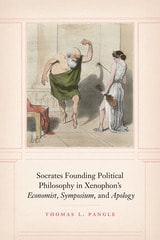
Socrates Founding Political Philosophy in Xenophon's "Economist", "Symposium", and "Apology"
Thomas L. Pangle
University of Chicago Press, 2020
Unlike the Socrates of Plato, Xenophon’s Socrates is more complicated and human, an individual working out the problem of what it means to live well and virtuously. While the Memorabilia defends Socrates by stressing his likeness to conventionally respectable gentlemen, Xenophon’s remaining Socratic texts offer a more nuanced characterization by highlighting how Socrates also diverges from conventions of gentlemanliness in his virtues, behaviors, and peculiar views of quotidian life and governmental rule. One question threads through the three writings: Which way of life best promotes human existence, politics, and economics—that of the Socratic political philosopher with his philosophic virtues or that of the gentleman with his familial, civic, and moral virtues? In uncovering the nuances of Xenophon’s approach to the issue in the Economist, Symposium, and Apology, Pangle’s book cements the significance of these writings for the field and their value for shaping a fuller conception of just who Socrates was and what he taught.
Socrates among Strangers
Joseph P. Lawrence
Northwestern University Press, 2015
In Socrates among Strangers, Joseph P. Lawrence reclaims the enigmatic sage from those who have seen him either as a prophet of science, seeking the security of knowledge, or as a wily actor who shed light on the dangerous world of politics while maintaining a prudent distance from it. The Socrates Lawrence seeks is the imprudent one, the man who knew how to die.
The institutionalization of philosophy in the modern world has come at the cost of its most vital concern: the achievement of life wisdom. Those who have ceased to grow (those who think they know) close their ears to the wisdom of strangers—and Socrates, who stood face to face with death, is the archetypal stranger. His avowal of ignorance, Lawrence suggests, is more needed than ever in an age defined by technical mastery and expert knowledge.
Socrates and Aristophanes
Leo Strauss
University of Chicago Press, 1996
"Strauss gives us an impressive addition to his life's work—the recovery of the Great Tradition in political philosophy. The problem the book proposes centers formally upon Socrates. As is typical of Strauss, he raises profound issues with great courage. . . . [He addresses] a problem that has been inherent in Western life ever since [Socrates'] execution: the tension between reason and religion. . . . Thus, we come to Aristophanes, the great comic poet, and his attack on Socrates in the play The Clouds. . . [Strauss] translates it into the basic problem of the relation between poetry and philosophy, and resolves this by an analysis of the function of comedy in the life of the city." —Stanley Parry, National Review
Socrates and the Fat Rabbis
Daniel Boyarin
University of Chicago Press, 2009
Socrates and the Gods
How to Read Plato's Euthyphro, Apology, and CritoNalin Ranasinghe
St. Augustine's Press, 2012
Socrates and the Jews
Hellenism and Hebraism from Moses Mendelssohn to Sigmund FreudMiriam Leonard
University of Chicago Press, 2012
"What has Athens to do with Jerusalem?” Asked by the early Christian Tertullian, the question was vigorously debated in the nineteenth century. While classics dominated the intellectual life of Europe, Christianity still prevailed and conflicts raged between the religious and the secular. Taking on the question of how the glories of the classical world could be reconciled with the Bible, Socrates and the Jews explains how Judaism played a vital role in defining modern philhellenism.
Socrates in the Underworld
On Plato's GorgiasNalin Ranasinghe
St. Augustine's Press, 2009
Socrates' Children
Ancient: The 100 Greatest PhilosophersPeter Kreeft
St. Augustine's Press, 2019
This is the first of a four-volume history of philosophy . . . on ancient, medieval, modern, and contemporary philosophy. After the fourth volume is produced in paper, a one-volume clothbound edition, containing all four paperbound editions, will be published.
Kreeft focuses on the “big ideas” that have influenced present people and present times, and includes relevant biographical data, proportionate to its importance for each thinker. Moreover, the aim of the work is to stimulate philosophizing, controversy, and argument. It uses ordinary language and logic, not jargon and symbolic logic, and it is commonsensical (like Aristotle) and existential in the sense that it sees philosophy as something to be lived and experienced in life. Philosophy, after all, is not about philosophy but reality . . . about wisdom, life and death, good and evil, and God.
Kreeft seeks to be simple and direct and clear. But it is not dumbed down and patronizing. It will stretch the reader, but it is meant for beginners, not just scholars. It can be used for college classes or do-it-yourselfers. It emphasizes surprises; remember, “philosophy begins in wonder.” And it includes visual aids: charts, cartoons, line drawings, and drawings of each philosopher.
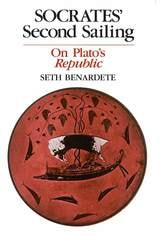
Socrates' Second Sailing
On Plato's RepublicSeth Benardete
University of Chicago Press, 1989
When the winds fall, the sailor picks up his oars, no longer relying on help outside his own power. This “second sailing,” according to the distinguished classicist Seth Benardete, is the essence of Socratic philosophizing
In this section-by-section commentary on Plato's most important dialogue, Benardete argues that the Republic is such a self-powered, holistic analysis of the beautiful, the good, and the just. This book provides a fresh interpretation of the Republic and a new understanding of philosophy as practiced by Plato and Socrates.
Sophistry and Political Philosophy
Protagoras' Challenge to SocratesRobert C. Bartlett
University of Chicago Press, 2016
With Sophistry and Political Philosophy, Robert C. Bartlett provides the first close reading of Plato’s two-part presentation of Protagoras. In the “Protagoras,” Plato sets out the sophist’s moral and political teachings, while the “Theaetetus,” offers a distillation of his theoretical and epistemological arguments. Taken together, the two dialogues demonstrate that Protagoras is attracted to one aspect of conventional morality—the nobility of courage, which in turn is connected to piety. This insight leads Bartlett to a consideration of the similarities and differences in the relationship of political philosophy and sophistry to pious faith. Bartlett’s superb exegesis offers a significant tool for understanding the history of philosophy, but, in tracing Socrates’s response to Protagoras’ teachings, Bartlett also builds toward a richer understanding of both ancient sophistry and what Socrates meant by “political philosophy.”
Sophocles I
The Theban Plays: Antigone, Oedipus the King, Oedipus at ColonusEdited and Translated by Mark Griffith, Glenn W. Most, David Grene, and Richmond Lattimore
University of Chicago Press, 2013
Sophocles I contains the plays “Antigone,” translated by Elizabeth Wyckoff; “Oedipus the King,” translated by David Grene; and “Oedipus at Colonus,” translated by Robert Fitzgerald.
Many years ago, the University of Chicago Press undertook a momentous project: a new translation of the Greek tragedies that would be the ultimate resource for teachers, students, and readers. They succeeded. Under the expert management of eminent classicists David Grene and Richmond Lattimore, those translations combined accuracy, poetic immediacy, and clarity of presentation to render the surviving masterpieces of Aeschylus, Sophocles, and Euripides in an English so lively and compelling that they remain the standard translations. The updated third editions of these classic works were designed to ensure that our Greek tragedies remain the leading English-language versions throughout the twenty-first century.
In this highly anticipated third edition, Mark Griffith and Glenn W. Most have carefully updated the translations to bring them even closer to the ancient Greek while retaining the vibrancy for which our English versions are famous. This edition also includes brand-new translations of Euripides’ Medea, The Children of Heracles, Andromache, and Iphigenia among the Taurians, fragments of lost plays by Aeschylus, and the surviving portion of Sophocles’s satyr-drama The Trackers. New introductions for each play offer essential information about its first production, plot, and reception in antiquity and beyond. In addition, each volume includes an introduction to the life and work of its tragedian, as well as notes addressing textual uncertainties and a glossary of names and places mentioned in the plays.
In addition to the new content, the volumes have been reorganized both within and between volumes to reflect the most up-to-date scholarship on the order in which the plays were originally written. The result is a set of handsome paperbacks destined to introduce new generations of readers to these foundational works of Western drama, art, and life.
Sophocles II
Ajax, The Women of Trachis, Electra, Philoctetes, The TrackersEdited by Mark Griffith, Glenn W. Most, David Grene, and Richmond Lattimore
University of Chicago Press, 2013
Sophocles II contains the plays “Ajax,” translated by John Moore; “The Women of Trachis,” translated by Michael Jameson; “Electra,” translated by David Grene; “Philoctetes,” translated by David Grene; and “The Trackers,” translated by Mark Griffith.
Many years ago, the University of Chicago Press undertook a momentous project: a new translation of the Greek tragedies that would be the ultimate resource for teachers, students, and readers. They succeeded. Under the expert management of eminent classicists David Grene and Richmond Lattimore, those translations combined accuracy, poetic immediacy, and clarity of presentation to render the surviving masterpieces of Aeschylus, Sophocles, and Euripides in an English so lively and compelling that they remain the standard translations. The updated third editions of these classic works were designed to ensure that our Greek tragedies remain the leading English-language versions throughout the twenty-first century.
In this highly anticipated third edition, Mark Griffith and Glenn W. Most have carefully updated the translations to bring them even closer to the ancient Greek while retaining the vibrancy for which our English versions are famous. This edition also includes brand-new translations of Euripides’ Medea, The Children of Heracles, Andromache, and Iphigenia among the Taurians, fragments of lost plays by Aeschylus, and the surviving portion of Sophocles’s satyr-drama The Trackers. New introductions for each play offer essential information about its first production, plot, and reception in antiquity and beyond. In addition, each volume includes an introduction to the life and work of its tragedian, as well as notes addressing textual uncertainties and a glossary of names and places mentioned in the plays.
In addition to the new content, the volumes have been reorganized both within and between volumes to reflect the most up-to-date scholarship on the order in which the plays were originally written. The result is a set of handsome paperbacks destined to introduce new generations of readers to these foundational works of Western drama, art, and life.
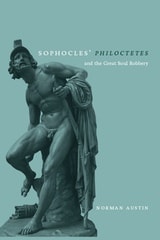
Sophocles' Philoctetes and the Great Soul Robbery
Norman Austin
University of Wisconsin Press, 2011
Norman Austin brings both keen insight and a life-long engagement with his subject to this study of Sophocles’ late tragedy Philoctetes, a fifth-century BCE play adapted from an infamous incident during the Trojan War. In Sophocles’ “Philoctetes” and the Great Soul Robbery, Austin examines the rich layers of text as well as context, situating the play within the historical and political milieu of the eclipse of Athenian power. He presents a study at once of interest to the classical scholar and accessible to the general reader. Though the play, written near the end of Sophocles’ career, is not as familiar to modern audiences as his Theban plays, Philoctetes grapples with issues—social, psychological, and spiritual—that remain as much a part of our lives today as they were for their original Athenian audience.
Speaking the Truth about Oneself
Lectures at Victoria University, Toronto, 1982Michel Foucault
University of Chicago Press, 2021
Just before the summer of 1982, French philosopher Michel Foucault gave a series of lectures at Victoria University in Toronto. In these lectures, which were part of his project of writing a genealogy of the modern subject, he is concerned with the care and cultivation of the self, a theme that becomes central to the second, third, and fourth volumes of his History of Sexuality. Foucault had always been interested in the question of how constellations of knowledge and power produce and shape subjects, and in the last phase of his life, he became especially interested not only in how subjects are formed by these forces but in how they ethically constitute themselves.
In this lecture series and accompanying seminar, Foucault focuses on antiquity, starting with classical Greece, the early Roman empire, and concluding with Christian monasticism in the fourth and fifth centuries AD. Foucault traces the development of a new kind of verbal practice—“speaking the truth about oneself”—in which the subject increasingly comes to be defined by its inner thoughts and desires. He deemed this new form of “hermeneutical” subjectivity important not just for historical reasons, but also due to its enduring significance in modern society.
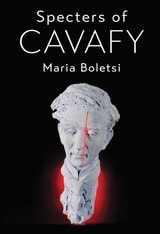
Specters of Cavafy
Maria Boletsi
University of Michigan Press, 2024
Winner of the European Society of Modern Greek Studies Best Monograph Award
The Greek Alexandrian poet C. P. Cavafy (1863–1933) has been recognized as a central figure in European modernism and world literature. His poetry explored the conditions for animating the past and making lost worlds or people haunt the present. Yet he also described himself as “a poet of the future generations.” Indeed, his writings address concerns and desires that permeate the twentieth and twenty-first centuries. How does poetry concerned with the past, memory, loss, and death, carry futurity? How does it haunt, and how is it haunted by, future presents?
Specters of Cavafy broaches these questions by proposing spectral poetics as a novel approach to Cavafy’s work. Drawing from theorizations of specters and haunting, it develops spectrality as a lens for revisiting Cavafy’s poetry and prose, fiction and nonfiction, as well as his poetry’s bearing on our present. By examining Cavafy’s spectral poetics, the book’s first part shows how conjurations work in his writings, and how the spectral permeates the entanglement of modernity and haunting, and of irony and affect. The second part traces the afterlives of specific poems in the Western imagination since the 1990s, in Egypt’s history of debt and colonization, and in Greece during the country’s recent debt crisis. Beyond its original contribution to Cavafy studies, the book proposes tools and modes of reading that are broadly applicable in literary and cultural studies.
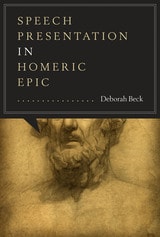
Speech Presentation in Homeric Epic
By Deborah Beck
University of Texas Press, 2012
The Iliad and the Odyssey are emotional powerhouses largely because of their extensive use of direct speech. Yet this characteristic of the Homeric epics has led scholars to underplay the poems’ use of non-direct speech, the importance of speech represented by characters, and the overall sophistication of Homeric narrative as measured by its approach to speech representation. In this pathfinding study by contrast, Deborah Beck undertakes the first systematic examination of all the speeches presented in the Homeric poems to show that Homeric speech presentation is a unified system that includes both direct quotation and non-direct modes of speech presentation.
Drawing on the fields of narratology and linguistics, Beck demonstrates that the Iliad and the Odyssey represent speech in a broader and more nuanced manner than has been perceived before, enabling us to reevaluate our understanding of supposedly “modern” techniques of speech representation and to refine our idea of where Homeric poetry belongs in the history of Western literature. She also broadens ideas of narratology by connecting them more strongly with relevant areas of linguistics, as she uses both to examine the full range of speech representational strategies in the Homeric poems. Through this in-depth analysis of how speech is represented in the Homeric poems, Beck seeks to make both the process of their composition and the resulting poems themselves seem more accessible, despite pervasive uncertainties about how and when the poems were put together.
Speeches from Athenian Law
Edited by Michael Gagarin
University of Texas Press, 2011
This is the sixteenth volume in the Oratory of Classical Greece. This series presents all of the surviving speeches from the late fifth and fourth centuries BC in new translations prepared by classical scholars who are at the forefront of the discipline. These translations are especially designed for the needs and interests of today's undergraduates, Greekless scholars in other disciplines, and the general public.
Classical oratory is an invaluable resource for the study of ancient Greek life and culture. The speeches offer evidence on Greek moral views, social and economic conditions, political and social ideology, law and legal procedure, and other aspects of Athenian culture that have recently been attracting particular interest: women and family life, slavery, and religion, to name just a few.
This volume assembles twenty-two speeches previously published in the Oratory series. The speeches are taken from a wide range of different kinds of cases—homicide, assault, commercial law, civic status, sexual offenses, and others—and include many of the best-known speeches in these areas. They are Antiphon, Speeches 1, 2, 5, and 6; Lysias 1, 3, 23, 24, and 32; Isocrates 17, 20; Isaeus 1, 7, 8; Hyperides 3; Demosthenes 27, 35, 54, 55, 57, and 59; and Aeschines 1. The volume is intended primarily for use in teaching courses in Greek law or related areas such as Greek history. It also provides the introductions and notes that originally accompanied the individual speeches, revised slightly to shift the focus onto law.
Stealing from the Gods
Temple Robbery in the Roman ImaginationIsabel K. Köster
University of Michigan Press, 2026
Ancient authors including Cicero, Caesar, Livy, Appian, and Pausanias present isolated, grotesque individuals whose actions have no bearing on the conduct of Romans as a whole, rendering temple robbery not a matter of collective responsibility, but of individual moral failure. By revealing how narratives of temple robbery are constructed from a literary perspective and how they inform discourses about military conquest and imperial rule, Isabel K. Köster shines a new light on how the Romans coped with the more pernicious aspects of their empire.
Stock Characters Speaking
Eight Libanian Declamations Introduced and TranslatedRobert J. Penella
University of Michigan Press, 2023
Declamations were composed and orally delivered in the Roman Empire by sophists, or teachers of rhetoric, of whom the Greek-speaking Libanius was one of the most distinguished. Stock Characters Speaking may be thought of as emerging from three developments of recent decades: an explosive interest in late antiquity, a newly sympathetic interest in rhetoric (including ancient declamation), and a desire to bring Libanius’s massive corpus into English and other modern languages.
In this book, author Robert J. Penella translates eight of Libanius’s declamations: 29, 30, 34, 35, 37, 45, 46, 47, and, in an appendix, the thirteenth-century Gregory of Cyprus’s response to Declamation 34. Each translation is accompanied by an introduction, in which Penella examines the themes, structure, and the stasis, or key issue, of the declamations. Figures who appear in the translated declamations include a parasite who has lost his patron, a man envious of his rich neighbor, a miser’s son, a poor man willing to die for his city, a rich war-hero accused of aiming at tyranny, and a convict asking for exile. Three of these declamations have appeared in German; otherwise, these translations are the first into a modern language.
Stoicism and Emotion
Margaret Graver
University of Chicago Press, 2007
In this elegant and clearly written work, Margaret Graver gives a compelling new interpretation of the Stoic position. Drawing on a vast range of ancient sources, she argues that the chief demand of Stoic ethics is not that we should suppress or deny our feelings, but that we should perfect the rational mind at the core of every human being. Like all our judgments, the Stoics believed, our affective responses can be either true or false and right or wrong, and we must assume responsibility for them. Without glossing over the difficulties, Graver also shows how the Stoics dealt with those questions that seem to present problems for their theory: the physiological basis of affective responses, the phenomenon of being carried away by one’s emotions, the occurrence of involuntary feelings and the disordered behaviors of mental illness. Ultimately revealing the deeper motivations of Stoic philosophy, Stoicism and Emotion uncovers the sources of its broad appeal in the ancient world and illuminates its surprising relevance to our own.

Stories and Histories of Islamic Art in Italy
Supplements to the Memoirs of the American Academy in RomeEdited by Silvia Armando
University of Michigan Press, 2027
In the past decades, scholarship on Islamic art has challenged the parameters of the discipline, but in the process, the Italian context has often been overlooked. Gathering the voices of prominent international specialists, the book fills an important gap by presenting new research on topics ranging from the medieval to modern periods. Contributors investigate how Islamic artifacts were collected, categorized, and studied; examine Orientalism(s) in Italy and beyond; reconstruct the genealogies of scholars who helped found and develop the academic discipline and museum practices; and offer new scholarship on ceramics, textiles, metalwork, rock crystals, numismatics, and archaeology. The volume reveals the interchange between romantic reveries and more “scientific” Islamic art studies. Following the model of counter-Orientalism proposed by Karla Mallette, it raises questions of identity, otherness, and self-representation within a cultural and geographical context where the Islamic “component” was—and is—perceived either as exotic or integral to Italian identity.
With over 100 illustrations, Stories and Histories of Islamic Art in Italy explores how amateurs, artists, and intellectuals perceived of, depicted, and wrote about the Islamic world, offering new ways to examine Italy’s Islamic past.
Studies in Aristotle
Dominic J. O'Meara
Catholic University of America Press, 2018
Studies in Philosophy and the History of Philosophy
John K. Ryan
Catholic University of America Press, 2018
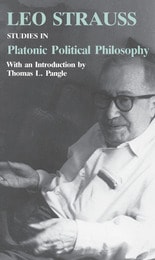
Studies in Platonic Political Philosophy
Leo Strauss
University of Chicago Press, 1983
As his choice of title indicates, the heart of Strauss's work is Platonism—a Platonism that is altogether unorthodox and highly controversial. These essays consider, among others, Heidegger, Husserl, Nietzsche, Marx, Moses Maimonides, Machiavelli, and of course Plato himself to test the Platonic understanding of the conflict between philosophy and political society. Strauss argues that an awesome spritual impoverishment has engulfed modernity because of our dimming awareness of that conflict.
Thomas Pangle's Introduction places the work within the context of the entire Straussian corpus and focuses especially on Strauss's late Socratic writings as a key to his mature thought. For those already familiar with Strauss, Pangle's essay will provoke thought and debate; for beginning readers of Strauss, it provides a fine introduction. A complete bibliography of Strauss's writings if included.
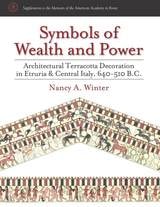
Symbols of Wealth and Power
Architectural Terracotta Decoration in Etruria and Central Italy, 640-510 B.C.Nancy A. Winter
University of Michigan Press, 2009
Although initially intended for the innovative, if prosaic, purpose of providing waterproof and fireproof cover for earlier thatch-roofed homes, fired clay tiles, in seventh- and sixth-century Etruria and Central Italy, combined with Etruscan love of adornment to create exceptional domestic and religious building decoration. Featuring statues and figured friezes of humans, animals, and mythological figures intended to convey the status of the owner or dedicator, the surviving terracotta roofs provide important insights into the architectural history of Etruria. With Symbols of Wealth and Power, Nancy A. Winter has provided a definitive overview of the evidence for these roofing elements that will enhance our knowledge of Etruscan---and more broadly, ancient---architecture.
Nancy A. Winter is an archaeologist and former librarian of the American School of Classical Studies, Athens. She is the author of Greek Architectural Terracottas: From the Prehistoric to the End of the Archaic Period (1993).
Role Models in the Roman World: Identity and Assimilation, edited by Sinclair Bell and Inge Lyse Hansen
The Maritime World of Ancient Rome, edited by Robert L. Hohlfelder
Cosa: The Black-Glaze Pottery 2, by Ann Reynolds Scott
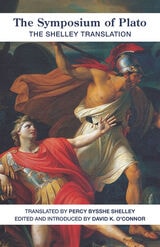
Symposium Of Plato
Shelley TranslationPercy Bysshe Shelley
St. Augustine's Press, 2002