Results by title
173 books match the query 'Commerce' and 13 start with s

Salaula
The World of Secondhand Clothing and ZambiaKaren Tranberg Hansen
University of Chicago Press, 2000
Essential for the African economy, the secondhand clothing business is wildly popular, to the point of threatening the indigenous textile industry. But, Hansen shows, wearing secondhand clothes is about much more than imitating Western styles. It is about taking a garment and altering it to something entirely local, something that adheres to current cultural norms of etiquette. By unraveling how these garments becomes entangled in the economic, political, and cultural processes of contemporary Zambia, Hansen also raises provocative questions about environmentalism, charity, recycling, and thrift.

Saltillo, 1770-1810
Town and Region in the Mexican NorthLeslie S. Offutt
University of Arizona Press, 2001

Sea Nomads of Southeast Asia
From the Past to the PresentEdited by Bérénice Bellina, Roger Blench, and Jean-Christophe Galipaud
National University of Singapore Press, 2020
For many years, the sea nomads were assumed to be without history, and even without archaeology. This has proven far from the case, and recent archaeological findings allow us to more closely describe sea nomadism from the Pleistocene through the early Holocene up to the present. Integrating these findings with the latest in historical research, linguistics, ethnography and historical genetics allows us to better understand sea-nomad ways of life over a scale of millennia and to appreciate the diversity and flexibility of this sea-nomad world. This in turn enriches our understanding of nomadism and mobility as ways of life more generally, and of the sea not only as a landscape of resources, but as a home and spiritual landscape.

Seaways and Gatekeepers
Trade and State in the Eastern Archipelagos of Southeast Asia, c.1600–c.1906Heather Sutherland
National University of Singapore Press, 2020
In this book, trade provides the integrating framework for local and regional histories that cover more than three hundred years, from the late sixteenth century to the beginning of the twentieth, when new technologies and changing markets helped lead to Western dominance. This book presents theories from the social sciences and economics that can help liberate scholars from dependence on states as narrative frameworks. It will also appeal to those working on wider themes such as global history, state formation, the evolution of markets, and anthropology.

Second Economy In Tanzania
Eastern African StudiesT. L. Maliyamkono
Ohio University Press, 1990
Every country has its second, underground, unofficial, irregular or parallel economy. By their nature they are hidden and defy accurate and formal measurement. They provoke conceptual and definitional arguments among analysts. There has recently been a surge of interest; anecdote, newspaper reports and ‘educated guesses’ have increasingly been replaced by serious analysis. However, most of the new generation of studies are of developed economies.
This book examines the effect on a developing economy. It explores the causes, identifies the key sectoral manifestations and reveals the various groups of actors. It attempts to establish the size of the second economy of Tanzania.
Various factors drove the official economy into distress. Tanzanian peasants, wage earners and firms resorted to legitimate and illegitimate activities to overcome state control and shortage of basic necessities.
This pioneering study will be invaluable for policy makers, international funding bodies and for students who are faced with trying to understand the realities of life behind the formal facade of economic theory and official statistics.

Security. Cooperation. Governance.
The Canada-United States Open Border ParadoxChristian Leuprecht and Todd Hataley, Editors
University of Michigan Press, 2023
The book’s findings show that border governance straddles multiple regional, sectoral, and security scales in ways rarely documented in such detail. These developments have precipitated an Open Border Paradox: extensive, regionally varied flows of trade and people have resulted in a series of nested but interdependent security regimes that function on different scales and vary across economic and policy sectors. These realities have given rise to regional and sectoral specialization in related security regimes. For instance, just-in-time automotive production in the Great Lakes region varies considerably from the governance of maritime and intermodal trade (and port systems) on the Atlantic and Pacific coasts, which in turn is quite different from commodity-based systems that manage diverse agricultural and food trade in the Canadian Prairies and US Great Plains.
The paradox of open borders and their legitimacy is a function of robust bilateral and multilevel governance based on effective partnerships with substate governments and the private sector. Effective policy accounts for regional variation in integrated binational security and trade imperatives. At the same time, binational and continental policies are embedded in each country’s trade and security relationships beyond North America.

Settling the Frontier
Urban Development in America's Borderlands, 1600–1830Joseph P. Alessi
Westholme Publishing, 2025
In 1811, while escorting members of John Jacob Astor’s Pacific Fur Company up the Columbia River, their Chinookan guide refused to advance beyond a particular point that marked a boundary between his people and another indigenous group. Long before European contact, Native Americans created and maintained recognized borders, ranging from family hunting and fishing properties to larger tribal territories to vast river valley regions. Within the confines of these respective borders, the native population often established permanent settlements that acted as the venues for the major political, economic, and social activities that took place in virtually every part of precolonial North America. It was the location of these native settlements that played a major role in the establishment of the first European, and later, American frontier towns.
In Settling the Frontier: Urban Development in America’s Borderlands, 1600–1830, historian Joseph P. Alessi examines how the Pecos, Mohawk, Ohioan, and Chinook tribal communities aided Europeans and Americans in the founding of five of America’s earliest border towns—Santa Fe (New Mexico), Fort Amsterdam (New York City), Fort Orange (Albany, New York), Fort Pitt (Pittsburgh, Pennsylvania), and Fort Astoria (Portland, Oregon). Filling a void in scholarship about the role of Native American communities in the settlement of North America, Alessi reveals that, although often resistant to European and American progress or abused by it, Indians played an integral role in motivating and assisting Europeans with the establishment of frontier towns. In addition to the location of these towns, the native population was often crucial to the survival of the settlers in unfamiliar and unforgiving environments. As a result, these new towns became the logistical and economic vanguards for even greater development and exploitation of North America.
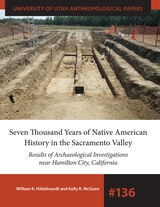
Seven Thousand Years of Native American History in the Sacramento Valley
Results of Archaeological Investigations near Hamilton City, CaliforniaWilliam R. Hildebrandt and Kelly R. McGuire
University of Utah Press, 2022
The other three sites date between 4000 and 300 years ago and reflect increasing human population density, technological innovation, and the rise of sedentism and territoriality. This historical sequence culminated in findings from a 400- to 300-year-old house complex probably occupied by the Mechoopda Indian Tribe, who collaborated with the authors throughout the project.

Sino–Malay Trade and Diplomacy from the Tenth through the Fourteenth Century
Derek Heng
Ohio University Press, 2009
China has been an important player in the international economy for two thousand years and has historically exerted enormous influence over the development and nature of political and economic affairs in the regions beyond its borders, especially its neighbors.
Sino–Malay Trade and Diplomacy from the Tenth through the Fourteenth Century examines how changes in foreign policy and economic perspectives of the Chinese court affected diplomatic intercourse as well as the fundamental nature of economic interaction between China and the Malay region, a subregion of Southeast Asia centered on the Strait of Malacca.
This study’s uniqueness and value lie in its integration of archaeological, epigraphic, and textual data from both China and Southeast Asia to provide a rich, multilayered picture of Sino–Southeast Asian relations in the premodern era. Derek Heng approaches the topic from both the Southeast Asian and Chinese perspectives, affording a dual narrative otherwise unavailable in the current body of Southeast Asian and China studies literature.

Slaves, Spices and Ivory in Zanzibar
Integration of an East African Commercial Empire into the World Economy, 1770–1873Abdul Sheriff
Ohio University Press, 1987
The rise of Zanzibar was based on two major economic transformations. Firstly slaves became used for producing cloves and grains for export. Previously the slaves themselves were exported.
Secondly, there was an increased international demand for luxuries such as ivory. At the same time the price of imported manufactured gods was falling. Zanzibar took advantage of its strategic position to trade as far as the Great Lakes.
However this very economic success increasingly subordinated Zanzibar to Britain, with its anti-slavery crusade and its control over the Indian merchant class.
Professor Sheriff analyses the early stages of the underdevelopment of East Africa and provides a corrective to the dominance of political and diplomatic factors in the history of the area.
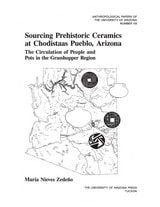
Sourcing Prehistoric Ceramics at Chodistaas Pueblo, Arizona
The Circulation of People and Pots in the Grasshopper RegionMaría Nieves Zedeño
University of Arizona Press, 1994

Sri Lanka at the Crossroads of History
Edited by Zoltán Biedermann and Alan Strathern
University College London, 2017

Structure and Regional Diversity in the Meadowood Interaction Sphere
Karine Taché
University of Michigan Press, 2011