Results by title
365 books match the query 'Correspondence' and 24 start with s
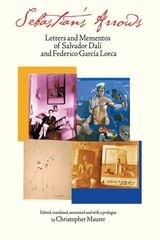
Sebastian's Arrows
Letters and Mementos of Salvador Dali and Federico Garcia LorcaSalvador Dali and Federico Garcia Lorca
Swan Isle Press, 2005
“In my ‘Saint Sebastian’ I remember you,” Salvador Dali replied to Garcia Lorca, referring to the essay on aesthetics that Dali had just written, “. . . and sometimes I think he is you. Let’s see whether Saint Sebastian turns out to be you.”
This exchange is but a glimpse into the complex relationship between two renowned and highly influential twentieth-century artists. On the centennial of Dali's birth, Sebastian’s Arrows presents a never-before-published collection of their letters, lectures, and mementos.
Written between 1925 and 1936, the letters and lectures bring to life a passionate friendship marked by a thoughtful dialogue on aesthetics and the constant interaction between poetry and painting. From their student days in Madrid's Residencia de Estudiantes, where the two waged war against cultural “putrefaction” and mocked the sacred cows of Spanish art, Dali and Garcia Lorca exchanged thoughts on the act of creation, modernity, and the meaning of their art. The volume chronicles how in their poetic skirmishes they sharpened and shaped each other’s work—Garcia Lorca defending his verses of absence and elegy and his love of tradition while Dali argued for his theories of “Clarity” and “Holy Objectivity” and the unsettling logic of Surrealism.
Christopher Maurer’s masterful prologue and selection of letters, texts, and images (many generously provided by the Fundacion Gala-Salvador Dali and Fundacion Federico Garcia Lorca), offer compelling and intimate insights into the lives and work of two iconic artists. The two men had a “tragic, passionate relationship,” Dali once wrote—a friendship pierced by the arrows of Saint Sebastian.
Secretaries of the Moon
The Letters of Wallace Stevens and José Rodriguez FeoBeverly Coyle and Alan Filreis, eds.
Duke University Press, 1986
Coyle and Filreis present the entire extant correspondence between the two men. The fifty-one Rodriguez Feo letters and ten of the numerous Stevens letters are printed here for the first time, and the exchange between the two is unusually complete. The work includes a critical introduction and complete annotation of the letters.
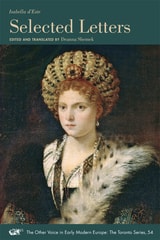
Selected Letters
Isabella d’Este
Iter Press, 2017
Isabella d’Este (1474–1539), daughter of the Este dukes of Ferrara and wife of Marchese Francesco II Gonzaga of Mantua, co-regent of the Gonzaga state, art collector, musician, diplomat, dynastic mother, traveler, reader, gardener, fashion innovator, and consummate politician, was also, as this volume attests, a prolific letter writer with a highly developed epistolary network. Presented here for the first time in any language is a representative selection from over 16,000 letters sent by Isabella to addressees across a wide social spectrum. Together, they paint a nuanced and colorful portrait of a brilliant and influential female protagonist of early modern European society.
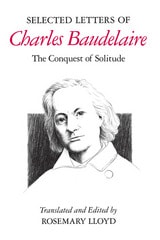
Selected Letters of Charles Baudelaire
The Conquest of SolitudeCharles Baudelaire
University of Chicago Press, 1986
Writing to family, friends, and lovers, Baudelaire reveals the incidents and passions that went into his poetry. In letters to editors, idols, and peers—Hugo, Flaubert, Vigny, Wagner, Cladel, among others—he elucidates the methods and concerns of his own art and criticism and comments tellingly on the arts and politics of his day. In all, ranging from childhood to days shortly before his death, these letters comprise a complex and moving portrait of the quintessential poet and his time.
Selected Letters of Edmund Burke
Edmund Burke
University of Chicago Press, 1984
Selected Letters of Lucretia Coffin Mott
Lucretia Coffin Mott. Edited by Beverly Wilson Palmer: With the Assistance of Holly Byers Ochoa, Associate Editor, and Carol Faulkner, Editing Fellow
University of Illinois Press, 2002
This landmark volume collects Lucretia Mott's correspondence for the first time, highlighting the length and breadth of her work as an activist dedicated to reform of almost every kind and providing an intimate glimpse of her family life.
Mott’s achievements left a mark on reform movements from abolition to women's rights. The letters cover her work in these causes as well as her founding of key antislavery organizations; her friendships with Harriet Tubman and Sojourner Truth; her efforts to bring Quakers into the abolitionist movement; and her part in organizing the 1848 Seneca Falls Woman's Rights Convention. Other correspondence cover her fifty-six-year marriage, the five children she raised to adulthood, and informal insights and news with and about her cherished family.
An invaluable resource, Selected Letters of Lucretia Coffin Mott reveals the incisive mind, sense of mission, and level-headed personality that made this extraordinary figure a major force in nineteenth-century American life.

Selected Letters of Stéphane Mallarmé
Stéphane Mallarmé
University of Chicago Press, 1988
Selected Letters of Walt Whitman
Edwin Haviland Miller
University of Iowa Press, 1990
There has never been an edition of the selected letters of Walt Whitman, a remarkable fact considering how accustomed we are to becoming acquainted with major writers through their letters. Now Edwin Haviland Miller, editor of the six-volume collected writings of Whitman, has used his intimate knowledge of the "good gray poet's" correspondence to produce this revealing selection of 250 letters, introduced and annotated concisely and evocatively. Whitman in these letters is simple, direct, colloquial, adding a counterpoint to his artistic voice and persona as a poet.
Selected Letters, 1514-1543
Maria Salviati de’ Medici
Iter Press, 2022
In recent years, there has been an upsurge of interest in Maria Salviati de’ Medici, specifically, in her role in Medici governance and her relationships with other members of the Medici court. Maria Salviati’s surviving correspondence documents a life spent close to the centers of Medici power in Florence and Rome, giving witness to its failures, resurrection, and eventual triumph. Presented here for the first time in English, this book is a representative sample of Maria’s surviving letters that document her remarkable life through a tumultuous period of Italian Renaissance history. While she earned the exasperation of some, she gained the respect of many more. Maria ended her life as an influential dowager, powerful intercessor for local Tuscans of all strata, and wise elder in Duke Cosimo I’s court. The first critical, analytical, biographical work on Maria Salviati de’ Medici’s life and letter-writing in English.
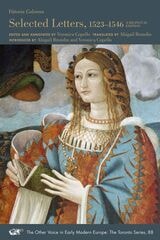
Selected Letters, 1523-1546
A Bilingual EditionVittoria Colonna
Iter Press, 2022
The most celebrated woman writer of the Italian Renaissance, Vittoria Colonna was known for her elegant poetry and use of the sonnet form to explore pressing religious questions. The selection of Colonna’s letters presented here for the first time in a collected edition was written to and from writers, artists, popes, cardinals, employees, and family members. Together they place Colonna at the center of intersecting epistolary networks as a political actor, theological thinker, literary practitioner, and caring friend. Revealing a historical woman speaking and acting with force in the world, these letters constitute a vital tool for anyone seeking to understand Colonna’s literary works. Newly translated, this work reveals new aspects and faces of the most celebrated woman writer of the Italian Renaissance.
Selected Passages from Correspondence with Friends
Nikolai Vasilevich Gogol
Vanderbilt University Press, 1969
Selected Writings of an Eighteenth-Century Venetian Woman of Letters
Elisabetta Caminer Turra
University of Chicago Press, 2003
Bringing together Caminer's letters, poems, and journalistic writings, nearly all published for the first time here, Selected Writings offers readers an intellectual biography of this remarkable figure as well as a glimpse into her intimate correspondence with the most prominent thinkers of her day. But more important, Selected Writings provides insight into the passion that animated Caminer's fervent reflections on the complex and shifting condition of women in her society-the same passion that pushed her to succeed in the male-dominated literary professions.

Shakespeare and Baseball
Reflections of a Shakespeare Professor and Detroit Tigers FanSamuel Crowl
Ohio University Press, 2024
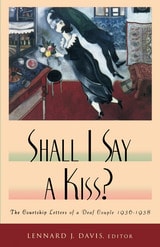
Shall I Say A Kiss?
The Courtship Letters of a Deaf Couple, 1936-1938Lennard J. Davis
Gallaudet University Press, 1999
Upon the death of his father Morris at age 82, Lennard Davis found among his effects a trove of letters, kept in careful chronological order, that dated from 1936. The letters ended in 1938, when Eva Weintrobe came to America to marry Morris, and they provide the core of Shall I Say A Kiss?, their courtship by correspondence. In his framing comments, Davis speculates that his parents met perhaps four or five times before they wed, a fact that heightens the importance of these letters to their fate. Davis illustrates vast contrasts between Morris and Eva, both to each other (Morris was 38; Eva was 26), and to themselves in later life as witnessed by their son. Where Davis saw his father brimming with confidence and a sense of superior intellect while his mother acted as the reserved, dutiful wife, he was startled to learn through their letters that she could be the shrewd questioning correspondent even as his father wrote as an unsure, imploring suitor.
Shall I Say A Kiss? opens a window into the lives of two working-class, Jewish, British, Deaf people in the 1930s. This striking book reveals a consistent, journal-like account of the “lived” experience of Deaf people during the tumultuous times just prior to World War II. Because the correspondence is mainly composed of Eva’s letters, the focus sharpens even further as a record of the life and opinions of a young, working-class, Deaf woman about to embark upon marriage and life in a new country. The challenges she faced, including de facto racial barriers for both deaf and Jewish immigrants, and the prospect of uniting with a man she knew mostly through his letters alone, make for a compelling and emotional trip through her life. Shall I Say A Kiss? serves as a singular social document and also as an engaging and often moving narrative that will win audiences among academics and romantics alike.
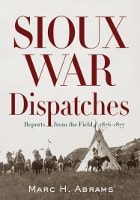
Sioux War Dispatches
Reports from the Field, 1876-1877Marc H. Abrams
Westholme Publishing, 2012
Rare, First-Hand Accounts from Newspaper Correspondents Describing the Course of America’s Largest Indian War, Compiled and Edited for the First Time in One Volume
“No one commands better the story of the Great Sioux War of 1876–1877 as presented in the nation’s newspapers than does Marc Abrams. Here is Abrams’s story of America’s greatest Indian war woven from those timely reports, augmented with insightful introductions and annotations. Abrams has produced a significant addition to the historiography of this endlessly fascinating struggle and its colorful personalities.” —Paul L. Hedren, author of After Custer: Loss and Transformation in Sioux Country
“Marc Abrams has provided an invaluable service to both scholars and lay readers in compiling this treasure trove of primary information. Like the correspondents he has come to know through his research, Marc has done the hard work; we need only read in comfort and benefit from his efforts.” —Douglas W. Ellison, author of Sole Survivor: An Examination of the Frank Finkel Narrative
“Marc Abrams’s book is an exciting and innovative approach that brings immediacy to the campaigns of Custer, Crook, and Miles, and teems with fascinating new detail. Sioux War Dispatches not only offers a gripping contemporary window into those times, it fills an important reference need as well.” —Jerome A. Greene, author of Stricken Field: The Little Bighorn Since 1876
Sioux War Dispatches: Reports from the Field, 1876-1877, tells the story of the Great Sioux War, including the battle of the Little Big Horn, primarily through the eyes of contemporary newspaper correspondents, both civilian and military. The volume begins with the Black Hills dilemma and the issue of the unceded territory (the disputed lands that were adjacent to the Great Sioux Reservation) and continues through to the spring of 1877 with the surrender of the legendary Sioux leader Crazy Horse. Along the way readers will learn about the Reynolds battle, the skirmish at Tongue River Heights, the battle of the Rosebud, the battle of the Little Big Horn, the skirmish at Warbonnet Creek, the fight at Slim Buttes, and more. In addition to numerous annotated excerpts from those who were there, are rare original dispatches, reprinted in full, that will take readers on a wild ride through several battles.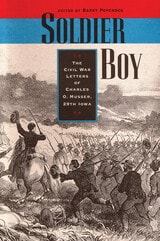
Soldier Boy
The Civil War Letters of Charles O. Musser, 29th IowaBarry Popchock
University of Iowa Press, 2008
Soldier Boy makes a significant contribution to the literature of the common soldier in the Civil War. Moreover, it takes a rare look at the Trans-Mississippi theater, which has traditionally been undervalued by historians.
Always Musser dutifully wrote and mailed his letters home. With a commendable eye for historical detail, he told of battles and marches, guerrilla and siege warfare, camp life and garrison soldiering, morale and patriotism, Copperheads and contraband, and Lincoln's reelection and assassination, creating a remarkable account of activities in this almost forgotten backwater of the war.
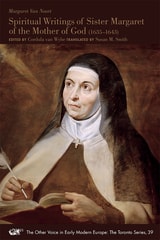
Spiritual Writings of Sister Margaret of the Mother of God (1635-1643)
Margaret Van Noort
Iter Press, 2015
In 1635, as directed by her confessor so that he might understand “the state of her soul,” Margaret Van Noort, a lay sister of the royal convent of Discalced Carmelite nuns in Brussels, composed her spiritual autobiography. This text was followed by two diaries in 1636 and 1637 recording the workings of her inner life and relation to God, and reflecting the cosmopolitan Catholic tradition of her homeland. Now gathered in this volume, these works illustrate Margaret’s development from a troubled young lay sister into a woman of spiritual experience and authority.
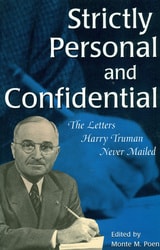
Strictly Personal and Confidential
The Letters Harry Truman Never MailedEdited by Monte M. Poen
University of Missouri Press, 1999
Harry S. Truman made plain speaking his trademark, and it was a common belief that "Give 'em hell" Harry spared few with his words. However, this fascinating collection of 140 amusing, angry, sarcastic, and controversial letters President Truman wrote but never mailed proves that conception wrong. Addressed to admirers and enemies alike, including Adlai Stevenson, Justice William Douglas, Dwight Eisenhower, Joe McCarthy, and Truman's wife, Bess, these intriguing letters cover such diverse subjects as the atomic bomb, running the country, and human greed.
Strictly from Hungary
Ladislas Farago
Westholme Publishing, 2004
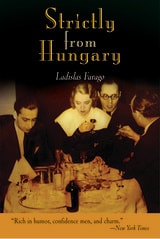
Known for his best-selling military histories, Ladislas Farago also wrote a witty tribute to his homeland, Strictly from Hungary. Noting that Hungary has produced some of the world's most renowned artists, scientists, and financiers as well as its share of world-class con-artists, charlatans, and rakes, Farago sets out to explain just how one tiny country can be responsible for so much talent, both good and bad. Using stories from his days as a struggling writer in the bustling café scenes of Budapest and New York City, Farago demonstrates the Hungarian knack for remaining irrepressible and optimistic even in the face of catastrophe. Here we meet Zoltan, a fellow Bohemian who presents his astonished benefactor with a play "about nothing," a theme later made famous by another writer of Hungarian descent, Jerry Seinfeld. Farago also introduces us to "Baby Kiss," a vivacious Hungarian beauty queen, and the story of how she ended up in Fort Worth, Texas; Orkeny, a double agent for America at the height of the Cold War who "spiced up" his reports to keep everyone happy, and the author's own experience getting mustered into the supposedly non-existent Royal Hungarian Army. Farago's reminiscence validates what most Hungarians believe: that Hungary is the center of the world and that everyone has some connection to the land of the Magyars. In that spirit, Farago learns that George Washington himself was "strictly from Hungary." This edition is introduced by the author's son, who shows that the same vibrant spirit described by his father remains the hallmark of the Hungarian temperament.
Strindberg's Letters
August Strindberg
University of Chicago Press, 1992
Strindberg's plays, novels, and short stories, which influenced film and theatre artists from Artaud and the German Expressionists to Ingmar Bergman and Woody Allen, chart an artistic evolution from Naturalism to the revolt against realism that issued in Expressionist drama. These letters help to explain Strindberg's seminal force and testify to the broad range of his interests, energies, and imaginative instincts. An essential part of their author's oeuvre, the letters provide invaluable insight into Strindberg the artist, the political thinker, and the person, and were regarded by Strindberg himself as an integral component of his autobiographical project.
The letters, some of them published here for the first time, have been meticulously edited and are supported by an extensive introduction and notes.
Strindberg's Letters, Volume 1
1862-1892August Strindberg
University of Chicago Press, 1992
Strindberg's Letters, Volume 2
1892-1912August Strindberg
University of Chicago Press, 1992
Studies on the Abuse and Decline of Reason
Text and DocumentsF. A. Hayek
University of Chicago Press, 2010
Hayek argues that the vast number of elements whose interactions create social structures and institutions make it unlikely that social science can predict precise outcomes. Instead, he contends, we should strive to simply understand the principles by which phenomena are produced. For Hayek this modesty of aspirations went hand in hand with his concern over widespread enthusiasm for economic planning. As a result, these essays are relevant to ongoing debates within the social sciences and to discussion about the role government can and should play in the economy.
Such Anxious Hours
Wisconsin Women's Voices from the Civil WarJo Ann Daly Carr
University of Wisconsin Press, 2020
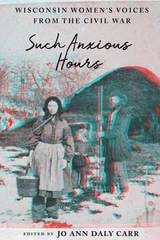
In Such Anxious Hours, Jo Ann Daly Carr places this material in historical context, detailing what was happening simultaneously in the nation, state, and local communities. Civil War history enthusiasts will appreciate these enlightening perspectives that demonstrate the variety of experiences in the Midwest during the bloody conflict.