83 books match the query 'Country & Bluegrass' and 5 start with s
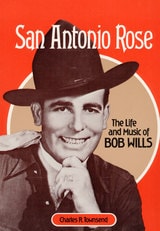
cover of San Antonio Rose: The Life and Music of Bob Wills

San Antonio Rose

The Life and Music of Bob Wills

Charles R. Townsend; Discography and filmusicography by Bob Pinson

University of Illinois Press, 1976

"Until Hank Williams came along, it was just Bob Willis," says Willie Nelson. "He was it." And indeed he was, especially for the thousands in the Southwest who knew and loved the King of Western Swing. The colorful band leader-composer-fiddler from Turkey, Texas, lassoed the emotions of country-and-western fans nationwide. In the early 1940s, his records outsold those of any other recording artist. He was voted not only into the Country Music Hall of Fame but also into the National Cowboy Hall of Fame, the only performer other than Gene Autry to be so honored. 

Affectionately written by a Texan who responded to the legendary fiddler's style, San Antonio Rose captures Wills's magnetism and the musical excitement he created. Charles R. Townsend traces Wills's dynamic life from his birth into a family of frontier fiddlers through his career and stardom and on to the poignant last recording session in 1973 and his death two years later. Townsend shows how Wills brought black and white music together and examines the tremendous impact he had on both popular and country music through the more than 550 selections he recorded and the forty years he and his Texas Playboys performed in dance halls and on radio.
[more]
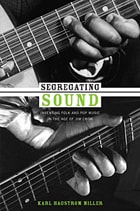
cover of Segregating Sound: Inventing Folk and Pop Music in the Age of Jim Crow

Segregating Sound

Inventing Folk and Pop Music in the Age of Jim Crow

Karl Hagstrom Miller

Duke University Press, 2010

In Segregating Sound, Karl Hagstrom Miller argues that the categories that we have inherited to think and talk about southern music bear little relation to the ways that southerners long played and heard music. Focusing on the late nineteenth century and the early twentieth, Miller chronicles how southern music—a fluid complex of sounds and styles in practice—was reduced to a series of distinct genres linked to particular racial and ethnic identities. The blues were African American. Rural white southerners played country music. By the 1920s, these depictions were touted in folk song collections and the catalogs of “race” and “hillbilly” records produced by the phonograph industry. Such links among race, region, and music were new. Black and white artists alike had played not only blues, ballads, ragtime, and string band music, but also nationally popular sentimental ballads, minstrel songs, Tin Pan Alley tunes, and Broadway hits.

In a cultural history filled with musicians, listeners, scholars, and business people, Miller describes how folklore studies and the music industry helped to create a “musical color line,” a cultural parallel to the physical color line that came to define the Jim Crow South. Segregated sound emerged slowly through the interactions of southern and northern musicians, record companies that sought to penetrate new markets across the South and the globe, and academic folklorists who attempted to tap southern music for evidence about the history of human civilization. Contending that people’s musical worlds were defined less by who they were than by the music that they heard, Miller challenges assumptions about the relation of race, music, and the market.
[more]
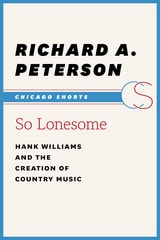
cover of So Lonesome: Hank Williams and the Creation of Country Music

So Lonesome

Hank Williams and the Creation of Country Music

Richard A. Peterson

University of Chicago Press, 1997
Hank Williams (1923–53) was an American singer-songwriter and musician regarded as the most important country music artist of all time, creator of an unforgettable sound and persona that helped to define the genre from its infancy and beyond. Though unable to read or notate music to any substantive degree, Williams recorded 11 number one hits between 1948 and 1953, which carried him to music’s mainstream and left an enduring legacy. In So Lonesome, Richard A. Peterson captures the free-wheeling entrepreneurial spirit of an era gone by, when the Grand Ole Opry put Nashville’s star on the map, while detailing how Williams came to fame and helped launch country music both during his life and after his death. More than just a history of the music and one of its most celebrated performers, So Lonesome explores what it means to live an authentic life within the confines of marketing popular culture.

[more]
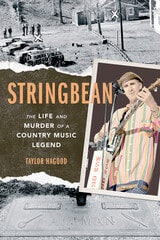
cover of Stringbean: The Life and Murder of a Country Legend

Stringbean

The Life and Murder of a Country Legend

Taylor Hagood

University of Illinois Press, 2023

The artist’s impact on country music and how his death changed the genre

A beloved member of the country music community, David “Stringbean” Akeman found nationwide fame as a cast member of Hee Haw. The 1973 murder of Stringbean and his wife forever changed Nashville’s sense of itself. Millions of others mourned not only the slain couple but the passing of the way of life that country music had long represented.

Taylor Hagood merges the story of Stringbean’s life with an account of murder and courtroom drama. Mentored by Uncle Dave Macon and Bill Monroe, Stringbean was a bridge to country’s early days. His instrumental savvy and old-time singing style drew upon a deep love for traditional country music that, along with his humor and humanity, won him the reverence of younger artists and made his violent death all the more shocking. Hagood delves into the unexpected questions and uneasy resolutions raised by the atmosphere of retribution surrounding the murder trial and recounts the redemption story that followed decades later.
[more]
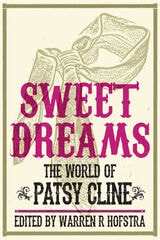
cover of Sweet Dreams: The World of Patsy Cline

Sweet Dreams

The World of Patsy Cline

Edited by Warren R. Hofstra

University of Illinois Press, 2013

One of the most influential and acclaimed female vocalists of the twentieth century, Patsy Cline (1932–63) was best known for her rich tone and emotionally expressive voice. Born Virginia Patterson Hensley, she launched her musical career during the early 1950s as a young woman in Winchester, Virginia, and her heartfelt songs reflect her life and times in this community. A country music singer who enjoyed pop music crossover success, Cline embodied the power and appeal of women in country music, helping open the lucrative industry to future female solo artists.
 
Bringing together noted authorities on Patsy Cline and country music, Sweet Dreams: The World of Patsy Cline examines the regional and national history that shaped Cline's career and the popular culture that she so profoundly influenced with her music. In detailed, deeply researched essays, contributors provide an account of Cline's early performance days in Virginia's Shenandoah Valley, analyze the politics of the split between pop and country music, and discuss her strategies for negotiating gender in relation to her public and private persona. Interpreting rich visual images, fan correspondence, publicity tactics, and community mores, this volume explores the rich and complex history of a woman whose music and image changed the shape of country music and American popular culture.
 
Contributors are Beth Bailey, Mike Foreman, Douglas Gomery, George Hamilton IV, Warren R. Hofstra, Joli Jensen, Bill C. Malone, Kristine M. McCusker, and Jocelyn R. Neal.
[more]