Results by title
18 books match the query 'Diplomats'
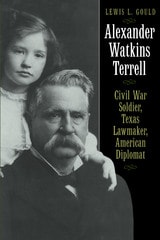
Alexander Watkins Terrell
Civil War Soldier, Texas Lawmaker, American DiplomatBy Lewis L. Gould
University of Texas Press, 2004
Alexander Terrell's career placed him at the center of some of the most pivotal events in nineteenth- and early twentieth-century history, ranging from the Civil War to Emperor Maximilian's reign over Mexico and an Armenian genocide under the Ottoman Empire. Alexander Watkins Terrell at last provides the first complete biographical portrait of this complex figure.
Born in Virginia in 1827, Terrell moved to Texas in 1852, rising to the rank of Confederate brigadier general when the Civil War erupted. Afterwards, he briefly served in Maximilian's army before returning to Texas, where he was elected to four terms in the state Senate and three terms in the House. President Grover Cleveland appointed him minister to the Ottoman Empire, dispatching him to Turkey and the Middle East for four years while the issues surrounding the existence of Christians in a Muslim empire stoked violent confrontations there. His other accomplishments included writing legislation that created the Texas Railroad Commission and what became the Permanent University Fund (the cornerstone of the University of Texas's multibillion-dollar endowment).
In this balanced exploration of Terrell's life, Gould also examines Terrell's views on race, the impact of the charges of cowardice in the Civil War that dogged him, and his spiritual searching beyond the established religions of his time. In his rich and varied life, Alexander Watkins Terrell experienced aspects of nineteenth-century Texas and American history whose effects have continued down to the present day.
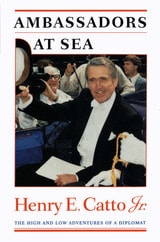
Ambassadors at Sea
The High and Low Adventures of a DiplomatBy Henry E. Catto, Jr.
University of Texas Press, 1998
In 1969, Henry Catto was selling insurance in San Antonio, Texas. Just twenty years later, he presented his credentials as ambassador to the Court of St. James's to Her Majesty, Queen Elizabeth II, at Buckingham Palace. In this engaging memoir, he retraces his journey from Texas outsider to Washington insider, providing a fascinating look at the glamour, day-to-day work, and even occasional danger that come with being a high-level representative of the United States government.
Catto's posts brought him into contact with the world's most powerful leaders and left him with a wealth of stories, which he recounts amusingly in these pages. He was the official host for Queen Elizabeth's visit to America during the Bicentennial year—and one of José Napoleon Duarte's protectors after his failed 1972 coup attempt in El Salvador. Catto accompanied Richard Nixon on his historic trip to Russia, sparred with Bill Moyers and the producers of "60 Minutes" as Caspar Weinberger's spokesman at the Pentagon, and hosted George Bush's planning meeting with Margaret Thatcher at the beginning of the Persian Gulf War. In telling these and other stories, he offers behind-the-scenes glimpses into how political power really works in Washington, London, and other world capitals.
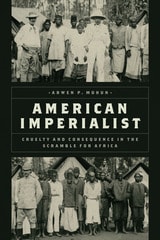
American Imperialist
Cruelty and Consequence in the Scramble for AfricaArwen P. Mohun
University of Chicago Press, 2023
Richard Dorsey Mohun spent his career circulating among the eastern United States, the cities and courts of Europe, and the African continent, as he served the US State Department at some points and King Leopold of Belgium at others. A freelance imperialist, he implemented the schemes of American investors and the Congo Free State alike. Without men like him, Africa’s history might have unfolded very differently. How did an ordinary son of a Washington bookseller become the agent of American corporate greed and European imperial ambition? Why did he choose to act in ways that ranged from thoughtless and amoral to criminal and unforgivable?
With unblinking clarity and precision, historian Arwen P. Mohun interrogates the life and actions of her great-grandfather in American Imperialist. She seeks not to excuse the man known as Dorsey but to understand how individual ambition and imperial lust fueled each other, to catastrophic ends. Ultimately, she offers a nuanced portrait of how her great-grandfather’s pursuit of career success and financial security for his family came at a tragic cost to countless Africans.
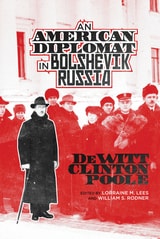
An American Diplomat in Bolshevik Russia
DeWitt Clinton Poole, Edited by Lorraine M. Lees and William S. Rodner
University of Wisconsin Press, 2014
Historians Lorraine M. Lees and William S. Rodner introduce and annotate Poole's recollections, which give a fresh, firsthand perspective on monumental events in world history and reveal the important impact DeWitt Clinton Poole (1885–1952) had on U.S.–Soviet relations. He was active in implementing U.S. policy, negotiating with the Bolshevik authorities, and supervising American intelligence operations that gathered information about conditions throughout Russia, especially monitoring anti-Bolshevik elements and areas of German influence. Departing Moscow in late 1918 via Petrograd, he was assigned to the port of Archangel, then occupied by Allied and American forces, and left Russia in June 1919.
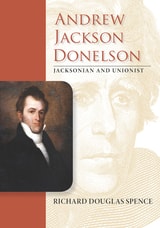
Andrew Jackson Donelson
Jacksonian and UnionistRichard Douglas Spence
Vanderbilt University Press, 2017
As his uncle's secretary, he weathered Old Hickory's tumultuous presidency, including the notorious "Petticoat War." Building his own political career, he served as US chargé d'affaires to the Republic of Texas, where he struggled against an enigmatic President Sam Houston, British and French intrigues, and the threat of war by Mexico, to achieve annexation. As minister to Prussia, Donelson enjoyed a ringside seat to the revolutions of 1848 and the first attempts at German unification. A firm Unionist in the mold of his uncle, Donelson denounced the secessionists at the Nashville Convention of 1850. He attempted as editor of the Washington Union to reunite the Democratic party, and, when he failed, he was nominated as Millard Fillmore's vice-presidential running mate on the Know-Nothing party ticket in 1856. He lived to see the Civil War wreck the Union he loved, devastate his farms, and take the lives of two of his sons.
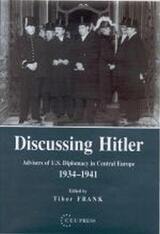
Discussing Hitler
Advisers of U.S. Diplomacy in Central Europe, 1934-41Tibor Frank
Central European University Press, 2003
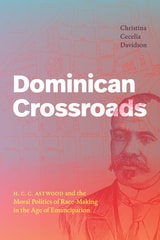
Dominican Crossroads
H. C. C. Astwood and the Moral Politics of Race-Making in the Age of EmancipationChristina Cecelia Davidson
Duke University Press, 2024
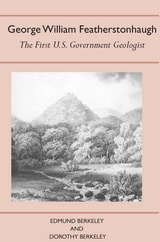
George William Featherstonhaugh
The First U.S. Government GeologistEdmund Berkeley and Dororthy Berkeley
University of Alabama Press, 1988
—Choice
"For anyone interested in the history of American geology, knowledge of G. W. Featherstonhaugh (1780-1866) is both essential and hard to obtain. He was the force behind the first railroad in America; a pioneer in scientific agriculture; an essayist, poet, and novelist; a lobbyist; a linguist; and a daring diplomat who saved the king and queen of France from certain death. [Yet] his strongest tie was with the geology. [This] biography is interesting, well researched and well written. It is a balanced study of a complex man who did so much work and generated such controversy."
—Earth Sciences History
Great Negotiations
Agreements that Changed the Modern WorldFredrik Stanton
Westholme Publishing, 2010
Lessons in Diplomacy from Colonial America to the Cold War
"In a time when negotiations, both great and small, continue to shape our world, this book provides an excellent opportunity to learn from the past and understand the present.”—Kofi Annan, Nobel Peace Prize Winner and former Secretary General of the United Nations
“A thought-provoking, informative book, highly recommended for all readers interested in international affairs.”—Library Journal
“For anyone with an interest in diplomacy and political history, Stanton's book is both entertaining and informative.” —Foreign Policy Watch
“Every professional concerned with dispute resolution and every student of negotiation has much to learn from Fredrik Stanton's lively stories of eight history-shaping negotiations.”—Robert H. Mnookin, Chair Program on Negotiation, Harvard Law School
“An excellent introduction into some of the great triumphs and failures of modern diplomacy.”—Seattle Post-Intelligencer
“An interesting, informative study well worth reading and pondering.” —American Diplomacy
“Stanton deftly illustrates that the power of haggling can easily rival that of any army or warhead.”—Roll Call
“Exhaustive research and careful thought have enabled Stanton to employ an extraordinary writing talent to produce a contribution to history and a source of enjoyable reading.”—New York Law Journal
“Stanton brings back to life both famous and some long forgotten personalities in the history of major American, European, and Asian negotiations. He persuasively makes his case for the importance of negotiators and negotiations both when wars can be kept from beginning and when wars end. He weaves in deft descriptions of the personal strengths and foibles of negotiators and homes in on the ability of the best to improvise when maneuvering on unfamiliar terrain.” —Ambassador Richard W. Murphy, Council on Foreign Relations
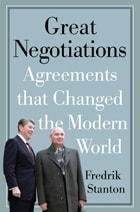
Words as much as weapons have shaped the course of history. Whether to avert, resolve, assist, or secure the outcome of a conflict, diplomacy in the modern age has had great triumphs and bitter failures, from the Cuban Missile Crisis in 1962, which narrowly spared humanity from a nuclear Armageddon, to the Treaty of Versailles after World War I, which created problems that still confront us today. Drawing on primary sources, transcripts, and interviews, Great Negotiations: Agreements that Changed the Modern World tells the stories of eight key episodes in modern diplomacy. From Benjamin Franklin securing crucial French support for the American revolution to Reagan and Gorbachev laying the groundwork to eliminate an entire class of nuclear weapons, Fredrik Stanton explains what each party brought to the negotiating table, the stakes, the obstacles to success, and how they were overcome.
Improbable Patriot
The Secret History of Monsieur de Beaumarchais, the French Playwright Who Saved the American RevolutionHarlow Giles Unger
University Press of New England, 2011
James Milton Turner and the Promise of America
The Public Life of a Post-Civil War Black LeaderGary R. Kremer
University of Missouri Press, 2020
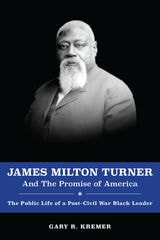
Born a slave, Turner gained freedom when he was a child and received his education in clandestine St. Louis schools, later briefly attending Oberlin College. A self-taught lawyer, Turner earned a statewide reputation and wielded power far out of proportion to Missouri's relatively small black population.
After working nearly a decade in Liberia, Turner never regained the prominence he had enjoyed during Reconstruction.
Korea Letters in the William Elliot Griffis Collection
An Annotated SelectionYoung-mee Yu Cho
Rutgers University Press, 2024
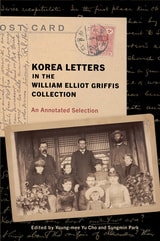
The Korean materials in the Griffis Collection at Rutgers University consist of journals, correspondence, articles, maps, prints, photos, postcards, manuscripts, scrapbooks, and ephemera. These papers reflect Griffis's interests and activities in relation to Korea as a historian, scholar, and theologian. They provide a rare window into the turbulent period of late nineteenth- and twentieth-century Korea, witnessed and evaluated by Griffis and early American missionaries in East Asia. The Korea Letters in the William Elliot Griffis Collection are divided into two parts: letters from missionaries and letters from Japanese and Korean political figures. Newly available and accessible through this collection, these letters develop a multifaceted history of early American missionaries in Korea, the Korean independence movement, and Griffis's views on Korean culture.
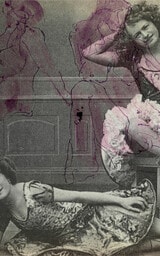
Lyric Novella
Annemarie Schwarzenbach
Seagull Books, 2011
Schwarzenbach’s clear, psychologically acute prose makes this novella an evocative narrative, with many intriguing parallels to her own life.
Annemarie Schwarzenbach—journalist, novelist, antifascist, archaeologist, and traveler—has become a European cult figure for bohemian free spirits since the rediscovery of her works in the late 1980s. Lyric Novella is her story of a young man’s obsession with a Berlin variété actress. Despite having his future career mapped out for him in the diplomatic service, the young man begins to question all his family values under Sibylle’s spell. His family, future, and social standing become irrelevant when set against his overriding compulsion to pick her up every night from the theater so they can go for a drive. Bringing the story back to her own life, Schwarzenbach admitted after publication that her hero was in fact a young woman, not a man, leaving little doubt that Lyric Novella is a literary tale of lesbian love during socially and politically turbulent times.
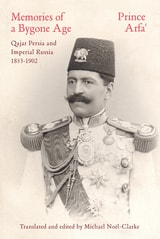
Memories of a Bygone Age
Qajar Persia and Imperial Russia 1853-1902Prince Arfa
Gingko, 2016
Prince Arfa writes with arresting wit about the deadly intrigues of the Qajar court. Lamentingly, but resolutely, he chronicles the decline of Iran from a once great empire to an almost bankrupt, lawless state, in which social unrest is channelled and exploited by the clergy. He describes the complex interactions between Iran and Europe, including an account of Naser-od-Din Shah’s profligate visits to Britain and France; the splendor and eccentricities of the doomed Tsar Nicholas II’s court; the Tsar’s omen-laden coronation; and his own favor with the Tsarina, who would grant him concessions on matters of vital importance to his country. The result is a memoir of extraordinary political intrigue.
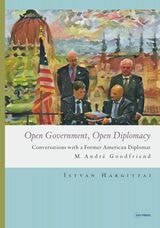
Open Government, Open Diplomacy
Conversations with a Former American Diplomat M. André GoodfriendIstván Hargittai
Central European University Press, 2023
André Goodfriend was Deputy Chief of Mission from 2013 to 2015 at the US Embassy in Budapest. In the absence of an ambassador, most of the time he was Chargé d’Affaires. Goodfriend represented his country, and for that matter, liberal democracy, in the early period of the increasingly autocratic Orbán regime. This tenure was distinguished by an unusually high public visibility and broad-based popularity. This book contains the distilled essence of conversations recorded in the fall of 2015 and in the years after his departure.
Aside from Goodfriend’s reflections on his personal history, the main focus of the deliberations is on open government: its characteristics, preconditions, benefits, and its relation to modern diplomacy. The mindset of a democracy-rooted diplomat with a working experience in an increasingly autocratic regime lends a particular perspective to the topics discussed. These topics include the fight against corruption, the protection of civil society, crisis prevention, education, economy, international relations, applied humanities, and the use of the social and traditional media to achieve policy goals.
This book presents modern, “people-friendly” diplomacy in an era in which public officials are increasingly expected to be transparent and engaged.
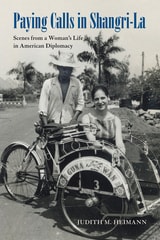
Paying Calls in Shangri-La
Scenes from a Woman’s Life in American DiplomacyJudith M. Heimann
Ohio University Press, 2016
Judith M. Heimann entered the diplomatic life in 1958 to join her husband, John, in Jakarta, Indonesia, at his American Embassy post. This, her first time out of the United States, would set her on a path across the continents as she mastered the fine points of diplomatic culture. She did so first as a spouse, then as a diplomat herself, thus becoming part of one of the Foreign Service’s first tandem couples.
Heimann’s lively recollections of her life in Africa, Asia, and Europe show us that when it comes to reconciling our government’s requirements with the other government’s wants, shuttle diplomacy, Skype, and email cannot match on-the-ground interaction. The ability to gauge and finesse gesture, tone of voice, and unspoken assumptions became her stock-in-trade as she navigated, time and again, remarkably delicate situations.
This insightful and witty memoir gives us a behind-the-scenes look at a rarely explored experience: that of one of the very first married female diplomats, who played an unsung but significant role in some of the important international events of the past fifty years. To those who know something of today’s world of diplomacy, Paying Calls in Shangri-La will be an enlightening tour through the way it used to be—and for aspiring Foreign Service officers and students, it will be an inspiration.
Published in association with ADST-DACOR Diplomats and Diplomacy Series
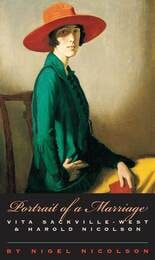
Portrait of a Marriage
Vita Sackville-West and Harold NicolsonNigel Nicolson
University of Chicago Press, 1998
Presidents, Diplomats, and Other Mortals
Edited by J. Garry Clifford & Theodore A. Wilson
University of Missouri Press, 2007
From Abraham Lincoln’s stance on international slavery to George W. Bush’s incursions on the world stage, American presidents and other leaders have taken decisive actions to shape our country’s foreign policy. This new collection of essays provides analytical narratives of how and why policies were devised and implemented that would determine the place of the United States in the international arena from the 1860s to the present. Showing what individuals do—or choose not to do—is central to understanding diplomacy in peace and war.
These writings—by such prominent historians as Terry H. Anderson and Eugene P. Trani—examine presidents and other diplomats at their best and worst in the practice of statecraft. They take on issues ranging from America’s economic expansion abroad to the relations of democracies with authoritarian leaders and rogue nations to advocacy of such concepts as internationalism, unilateralism, nation building, and regime change. In so doing, they take readers on a virtual tour of American diplomatic history, tracing the ideas and actions of individuals in shaping our foreign policy, whether George F. Kennan as author of Soviet containment or Ronald Reagan as progenitor of “Star Wars.”
The essays range over a variety of scenarios to depict leaders coming to grips with real-world situations. They offer original views on such topics as American diplomacy toward Nicaragua, origins of U.S. attitudes toward Russia and the Soviet Union, FDR’s idiosyncratic approach to statecraft, and food diplomacy as practiced by LBJ and Richard Nixon. And in considering post–Cold War crises, they address Bill Clinton’s military interventions, George W. Bush’s war against Iraq, and the half-century background to the current nuclear standoff with Iran. Additional articles pay tribute to the outstanding career of Robert H. Ferrell as a scholar and teacher.
Throughout the volume, the authors seek to exemplify the scholarly standards of narrative diplomatic history espoused by Robert Ferrell—especially the notion that historians should attempt to explain fully the circumstances, opportunities, and pressures that influence foreign policy decisions while remembering that historical actors cannot with certainty predict the outcomes of their actions. Presidents, Diplomats, and Other Mortals is both a collection of compelling historical studies and an overarching case study of the role of individuals in foreign policy making and an insightful review of some of history’s most important moments. Taken together, these essays provide a fitting tribute to Ferrell, the trailblazing scholar in whose honor the book was written.