Results by title
240 books match the query 'Diaries' and 10 start with s

Sailor Of The Air
The 1917-1919 Letters and Diary of USN CMM/A Irving Edward SheelyLawrence D. Sheely
University of Alabama Press, 1993
In the winter of 1917, with most of the world at war, twenty-three-year-old Irving Edward Sheely of Albany, New York, enlisted in Naval Aviation and began his training at Pensacola Naval Air Station. When Congress declared ware on Germany on April 6, 1917, the combined strength of aviation within the Navy and Marine Corps was 48 officers, 239 enlisted men, 54 airplanes, one airship, and one air station.
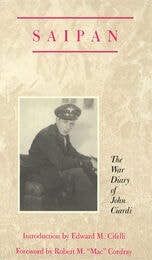
Saipan
The War Diary of John CiardiJohn Ciardi
University of Arkansas Press, 1988
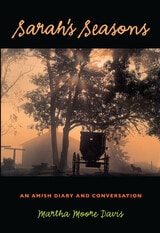
Sarah's Seasons
An Amish Diary and ConversationMartha Moore Davis
University of Iowa Press, 1997
Sarah's brief daily notations, recorded on a calendar throughout 1976 and 1977, reveal an ongoing account of her seasonal routine. In many ways the straightforward simplicity of her writing is a reflection of her life near rural Kalona, Iowa, a life filled with what Martha Davis calls look-easy tasks undertaken without the conveniences of electricity, phones, or automobiles. For Sarah, diaries are a record. “A diary can settle a question, a disagreement,” she tells Martha. “You look back and see what took place. That's history.”
Through their conversations, Martha soon discovered she had more in common with Sarah than diary writing. Though Davis lived in the mainstream culture, an “English” person as the Amish say, like Sarah she grew up on a farm in rural Iowa during the 1950s and 1960s. Like Martha, Sarah had spent several years as a teacher.
In Sarah's Seasons Martha Davis shares their common experiences and common interests—gardening, quilting, and cooking. Alongside Sarah's diary, Martha presents their shared recipes and conversations as well as reflections on her own more modern existence. Because of her friendship with Sarah, the author found a new sense of belonging to and purpose in the mainstream world. In the end, Sarah's diary becomes for Martha a meditation on time and community.
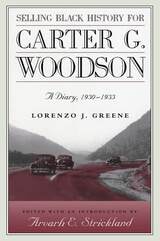
Selling Black History for Carter G. Woodson
A Diary, 1930-1933Lorenzo J. Greene, Edited & Intro by Arvarh E. Strickland
University of Missouri Press, 1996
In the summer of 1930, Lorenzo Johnston Greene, a graduate of Howard University and a doctoral candidate at Columbia University, became a book agent for the man with the undisputed title of "Father of Negro History," Carter G. Woodson. With little more than determination, Greene, along with four Howard University students, traveled throughout the South and Southeast selling books published by Woodson's Associated Publishers. Their dual purpose was to provide needed funds for the Association for the Study of Negro Life and History and to promote the study of African American history. Greene returned east by way of Chicago, and, for a time, he settled in Philadelphia, selling books there and in the nearby cities of Delaware and New Jersey. He left Philadelphia in 1931 to conduct a survey in Washington, D.C., of firms employing and not employing black workers.
From 1930 until 1933, when Greene began teaching at Lincoln University in Jefferson City, Missouri, Selling Black History for Carter G. Woodson provides a unique firsthand account of conditions in African American communities during the Great Depression. Greene describes in the diary, often in lyrical terms, the places and people he visited. He provides poignant descriptions of what was happening to black professional and business people, plus working-class people, along with details of high school facilities, churches, black business enterprises, housing, and general conditions in communities. Greene also gives revealing accounts of how the black colleges were faring in 1930.
Selling Black History for Carter G. Woodson offers important glimpses into the private thoughts of a young man of the 1930s, a developing intellectual and scholar. Greene's diary also provides invaluable insights into the personality of Carter Woodson that are not otherwise available. This fascinating and comprehensive view of black America during the early thirties will be a welcome addition to African American studies.
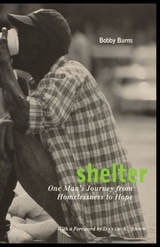
Shelter
Bobby Burns
University of Arizona Press, 1998
Shelter is filled with the sights and sounds of homelessness. Shelter life is patterned by meals provided by church volunteers, lines for soap and clean towels, the repeated meticulous washing of hands by an obsessive-compulsive resident, the rare pleasure of a fried chicken dinner, the illicit smell of marijuana within the shelter. Burns witnesses the residents' struggles with drugs, alcohol, and disability, and he wonders daily whether he will have the courage to emerge from this life. Bobby's diary expresses the full range of emotions of a homeless person: anger, self-pity, pride, humility, shame, depression, and optimism. These are not contradictions; taken together they represent the real feelings provoked by homelessness.
But with rare inner courage, Bobby stokes the fires of hope within himself, marking the days in his journal to keep himself from sliding deeper into a spiral of despair. Bobby confronts his own stereotypes about the homeless and learns firsthand what it means to struggle daily for survival and for dignity. He learns greater courage and he learns greater kindness. He is given food and a bed for 41 days, but he finds shelter on his own, deep within himself.

Spiritual Writings of Sister Margaret of the Mother of God (1635-1643)
Margaret Van Noort
Iter Press, 2015
In 1635, as directed by her confessor so that he might understand “the state of her soul,” Margaret Van Noort, a lay sister of the royal convent of Discalced Carmelite nuns in Brussels, composed her spiritual autobiography. This text was followed by two diaries in 1636 and 1637 recording the workings of her inner life and relation to God, and reflecting the cosmopolitan Catholic tradition of her homeland. Now gathered in this volume, these works illustrate Margaret’s development from a troubled young lay sister into a woman of spiritual experience and authority.
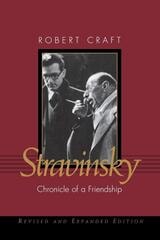
Stravinsky
Chronicle of a FriendshipRobert Craft
Vanderbilt University Press, 1994
For nearly the last twenty-five years of Igor Stravinsky's incredibly full life, the noted musician, conductor, and writer Robert Craft was his closest colleague and friend, a trusted member of his household, and an important part of all of the composer's activities. Throughout these years, Craft kept a detailed diary, impressive in its powers of observation and characterization. That diary forms the basis for Stravinsky: Chronicle of a Friendship, now released in a substantially revised and expanded new edition.
This edition includes nearly twice as many illustrations and more than 35% entirely new textual material. In addition, Craft adds an evocative "Postlude" in which he summarily brings matters forward to the death of Vera Stravinsky, several years after that of the Maestro.
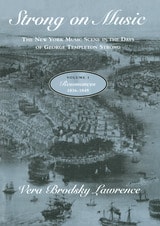
Strong on Music
The New York Music Scene in the Days of George Templeton Strong, Volume 1: Resonances, 1836-1849Vera Brodsky Lawrence
University of Chicago Press, 1995
Formerly a concert pianist, Vera Brodsky Lawrence spent the last third of her life as a historian of American music (she died in 1996). She was editor of The Piano Works of Louis Moreau Gottschalk and The Complete Works of Scott Joplin.
On Volume 1: "A marvelous book. There is nothing like it in the literature of American music."—Harold C. Schonberg, New York Times Book Review
On Volume 2: "A monumental achievement."—Victor Fell Yellin, Opera Quarterly

Strong on Music
The New York Music Scene in the Days of George Templeton Strong, Volume 2: Reverberations, 1850-1856Vera Brodsky Lawrence
University of Chicago Press, 1995
Each chapter presents one year in the musical life of New York City, with Lawrence's extensive commentary enriched both by excerpts from Strong's diaries and a lavish selection of little-known music criticism and comment from the period. The reviews, written by an often truculent, sometimes venal tribe of music journalists, cover the entire world of music—from opera to barrel organ, salon to saloon.
In this New York, operas performed by renowned artists are parodied by blackface minstrels; performances of the Philharmonic Society are drowned by the raucous chatter of flirtatious adolescents, who turn concerts into a noisy singles' hangout; and irate critics trash the first performances of Verdi operas, calling the plots indecent and the scores noisy and unmelodic. In this volatile atmosphere, a native musical culture is born; its whose first faltering efforts are dubiously received, and the first American composers begin to emerge.
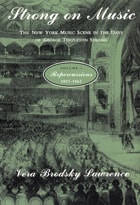
Strong on Music
The New York Music Scene in the Days of George Templeton Strong, Volume 3: Repercussions, 1857-1862Vera Brodsky Lawrence
University of Chicago Press, 1999
Among the many striking scenes vividly portrayed in Repercussions are the rapturous reception of Verdi's Ballo in maschera in 1861; the impact of the Civil War on New York's music scene, from theaters closing as their musicians enlisted to the performance of "The Star-Spangled Banner" at every possible occasion; and open-air concerts in the developing Central Park. Throughout, Lawrence mines a treasure trove of primary source materials including daily newspapers, memoirs, city directories, and architectural drawings.
Indispensable for scholars, Repercussions will also fascinate music fans with its witty writing and detailed descriptions of the cultural life of America's first metropolis.
Formerly a concert pianist, Vera Brodsky Lawrence spent the last third of her life as a historian of American music (she died in 1996). She was editor of The Piano Works of Louis Moreau Gottschalk and The Complete Works of Scott Joplin.
On Volume 1: "A marvelous book. There is nothing like it in the literature of American music."—Harold C. Schonberg, New York Times Book Review
On Volume 2: "A monumental achievement."—Victor Fell Yellin, Opera Quarterly