Results by title
154 books match the query 'East' and 12 start with s

Second Chances
Surviving AIDS in UgandaSusan Reynolds Whyte, editor
Duke University Press, 2014
Contributors. Phoebe Kajubi, David Kyaddondo, Lotte Meinert, Hanne O. Mogensen, Godfrey Etyang Siu, Jenipher Twebaze, Michael A. Whyte, Susan Reynolds Whyte
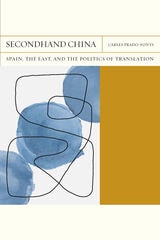
Secondhand China
Spain, the East, and the Politics of TranslationCarles Prado-Fonts
Northwestern University Press, 2022
Uncovering an eclectic and surprising archive, Prado-Fonts draws on diverse cultural artifacts from popular literature, journalism, and early cinema to offer a rich account of how China was seen across the West between 1880 and 1930. Enrique Gaspar, Luis de Oteyza, Vicente Blasco Ibáñez, and lesser-known authors writing in Spanish and Catalan put themselves in dialogue with Leo Tolstoy, John Dewey, W. Somerset Maugham, Bertrand Russell, Pearl Buck, and André Malraux, as well as stereotypical figures from popular culture like Fu Manchu and Charlie Chan. Throughout, Prado-Fonts exposes translation as a technology of cultural hegemony and China as an appealing object for representation. A timely contribution to our understanding of how we create and consume knowledge about the world, Secondhand China is essential reading for scholars and students of Orientalism, postcolonial studies, translation studies, comparative literature, and cultural studies.
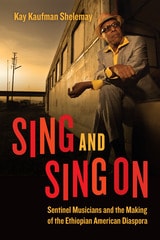
Sing and Sing On
Sentinel Musicians and the Making of the Ethiopian American DiasporaKay Kaufman Shelemay
University of Chicago Press, 2022
Sing and Sing On is the first study of the forced migration of musicians out of the Horn of Africa dating from the 1974 Ethiopian revolution, a political event that overthrew one of the world’s oldest monarchies and installed a brutal military regime. Musicians were among the first to depart the region, their lives shattered by revolutionary violence, curfews, and civil war. Reconstructing the memories of forced migration, Sing and Sing On traces the challenges musicians faced amidst revolutionary violence and the critical role they played in building communities abroad.
Drawing on the recollections of dozens of musicians, Sing and Sing On details personal, cultural, and economic hardships experienced by musicians who have resettled in new locales abroad. Kay Kaufman Shelemay highlights their many artistic and social initiatives and the ways they have offered inspiration and leadership within and beyond a rapidly growing Ethiopian American diaspora. While musicians held this role as sentinels in Ethiopian culture long before the revolution began, it has taken on new meanings and contours in the Ethiopian diaspora. The book details the ongoing creativity of these musicians while exploring the attraction of return to their Ethiopian homeland over the course of decades abroad. Ultimately, Shelemay shows that musicians are uniquely positioned to serve this sentinel role as both guardians and challengers of cultural heritage.
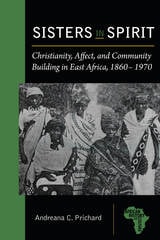
Sisters in Spirit
Christianity, Affect, and Community Building in East Africa, 1860–1970Andreana C. Prichard
Michigan State University Press, 2017
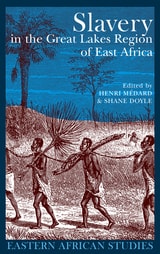
Slavery in the Great Lakes Region of East Africa
Henri Médard
Ohio University Press, 2007
Slavery in the Great Lakes Region of East Africa is a collection of ten studies by the most prominent historians of the region. Slavery was more important in the Great Lakes region of Eastern Africa than often has been assumed, and Africans from the interior played a more complex role than was previously recognized. The essays in this collection reveal the connections between the peoples of the region as well as their encounters with the conquering Europeans. The contributors challenge the assertion that domestic slavery increased in Africa as a result of the international trade. Slavery in this region was not a uniform phenomenon and the line between enslaved and non-slave labor was fine. Kinship ties could mark the difference between free and unfree labor. Social categories were not always clear-cut and the status of a slave could change within a lifetime.
Contents:
- Introduction by Henri Médard
- Language Evidence of Slavery to the Eighteenth Century by David Schoenbrun
- The Rise of Slavery & Social Change in Unyamwezi 1860–1900 by Jan-Georg Deutsch
- Slavery & Forced Labour in the Eastern Congo 1850–1910 by David Northrup
- Legacies of Slavery in North West Uganda ‘The One-Elevens’ by Mark Leopold
- Human Booty in Buganda: The Seizure of People in War, c.1700–c.1900 by Richard Reid
- Stolen People & Autonomous Chiefs in Nineteenth-Century Buganda by Holly Hanson
- Women’s Experiences of Slavery in Late Nineteenth- & Early Twentieth-Century Uganda by Michael W. Tuck
- Slavery & Social Oppression in Ankole 1890–1940 by Edward I. Steinhart
- The Slave Trade in Burundi & Rwanda at the Beginning of German Colonisation 1890–1906 by Jean-Pierre Chretien
- Bunyoro & the Demography of Slavery Debate by Shane Doyle
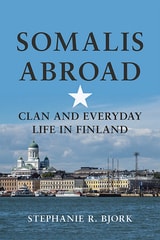
Somalis Abroad
Clan and Everyday Life in FinlandStephanie R. Bjork
University of Illinois Press, 2017
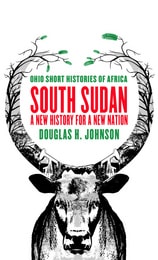
South Sudan
A New History for a New NationDouglas H. Johnson
Ohio University Press, 2016
Africa’s newest nation has a long history. Often considered remote and isolated from the rest of Africa, and usually associated with the violence of slavery and civil war, South Sudan has been an arena for a complex mixing of peoples, languages, and beliefs. The nation’s diversity is both its strength and a challenge as its people attempt to overcome the legacy of decades of war to build a new economic, political, and national future.
Most recent studies of South Sudan’s history have a foreshortened sense of the past, focusing on current political issues, the recently ended civil war, or the ongoing conflicts within the country and along its border with Sudan. This brief but substantial overview of South Sudan’s longue durée, by one of the world’s foremost experts on the region, answers the need for a current, accessible book on this important country.
Drawing on recent advances in the archaeology of the Nile Valley, new fieldwork as well as classic ethnography, and local and foreign archives, Johnson recovers South Sudan’s place in African history and challenges the stereotypes imposed on its peoples.
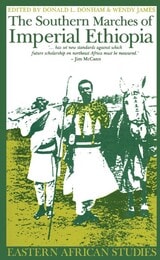
Southern Marches of Imperial Ethiopia
Essays in History and Social AnthropologyDonald L. Donham
Ohio University Press, 2002
This pioneering book, first published to wide acclaim in 1986, traces the way the Ethiopian center and the peripheral regions of the country affected each other. It looks specifically at the expansion of the highland Ethiopian state into the western and southern lowlands from the 1890s up to 1974.
Southern Nilotic History
Linguistic Approaches to the Study of the PastChristopher Ehret
Northwestern University Press, 1971
“As a history, the book is a remarkable tour de force. Using mainly linguistic evidence, the author locates populations, moves them around, determines their relative influence vis-à-vis their neighbors, and reconstructs aspects of their culture, from basic economy to the practice of extracting incisors.” —American Anthropologist
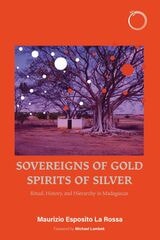
Sovereigns of Gold, Spirits of Silver
Ritual, History, and Hierarchy in MadagascarMaurizio Esposito La Rossa
HAU, 2026
How the inhabitants of Western Madagascar reshape their collective identity and negotiate their place within contemporary society through royal rituals and the reinterpretation of the past.
In a postcolonial republic marked by recurrent crises, royal hierarchy continues to frame social inequalities. Within this context, both the descendants of slaves and the newly rich seek to claim or legitimize new hierarchical positions by reformulating historical narratives and establishing them through royal rituals. Focusing on a cult dedicated to the spirits of the ancestors of the Silver Dynasty, Maurizio Esposito La Rossa investigates the categories of “silver” and “gold” that structure the hierarchy of the Sakalava monarchy and are also mobilized by politicians to legitimize their power.
Through multi-sited ethnography, the book offers a broader reflection on the link between narratives and places and on contrasting ways of conceiving history. Whereas Western historiography—and the rise of the nation-state—tends to produce unified historical narratives, the Sakalava monarchies conceive of history as rooted in specific places and social groups, where multiple versions coexist and contend. Combining the divergent demands of a historical anthropology and an anthropology of history, this book endeavors to recount another history of the Sakalava monarchy, without neglecting the polyphony that characterizes it. By tracing how the past is mobilized, transformed, and contested in the present, the book speaks to anthropologists, historians, and readers interested in the intricate entanglements of history, ritual, and political power in postcolonial settings.
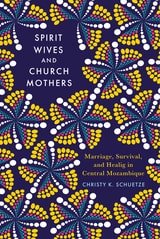
Spirit Wives and Church Mothers
Marriage, Survival, and Healing in Central MozambiqueChristy K. Schuetze
University of Wisconsin Press, 2023
Drawing on years of field research, Schuetze offers a richly drawn ethnographic analysis of these important religious transformations in the lives of female participants. Illustrating how economic and social context shapes the possibilities for—and forms of—women’s empowerment, Spirit Wives andChurch Mothers intervenes in scholarly debates about the nature of agency and challenges universalist Western feminist assumptions about the form of women’s liberation.
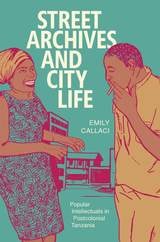
Street Archives and City Life
Popular Intellectuals in Postcolonial TanzaniaEmily Callaci
Duke University Press, 2017