Results by title
1832 books match the query 'Essays' and 137 start with s
Sacred Place
W Scott Olsen
University of Utah Press, 1996
Some of today's most significant writers and poets explore the relation between what we call the sacred and what we witness in the apparent world.
This unprecedented anthology brings together a provocative mix of new and well known writers whose poetry and prose broaches the possibility of something "bigger" going on, something more significant at stake. Is some powerful agency at work in what we see or are we just wishing (or fearing) that there were? Who can say? Who would dare? What’s most intriguing about the selections in this volume is that the authors do dare. What’s most attractive about them is that they resist answering that dare with reductions. They prefer the swoon of multiple possibilities over the relative comfort of conclusions. Various as they are, the works collected in The Sacred Place share a common reverence for the word itself, and perhaps best of all—they share a common understanding that no one of them comprehends fully what that means. They seem to desire instead a sense that the humble stuff surrounding us affords a likely enough habitation for the sacred, even now.
Sails of the Herring Fleet
Essays on BeckettHerbert Blau
University of Michigan Press, 2003
Salleyland
Wildlife Adventures in Swamps, Sandhills, and ForestsWhit Gibbons
University of Alabama Press, 2023
WINNER OF THE SOUTH CAROLINA OUTDOOR PRESS ASSOCIATION'S EXCELLENCE IN CRAFT FOR THE BEST OUTDOOR BOOK AWARD
Adventures and misadventures exploring nature on a patch of “worthless” abandoned farmland
Following his retirement from academic life, renowned naturalist and writer Whit Gibbons and his family purchased a tract of abandoned farmland where the South Carolina piedmont meets the coastal plain. Described as backcountry scrubland, it was originally envisioned as a family retreat, but soon the property became Gibbons’s outdoor learning laboratory where he was often aided by his four grandchildren, along with a host of enthusiastic visitors.
Inspired by nature’s power to excite, educate, and provide a sense of place in the world, Gibbons invites readers to learn about their surrounding environments by describing his latest adventures and sharing expert advice for exploring the world in which we live. Peppered throughout with colorful personal anecdotes and told with Gibbons’s affable style and wit, Salleyland: Wildlife Adventures in Swamps, Sandhills, and Forests is more than a personal memoir or a record of place. Rather, it is an exercise in learning about a patch of nature, thereby reminding us to open our eyes to the complexity and wonder of the natural world.
Starting with the simple advice of following your own curiosity, Gibbons discusses different opportunities and methods for exploring one’s surroundings, introduces key ecological concepts, offers advice for cultivating habitat, explains the value of and different approaches to keeping lists and field journals, and celebrates the advances that cell phone photography and wildlife cameras offer naturalists of all levels. With Gibbons’s guidance and encouragement, readers will learn to embrace their inner scientists, equipped with the knowledge and encouragement to venture beyond their own front doors, ready to discover the secrets of their habitat, regardless of where they live.
Salt and Pepper
Selected Literary ColumnsSankarshan Thakur
Seagull Books, 2026
Salt and Pepper is a collection of literary columns that defy convention—acerbic, tender, and unrelenting in their gaze. Written between the margins of news and national spectacle, these pieces are not topical commentary but something far more enduring: political satire that reads like poetry, reportage that mutates into parable, lament, and fable. In these dispatches from a fractured republic, written over the past decade, journalist Sankarshan Thakur captures the surreal absurdities and deep disquiet of an India caught between thunderous assertion and muffled dissent. Governments speak in acronyms, mobs chant in hashtags, silence acquires a sound—and memory becomes an act of resistance. These are chronicles of a society slipping into curated amnesia, of belonging turned conditional, and of patriotism twisted into performance.
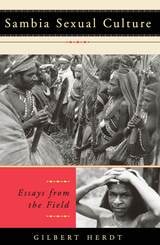
Sambia Sexual Culture
Essays from the FieldGilbert Herdt
University of Chicago Press, 1999
Over the course of 20 years, Herdt made 13 field trips to live with the Sambia in order to understand sexuality and ritual in the context of warfare and gender segregation. Herdt's essays examine Sambia fetish and fantasy, ritual nose-bleeding, the role of homoerotic insemination, the role of the father and mother in the process of identity formation, and the creation of a "third sex" in nature and culture. He also discusses the representation of homosexuality in cross-cultural literature on premodern societies, arguing that scholars have long viewed desires through the tropes of negative western models. Herdt asks us to reconsider the realities and subjective experiences of desires in their own context, and to rethink how the homoerotic is expressed in radically divergent sexual cultures.
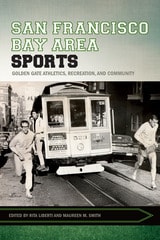
San Francisco Bay Area Sports
Golden Gate Athletics, Recreation, and CommunityRita Liberti
University of Arkansas Press, 2017
San Francisco Bay Area Sports brings together fifteen essays covering the issues, controversies, and personalities that have emerged as northern Californians recreated and competed over the last 150 years. The area’s diversity, anti-establishment leanings, and unique and beautiful natural surroundings are explored in the context of a dynamic sporting past that includes events broadcast to millions or activities engaged in by just a few.
Professional and college events are covered along with lesser-known entities such as Oakland’s public parks, tennis player and Bay Area native Rosie Casals, environmentalism and hiking in Marin County, and the origins of the Gay Games. Taken as a whole, this book clarifies how sport is connected to identities based on sexuality, gender, race, and ethnicity. Just as crucial, the stories here illuminate how sport and recreation can potentially create transgressive spaces, particularity in a place known for its nonconformity.
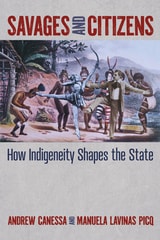
Savages and Citizens
How Indigeneity Shapes the StateAndrew Canessa and Manuela Lavinas Picq; Foreword by Jeff Ganohalidoh Corntassel
University of Arizona Press, 2024
Delving into European political philosophy, comparative politics, and contemporary international law, the book shows how the concept of indigeneity has shaped the development of the modern state. The exclusion of Indigenous people was not a collateral byproduct; it was a political project in its own right. The book argues that indigeneity is a political identity relational to modern nation-states and that Indigenous politics, although marking the boundary of the state, are co-constitutive of colonial processes of state-making. In showing how indigeneity is central to how the international system of states operates, the book forefronts Indigenous peoples as political actors to reject essentializing views that reduce them to cultural “survivors” rooted in the past.
With insights drawn from diverse global contexts and empirical research from Bolivia and Ecuador, this work advocates for the relevance of Indigenous studies within political science and argues for an ethnography of sovereignty in anthropology. Savages and Citizens makes a compelling case for the centrality of Indigenous perspectives to understand the modern state from political theory to international studies.

Schall on Chesterton
Timely Essays on Timeless ParadoxesJames V. Schall
Catholic University of America Press, 2000
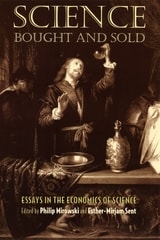
Science Bought and Sold
Essays in the Economics of ScienceEdited by Philip Mirowski and Esther-Mirjam Sent
University of Chicago Press, 2001
Bringing together central themes in this emerging discipline, the editors have assembled important articles that provide a wider context and background against which the economics of science can be evaluated. Roughly one-third of the essays presented here are original papers, and the rest are critical articles previously published in the field. From essays examining economic welfare to the idea of scientists as agents to the digital aspects of higher education,Science Bought and Sold presents a comprehensive overview of the new directions of this expanding area.
Contributors:
Kenneth J. Arrow
Mario Biagioli
William A. Brock
Michel Callon
Partha Dasgupta
Paul A. David
Steven N. Durlauf
Paul Forman
Steve Fuller
D. Wade Hands
Shaun P. Hargreaves Heap
Philip Kitcher
Sharon G. Levin
Richard R. Nelson
David F. Noble
Michael Polanyi
Gary Rhoades
Charles Sanders Peirce
Sheila Slaughter
Paula E. Stephan
Stephen Turner
James R. Wible
John Ziman
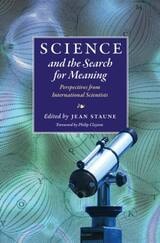
Science and the Search for Meaning
Perspectives from International ScientistsJean Staune
Templeton Press, 2006
As the organizer of some of the most important meetings in science and religion in Europe, Jean Staune is in a core position to report on the dialogue between science and religion, primarily from the views of scientists. In this book, the translation of a recent French edition, he presents "audacious and rigorous" articles by fifteen renowned leaders in the field, of whom four are Nobel Prize winners. They represent nine countries and seven religions.
Each of the authors in this volume responds in a different way, addressing naturalism, materialism, the nature of consciousness, reductionism, and the quest for meaning.Two paradigms emerge, with those who say that God (or direction) can exist in the universe because we can understand certain things, while others say that God exists because we cannot understand the universe altogether. Their reflections on the accessibility and the mystery of the world show the extraordinary abstract revolution that took place in science during the twentieth century and the way this establishes a bridge between science and religion.
Contributors are Nobel Prize winners Christian de Duve, Charles Townes, Ahmed Zewail, and William D. Phillips; as well as Paul Davies, Bernard d'Espagnat, Thomas Odhiambo, Ramanath Cowsik, Jean Kovalevsky, Thierry Magnin, Bruno Guiderdoni, Trinh Xuan Thuan, Khalil Chamcham, Michael Heller, and Philip Clayton.
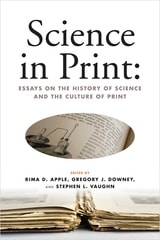
Science in Print
Essays on the History of Science and the Culture of PrintEdited by Rima D. Apple, Gregory J. Downey, and Stephen L. Vaughn; Foreword by James A. Secord
University of Wisconsin Press, 2012
Ever since the threads of seventeenth-century natural philosophy began to coalesce into an understanding of the natural world, printed artifacts such as laboratory notebooks, research journals, college textbooks, and popular paperbacks have been instrumental to the development of what we think of today as “science.” But just as the history of science involves more than recording discoveries, so too does the study of print culture extend beyond the mere cataloguing of books. In both disciplines, researchers attempt to comprehend how social structures of power, reputation, and meaning permeate both the written record and the intellectual scaffolding through which scientific debate takes place.
Science in Print brings together scholars from the fields of print culture, environmental history, science and technology studies, medical history, and library and information studies. This ambitious volume paints a rich picture of those tools and techniques of printing, publishing, and reading that shaped the ideas and practices that grew into modern science, from the days of the Royal Society of London in the late 1600s to the beginning of the modern U.S. environmental movement in the early 1960s.
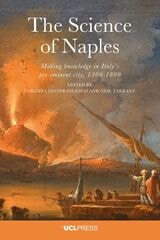
Science of Naples
Making Knowledge in Italy's Pre-Eminent City, 1500–1800Edited by Lorenza Gianfrancesco and Neil Tarrant
University College London, 2024
Long neglected in the history of Renaissance and early modern Europe, in recent years scholars have revised the received understanding of the political and economic significance of the city of Naples and its rich artistic, musical, and political culture. Its importance in the history of science, however, has remained relatively unknown. The Science of Naples provides the first dedicated study of Neapolitan scientific culture in the English language. Drawing on contributions from leading experts in the field, this volume presents a series of studies that demonstrate Neapolitans’ manifold contributions to European scientific culture in the early modern period and considers the importance of the city, its institutions, and its surrounding territories for the production of new knowledge.
Individual chapters demonstrate the extent to which Neapolitan scholars and academies contributed to debates within the Republic of Letters that continued until deep into the nineteenth century, and how studies of Neapolitan natural disasters yielded unique insights that contributed to the development of fields such as medicine and volcanology. Taken together, these studies resituate the city of Naples as an integral part of a scientific culture that has increasingly globalized and present a rich and engaging portrait of the individuals who lived, worked, and made scientific knowledge there.
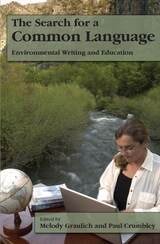
Search for a Common Language
Environmental Writing and Educationedited by Melody Graulich & Paul Crumbley
Utah State University Press, 2005

Seattle Sports
Play, Identity, and Pursuit in the Emerald CityTerry Anne Scott
University of Arkansas Press, 2020
Seattle Sports: Play, Identity, and Pursuit in the Emerald City, edited by Terry Anne Scott, explores the vast and varied history of sports in this city where diversity and social progress are reflected in and reinforced by play. The work gathered here covers Seattle’s professional sports culture as well as many of the city’s lesser-known figures and sports milestones. Fresh, nuanced takes on the Seattle Mariners, Supersonics, and Seahawks are joined by essays on gay softball leagues, city court basketball, athletics in local Japanese American communities during the interwar years, ultimate, the fierce women of roller derby, and much more. Together, these essays create a vivid portrait of Seattle fans, who, in supporting their teams—often in rain, sometimes in the midst of seismic activity—check the country’s implicit racial bias by rallying behind outspoken local sporting heroes.
Secrets of the Sun
A MemoirMako Yoshikawa
The Ohio State University Press, 2024
See It Feelingly
Classic Novels, Autistic Readers, and the Schooling of a No-Good English ProfessorRalph James Savarese
Duke University Press, 2018
Since the 1940s researchers have been repeating claims about autistic people's limited ability to understand language, to partake in imaginative play, and to generate the complex theory of mind necessary to appreciate literature. In See It Feelingly Ralph James Savarese, an English professor whose son is one of the first nonspeaking autistics to graduate from college, challenges this view.
Discussing fictional works over a period of years with readers from across the autism spectrum, Savarese was stunned by the readers' ability to expand his understanding of texts he knew intimately. Their startling insights emerged not only from the way their different bodies and brains lined up with a story but also from their experiences of stigma and exclusion.
For Mukhopadhyay Moby-Dick is an allegory of revenge against autism, the frantic quest for a cure. The white whale represents the autist's baffling, because wordless, immersion in the sensory. Computer programmer and cyberpunk author Dora Raymaker skewers the empathetic failings of the bounty hunters in Philip K. Dick's Do Androids Dream of Electric Sheep? Autistics, some studies suggest, offer instruction in embracing the nonhuman. Encountering a short story about a lonely marine biologist in Antarctica, Temple Grandin remembers her past with an uncharacteristic emotional intensity, and she reminds the reader of the myriad ways in which people can relate to fiction. Why must there be a norm?
Mixing memoir with current research in autism and cognitive literary studies, Savarese celebrates how literature springs to life through the contrasting responses of unique individuals, while helping people both on and off the spectrum to engage more richly with the world.
Seeing MAD
Essays on MAD Magazine's Humor and LegacyJudith Yaross Lee
University of Missouri Press, 2021
Mad magazine stands near the heart of post-WWII American humor, but at the periphery in scholarly recognition from American cultural historians, including humor specialists. This book fills that gap, with perceptive, informed, engaging, but also funny essays by a variety of scholars. The chapters, written by experts on humor, comics, and popular culture, cover the genesis of Mad; its editors and prominent contributors; its regular features and departments and standout examples of their contents; perspectives on its cultural and political significance; and its enduring legacy in American culture.
Seeing Through Madness
Essays in Crazy TimesW. J. T. Mitchell
University of Chicago Press, 2027
An insightful reconsideration of our historical moment seen through the lens of madness.
In Seeing Through Madness, W. J. T. Mitchell pursues the idea of “putting madness to work” by transforming it from an individual affliction—an illness to be treated—into a critical framework for understanding the human condition. The human species is now a danger to itself and others—the very definition of mental disorder in most societies. Therefore, it is time, Mitchell argues, for a fundamental reconsideration of madness, not only as a subject in media and the arts but more fundamentally as a “critical optic” on our historical moment. It is time to see through madness in all its variations, to see by means of it as a template for understanding, and to see it through to some form of wisdom.
While drawing a sense of urgency from Mitchell’s conviction that the whole world is experiencing a widespread political madness, the book specifically focuses on American psychoses and collective disorders, not least the country’s delusional exceptionalism.
Incisive, eclectic, and occasionally enraged, Mitchell’s essays are the guide we need to see us through crazy times.
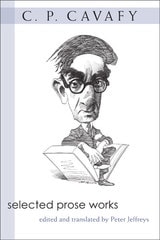
Selected Prose Works
C. P. Cavafy
University of Michigan Press, 2010
"A timely and significant supplement to C. P. Cavafy's poetic canon, the Selected Prose Works, eloquently translated and meticulously annotated by Peter Jeffreys, allows readers yet another creative engagement with the greatest Greek writer since antiquity. Marked by a wide and intriguing range of interests, these writings offer a rich trove for general readers and scholars alike, who from now on will find it difficult to discuss Cavafy's poetry without reference to his prose."
---Vassilis Lambropoulos, C. P. Cavafy Professor of Modern Greek, University of Michigan
"Peter Jeffreys gives us a rare gift---access to Constantine Cavafy's prose work. Through his intelligent translation, these texts, which range from literary criticism to personal notes, from essays on the Greek language to the Parthenon marbles, offer unexpected entry into the mind of one of the twentieth century's greatest literary figures. They suggest new ways to think about not only Cavafy's remarkable poetry but also the man himself. An indispensable companion for all who love Cavafy's work."
---Gregory Jusdanis, The Ohio State University
"Once you've felt his influence, you won't need telling that Cavafy is unique in his distinctive voice, his quiet humor, and his unassertive culture."
---Frank Kermode, Formerly Lord Northcliffe Professor of Modern English Literature at University College, London, and King Edward VII Professor of English Literature, University of Cambridge
Constantine Cavafy (1863–1933) is arguably the most important modern poet of Greece and Greek culture. Long a resident of Egypt and then Constantinople, Cavafy in his poems and prose works tended to focus on Greco-Roman antiquity, on Greece's national identity, and on personal and mythological images and themes including his ethnicity and sexual identity. He wrote some 150 poems, plus a few works in collaboration with his brother John.
His poetical works have been much translated and discussed, but until now, very little consideration has been given to his prose works, in part because many remained untranslated from the original Greek. This book collects Cavafy's more interesting prose pieces and translates those that originally appeared in Greek.
Of the forty pieces included, only thirteen have previously appeared in print, and of those thirteen only a few were in English. The pieces include essays, "prose poems," short stories, self-assessments, and considerations of other poets, including John Keats. This significant new collection offers a different perspective on the well-known Cavafy.
Peter Jeffreys, Assistant Professor of English at Suffolk University in Boston, received a Doctorate in English Literature from the University of Toronto. He is the author of Eastern Questions: Hellenism and Orientalism in the Writings of E.M. Forster and C.P. Cavafy and the editor of The Forster-Cavafy Letters: Friends at a Slight Angle. He is currently working on a bio-critical study of C. P. Cavafy and the decadent tradition.
Cover image copyright © David Levine
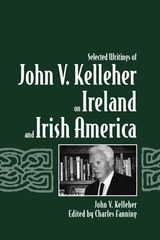
Selected Writings of John V. Kelleher on Ireland and Irish America
John V. Kelleher. Edited by Charles Fanning
Southern Illinois University Press, 2002
A collection of eighteen critical essays and twenty-six translations spanning the career of one of the founding intellects of Irish Studies, the Selected Writings of John V. Kelleher on Ireland and Irish America consists of five accessible sections. The first gathers Kelleher’s essays on the most widely known Irish cultural phenomenon—the literary renaissance of the early twentieth century. Part two contains his judicious assessments of Irish literature in its post-Revolutionary phase. The third section includes Kelleher’s insightful essays on the experience of the Irish in America. The fourth section contains essays that examine early Irish literature and culture, opening with a benchmark essay for Irish Studies, “Early Irish History and Pseudo-History,” which was read at the inaugural meeting of the American Conference for Irish Studies in 1961. The collection concludes with Kelleher’s translations and adaptations of poems in Old, Middle, and Modern Irish, illustrating his command of the language at every stage.
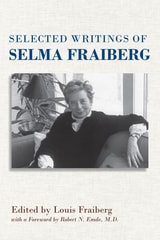
Selected Writings of Selma Fraiberg
Edited by Louis Fraiberg with a Foreword by Robert N. Emde, M.D.
The Ohio State University Press, 1987

Self and Society
Are Communal Solidarity and Individual Freedom Allies or Antagonists?Michael Amherst, David Crane, Nick Inman, Beninio McDonough-Tranza, and Tara McEvoy
Haus Publishing, 2021
Bringing together the winning and shortlisted essays from the 2020 Hubert Butler Essay Prize, Self and Society presents five fresh perspectives on the tension between individual freedom and communal solidarity, asking what we owe our communities and why it matters. With a foreword by Ireland’s President Michael D. Higgins, the book examines themes that are more pressing than ever in the age of Coronavirus and Brexit, invoking the spirit of the Irish essayist Hubert Butler to investigate whether collective and personal aims can be synergistic or are destined to remain ever in conflict.
Winner Michael Amherst takes on identity politics, questioning whether the stratification of society in the name of social justice is helpful or harmful in the pursuit of equality. Runners-up Tara McEvoy and David Crane tackle, respectively, the necessity of collective action as a response to the current pandemic and other social crises, and the role of conflicts of individual freedom in facilitating or stifling the economic liberation of refugees. Special mentions have been awarded to Nick Inman and Beninio McDonough-Tranza for their respective essays on personal responsibility and the legacy of the Polish union Solidarnosc.
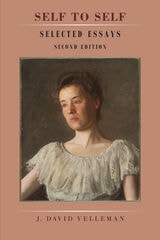
Self to Self
Selected Essays: Second EditionJ. David Velleman
Michigan Publishing Services, 2020
Self to Self brings together essays on personal identity, autonomy, and moral emotions by the philosopher J. David Velleman. Although the essays were written independently, they are unified by an overarching thesis – that there is no single entity denoted by “the self ” – as well as by themes from Kantian ethics, psychoanalytic theory, social psychology, and Velleman’s work in the philosophy of action. Two of the essays were selected by the editors of Philosophers’ Annual as being among the ten best papers in their year of publication.
Self to Self will be of interest to philosophers, psychologists, and others who theorize about the self.
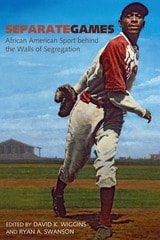
Separate Games
African American Sport behind the Walls of SegregationDavid K. Wiggins
University of Arkansas Press, 2017
Winner of the 2017 NASSH Book Award for best edited collection.
The hardening of racial lines during the first half of the twentieth century eliminated almost all African Americans from white organized sports, forcing black athletes to form their own teams, organizations, and events. This separate sporting culture, explored in the twelve essays included here, comprised much more than athletic competition; these “separate games” provided examples of black enterprise and black self-help and showed the importance of agency and the quest for racial uplift in a country fraught with racialist thinking and discrimination.
The significance of this sporting culture is vividly showcased in the stories of the Cuban Giants baseball team, basketball’s New York Renaissance Five, the Tennessee State Tigerbelles track-and-field team, black college football’s Turkey Bowl Classic, car racing’s Gold and Glory Sweepstakes, Negro League Baseball’s East-West All-Star game, and many more. These teams, organizations, and events made up a vibrant national sporting complex that remained in existence until the integration of sports beginning in the late 1940s. Separate Games explores the fascinating ways sports helped bind the black community and illuminate race pride, business acumen, and organizational abilities.
Serious Reflections During the Life and Surprising Adventures of Robinson Crusoe with his Vision of the Angelick World
The Stoke Newington EditionDaniel Defoe
Bucknell University Press, 2022

Service as Mandate
How American Land-Grant Universities Shaped the Modern World, 1920–2015Edited by Alan I Marcus
University of Alabama Press, 2015
From their founding, land-grant schools have provided educational opportunities to millions, producing many of the nation’s scientific, technical, and agricultural leaders and spawning countless technological and agricultural innovations. Nevertheless, their history has not always been smooth or without controversy or setbacks. These vital centers of learning and research have in fact been redefined and reconceptualized many times and today bear only a cursory resemblance to their original incarnations.
The thirteen essays in this collection explore such themes as the emphasis on food science and home economics, the country life movement, the evolution of a public research system, the rise of aerospace engineering, the effects of the GI Bill, the teaching of military science, the sustainable agriculture movement, and the development of golf-turf science. Woven together, these expertly curated scenes, vignettes, and episodes powerfully illustrate these institutions’ ability to flex and adapt to serve the educational needs of an ever-changing American citizenry.
By dint of their mission to remedy social, economic, and technical problems; to improve standards of living; and to enhance the quality of life, land-grant universities are destined and intended to be agents of change—a role that finds them at times both celebrated and hotly contested, even vilified. A readable and fascinating exploration of land-grant universities, Service as Mandate offers a vital exploration of these dynamic institutions to educators, policy makers, students, and the wider communities that land-grant universities serve.
Set in Motion
Essays, Interviews, and DialoguesA. R. Ammons
University of Michigan Press, 1996

Seven Contemporary Authors
Essays on Cozzens, Miller, West, Golding, Heller, Albee, and PowersEdited with an Introduction by Thomas B. Whitbread
University of Texas Press, 1966
These seven critical essays, each on a twentieth-century novelist, are disparate in content, but all are concerned with the problem of evil and inhumanity and with the paradoxes of human existence.
Each essay discusses a different author, but this independence of subject is resolved into a central theme through the interpretive approach followed by the seven critics. Each of the contributors presents his subject against the background of the current disillusionment and frustration of our age. Underlying each essay are undertones of the "absurdity" of life today for those who consider it thoughtfully, and the contrast between what men would like reality to be and what they actually find.
This unity of theme—the problem of evil, of inhumanity, of meaninglessness, the concern for the human being and his future—is developed in an interesting manner. It was exploited in different ways by the seven modern novelists discussed in the essays, and it is presented with different analytical techniques by the seven critics. Yet the reader senses the unity of feeling and purpose amid the diversity of fictional content and critical evaluation.
Besdies the interpretive Introduction by Thomas B. Whitbread, the book contains the following essays:
- R. W. Lewis, "The Conflicts of Reality: Cozzens' The Last Adam"
- Alan Friedman, "The Pitching of Love's Mansion in the Tropics of Henry Miller"
- Roger D. Abrahams, "Androgynes Bound: Nathanael West's Miss Lonelyhearts"
- George Clark, "An Illiberal Education: William Golding's Pedagogy"
- Vance Ramsey, "From Here to Absurdity: Heller's Catch-22"
- Anthony Channell Hilfer, "George and Martha: Sad, Sad, Sad"
- Robert G. Twombly, "Hubris, Health, and Holiness: The Despair of J. F. Powers"
Seven Letters to Melin
Essays on the Soul, Science, Art and MortalityJosef Šafarík
Karolinum Press, 2020
Through these exchanges, Šafařík argues for the primacy of artistic creativity over scientific explanation, of truth over accuracy, of internal moral agency over an externally imposed social morality, and of personal religious belief over organized church-going. Šafařík is neither anti-scientific nor anti-rational; however, he argues that science has limited power, and he rejects the idea of science that denies meaning and value to what cannot be measured or calculated.
Šafařík’s critiques of technology, the wage economy, and increased professionalization make him an important precursor to the philosophy of deep ecology. This book was also a major influence on the Czech president Václav Havel; in this new translation it will find a fresh cohort of readers interested in what makes us human.
Seven Words for Wind
Essays and Field Notes from Alaska's Pribilof IslandsSumner MacLeish
University of Alaska Press, 2008

Sex and Isolation
And Other EssaysBruce Benderson; Foreword by Catherine Texier
University of Wisconsin Press, 2007
In Sex and Isolation, readers will encounter eccentric street people, Latin American literary geniuses, a French cabaret owner, a transvestite performer, and many other unusual characters; they’ll visit subcultures rarely described in writing and be treated to Benderson’s iconoclastic opinions about culture in former and contemporary urban society. Whether proposing new theories about the relationship between art, entertainment, and sex, analyzing the rise of the Internet and the disappearance of public space, or considering how religion and sexual identity interact, each essay demonstrates sharp wit, surprising insight and some startling intellectual positions.
This is the first American volume of Benderson’s collected essays, featuring both new work and some of his best-known writings, including his famous essay “Toward the New Degeneracy.”
Sex and Religion
Teachings and Taboos in the History of World FaithsDag Ølstein Endsjø
Reaktion Books, 2011
Sex and religion are inevitably and intricately linked. There are few realms of human experience other than sex in which religion has greater reach and influence. The role of religion, of any faith, to prohibit, regulate, condemn, and reward, is unavoidably prominent in questions of sex—namely with whom, when, how, and why. In Sex and Religion, Dag Øistein Endsjø examines the myriad and complex religious attitudes towards sex in cultures throughout the world.
Endsjø reflects on some of the most significantly problematic areas in the relationship between sex and religion—from sex before or outside of marriage to homosexuality. Through many examples from world religions, he outlines what people mean by sex in a religious context, with whom it’s permissible to have sex, how sex can be a directly religious experience, and what consequences there are for deviance, for both the individual and society. As Endsjø explains, while Buddhist monks call attention to gay sex as a holy mystery, the Christian church questions a homosexual’s place in the church. Some religions may believe that promiscuity leads to hurricanes and nuclear war, and in others God condemns interracial marriage. Sex and Religion reveals there is nothing natural or self-evident about the ways in which various religions prescribe or proscribe and bless or condemn different types of sexuality. Whether sex becomes sacred or abhorrent depends entirely on how a religion defines it.
Sex and Religion is a fascinating investigation of mores, meanings, rituals, and rules in many faiths around the globe, and will be of interest to anyone curious about the intersection of these fundamental aspects of human history and experience.
Sexual Textualities
Essays on Queer/ing Latin American WritingBy David William Foster
University of Texas Press, 1997
Since the 1991 publication of his groundbreaking book Gay and Lesbian Themes in Latin American Writing, David William Foster has proposed a series of theoretical and critical principles for the analysis of Latin American culture from the perspectives of the queer. This book continues that project with a queer reading of literary and cultural aspects of Latin American texts.
Moving beyond its predecessor, which provided an initial inventory of Latin American gay and lesbian writing, Sexual Textualities analyzes questions of gender representation in Latin American cultural productions to establish the interrelationships, tensions, and irresolvable conflicts between heterosexism and homoeroticism. The topics that Foster addresses include Eva Peron as a cultural/sexual icon, feminine pornography, Luis Humberto Hermosillo's classic gay film Doña Herlinda y su hijo, homoerotic writing and Chicano authors, Matias Montes Huidobro's Exilio and the representation of gay identity, representation of the body in Alejandra Pizarnik's poetry, and the crisis of masculinity in Argentine fiction from 1940 to 1960.
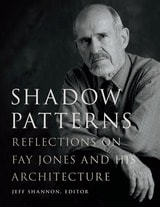
Shadow Patterns
Reflections on Fay Jones and His ArchitectureJeff Shannon
University of Arkansas Press, 2017
Winner, 2017 Ned Shank Award for Outstanding Preservation Publication from Preserve Arkansas
Shadow Patterns: Reflections on Fay Jones and His Architecture is a collection of critical essays and personal accounts of the man the American Institute of Architects honored with its highest award, the Gold Medal, in 1990.
The essays range from the academic, with appreciations and observations by Juhanni Palaasma and Robert McCarter and Ethel Goodstein-Murphree, to personal reflections by clients and friends. Two of Arkansas’s most accomplished writers, Roy Reed and Ellen Gilchrist, who each live in Fay Jones houses, have provided intimate portrayals of what it’s like to live in, and manage the quirks of, a “house built by a genius,” where “light is everywhere. . . . Everything is quiet, and everything is a surprise,” as Gilchrist says.
Through this compendium of perspectives, readers will learn about Jones’s personal qualities, including his strong will, his ability to convince other people of the rightness of his ideas, and yet his willingness, at times, to change his mind. We also enter into the work: powerful architecture like Stoneflower and Thorncrown Chapel and Pinecote Pavilion, along with private residences ranging from the modest to the monumental. And we learn about his relationship with his mentor, Frank Lloyd Wright.
Shadow Patterns broadens and enriches our understanding of this major figure in American architecture of the twentieth century.
Shakespeare without Boundaries
Essays in Honor of Dieter MehlChrista Jansohn
University of Delaware Press, 2011
Shakespeare without Boundaries: Essays in Honor of Dieter Mehl offers a wide-ranging collection of essays written by an international team of distinguished scholars who attempt to define, to challenge, and to erode boundaries that currently inhibit understanding of Shakespeare, and to exemplify how approaches that defy traditional bounds of study and criticism may enhance understanding and enjoyment of a dramatist who acknowledged no boundaries in art.
The Volume is published in tribute to Professor Dieter Mehl, whose critical and scholarly work on authors from Chaucer through Shakespeare to D. H. Lawrence has transcended temporal and national boundaries in its range and scope, and who, as Ann Jennalie Cook writes, has contributed significantly to the erasure of political boundaries that have endangered the unity of German literary scholarship and, more broadly, through his work for the International Shakespeare Association, to the globalization of Shakespeare studies.
Published by University of Delaware Press. Distributed worldwide by Rutgers University Press.
Shamewreck
EssaysPeggy Shinner
The Ohio State University Press, 2027
In Shamewreck, Peggy Shinner interrogates the entanglement of shame and language, casting shame as a moral force, a conscience-beast, an umpire, the fellow who awaits when you come home. She grapples with the nuclear bombing of Bikini Atoll and the emergence, four days later, of the bikini in Paris; the link between property and personhood and what it means to die without possessions; the mutability of language and how shamefaced once meant “modest and bashful,” before morphing into “abashed and ashamed”; how talkative women were thought to be sloppy women, like Eve (loose of mouth and morals ); how occupation once meant “heterosexual intercourse” and now means “military invasion.” Parsing the dark undercurrents of popular culture alongside her own experiences as a queer woman, Shinner exhorts us to abandon willful unseeing and consider the legacies of language. Take a look, she urges, you can buy a new car in twenty-first-century America and for your money get two masters and a slave key. Shamewreck complicates our notions of shame and shamelessness and rescues them from the refuse pile, reclaiming shame as a potent moral adjudicator.
Shaping Science and Technology Policy
The Next Generation of ResearchEdited by David H. Guston and Daniel Sarewitz
University of Wisconsin Press, 2006
With scientific progress occurring at a breathtaking pace, science and technology policy has never been more important than it is today. Yet there is a very real lack of public discourse about policy-making, and government involvement in science remains shrouded in both mystery and misunderstanding. Who is making choices about technology policy, and who stands to win or lose from these choices? What criteria are being used to make decisions and why? Does government involvement help or hinder scientific research?
Shaping Science and Technology Policy brings together an exciting and diverse group of emerging scholars, both practitioners and academic experts, to investigate current issues in science and technology policy. Essays explore such topics as globalization, the shifting boundary between public and private, informed consent in human participation in scientific research, intellectual property and university science, and the distribution of the costs and benefits of research.
Contributors: Charlotte Augst, Grant Black, Mark Brown, Kevin Elliott, Patrick Feng, Pamela M. Franklin, Carolyn Gideon, Tené N. Hamilton, Brian A. Jackson, Shobita Parthasarathy, Jason W. Patton, A. Abigail Payne, Bhaven Sampat, Christian Sandvig, Sheryl Winston Smith, Michael Whong-Barr
Sharing Fencelines
Linda Hussa
University of Utah Press, 2002
In the lightly-populated northwestern corner of Nevada, a former geologist and rural schoolteacher, a published poet and ranch owner, and an artist and environmentalist make for an intriguing—perhaps even unlikely—trio of friends. In this evocative collection of personal essays, each offers her voice as a testament to the joys and struggles of creating a home and connecting to the land and the people who live there.
Stories of ranch hands and Ladies’ Clubs, raising chickens and raising children, pulling up roots and planting dreams tumble together in a mélange of lives lived well and thoughtfully. Sharing Fencelines is as much about art as it is about activism, as much about personal growth as it is about growing community. What these women offer us is the sweet taste of what is possible, and the blended harmony of their voices echoes across the mountains and washes and deserts, resonating in our own hearts, our own homes.
Carolyn Dufurrena’s "The Flying Heart Museum" pays homage to a layered landscape of unique individuals—not the least of which are her students, searching for themselves in the Nevada wilderness: "You know how your spirit betrays you when you’re not thinking to protect yourself. Jose has been dreaming, doodling away, and his pencil has discovered this flying heart, as big as the Puritan meetinghouse....He has drawn the log cabin around the heart, and labeled it. At recess I ask him, gently, 'So, Jose, what’s in there, in your Flying Heart Museum?'"
In "Shared Fencelines," Linda Hussa reveals the mystery of horses, the gift of water, and the serendipity of love: "My first hurt came from a horse when I tried to shinny up the feathered leg of our old gelding as I’d seen my brother and sister do. Twelve hundred pounds of him stepped on my bare foot. Mom carried her shrieking two-year-old to the house...she cut off the dangling nail saying Popeye didn’t mean to, he just didn’t notice my little foot. Then she cradled my face in her cool hands and said she hoped I would forgive him and we could be friends again."
"Fire Hall" by Sophie Sheppard paints a picture of a families and communities forged against the backdrop of a rugged, rural life: "Here, when there is a funeral, the whole town comes. First to arrive are the older women, vestiges of the Lake City Ladies Club that was disbanded a few years ago because most of the younger women have jobs and no longer stay at home. At the potluck funeral dinner everyone will file in together: the women unfamiliar in dresses ordered from catalogs, the mens' hatless foreheads glowing pale in contrast to the tan of their freshly shaven jaws, the younger people that I won’t recognize."

Sharpening the Legal Mind
How to Think Like a LawyerWilliam Powers Jr, edited by John Deigh
University of Texas Press, 2023
The way lawyers think about the law can seem deeply mysterious. They see nuance and meaning in statutes and implications in judicial opinions that are opaque to the rest of us. Accessible and thought provoking, Sharpening the Legal Mind explains how lawyers analyze the cases and controversies that come before the courts.
Written by William Powers Jr., the former president of the University of Texas at Austin, this book is an authoritative introduction to the academic study of law and legal reasoning, including insights into the philosophy of law and the intellectual history of legal thought. Powers discusses the methods lawyers use to interpret the law, the relation between law and morals, and the role of courts in shaping the law. In eight chapters, he follows the historical debate on these issues and others through different generations and movements in American legal thought—formalism, realism, positivism—to critical legal studies and postmodern theory. The perfect read for anyone looking for a primer on legal reasoning, Sharpening the Legal Mind demystifies the debates and approaches to thinking like a lawyer that profoundly influence the rule of law in our lives.
Shelf Life
Essays, Memoirs, and an InterviewThom Gunn
University of Michigan Press, 1993
Gunn’s criticism communicates his own enthusiasm for poetry. He tries to show his readers how to get a first foothold into the work of some of his favorite poets, whether Wyatt or Whitman, Mina Loy or Robert Creeley.
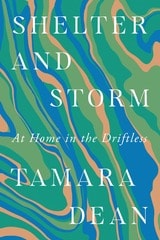
Shelter and Storm
At Home in the Driftlessdean
University of Minnesota Press, 2025
Living mindfully with nature during a time of uncertainty
In the midst of the environmental crises of the early twenty-first century, Tamara Dean sought a way to live lightly on the planet. Her quest drew her to a landscape unlike any other: the Driftless area of Wisconsin, a region untouched by glaciers, marked by steep hills and deeply carved valleys, capped with forests and laced with cold, spring-fed streams. There, she confronted, in ways large and small, the challenges of meeting basic needs while facing the ravages of climate change—an experience at once soul-stirring and practical that she recounts in Shelter and Storm.
Dean’s boundless curiosity and gift for storytelling imbue these essays with urgency and a sense of adventure. She invites readers to share in her discoveries while hunting for water, learning that a persistent weed could be food, or burning a hayfield to recreate a prairie. Contending with the fallout of fires, floods, and tornadoes, she offers responses to natural disasters that reflect the importance of community, now and for generations to come. Whether tracking down a rare, blue-glowing firefly, engineering a beaver-friendly waterway to appease a dying neighbor, or building a house of earthen blocks, Dean unites personal experience with science and history, presenting a perspective as informative as it is compelling.
Keenly attentive to the stakes for our planet’s future—and the implications of extreme weather, shifting agricultural practices, and political divides—Shelter and Storm illuminates a thoughtful way forward for anyone concerned about climate change and its far-reaching consequences or for anyone searching, as Dean has, for a more sustainable way to live.
Retail e-book files for this title are screen-reader friendly.
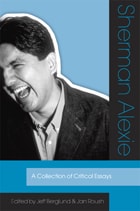
Sherman Alexie
A Collection of Critical EssaysJeff Berglund
University of Utah Press, 2010
Sherman Alexie is, by many accounts, the most widely read American Indian writer in the United States and likely in the world. A literary polymath, Alexie's nineteen published books span a variety of genres and include his most recent National Book Award-winning The Absolutely True Diary of a Part-Time Indian.
Now, for the first time, a volume of critical essays is devoted to Alexie's work both in print and on the big screen. Editors Jeff Berglund and Jan Roush have assembled twelve leading scholars of American Indian literature to provide new perspectives on a writer with his finger on the pulse of America.
Interdisciplinary in their approach to Alexie's work, these essays cover the writer's entire career, and are insightful and accessible to scholars and lay readers alike. This volume is a worthy companion to the work of one of our nations's most recognized contemporary voices.
Shifting Obsessions
Three Essays on the Politics of AnticorruptionAryeh Neier
Central European University Press, 2004
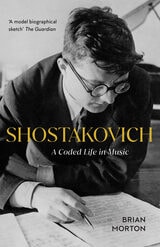
Shostakovich
Brian Morton
Haus Publishing, 2021
Internationally esteemed, Soviet composer Dmitri Shostakovich is widely considered to have been the last great classical symphonist, and his reputation has continued to increase since his death in 1975.
Shostakovich wrote his First Symphony at the age of nineteen, then he soon embarked on a dual career as a concert pianist and composer. His early avant-gardism resulted in the triumph of his 1934 opera Lady Macbeth of Mtsensk. Though at first highly praised by Stalin, Shostakovich would later suffer from a complex and brutalizing relationship with the Soviet dictator and the governments that followed him. Despite this persecution, his Seventh Symphony was embraced as a potent symbol of Russian resistance to the invading Nazi army in both the USSR and the West. Though his later years were marked by ill health, his rate of composition remained prolific. His music became increasingly beloved as he established himself as the most popular composer of serious music in the middle of the twentieth century.
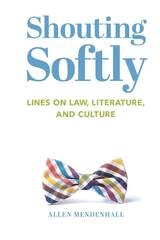
Shouting Softly
Lines on Law, Literature, and CultureAllen Mendenhall
St. Augustine's Press, 2020
The work is given in three parts. The first section on law explores legal minds, rules and commentary on seminal jurisprudence. The second part explores literature and the influence of the writer and the disconcerting truths stories often seek to convey. Thirdly, Mendenhall delves into culture and the more obvious situations wherein we gain insight into our manner of living, and here Mendenhall exudes a Southern accent that in no way compromises his universal bearings. One of the highlights is his echo of Larry Seidentop’s question: “If we in the West do not understand the moral depth of our own tradition, how can we hope to shape the conversation of mankind?” This is all the more meaningful given that Mendenhall is a member of the Millennial generation, and part of the intellectual minority who sees the urgency of “a studied appreciation for nuanced story and linguistic narrative.”
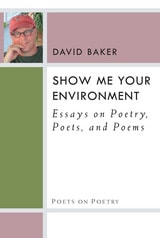
Show Me Your Environment
Essays on Poetry, Poets, and PoemsDavid Baker
University of Michigan Press, 2014
In Show Me Your Environment, a penetrating yet personable collection of critical essays, David Baker explores how a poem works, how a poet thinks, and how the art of poetry has evolved—and is still evolving as a highly diverse, spacious, and inclusive art form. The opening essays offer contemplations on the “environment” of poetry from thoughts on physical places and regions as well as the inner aesthetic environment. Next, Baker looks at the highly distinctive achievements and styles of poets ranging from George Herbert and Emily Dickinson through poets writing today. Finally, he takes joy in reading individual poems—from the canonical to the contemporary; simply and closely.
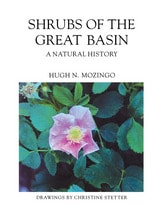
Shrubs Of The Great Basin
A Natural HistoryHugh N. Mozingo
University of Nevada Press, 1987
Mozingo presents the life histories of more than sixty species of both common and unusual shrubs, and discusses how shrubs grow, reproduce, and adapt to the extreme weather conditions that are part of daily life in the Great Basin. Drawings by Christine Stetter.
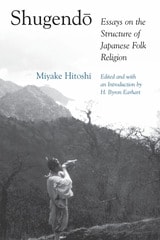
Shugendo
Essays on the Structure of Japanese Folk ReligionMiyake Hitoshi; Edited and with an Introduction by H. Byron Earhart
University of Michigan Press, 2001

Shylock on Trial
The Appellate BriefsRichard A. Posner and Charles Fried
University of Chicago Press, 2013
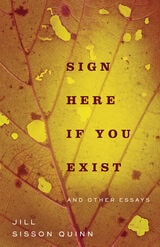
Sign Here If You Exist and Other Essays
Jill Sisson Quinn
The Ohio State University Press, 2020
Sign Here If You Exist explores states of being and states of mind, from the existence of God to sense of place to adoptive motherhood. In it, Jill Sisson Quinn examines how these states both disorient and anchor us as she treks through forests, along shorelines and into lakes and rivers as well as through memories and into scientific literature.Each essay hinges on an unlikely pairing—parasitic wasps and the afterlife, or salamanders and parenthood—in which each element casts the other in unexpectedly rich light. Quinn joins the tradition of writers such as Annie Dillard, Scott Russell Sanders, and Eula Biss to deliver essays that radiate from the junction of science and imagination, observation and introspection, and research and reflection.