Results by title
2706 books match the query 'European' and 204 start with s
SCOTLAND BRITAIN EMPIRE
WRITING THE HIGHLANDS, 1760-1860KENNETH MCNEIL
The Ohio State University Press, 2007
Kenneth McNeil invokes recent work in postcolonial studies to show how British writers of the Romantic period were actually shaping a more complex national and imperial consciousness. He discusses canonical works—the works of James Macpherson and Sir Walter Scott—and noncanonical and nonliterary works—particularly in the fields of historiography, anthropology, and sociology. This book calls for a rethinking of the “romanticization” of the Highlands and shows that Scottish writing on the Highlands reflects the unique circumstances of a culture simultaneously feeling the weight of imperial “anglobalization” while playing a vital role in its inception.
Sacred Narratives
Lucrezia Tornabuoni de' Medici
University of Chicago Press, 2001
This is the first major collection in any language of her extensive body of religious poems. Ranging from gentle lyrics on the Nativity to moving dialogues between a crucified Christ and the weeping sinner who kneels before him, the nine laudi (poems of praise) included here are among the few such poems known to have been written by a woman. Tornabuoni's five storie sacre, narrative poems based on the lives of biblical figures-three of whom, Judith, Susanna, and Esther, are Old Testament heroines-are virtually unique in their range and expressiveness. Together with Jane Tylus's substantial introduction, these poems offer us both a fascinating portrait of a highly educated and creative woman and a lively sense of cultural and social life in Renaissance Florence.
Sacrifice Your Love
Psychoanalysis, Historicism, ChaucerL.O. Aranye Fradenburg
University of Minnesota Press, 2002
A long-awaited reevaluation of Chaucer through the lens of sacrifice by a major figure in medieval studies
Historicism and its discontents have long been central to the work of Louise Fradenburg, one of the world’s most original and provocative literary medievalists. Sacrifice Your Love brings this interest to bear on Chaucer’s writing and his world, rethought in light of a theory of sacrifice and its part in cultural production. Fradenburg writes the "history of the signifier"—a way of reading change in the symbolic order—and its role in making sacrifice enjoyable.
Sacrifice Your Love develops the idea that sacrifice is a mode of enjoyment—that our willingness to sacrifice our desire is actually a way of pursuing it. Fradenburg considers the implications of this idea for various problems important in medieval studies today—how to understand the religiosity of cultural forms, particularly chivalry, in the later Middle Ages and how to understand the ethics of Chaucer’s famously nondidactic poetry—as well as in other fields of inquiry. A major rethinking of Chaucer, Sacrifice Your Love works in depth as well as across a broad range of topics from medievalism to psychoanalysis, advancing both the theory and practice of a new kind of historicist approach.
Sacrifice in the Modern World
On the Particularity and Generality of Nazi MythDavid Pan
Northwestern University Press, 2012
A landmark book, David Pan’s Sacrifice in the Modern World seeks to explain the continuing emphasis, in modern times, on sacrifice. Pan specifically turns to the culture of sacrifice—ritualized and sanctified death—in Nazi Germany, showing how that regime co-opted an existing discussion of sacrifice and infused it with its own mythology. Pan suggests that sacrifice is a key value in every society but that there is a preponderance of association of sacrifice with Nazi culture and therefore a largely pejorative treatment of sacrifice.
Surveying the arguments of philosopher Alfred Baeumler and other symptomatic Nazi texts, Pan shows how the Nazis’ reactionary intellectual culture unraveled much of the Enlightenment project. In so doing, he is able to offer a compelling new perspective on basic theoretical concepts in the work of Kant, Nietzsche, Adorno, Bataille, Girard, and others. He posits that it is only by clearing our way through the Nazis’ misuse of sacrifice that we can understand the durability of sacrificial structures that—following several of the theorists he discusses— establish the fundamental values by which we live our lives.
Rather than condemning the Nazi appeal to sacrifice itself, this book looks at the particular ways in which sacrifice was distributed and structured within that society. All cultures must grapple with the existential violence of the human condition, and they frequently do so through aesthetic treatments of sacrifice, rooted in myths and traditions. Pan argues that our task is not to eradicate these traditions but to engage them by carefully evaluating the commitments and values that they imply.
Sade
The Invention Of The Libertine BodyMarcel Henaff
University of Minnesota Press, 1999
A new model for examining Sade and his creations.
A new model for examining Sade and his creations.
Decried as a misogynist and pornographer, imprisoned for debauchery and for his writings, there is scarcely a cultural figure as flamboyant and controversial as the Marquis de Sade, the father of the new libertine body. But this is not, Hénaff maintains, the only way to see Sade. In this long-awaited English translation, Hénaff says that Sade should be discussed less for the sensual heat of his writing and more for the larger poetic and economic model his work represents.With unabashed candor, Sade describes bodies in terms not of flesh but of production, use, exchange, and waste. In his writing, this libertine self is unleashed from its constraints, no longer bound by old conceptions of desire and traditions of courtship. Hénaff’s argument that Sade is a sign of his times-exposing the courtly facade of a society unable to preserve itself-reveals dark, disquieting secrets about the direction of civilization. The libertine body, he says, is a child of this new order.ISBN 0-8166-2536-0 Cloth £34.50 $49.95xxISBN 0-8166-2537-9 Paper £14.00 $19.95x296 Pages 5 7/8 x 9 OctoberTranslation inquiries: University of Minnesota Press
Safe Third Countries
Extending the EU Asylum and Immigration Policies to Central and Eastern EuropeSandra Lavenex
Central European University Press, 1999
The refugee issue has always been controversial and Lavenex's analyses add fuel to an already heated debate. She analyses the various bi- and multilateral processes by which the countries of Central and Eastern Europe (CEECs) are being gradually incorporated into a restrictive refugee regime established among the EU member states, in which the CEECs serve as "gate-keepers" for refugees and immigrants heading towards Western Europe.
At a time when many transition countries are trying to enter the EU, Lavenex highlights the CEECs consent to adapt to Western European policies aimed at fighting illegal immigration and reducing the numbers of asylum seekers as a political bargaining tool in exchange for future membership in the EU. She also argues that the regime undermines the values of international refugee protection and diffuses states' responsibilities by establishing a system of negative redistribution for the handling of asylum claims.
Safe Third Countries is the first comprehensive study on the extension of the emergent European refugee regime and highlights, in an innovative manner, the complex entanglement of domestic policies, European integration and international relations.
Sails of the Herring Fleet
Essays on BeckettHerbert Blau
University of Michigan Press, 2003

Saint Petersburg Notebook
Ann Lauterbach
Omnidawn, 2014
Saints' Lives and Bible Stories for the Stage
A Bilingual EditionAntonia Pulci
Iter Press, 2010
—Sharon Strocchia
Professor of History, Emory University
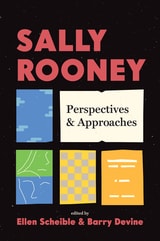
Sally Rooney
Perspectives and ApproachesEllen Scheible
Bucknell University Press, 2026
Bestselling Irish novelist Sally Rooney has emerged as the defining voice of a generation, a cultural phenomenon whose spare, intelligent prose and sharp social insight have reshaped contemporary fiction and sparked a global conversation about intimacy, politics, and the millennial condition. This new collection brings together contributors from a wide range of disciplines to offer fresh critical readings of Rooney’s influential novels, alongside adaptable strategies for teaching her work in today’s undergraduate and graduate classrooms. The essays situate Rooney within literary traditions from Romantic poetry to the bildungsroman and the contemporary campus novel, while engaging with contemporary topics such as gender politics, late capitalism, and media adaptation. Providing accessible yet rigorous frameworks for exploring Rooney’s fiction, this volume confirms her significance not only within contemporary literary studies but also as a cultural force whose work reaffirms the relevance of the humanities in the twenty-first-century classroom.
Published by Bucknell University Press. Distributed worldwide by Rutgers University Press.
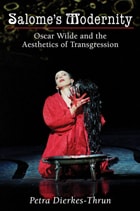
Salome's Modernity
Oscar Wilde and the Aesthetics of TransgressionPetra Dierkes-Thrun
University of Michigan Press, 2014
Oscar Wilde's 1891 symbolist tragedy Salomé has had a rich afterlife in literature, opera, dance, film, and popular culture. Salome's Modernity: Oscar Wilde and the Aesthetics of Transgression is the first comprehensive scholarly exploration of that extraordinary resonance that persists to the present. Petra Dierkes-Thrun positions Wilde as a founding figure of modernism and Salomé as a key text in modern culture's preoccupation with erotic and aesthetic transgression, arguing that Wilde's Salomé marks a major turning point from a dominant traditional cultural, moral, and religious outlook to a utopian aesthetic of erotic and artistic transgression. Wilde and Salomé are seen to represent a bridge linking the philosophical and artistic projects of writers such as Mallarmé, Pater, and Nietzsche to modernist and postmodernist literature and philosophy and our contemporary culture. Dierkes-Thrun addresses subsequent representations of Salome in a wide range of artistic productions of both high and popular culture through the works of Richard Strauss, Maud Allan, Alla Nazimova, Ken Russell, Suri Krishnamma, Robert Altman, Tom Robbins, and Nick Cave, among others.
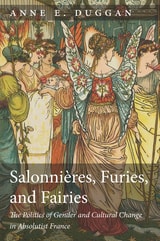
Salonnières, Furies, and Fairies, revised edition
The Politics of Gender and Cultural Change in Absolutist FranceAnne E. Duggan
University of Delaware Press, 2021
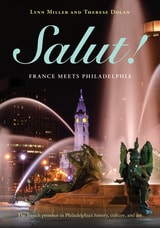
Salut!
France Meets PhiladelphiaLynn Miller and Therese Dolan
Temple University Press, 2021
One highly visible example of French influence on the city of Philadelphia is the Benjamin Franklin Parkway, modeled on the Champs-Élysées. In Salut!, Lynn Miller and Therese Dolan trace the fruitful, three-centuries-long relationship between the City of Brotherly Love and France. This detailed volume illustrates the effect of Huguenots settling in Philadelphia and 18-year-old William Penn visiting Paris, all the way up through more recent cultural offerings that have helped make the city the distinctive urban center it is today.
Salut! provides a magnifique history of Philadelphia seen through a particular cultural lens. The authors chronicle the French influence during colonial and revolutionary times. They highlight the contributions of nineteenth-century French philanthropists, such as Stephen Girard and the Dupont family. And they showcase the city’s vibrant visual arts community featuring works from the Philadelphia Museum of Art, the Rodin Museum, the Barnes Foundation, and the Joan of Arc sculpture, as well as studies of artists Thomas Eakins, Mary Cassatt, and Henry Ossawa Tanner. There is also a profile of renowned Le Bec-Fin chef Georges Perrier, who made Philadelphia a renowned culinary destination in the twentieth century.
With lavish illustrations and enthusiastic text, Salut!celebrates a potpourri of all things French in the Philadelphia region.
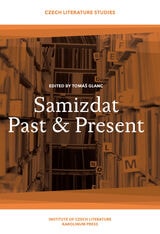
Samizdat Past+Present
Edited by Tomáš Glanc
Karolinum Press, 2019
Samuel Johnson and Moral Discipline
Paul Kent Alkon
Northwestern University Press, 1967

Samuel Johnson
A Survey and Bibliography of Critical StudiesJames L. Clifford and Donald J. Greene
University of Minnesota Press, 1970
Samuel Johnson was first published in 1970. Minnesota Archive Editions uses digital technology to make long-unavailable books once again accessible, and are published unaltered from the original University of Minnesota Press editions.
For anyone interested in the work of Samuel Johnson and his place in eighteenth-century studies, this bibliography will be of great value, for it includes virtually everything of importance that has been written about Johnson from his own lifetime to the present. In addition, Professors Clifford and Greene, in an introductory essay, survey and evaluate the changing attitudes toward Johnson through the entire period covered in the bibliography.
This volume is a revision and enlargement of Professor Clifford's earlier work Johnsonian Studies, 1887–1950: A Survey and Bibliography,long recognized as an indispensable tool for the study of Samuel Johnson, his circle, and his times, and now out of print. The present volume contains nearly four thousand bibliographical entries, grouped under twenty-five subject headings, and arranged chronologically within each classification. This arrangement enables the student to trace the development of the scholarship of the various aspects of Johnson's life and work. A detailed author and subject index to the whole volume makes it easy for him to find the description of the particular book or article for which he is searching.
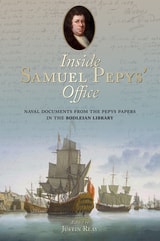
Samuel Pepys’ Naval Papers
A Bodleian Library SourcebookEdited by Justin Reay
Bodleian Library Publishing, 0
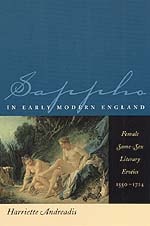
Sappho in Early Modern England
Female Same-Sex Literary Erotics, 1550-1714Harriette Andreadis
University of Chicago Press, 2001
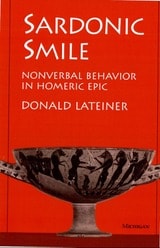
Sardonic Smile
Nonverbal Behavior in Homeric EpicDonald Lateiner
University of Michigan Press, 1998
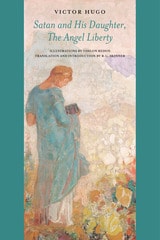
Satan and His Daughter, the Angel Liberty
Selected VersesVictor Hugo
Swan Isle Press, 2018
Satan and his Daughter, the Angel Liberty, drawn from this larger poem, tells the story of Satan and his daughter, the angel created by God from a feather left behind following his banishment. Hugo details Satan’s fall, and through a despairing soliloquy, reveals him intent on revenge, yet desiring God’s forgiveness. The angel Liberty, meanwhile, is presented by Hugo as the embodiment of good, working to convince her father to return to Heaven.
This new translation by Richard Skinner presents Hugo’s verse in a unique prose approach to the poet’s poignant work, and is accompanied by the Symbolist artist Odilon Redon’s haunting illustrations. No adventurous reader will want to miss this beautiful mingling of the epic and familial, religious and political.
Satiric Advice on Women and Marriage
From Plautus to ChaucerWarren S. Smith, Editor
University of Michigan Press, 2005
Advice on sex and marriage in the literature of antiquity and the middle ages typically stressed the negative: from stereotypes of nagging wives and cheating husbands to nightmarish visions of women empowered through marriage. Satiric Advice on Women and Marriage brings together the leading scholars of this fascinating body of literature. Their essays examine a variety of ancient and early medieval writers' cautionary and often eccentric marital satire beginning with Plautus in the third century B.C.E. through Chaucer (the only non-Latin author studied). The volume demonstrates the continuity in the Latin tradition which taps into the fear of marriage and intimacy shared by ancient ascetics (Lucretius), satirists (Juvenal), comic novelists (Apuleius), and by subsequent Christian writers starting with Tertullian and Jerome, who freely used these ancient sources for their own purposes, including propaganda for recruiting a celibate clergy and the promotion of detachment and asceticism as Christian ideals.
Warren S. Smith is Professor of Classical Languages at the University of New Mexico.
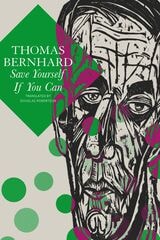
Save Yourself If You Can
Six PlaysThomas Bernhard
Seagull Books, 2023
Save Yourself if You Can is a collection of six plays that span the entirety of Thomas Bernhard’s career as a dramatist. The plays collected in this long-awaited addition to Bernhard’s oeuvre in English—The Ignoramus and the Madman, The Celebrities, Immanuel Kant, The Goal Attained, Simply Complicated, and Elizabeth II—traverse somber lyricism and misanthropy to biting satire and glorious slapstick. They explore themes that will be familiar to longtime readers of Bernhardt, but here they are presented in a subtly different register, attuned to the needs of the stage.
Scanderbeide
The Heroic Deeds of George Scanderbeg, King of EpirusMargherita Sarrocchi
University of Chicago Press, 2006
First published posthumously in 1623, Scanderbeide reemerges here in an adroit English prose translation that maintains the suspense of the original text and gives ample context to its rich cultural implications.
Scandinavian Elements of Finnegans Wake
Dounia Bunis Christiani
Northwestern University Press, 1965
Scandinavian Folk Belief and Legend
Reimund Kvideland
University of Minnesota Press, 1991
An entertaining collection of over 400 folk tales of legends, stories, and magic. Translated from the original Norwegian, Danish, and Swedish, this highly acclaimed work is perfect for bedside or fireside reading.
Scenes from the Bathhouse
And Other Stories of Communist RussiaMikhail Zoshchenko
University of Michigan Press, 1959
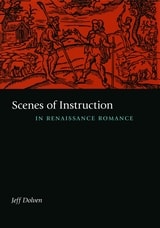
Scenes of Instruction in Renaissance Romance
Jeff Dolven
University of Chicago Press, 2007
We take it for granted today that the study of poetry belongs in school—but in sixteenth-century England, making Ovid or Virgil into pillars of the curriculum was a revolution. Scenes of Instruction in Renaissance Romance explores how poets reacted to the new authority of humanist pedagogy, and how they transformed a genre to express their most radical doubts.
Jeff Dolven investigates what it meant for a book to teach as he traces the rivalry between poet and schoolmaster in the works of John Lyly, Philip Sydney, Edmund Spenser, and John Milton. Drawing deeply on the era’s pedagogical literature, Dolven explores the links between humanist strategies of instruction and romance narrative, rethinking such concepts as experience, sententiousness, example, method, punishment, lessons, and endings. In scrutinizing this pivotal moment in the ancient, intimate contest between art and education, Scenes of Instruction in Renaissance Romance offers a new view of one of the most unconsidered—yet fundamental—problems in literary criticism: poetry’s power to please and instruct.
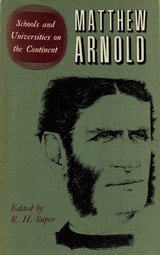
Schools and Universities on the Continent
The Complete Prose Works of Matthew ArnoldMatthew Arnold; Edited by R. H. Super
University of Michigan Press, 1964
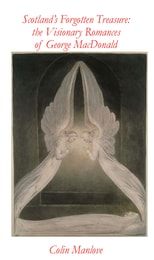
Scotland's Forgotten Treasure
The Visionary Romances of George MacDonaldColin Manlove
Aberdeen University Press, 2017
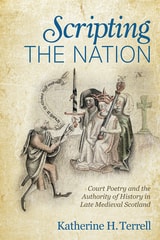
Scripting the Nation
Court Poetry and the Authority of History in Late Medieval ScotlandKatherine H. Terrell
The Ohio State University Press, 2021
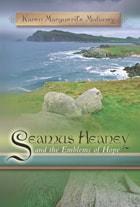
Seamus Heaney and the Emblems of Hope
Karen Marguerite Moloney
University of Missouri Press, 2007
A rich body of mythology and literature has grown around the Celtic ritual known as the Feis of Tara or “marriage of sovereignty”—ancient ceremonies in which the future king pledges to care for the land and serve the goddess of sovereignty. Seamus Heaney, whose writing has attracted the overwhelming share of critical attention directed toward contemporary Irish poetry, has engaged this symbolic tradition in some of his most significant—and controversial—work.
Seamus Heaney and the Emblems of Hope explores Heaney’s use of the family of sovereignty motifs and redresses the imbalance of criticism that has overemphasized the theme of sacrifice to the detriment of more optimistic symbols. Moreover, Moloney reviews the development of the marriage motif in Irish poetry from the ninth to the twenty-first centuries with a focus on Heaney’s adaptations from The Frenzy of Sweeney and The Midnight Court and on the work of such poets as Kinsella, Montague, Boland, and Ní Dhomhnaill. Karen Marguerite Moloney examines the central role that Heaney assigns the Feis of Tara in his response to the crisis of Ulster and to the general spiritual bankruptcy of our times, showing in his verse how the relationship of the male lover to the goddess—particularly in her more repugnant guises—serves as prototype for the humility and deference needed to repair the effects of English colonization of Ireland and, by extension, centuries of worldwide patriarchal abuse.
Through close, sustained readings of poems previously overlooked or misinterpreted, such as “Ocean’s Love to Ireland,” “Come to the Bower,” and “Bone Dreams”—poems that Irish feminist critics have deemed flawed and distressingly sexist—Moloney refutes views that have long stood unchallenged. She also considers the direction of Heaney’s more recent poems, which continue to resonate to the twin demands of conscience and artistic integrity.
An impeccably researched and immensely readable work, Seamus Heaney and the Emblems of Hope reveals that Heaney’s poetry offers a reverence for archetypal femininity and Dionysian energy that can counter the sterility and violence of postcolonial Irish life. Moloney shows us that, in the tradition of poets who preceded him, Heaney turns to the marriage of sovereignty to encode a message for our times—and to offer up emblems of hope on behalf of us all.

Searching for Emma
Gustave Flaubert and Madame BovaryDacia Maraini
University of Chicago Press, 1997
Maraini argues that in their desire to claim Emma Bovary as a standard-bearer of revolt, women have often overlooked the bitter, pitiless way in which Flaubert evokes Emma's insignificance and vulgarity. Searching for Emma guides the reader through Flaubert's novel and many of his letters, seeking out the sources of his obsessive cruelty toward Emma. Maraini relates Flaubert's contempt for Emma to his relationship with his mistress, Louise Colet, to his general terror of women, and to his own self-loathing. It was entirely in spite of himself, Maraini writes, that Flaubert created the female Don Quixote so admired for her restlessness and determination.
Searching for Emma offers a novelist's insight into the complex relationship between author and character, and into the deepest motivations of fiction.
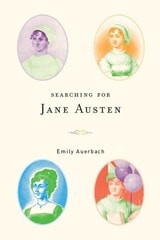
Searching for Jane Austen
Emily Auerbach
University of Wisconsin Press, 2004
In this beautifully illustrated and lively work, Auerbach surveys two centuries of editing, censoring, and distorting Austen’s life and writings. Auerbach samples Austen’s flamboyant, risqué adolescent works featuring heroines who get drunk, lie, steal, raise armies, and throw rivals out of windows. She demonstrates that Austen constantly tested and improved her skills by setting herself a new challenge in each of her six novels.
In addition, Auerbach considers Austen’s final irreverent writings, discusses her tragic death at the age of forty-one, and ferrets out ridiculous modern adaptations and illustrations, including ads, cartoons, book jackets, newspaper articles, plays, and films from our own time. An appendix reprints a ground-breaking article that introduced Mark Twain’s "Jane Austen," an unfinished and unforgettable essay in which Twain and Austen enter into mortal combat.
Seasonal Time Change
Selected PoemsMichael Krüger
Seagull Books, 2015
Bearing witness to Krüger’s interactions with renowned poets and artists through his time as director of Hanser publishing house, proximity and relationships are ongoing themes in this volume. Together, the poems remind us of our own mortality and of the finiteness of nature, but also our need for celebration even—perhaps especially—in times of darkness.

Sebastian Dreaming
Georg Trakl
Seagull Books, 2016
A century later, the book appears for the first time in English. While a number of its poems have been included in other collections, translator James Reidel argues that this particular book deserves to stand on its own and be read as one piece, as Trakl intended. Only by doing this can we begin to see Trakl in his proper time and place, as an early modern poet whose words nonetheless continue to exert a powerful hold on us while we make our way through a new, uncharted century.
Secondhand China
Spain, the East, and the Politics of TranslationCarles Prado-Fonts
Northwestern University Press, 2022
Uncovering an eclectic and surprising archive, Prado-Fonts draws on diverse cultural artifacts from popular literature, journalism, and early cinema to offer a rich account of how China was seen across the West between 1880 and 1930. Enrique Gaspar, Luis de Oteyza, Vicente Blasco Ibáñez, and lesser-known authors writing in Spanish and Catalan put themselves in dialogue with Leo Tolstoy, John Dewey, W. Somerset Maugham, Bertrand Russell, Pearl Buck, and André Malraux, as well as stereotypical figures from popular culture like Fu Manchu and Charlie Chan. Throughout, Prado-Fonts exposes translation as a technology of cultural hegemony and China as an appealing object for representation. A timely contribution to our understanding of how we create and consume knowledge about the world, Secondhand China is essential reading for scholars and students of Orientalism, postcolonial studies, translation studies, comparative literature, and cultural studies.
Secret Germany
Myth in Twentieth-Century German CultureFurio Jesi
Seagull Books, 2021
In the decades before the rise of the Third Reich, “Secret Germany” was a phrase used by the circle of writers around the poet Stefan George to describe a collective political and poetic project: the introduction of the highest values of art into everyday life, the secularization of myth and the mythologization of history. In this book, Furio Jesi takes up the term in order to trace the contours of that political, artistic, and aesthetic thread as it runs through German literary and artistic culture in the period—which, in the 1930s, became absorbed by Nazism as part of its prophecy of a triumphant future. Drawing on thinkers like Carl Jung and writers such as Thomas Mann and Rainer Maria Rilke, Jesi reveals a literary genre that was transformed, tragically, into a potent political myth.
Secret Leaves
The Novels of Walter ScottJudith Wilt
University of Chicago Press, 1985
Secret of the Muses Retold
Classical Influences on Italian Authors of the Twentieth CenturyJohn T. Kirby
University of Chicago Press, 2000
These are some of the questions that gave rise to John Kirby's Secret of the Muses Retold. This new study of works by five twentieth-century Italian writers investigates the abiding influence of the Greek and Roman classics, and their rich legacy in our own day. The result is not only a splendid introduction to contemporary Italian literature, but also a lucid and stimulating meditation on the insights that writers such as Umberto Eco and Italo Calvino have tapped from the wellspring of ancient tradition.
Kirby's book offers an impassioned plea for the recuperation of the humanities in general, and of classical studies in particular. No expertise in Greek, Latin, Italian, or literary theory is presumed, and both traditional and postmodern perspectives are accommodated.
Secular Scriptures
Modern Theological Poetics in the Wake of DanteWilliam Franke
The Ohio State University Press, 2015
Secular Scriptures examines, through its own original speculative outlook, some of the most compelling exemplars of religious-poetic revelation in modern Western literature. The essays taken as an ensemble revolve around and are bookended by Dante, but they also explore the work of Chaucer, Shakespeare, Milton, Blake, Leopardi, Baudelaire, Dickinson, and Yeats. Looking both backward and forward from the vantage of Dante, Franke explores the roots of secularized religious vision in antiquity and the Middle Ages, even as he also looks forward toward its fruits in modern poetry and poetics. Ultimately, Franke’s analyses demonstrate the possibilities opened by understanding literature as secularized religious revelation.

Security Integration in Europe
How Knowledge-based Networks Are Transforming the European UnionMai'a K. Davis Cross
University of Michigan Press, 2013
The European Union has made remarkable, unprecedented advances in both external and internal security integration. "Epistemic communities" of ambassadors, military generals, scientists, and other experts who supersede national governments in the diplomacy of security decision making are taking advantage of their shared expertise, common culture, professional norms, and frequent meetings to forge new levels of collaboration. Mai'a K. Davis Cross brings together numerous personal interviews and recent government documents across five separate case studies to construct a microsociological account of how EU governance really works and what future role the EU is likely to play internationally.
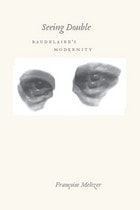
Seeing Double
Baudelaire's ModernityFrançoise Meltzer
University of Chicago Press, 2011
The poet Charles Baudelaire (1821–1867) has been labeled the very icon of modernity, the scribe of the modern city, and an observer of an emerging capitalist culture. Seeing Double reconsiders this iconic literary figure and his fraught relationship with the nineteenth-century world by examining the way in which he viewed the increasing dominance of modern life. In doing so, it revises some of our most common assumptions about the unresolved tensions that emerged in Baudelaire’s writing during a time of political and social upheaval.
Françoise Meltzer argues that Baudelaire did not simply describe the contradictions of modernity; instead, his work embodied and recorded them, leaving them unresolved and often less than comprehensible. Baudelaire’s penchant for looking simultaneously backward to an idealized past and forward to an anxious future, while suspending the tension between them, is part of what Meltzer calls his “double vision”—a way of seeing that produces encounters that are doomed to fail, poems that can’t advance, and communications that always seem to falter. In looking again at the poet and his work, Seeing Double helps to us to understand the prodigious transformations at stake in the writing of modern life.
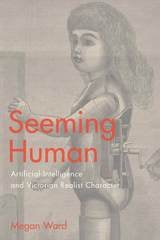
Seeming Human
Artificial Intelligence and Victorian Realist CharacterMegan Ward
The Ohio State University Press, 2018
In Seeming Human, Megan Ward contends that mid-twentieth-century versions of artificial intelligence (AI) offer a theory of verisimilitude omitted by traditional histories of character, which often focus on the development of interiority and the shift from “flat” to “round” characters in the Victorian era. Instead, by reading character through AI, Megan Ward’s Seeming Human argues that routinization, predictability, automation, and even flatness are all features of realist characters.
Early artificial intelligence movements such as cybernetics, information theory, and the Turing test define ways of seeming—rather than being—human. Using these theories of verisimilitude to read Victorian novelists such as Elizabeth Gaskell, Margaret Oliphant, Anthony Trollope, Thomas Hardy, and Henry James, Seeming Human argues that mechanicity has been perceived as anti-realist because it is the element that we least want to identify as human. Because AI produces human-like intelligence, it makes clear that we must actually turn to machines in order to understand what makes realist characters seem so human.
Selected Drama and Verse
Franciszka Urszula Radziwillowa
Iter Press, 2015
Selected Essays and Dialogues by Gianni Celati
Adventures into the Errant FamiliarEdited and Translated by Patrick Barron
University College London, 2024
Selected Essays and Dialogues is a collection of translations of Italian essayist Gianni Celati’s theoretical and musing work from the late 1960s to the present. Its topics range from environmental perception and archaeological conceptions of historical knowledge to street theater, writing, photography, cinema, and translation. The book provides a framework of key literary, theoretical, and artistic movements of the past fifty years, as well as a guide for English-language readers to place Celati’s work in historical, cultural, and biographical contexts.
Celati’s fondness for the unexpected ordinary tempts readers to wander and become lost in the webs of his daring thoughts. Indeed, a genial adventurousness can be found within all of his writings collected here, driven by an affectionate and light-hearted engagement with the surrounding world. This collection offers a taste of his adventures of the mind and body, led by a lithe sensitivity not restricted to the so-called high arts or letters, but also very much engaged with the everyday lives, places, and tales we all constantly share.
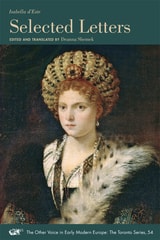
Selected Letters
Isabella d’Este
Iter Press, 2017
Isabella d’Este (1474–1539), daughter of the Este dukes of Ferrara and wife of Marchese Francesco II Gonzaga of Mantua, co-regent of the Gonzaga state, art collector, musician, diplomat, dynastic mother, traveler, reader, gardener, fashion innovator, and consummate politician, was also, as this volume attests, a prolific letter writer with a highly developed epistolary network. Presented here for the first time in any language is a representative selection from over 16,000 letters sent by Isabella to addressees across a wide social spectrum. Together, they paint a nuanced and colorful portrait of a brilliant and influential female protagonist of early modern European society.
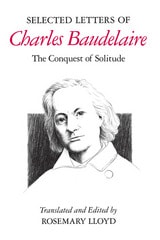
Selected Letters of Charles Baudelaire
The Conquest of SolitudeCharles Baudelaire
University of Chicago Press, 1986
Writing to family, friends, and lovers, Baudelaire reveals the incidents and passions that went into his poetry. In letters to editors, idols, and peers—Hugo, Flaubert, Vigny, Wagner, Cladel, among others—he elucidates the methods and concerns of his own art and criticism and comments tellingly on the arts and politics of his day. In all, ranging from childhood to days shortly before his death, these letters comprise a complex and moving portrait of the quintessential poet and his time.
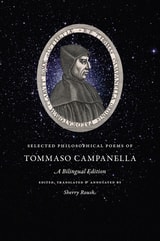
Selected Philosophical Poems of Tommaso Campanella
A Bilingual EditionTommaso Campanella
University of Chicago Press, 2011
A contemporary of Giordano Bruno and Galileo, Tommaso Campanella (1568–1639) was a controversial philosopher, theologian, astrologer, and poet who was persecuted during the Inquisition and spent much of his adult life imprisoned because of his heterodox views. He is best known today for two works: The City of the Sun, a dialogue inspired by Plato’s Republic, in which he prophesies a vision of a unified, peaceful world governed by a theocratic monarchy; and his well-meaning Defense of Galileo, which may have done Galileo more harm than good because of Campanella’s previous conviction for heresy.
But Campanella’s philosophical poems are where his most forceful and undiluted ideas reside. His poetry is where his faith in observable and experimental sciences, his astrological and occult wisdom, his ideas about deism, his anti-Aristotelianism, and his calls for religious and secular reform most put him at odds with both civil and church authorities. For this volume, Sherry Roush has selected Campanella’s best and most idiosyncratic poems, which are masterpieces of sixteenth-century Italian lyrics, displaying a questing mind of great, if unorthodox, brilliance, and showing Campanella’s passionate belief in the intrinsic harmony between the sacred and secular.
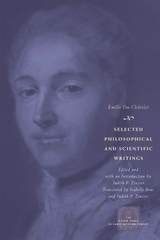
Selected Philosophical and Scientific Writings
Emilie Du Châtelet
University of Chicago Press, 2009
Though most historians remember her as the mistress of Voltaire, Emilie Du Châtelet (1706–49) was an accomplished writer in her own right, who published multiple editions of her scientific writings during her lifetime, as well as a translation of Newton’s Principia Mathematica that is still the standard edition of that work in French. Had she been a man, her reputation as a member of the eighteenth-century French intellectual elite would have been assured.
In the 1970s, feminist historians of science began the slow work of recovering Du Châtelet’s writings and her contributions to history and philosophy. For this edition, Judith P. Zinsser has selected key sections from Du Châtelet’s published and unpublished works, as well as related correspondence, part of her little-known critique of the Old and New Testaments, and a treatise on happiness that is a refreshingly uncensored piece of autobiography—making all of them available for the first time in English. The resulting volume will recover Châtelet’s place in the pantheon of French letters and culture.
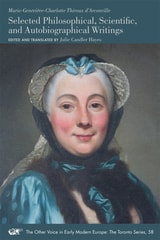
Selected Philosophical, Scientific, and Autobiographical Writings
Marie-Geneviève-Charlotte Thiroux d’Arconville
Iter Press, 2018
Edited and translated by Julie Candler Hayes
The Other Voice in Early Modern Europe: The Toronto Series, volume 58