Results by title
520 books match the query 'Family' and 34 start with s
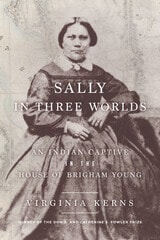
Sally in Three Worlds
An Indian Captive in the House of Brigham YoungVirginia Kerns
University of Utah Press, 2021
In this remarkable and deeply felt book, Virginia Kerns uncovers the singular and forgotten life of a young Indian woman who was captured in 1847 in what was then Mexican territory. Sold to a settler, a son-in-law of Brigham Young, the woman spent the next thirty years as a servant to Young’s family. Sally, as they called her, lived in the shadows, largely unseen. She was later remembered as a “wild” woman made “tame” who happily shed her past to enter a new and better life in civilization.
Drawing from a broad range of primary sources, Kerns retrieves Sally from obscurity and reconstructs her complex life before, during, and after captivity. This true story from the American past resonates deeply in the current moment, attentive as it is to killing epidemics and racial injustices. In telling Sally’s story, Kerns presents a new narrative of the American West.
Salt Lantern
Traces of an American FamilyWilliam Towner Morgan
University of Iowa Press, 1997
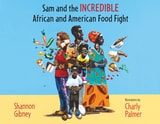
Sam and the Incredible African and American Food Fight
Shannon Gibney
University of Minnesota Press, 2023
Six-year-old Sam, with his Liberian dad and African American mom, finds a way to bring everyone in his cross-cultural family together at the dinner table
Rice and okra soup: Sam’s auntie from Liberia made it, and it’s Dad’s favorite. Mom, homegrown in Minnesota, made spaghetti and meatballs. And Sam? He’s just hungry, but no matter what he chooses to eat, someone will be disappointed. Caught in the middle of his family’s African and American food fight, Sam gets a little help from his grumbling stomach—and readers of this seriously funny book by Shannon Gibney get a peek at cultures colliding in a family kitchen that work out in a very delicious way. Charly Palmer’s vibrant and captivating illustrations make this gentle lesson in getting along a bright and colorful visual feast as well.
Cassava leaf torbogee or homemade sausage pizza? Sam’s family recipes bring Sam and the Incredible African and American Food Fight to an apt and happy ending—and readers can decide which dinner is best. But, really, why not both?
Scatterplot
David Koehn
Omnidawn, 2019
Koehn diagrams connections from media, art, film, music, nature, history, and his own family into a web of coordinates that form constellations of beauty and tragedy. He moves from the music of the Bad Brains, to the grotesque lifecycle of the Tongue-Eating Louse, to the deconstruction of Mutant Mania toys, and on through the poems of David Antin and the suicide of Anthony Bourdain, building a fantastical world from the wild realities of the real one. In a universe so full of imperfection one can’t help but both laugh and cry, the poet embraces the present while taking responsibility for his own insufficiencies. Amounting to a mix of experiments—erasures, surreal narratives, collage, walking poems, and more—the delta between right now and forever feels both inescapably present and delightfully confused. Immense vulnerability, infinitely odd observations, and uninhibited daring populate the psychological terrain in the poems of Scatterplot as Koehn invites us to join his spiraling poetic exploration.
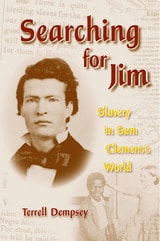
Searching for Jim
Slavery in Sam Clemens's WorldTerrell Dempsey
University of Missouri Press, 2005
During Sam’s earliest years, his father, John Marshall Clemens, had significant interaction with slaves. Newly discovered court records show the senior Clemens in his role as justice of the peace in Hannibal enforcing the slave ordinances. With the death of his father, young Sam was apprenticed to learn the printing and newspaper trade. It was in the newspaper that slaves were bought and sold, masters sought runaways, and life insurance was sold on slaves. Stories the young apprentice typeset helped Clemens learn to write in black dialect, a skill he would use throughout his writing, most notably in Huckleberry Finn.
Missourians at that time feared abolitionists across the border in Illinois and Iowa. Slave owners suspected every traveling salesman, itinerant preacher, or immigrant of being an abolition agent sent to steal slaves. This was the world in which Sam Clemens grew up. Dempsey also discusses the stories of Hannibal’s slaves: their treatment, condition, and escapes. He uncovers new information about the Underground Railroad, particularly about the role free blacks played in northeast Missouri.
Carefully reconstructed from letters, newspaper articles, sermons, speeches, books, and court records, Searching for Jim offers a new perspective on Clemens’s writings, especially regarding his use of race in the portrayal of individual characters, their attitudes, and worldviews. This fascinating volume will be valuable to anyone trying to measure the extent to which Clemens transcended the slave culture he lived in during his formative years and the struggles he later faced in dealing with race and guilt. It will forever alter the way we view Sam Clemens, Hannibal, and Mark Twain.

Secrets and Rivals
Wartime Letters and the Parents I Never KnewR. Bruce Larson
University of Missouri Press, 2015
Reading through the letters, he is drawn into his parents’ courtship amid the hardships of separation and war. Beyond the tumultuous romance, Larson finds that he barely recognizes his father, whom he knew only as distant and impassive. He uncovers shocking truths about his mother, Ruth, whom family lore had pigeonholed as sweetly pious.
At the time of the letters, Bob is a young Coast Guard clerk fighting off depression with thoughts of his dream girl back home. Back in Minnesota, Ruth passes the days adrift in romantic fantasies and liaisons with local admirers. Bob’s suspicions about Ruth and his obsession with her from afar threaten the young man’s fragile hold on his sanity, but he will not give her up. Decades later, their son comes to feel a tenderness for both his parents and to understand how their losses, fears, and reluctance can transform and refashion family bonds.
Secrets of the Sun
A MemoirMako Yoshikawa
The Ohio State University Press, 2024
Seize
Brian Komei Dempster
Four Way Books, 2020
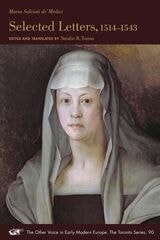
Selected Letters, 1514-1543
Maria Salviati de’ Medici
Iter Press, 2022
In recent years, there has been an upsurge of interest in Maria Salviati de’ Medici, specifically, in her role in Medici governance and her relationships with other members of the Medici court. Maria Salviati’s surviving correspondence documents a life spent close to the centers of Medici power in Florence and Rome, giving witness to its failures, resurrection, and eventual triumph. Presented here for the first time in English, this book is a representative sample of Maria’s surviving letters that document her remarkable life through a tumultuous period of Italian Renaissance history. While she earned the exasperation of some, she gained the respect of many more. Maria ended her life as an influential dowager, powerful intercessor for local Tuscans of all strata, and wise elder in Duke Cosimo I’s court. The first critical, analytical, biographical work on Maria Salviati de’ Medici’s life and letter-writing in English.
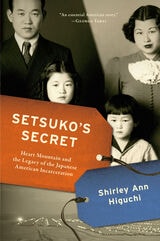
Setsuko's Secret
Heart Mountain and the Legacy of the Japanese American IncarcerationShirley Ann Higuchi
University of Wisconsin Press, 2020
Only after a serious cancer diagnosis did Shirley's mother, Setsuko, share her vision for a museum at the site of the former camp, where she had been donating funds and volunteering in secret for many years. After Setsuko's death, Shirley skeptically accepted an invitation to visit the site, a journey that would forever change her life and introduce her to a part of her mother she never knew.
Navigating the complicated terrain of the Japanese American experience, Shirley patched together Setsuko's story and came to understand the forces and generational trauma that shaped her own life. Moving seamlessly between family and communal history, Setsuko's Secret offers a clear window into the "camp life" that was rarely revealed to the children of the incarcerated. This volume powerfully insists that we reckon with the pain in our collective American past.
Seven Aunts
Staci Lola Drouillard
University of Minnesota Press, 2022
Part memoir, part cultural history, these memories of seven aunts holding home and family together tell a crucial, often overlooked story of women of the twentieth century
They were German and English, Anishinaabe and French, born in the north woods and Midwestern farm country. They moved again and again, and they fought for each other when men turned mean, when money ran out, when babies—and there were so many—added more trouble but even more love. These are the aunties: Faye, who lived in California, and Lila, who lived just down the street; Doreen, who took on the bullies taunting her “mixed-blood” brothers and sisters; Gloria, who raised six children (no thanks to all of her “stupid husbands”); Betty, who left a marriage of indenture to a misogynistic southerner to find love and acceptance with a Norwegian logger; and Carol and Diane, who broke the warped molds of their own upbringing.
From the fabric of these women’s lives, Staci Lola Drouillard stitches a colorful quilt, its brightly patterned pieces as different as her aunties, yet alike in their warmth and spirit and resilience, their persistence in speaking for their generation. Seven Aunts is an inspired patchwork of memoir and reminiscence, poetry, testimony, love letters, and family lore.
In this multifaceted, unconventional portrait, Drouillard summons ways of life largely lost to history, even as the possibilities created by these women live on. Unfolding against a personal view of the settler invasion of the Midwest by men who farmed and logged, fished and hunted and mined, it reveals the true heart and soul of that history: the lives of the women who held together family, home, and community—women who defied expectations and overwhelming odds to make a place in the world for the next generation.
Sex Depression Animals
PoemsMag Gabbert
The Ohio State University Press, 2023
Sexual Power
Feminism and the Family in AmericaCarolyn Ross Johnston
University of Alabama Press, 1992
Since the early 1970s, scholars have argued, defined, and refined a wide range of interpretations of American women’s lives. Despite the richness of the recent literature, few interpretations sufficiently credit women’s family and sexual experiences for the emergence of feminism and the construction of pro-family agendas. Thus, Johnston’s approach offers an opportunity to view the history of feminism and the family from a fresh perspective.
Much of the literature on feminism has focused on women’s oppression and victimization, rather than on the power that women historically have exerted. Johnston’s interpretation of American feminism differs from previous works because she argues that the gradual growth of feminist consciousness lies not simply in oppression or feelings of victimization, but paradoxically in a growing sense of the empowerment of women as wives and mothers. She traces how reproduction, sexuality, domesticity, and motherhood have been socially constructed, and examines how feminists and anti-feminists have fought on the terrain of “family” issues.
Johnston explores critical questions concerning American women’s sexual lives. How have women’s empowering experiences in the family shaped feminist consciousness and action? How have feminists confronted family issues? How have women exerted sexual power? How was it contained within the limits of patriarchal society at times, while at other times it fueled the fires of feminist rebellion? How have gender and class issues affected domestic politics and feminism?
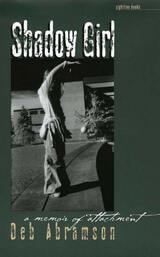
Shadow Girl
A Memoir Of AttachmentDeb Abramson
University of Iowa Press, 2002
In this psychological portrait of a family bound together by the uneasy permutations of love, Abramson relies not on sensationalist narrative but on a collection of the many small moments that glitter along the bumpy path of her life. Now and then she provides a broader, connecting perspective by stepping out of her story to reflect on the meaning of it all from the standpoint of the insightful, healed person she has managed—against all odds—to become.
Rich in metaphor and intimate detail, this is a lyrical story about moving from isolation toward connection, about seeing childhood not as a crippling refuge but as a point of departure, about discovering that it is possible to “have your shadows as well as your light.”

Shake Terribly the Earth
Stories from an Appalachian FamilySarah Beth Childers
Ohio University Press, 2013
In a thoughtful, humorous voice born of Appalachian storytelling, Childers brings to life in these essays events that affected the entire region: large families that squeezed into tiny apartments during the Great Depression, a girl who stepped into a rowboat from a second-story window during Huntington’s 1937 flood, brothers who were whisked away to World War II and Vietnam, and a young man who returned home from the South Pacific and worked his life away as a railroad engineer.
Childers uses these family tales to make sense of her personal journey and find the joy and clarity that often emerge after the earth shakes terribly beneath us.
She Came from Mariupol
Natascha Wodin
Michigan State University Press, 2022
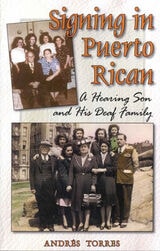
Signing in Puerto Rican
A Hearing Son and His Deaf FamilyAndrés Torres
Gallaudet University Press, 2009
The only child of deaf Puerto Rican immigrants, Andrés Torres grew up in New York City in a large, extended family that included several deaf aunts and uncles. In Signing in Puerto Rican: A Hearing Son and His Deaf Family, he opens a window into the little known culture of Deaf Latinos chasing the immigrant American dream. Like many children of deaf adults (codas), Torres loved his parents deeply but also longed to be free from being their interpreter to the hearing world. Torres’s story is unique in that his family communicated in three languages. The gatherings of his family reverberated with “deaf talk,” in sign, Spanish, and English. What might have struck outsiders as a strange chaos of gestures and mixed spoken languages was just normal for his family.
Torres describes his early life as one of conflicting influences in his search for identity. His parents’ deep involvement in the Puerto Rican Society for the Catholic Deaf led him to study for the priesthood. He later left the seminary as his own ambitions took hold. Torres became very active in the Puerto Rico independence party against the backdrop of the Civil Rights movement and protest against the Vietnam War. Throughout these defining events, Torres’s journey never took him too far from his Deaf Puerto Rican family roots and the passion of arms, hands, and fingers filling the air with simultaneous translation and understanding.
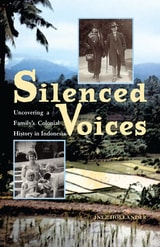
Silenced Voices
Uncovering a Family’s Colonial History in IndonesiaInez Hollander
Ohio University Press, 2008
Like a number of Netherlanders in the post–World War II era, Inez Hollander only gradually became aware of her family’s connections with its Dutch colonial past, including a Creole great-grandmother. For the most part, such personal stories have been, if not entirely silenced, at least only whispered about in Holland, where society has remained uncomfortable with many aspects of the country’s relationship with its colonial empire.
Unlike the majority of memoirs that are soaked in nostalgia for tempo dulu, Hollander’s story sets out to come to grips with her family’s past by weaving together personal records with historical and literary accounts of the period. She seeks not merely to locate and preserve family memories, but also to test them against a more disinterested historical record. Hers is a complicated and sometimes painful personal journey of realization, unusually mindful of the ways in which past memories and present considerations can be intermingled when we seek to understand a difficult past. Silenced Voices is an important contribution to the literature on how Dutch society has dealt with its recent colonial history.
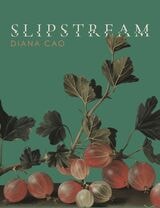
Slipstream
Diana Cao
Tupelo Press, 2026
The poems in Slipstream deal with the slippery concept of home, with robots and the internet and other human inventions, and with what we can learn from the natural world around us.
Winner of the Berkshire Prize, Slipstream is a bracing, intimate, and formally adventurous debut that moves with equal grace through personal memory, inherited history, myth, and the ambient technologies of contemporary life. Diana Cao’s poems braid ancient Chinese legend, family migration, illness, love, and grief with moon landers, algorithms, privacy policies, and online ritual, creating a lyric field where the ancestral and the digital speak fluently to one another. The book is formally restless and assured. Sonnets, sestinas, villanelles, fables, and linked sequences feel conversational rather than ornate, their intelligence worn lightly, their music precise and unforced. Throughout, Cao writes with a clarity that never flattens complexity: humor and vulnerability coexist with philosophical rigor. Tenderness is sharpened, not softened, by attention to politics, history, and care.
What emerges is a voice attuned to relational life in all its registers—daughterhood, friendship, desire, citizenship, species—asking how to live, love, and remain lucid inside systems that both sustain and estrange us. Slipstream is a book of uncommon range and emotional intelligence, one that feels fully of this moment while remaining in deep, living conversation with the past.
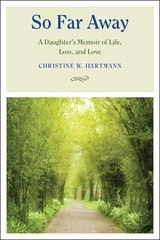
So Far Away
A Daughter's Memoir of Life, Loss, and LoveChristine W. Hartmann
Vanderbilt University Press, 2011
Christine's father, as it turned out, prepared too slowly for old age. Before he had made any decision, fate disabled him through a series of strokes. Confined to a nursing home, severely impaired by dementia and frustrated by his circumstances, his life epitomized the predicament her mother wanted to avoid.
So Far Away gives us an intimate view of a person interacting with and reacting to her parents at the ends of their lives. In a richly detailed, poignant story of family members' separate yet interwoven journeys, it underscores the complexities and opportunities that life presents each one of us.

Social Change and the Family in Taiwan
Arland Thornton and Hui-Sheng Lin
University of Chicago Press, 1994
This interdisciplinary study explores the patterns and causes of change in education, work, income, leisure time, marriage, living arrangements, and interactions among extended kin. Theoretical chapters enunciate a theory of family and social change centered on the life course and modes of social organization. Other chapters look at the shift from arranged marriages toward love matches, as well as changes in dating practices, premarital sex, fertility, and divorce.
Contributions to the book are made by Jui-Shan Chang, Ming-Cheng Chang, Deborah S. Freedman, Ronald Freedman, Thomas E. Fricke, Albert Hermalin, Mei-Lin Lee, Paul K. C. Liu, Hui-Sheng Lin, Te-Hsiung Sun, Arland Thornton, Maxine Weinstein, and Li-Shou Yang.
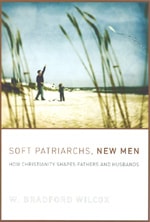
Soft Patriarchs, New Men
How Christianity Shapes Fathers and HusbandsW. Bradford Wilcox
University of Chicago Press, 2004
According to W. Bradford Wilcox, the divergent family ideologies of evangelical and mainline churches do not translate into large differences in family behavior between evangelical and mainline Protestant men who are married with children. Mainline Protestant men, he contends, are "new men" who take a more egalitarian approach to the division of household labor than their conservative peers and a more involved approach to parenting than men with no religious affiliation. Evangelical Protestant men, meanwhile, are "soft patriarchs"—not as authoritarian as some would expect, and given to being more emotional and dedicated to their wives and children than both their mainline and secular counterparts. Thus, Wilcox argues that religion domesticates men in ways that make them more responsive to the aspirations and needs of their immediate families.

Song in Tammuz
Avia Tadmor
Tupelo Press, 2026
Winner of the International Berkshire Prize, this collection draws from an incredible range of literary forms, from familiar couplets and tercets to footnotes, dictionary definitions, and luminous lyric fragments.
While stylistically daring, even virtuosic, Avia Tadmor’s stunning debut is unified by its enduring engagement with questions of language and alterity. What does it mean to be othered by and through language? What happens when grammar, syntax, and the concepts of identity housed within them are at odds? Does a revolutionary message demand new forms of discourse? “I can say it through the distance of this other tongue,” Tadmor writes.
Indeed, she considers the role of language—from conceptual framework to vast storehouse of history, culture, and inheritance—in shaping the self, ultimately revealing our agency within a grammar and syntax we did not choose. As Tadmor writes, “Her pen is a stronghold, a lighthouse / flickering late in July.”
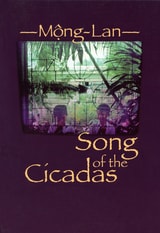
Song of the Cicadas
Anne Mong-Lan Pham
University of Massachusetts Press, 2001
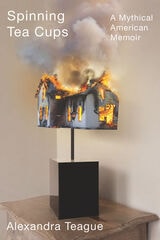
Spinning Tea Cups
A Mythical American MemoirAlexandra Teague
Oregon State University Press, 2023
How did people who prided themselves on making everything from scratch manage to afford annual trips to Disney World? Did her mother really have psychic abilities? Why did her sensitive youngest nephew speak in a voice that wasn’t his own? How do family legacies of grief and dysfunction and creativity intersect? How can she escape her circumstances without replicating the escapist fantasies with which she was raised?
Teague attempts to understand and contextualize her family in terms of trauma and mental health, but also with deep love and humor. Carefully attuned to the vagaries of geographical cultures, she weaves her family’s history with explorations of pop culture and the specific cultures of the places she and her family pass through: a Texas city, an Victorian tourist town in Arkansas, a Southwest ghost town, Central Florida, the Bay Area, Kansas City, and a college town in the Inland Northwest.
Spinning Tea Cups will appeal to readers interested in American cultural studies, those concerned with the ongoing crisis of mental illness in this country, and anyone seeking to explore the dangerous and recuperative powers of fantasy.
Sprawl
PoemsAndrew Collard
Ohio University Press, 2023
Within the larger geographical space of the metropolis are the in-between places of personal significance: the gas stations, burger joints, malls, and parking lots where many of the defining moments of ordinary lives occur. These poems take deep inspiration from such places, insisting on the value of the people found there, along with their experiences. What might be considered high and low culture are as inextricably linked in the formal cues of the poems as they are in the Michigan landscape, influenced by pop music, midcentury modern aesthetics, comic books, and cars.
While the sprawl of the title refers to the seemingly endless succession of businesses and neighborhoods extending north from Detroit (“a sprawl this extensive breeds / empty pockets”), it also invokes the sprawl of history through poems that move between the past and present. One sequence of poems built on old newspaper clippings draws attention to a Chrysler plant that once constructed Redstone missiles. Elsewhere, two poems refer to the Detroit newspaper strike of the 1990s, a local controversy with lasting implications for the community. Sprawl ultimately illuminates the relationship of one place to other places, contextualizing its characters and locales within a wider societal frame.
Still Connected
Family and Friends in America Since 1970Claude S. Fischer
Russell Sage Foundation, 2011
Still Here, Still Now
Robert Pack
University of Chicago Press, 2008
The first section of the book contains traditional lyrics that celebrate family ties and seek consolations for the passing of personal and evolutionary time. The poems in this group address a named or unnamed auditor in a voice of intimate engagement. Featuring the most narrative selections in the book, the second section consists of fable-like stories, rich with innuendo and implication. The characters in these poems make choices that press against the events and circumstances that challenge and define them. Embodying what Harold Bloom has called Pack’s “courage to surmount suffering,” the poems of the third section are largely devoted to biblical themes and philosophical speculations on the meaning of happiness and the uses of suffering. Here, Pack’s empathy for the human condition as well as his forebodings about the prospect of human survival are on poignant display. The final section of the book turns to Pack's abiding interest in landscape and the ways in which the place one inhabits contains and animates our individual lives.
Ripe with many years, Pack remains a vital presence in American letters. Still Here, Still Now is an affecting and graceful addition to the oeuvre of a poet whose compelling and distinct voice will continue to resonate among his loyal readers.
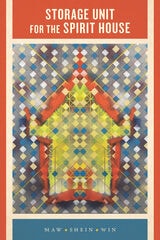
Storage Unit for the Spirit House
Maw Shein Win
Omnidawn, 2020
Assemblages of both earthly and noncorporeal possessions throughout the collection become resonant and alive, and Win must summon “a circle of drums and copper bells” to appease the nats who have moved into a long-ago family house. This careful curation of unlikely objects and images becomes an act of ritual collection that uses language to interrogate how pain in life can transform someone into a nat or a siren that lives on. Restrained lines request our imagination as we move with the poet through haunted spaces and the objects that inhabit them.
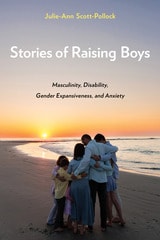
Stories of Raising Boys
Masculinity, Disability, Gender Expansiveness, and AnxietyJulie-Ann Scott-Pollock
Temple University Press, 2026
In her poignant, affecting autoethnography, Stories of Raising Boys, Julie-Ann Scott-Pollock investigates the meaning of disability, gender, race, and privilege in contemporary culture. Scott-Pollock is a white mother living with a physical disability raising four boys—Theo, a three-year-old risktaker; Tony, ten, who lives with seizures; Vinny, eight, who is gender expansive; and five-year-old Nico, who is also gender expansive and experiences anxiety. They live on the southeastern U.S. coast with their father, Evan, and their baby sister, Rosalie.
Through narrative analysis, Scott-Pollock compares and contrasts her circumstances to the ways in which adult interviewees manage the same lived experiences as her sons. She also includes their opinions about masculinity and identity, as well as parenting boys. In doing so, Stories of Raising Boys deepens the cultural complexity of parent–child relationships and expands our collective understanding of how they form and emerge. In addition, Scott-Pollock uses a metaphor of swimming through the ocean near her family’s home to illustrate resisting marginalization while also promoting strong cultural identities, especially in turbulent waters.
Stories of Raising Boys offers an absorbing cultural reflection on the intersectionality of identity, power, and privilege.
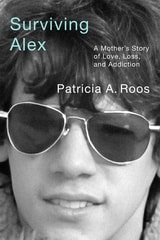
Surviving Alex
A Mother’s Story of Love, Loss, and AddictionPatricia A. Roos
Rutgers University Press, 2024
Weaving together a personal narrative and a sociological perspective, Surviving Alex movingly describes how even children from “good families” fall prey to addiction, and recounts the hellish toll it takes on families. Drawing from interviews with Alex’s friends, family members, therapists, teachers, and police officers—as well as files from his stays in hospitals, rehab facilities, and jails—Roos paints a compelling portrait of a young man whose life veered between happiness, anxiety, success, and despair. And as she explores how a punitive system failed her son, she calls for a community of action that would improve care for substance users and reduce addiction, realigning public health policy to address the overdose crisis.
Surviving Modern Medicine
How to Get the Best From Doctors, Family, and FriendsClarke, Peter
Rutgers University Press, 1998
Survivor's Notebook
PoemsDan O'Brien
Acre Books, 2023
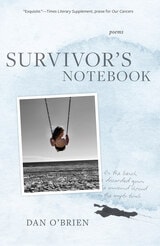
Dan O’Brien’s powerful companion to Our Cancers catalogs the recovery of a cancer survivor, whose wife has recently survived her own cancer, as he returns to his daily life while raising a young daughter. This prose-poem sequence is a true survivor’s notebook, using photos and the tools of memoir to evoke how disaster can constellate our past, present, and future.
In his poems, plays, and nonfiction, Dan O’Brien has explored, as he says in a 2023 interview, “how trauma shatters identity, and in its aftermath we reconfigure and rewrite, as it were, the story of who we were and are and maybe will be.” In highly personal poems reminiscent of dramatic monologues, as well as shorter lyric fragments, the protagonist reconsiders the people and places he knew before his illness, including his estranged family and others with cancer. While looking back he moves forward again, resuming his career as a writer and teacher, revisiting Ireland, and making a kind of pilgrimage to the Holy Land. There is a confiding and at times comical tone in these poems as O’Brien awakens to the delights, absurdities, and wonders of existence, and as he and his wife work through the aftershocks of their trauma toward a deeper love.
With text and image, Survivor’s Notebook shows how we go on, with resilience, gratitude, and joy, when “the emergency’s elsewhere” now.
Survivor's Notebook
PoemsDan O’Brien
Acre Books, 2023
In his poems, plays, and nonfiction, Dan O’Brien has explored, as he says in a 2023 interview, “how trauma shatters identity, and in its aftermath we reconfigure and rewrite, as it were, the story of who we were and are and maybe will be.” In highly personal poems reminiscent of dramatic monologues, as well as shorter lyric fragments, the protagonist reconsiders the people and places he knew before his illness, including his estranged family and others with cancer. While looking back he moves forward again, revisiting Ireland, resuming his career as a writer and teacher, and making a kind of pilgrimage to the Holy Land. There is a confiding and at times comical tone in these poems, as he awakens to the delights, absurdities, and wonders of existence, and as he and his wife work through the aftershocks of their trauma toward a deeper love.
Survivor’s Notebook shows how we go on, with resilience, gratitude, and joy, when “the emergency’s elsewhere” now.