Results by title
91 books match the query 'Feminists' and 6 start with s

Seeking the One Great Remedy
Francis George Shaw and Nineteenth-Century ReformLorien Foote
Ohio University Press, 2003
A radical abolitionist and early feminist, Francis George Shaw (1809–1882) was a prominent figure in American reform and intellectual circles for five decades. He rejected capitalism in favor of a popular utopian socialist movement; during the Civil War and Reconstruction, he applied his radical principles to the Northern war effort and to freedmen’s organizations.
A partnership with Henry George in the late 1870s provided an international audience for Shaw’s alternative vision of society. Seeking the One Great Remedy is the biography of this remarkable and influential man. In compelling detail, author Lorien Foote depicts the many aspects and exploits of the Shaw family. Their activities provide a perspective on the course of American reform that calls into question previous interpretations of the reform movement of this period.
Francis George Shaw is perhaps best known as the father of Robert Gould Shaw, subject of the movie Glory. Francis and his wife, Sarah Blake Shaw, achieved considerable notoriety for their activities, including their effort to shape public opinion during the Civil War. Turning the tragic death of their son into a public relations and propaganda triumph, they altered Northern opinion about the war and shaped a historical perception of the famous Massachusetts Fifty-fourth that continues today.
Seeking the One Great Remedy argues that social radicalism was pervasive among elite reformers before and after the Civil War and finds in the dramatic story of Francis George Shaw a model of that cause.
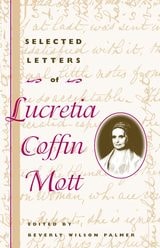
Selected Letters of Lucretia Coffin Mott
Lucretia Coffin Mott. Edited by Beverly Wilson Palmer: With the Assistance of Holly Byers Ochoa, Associate Editor, and Carol Faulkner, Editing Fellow
University of Illinois Press, 2002
This landmark volume collects Lucretia Mott's correspondence for the first time, highlighting the length and breadth of her work as an activist dedicated to reform of almost every kind and providing an intimate glimpse of her family life.
Mott’s achievements left a mark on reform movements from abolition to women's rights. The letters cover her work in these causes as well as her founding of key antislavery organizations; her friendships with Harriet Tubman and Sojourner Truth; her efforts to bring Quakers into the abolitionist movement; and her part in organizing the 1848 Seneca Falls Woman's Rights Convention. Other correspondence cover her fifty-six-year marriage, the five children she raised to adulthood, and informal insights and news with and about her cherished family.
An invaluable resource, Selected Letters of Lucretia Coffin Mott reveals the incisive mind, sense of mission, and level-headed personality that made this extraordinary figure a major force in nineteenth-century American life.
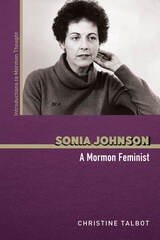
Sonia Johnson
A Mormon FeministChristine Talbot
University of Illinois Press, 2024
Few figures in the history of the Church of Jesus Christ of Latter-day Saints provoke such visceral responses as Sonia Johnson. Her unrelenting public support of the Equal Rights Amendment (ERA) made her the face of LDS feminism while her subsequent excommunication roiled the faith community.
Christine Talbot tells the story of Sonia’s historic confrontation with the Church within the context of the faith’s first large-scale engagement with the feminist movement. A typical if well-educated Latter-day Saints homemaker, Sonia was moved to action by the all-male LDS leadership’s opposition to the ERA and a belief the Church should stay out of politics. Talbot uses the activist’s experiences and criticisms to explore the ways Sonia’s ideas and situation sparked critical questions about LDS thought, culture, and belief. She also illuminates how Sonia’s excommunication shaped LDS feminism, the Church’s antagonism to feminist critiques, and the Church itself in the years to come.
A revealing and long-overdue account, Sonia Johnson explores the life, work, and impact of the LDS feminist.
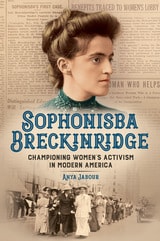
Sophonisba Breckinridge
Championing Women's Activism in Modern AmericaAnya Jabour
University of Illinois Press, 2019
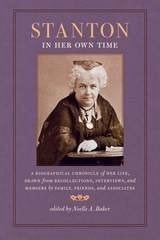
Stanton in Her Own Time
A Biographical Chronicle of Her Life, Drawn from Recollections, Interviews, and Memoirs by Family, Friends, and AssociatesNoelle A. Baker
University of Iowa Press, 2016
Among nineteenth-century women’s rights reformers, Elizabeth Cady Stanton (1815–1902) stands out for the maternal and secular advocacy that shaped her activism and public reception. A wife and mother of seven, she was also a prolific writer, transatlantic women’s rights leader, popular lecturer, congressional candidate, canny historian, and freethought champion. Her lifelong interest in women’s sexual and reproductive rights and late efforts to reform institutional religion are as relevant to our time as they were to her own.
Stanton’s professional life lasted a half-century, ranging from antebellum women’s rights organization and oratory, to a post–Civil War career as a lyceum lecturer, to a late-century role as an incisive religious and cultural critic. Acutely aware of the medical, religious, legal, and educational barriers to women’s independence, she advocated for married women’s right to vote, obtain a divorce, gain custody of their children, and own property. As she grew more radical over the years, she also demanded judicial reform, the separation of church and state, free love, progressive coeducational opportunities, and women’s right to limit their fertility.
In this richly contextualized collection of primary sources, Noelle A. Baker brings together accounts of Stanton’s life and ideas from both well-known and recently recovered figures. From the teacher chiding an assertive young woman to erstwhile allies worrying about her growing radicalism, their voices paint a vivid portrait of a woman of vaunting ambition, powerhouse intellect, and her share of human failings.

Sylvia Pankhurst
A Life in Radical PoliticsMary Davis
Pluto Press, 1999