Results by title
329 books match the query 'Folklore & Mythology' and 24 start with s
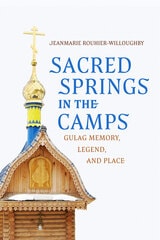
Sacred Springs in the Camps
Gulag Memory, Legend, and PlaceJeanmarie Rouhier-Willoughby
University of Wisconsin Press, 2026
Grounded by detailed ethnography, Sacred Springs in the Camps explores how legend creates, negotiates, and challenges collective memory; how lived religious practices intersect with the current revival of the Russian Orthodox Church; how politics intertwine with belief; and how the social construction of sacred places affects folk narratives, faith, and local identity. These unlikely holy waters thus reflect important facets of contemporary Russian religion, politics, and society, refracting and reframing memories of the socialist past even as they offer important lessons for the present moment.
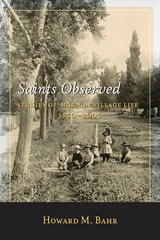
Saints Observed
Studies of Mormon Village Life, 1850-2005Howard M. Bahr
University of Utah Press, 2014
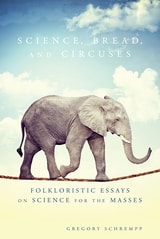
Science, Bread, and Circuses
Folkloristic Essays on Science for the MassesGregory Schrempp
Utah State University Press, 2014
In Science, Bread, and Circuses, Gregory Schrempp brings a folkloristic viewpoint to the topic of popular science, calling attention to the persistence of folkloric form, idiom, and worldview within the increasingly important dimension of popular consciousness defined by the impact of science.
Schrempp considers specific examples of texts in which science interpreters employ folkloric tropes—myths, legends, epics, proverbs, spectacles, and a variety of gestures from religious tradition—to lend credibility and appeal to their messages. In each essay he explores an instance of science popularization rooted in the quotidian round: variations of proverb formulas in monumental measurements, invocations of science heroes like saints or other inspirational figures, the battle of mythos and logos in parenting and academe, how the meme has become embroiled in quasi-religious treatments of the problem of evil, and a range of other tropes of folklore drafted to serve the exposition of science.
Science, Bread, and Circuses places the relationship of science and folklore at the very center of folkloristic inquiry by exploring a range of attempts to rephrase and thus domesticate scientific findings and claims in folklorically imbued popular forms.
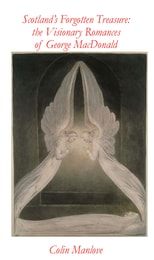
Scotland's Forgotten Treasure
The Visionary Romances of George MacDonaldColin Manlove
Aberdeen University Press, 2017

Self-Help Books
Why Americans Keep Reading ThemSandra K. Dolby
University of Illinois Press, 2004
Understanding instead of lamenting the popularity of self-help books
Based on a reading of more than three hundred self-help books, Sandra K. Dolby examines this remarkably popular genre to define "self-help" in a way that's compelling to academics and lay readers alike. Self-Help Books also offers an interpretation of why these books are so popular, arguing that they continue the well-established American penchant for self-education, they articulate problems of daily life and their supposed solutions, and that they present their content in a form and style that is accessible rather than arcane.
Using tools associated with folklore studies, Dolby then examines how the genre makes use of stories, aphorisms, and a worldview that is at once traditional and contemporary. The overarching premise of the study is that self-help books, much like fairy tales, take traditional materials, especially stories and ideas, and recast them into extended essays that people happily read, think about, try to apply, and then set aside when a new embodiment of the genre comes along.
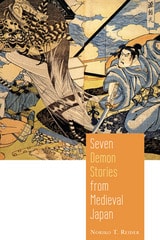
Seven Demon Stories from Medieval Japan
Noriko T. Reider
Utah State University Press, 2016
Reider, concordant with many scholars of Japanese cultural studies, argues that to study oni is to study humanity. These tales are from an era in which many new oni stories appeared for the purpose of both entertainment and moral/religious edification and for which oni were particularly important, as they were perceived to be living entities. They reflect not only the worldview of medieval Japan but also themes that inform twenty-first-century Japanese pop and vernacular culture, including literature, manga, film, and anime. With each translation, Reider includes an introductory essay exploring the historical and cultural importance of the characters and oni manifestations within this period.
Offering new insights into and interpretations of not only the stories therein but also the entire genre of Japanese ghost stories, Seven Demon Stories is a valuable companion to Reider’s 2010 volume Japanese Demon Lore. It will be of significant value to folklore scholars as well as students of Japanese culture.
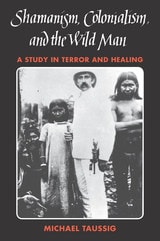
Shamanism, Colonialism, and the Wild Man
A Study in Terror and HealingMichael Taussig
University of Chicago Press, 1987
"This extraordinary book . . . will encourage ever more critical and creative explorations."—Fernando Coronil, [I]American Journal of Sociology[/I]
"Taussig has brought a formidable collection of data from arcane literary, journalistic, and biographical sources to bear on . . . questions of evil, torture, and politically institutionalized hatred and terror. His intent is laudable, and much of the book is brilliant, both in its discovery of how particular people perpetrated evil and others interpreted it."—Stehen G. Bunker, Social Science Quarterly
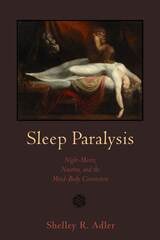
Sleep Paralysis
Night-mares, Nocebos, and the Mind-Body ConnectionAdler, Shelley R
Rutgers University Press, 2011
Shelley R. Adler's fifteen years of field and archival research focus on the ways in which night-mare attacks have been experienced and interpreted throughout history and across cultures and how, in a unique example of the effect of nocebo (placebo's evil twin), the combination of meaning and biology may result in sudden nocturnal death.
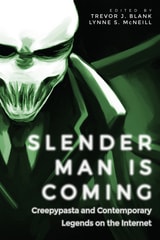
Slender Man Is Coming
Creepypasta and Contemporary Legends on the InternetTrevor J. Blank
Utah State University Press, 2018
As narrative texts are copied across online forums, they undergo modification, annotation, and reinterpretation by new posters in a folkloric process of repetition and variation. Though by definition legends deal largely with belief and possibility, the crowdsourced mythos behind creepypasta and Slender Man suggests a distinct awareness of fabrication. Slender Man is therefore a new kind of creation: one intentionally created as a fiction but with the look and feel of legend.
Slender Man Is Coming offers an unprecedented folkloristic take on Slender Man, analyzing him within the framework of contemporary legend studies, “creepypastas,” folk belief, and children’s culture. This first folkloric examination of the phenomenon of Slender Man is a must-read for anyone interested in folklore, horror, urban legends, new media, or digital cultures.
Contributors: Timothy H. Evans, Andrea Kitta, Mikel J. Koven, Paul Manning, Andrew Peck, Jeffrey A. Tolbert, Elizabeth Tucker
So They Understand
William Schneider
Utah State University Press, 2002
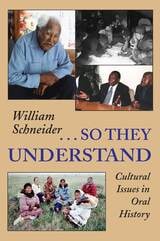
Illustrated with numerous stories collected from Alaska, the Yukon, and South Africa and further enlivened by the author's accessible style and experiences as a longtime oral historian and archivist, So They Understand is a comprehensive study of the special challenges and concerns involved in documenting, representing, preserving, and interpreting oral narratives. The title of the book comes from a quotation by Chief Peter John, the traditional chief of the Tanana Chiefs region in central Alaska: "In between the lines is something special going on in their minds, and that has got to be brought to light, so they understand just exactly what is said."
William Schneider discusses how stories work in relation to their cultures and performance settings, sorts out different types of stories-from broad genres such as personal narratives and life histories to such more specific and less-often considered types as presentations at hearings and other public gatherings-and examines a variety of critical issues, including the roles and relationships of storytellers and interviewers, accurate representation and preservation of stories and their performances, understanding and interpreting their cultural backgrounds and meanings, and intellectual property rights. Throughout, he blends a diverse selection of stories, including his own, into a text rich with pertinent examples.
William Schneider is curator of oral history and associate in anthropology at the Rasmuson Library, University of Alaska Fairbanks, where he introduced oral history "jukeboxes," innovative interactive, multimedia computer files that present and cross-reference audio oral history and related photos and maps. Among other works, his publications include, as editor, Kusiq: An Eskimo Life History from the Arctic Coast of Alaska and, with Phyllis Morrow, When Our Words Return: Writing, Hearing, and Remembering Oral Traditions of Alaska and the Yukon.
Social Voices
The Cultural Politics of Singers around the GlobeEdited by Levi S. Gibbs
University of Illinois Press, 2023
Around the world and across time, singers and their songs stand at the crossroads of differing politics and perspectives. Levi S. Gibbs edits a collection built around the idea of listening as a political act that produces meaning. Contributors explore a wide range of issues by examining artists like Romani icon Esma Redžepova, Indian legend Lata Mangeshkar, and pop superstar Teresa Teng. Topics include gendered performances and the negotiation of race and class identities; the class-related contradictions exposed by the divide between highbrow and pop culture; links between narratives of overcoming struggle and the distinction between privileged and marginalized identities; singers’ ability to adapt to shifting notions of history, borders, gender, and memory in order to connect with listeners; how the meanings we read into a singer’s life and art build on one another; and technology’s ability to challenge our ideas about what constitutes music.
Cutting-edge and original, Social Voices reveals how singers and their songs equip us to process social change and divergent opinions.
Contributors: Christina D. Abreu, Michael K. Bourdaghs, Kwame Dawes, Nancy Guy, Ruth Hellier, John Lie, Treva B. Lindsey, Eric Lott, Katherine Meizel, Carol A. Muller, Natalie Sarrazin, Anthony Seeger, Carol Silverman, Andrew Simon, Jeff Todd Titon, and Elijah Wald
Some Nightmares Are Real
The Haunting Truth Behind Alabama’s Supernatural Talesby Kelly Kazek, illustrated by Sarah Cotton
University of Alabama Press, 2024
Southern writer and folklorist Kelly Kazek’s collection of eerie and enigmatic Alabama ghost stories
Dark secrets lurk beneath the sleepy surface of Alabama. Ghosts and grisly creatures haunt the towns and forests. In the great Southern ghost-story tradition, famed Alabama storyteller Kelly Kazek weaves a gothic tapestry of ten stories drawn from real people and legendary creatures, cursed places, and harrowing events.
Each story or legend takes readers to a different place in Alabama. Read about the bestial Wolf Woman who terrified Mobilians in the haunted old port city. In the northern city of Huntsville, visit the Dead Children’s Playground in gloomy Maple Hill Cemetery. In Jacksonville, feel the cold grip of the Old Mill Witch, rumored to protect the workers at the rickety cotton yarn mill. Hear about the mysterious green light that drifts along the Alabama River in the Black Belt hamlet of Gee’s Bend and learn about the role the Gee’s Bend Ferry played in the Civil Rights Movement.
Unlike most ghost-story collections, Some Nightmares Are Real includes an appendix of facts, historical resources, and information about how to visit the locations. These contemporary stories embrace a beloved Southern folkloric tradition for a new generation of young readers. The tales will terrify and ensnare ghost-story lovers of all ages. So settle in, pull the covers up tight, and maybe turn on the light, because the truth is: Some Nightmares Are Real.
Some Nightmares Are True
Ghosts of America's Deadliest Disastersby Kelly Kazek, illustrated by Sarah Cotton
University of Alabama Press, 2025
Digging up the eerie aftermath of America’s deadliest disasters—where ghost stories take root, history lingers in the shadows, and the past refuses to stay buried.
In this haunting follow-up to Some Nightmares Are Real: The Haunting Truth Behind Alabama’s Supernatural Tales, journalist and storyteller Kelly Kazek investigates supernatural folklore grounded in historical catastrophe. This time, she ventures far beyond Alabama, unearthing the eerie legends born from their aftermath of nine of America’s most infamous disasters. From the strangling suffocation of the Boston Molasses Flood and the terror of Galveston’s notorious Great Storm, to flames blasting from the Triangle Shirtwaist Factory disaster, Some Nightmares Are True examines ghost stories that have haunted communities long after the news headlines stopped.
Each spooky story blends vivid storytelling with meticulous research, connecting real events to the ghostly lore they inspired. Kazek explores not just the moment of disaster, but how grief, resilience, and remembrance shape the way stories live on—through newspaper archives, folklore, and generations of retelling.
With both wry Southern sensibility and journalistic rigor, Kazek explores how moments of tragedy like the Dixie Tornado Outbreak in Alabama, the capsizing of the SS Eastland in Chicago, and the haunting aftermath of the Schoolchildren’s Blizzard in Nebraska leave lasting imprints on generational memory. These sites of devastation become more than historical footnotes; they transform into hallowed grounds where grief lingers, legends remain, and the line between fact and folklore dissolves.
For ghost hunters, or simply those brave enough to follow their curiosity into learning more about the stories’ historical facts, Kazek has compiled a robust appendix that provides context, source materials, and location details, making this a perfect pick to toss in the car for that late-night road trip adventure. But remember, Some Nightmares Are True.
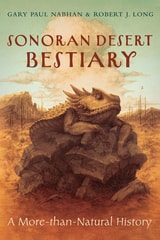
Sonoran Desert Bestiary
A More-than-Natural HistoryText by Gary Paul Nabhan; Illustrations by Robert J. Long
University of Arizona Press, 2026
The Sonoran Desert has many marvelous and well-known creatures such as the javelina and the coyote, often found on postcards and lawn ornaments. But what about the lesser-known creatures—the ones that are underfoot yet unseen, that lurk only in the shadows and in our imaginations? In this collection of essays, prose poems, and illustrations, naturalist Gary Paul Nabhan and artist Robert J. Long team up to celebrate these unsung beings of the Sonoran Desert.
This desert bestiary includes creatures whose existence lies largely in traditional story and belief, as well as creatures whose life cycles are so cryptic they seem mythic, such as the walking catfish and the carbunco. Positioned at the dynamic intersection of folklore and natural history, the book reflects on the reasons why human imaginations over the ages have reached into this realm of seldom seen but often intuited animals. Focusing on small animals and charismatic mini-fauna, Nabhan expands our understanding of the natural world by delightfully describing the interactions between animals and plants.
This more-than-natural history is for anyone who finds joy in the marvels of the natural world.
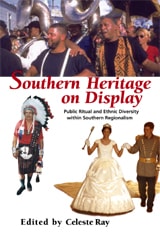
Southern Heritage on Display
Public Ritual and Ethnic Diversity within Southern RegionalismEdited by Celeste Ray
University of Alabama Press, 2002
W. J. Cash's 1941 observation that “there are many Souths and many cultural traditions among them” is certainly validated by this book. Although the Civil War and its “lost cause” tradition continues to serve as a cultural root paradigm in celebrations, both uniting and dividing loyalties, southerners also embrace a panoply of public rituals—parades, cook-offs, kinship homecomings, church assemblies, music spectacles, and material culture exhibitions—that affirm other identities. From the Appalachian uplands to the Mississippi Delta, from Kentucky bluegrass to Carolina piedmont, southerners celebrate in festivals that showcase their diverse cultural backgrounds and their mythic beliefs about themselves.
The ten essays of this cohesive, interdisciplinary collection present event-centered research from various fields of study—anthropology, geography, history, and literature—to establish a rich, complex picture of the stereotypically “Solid South.” Topics include the Mardi Gras Indian song cycle as a means of expressing African-American identity in New Orleans; powwow performances and Native American traditions in southeast North Carolina; religious healings in southern Appalachian communities; Mexican Independence Day festivals in central Florida; and, in eastern Tennessee, bonding ceremonies of melungeons who share Indian, Scots Irish, Mediterranean, and African ancestry. Seen together, these public heritage displays reveal a rich “creole” of cultures that have always been a part of southern life and that continue to affirm a flourishing regionalism.
This book will be valuable to students and scholars of cultural anthropology, American studies, and southern history; academic and public libraries; and general readers interested in the American South. It contributes a vibrant, colorful layer of understanding to the continuously emerging picture of complexity in this region historically depicted by simple stereotypes.
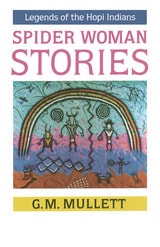
Spider Woman Stories
G. M. Mullett
University of Arizona Press, 1979
"This is a fine introduction to Hopi mythology and values. It recreates an authentic poetic spirit and makes the reader eager to read more Hopi tales." —New Mexico Humanities Review
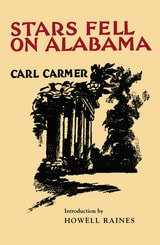
Stars Fell on Alabama
Carl Carmer
University of Alabama Press, 2000
A timeless journey into the heart and folklore of Alabama.
Stars Fell on Alabama is a landmark work of Southern literature that transports readers to Alabama during the early 20th century. Written by Carl Carmer, this evocative narrative blends memoir, travel writing, and folklore to paint a rich portrait of a region steeped in tradition and complexity. Carmer captures the rhythms of rural life, the haunting beauty of the landscape, and the voices of its people—farmers, musicians, storytellers—whose tales reveal the cultural fabric of the Deep South. From ghost stories and folk songs to accounts of social customs and racial tensions, this book offers an unflinching yet affectionate look at Alabama’s heritage. Both a historical document and a literary masterpiece, Stars Fell on Alabama remains essential reading for anyone interested in Southern history, American folklore, and the enduring power of storytelling.
Still, the Small Voice
Narrative, Personal Revelation, and the Mormon Folk TraditionTom Mould
Utah State University Press, 2011
Memorates—personal experience narratives of encounters with the supernatural—that recount individuals’ personal revelations, primarily through the Holy Ghost, are a pervasive aspect of the communal religious experience of Mormons, members of the Church of Jesus Christ of Latter-day Saints. In accordance with current emphases in folklore studies on narrative and belief, Tom Mould uses ethnographic research and an emic approach that honors the belief systems under study to analyze how people within Mormon communities frame and interpret their experiences with the divine through the narratives they share. In doing so, he provides a significant new ethnographic interpretation of Mormon culture and belief and also applies his findings directly to broader scholarly folklore discourse on performance, genre, personal experience narrative, belief, and oral versus written traditions.
Stories from the Heart
Missouri's African American HeritageCompiled by Gladys Caines-Coggswell
University of Missouri Press, 2009
All along the river, from the front porches of Hannibal to the neighborhoods of St. Louis to the cotton fields of the Bootheel and west to Kansas City, stories are being told.
This collection of family stories and traditional tales brings to print down-home stories about all walks of African American life. Passed down from grandparents and great-grandparents, they have been lovingly gathered by Gladys Caines Coggswell as she visited Missouri communities and participated in storytelling events over the last two decades. These stories bring to life characters with uncommon courage, strength, will, and wit as they offer insight into African American experiences throughout the state’s history.
Often profound, always entertaining, some of these stories hark back to times barely remembered. Many tell of ordinary folks who achieved victories in the face of overwhelming odds. They range from recollections of KKK activities—recalling a Klan leader who owned property on which a black family lived as “the man who was always so nice to us”—to remembered differences between country and city schools and black schoolchildren introduced to Dick and Jane and Little Black Sambo. Stories from the Bootheel shed light on family life, sharecropping, and the mechanization of cotton culture, which in one instance led to a massive migration of rats as the first mechanical cotton pickers came in.
As memorable as the stories are the people who tell them, such as the author’s own “Uncle Pete” reporting on a duck epidemic or Evelyn Pulliam of Kennett telling of her resourceful neighbors in North Lilburn. Loretta Washington remembers sitting on her little wooden stool beside her great-grandmother’s rocking chair on the front porch in Wardell, mesmerized by stories—and the time when rocking chair and little wooden stool were moved inside and the stories stopped. Marlene Rhodes writes of her mother’s hero, Odie, St. Louis “Entrepreneur and English gentleman.”
Whether sharing previously unknown stories from St. Louis or betraying the secret of “Why Dogs Chase Cats,” this book is a rich repository of African American life. And if some of these tales seem unusual, the people remembering them will be the first to tell you: that’s the way it was. Coggswell preserves them for posterity and along with them an important slice of Missouri history.
Stories of Our Lives
Memory, History, NarrativeFrank de Caro
Utah State University Press, 2013
Story
Harold Scheub
University of Wisconsin Press, 1998
What is the essence of story? How does the storyteller convey meaning? Leading scholar Harold Scheub tackles these questions and more, demonstrating that the power of story lies in emotion.
While others have focused on the importance of structure in the art of story, Scheub emphasizes emotion. He shows how an expert storyteller uses structural elements—image, rhythm, and narrative—to shape a story's fundamental emotional content. The storyteller uses traditional images, repetition, and linear narrative to move the audience past the story’s surface of morals and ideas, and make connections to their past, present, and future. To guide the audience on this emotional journey is the storyteller’s art.
The traditional stories from South African, Xhosa, and San cultures included in the book lend persuasive support to Scheub’s. These stories speak for themselves, demonstrating that a skilled performer can stir emotions despite the obstacles of space, time, and culture.
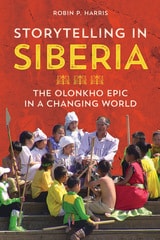
Storytelling in Siberia
The Olonkho Epic in a Changing WorldRobin P. Harris
University of Illinois Press, 2017
Drawing on her ten years of living in the Russian North, Robin P. Harris documents how the Sakha have used the Masterpiece program to revive olonkho and strengthen their cultural identity. Harris’s personal relationships with and primary research among Sakha people provide vivid insights into understanding olonkho and the attenuation, revitalization, transformation, and sustainability of the Sakha’s cultural reemergence. Interdisciplinary in scope, Storytelling in Siberia considers the nature of folklore alongside ethnomusicology, anthropology, comparative literature, and cultural studies to shed light on how marginalized peoples are revitalizing their own intangible cultural heritage.
Studies In Italian American Folklore
Luisa Del Giudice
Utah State University Press, 1994
Supplement to the Handbook of Middle American Indians, Volume 3
LiteraturesVictoria R. Bricker, general editor<br>Munro S. Edmonson, volume editor
University of Texas Press, 1985
The sixteen-volume Handbook of Middle American Indians, completed in 1976, has been acclaimed the world over as the single most valuable resource ever produced for those involved in the study of Mesoamerica. When it was determined in 1978 that the Handbook should be updated periodically, Victoria Reifler Bricker, well-known cultural anthropologist, was elected to be general editor.
This third volume of the Supplement is devoted to the aboriginal literatures of Mesoamerica, a topic receiving little attention in the original Handbook. According to the general editor, "This volume does more than supplement and update the coverage of Middle American Indian literatures in the Handbook. It breaks new ground by defining the parameters of a new interdisciplinary field in Middle American Indian studies."
The aim of the present volume is to consider literature from five Middle American Indian languages: Nahuatl, Yucatecan Maya, Quiche, Tzotzil, and Chorti. The first three literatures are well documented for both the Classical and Modern variants of their languages and are obvious candidates for inclusion in this volume. The literatures of Tzotzil and Chorti, on the other hand, are oral, and heretofore little has been written of their genres and styles.
Taken together, these essays represent a substantial contribution to the Handbook series, with the volume editor's introduction placing in geographic perspective the five literatures chosen as representative of the Middle American literary tradition.