Results by title
406 books match the query 'Greece' and 26 start with s
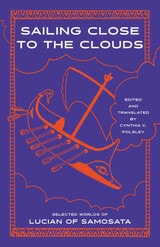
Sailing Close to the Clouds
Selected Worlds of Lucian of SamosataLucian of Samosata
University of Chicago Press, 0
Approachable translations and discussions of Lucian that reveal his world-building, world-bending, and multiversal thinking.
Lucian of Samosata was ahead of his time. A rhetorician and writer active in the second century CE, he was one of the earliest known worldbuilders and science-fiction enthusiasts. Popular and prolific in antiquity—more than eighty texts attributed to him have come down to us today, including satires, dialogues, and part of a fictional work called True History—Lucian crafted astonishing tales that unfold on the surface of the moon or other planets, high above in Earth’s atmosphere, or through the eyes of underworld inhabitants or other entities who view mortal humans as otherworldly beings.
Ideal for readers interested in science fiction, fantasy, and mythology, this accessible collection offers a guided journey through Lucian’s many worlds. Bringing together fresh vernacular translations of eight works with substantial discussion, this selection showcases Lucian as a proto-multiversal thinker, presenting multiform narratives that herald developments in modern genres ranging from literature and film to gaming and fan fiction. Translator and editor Cynthia Polsley introduces each with a short excerpt from another piece of classical literature, showing how other ancient authors—including Homer, Ovid, and Vergil—influenced Lucian’s literary landscapes or were inspired by him in turn.
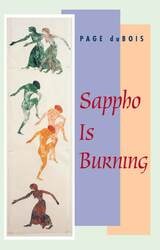
Sappho Is Burning
Page duBois
University of Chicago Press, 1995
In Sappho is Burning, duBois reads Sappho as a disruptive figure at the very origin of our story of Western civilization. Sappho is beyond contemporary categories, inhabiting a space outside of reductively linear accounts of our common history. She is a woman, but also an aristocrat, a Greek, but one turned toward Asia, a poet who writes as a philosopher before philosophy, a writer who speaks of sexuality that can be identified neither with Michel Foucault's account of Greek sexuality, nor with many versions of contemporary lesbian sexuality. She is named as the tenth muse, yet the nine books of her poetry survive only in fragments. She disorients, troubles, undoes many certitudes in the history of poetry, the history of philosophy, the history of sexuality. DuBois argues that we need to read Sappho again.
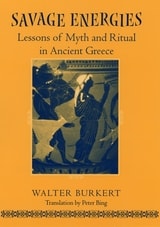
Savage Energies
Lessons of Myth and Ritual in Ancient GreeceWalter Burkert
University of Chicago Press, 2001
For example, in a much-cited essay on the Athenian religious festival of the Arrephoria, Burkert uncovers deep connections between this strange nocturnal ritual, in which two virgin girls carried sacred offerings into a cave and later returned with something given to them there, and tribal puberty initiations by linking the festival with the myth of the daughters of Kekrops. Other chapters explore the origins of tragedy in blood sacrifice; the role of myth in the ritual of the new fire on Lemnos; the ties between violence, the Athenian courts, and the annual purification of the divine image; and how failed political propaganda entered the realm of myth at the time of the Persian Wars.

School for Pagan Lovers
Keeley, Edmund
Rutgers University Press, 1993
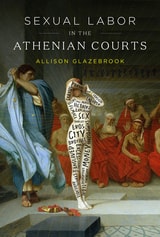
Sexual Labor in the Athenian Courts
Allison Glazebrook
University of Texas Press, 2021
Oratory is a valuable source for reconstructing the practices, legalities, and attitudes surrounding sexual labor in classical Athens. It provides evidence of male and female sex laborers, sex slaves, brothels, sex traffickers, the cost of sex, contracts for sexual labor, and manumission practices for sex slaves. Yet the witty, wealthy, and independent hetaira, well-known from other genres, does not feature. Its detailed narratives and character portrayals provide a unique discourse on sexual labor and reveal the complex relationship between such labor and Athenian society.
Through a holistic examination of five key speeches, Sexual Labor in the Athenian Courts considers how portrayals of sex laborers intersected with gender, the body, sexuality, the family, urban spaces, and the polis in the context of the Athenian courts. Drawing on gender theory and exploring questions of space, place, and mobility, Allison Glazebrook shows how sex laborers represented a diverse set of anxieties concerning social legitimacy and how the public discourse about them is in fact a discourse on Athenian society, values, and institutions.
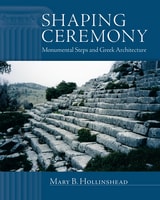
Shaping Ceremony
Monumental Steps and Greek ArchitectureMary B. Hollinshead
University of Wisconsin Press, 2014
The heart of the study is a close reading of thirty-eight sites with monumental steps from the sixth through second centuries B.C. Organized by century, the book tracks the development of built pathways and grandstands for crowds of worshippers as evidence of the Greeks' increasing awareness of the power of architecture to shape behavior and concentrate social energy. With photographs and illustrations of plans, Shaping Ceremony offers a clear account of how Greeks' adaptation of terrain for human use promoted social cohesion and integrated architectural compositions.
Siren Songs
Gender, Audiences, and Narrators in the OdysseyLillian Eileen Doherty
University of Michigan Press, 1995
Siren Songs synthesizes audience-oriented and narratological approaches, and examines the relationships among three kinds of audiences: internal, implied, and actual. The author prefaces her own reading of the Odyssey with an analysis of the issues posed by the earlier feminist readings on which she builds. Should the Odyssey be read as a "closed" text, that is, as one whose meaning is highly determined, or as an "open" text whose contradictions and ambiguities undercut its overt meanings?
Siren Songs presents a feminist critique of the Odyssey in an accessible manner aimed at a more general audience. All Greek is translated, and critical terminology is clearly defined.
Lillian Eileen Doherty is Associate Professor of Classics, University of Maryland, College Park.
Slavery and Sexuality in Classical Antiquity
Edited by Deborah Kamen and C. W. Marshall
University of Wisconsin Press, 2021
Slavery and Sexuality in Classical Antiquity reveals the often hidden and contradictory attitudes concerning the sexual identities and expression of enslaved people. These individuals were typically objectified by both social convention and legal description but were also recognized as human subjects, with subjectivity and sexual desires of their own. The contributors provoke valuable and fascinating questions that not only recognize the trauma and struggles of enslaved people but also point to the apparent inconsistencies in the mindsets of the enslavers. The resulting volume expands our understanding of both sexuality and slavery in ancient Greece and Rome, as separate subjects and as they impacted each other.
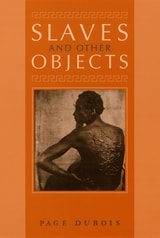
Slaves and Other Objects
Page duBois
University of Chicago Press, 2003
DuBois begins her study by exploring the material culture of slavery, including how most museum exhibits erase the presence of slaves in the classical world. Shifting her focus to literature, she considers the place of slaves in Plato's Meno, Aristotle's Politics, Aesop's Fables, Aristophanes' Wasps, and Euripides' Orestes. She contends throughout that portraying the difference between slave and free as natural was pivotal to Greek concepts of selfhood and political freedom, and that scholars who idealize such concepts too often fail to recognize the role that slavery played in their articulation.
Opening new lines of inquiry into ancient culture, Slaves and Other Objects will enlighten classicists and historians alike.
Social Memory in Athenian Public Discourse
Uses and Meanings of the PastBernd Steinbock
University of Michigan Press, 2013
Integrating literary, epigraphic, and archaeological evidence with recent scholarship on memory, identity, rhetoric, and international relations, Social Memory in Athenian Public Discourse: Uses and Meanings of the Past enhances our understanding of both the function of memory in Athenian public discourse and the history of Athenian-Theban relations. It should be of interest not only to students of Greek history and oratory but to everybody interested in memory studies, Athenian democracy, and political decision making.
Socrates of Constantinople
Historian of Church and StateTheresa Urbainczyk
University of Michigan Press, 1997

Sophocles II
Ajax, The Women of Trachis, Electra, Philoctetes, The TrackersEdited by Mark Griffith, Glenn W. Most, David Grene, and Richmond Lattimore
University of Chicago Press, 2013
Sophocles II contains the plays “Ajax,” translated by John Moore; “The Women of Trachis,” translated by Michael Jameson; “Electra,” translated by David Grene; “Philoctetes,” translated by David Grene; and “The Trackers,” translated by Mark Griffith.
Many years ago, the University of Chicago Press undertook a momentous project: a new translation of the Greek tragedies that would be the ultimate resource for teachers, students, and readers. They succeeded. Under the expert management of eminent classicists David Grene and Richmond Lattimore, those translations combined accuracy, poetic immediacy, and clarity of presentation to render the surviving masterpieces of Aeschylus, Sophocles, and Euripides in an English so lively and compelling that they remain the standard translations. The updated third editions of these classic works were designed to ensure that our Greek tragedies remain the leading English-language versions throughout the twenty-first century.
In this highly anticipated third edition, Mark Griffith and Glenn W. Most have carefully updated the translations to bring them even closer to the ancient Greek while retaining the vibrancy for which our English versions are famous. This edition also includes brand-new translations of Euripides’ Medea, The Children of Heracles, Andromache, and Iphigenia among the Taurians, fragments of lost plays by Aeschylus, and the surviving portion of Sophocles’s satyr-drama The Trackers. New introductions for each play offer essential information about its first production, plot, and reception in antiquity and beyond. In addition, each volume includes an introduction to the life and work of its tragedian, as well as notes addressing textual uncertainties and a glossary of names and places mentioned in the plays.
In addition to the new content, the volumes have been reorganized both within and between volumes to reflect the most up-to-date scholarship on the order in which the plays were originally written. The result is a set of handsome paperbacks destined to introduce new generations of readers to these foundational works of Western drama, art, and life.
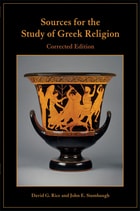
Sources for the Study of Greek Religion, Corrected Edition
David G. Rice
SBL Press, 2009

Southern Europe?
Italy, Spain, Portugal, and Greece from the 1950s Until the Present DayEdited by Martin Baumeister and Roberto Sala
Campus Verlag, 2015
Now, old inequalities long believed to be things of the past have resurfaced, and a new debt crisis appears to be splitting the continent apart along historic lines. This book raises the important question of whether studying the geopolitics and social history of southern Europe might be a valuable analytical tool for understanding these contemporary financial catastrophes.

Space in Greek Tragedy (BICS Supplement 131)
Edited by Vassiliki Kampourelli
University of London Press, 2016
Speaking the Same Language
Speech and Audience in Thucydides' Spartan DebatesPaula Debnar
University of Michigan Press, 2002
Speaking the Same Language seeks to recover the role played by the audiences within the History. By restoring the internal audiences to a more prominent place, Debnar emphasizes the perspective of the participants in the war and heightens the dramatic immediacy of the debates. She thoroughly analyzes twelve speeches delivered by or to the Spartans, demonstrating how the earlier speeches illustrate the role of discourse in the construction of Sparta's identity and the unification of her Dorian allies in the face of their primarily Ionian adversaries.
Combining close textual analysis with an examination of narrative and historical context, Debnar bridges the gap between literary and historical studies of Thucydides. Accessible to specialists and nonspecialists alike, her work will interest those working in the fields of Greek literature, ancient historiography, rhetoric, political science, and ethnic studies.
Paula Debnar is Associate Professor of Classics, Mount Holyoke College.
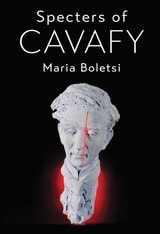
Specters of Cavafy
Maria Boletsi
University of Michigan Press, 2024
Winner of the European Society of Modern Greek Studies Best Monograph Award
The Greek Alexandrian poet C. P. Cavafy (1863–1933) has been recognized as a central figure in European modernism and world literature. His poetry explored the conditions for animating the past and making lost worlds or people haunt the present. Yet he also described himself as “a poet of the future generations.” Indeed, his writings address concerns and desires that permeate the twentieth and twenty-first centuries. How does poetry concerned with the past, memory, loss, and death, carry futurity? How does it haunt, and how is it haunted by, future presents?
Specters of Cavafy broaches these questions by proposing spectral poetics as a novel approach to Cavafy’s work. Drawing from theorizations of specters and haunting, it develops spectrality as a lens for revisiting Cavafy’s poetry and prose, fiction and nonfiction, as well as his poetry’s bearing on our present. By examining Cavafy’s spectral poetics, the book’s first part shows how conjurations work in his writings, and how the spectral permeates the entanglement of modernity and haunting, and of irony and affect. The second part traces the afterlives of specific poems in the Western imagination since the 1990s, in Egypt’s history of debt and colonization, and in Greece during the country’s recent debt crisis. Beyond its original contribution to Cavafy studies, the book proposes tools and modes of reading that are broadly applicable in literary and cultural studies.
Speeches from Athenian Law
Edited by Michael Gagarin
University of Texas Press, 2011
This is the sixteenth volume in the Oratory of Classical Greece. This series presents all of the surviving speeches from the late fifth and fourth centuries BC in new translations prepared by classical scholars who are at the forefront of the discipline. These translations are especially designed for the needs and interests of today's undergraduates, Greekless scholars in other disciplines, and the general public.
Classical oratory is an invaluable resource for the study of ancient Greek life and culture. The speeches offer evidence on Greek moral views, social and economic conditions, political and social ideology, law and legal procedure, and other aspects of Athenian culture that have recently been attracting particular interest: women and family life, slavery, and religion, to name just a few.
This volume assembles twenty-two speeches previously published in the Oratory series. The speeches are taken from a wide range of different kinds of cases—homicide, assault, commercial law, civic status, sexual offenses, and others—and include many of the best-known speeches in these areas. They are Antiphon, Speeches 1, 2, 5, and 6; Lysias 1, 3, 23, 24, and 32; Isocrates 17, 20; Isaeus 1, 7, 8; Hyperides 3; Demosthenes 27, 35, 54, 55, 57, and 59; and Aeschines 1. The volume is intended primarily for use in teaching courses in Greek law or related areas such as Greek history. It also provides the introductions and notes that originally accompanied the individual speeches, revised slightly to shift the focus onto law.
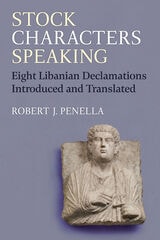
Stock Characters Speaking
Eight Libanian Declamations Introduced and TranslatedRobert J. Penella
University of Michigan Press, 2023
Declamations were composed and orally delivered in the Roman Empire by sophists, or teachers of rhetoric, of whom the Greek-speaking Libanius was one of the most distinguished. Stock Characters Speaking may be thought of as emerging from three developments of recent decades: an explosive interest in late antiquity, a newly sympathetic interest in rhetoric (including ancient declamation), and a desire to bring Libanius’s massive corpus into English and other modern languages.
In this book, author Robert J. Penella translates eight of Libanius’s declamations: 29, 30, 34, 35, 37, 45, 46, 47, and, in an appendix, the thirteenth-century Gregory of Cyprus’s response to Declamation 34. Each translation is accompanied by an introduction, in which Penella examines the themes, structure, and the stasis, or key issue, of the declamations. Figures who appear in the translated declamations include a parasite who has lost his patron, a man envious of his rich neighbor, a miser’s son, a poor man willing to die for his city, a rich war-hero accused of aiming at tyranny, and a convict asking for exile. Three of these declamations have appeared in German; otherwise, these translations are the first into a modern language.
Stones, Bones, and the Sacred
Essays on Material Culture and Ancient Religion in Honor of Dennis E.Alan H. Cadwallader
SBL Press, 2016
A crucial text for any university course on the interaction of archaeology and the Bible
The world of early Christians was not a world lived in texts; it was a world saturated with material reality and concerns: what, where and when to eat or drink; how to present oneself in the space of bodily life and that of death; how to move from one place to another; what impacted status or the adjudication of legal charges. All these and more controlled so much of life in the ancient world. The Christians were not immune from the impact of these realities. Sometimes they absorbed their surrounds; sometimes they quite explicitly rejected the material practices bearing in on them; frequently they modified the practice and the rationale to create a significant Christian alternative. The collection of essays in this volume come from a range of international scholars who, for all their different interests and critical commitments, are yet united in treasuring research into the Greek and Roman worlds in which Christians sought to make their way. They offer these essays in honor of one who has made a lifetime's work in mining ancient material culture to extract nuggets of insight into early Christian dining practices: Dennis E. Smith.
Features
- Rich examples of method in the utilization of ancient material culture for biblical interpretation.
- Thirteen essays with a response from Dennis E. Smith
- Maps, diagrams, and plates
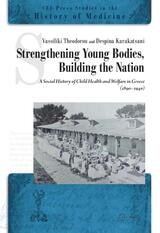
Strengthening Young Bodies, Building the Nation
A Social History of the Child Health and Welfare in Greece (1890–1940)Vassiliki Theodorou
Central European University Press, 2019
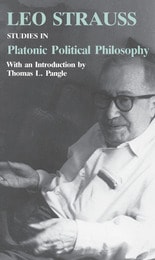
Studies in Platonic Political Philosophy
Leo Strauss
University of Chicago Press, 1983
As his choice of title indicates, the heart of Strauss's work is Platonism—a Platonism that is altogether unorthodox and highly controversial. These essays consider, among others, Heidegger, Husserl, Nietzsche, Marx, Moses Maimonides, Machiavelli, and of course Plato himself to test the Platonic understanding of the conflict between philosophy and political society. Strauss argues that an awesome spritual impoverishment has engulfed modernity because of our dimming awareness of that conflict.
Thomas Pangle's Introduction places the work within the context of the entire Straussian corpus and focuses especially on Strauss's late Socratic writings as a key to his mature thought. For those already familiar with Strauss, Pangle's essay will provoke thought and debate; for beginning readers of Strauss, it provides a fine introduction. A complete bibliography of Strauss's writings if included.
Subversive Archaism
Troubling Traditionalists and the Politics of National HeritageMichael Herzfeld
Duke University Press, 2021
Surplus Citizens
Struggle and Nationalism in the Greek CrisisDimitra Kotouza
Pluto Press, 2018
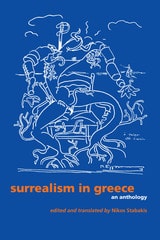
Surrealism in Greece
An AnthologyEdited and translated by Nikos Stabakis
University of Texas Press, 2008
In the decades between the two World Wars, Greek writers and artists adopted surrealism both as an avant-garde means of overturning the stifling traditions of their classical heritage and also as a way of responding to the extremely unstable political situation in their country. Despite producing much first-rate work throughout the rest of the twentieth century, Greek surrealists have not been widely read outside of Greece. This volume seeks to remedy that omission by offering authoritative translations of the major works of the most important Greek surrealist writers.
Nikos Stabakis groups the Greek surrealists into three generations: the founders (such as Andreas Embirikos, Nikos Engonopoulos, and Nicolas Calas), the second generation, and the Pali Group, which formed around the magazine Pali. For each generation, he provides a very helpful introduction to the themes and concerns that animate their work, as well as concise biographies of each writer. Stabakis anthologizes translations of all the key surrealist works of each generation—poetry, prose, letters, and other documents—as well as a selection of rarer texts. His introduction to the volume places Greek surrealism within the context of the international movement, showing how Greek writers and artists used surrealism to express their own cultural and political realities.

Sweet Greeks
First-Generation Immigrant Confectioners in the HeartlandAnn Flesor Beck
University of Illinois Press, 2020
Ann Flesor Beck's charming personal account recreates the atmosphere of her grandfather's candy kitchen with its odors of chocolate and popcorn and the comings-and-goings of family members. "The Store" represented success while anchoring the business district of Gus's chosen home. It also embodied the Midwest émigré experience of chain migration, immigrant networking, resistance and outright threats by local townspeople, food-related entrepreneurship, and tensions over whether later generations would take over the business.
An engaging blend of family memoir and Midwest history, Sweet Greeks tells how Greeks became candy makers to the nation, one shop at a time.