Results by title
767 books match the query 'Hispanic & Latino Studies' and 42 start with s
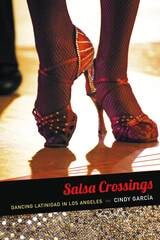
Salsa Crossings
Dancing Latinidad in Los AngelesCindy García
Duke University Press, 2013
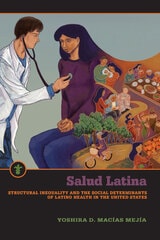
Salud Latina
Structural Inequality and the Social Determinants of Latino Health in the United StatesYoshira D. Macías Mejía
Michigan State University Press, 2027
Latinos living in the United States continue to face institutional racism and systemic oppression in many aspects of their lives. This volume focuses on discriminatory policies and practices in the health sector and reveals how they compound contemporary health inequities among Latinos. Through a combination of rigorous data analysis and personal narratives, the contributors explore critical dimensions of Latino health, including systemic disparities in healthcare access and insurance, the effects of state immigration policies on health outcomes, unique challenges facing undocumented immigrants, adolescent socio-emotional development, aging populations, Latina women’s physical and mental health, farmworker occupational hazards, and pathways toward health equity. Together, the chapters show that Latinos in the United States continue to face four fundamental barriers to health equity, namely immigrant legal status restrictions, anti-immigrant policies, inadequate quality care from healthcare systems lacking cultural competency, and limited occupational protections. This timely work provides essential evidence for policymakers, public health practitioners, and researchers seeking to understand and address persistent health disparities affecting America's largest ethnic minority population.
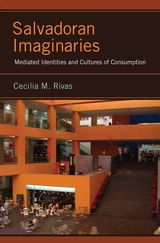
Salvadoran Imaginaries
Mediated Identities and Cultures of ConsumptionCecilia M. Rivas
Rutgers University Press, 2014
In Salvadoran Imaginaries, Cecilia M. Rivas takes us on a journey through twenty-first century El Salvador and to the diverse range of sites where the nation’s postwar identity is being forged. Combining field ethnography with media research, Rivas deftly toggles between the physical spaces where the new El Salvador is starting to emerge and the virtual spaces where Salvadoran identity is being imagined, including newspapers, literature, and digital media. This interdisciplinary approach enables her to explore the multitude of ways that Salvadorans negotiate between reality and representation, between local neighborhoods and transnational imagined communities, between present conditions and dreams for the future.
Everyday life in El Salvador may seem like a simple matter, but Rivas digs deeper, across many different layers of society, revealing a wealth of complex feelings that the nation’s citizens have about power, opportunity, safety, migration, and community. Filled with first-hand interviews and unique archival research, Salvadoran Imaginaries offers a fresh take on an emerging nation and its people.
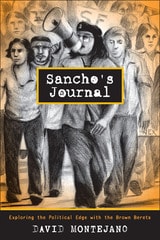
Sancho's Journal
Exploring the Political Edge with the Brown BeretsBy David Montejano
University of Texas Press, 2012
How do people acquire political consciousness, and how does that consciousness transform their behavior? This question launched the scholarly career of David Montejano, whose masterful explorations of the Mexican American experience produced the award-winning books Anglos and Mexicans in the Making of Texas, 1836–1986, a sweeping outline of the changing relations between the two peoples, and Quixote’s Soldiers: A Local History of the Chicano Movement, 1966–1981, a concentrated look at how a social movement “from below” began to sweep away the last vestiges of the segregated social-political order in San Antonio and South Texas. Now in Sancho’s Journal, Montejano revisits the experience that set him on his scholarly quest—“hanging out” as a participant-observer with the South Side Berets of San Antonio as the chapter formed in 1974.
Sancho’s Journal presents a rich ethnography of daily life among the “batos locos” (crazy guys) as they joined the Brown Berets and became associated with the greater Chicano movement. Montejano describes the motivations that brought young men into the group and shows how they learned to link their individual troubles with the larger issues of social inequality and discrimination that the movement sought to redress. He also recounts his own journey as a scholar who came to realize that, before he could tell this street-level story, he had to understand the larger history of Mexican Americans and their struggle for a place in U.S. society. Sancho’s Journal completes that epic story.

Sanctuary
Exclusion, Violence, and Indigenous Migrants in the East BayCruz Medina
The Ohio State University Press, 2024
Taking a Northern California community of migrants from Guatemala as a case study, Medina demonstrates the ways in which immigration policy and educational barriers exclude Indigenous migrant populations. He follows the community at the “Sanctuary”—a Spanish-speaking church in the East Bay Area that serves as a place of worship, English language instruction, and refuge for migrants. Medina assembles participant observations, interviews, surveys, and other data to provide points of entry into intersecting issues of immigration, violence, language, and property and to untangle aspects of citizenship, exclusion, and assumptions about literacy.
Scales of Captivity
Racial Capitalism and the Latinx ChildMary Pat Brady
Duke University Press, 2022
Scales of Resistance
Indigenous Women’s Transborder ActivismMaylei Blackwell
Duke University Press, 2022
Scarred Landscapes
Place, Trauma, and Memory in Caribbean Latinx ArtStephanie Lewthwaite
University of Arizona Press, 2025
The book combines formal analysis with artist testimony, exhibition histories, and theoretical frameworks from trauma, memory, and archipelagic studies, to offer a multifaceted examination of Caribbean Latinx art. Lewthwaite explores how these artists practice “archipelagic memory,” a generative, decolonial, and coalitional form of memory work that envisions alternative modes of belonging in difference and solidarity with others. By connecting different people, pasts, and places, Caribbean Latinx artists expose the reverberations of trauma while imagining other worlds beyond it.
This work puts Caribbean Latinx artists at the center of debates about the exclusions of dominant memory narratives and contemporary art worlds, highlighting their contributions to a wider decolonial project of remembrance. By revealing the interconnectedness of traumatic histories and the potential for art to foster empathy and justice, Lewthwaite’s work underscores the importance of relational and decolonial thought for imagining a better society.
Scenes from la Cuenca de Los Angeles y otros Natural Disasters
Susana Chávez-Silverman
University of Wisconsin Press, 2010
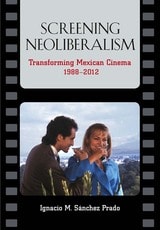
Screening Neoliberalism
Transforming Mexican Cinema, 1988-2012Ignacio M. Sánchez Prado
Vanderbilt University Press, 2014
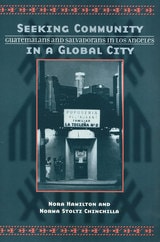
Seeking Community In Global City
Guatemalans & Salvadorans In Los AngelesNora Hamilton
Temple University Press, 2001
Based on twenty years of work with the Los Angeles Central American community and filled with facts, figures, and personal narratives, Seeking Community in a Global City presents this saga from many perspectives. The authors examine the forces in Central America that sent thousands of people streaming across international borders. They discuss economic, political, and demographic changes in the Los Angeles region and the difficulties the new immigrants faced in negotiating a new, urban environment. They look at family roles, networking, work strategies, and inter-ethnic relations. But they also consider policy issues and alliances, changing expectations, shifting priorities, and the reciprocal effect of the migrants and the city on each other.
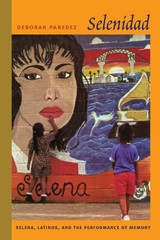
Selenidad
Selena, Latinos, and the Performance of MemoryDeborah Paredez
Duke University Press, 2009
Paredez argues that Selena’s death galvanized Latina/o efforts to publicly mourn collective tragedies (such as the murders of young women along the U.S.-Mexico border) and to envision a brighter future. At the same time, reactions to the star’s death catalyzed political jockeying for the Latino vote and corporate attempts to corner the Latino market. Foregrounding the role of performance in the politics of remembering, Paredez unravels the cultural, political, and economic dynamics at work in specific commemorations of Selena. She analyzes Selena’s final concert, the controversy surrounding the memorial erected in the star’s hometown of Corpus Christi, and the political climate that served as the backdrop to the touring musicals Selena Forever and Selena: A Musical Celebration of Life. Paredez considers what “becoming” Selena meant to the young Latinas who auditioned for the biopic Selena, released in 1997, and she surveys a range of Latina/o queer engagements with Selena, including Latina lesbian readings of the star’s death scene and queer Selena drag. Selenidad is a provocative exploration of how commemorations of Selena reflected and changed Latinidad.
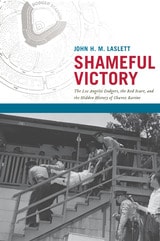
Shameful Victory
The Los Angeles Dodgers, the Red Scare, and the Hidden History of Chavez RavineJohn H. M. Laslett
University of Arizona Press, 2015
John H. M. Laslett offers a new interpretation of the Chavez Ravine tragedy, paying special attention to the early history of the barrio, the reform of Los Angeles's destructive urban renewal policies, and the influence of the evictions on the collective memory of the Mexican American community.
In addition to examining the political decisions made by power brokers at city hall, Shameful Victory argues that the tragedy exerted a much greater influence on the history of the Los Angeles civil rights movement than has hitherto been appreciated. The author also sheds fresh light on how the community grew, on the experience of individual home owners who were evicted from the barrio, and on the influence that the event had on the development of recent Chicano/a popular music, drama, and literature.
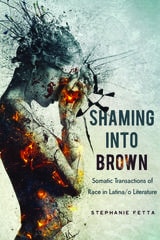
Shaming into Brown
Somatic Transactions of Race in Latina/o LiteratureStephanie Fetta
The Ohio State University Press, 2018
In Shaming into Brown: Somatic Transactions of Race in Latina/o Literature, Stephanie Fetta asserts that our bodies are fundamental to how we live and how we make meaning. Anchored by two psychoanalytic theories, bioenergetic analysis developed by Alexander Lowen and affect theory put forth by Silvan Tomkins, Fetta examines Latinx fiction to draw attention to the cultural role of the intelligent, emotional, and communicative body—the soma—in relation to shame. She argues that we bring the soma—the physical, emotive, and social register of our subjectivity—to the text as we do to our lives,proposing that the power of racialization operates at the level of somatic expression and reception through habituated, socially cued behaviors that are not readily subject to intentional control.
Fetta examines shame beyond individual experiences, looking at literary renderings of the cultural practice of racial shaming that are deeply embedded into our laws, hiring practices, marketing strategies, and more. Grounding her analysis in the works of Gloria Anzaldúa and Cherríe Moraga, Shaming into Brown focuses on exposing the underpinnings of racialized shame and does so through analyzing “scenes of racialization” in prominent works by authors such as Junot Díaz, Sandra Cisneros, and Oscar Zeta Acosta.
Shared Selves
Latinx Memoir and Ethical Alternatives to HumanismSuzanne Bost
University of Illinois Press, 2019

Side Dishes
Latina American Women, Sex, and Cultural ProductionFitch, Melissa A
Rutgers University Press, 2009
Side Dishes considers feminist pornography and literary representations of masturbation, bisexuality, lesbianism, and sexual fantasies; the treatment of lust in stand-up comedy and science fiction; critical issues in leading feminist journals; and portrayals of sexuality in four contemporary Latin American films. Melissa A. Fitch concludes with a look at the rise of women's and gender studies programs in Latin America.
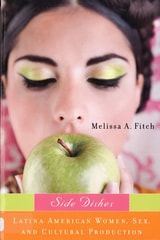
Side Dishes
Latina American Women, Sex, and Cultural ProductionFitch, Melissa A
Rutgers University Press, 2009
Side Dishes considers feminist pornography and literary representations of masturbation, bisexuality, lesbianism, and sexual fantasies; the treatment of lust in stand-up comedy and science fiction; critical issues in leading feminist journals; and portrayals of sexuality in four contemporary Latin American films. Melissa A. Fitch concludes with a look at the rise of women's and gender studies programs in Latin America.
Sideways Selves
Travesti and Jotería Struggles Across the AméricasPJ DiPietro
University of Texas Press, 2025
2026 Sylvia Rivera Award in Transgender Studies, The Center for LGBTQ Studies (CLAGS), CUNY
How trans and non-binary networks engage in decoloniality across hemispheres.
A deeply informed, theoretically rich work of inquiry and critique, Sideways Selves learns from two communities of migrants as they contest their marginalization under the colonial regime of gender—colonial because, as PJ DiPietro affirms, Indigenous and Afro-diasporic conceptions of embodiment have been displaced by the European-Christian order of gender. Following gender-nonconforming Aymara, Kolla, and mixed-race exiles in Buenos Aires and K’iche’, Nahua, and Central American migrants in the San Francisco Bay Area, DiPietro takes stock of a collective, transnational effort to reimagine ideas of personhood and kinship that gender makes unthinkable.
The communities DiPietro studies create new kinds of identities, collective and genderless in nature. Their ways of thinking and doing, though radical, are motivated by old wisdom, storytelling, healing, and religion—brujería, curanderismo, Voudoun, and other practices that colonialism, capitalism, and the nation-state have unsuccessfully tried to erase. In equal measures philosophical and ethnographic, Sideways Selves witnesses and listens as these displaced people—displaced from their homes and from the moral geography of the West—show us what a just, decolonial world could actually be.
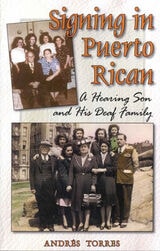
Signing in Puerto Rican
A Hearing Son and His Deaf FamilyAndrés Torres
Gallaudet University Press, 2009
The only child of deaf Puerto Rican immigrants, Andrés Torres grew up in New York City in a large, extended family that included several deaf aunts and uncles. In Signing in Puerto Rican: A Hearing Son and His Deaf Family, he opens a window into the little known culture of Deaf Latinos chasing the immigrant American dream. Like many children of deaf adults (codas), Torres loved his parents deeply but also longed to be free from being their interpreter to the hearing world. Torres’s story is unique in that his family communicated in three languages. The gatherings of his family reverberated with “deaf talk,” in sign, Spanish, and English. What might have struck outsiders as a strange chaos of gestures and mixed spoken languages was just normal for his family.
Torres describes his early life as one of conflicting influences in his search for identity. His parents’ deep involvement in the Puerto Rican Society for the Catholic Deaf led him to study for the priesthood. He later left the seminary as his own ambitions took hold. Torres became very active in the Puerto Rico independence party against the backdrop of the Civil Rights movement and protest against the Vietnam War. Throughout these defining events, Torres’s journey never took him too far from his Deaf Puerto Rican family roots and the passion of arms, hands, and fingers filling the air with simultaneous translation and understanding.

Sites of Translation
What Multilinguals Can Teach Us about Digital Writing and RhetoricLaura Gonzales
University of Michigan Press, 2018
Winner of the 2016 Sweetland Digital Rhetoric Collaborative Book Prize
Sites of Translation illustrates the intricate rhetorical work that multilingual communicators engage in as they translate information for their communities. Blending ethnographic and empirical methods from multiple disciplines, Laura Gonzales provides methodological examples of how linguistic diversity can be studied in practice, both in and outside the classroom, and provides insights into the rhetorical labor that is often unacknowledged and made invisible in multilingual communication. Sites of Translation is relevant to researchers and teachers of writing as well as technology designers interested in creating systems, pedagogies, and platforms that will be more accessible and useful to multilingual audiences. Gonzales presents multilingual communication as intellectual labor that should be further valued in both academic and professional spaces, and supported by multilingual technologies and pedagogies that center the expertise of linguistically diverse communicators.
Social Functions of Language in a Mexican-American Community
George Carpenter Barker
University of Arizona Press, 1972
Data were drawn from observational studies of individuals and families; observation of group activities; and observation of, supplemented by questionnaires on, the cultural interests of Mexican children and their families. Some conclusions of the study were that Spanish came to be identified in the Mexican community as the language of intimate and family relations, while English came to be identified as the language of formal social relations and of all relations with Anglos. It was also found that the younger American-born group reject both Spanish and English in favor of their own language, Pachuco. Tables depicting the characteristics of 20 families, the language usage of families, and the language usage in personal relationships of English and Spanish are included. Suggestions for further research are made.
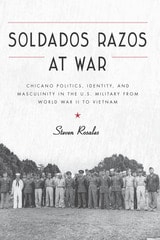
Soldados Razos at War
Chicano Politics, Identity, and Masculinity in the U.S. Military from World War II to VietnamSteven Rosales
University of Arizona Press, 2017
What were the catalysts that motivated Mexican American youth to enlist or readily accept their draft notices in World War II, Korea, or Vietnam? In Soldados Razos at War, historian and veteran Steven Rosales chronicles the experiences of Chicano servicemen who fought for the United States, explaining why these men served, how they served, and the impact of their service on their identity and political consciousness.
As a social space imbued with its own martial and masculine ethos, the U.S. military offers an ideal way to study the aspirations and behaviors that carried over into the civilian lives of these young men. A tradition of martial citizenship forms the core of the book. Using rich oral histories and archival research, Rosales investigates the military’s transformative potential with a particular focus on socioeconomic mobility, masculinity, and postwar political activism across three generations.
The national collective effort characteristic of World War II and Korea differed sharply from the highly divisive nature of American involvement in Vietnam. Thus, for Mexican Americans, military service produced a wide range of ideological reactions, with the ideals of each often in opposition to the others. Yet a critical thread connecting these diverse outcomes was a redefined sense of self and a willingness to engage in individual and collective action to secure first-class citizenship.
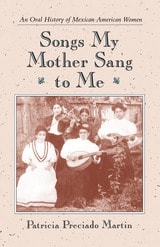
Songs My Mother Sang to Me
An Oral History of Mexican American WomenPatricia Preciado Martin
University of Arizona Press, 1992
Martin's quest took her to ranches, mining towns, and cities throughout southern Arizona, for she sought to document as varied an experience of the contributions of Mexican American women as possible. The interviews covered family history and genealogy, childhood memories, secular and religious traditions, education, work and leisure, environment and living conditions, rites of passage, and personal values. Each of the ten oral histories reflects not only the spontaneity of the interview and personality of each individual, but also the friendship that grew between Martin and her subjects.
Songs My Mother Sang to Me collects voices not often heard and brings to print accounts of social change never previously recorded. These women document more than the details of their own lives; in relating the histories of their ancestors and communities, they add to our knowledge of the culture and contributions of Mexican American people in the Southwest.
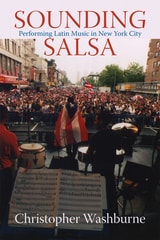
Sounding Salsa
Performing Latin Music in New York CityChristopher Washburne
Temple University Press, 2008
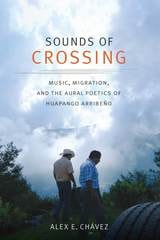
Sounds of Crossing
Music, Migration, and the Aural Poetics of Huapango ArribeñoAlex E. Chávez
Duke University Press, 2017
Southwest Asia
The Transpacific Geographies of Chicana/o LiteratureJayson Gonzales Sae-Saue
Rutgers University Press, 2016
Spatial and Discursive Violence in the US Southwest
Rosaura Sánchez and Beatrice Pita
Duke University Press, 2020
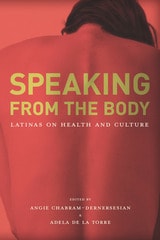
Speaking from the Body
Latinas on Health and CultureEdited by Angie Chabram-Dernersesian and Adela de la Torre
University of Arizona Press, 2008
Here are stories of Latinas living with conditions common to many: hypertension, breast cancer, obesity, diabetes, depression, osteoarthritis, rheumatoid arthritis, dementia, Parkinson’s, lupus, and hyper/hypothyroidism. By bringing these narratives out from the shadows of private lives, they demonstrate how such ailments form part of the larger whole of Latina lives that encompasses family, community, the medical profession, and society. They show how personal identity and community intersect to affect the interpretation of illness, compliance with treatment, and the utilization of allopathic medicine, alternative therapies, and traditional healing practices. The book also includes a retrospective analysis of the narratives and a discussion of Latina health issues and policy recommendations.
These Latina cultural narratives illustrate important aspects of the social contexts and real-world family relationships crucial to understanding illness. Speaking from the Body is a trailblazing collection of personal testimonies that integrates professional and personal perspectives and shows that our understanding of health remains incomplete if Latina cultural narratives are not included.
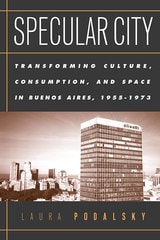
Specular City
The Transformation Of Culture, ConsumptionLaura Podalsky
Temple University Press, 2004
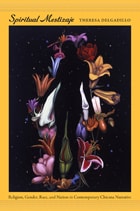
Spiritual Mestizaje
Religion, Gender, Race, and Nation in Contemporary Chicana NarrativeTheresa Delgadillo
Duke University Press, 2011
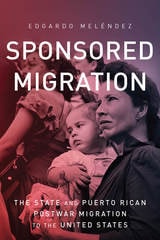
Sponsored Migration
The State and Puerto Rican Postwar Migration to the United StatesEdgardo Meléndez
The Ohio State University Press, 2017
Sponsored Migration places Puerto Rico’s migration policy in its historical context, examining the central role the Puerto Rican government played in encouraging and organizing migration during the postwar period. Meléndez sheds an important new light on the many ways in which the government intervened in the movement of its people: attempting to provide labor to U.S. agriculture, incorporating migrants into places like New York City, seeking to expand the island’s air transportation infrastructure, and even promoting migration in the public school system. One of the first scholars to explore this topic in depth, Meléndez illuminates how migration influenced U.S. and Puerto Rican relations from 1898 onward.
Stages of Life
Transcultural Performance and Identity in U.S. Latina TheaterAlberto Sandoval-Sánchez
University of Arizona Press, 2001
This is the first in-depth study of the entire corpus of Latina theater, based on close readings of works both published and in manuscript. It considers a large body of productions and performances, including works by such internationally known authors as Dolores Prida, Cherríe Moraga, and Janis Astor del Valle.
Applying feminist and postcolonial theory as well as theories of transculturation, Sandoval-Sánchez and Sternbach show how, despite cultural differences among Latinas, their works share a common poetics by building upon the politics of representation, identity, and location. In addition to covering theater, this study also shows that solo performance has its own history, properties, structure, and poetics. It examines performances of Carmelita Tropicana, Monica Palacios, and Marga Gomez—artists whose hybrid identities as Latina lesbians constitute living examples of transculturation in the making—to show how solo performance has roots in and digresses from more traditional modes of theater. With their Latina heritage as a unifying link, these women reflect common traits, patterns, dramatic structures, and properties that overcome regional differences. Stages of Life reads these eclectic cultural productions as a unified body of work that contributes to the formation of Latina identity in America today.
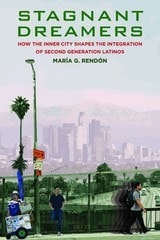
Stagnant Dreamers
How the Inner City Shapes the Integration of the Second GenerationMaria G. Rendon
Russell Sage Foundation, 2019
Winner of the 2020 Robert E. Park Award for Best Book from the Community and Urban Sociology Section of the American Sociological Association
Winner of the 2020 Distinguished Contribution to Research Award from the Latino/a Section of the American Sociological Association
Honorable Mention for the 2020 Thomas and Znaniecki Award from the International Migration Section of the American Sociological Association
A quarter of young adults in the U.S. today are the children of immigrants, and Latinos are the largest minority group. In Stagnant Dreamers, sociologist and social policy expert María Rendón follows 42 young men from two high-poverty Los Angeles neighborhoods as they transition into adulthood. Based on in-depth interviews and ethnographic observations with them and their immigrant parents, Stagnant Dreamers describes the challenges they face coming of age in the inner city and accessing higher education and good jobs, and demonstrates how family-based social ties and community institutions can serve as buffers against neighborhood violence, chronic poverty, incarceration, and other negative outcomes.
Neighborhoods in East and South Central Los Angeles were sites of acute gang violence that peaked in the 1990s, shattering any romantic notions of American life held by the immigrant parents. Yet, Rendón finds that their children are generally optimistic about their life chances and determined to make good on their parents’ sacrifices. Most are strongly oriented towards work. But despite high rates of employment, most earn modest wages and rely on kinship networks for labor market connections. Those who made social connections outside of their family and neighborhood contexts, more often found higher quality jobs. However, a middle-class lifestyle remains elusive for most, even for college graduates.
Rendón debunks fears of downward assimilation among second-generation Latinos, noting that most of her subjects were employed and many had gone on to college. She questions the ability of institutions of higher education to fully integrate low-income students of color. She shares the story of one Ivy League college graduate who finds himself working in the same low-wage jobs as his parents and peers who did not attend college. Ironically, students who leave their neighborhoods to pursue higher education are often the most exposed to racism, discrimination, and classism.
Rendón demonstrates the importance of social supports in helping second-generation immigrant youth succeed. To further the integration of second-generation Latinos, she suggests investing in community organizations, combating criminalization of Latino youth, and fully integrating them into higher education institutions. Stagnant Dreamers presents a realistic yet hopeful account of how the Latino second generation is attempting to realize its vision of the American dream.
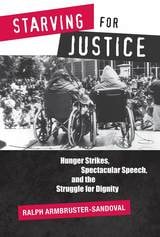
Starving for Justice
Hunger Strikes, Spectacular Speech, and the Struggle for DignityRalph Armbruster-Sandoval
University of Arizona Press, 2017
In the 1990s three college campuses in California exploded as Chicano/a and Latino/a students went on hunger strikes. Through courageous self-sacrifice, these students risked their lives to challenge racial neoliberalism, budget cuts, and fee increases. The strikers acted and spoke spectacularly and, despite great odds, produced substantive change.
Social movement scholars have raised the question of why some people risk their lives to create a better world. In Starving for Justice, Ralph Armbruster-Sandoval uses interviews and archival material to examine people’s willingness to make the extreme sacrifice and give their lives in order to create a more just society.
Popular memory and scholarly discourse around social movements have long acknowledged the actions of student groups during the 1960s. Now Armbruster-Sandoval extends our understanding of social justice and activism, providing one of the first examinations of Chicana/o and Latina/o student activism in the 1990s.
Students at University of California, Los Angeles; University of California, Santa Barbara; and Stanford University went on hunger strikes to demand the establishment and expansion of Chicana/o studies departments. They also had even broader aspirations—to obtain dignity and justice for all people. These students spoke eloquently, making their bodies and concerns visible. They challenged anti-immigrant politics. They scrutinized the rapid growth of the prison-industrial complex, racial and class polarization, and the university’s neoliberalization. Though they did not fully succeed in having all their demands met, they helped generate long-lasting social change on their respective campuses, making those learning institutions more just.

States of Defeat
US Imaginaries of Revolutionary Central AmericaEric A. Vázquez
University of Minnesota Press, 2025
The cultural reverberations of Central America’s failed revolutions on US intellectual thought
The thwarted Central American revolutions during the latter half of the twentieth century marked a watershed in what had become a global anti-imperialist movement striving for a more egalitarian future. Examining a range of documentary, literary, and artistic works, States of Defeat looks at how left-wing intellectuals in the United States reckoned with the fallout from these defeats through wide-ranging creative expressions of indignation, cynicism, and grief.
As he argues for the historical significance of Central America in the transition out of the Cold War, Eric A. Vázquez shows how the unfulfilled revolutionary ambitions in Nicaragua, El Salvador, and Guatemala prompted intellectuals in the United States to reexamine their desires for radical transformation. Analyzing novels, memoirs, anthropological writings, documentary film, and archival materials from the 1980s and 1990s, he demonstrates how these texts prefigured later anxieties about secrecy and securitization, the rise of nongovernmental organizational forms, and state failure.
Examining the legacies of unfulfilled anti-imperialist political ideals and their implications for the global left in the twenty-first century, States of Defeat offers a renewed perspective on the function of Central America in the US imagination. Amid a resurgence of crackdowns on public protest and a rise in virulent anti-immigrant campaigns throughout the United States and globally, Vázquez presents urgent and valuable insights into the viability of political solidarity and state power.
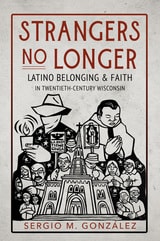
Strangers No Longer
Latino Belonging and Faith in Twentieth-Century WisconsinSergio M. González
University of Illinois Press, 2024
Hospitality practices grounded in religious belief have long exercised a profound influence on Wisconsin’s Latino communities. Sergio M. González examines the power relations at work behind the types of hospitality--welcoming and otherwise--practiced on newcomers in both Milwaukee and rural areas of the Badger State. González’s analysis addresses central issues like the foundational role played by religion and sacred spaces in shaping experiences and facilitating collaboration among disparate Latino groups and across ethnic lines; the connections between sacred spaces and the moral justification for social justice movements; and the ways sacred spaces evolved into places for mitigating prejudice and social alienation, providing sanctuary from nativism and repression, and fostering local and transnational community building.
Perceptive and original, Strangers No Longer reframes the history of Latinos in Wisconsin by revealing religion’s central role in the settlement experience of immigrants, migrants, and refugees.

Strawberries and Technologies
How Media Transforms Farmworker Communities in Southern CaliforniaCarlos Jimenez Jr.
University of Illinois Press, 2027
Carlos Jimenez Jr. looks at the lives of farmworkers living at the intersection of agriculture and digital technologies. As he tells the workers’ stories, Jimenez shows how technology like non-commercial radio and autonomous robots offer chances to create, experiment, dream, develop new skills, and participate in civic life, yet also power the automation that may replace their jobs. The simultaneous processes of stabilization with visibility, and destabilization with invisibility, drive an ongoing evolution that continually redefines contemporary farmworker life.
Enlightening and richly detailed, Strawberries and Technologies provides an on-the-ground report of the surprising role of digital communication in farmworker communities.
Sueños Americanos
Barrio Youth Negotiating Social and Cultural IdentitiesJulio Cammarota
University of Arizona Press, 2012
For nearly a decade Julio Cammarota interviewed and observed Latino youth between the ages of seventeen and twenty-four who lived in a barrio in a city on the California coast. He conducted forty life interviews, selecting six people to investigate in depth. Twenty of the study participants worked at a fast-food restaurant, while the other twenty worked at a community cultural center.
Focusing on the experiences of his subjects in the primary settings of family, work, and school, Cammarota structured his research to examine how Latino youth negotiate myriad social conditions and hostile economic and political pressures in their daily lives. His extensive interviews and incisive analyses illuminate the complex relationships among low-wage employment, cultural standards, education, class oppression, and gender expectations.
Among other topics, Cammarota investigates how working affects Latino education; how gender influences social relationships and life choices; how Latinos and Latinas try to maintain their distinct ethnic identity while attempting to transcend marginalization; whether the Latino culture helps young people work hard for their families and for a better future; and how the connections and disconnections among work, family, and school constitute formative processes that shape the cultural identities of Latino youth.
One of the most extensive studies of barrio youth available, Sueños Americanos concludes with a discussion of social justice education for Latino youth and how this educational approach meets their academic needs while providing opportunities for self-determination and community activism.
Sunbelt Diaspora
Race, Class, and Latino Politics in Puerto Rican OrlandoBy Patricia Silver
University of Texas Press, 2020
2021 — Silver Medal, Raul Yzaguirre Best Political/Current Affairs Book – International Latino Book Awards, Latino Literacy Now
An in-depth look at an emerging Latino presence in Orlando, Florida, where Puerto Ricans and others navigate differences of race, class, and place of origin in their struggle for social, economic, and political belonging.
Puerto Ricans make up half of Orlando-area Latinos, arriving from Puerto Rico as well as from other long-established diaspora communities to a place where Latino politics has long been about Cubans in Miami. Together with other Latinos from multiple places, Puerto Ricans bring diverse experiences of race and class to this Sunbelt city. Tracing the emergence of the Puerto Rican and Latino presence in Orlando from the 1940s through an ethnographic moment of twenty-first-century electoral redistricting, Sunbelt Diaspora provides a timely prism for viewing how differences of race, class, and place play out in struggles to claim political, social, and economic ground for Latinos.
Drawing on over a decade of ethnographic, oral history, and archival research, Patricia Silver situates her findings in Orlando’s historically black-white racial landscape, post-1960s claims to “color-blindness,” and neoliberal celebrations of individualism. Through the voices of diverse participants, Silver brings anthropological attention to the question of how social difference affects collective identification and political practice. Sunbelt Diaspora asks what constitutes community and how criteria for membership and legitimate representation are negotiated.
Surviving HIV/AIDS in the Inner City
How Resourceful Latinas Beat the OddsChase, Sabrina
Rutgers University Press, 2011
Based on her work with minority women living in Newark, New Jersey, Sabrina Marie Chase illuminates the hidden traps and land mines burdening our current health care system as a whole. For the women she studied, alliances with doctors, nurses, and social workers could literally mean the difference between life and death. By applying the theories of sociologist Pierre Bourdieu to the day-to-day experiences of HIV-positive Latinas, Chase explains why some struggled and even died while others flourished and thrived under difficult conditions. These gripping, true-life stories advocate for those living with chronic illness who depend on the health care "safety net." Through her exploration of life and death among Newark's resourceful women, Chase provides the groundwork for inciting positive change in the U.S. health care system.
Surviving the ICE Age
Children of Immigrants in New YorkJoanna Dreby
Russell Sage Foundation, 2025
Dreby shows that a restrictive approach to immigration creates problems over time and across generations. These issues occur regardless of one’s citizenship status and go beyond deportations. Despite having pride in their heritage, her interviewees did not talk much about immigration. She refers to this unwillingness—and at times, inability—to speak about immigration as silencing. Silencing in a community or family is often intended to protect children, but this can leave them with little information about their backgrounds and status, leading to fear and anxiety instead. Self-silencing often resulted from traumatic experiences tied to enforcement episodes, which sometimes took the form of memory loss or emotional withholding. Dreby finds that experiences with the immigration system that disrupted relationships in a child’s household arising from family separations, moves, or changing roles in the family had especially long-term effects, causing, at times, ongoing mental health issues. Even the risk of immigration involvement left some young adults feeling vulnerable and undermined their sense of safety and security as U.S. citizens.
Dreby also highlights stories that offer hope. Young adults developed strategies to persevere, and children who grew up in communities and families that openly talked about migration felt empowered and fared much better, especially when they had access to resources, such as adequate food and shelter, mental health services, and community support. Dreby calls for policies and practices to mitigate the harms of restrictive migratory control on children’s wellbeing, such avoiding the arrest of parents in front of children and ensuring that U.S. citizen children’s interests are considered in immigration court without their direct involvement.
Surviving the ICE Age details the generational harms caused by U.S. immigration policy and offers suggestions for a better way forward.
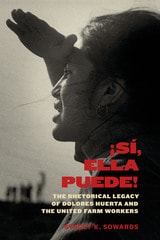
Sí, Ella Puede!
The Rhetorical Legacy of Dolores Huerta and the United Farm WorkersBy Stacey K. Sowards
University of Texas Press, 2019
Winner, Marie Hochmuth Nichols Award, Public Address Division, National Communication Association, 2020
Outstanding Book Award, Latina/o Communication Studies Division, National Communication Association, 2020
Since the 1950s, Latina activist Dolores Huerta has been a fervent leader and organizer in the struggle for farmworkers’ rights within the Latina/o community. A cofounder of the United Farm Workers union in the 1960s alongside César Chávez, Huerta was a union vice president for nearly four decades before starting her own foundation in the early 2000s. She continues to act as a dynamic speaker, passionate lobbyist, and dedicated figure for social and political change, but her crucial contributions and commanding presence have often been overshadowed by those of Chávez and other leaders in the Chicana/o movement. In this new study, Stacey K. Sowards closely examines Huerta’s rhetorical skills both in and out of the public eye and defines Huerta’s vital place within Chicana/o history.
Referencing the theoretical works of Pierre Bourdieu, Chela Sandoval, Gloria Anzaldúa, and others, Sowards closely analyzes Huerta’s speeches, letters, and interviews. She shows how Huerta navigates the complex intersections of race, ethnicity, gender, language, and class through the myriad challenges faced by women activists of color. Sowards’s approach to studying Huerta’s rhetorical influence offers a unique perspective for understanding the transformative relationship between agency and social justice.